
Turn the key, and the dash pulls up your route before the engine’s warm. Connected Navigation runs straight off the truck. It doesn’t need your phone. It tracks the road, links with built-in sensors, and stays live even if your cell overheats or loses signal deep into a worksite or highway stretch.
Some drivers count on that. Others see it as one more paid feature chasing something their phone already handles for free.
This guide breaks down how it works across SYNC 4 and the newer Ford Digital Experience, where it actually helps, where it falls flat, and why EV drivers are stuck playing by a different set of rules. Whether it’s worth the money depends on how much the truck’s doing, and where it’s doing it.
1. How Ford builds its navigation backbone today
SYNC 4’s quiet split: one nav dies, one stays sharp
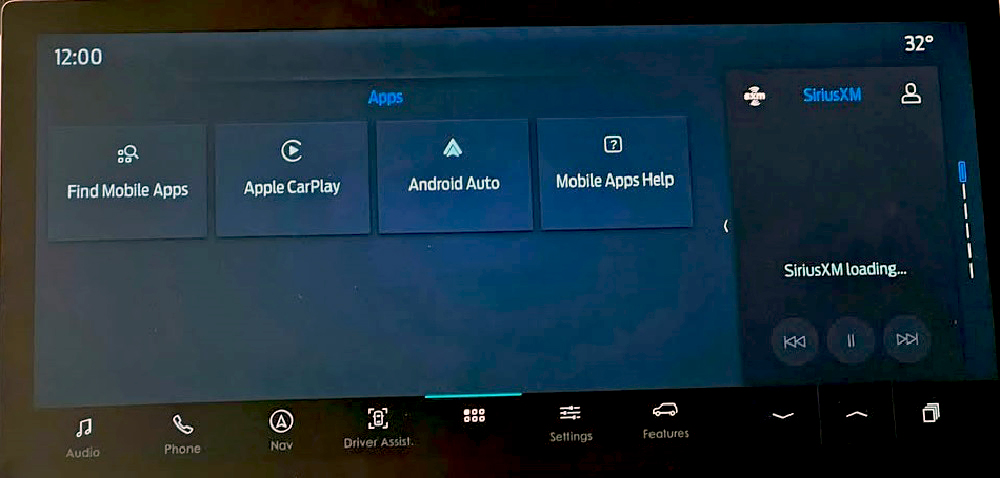
SYNC 4 covers two very different setups, but Ford slaps the same name on both. That’s where the confusion starts.
Connected Navigation leans on the cloud. It pulls routing, traffic, POIs, and search results over the air through the truck’s modem. Once the plan expires, or you lose signal, the system doesn’t throw an error. It just stops doing anything smart. You’re left staring at a moving dot on a blank map.
Connected Built-In Navigation packs more muscle. Full maps for North America live on the truck’s internal storage. It still updates traffic and weather through the cloud, but the routing engine works offline.
If your plan lapses or coverage disappears, you still get turn-by-turn with the last available data. That kind of fallback matters when you’re off-grid or forget to renew.
Both systems depend on FordPass Connect. If the truck’s modem goes cold, so do the live updates. The difference is whether the nav still thinks for itself, or blanks out without asking Google first.
The 2025 shift: Ford drops Telenav, boots into Google
Ford started flipping the script in 2025. Models with the new Ford Digital Experience now boot straight into native Google Maps, no more legacy Telenav stack under SYNC.
This isn’t phone mirroring. Google’s engine runs on the vehicle’s OS. Maps show up in the cluster, in the HUD, and respond to a signed-in Google account. Saved places, search history, even calendar-linked stops come along for the ride.
But Ford didn’t hand over the keys. EV-specific routing still pulls from the truck’s battery data, range limits, and charger availability via BlueOval. Google handles the scale and mapping muscle, but Ford keeps the hooks into the hardware.
No more SD cards. No more dealer visits. Updates land over the air, just like any good app should.
With these new models, the choice isn’t Ford vs. phone. It’s whether the broader Connectivity Package earns its monthly fee after the free trial ends.
The only three tiers that matter
| Tier | What’s bolted into the vehicle | What works with an active plan | What survives if you stop paying | Common examples |
|---|---|---|---|---|
| Connected Navigation (SYNC 4) | Modem, minimal local data | Cloud routing, live traffic, weather, Yelp POIs | Moving map only | Base Bronco, lower-trim F-150 |
| Connected Built-In Navigation | Modem plus full map storage | Cloud perks plus offline routing | Full turn-by-turn with dated data | Mach-E, higher-trim F-150 |
| Ford Digital Experience | Google-based head unit, 5G | Native Google Maps, EV routing, apps | Limited core maps, policy-dependent | 2025+ Mach-E, Expedition |
2. What Ford Connected Navigation actually brings to the table
Traffic and weather that adjust to the truck, not just the road
Ford pulls live traffic from TomTom, but it doesn’t just echo driver reports. It reads speed, road type, and sustained congestion, not last-minute slowdowns.
Weather overlays come from AccuWeather, flagging wind, rain, and snow on your actual route, crucial when you’re hauling weight uphill or heading into weather that messes with traction and timing.
You won’t get flashy alerts. What you get is solid guidance. Long closures get routed around before you see the barricade. Icy zones show up before you commit to the ramp. The system plays it safe because it’s tuned to your truck, not your phone’s guesswork.
Search results that don’t wait for a map update
Points of interest pull live data from Yelp and Ford’s own cloud, not some months-old database baked into a static file. That means new restaurants, open chargers, and service stops show up right away. You don’t need a dealer visit or map update to see what’s open, and what’s not.
In the city, it’s a bonus. Out in the sticks, it’s a lifesaver. Fuel stops change owners. Late-night diners close early. Chargers go dark or pop back online. Cloud-based search keeps the info current where embedded maps fall behind.
Voice commands that don’t make you fight the screen
SYNC 4’s voice control actually listens. One sentence can handle routing, find a charger, and bring up a stop for food, without stabbing through six menus. It pulls from cloud search, your history, and the onboard routing all at once.
You feel the difference when traffic’s tight or weather’s turning. Fewer glances at the screen. Fewer wrong turns. Less cabin noise. It’s not just about hands-free, it’s about keeping focus when you need it most.
It learns your habits and pre-loads what you need
Drive at the same time each day, and the system catches on. Commutes, school runs, gym stops, it all gets logged quietly. Fire up the truck, and your usual route pops up with live delays already factored in.
It’s not for show. It cuts down the taps and shortens that startup delay before you’re moving. If traffic throws a wrench in the plan, it flags the backup early, before you’re boxed into it.
3. Why EV owners don’t get to skip this
Range estimates that actually react to the road
In the Mach-E and F-150 Lightning, the nav system feeds real route data into the range guess, not just battery averages. Elevation, temperature, wind, and how you’ve driven that stretch before all weigh in. As conditions change, the system redraws a blue circle showing how far you’ll actually make it.
Standard “miles remaining” numbers crumble when you hit a steep climb or a stiff headwind. Route-aware estimates stay real. That matters most when you’re stretching range on road trips and can’t afford to guess wrong.
Preconditioning that phone maps can’t trigger
Use Ford’s built-in nav to route to a DC fast charger, and the truck starts prepping the battery before you even arrive. The pack hits the charger warm, ready to take a full-speed hit. In cold weather, that can cut charging time by 15 to 30 minutes.
Phone apps can steer you to a plug, but they don’t wake the thermal system. Show up cold, and you’re stuck waiting while the battery gets its act together.
Charger stops that don’t leave you guessing
Built-in routing ties straight into the BlueOval network. It shows fast and ultra-fast chargers, stall availability, Plug & Charge status, and how long you’ll need to stop. The plan updates as you drive, not after you pull up to a dead site.
That kind of visibility beats juggling apps at night or on unfamiliar highways. No guessing. No backtracking.
| EV function | Requires Ford native routing | Practical payoff |
|---|---|---|
| Intelligent Range | Yes | More accurate arrival SoC |
| Battery preconditioning | Yes | Faster DC charging |
| Charger filtering and status | Yes | Fewer dead or slow stops |
| Phone-based EV routing | Partial | Misses thermal and charger sync |
4. Native Ford nav vs. the phone in your pocket
Where phone maps win on speed
CarPlay and Android Auto pull live data from apps that refresh by the second. Google Maps updates road closures, reroutes, and POIs faster than most OEM systems, especially in cities where traffic shifts by the block.
With a strong signal, phone maps feel snappier. Alerts hit sooner. You get faster heads-ups on lane closures, wrecks, and delays. It’s a live feed, not a slow drip.
Where built-in nav holds when things fall apart
Ford’s nav runs off a roof antenna and wheel-speed sensors. It stays locked in tunnels, mountain gaps, and dense city streets where phones drift or lose lock. A dead phone or a bad signal doesn’t derail it, because the GPS lives in the truck, not your pocket.
That stability earns its keep on long trips and rougher routes. Miss one turn in a canyon and the reroute penalty hits hard.
What keeps working when your phone doesn’t
Native nav fills the cluster and HUD with clean, full-screen layouts. It keeps guiding when your phone dies, overheats, or drops connection on a shaky wireless link. CarPlay’s better than it used to be, but it still leans on the phone being awake and happy.
| Factor | Ford Connected or Built-In nav | CarPlay and Android Auto |
|---|---|---|
| GPS source | Vehicle antenna + dead-reckoning | Phone GPS |
| Cluster and HUD | Full native layouts | Limited metadata |
| Offline routing | Strong with Built-In | Requires advance downloads |
| EV thermal integration | Full on Mach-E and Lightning | Minimal |
| Ongoing cost | Subscription | Uses your phone plan |
5. What it actually costs to keep nav running
SYNC 4 pricing flew under the radar
Older SYNC 4 setups kept things simple. Connected Navigation came with a 90-day trial. Built-In Navigation usually had 3 years included from the warranty start date. After that, renewals ran about $80 per year.
Most gas truck owners didn’t flinch. It was cheaper than hands-free driving packages and didn’t force you into bundles. Pay the fee, and the maps stayed sharp. Skip it, and Built-In nav still worked offline.
The bundle that raised eyebrows
Starting with the Ford Digital Experience, navigation got bundled into the Connectivity Package. That includes nav, streaming apps, the voice assistant, and a 5G hotspot. Once the free trial runs out, the whole thing renews for $149.95 per year.
There’s also a one-time option, $745 for a minimum of 7 years. That drops the effective yearly cost closer to $106, assuming you keep the truck and Ford keeps supporting the modem.
But not everyone wants the bundle. Drivers who just want nav now pay for extras they might never touch. That’s where the complaints started piling up.
What those numbers actually mean
| Plan | What you’re paying for | Cost | Effective yearly spend |
|---|---|---|---|
| SYNC 4 Connected Navigation | Cloud maps and live data | ~$80 per year | $80 |
| SYNC 4 Built-In renewal | Live data on top of offline nav | ~$80 per year | $80 |
| Connectivity Package annual | Nav plus bundled services | $149.95 per year | $150 |
| Connectivity Package one-time | Same bundle, prepaid | ~$745 upfront | ~$106 over 7 years |
6. What owners still gripe about, and what Ford’s fixing
EV chargers that just don’t work out
Mach-E and Lightning owners have a common issue: native routing keeps favoring dealership chargers. They’re slow, blocked, or buried behind rows of new inventory. And on steep routes, the system sometimes pushes you to stop early, even when Google Maps would’ve sailed through without a warning.
It’s not just edge cases. These patterns show up often enough that seasoned EV drivers double-check everything in Google before committing to a long leg.
Cold starts, random stumbles, and occasional GPS drift
SYNC 4 still has its rough moments. Cold boots can lag. Routes sometimes load slower than expected. And even with that roof-mounted GPS, location glitches still crop up now and then.
It doesn’t brick the system, but it chips away at trust. In cities, where traffic changes fast, most drivers fall back on phone apps once the factory nav drags its feet.
Quiet updates that rewrite the rules
Ford ships fixes through over-the-air Power-Up updates, and most changes land without fanfare. EV routing’s tighter now. Tesla Superchargers show up on the map. Split-screen layouts look cleaner. Voice commands respond quicker. None of it needs a dealer trip.
That subscription isn’t just buying maps, it’s buying an evolving system. Whether that feels smart or slippery depends on how much you like surprises under the hood.
7. Who actually gets their money’s worth, and who doesn’t
EV drivers running beyond the home loop
If you’re road-tripping in a Mach-E or F-150 Lightning, this isn’t a nice-to-have, it’s mission-critical. Route-aware range, automatic battery preconditioning, and real-time charger filtering trim hours off long hauls over a year. Even one winter fast-charge that hits at full speed instead of crawling cold can save 20–30 minutes.
Stick to local errands and home charging, and the edge fades. In-town EV use doesn’t push the system hard enough to matter.
Gas and diesel trucks that earn their miles
If you’re towing, running rural routes, or losing signal often, Ford’s nav starts pulling weight. Offline routing, full-screen HUD guidance, and dead-reckoning GPS beat phone apps that drift or freeze when it counts.
But if the truck stays in city traffic, never pulls a load, and your phone signal never drops, that edge disappears.
City commuters who already trust their phone
Urban drivers with steady 5G don’t need the help. CarPlay and Android Auto call out closures faster, reroute quicker, and never ask for a subscription. For daily commutes and repeat stops, the phone stays ahead.
Built-in nav still has perks, cleaner visuals, instant start, no app juggling, but those are comfort features. They don’t shift the outcome if your phone’s already doing the job without breaking a sweat.
Sources & References
- Connected vs. Connected Built-In Navigation | Page 5 | Bronco6G
- Ford Connected Navigation Systems | Ford.com
- What are the SYNC 4 Navigation options? – Ford
- How do I renew my Connected Navigation services plan? – Ford Canada
- SYNC® 4 | Features and Updates | Ford.com
- Ford’s 2025 Connectivity Package on the Mach-E & Expedition
- Ford Digital Experience | Ford.com
- Ford Digital Experience | Ford.ca
- Ford’s Connected Built-In Navigation | SYNC 4 & SYNC 4A – Dorian Ford
- How do I use the SYNC 4 Technology Navigation Systems? – Ford
- Everything You Need to Know About Ford SYNC 4 – Friendly Ford
- How Ford SYNC® 4 Works | Exploring Features & Technology
- Ford Connected Navigation | Ford How-To | Ford – YouTube
- Using Connected Navigation Electric Vehicle (EV) Routing – Ford Canada
- Ford (and most) OEMs have missed the point with Connected Navigation – F150 Lightning Forum
- Advantage of native ford apps vs Carplay : r/MachE – Reddit
- Seeking Feedback: How Does Ford Connected Navigation Compare to Google and Apple Maps? : r/MachE – Reddit
- Enhanced EV Routing with Google Maps: New Features for Ford F-150 Lightning & Mustang Mach-E | Mullinax Ford of OlympiaStart Chat
- What is the Ford Connectivity Package?
- Android Auto vs. Ford Sync 4 – Lightning Forum
- How do I use Google Maps EV Routing for Android Auto – Ford
- What are SYNC 4A and SYNC 4? – Ford
- $40 navigation update worth it? | MaverickTruckClub – 2022+ Ford Maverick Pickup Forum, News, Owners, Discussions
- Apple Carplay now supports Google Maps Directions on HUD : r/cars – Reddit
- Google Maps Directions enabled on HUD (as of July 10, 2025) : r/CarPlay – Reddit
- Connected Services renewal costs : r/Ford – Reddit
- Use Google Maps built into your car when offline
- How much does a SYNC 4A or SYNC 4 Navigation subscription cost? – Ford
- Connected Services renewal costs : r/fordexpedition – Reddit
- I think Ford has lost their mind with the subscriptions : r/f150 – Reddit
- Ford Connectivity Package for Ford Digital Experience
- The Ford Connectivity Package | Ford.com
- Ford SYNC 4 – Next Gen Infotainment Technology | Ford UAE
- General Motors’ OnStar launches in Saudi Arabia
- Google Maps really this much better than built-in Nav? – MachEforum
- Google Maps vs Ford Nav vs ABRP (Why are Google’s estimated charge times so long?) : r/MachE – Reddit
- 2025 Ford SYNC 4 Features and Benefits to Know | J.C. Lewis Ford Hinesville
- Feature Highlight: EV Routing for Android Auto – Ford
- Any reason to pay for Sync 4 navigation if I have CarPlay? : r/Ford – Reddit