
Hear a dry knock at idle. Pop the hood, and it ticks like it’s missing a valve cover. That’s the 5.4 Triton, Ford’s long-stroke Modular V8 built for low-end torque, fleet durability, and endless online complaint threads.
From plug launches to timing collapse, it earned its scars across pickups, vans, and SUVs for over a decade. Some were built tough. Others were built wrong.
This guide breaks it down by head, plant, and generation, 2V, 3V, 4V. We’ll track every known weak point back to the design choices that caused it, and call every fix straight: thread inserts, phaser kits, Melling pumps, cooling mods, or junkyard signs you’re too late.
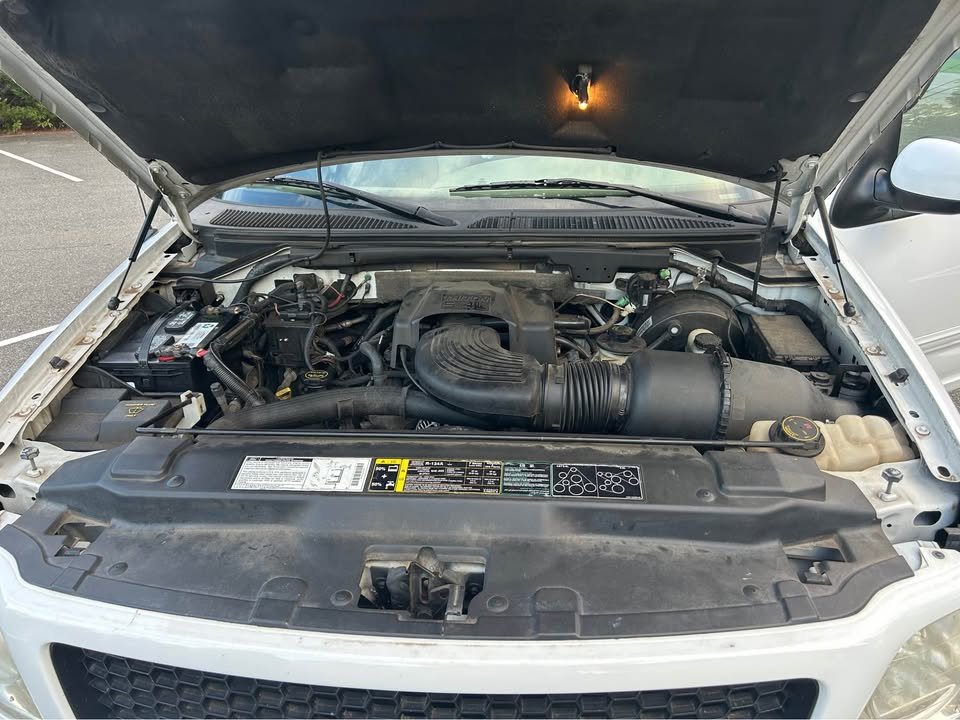
1. How Ford’s layout loaded the dice against the 5.4
A taller deck, a longer stroke, and too much stress up top
The 5.4 didn’t start from scratch. It’s a stroked version of the 4.6 Modular, same 3.552-inch bore, but stretched to 4.165 inches of stroke with a taller block. That long stroke built torque down low, where trucks and vans need it. But it came with a cost.
Higher piston speeds and longer rods slammed the top end with more heat, side-load, and oil demand. The heads needed more cooling. The chains needed more tension.
The journals needed oil film that couldn’t thin out when hot. Ford kept the Modular’s narrow timing cavities and modest oil pump, and the problems stacked fast in hard-use cycles.
Three valve layouts, three failure patterns
| Variant | Years (typical) | Valve timing | Failure signature |
|---|---|---|---|
| 5.4 2V | 1997–2003 F-150, early E | Fixed cams | Spark plug blowouts, mild chain wear |
| 5.4 3V | 2004–2010 F-150, later SUVs | VCT on both cams | Cold-start rattle, phaser knock, sludge |
| 5.4 4V InTech/GT | 1999–2012 luxury/performance | DOHC, some VCT | Rear-cylinder hot spots, costly top-ends |
Romeo vs. Windsor : same engine, different rules
Two factories, two sets of quirks. Windsor-built blocks used different cam caps, crank flanges, and timing covers. Romeo engines had powdered-metal rods and often different valve cover bolt patterns.
Most parts don’t swap cleanly. Mixing a Windsor front cover with a Romeo block throws timing alignment off just enough to trash a build.
Techs who don’t check the tag or casting numbers often order the wrong chains, seals, or bolts. Even flywheels and flexplates change between plants, and that alone can stop a rebuild cold if it doesn’t match the torque converter.
Hard use brings failure forward, not sideways
Tow every weekend, idle in traffic for hours, or run HVAC on job sites and the weak links come early. Vans and ambulances rack up hours faster than miles.
They show sludge and chain noise before 80,000. Retail trucks with short trips blow out plugs or snap exhaust studs. The engine’s base design doesn’t shift, but the calendar for failure does. Fleets knew it. Many parked them at 150,000 and never looked back.
2. When spark plugs blow out from 2V thread failure
Soft heads, shallow threads, and the ejection problem
Early 2-valve 5.4 heads used a soft aluminum alloy and just four threads to hold each plug. Not helicoils, not inserts, bare aluminum with minimal grip.
Under normal combustion, pressure spikes north of 1,000 PSI slam the plug against those threads on every power stroke. Over time, they stretch, deform, and let go.
Once they lose torque, the plug doesn’t just rattle, it cuts the threads like a die, lifting higher with each ignition pulse. Eventually, it fires out like a bullet, often taking the coil with it and cracking the boot or intake in the blast zone.
How the engine warns you before a plug exits
Ticking at idle is the first clue. Not lifter noise, this tick changes with RPM and often gets louder under load. It’s combustion sneaking past the plug seat, torching the threads.
If fuel trims start drifting lean and misfire counts spike, especially in the back cylinders, that plug’s already walking out. Catch it late, and the hole’s already stripped. Catch it earlier, and the threads might still bite.
Thread inserts that hold, and why one cylinder isn’t always enough
Time-Sert and Cal-Van insert kits became the go-to fix. They cut fresh threads, ream the hole, and stake a steel sleeve into place. Once installed right, it’s stronger than the factory metal ever was.
One kit, one plug, but most shops that see a blowout on one cylinder recommend doing all 8. If the heads stay on, access gets tight. If they’re off the truck, doing all sleeves now avoids a repeat visit when another plug cuts loose.
New heads fix it too, but cost more, take longer, and don’t add strength unless they’re the late 8-thread castings. Which is why inserts became standard for in-bay repairs.
Which years spit plugs and which ones already got the fix
| Model years | Thread design | Blowout risk level | What to verify before buying |
|---|---|---|---|
| 1997–early 2003 | 4-thread heads | High | Ask for insert records or head replacement docs |
| Late 2003–2004+ | 8-thread revised heads | Moderate to low | Check for revised head casting part numbers |
| E-Series fleet | Mixed over long runs | Varies | Inspect for past blowouts or sleeve repairs |
3. The timing system that grinds itself to death on 3V engines
What the 3V timing layout actually runs on
The 3-valve 5.4 didn’t just add VCT, it doubled the number of oil-fed components that had to stay pressurized. Two primary chains, hydraulic tensioners, plastic guides, cam phasers, and spool valves all fed off the same crank-driven pump. If pressure dropped at hot idle, the whole top end went loose.
Every part depended on volume. Cold starts with full pressure? Quiet. Five minutes in traffic with hot oil and internal leaks? Chain rattle. If the pump bled off or the tensioners leaked, the phasers couldn’t hold position, and the cams drifted out of sync mid-drive.
The molded tensioner gasket that lets pressure bleed out
Behind each tensioner sits a silicone gasket molded into a metal housing. It seals the back of the tensioner body to the block.
Once that bead splits or shrinks, oil pours straight into the timing cover cavity instead of the chain tensioners. The PCM doesn’t see a problem, the dash gauge shows pressure because it reads at the filter base, not up top.
With low volume reaching the phasers and journals, hot-idle timing goes erratic. Cold starts get louder. Timing marks drift. And by the time the knock shows up at idle, wear’s already cut into the cam lobes.
How failing phasers and guides turn the oil pan into a parts bin
| Component | Failure mode | Driver hears/sees | Downstream damage |
|---|---|---|---|
| Tensioner gasket | Gasket blowout | Cold-start chain rattle | Starved top-end, slow phaser control |
| Cam phasers | Lock pin wear, vane oscillation | Warm idle knock, P001x DTCs | Erratic timing, loss of midrange torque |
| Timing guides | Impact fracture | Whirring noise, plastic chunks in oil | Debris in pan, pickup screen clog |
What sludge and long intervals do to an already fragile setup
Phaser solenoids choke on varnish. Guide wear accelerates with cheap oil. The trucks that last ran 5,000-mile intervals with full synthetic and a Motorcraft FL-820S filter. The ones that didn’t? Solenoids gummed up, screens clogged, cam journals scored.
Owners who followed the 7,500-mile interval on the door sticker ran head-first into early failure. Fleets figured it out first. Most started doing oil every 3,000–5,000 miles and still budgeted for full timing jobs before 150,000. Wait longer, and the rattle’s no longer a noise, it’s the sound of the valvetrain giving up.
4. Broken in half: how 3V spark plugs snap during removal
Why Ford used a two-piece plug that loves to fail
The 5.4 3-valve runs long-reach plugs sunk deep into the head. To get the reach, Ford went with a two-piece shell: a threaded upper body and a crimped lower shroud that extends into the combustion chamber.
That seam in the middle isn’t welded. It’s pressed. With every heat cycle, that crimp weakens, and by 60,000 miles, many plugs are fused with carbon and heat stress.
When you turn the plug, the top rotates. The bottom doesn’t. The crimp splits, the plug shears, and the lower shell stays buried in the head.
Carbon seizure locks the lower shell in place
The lower shell sits in the hottest part of the chamber and picks up heavy carbon deposits. Over time, that carbon packs the narrow space between the shell and head. It doesn’t melt or break loose. It binds the lower shell so tightly that even a clean thread won’t budge it.
When torque goes in, the steel twists at the crimp. Snap. Now the shell’s stuck below the seat, too far to reach with a standard extractor. And if you drill crooked, you risk wrecking the head.
The factory fix: TSB 08-7-6 and the tools that make it work
Ford issued a formal bulletin for broken plugs. The method: crack the plug loose one-eighth turn, soak with cleaner, wait 15 minutes, then back it out slowly.
If the shell breaks anyway, you’ll need a specialty extractor. Most shops use the Lisle 65600. It threads into the shell, locks, and pulls the core up without touching the aluminum.
Done right, it saves the head. Done wrong, it scars the seat and invites a compression leak. Trying to “spin it out” without soaking just shreds the top.
Why waiting too long brings eight broken plugs in a row
Ford originally called for 100,000-mile intervals. By then, many trucks snapped half or more during service. Shops that know the game now recommend doing plugs at 60,000, engine at room temperature, as per Ford TSB 08-7-6. Anti-seize doesn’t help much. Torque does.
Too loose and they walk. Too tight and the shell distorts. Proper install, proper removal, and you might save all 8. Wait too long, and you’ll spend more time pulling broken steel than swapping plugs. Some shops quote full head removal just to be safe. Most owners never go past round two.
5. Oil pump limits and why every serious rebuild includes a Melling
Stock pump weaknesses that rear their head under real load
The factory 5.4 oil pump uses a stamped aluminum backing plate held together by tabs. Under heat and load, that plate flexes. When it does, pressure bleeds off internally, right when the phasers, journals, and tensioners need full volume to stay alive. It doesn’t take much.
Haul a trailer uphill in summer, idle in traffic with A/C on, or stretch oil changes to 8,000 miles, and the pump starts losing the fight. By the time the rattle hits on a warm start, that pressure loss has already shaved years off the top end.
Melling upgrades that hold pressure where it counts
| Pump model | Type / key features | Best use case |
|---|---|---|
| OE Ford pump | Stock volume, aluminum backplate | Budget rebuild, low-mile stock motor |
| Melling M340 | Stock volume, cast iron plate | Basic upgrade for longevity |
| Melling 340HV | High volume, cast iron plate | 3V phaser/timing service, moderate towing |
| Melling 360HV | High vol + high-pressure spring | Heavy-duty tow rigs, aging Super Duty fleets |
Where a better pump earns its keep and where it doesn’t
If the timing’s already off, the phasers clatter, or the chains slap on cold start, it’s time. Dropping a new Melling pump during a full front-end service adds around $100 in parts and an hour of labor. But skipping it leaves the top end starved the next time the oil thins at idle.
On clean 2V motors with fixed cams and no VCT? You can skip it. On 3Vs pulling trailers or logging 10-hour shifts in Texas heat? It’s cheap insurance. Wait too long and the pressure loss doesn’t just cost power, it takes out the bearings, cam bores, and pickup in one go.
6. Four-valve 5.4s run stronger, until the back cylinders cook
How twin cams and four valves reshape the failure curve
The 4V 5.4 uses dual overhead cams, wider ports, and symmetric intake/exhaust flow. It breathes better, revs higher, and makes more power than any 2V or 3V variant. Most skipped VCT entirely or ran it only on the intake cams. That means fewer phaser failures and more stable timing over time.
But the complexity adds cost. Extra cams, longer chains, more tensioners, when they wear out, the parts bill doubles. And when cooling isn’t upgraded, the rear cylinders become the weakest link.
Cylinder 7 and 8 don’t cool the same and it shows
The back of the driver-side head doesn’t flow coolant evenly. Cylinders 7 and 8 sit in a dead zone where circulation stalls under load. In stock trim, that raises local temps. With boost or towing, it warps the head or drops valve seats.
Signs start subtle. Plugs in 7 and 8 burn lighter or cleaner than the rest. Ping shows up first under load. Then misfires creep in. Miss the warning signs, and the head fails from the rear forward, no head gasket issue, just a heat sink that gave up.
Rear-head cooling mods that stop the temperature spike
Performance shops fixed this years ago. They drilled freeze plugs at the rear of each head, plumbed crossovers, and routed the coolant forward. That head-cooling mod balances flow, cuts rear chamber temps, and prevents detonation on long pulls or high boost.
On GT500s and forced-induction builds, it’s standard. But even stock Navigators or InTech Lincolns that tow benefit from it. Keep the stock flow path, and 7–8 stays hotter than the rest no matter how clean the system runs. The block may survive it. The rest won’t.
7. Exhaust studs snap, gaskets fail, and leaks cook the corners
Thermal mismatch wrecks the studs one by one
The 5.4 bolts a cast-iron manifold to an aluminum head using steel studs. All three expand at different rates every time the engine heats and cools. After a few hundred cycles, the studs stretch, shift, and start backing out. Rear ones snap off flush. Fronts loosen until the gasket burns.
Cold-start ticks show up first. Not valve noise, this one’s sharp, rhythmic, and usually worse near the firewall. Wait too long, and the gasket burns clean through. The flange warps, the O2 sensors read lean, and the PCM tries to add fuel until it hits a limit.
Tick, soot, and failed cats from untreated leaks
| Symptom | Underlying failure | What it damages next |
|---|---|---|
| Front-end tick, no soot | Flange warping, loose studs | Gasket burn, upstream O2 shift |
| Loud tick, soot at rear ports | Rear studs snapped flush | Harness heat damage, misfire faults |
| P0420/P0430 catalyst codes | Lean misread from O2 skew | Melts converter, throws efficiency DTC |
Common grime, hidden failures, and the leaks that stain everything
High-mileage 2Vs and 3Vs often look worse than they run. Chains stretch, tensioners weep, and the PCV system pulls oil vapor into the intake until sludge builds in the runners. Valve cover gaskets and pans start leaking late, not early, but when they do, they soak the block and bellhousing.
Chronic idling or short trips speed up the sludge. Dirty oil clogs passages, slows solenoids, and leaves varnish on cam journals. The bottom end can survive it.
But once the timing cover leaks mix with valve cover drip, it’s hard to tell what’s wear and what’s neglect. Shops see that and quote full front-end jobs whether it’s needed or not. Clean trucks still fail, but they’re easier to save.
8. Towing loads and chasing miles: where the 5.4 holds up and where it folds
How 5.4 tow ratings changed with each generation
| Engine / era | Max tow rating (F-150) | Drive feel under load |
|---|---|---|
| 2V early trucks | ~8,000 lbs | Flat pull, steady but slow to recover |
| 3V mid-2000s | ~9,500–11,300 lbs | More midrange, weak when hot |
| 3V SUVs | ~9,000+ lbs | Pulls clean until cooling falls short |
Which version fleets trust and which ones they offload early
Fleet buyers stuck with 2Vs in vans and early Super Dutys for a reason. They rattled less, ran forever on short oil changes, and threw plugs long before they threw rods. Most lived out full service lives. Some got retired with original chains still holding tension.
The 3V didn’t earn that trust. Ambulances saw them sludge early. Tow fleets swapped timing kits before 150,000. Utility trucks deleted phasers and ran fixed cam gears just to stay usable. Some late 3Vs survived, but only in hands that treated oil like a wear item.
Performance builds chased the 4V, InTech, GT, or Shelby versions, but parts doubled in price and heat management became mandatory. Rear-cylinder cooling mods weren’t optional. Miss one, and the block didn’t fail, the head did.
What to check before buying one that’s still alive
Plug history matters. On a 2V, look for insert records or head swaps. On a 3V, check for full timing set replacement, chains, phasers, tensioners, guides, and pump. If plugs were done on a 3V, make sure they didn’t snap and leave a sleeve behind.
Listen cold. If it rattles at startup or knocks at hot idle, walk. Look for soot near the exhaust flange. If the pressure drops at hot idle or the gauge bounces, it’s starving somewhere.
Paperwork matters more than mileage. Plenty of these engines run past 200,000, but only after $2,500–$4,000 in front-end work. The ones that didn’t get that work rarely make it that far.
9. What saves a 5.4 and what drains your wallet trying
The oil and filter habits that keep these alive
Skip the sticker. The factory 7,500-mile interval was too long from day one. Engines that last run 5,000-mile intervals with synthetic 5W-20 or 5W-30 and a Motorcraft FL-820S filter.
That filter matters, cheap ones let oil drain back overnight, starving the top end on cold start. VCT systems choke on varnish. Tensioners collapse without pressure. One missed change won’t end it. But one sludge-packed screen will.
Locking out phasers vs rebuilding them the right way
Phaser lockouts jam the VCT in a fixed position. They work, but only when the rest of the timing set is fresh. On high-mileage trucks with oil pressure loss, it’s a patch. Not a fix.
A full reset means chains, guides, tensioners, phasers, solenoids, and a Melling pump. Done right, it puts the system back to spec. Lockouts with a custom tune make sense for fleet rigs that need to run dirty and cheap. But without a tune, locked phasers throw codes and rob power.
Spark plug strategy by engine family and history
On a 2V, pull one plug and check for inserts. If you see steel sleeves, someone’s already patched the weak threads. If not, torque each to spec and don’t touch them again unless they misfire.
On a 3V, early removal prevents breakage. Wait past 100,000, and you’ll snap half of them. 60,000 is the safe mark. Warm engine, slow back-out, carb cleaner soak. No shortcuts. If someone already broke one and left a Lisle-style sleeve behind, inspect the seat carefully, some leak under pressure.
What rebuilds actually cost and when the math says walk
Basic timing job with pump: $2,000–$2,500 parts and labor. Add broken plugs or stud extractions, and you’re over $3,000. Add head work or engine-out repairs, and you’re staring at $4,500 or more on a truck worth $6,000.
The trucks worth saving come with records. Timing set done, plugs done, no rattle, no knock. The ones with stained manifolds, warm-idle knock, or ticking out back? They don’t need a tune-up. They need a teardown.
Sources & References
- Ford Modular engine – Wikipedia
- Ford 5.4 Triton Engine Buyer’s Guide – Newparts.com
- The Ford 5.4L Triton Engine: Performance and Reliability Insights | Mtn. View Ford Lincoln
- the truth about the Ford 5.4 triton engine. : r/Cartalk – Reddit
- Why Do Ford Triton Engines Blow Out Spark Plugs? – Matson Point S
- How to Fix the Cam Timing System in Ford’s Troublesome Modular 3 …
- Common Problems With The Ford 5.4 Triton Engine – SlashGear
- Ford 5.4L 4V Engine Specs – Help Center
- Ford 5.4L 3V Engine Specs – Help Center
- Ford Modular Engine Identification Guide
- Ford 5.4L 2V Engine Specs – Help Center
- Ford F-150, Mustang, 3-Valve 5.4 / 4.6 VCT Solenoid Failure, Trouble C
- Ford Spark Plug Blow Out – Solved – Wise Auto Tools LLC
- Say ONE positive thing about the 5.4 engine…. : r/DonutMedia – Reddit
- The Ford 5.4L Triton V8 – Common Problems And Solutions | Powertrain Products Blog
- Is there a definite way to prevent spark plug issues on the 5.4 2v? : r/FordTrucks – Reddit
- Bad VVT Solenoid Symptoms: What You Need to Know – In The Garage with CarParts.com
- 5.4l 3v Triton Engine : r/MechanicAdvice – Reddit
- Non professional replacing a timing chain on 5.4 triton? : r/MechanicAdvice
- Solving Ford Timing Chain Tensioner Gasket Issues – Fel-Pro
- What exactly is the cam phaser issue? : r/f150 – Reddit
- Life Support: Curing The Death Rattle In A 5.4-Liter Three Valve – FordMuscle
- Ford 5.4l V3 Timing Job : r/MechanicAdvice – Reddit
- Understanding the Issues with Ford Timing Chains: A Look at Affected Years and Problems
- Ford Spark Plugs Break During Removal – Design News
- Spark Plug Broke Inside Your Ford 5.4L 3V Engine Cylinder Head? This Tool Makes it Easy to Fix! – YouTube
- 5.4 keeps breaking side electrode off sparkplugs. : r/FordTrucks – Reddit
- Melling Introduces Ford 4.6/5.4L High Volume Oil Pump – FordMuscle
- Ford 5.4 4v questions – Reddit
- Aftermath of failed oil pump. Ford 5.4 3V. : r/Justrolledintotheshop – Reddit
- These W Attard | PDF | Internal Combustion Engine | Turbocharger – Scribd
- 3 Signs It’s Time For An Exhaust Manifold Repair: Replace & Repair Broken Bolts
- Bad Exhaust Manifold or Gasket Leaks (Know the Symptoms before Replacement)
- Ford Engine 3.0 vs 4.6 vs 5.4
- WHY ARE FORD ECOBOOST EXHAUST MANIFOLD BOLT STUDS BREAKING?
- Sheared Exhaust Manifold Bolt – What to do? : r/Cartalk – Reddit
- 7 SIGNS OF A FAILING EXHAUST MANIFOLD AND GASKET GOING BAD AND NEEDS TO BE REPLACEMENT – YouTube
- Ford 4.6L V8 vs. 5.4L V8 question – Bass Cat Boats
- Ford F-150 Towing Capacity | All Model Years
- Im a little slow, another tow capacity question : r/Ford – Reddit
- Ford F-150 Towing Capacity, Chart & Comparison
- Ford F150 5.4 V8 problems, Cam Phaser and Timing Issues, SLUDGE problem
- Ford 2V Vs 3V triton – Reddit