
Smells like fuel. Coolant level drops. Misfires creep in cold. Dealers say “normal,” but the problems keep circling back.
Honda’s 1.5-liter turbo, built for mpg and midrange punch, runs a tightrope between power and reliability. Oil dilution thins the bearings. Boost hammers the gasket. Valves choke with carbon. And in too many cars, it all starts showing up before 100,000 miles.
Here’s what fails, when it fails, and how to keep it from blowing holes in your engine; or your wallet.
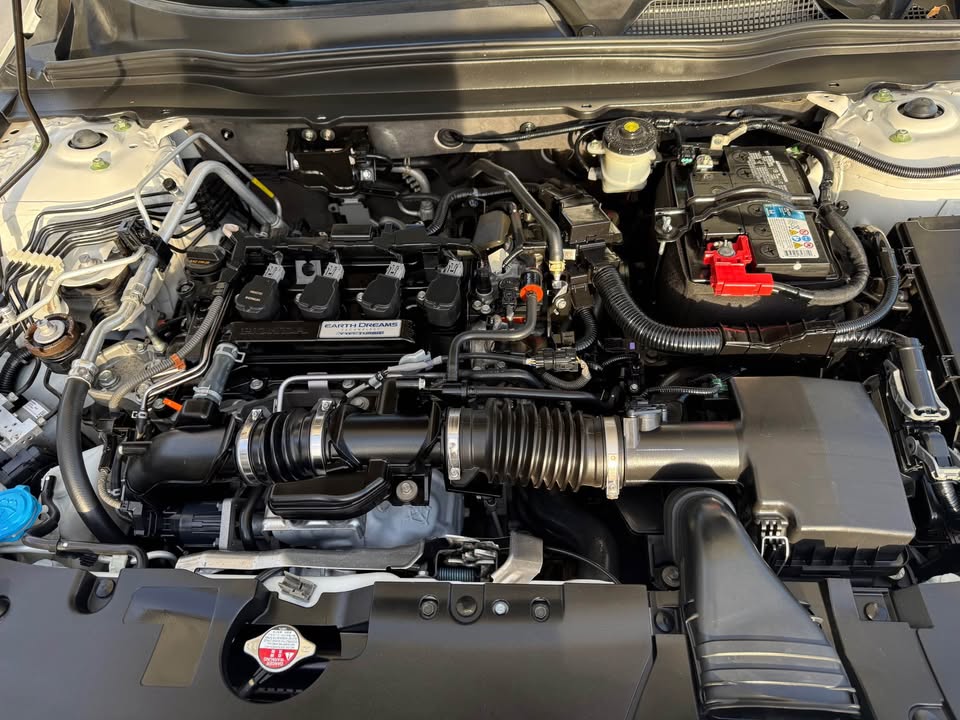
1. What the 1.5T is really built like and where it runs thin
L15B7, L15BE, L15CA: same bones, different badges
The L15B7 powers most Civic and CR-V trims from 2016–2021. L15BE shows up in the 2018–2022 Accord, tuned for extra torque. L15CA replaced both in the 11th-gen Civic and Si, starting 2022.
All three ride on the same open-deck aluminum block, direct injection, dual VTC, and a small single-scroll turbo hung off the front.
Exhaust-side VTEC only arrived with the newer L15CA. Everything else, from stroke to turbo mounting, remains nearly identical. That means most known issues follow the engine family across model lines.
Trim doesn’t always tell the story. The same CR-V can carry either the 2.4 NA or 1.5T, depending on year and region. Confirm with VIN or underhood sticker, L15 engines are marked right on the block.
How turbo torque replaced low-stress NA
The 1.5T didn’t win fans with top-end pull. It replaced Honda’s long-lived 2.0-liter NA fours in base models by offering more grunt off the line, and sharper EPA scores. Boost comes in under 2,000 rpm, holding 162–192 lb-ft deep into the rev range. The old 2.0L only cracked 138 lb-ft, and not until mid-throttle.
That low-end torque means more pressure in the chamber, earlier in the stroke, more often. Thermal load climbs. Rod bearings get squeezed harder. Margins shrink on the head gasket and ring lands, especially under light load in cold weather when fuel and oil start mixing.
Thin walls, narrow slots, and weak clamp hold
Honda gave the L15 an open-deck block with coolant slots between cylinders. That improves heat flow but costs surface area for gasket seal, especially between cylinders 2 and 3. The fire ring’s working with tight real estate and hot chambers.
Head bolts are torque-to-yield, stretching microscopically under load. Heat cycles relax the clamp. After enough pressure pulses, the head lifts just enough to let gas and coolant start trading places.
What starts as a minor seep can become a full breach, and that open-deck layout won’t forgive a second chance.
The whole engine lives closer to its limit than the old R- or K-series blocks. Every extra psi of boost, every missed oil change, every cold start with short idle builds the pressure.
2. Oil dilution: when fuel loads the crankcase instead of the wheels
Cold starts, rich fuel, and raw gas in the sump
Every winter morning starts the same: rich mix, high pressure, cold metal. The 1.5T sprays fuel directly at the cylinder wall before it’s warmed up. Instead of burning, some sticks. Rings can’t seal all of it. What slides past lands in the crankcase.
The engine’s high efficiency means it runs cool at light load. Short trips don’t get oil hot enough to evaporate that fuel. Layer by layer, it builds. Oil level creeps up. Additives deplete faster. What started as a cold-start quirk turns into a chemistry problem.
What thinned oil does when bearings get hungry
Gasoline strips viscosity. The hydrodynamic film collapses. Crank journals lose their buffer. Rods ride closer to metal. Over time, varnish and sludge start to build, especially around cam lobes and turbo lines.
The turbo’s bearings spin past 150,000 rpm and rely on a clean, thick oil wedge. Diluted oil cokes in the center housing, opens clearances, and lets the shaft wobble. Seals go next. When oil starts burning out the tailpipe, it’s often the turbo, not the rings.
Flash updates that tweak warm-up, not hardware
Honda issued TSBs for CR-V and Civic 1.5Ts starting in 2018. The changes raised idle speeds during warm-up and altered injector timing to generate more heat faster. Some HVAC settings were adjusted to favor engine temp over cabin comfort.
These updates help oil temperature climb faster but don’t change cold-weather behavior on short trips. Post-flash oil analysis from owners still shows fuel levels above safe thresholds, especially in sub-zero climates.
Which cars get hit hardest and why
2017–2018 CR-Vs and Civics in northern states and Canada appear most in oil dilution complaints. The early calibrations were richer, and many cars ran short urban loops.
Accords joined the list later, but less often, likely due to heavier load profiles and more consistent highway use.
Oil dilution risk by driving pattern and climate
| Driving pattern | Climate band | Typical trip length | Dilution risk level | Likely owner experience |
|---|---|---|---|---|
| Daily highway commute | Mild / warm | 30–60 minutes | Low | Oil stays near full, normal smell, stable UOAs |
| Mixed suburb and highway | Mild | 15–30 minutes | Medium | Slight level creep, benefits from shorter intervals |
| Stop-and-go city, light load | Cold | 5–15 minutes | High | Rising dipstick level, fuel smell in oil, rough idle |
| Short hops in severe winter | Very cold | Under 10 minutes | Very high | Severe dilution, long-term bearing and turbo wear |
3. Head gasket and block integrity: when coolant sneaks into the fire ring
Boosted pressure meets a narrow margin
Cylinder pressure rises fast on the L15. Torque hits early, long before the coolant hits steady-state temp. Between cylinders 2 and 3, the sealing surface narrows, just a sliver of MLS gasket sitting over a coolant slot.
Under sustained load, torque-to-yield bolts start giving up clamping force. Hot gas jets past the fire ring, carving metal and loosening the seal. Gasket material erodes. Over time, coolant and combustion swap places with nothing more than a faint misfire to warn you.
Small signs most owners ignore until it’s too late
Rough starts show up first, cold idle hunts, maybe a single misfire code. Coolant needs topping off, but there’s no visible leak. Then the heater fades, the temp gauge wobbles, and the exhaust smells faintly sweet.
Cylinder misfire codes start stacking: P0300, P0301, P0302, or P0303. Plugs come out looking steam-cleaned. Once vapor shows in the tailpipe, the breach is done.
Head-gasket failure stages on the Honda 1.5T
| Stage | Typical symptom set | Internal condition | Risk if ignored |
|---|---|---|---|
| Seep | Occasional rough cold start, minor coolant loss | Small coolant seep into one cylinder | Gasket erosion, growing hot spot |
| Developing leak | Frequent top-offs, heater swings, random misfire | Larger leak path, exhaust gas in coolant | Overheat episodes, accelerated head warping |
| Aerated system | Gurgling in dash, unstable temp gauge | Air pockets in head and heater core | Localized boiling, serious gasket damage |
| Full breach | Thick white steam, strong sweet smell, dead cylinder | Large coolant volume entering one or more bores | Hydrolock, bent rods, full engine replacement |
Why OEM head jobs don’t hold for long
Honda’s factory repair means a fresh MLS gasket, new torque-to-yield bolts, and a skimmed head if needed. Same gasket, same weak clamp, same open deck. Many engines fail again within 40,000–60,000 miles.
The upgrade path uses ARP studs. Higher clamping force, more consistent torque, and resistance to thermal cycling that stock bolts can’t match. Labor’s the same, but warranty goodwill usually dies when studs go in.
Stock commuter or tuned street build, both get hit
Gasket failure isn’t just for modded cars. Plenty of CR-Vs and base Civics have lost compression under stock load. But tuned Civics and Accords push the edge harder. Higher boost, more ignition advance, more heat.
The L15’s small bore and open-deck layout don’t give much buffer. It only takes a few seconds of knock or one long high-load pull on a hot day to start the leak that ends the motor.
4. Carbon buildup and LSPI: how the 1.5T strangles itself over time
Intake valves coke up fast on short runs
The 1.5T’s direct injection skips the valves. Instead of fuel washing the intake tract, only oil vapor and combustion blow-by move through. That sticky mix bakes onto the valve stems at idle and part throttle, especially on short trips and cold starts.
Over time, deposits thicken into dense black rings. Airflow drops. Swirl breaks down. At light load, combustion gets lazy, then unstable. On long enough timelines, carbon doesn’t just slow the air, it starts lighting the mix early.
What the driver feels before the light comes on
Response gets soft off the line. Torque flattens in the midrange. Some cars stumble, hesitate, or misfire under light throttle. Cold starts take longer. Fuel economy slips even without a check engine light.
Hot carbon deposits hold heat between intake and compression strokes. Under certain conditions, they spark the mixture before the plug fires. This low-speed pre-ignition (LSPI) punches rod bearings and ring lands hard, especially under boost in higher gears.
Honda’s fix is to blast the valves, not tune around them
Honda issued TSBs on valve cleaning for carbon-related misfires. The official fix: walnut blasting. The intake comes off. Each port gets sealed and blasted with fine crushed shells using a media gun. The grit strips carbon without cutting aluminum or scarring steel.
Most owners never hear about it until performance drops or codes pop. Shops see heavy buildup starting around 60,000–80,000 miles on short-trip cars, often earlier on tuned engines or those using long oil intervals.
Catch cans help, but only if built right
A baffled catch can intercepts the vapor before it hits the intake. It condenses oil and fuel mist into a drainable reservoir. Without baffles or fine filtration, most of that vapor blows right through.
Top-tier brands use micron-level filtration and pressure-tested housings. Cheaper cans may leak, clog, or fill too fast. On the 1.5T, the PCV side is the key tap-in. Mount it high, drain it often, and check hoses for freeze-ups in winter.
Shorter oil changes, fewer short trips, and top-tier gas with strong detergents also slow buildup, but nothing stops it completely once the miles rack up.
5. Fuel injectors and high-pressure failures: when spray turns to seep
2,900 psi through pinholes and paper-clearances
The 1.5T runs a two-stage fuel system. Low pressure feeds a cam-driven pump that spikes delivery to over 2,900 psi. Injectors fire straight into the combustion chamber, no margin for dirt, varnish, or water.
Each injector runs hot, cycles fast, and sprays through microscopic nozzles. One clog, one wear ridge, one out-of-spec pressure pulse throws off the cone. The mix leans out, flame speed drops, and torque goes soft. Misfire follows close behind.
When injectors drip and oil turns to solvent
Heat soak after shutdown causes internal wear. A tired injector doesn’t seal, it leaks. Unburned fuel trickles into the cylinder, strips the oil film off the wall, and slides straight into the sump.
Drivers smell it in the oil before they see it on the dash. Cold starts get rough. One plug looks too clean. Cylinder balance starts to drift. Eventually, the same injector throws repeat misfires, even with a fresh coil and plug.
Dealer TSBs, warranty fights, and labor the shop doesn’t tell you about
Honda’s issued TSBs and extended warranty coverage for select VINs. Covered or not, injector replacement isn’t cheap. The intake has to come off. High-pressure lines get replaced. Each injector gets torqued in sequence and coded to the ECU.
Shops often quote the part cost and forget to mention labor. On the 1.5T, expect over $1,000 at the dealer. Independent shops can cut that, but only if they know how to reprogram injector IDs and use new seals.
Injector fault types and owner impact
| Fault type | Mechanical cause | Symptoms a driver notices | Long-term risk if ignored |
|---|---|---|---|
| Clogged / restricted | Debris, varnish, poor fuel | Lean misfire, hesitation, power loss | Hot spots, LSPI, piston and valve damage |
| Dribbling after shutdown | Internal wear, sealing failure | Hard start, fuel smell in oil, rough idle | Severe oil dilution, ring and bore wear |
| Inconsistent spray cone | Nozzle erosion, partial clog | Roughness at certain loads, poor economy | Uneven cylinder temps, knock, gasket stress |
6. Turbocharger and wastegate: where P0299 ends the fun
The quick-spool turbo that runs out of margin
Honda’s 1.5T turbo is built for torque, not top-end. Small single-scroll housing, integrated wastegate, and an electronic actuator bolted to the side. Boost hits early and often, right off idle and into the midrange.
But size limits headroom. High EGTs and long highway pulls push the turbine to the edge. The center housing runs hot. Oil coke builds in the feed line. Any delay in pressure drop after shutdown starts the damage clock.
Underboost, overboost, and when flappers fail
Code P0299 flags underboost. Most owners see it climbing a grade or merging at wide-open throttle. Common triggers: cracked charge pipe, weak actuator, worn or sticking flapper. On the flip side, P0234 points to overboost, usually from a jammed actuator or flapper not opening fast enough.
Turbos that can’t hit targets trigger limp mode. Power drops out. CEL flashes. Codes cycle back after clears unless the actuator or wastegate hardware gets addressed.
Common 1.5T turbo-related codes and causes
| Code | ECU description | Likely root cause | Typical seat-of-the-pants symptom |
|---|---|---|---|
| P0299 | Turbo underboost | Boost leak, loose clamp, worn flapper, weak actuator | Feels flat, slow to build speed |
| P0234 | Turbo overboost | Stuck flapper, actuator command fault | Surging, possible knock, limp behavior |
| P00AF / relatives | Turbo control range/performance | Sticky linkage, calibration drift, actuator wear | Boost comes in late or unpredictably |
Honda swaps the whole unit, most shops do too
Honda doesn’t service wastegate actuators separately. If the flapper binds or actuator throws an internal code, the entire turbo assembly gets replaced. That includes the integrated actuator and housing.
Dealers quote $2,000–$3,600 depending on model. Independent shops sometimes source actuators alone, around $100 online, but it’s a risk. Used turbos from low-mile wrecks offer a middle ground but need tight inspection for shaft play and carbon scoring.
Oil quality and shutdown habits make or break it
Fuel-soaked oil hits the turbo first. When that oil thins or breaks down, the bearings overheat. Without a proper cooldown after highway runs or boost-heavy pulls, oil trapped in the center housing bakes into coke. That coke blocks flow and collapses the shaft’s oil wedge.
Even stock tunes put pressure on the wastegate. Add boost, raise temps, and the actuator gets pushed harder, sooner. One jammed flapper under load is all it takes to break the loop and trigger cascade faults.
7. Updates and lawsuits: how Honda patched the mess, and where they didn’t
L15CA vs L15B: quiet revisions, same foundation
Starting in 2022, Honda shifted most Civic trims to the L15CA. On paper, it looks familiar, same bore, same open deck, but teardown reports flagged key differences: exhaust-side VTEC, revised turbo mapping, and likely stronger rods and bearings.
Exhaust VTEC improved gas flow and heat control under load. Internal oiling tweaks and rod reinforcements suggest Honda was targeting known weak points without admitting fault. So far, the L15CA shows fewer early failures, but the mileage clock hasn’t ticked long enough to give a result.
L15B vs L15CA evolution
| Engine code | Key applications | Notable hardware / calibration changes | Reported trend so far |
|---|---|---|---|
| L15B7 / L15BE | 10th-gen Civic, CR-V, Accord | Baseline open-deck, GDI, small turbo, no exhaust VTEC | Higher volume of dilution and gasket complaints |
| L15CA | 11th-gen Civic / Si | Adds exhaust VTEC, revised turbo, likely stronger bottom end | Fewer early failures reported, result pending |
Legal heat forced some hands, but left others hanging
Oil dilution cases hit U.S. courts first. Complaints focused on crankcase fuel contamination and accelerated engine wear. Honda’s response was software flashes, warranty extensions for injectors, and quiet dealership repairs.
Canada came harder. Class actions in Quebec and British Columbia focused on head gasket breaches in Civic, CR-V, and Accord models. Some owners were reimbursed for $5,000–$7,000 repairs, but only if they stayed within strict time and mileage cutoffs.
Extended coverage often excluded repeat failures, modified cars, or late-diagnosed cases. Thousands of engines aged out of protection while still showing early-stage symptoms.
The resale hit and the shift in buyer behavior
Used car listings tell the story. Early 1.5T Civics and CR-Vs sell slower, fetch less, and draw more pre-purchase inspection requests than 2.0 NA trims. Shoppers in the know check oil level, smell the dipstick, and dig into VINs for open recalls or injector TSBs.
Dealers push the “fuel-efficient turbo” line hard, but forums show a split. Longtime Honda loyalists have drifted back to K-series cars or gone hybrid. Those sticking with the 1.5T demand proof, service history, catch cans, or head-stud receipts.
Honda’s brand reputation still holds, but the margin is thinner. The L15T era shifted the burden from the factory floor to the driver’s discipline.
8. How to make a 1.5T last: habits, intervals, and hard limits
Maintenance intervals that match the engine’s load
The factory schedule pretends this is an economy engine. It’s not. The 1.5T needs shorter intervals and earlier wear-item swaps to stand a shot at 200,000 miles.
Forget the oil minder. Fuel dilution thins viscosity long before 10,000 miles. Every 5,000 on full synthetic, no exceptions. Spark plugs start fouling early with GDI and carbon load. Waiting until 100,000 risks misfires and LSPI hits.
Factory schedule vs “1.5T survival” intervals
| Service item | Factory guidance | Aggressive 1.5T interval | Main failure risk reduced |
|---|---|---|---|
| Engine oil & filter | Up to 10,000 miles, minder | 5,000 miles, full synthetic | Dilution damage to bearings and turbo |
| Spark plugs | ~100,000 miles | 30,000–40,000 miles | Misfires, LSPI events under boost |
| Intake valve cleaning | Only with misfire DTCs | 60,000–80,000 miles | Airflow loss, carbon knock, cold misfires |
| Coolant | ~100,000 miles | 50,000 miles | Hot spots that stress head gasket |
| ATF / CVT fluid | 30,000–60,000 miles | 30,000 miles in heavy torque use | Early gearbox wear from high low-rpm torque |
CVTs and early 10-speed autos don’t handle early torque spikes well on factory fluid. Flush early. Don’t trust lifetime claims.
Driving habits that cut wear instead of corners
Short trips do the most damage. Fuel loads the oil, valves coke, coolant stays cold, and the turbo never sees a clean shutdown. At least once a week, get the car up to temp and hold 15–20 minutes at highway speed.
Avoid hard throttle until coolant passes 150°F. After boost-heavy runs, cruise easy for 30 seconds before shutting off. This gives the turbo time to shed heat and keeps oil from baking in the core.
Use premium fuel if you live in a hot climate, tow, or have a tune. Even stock engines pull timing under knock, hot carbon, light throttle, or low octane can all set it off.
Upgrades and inspections that actually buy time
If the head ever comes off, install ARP head studs. Factory TTY bolts are already soft by 100,000 miles. Reusing them sets up the same head-lift loop that cracks gaskets wide open again.
A baffled catch can cuts intake valve buildup. Drain it often, especially in cold months. Stick to high-quality synthetic oil that meets Honda spec. Avoid cheap filters, thin housing and weak bypass valves won’t hold under fuel load.
Scan the ECU monthly. Look for misfires, boost control codes, or long-term fuel trim shifts. If oil starts rising on the stick or smells like raw gas, send a sample to the lab. It costs less than a turbo rebuild.
Buyers looking at used 1.5Ts should request full records. Look for oil changes under 6,000 miles, TSBs completed, injectors or gaskets replaced, and proof of valve cleanings. Compression and leak-down tell the truth if the history doesn’t.
Sources & References
- 5 Honda 1.5 Turbo Engine Problems and How to Fix Them – The …
- Honda Accord Engine Options | Hybrid vs Gas Powertrain in Clearwater
- Turbocharged 1.5-liter Engine (EX-T and a…) – 2018 Honda Civic Sedan
- How does the Civic 1.5L Turbo engine feel in comparison to the regular 2.0L engine in the 2016 Civic? : r/Honda – Reddit
- What’s the Difference Between the Honda 1.5 and 2.0 Engine?
- Civic Si 1.5T : r/CivicSi – Reddit
- Benchmarking a 2016 Honda Civic 1.5-liter L15B7 Turbocharged Engine and Evaluating the Future Efficiency Potential of – EPA
- Drivers Say Honda’s Turbo Engines Are Failing Early And The Company Knew – Carscoops
- why does the 1.5 turbo honda engine have so many head gasket issues? – Reddit
- Honda Oil Dilution Lawsuit 2022-2024: Does Your Honda Have a Problem?
- Hamilton v. American Honda Motor Company, Inc. – Class Action Lawsuits
- Oil dilution: which model years had this issue, and did the software update fix it? : r/crv
- How bad is the Honda Oil Dilution issue, are there model years to avoid? – CarEdge
- October 22, 2018 TO: All Honda Parts & Service Managers, Advisors, and Personnel FROM: Brad Ortloff – NHTSA
- Honda 1.5 Turbo Problems – Precision Turbo Services
- How bad is the Honda 1.5T oil dilution problem? – CarEdge
- IN THE UNITED STATES DISTRICT COURT FOR THE DISTRICT OF MINNESOTA – Migliaccio & Rathod LLP
- Warranty Extension: 2017-2018 Honda CR-V: DTC P0300–P0304
- Honda Civic Turbocharger Assembly Replacement Cost Estimate – RepairPal
- 2017-18 CR-V: Software and A/C Control Unit Update – NHTSA
- Honda Canada sued over alleged head-gasket defects – Driving.ca
- Head gasket issues on 1.5 Turbo engine? : r/civic
- 1.5 Failed me. 100k miles. : r/accord
- Honda Tech Warns CR-V 1.5L Owners – Torque News
- Honda internal memo about head gaskets : r/accord
- This happened after driving the car for an hour. Is it what I think it is? : r/CivicSi
- It happened, you guys. Head gasket on my Accord 1.5L blew. – Reddit
- Class action suit in Canada or 1.5t head gasket failure : r/Honda
- Service Bulletin – NHTSA
- Honda – Expert Carbon Cleaning
- Carbon Buildup in Engines: Causes, Symptoms & Prevention – CarHub
- Service Bulletin – NHTSA
- 22-002 – NHTSA
- CCS Oil Catch Can Kit – Improved Racing
- Honda Civic Gen 10 1.5T Oil Catch Can Kit – Wunderladen Racing
- Baffled Oil Catch Can for Honda Civic 1.5 Turbo – Mishimoto
- Oil Catch Can PCV Side for Honda Civic 1.5 Turbo – Flashark
- Confirmed Fuel Injector issue : r/crv
- Service Bulletin – NHTSA
- P0299 – Turbocharger/Supercharger underboost condition – OBDeleven
- P0234 Code: Turbocharger / Supercharger “A” Overboost Condition – CarParts.com
- Turbo actuator symptoms vs turbo failure – Wisco Automotive
- Turbocharger Assembly Replacement Cost Estimate – RepairPal
- P0299 code : r/10thgenaccords
- Canada Class Action Lawsuit – Honda 1.5L Turbo Engines : r/CivicSi
- How reliable is the 1.5t in the 11th gen. : r/CivicSi
- 1.5T head gasket : r/CivicSi
- Honda Canada faces a class action over alleged head gasket failures – Reddit
- Honda class action claims vehicles contain turbo direct injection engine defect
- Honda Canada Faces Class-Action Suit Over Defective 1.5L Turbo Engines – Auto123
- Owners Furious as Honda Faces New Lawsuit for Engine Trouble – Autoblog
- HONDA CANADA – HIDDEN DEFECT – Adams Avocat
- Concerned about the “turbo” engines of 10th gen Civic hatchbacks – Reddit
- Why do so many people here hate the 10th and 11th gen’s? : r/CivicSi
- What’s the best way to prevent head gasket failure in the 1.5T? : r/10thgenaccords