
Underhood cable slips free. Shifter says Park. Transmission stays in Reverse. That’s the failure behind Ford’s 22S43 recall; just one of many Edge transmission flaws hiding behind vague symptoms and half-covered fixes.
Others crack flexplates, leak fluid, shear torque studs, or seize up from clogged filters no shop can service.
This guide breaks down every real threat from 2010 to 2026. Which years run which transmission. Which codes matter. Which repairs buy time. And which failures don’t show up until your Edge stops moving.
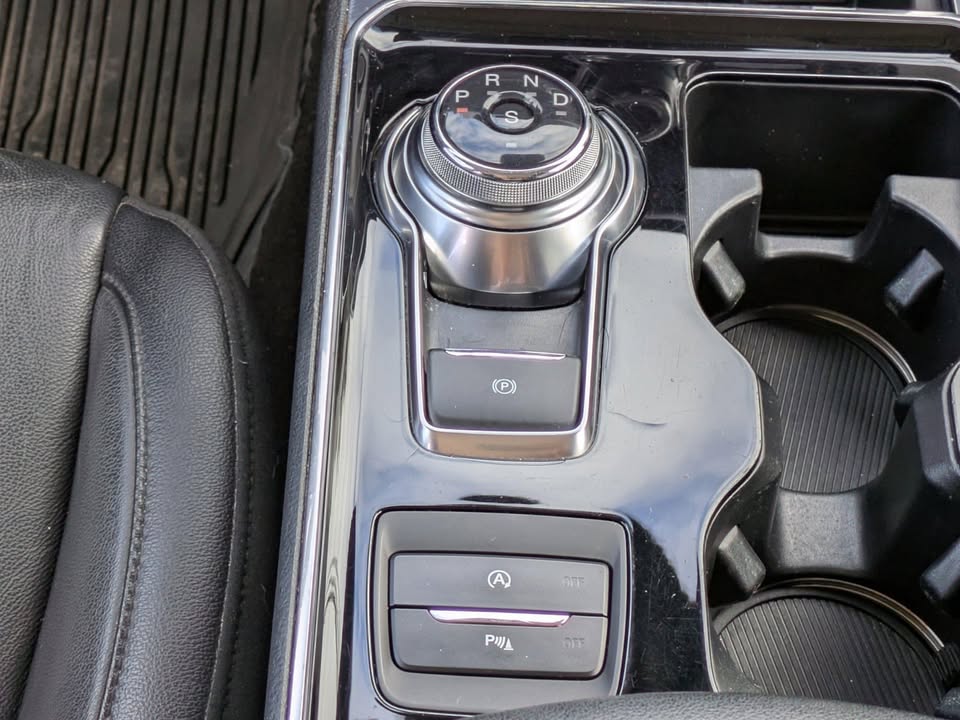
1. Where Edge transmissions break, year by year
Transmission types by model year and which ones get flagged
Ford didn’t build one Edge transmission. It built at least four, spread across 16 model years, each with its own quirks and campaign codes. The 6F50 and 6F55 ruled the early V6 years.
The 6F35 covered most of the 2.0L EcoBoost run. The newer 8F35 took over by 2019, with 8F57 added for late-run ST trims and hybrid-capable setups.
Failure types cluster tight around certain years. Some were structural; cracked flexplates, snapped torque converter studs. Others came from brittle bushings, leaking accumulators, and sealed filters no dealer could service. The table below puts the blame on a timeline.
Ford Edge transmissions by year and major transmission-related campaigns
| Model years | Engine highlight | Transmission | Key safety recalls (trans/driveline) | CSPs / TSBs most relevant |
|---|---|---|---|---|
| 2010–2014 | 3.5L / 3.7L V6 | 6F50 / 6F55 | Axle retention / halfshaft disengagement (14S10, later 20S63) | Shift quality TSBs, leak repairs |
| 2015–2018 | 2.0L EcoBoost / 3.5L V6 | 6F35 / 6F50 | Shifter cable bushing rollaway (22S43); torque converter studs (17S16, 18V390) | Flexplate CSP 22N12; 6F35 harsh shift TSBs |
| 2019–2020 | 2.0L EcoBoost | 8F35 | Start/stop accumulator fluid leak (20S49) | 8F35 shudder/buck TSB 21-2389 |
| 2021–2023 | 2.0L EcoBoost | 8F35 | Shifter bushing recall overlaps on some builds (22S43) | 8F35 internal failures, strategy updates |
| 2024–2026 | 2.0L EcoBoost (final run) | 8F35 / 8F57 | Rear camera / APIM issues tied to reversing (25S49, 25S89) | Late-life shift and software TSBs |
Why Escape and Fusion fixes matter for the Edge
Ford used the same 6F35 and 8F35 cores across multiple platforms; Edge, Fusion, Escape, C-Max. Most of the mechanical guts match, including the cable layout that leads to the bushing failure behind 22S43. Fixes or lawsuits tied to one model often preview what happens next for the rest.
But Edge isn’t just a taller Fusion. It’s heavier, sees more AWD builds, and hauls more weight. The same shifter cable that lasts 100,000 miles in a front-drive Fusion can pop loose 30,000 miles earlier on an AWD Edge that tows. Same transmission, different stress.
Why some coverage never shows up on recall lookups
Not all fixes go through NHTSA. Ford runs Customer Satisfaction Programs (CSPs) like 22N12 for cracked flexplates and TSBs like 21-2389 for rough shifting, both of which cover serious failures. But these don’t show up on standard VIN recall lookups.
Owners who only rely on Ford’s public recall page miss them entirely. Unless a dealer checks OASIS, or the vehicle gets flagged during service, CSP and TSB work stays hidden. That gap means thousands are driving around with known issues that already qualify for free repair, and don’t know it.
2. Shifter bushings that disconnect Park from the wheels
How a soft bushing cuts the cable and breaks the lock
The Edge’s shift cable ends at a Hytrel 4556 bushing. That polymer donut connects the cabin shifter to the transmission’s manual lever under the hood. Once the material softens or cracks, the cable pops off the post. The lever moves inside. The transmission doesn’t.
Heat and humidity chew through the bushing. Over time, the polymer swells, shrinks, then stops gripping. Some fail clean and early. Others hang on just long enough to trick the driver. Lever says Park. Wheels still roll.
What it feels like before and after the bushing lets go
Early signs show up in the cabin. The shifter gets sloppy. Gear positions stop lining up. Sometimes the ignition blocks a crank until you jiggle the lever. “Transmission Not in Park” lights flash without reason. The cable’s still attached, but it’s barely holding on.
When it fails, the shift lever becomes a prop. You drop it into Park, take the key, step out, and the Edge is still in Neutral or Reverse. If the parking brake’s off, the car rolls. If it’s stuck in gear, you won’t be able to shift out at all.
Ford’s fix under recall 22S43 and what the dealer replaces
Ford’s official repair swaps the failed bushing, adds a hard plastic cap to block moisture, and adjusts the shift cable tension. That cap wasn’t on the original design. Now it’s the key to sealing the fix. No reflash, no transmission drop, just a mechanical reset with updated parts.
Where the lawsuits say Ford cut corners
Attorneys argue Ford knew early Hytrel bushings wouldn’t hold in Gulf Coast heat or southern humidity, yet kept using them past 2017. The first recall was narrow; only some models, some plants. Many failures didn’t qualify.
By the time 22S43 widened coverage, some owners had already paid out of pocket or suffered rollaway damage. If your Edge had a pre-2022 bushing job but now shows 22S43 as open again, Ford expects a second round. That cap wasn’t added the first time. Now it’s mandatory.
3. Cracked flexplates and torque converters that drop drive mid-trip
When Ford covers cracked flexplates under CSP 22N12
The 2015–2018 Edge with the 2.0L EcoBoost and 6F35 transmission carries a known risk of flexplate failure.
Ford issued Customer Satisfaction Program 22N12 to inspect and replace cracked flexplates, but only under specific conditions. Coverage doesn’t show on public recall tools. It hits the dealer OASIS system when the VIN qualifies.
Flexplate failure here isn’t theoretical. Enough owners lost drive that Ford authorized a full replacement package; flexplate, transmission pump, and torque converter; if the crack is confirmed by borescope. Most owners only hear about this program when their Edge rattles or stops moving.
What a cracked flexplate sounds like before it lets go
Idle in Drive starts buzzing. The bellhousing ticks like a loose heat shield. Noise ramps up when shifted but smooths out in Park or Neutral. That’s the plate starting to crack around the crank bolts.
Once the fractures spread, it vibrates through the chassis and ends startup torque. Failures don’t give a second warning.
Some cracks stop the Edge from starting altogether. Others let you drive, with just enough rattle to fool a tech into chasing motor mounts or exhaust hangers. The only way to catch it early is a borescope through the starter hole.
What Ford replaces, what they won’t, and where coverage stops
Once cracks are confirmed, Ford approves a bundled repair. No piece-by-piece swap. No single fix. All three go: plate, pump, converter.
CSP 22N12 flexplate coverage levels
| Odometer at repair | Time from warranty start | Ford contribution to repair |
|---|---|---|
| 0 – 100,000 miles | ≤ 10 years | 100% parts and labor |
| 100,001 – 120,000 miles | ≤ 10 years | 50% parts and labor |
| Any mileage | After Feb 28, 2023 | Program expired – owner pays |
If your mileage is over 120,000 or the in-service date is too old, you’re out. No appeal, no goodwill. Ford doesn’t reopen the program or make exceptions for late failure.
Torque converter studs that shear clean off (17S16 / 18V390)
Some 2017–2018 2.0L EcoBoost Edge models came with converters that were welded wrong from the start. The studs holding the converter to the flexplate were weak or misaligned. Under normal load, they shear. When they do, the engine revs like it’s in Neutral. The car won’t move in any gear.
The converter doesn’t just slip, it disconnects. If it breaks at speed, you lose power immediately. If it happens while parking, the shifter still works but nothing engages.
Ford’s recall campaign 17S16 / 18V390 replaces the entire torque converter and bolts. No diagnostics, no delay. One confirmed failure is enough.
4. Eight-speed failures Ford never recalled
What the 8F35 was built to fix, and where it still falls short
The 8F35 arrived in the 2019 Edge promising smoother shifts and better efficiency than the aging 6-speed. It packed closer gear spacing, faster downshifts, and a fresh calibration map meant to end lag in city driving. When it’s working, shifts are crisp, invisible below 4,000 rpm, and consistent under load.
But even on healthy units, early builds run hot and sometimes hunt gears in stop-and-go. Once the strategy misfires or hard parts wear, symptoms stack up fast.
Bucking under 35 mph and TSB 21-2389
Ford issued TSB 21-2389 for 2019–2021 Edge models that lurch, surge, or buck under light throttle. The issue sits in the PCM and TCM logic. Line pressure and solenoid timing drift out of sync. The result feels like driving through speed bumps at 20 mph, with no bumps.
The fix isn’t mechanical. It starts with pulling the 13-digit solenoid strategy code etched on the case, then flashing both modules. After the update, the system relearns shift points over the next few days of mixed driving. No parts change, just reprogramming and road time.
What breaks inside the 8F35, and why it takes the whole unit down
Planetary carrier failures start with a faint buzz. The No. 1 carrier sheds its washer, sending metal through the valve body and converter. That’s when downshifts slam, certain gears vanish, and the Edge drops into limp mode. No rebuild option. Internal filter’s sealed. Once it plugs, pressure tanks.
Some dealers catch it on time with fluid pulls. Most don’t. When the clutches start to slip, it’s already too late. No warning light until the damage is baked in.
Common 8F35 issues and Ford’s current stance
| Component / concern | Typical Edge years | Main symptom at the wheel | Ford response type |
|---|---|---|---|
| PCM/TCM calibration | 2019–2021 | Shudder, buck, surge < 35 mph | TSB 21-2389 reflash + adaptive relearn |
| No. 1 planetary carrier | 2019–2025 | Clicking/buzz, loss of certain gears, limp | Internal part updates; no formal recall |
| Torque converter shudder | 2019–2025 | Vibration on light throttle, highway speeds | TSB-based repairs, fluid changes |
| Internal “lifetime” filter | All 8F35 | Late harsh shifts, overheat, failure | No service procedure; fluid only |
How fluid changes buy time, and why flushes don’t
Ford calls the 8F35 fluid “lifetime” but won’t commit to a mileage. Real-world data shows filter clogging and clutch dust around 50,000 miles in heavy-use builds. A basic drain-and-fill every 30,000–50,000 miles keeps pressure stable and shift quality clean.
Power flushes on high-mileage units push debris into the valve body and end the pump. Stick to gravity drains; 3 to 4 quarts at a time, repeated if needed. On a sealed filter box, fluid’s all you’ve got. No second chances.
5. Drivetrain defects that mimic full transmission failure
Halfshaft and axle bracket defects that end power and Park
A popped halfshaft looks like a dead transmission. The wheels lose power. The car won’t hold in Park. But the internals are fine; the shaft just slid loose.
Recall 14S10 hit 2012–2014 Edges built without a strong enough circlip to retain the left halfshaft in the transaxle. If the shaft walks out, the Park pawl can’t lock the diff. You shift into Park, but the wheels still turn.
Ford followed up with 20S63 for 2014–2016 builds, this time to replace weak axle support brackets that crack and let the shaft shift under load.
Both recalls fix the retention, not the gearbox. But to the driver, the failure feels the same: no drive, no hold, no warning.
Major Edge drivetrain recalls that mimic transmission failure
| Recall code | Model years affected | Component at fault | Driver symptom |
|---|---|---|---|
| 14S10 | 2012–2014 Edge | Halfshaft circlip retention | Sudden loss of drive, rollaway in “Park” |
| 20S63 | 2014–2016 Edge | Front axle support bracket | Clunk, loss of power to wheels |
| 20S49 | 2019–2020 Edge | Start/stop accumulator endcap | Fluid leak, slipping, possible fire |
Accumulator leaks that drop pressure and throw codes
In 2019–2020 Edges, the start/stop accumulator was built with missing or loose endcap bolts. Once pressure builds, fluid leaks from the side of the unit, not from a seal or hose. Owners report delayed engagement, hard shifts, and eventually, full no-move.
Ford opened recall 20S49 to replace the whole accumulator assembly. Left unchecked, fluid loss can starve the pump and trigger overheating or a dashboard fire warning. The accumulator sits buried and doesn’t leak visibly until the pan’s wet. By then, pressure’s already gone.
Rearview camera and shift logic tied to safety recalls
On 2024–2026 Edges, camera failures during Reverse triggered recalls 25S49 and 25S89. The software in the APIM glitches or freezes, leaving the screen black or stuck. Some owners saw a full delay between shifting into Reverse and the image coming on, long enough to back into traffic blind.
While not mechanical, these software faults cross into drivetrain safety. When tied to poor Park logic or bushing-related faults, they compound risk. Ford sometimes pushes the fix over-the-air. But any Edge in the shop for transmission complaints should have the update flashed on the spot.
6. Park-detect failures that fake transmission faults
How the Edge decides it’s in Park, and when it’s wrong
Modern Edge models don’t just lock mechanically. They also have to agree electronically. A Park command passes through five checkpoints: the shifter’s ground switch, the Transmission Range Sensor (TRS), the Powertrain Control Module (PCM), the Body Control Module (BCM), and the Instrument Panel Cluster (IPC).
If any signal drops, the system throws a “Transmission Not in Park” message, even if the lever looks right.
This failsafe kicked into high gear once 22S43 showed how often the mechanical side lets go. Now the electronics backstop the shifter, but those signals fail too, especially on low battery or corroded grounds.
What shops check before calling it a dead transmission
The “Not in Park” fault triggers panic, but smart techs start with voltage and sensor data. Most problems come from signal loss, not internal failure.
Typical diagnostic sequence for “Transmission Not in Park”
| Step | Check | Tool / signal watched | What “good” looks like |
|---|---|---|---|
| 1 | Battery / charging voltage | DVOM | ≥ 12.6 V off, ~13.5–14.5 V running |
| 2 | Park Detect PID in cluster | Scan tool (IPC data) | PID toggles when shifter in/out P |
| 3 | TRS (range) PID in PCM | Scan tool (PCM data) | Range state matches lever position |
| 4 | Shifter cable & bushing | Visual under hood | Bushing intact, cable seated |
| 5 | Shifter switch ground signal | Back-probe shifter harness | Ground present only in Park |
If the Park PID doesn’t toggle and the bushing’s fine, the issue usually lives in the switch or cable. If voltage drops below spec, the whole chain gets noisy; flickering warnings, delayed unlock, or no-start.
When a reflash clears it, and when hardware has to come out
If all signals check out, the next step is software. Dealers often reflash the IPC, BCM, or PCM together, especially on 2021+ Edge models where firmware updates patch communication lag. One failed module can block the rest from syncing.
But if the lever’s worn, or the cable’s stretched, no software will fix the miss. Once the internal detents lose hold, the switch can’t ground cleanly, and the fault keeps coming back. Every Edge still running the old-style bushing is treated as unsafe until 22S43 is confirmed complete. No exceptions.
7. Lawsuits that pushed Ford to expand coverage
Where the Edge fits in Ford’s broader transmission legal fights
The Edge never carried the DPS6 dual-clutch, but it shares legal DNA with the rest of Ford’s troubled lineup. The 6F35, 8F35, and 10R80 automatics all landed in court for lurching, hesitation, and early failure.
In each case, Ford was accused of downplaying known defects and limiting payouts through quiet CSPs instead of full recalls.
Edge wasn’t named in the DPS6 class action, but that case set the template; payouts for repeat failures, compensation for denied service, and buyback options under lemon law. Once that precedent landed, attorneys turned to conventional automatics like the 6F35.
What PowerShift settlements tell us about Ford’s approach
Under the DPS6 terms, owners got cash for repeat visits, major part replacements, or even being turned away. That framework now shapes what Edge owners ask for when 8F35 or bushing repairs don’t hold.
Cash tiers included:
• $50 per flash starting from the third visit (capped at $600)
• $2,000 to $4,650 for repeated hardware failures or rebuilds
• $20 turn-away fee when a dealer denied help under warranty
• Buyback or arbitration if the vehicle failed more than twice for the same issue
Ford fought to cap payouts and dodge buybacks where possible. Most owners who won showed repair records, internal memos, or multiple RO numbers tied to the same failure.
When owners should go beyond recall repairs
Recalls patch single points of failure. They don’t cover recurring breakdowns. If your Edge has had multiple flexplate replacements, two or more bushing repairs, or a transmission teardown that didn’t hold, it moves out of recall territory and into lemon law or class-action scope.
Every denied claim, out-of-pocket repair, or closed CSP with ongoing symptoms builds a stronger case. The longer the issue persists after Ford claims it’s fixed, the better the odds of legal relief. Some Edge owners never hear about their rights unless a second or third failure forces the issue.
8. How to track recalls and keep your Edge out of the bay
Why clean VIN checks don’t tell the full story
Ford’s public recall tool only flags open safety recalls. It skips CSPs, closed campaigns, and TSBs tied to real failures. Same for the NHTSA VIN tool. A clean report doesn’t mean your Edge is safe; it means it hasn’t had the right shop plug in a dealer scanner and run a full OASIS check.
Used buyers get hit hardest. If a dealer closed a campaign years ago but skipped the fix, that VIN looks clear online. The only way to confirm program status is through Ford’s internal history.
Where to check a Ford Edge for recall and program history
| Tool / source | Who can access it | What it shows |
|---|---|---|
| NHTSA VIN lookup | Public | Open federal safety recalls only |
| Ford owner website / app | Registered owner | Open recalls + some field actions |
| Dealer OASIS report | Dealer service department | Full recall, CSP, and TSB history by VIN |
| Carfax / commercial lookup | Dealers, fleets, some owners | Reported recall completions, service visits |
Stack the work to avoid repeat trips and tow bills
Edges built between 2015 and 2021 often have multiple overlapping campaigns. A smart shop will knock out the 22S43 bushing, run a 22N12 flexplate check, flash the 8F35 strategy update, and inspect for bracket or accumulator leaks, all in one visit.
Some dealers won’t suggest this unless asked. Any recall tied to rollaway, no-drive, or fire risk should be pushed to the front of the queue. Don’t waste shop time on software updates if the vehicle can’t hold Park or hold fluid.
Maintenance steps that outlive the recall paperwork
Recalls buy you time. Preventive service buys you miles. Start with 30,000–50,000-mile fluid changes on the 6F35 and 8F35, especially in hot climates or stop-start traffic.
Watch for early shudder, delayed shifts, and wet bellhousings. Those catch the failure before the TCM goes limp or the clutches burn.
If the Edge starts flaring between gears or stumbles in low-speed crawl, the strategy’s already slipping. Recalls don’t catch wear. They reset risk. Everything after that falls on the owner, or the second one, when the paperwork’s long gone.
Sources & References
- Recall – Ford
- 2018 Ford Edge Recalls & Safety Notices | Kelley Blue Book
- NEW VEHICLE DEMONSTRATION / DELIVERY HOLD … – nhtsa
- Ford Shifter Cable Bushing Recalls Failed, Alleges Lawsuit – Autobody News
- Defect in Certain Ford Vehicles Causes Unexpected Rollaways …
- Safety Recall Notice 18S10 / NHTSA Recall 18V-214 – State of Alaska
- Ford Edge Recalls | Cars.com
- August 26, 2022 TO: All U.S. Ford and Lincoln Dealers … – nhtsa
- Ford 6F35 Transmission Lawsuit: Affected Models and Legal Help …
- TECHNICAL SERVICE BULLETIN 8F35 Transmission … – nhtsa
- Ford transmission issues don’t buy – Reddit
- 2021 Ford Edge Problems & Complaints – The Lemon Law Experts
- IF YOUR FORD EDGE TRANSMISSION IS SHUDDERING AND JERKING… – Reddit
- Did Ford Escape Recall 22S43 Cause Transmission Failure?: HOW TO ESCAPE – YouTube
- 2014 Ford Edge Recalls & Safety Notices | Kelley Blue Book
- Ford Edge Axle Shaft Recall – Asbury Automotive
- 2014 FORD Edge Recalls, Complaints and Investigations – The Center for Auto Safety
- Ford Edge Transmission Recall – Asbury Automotive Group
- Find Existing Ford Edge Car Recalls – Dealer Rater
- Ford Recalls 272,645 Vehicles to Fix a Transmission Issue – Motor Illustrated
- Ford’s Park Detect System – Gears Magazine
- How to Fix Your Ford Fusion Transmission Not in Park: Expert Tips and Solutions!
- How To Fix “Transmission Not In Park” Warning In Ford Fusion – Causes & Fixes – YouTube
- Ford Transmissions Class Action Lawsuit – Wallace Miller
- The Ford 10 Speed Transmission Lawsuit: What You Need to Know – Quill and Arrow Law
- Ford 6F35 Transmission Mass Action Lawsuit Dismissed – Handy Law PC
- Submit a Claim – Ford PowerShift Transmission Settlement
- 1 CONSUMER ARBITRATION PROGRAM FOR FORD MOTOR COMPANY POWERSHIFT DPS6 TRANSMISSION FAQs
- Is There a Recall on My Ford Vehicle?
- Recalls Look-up by VIN (Vehicle Identification Number)
- 2010 Ford Edge Recalls & Safety Notices | Kelley Blue Book
- Ford Recall: Transmission Shift Lever Indicator Shows In Park Gear When Not Securely In Park – RepairPal
- Ford Edge Recalls | RepairPal
- Vehicle Safety Recalls Week – NHTSA
- Check for Recalls: Vehicle, Car Seat, Tire, Equipment – NHTSA
- GOV Recalls – GSA
- Ford Recalls | Ford Owner Support
- Ford Recall Statistics [2025] – Woodard Injury Law