
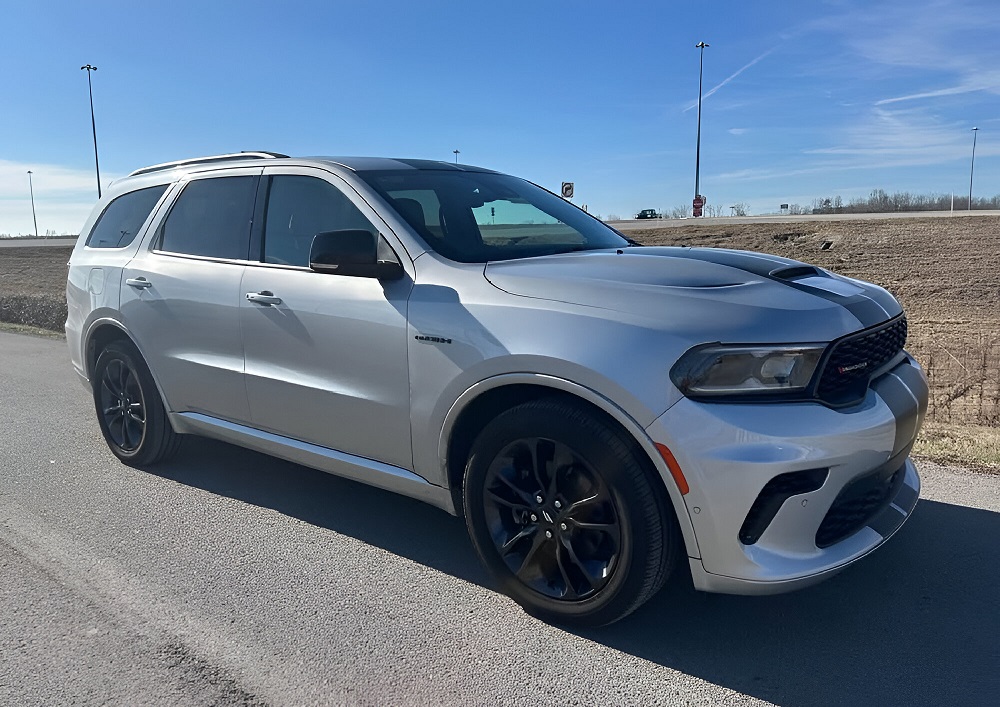
Hitch slams. Jack folds. Back bumper drops under the tongue weight, and just like that, the Durango’s in the fight. Dodge didn’t shape this thing like a crossover.
Longitudinal layout, big cooling, V8 torque, and hardware lifted straight out of the SRT bin. But not every trim’s built to pull heavy. The numbers on the brochure only count if the right box got ticked at the factory.
This guide cuts through the badges and ad copy. What Trailer-Tow Group IV really adds. How Tow N Go reaches 8,700 lb with the same 5.7 HEMI.
Where the limits show up first, tongue weight, axle load, or tire index. And why the Durango might be the last muscle SUV still built to drag a real trailer.
1. Durango towing fundamentals: where structure, numbers, and factory options collide
Longitudinal layout changes how this SUV pulls weight
Durango rides on a rear-drive unibody, same bones as the old Mercedes ML and Grand Cherokee. No sideways engine, no CVT, no FWD fallback. Torque heads straight back through a lengthwise driveshaft, not sideways through a cramped transaxle. That layout holds up better under trailer load.
Wheelbase stretches to 119.8 inches, and the stance is wide. Both matter. That long wheelbase reduces trailer sway and squat. The wide track keeps side loads from pushing the body around in crosswinds.
Load that hitch properly, and you’re planting weight right over the driven wheels, more grip when pulling away, not less.
Towing numbers change fast when the wrong box gets skipped
Dodge quotes up to 8,700 lbs, but that’s not standard. V6 trims top out at 6,200. HEMI models start lower and need the right axle and cooling to climb. Tow N Go or SRT parts are mandatory for the full figure. Miss a box, and you lose 1,000–3,000 lbs of rating, even with a V8.
Payload limits cut you down further. Most Durangos carry 1,200 to 1,600 lbs max. A 700–870 lb tongue load from a heavy trailer eats half or more. Add three adults and weekend gear, and you’re already flirting with the red.
Dodge Durango tow ratings by powertrain & package (recent model years)
| Engine / Trim | Tow Equipment | Drivetrain | Max Tow Rating |
|---|---|---|---|
| 3.6L Pentastar (SXT/GT/Citadel) | Trailer-Tow Group IV | AWD/RWD | 6,200 lb |
| 5.7L HEMI (R/T, Citadel) | No tow pkg / light towing | AWD/RWD | ~5,000–6,200 lb* |
| 5.7L HEMI (R/T, Citadel) | Trailer-Tow Group IV | AWD/RWD | 7,200–7,400 lb |
| 5.7L HEMI R/T Tow N Go | Tow N Go package | AWD | 8,700 lb |
| 6.4L SRT 392 | Performance tow hardware | AWD | 8,700 lb |
| 6.2L SRT Hellcat | Performance tow hardware | AWD | 8,700 lb |
| 3.0L Hurricane I6 (expected) | Heavy-duty tow hardware | AWD/RWD | 8,700+ lb (target) |
| *Some HEMI trims without the full tow package are limited by software, hitch rating, or cooling. | |||
A hitch doesn’t mean you have the tow package
Plenty of Durangos wear a hitch. That doesn’t mean they’re built to tow. Factory Trailer-Tow Group IV includes more than a mount, it adds cooling, shocks, wiring, and a higher GCWR.
Tow N Go builds on that with SRT-grade gear. Some trims had these packages standard, others offered them as options. The badge won’t tell you. The window sticker will.
Buyers chasing numbers need to check the build sheet. Look for the 4/7-pin wiring, load-leveling shocks, heavy-duty cooling. If those parts aren’t listed, the 8,700-lb dream’s off the table. You’re capped lower, and pushing past it risks overheating or worse.
2. Powertrains, shift maps, and cooling setups that hold the weight
Which engine pulls clean, which one runs hot, and what’s coming next
The 3.6L Pentastar V6 handles 3,500 to 5,000 lb loads without drama, small boats, ATVs, pop-up trailers. Push it to 6,200 lb and you’ll hear it working. RPM climbs, shifts stretch, and uphill momentum fades fast with a headwind or a full cabin.
The 5.7L HEMI V8 hits the sweet spot. You get 360 hp and 390 lb-ft early in the rev range, and Tow mode disables the cylinder deactivation system so it stays in full V8 mode. Paired with Group IV or Tow N Go, it’s built to pull long and hard without bogging down or cooking fluids.
6.4L SRT 392 and 6.2L Hellcat trims both carry the full 8,700 lb rating. They don’t tow more, but they do it with more overhead, more torque, more gear holding, more cooling.
Hellcat trims use a supercharger to bring torque early and often, which matters on steep grades or at altitude. Fuel economy takes the hit.
The new 3.0L Hurricane I6, expected to phase in during 2026, brings twin turbos, up to 500 lb-ft, and better mpg than the HEMI. It’ll land with an 8-speed and heavy-duty cooling.
Early factory data points to 8,700+ lb capability with the right axle and package, though final figures will ride on calibration and trim.
Durango engines and tow-relevant specs
| Engine | Power / Torque | Typical Tow Rating w/ Tow Pkg | Best Use Case Under Load |
|---|---|---|---|
| 3.6L Pentastar V6 | 295 hp / 260 lb-ft | 6,200 lb | Light campers, jet skis, small trailers |
| 5.7L HEMI V8 | 360 hp / 390 lb-ft | 7,200–8,700 lb | Travel trailers, enclosed haulers |
| 6.4L SRT 392 V8 | 475 hp / 470 lb-ft | 8,700 lb | Heavy loads, high-speed long-distance |
| 6.2L Hellcat V8 | 710 hp / 645 lb-ft | 8,700 lb | High-altitude or max-load steep grades |
| 3.0L Hurricane I6 | ~420–510 hp / 468–500 lb-ft | 8,700+ lb (target) | Towing with better MPG and cooler temps |
Eight forward gears that carry the load without overheating
All Durangos use the TorqueFlite 8-speed automatic. It’s not one gearbox, it’s a lineup tuned by engine and load spec. V6 versions get taller gearing for mpg. V8s use shorter ratios for torque multiplication, especially in 1st, 2nd, and 3rd. The box is built strong and runs cool with the right tow package.
Tow mode rewrites the shift logic. Upshifts come later. Downshifts happen sooner. The converter locks earlier to reduce slippage and drop heat. You feel it on downhill grades, the truck holds gear, even taps the throttle to avoid a runaway. Ignore Tow mode, and you’ll see temps climb faster under load.
Long pulls under load should show tight converter lock, minimal gear hunting, and consistent fluid temps below 230°F. If you’re hitting 240°F+, the trans cooler may be missing or airflow’s blocked, either way, that setup won’t hold grade under max trailer weight.
What overheats first when the trailer’s heavy and the weather’s hot
HEMI and SRT tow setups come with upgraded thermal management. That includes high-capacity radiators, dedicated external trans coolers, and oil coolers that can take sustained abuse. Group IV includes these by default; base trims with a hitch may not.
Critical temps, transmission, engine oil, and coolant, are visible on Performance Pages in most V8 models. On long grades or desert pulls, it’s the trans that spikes first. Oil usually follows, especially if downshifting is aggressive and the engine’s holding high revs.
Tow N Go and SRT trims use higher-output cooling fans and larger fluid reservoirs. That buys you more run time before fluid shear or heat soak begins. If the needle creeps and doesn’t fall fast after cresting a hill, you’re either over the limit or missing the right cooling hardware.
3. Factory tow packages: what’s bolted in and what’s just branding
Group IV gets the job done without the flash
Trailer-Tow Group IV doesn’t chase performance, it nails the basics. You get a Class IV hitch, 4/7-pin wiring, upgraded engine and trans cooling, 180-amp alternator, and mechanical load-leveling shocks in the rear. It’s a quiet work setup, built to survive heat and haul without rear sag.
Those rear shocks matter. They use internal valves and fluid transfer to stiffen as the load presses down. That keeps the back end level without active dampers or air. It’s a simple, mechanical fix that works. No wiring. No waiting.
Group IV is optional on GT, R/T, and Citadel trims, often bundled or pre-equipped on dealer lots. Without it, HEMI trims lose the full rating. Miss it, and you drop straight to the soft limits, less cooling, less payload, no self-leveling.
Tow N Go brings SRT guts to a 5.7
Tow N Go rewires the R/T. You still get the 5.7, but everything else changes. Suspension, exhaust, cooling, rear diff, brakes, all pulled from the SRT bin. That’s how it unlocks the 8,700-lb rating without needing the 392.
Bilstein active damping replaces the mechanical shocks. You get firm compression under load, quicker rebound to stop trailer bounce, and less sway on uneven ground. The system reacts fast, especially in Tow mode, and it tightens up feel when empty.
You also get Brembo 6-piston front and 4-piston rear brakes, a standard eLSD, louder exhaust with active noise cancellation, and SRT-style drive modes. Everything’s calibrated for mixed duty, Tow, Sport, Snow, and Track. Same hardware, different behavior.
Tow N Go started in 2021. If you’re buying used, confirm the build. Some R/Ts have the look without the load rating.
Hardware difference, rating jump
| Feature | Trailer-Tow Group IV | Tow N Go (R/T, Citadel, SRT) |
|---|---|---|
| Max tow (5.7 HEMI) | 7,200–7,400 lb | 8,700 lb |
| Hitch / Wiring | Class IV + 4/7-pin | Class IV + 4/7-pin |
| Cooling | HD engine & trans cooling | HD cooling + performance mapping |
| Brakes | Heavy-duty standard | Brembo 6-piston front / 4-piston rear |
| Rear Suspension | Load-leveling mechanical shocks | Bilstein active damping |
| Rear Diff | Open or basic LSD | Electronic limited-slip (eLSD) |
| Drive Modes | Normal, Tow, Snow | Tow, Snow, Sport, Track |
| Performance Pages | Not guaranteed | Standard or commonly included |
4. Brakes, suspension, and control systems that hold 8,700 lb in check
Big brakes stop big weight, Brembos aren’t just flash
Weight brings heat. At 65 mph, an 8,700-lb trailer means you’re losing over 200,000 ft-lb of energy every time you brake hard. Standard setups can’t dump that heat fast enough. Fade creeps in. Pedal feel goes soft. Stopping distance stretches.
Tow N Go and SRT models run Brembo hardware, 6-piston front calipers, 4-piston rears, and vented rotors big enough to swallow a dinner plate. These setups survive long downhill pulls without cooking. Pad wear stays even, pedal pressure holds up, and repeated stops don’t feel like roulette.
The stock heavy-duty brakes in Group IV builds are solid, but not in the same league. They’ll hold up on rolling terrain or short trips. They fall off when you’re running hard, loaded heavy, or descending fast.
How suspension keeps the trailer in line, not just level
Trailer sag wrecks balance. It lightens the nose, lifts steering grip, and lets the rear float. Group IV fights it with mechanical load-leveling shocks. As the rear compresses, internal valving increases resistance. No sensors. No wiring. Just pressure and rebound.
Tow N Go swaps in Bilstein active damping. These dampers read vehicle motion and tighten up instantly. Under trailer load, they stiffen compression and control rebound to stop bounce and sway. They also adapt in real-time, whether you’re turning, braking, or towing through chop.
When empty, ride quality shifts. Group IV rides softer, especially on crumbling pavement. Tow N Go trims feel sharper, especially on 20-inch wheels and low-profile tires. You feel it over expansion joints and rough patches.
Stability systems don’t just watch, they intervene
Every Durango with a tow package gets ESC with Trailer Sway Control. It reads yaw and steering angle. If the trailer starts walking, it trims throttle and taps individual brakes to straighten the line. You don’t feel it fire, but you notice the rig straighten when it does.
Tow N Go adds AWD torque split logic and eLSD tuning that reacts to load. In Tow mode, the system favors neutral torque balance. Snow and Track shift that bias, but the diff keeps the loaded axle hooked up. On a slick grade with a loaded trailer, that keeps you moving instead of spinning.
All of it depends on correct weight, correct tires, and correct trailer balance. No system fixes a misloaded rig. ESC buys time. Tires and hitch setup finish the job.
5. Payload math, tongue weight, and where Durango tow setups hit the wall
Max tow rating means nothing if payload’s already gone
Most Durangos fall between 1,200 and 1,600 lb of payload. That includes people, cargo, fuel, and tongue weight. A loaded trailer with a 10% tongue can eat over 870 lb, more than half your capacity, before a single passenger climbs in.
Axle load becomes the choke point. Rear GAWR on R/T and SRT trims runs around 3,900 lb. Add a loaded trailer, a full cabin, and gear in the back, and you’re brushing the limit, fast.
Weight ratings aren’t suggestions. Blow past payload, and braking, steering, and cooling all fall off. Most Durango owners hit that wall long before hitting 8,700 lb on the hitch.
Example R/T Tow N Go weight math
| Rating / Load Item | Example Value |
|---|---|
| GVWR | 7,100 lb |
| Curb Weight (approx.) | 5,500 lb |
| Payload Rating | 1,600 lb |
| Max Trailer Rating | 8,700 lb |
| 10% Tongue on Max Trailer | 870 lb |
| Payload Left (People/Gear) | 730 lb |
Weight distribution hitch isn’t optional past 5,000 lb
Dodge doesn’t leave it vague, WDH is required for heavy trailers. Anything past 5,000 lb needs one to stay level, keep steering crisp, and restore front-axle grip.
WDH bars shift tongue weight forward. That load lands on the front axle and trailer axles instead of squashing the rear bumper. That restores brake balance and keeps headlights aimed where they belong.
No WDH means light steering, early brake fade, and tail sag. Even a well-packed trailer feels sketchy without one once you pass 5,000 lb.
Typical WDH recommendations for Durango
| Trailer Weight Range | WDH Recommendation | Notes |
|---|---|---|
| Up to 3,500 lb | Optional | Short trailers, well-balanced load |
| 3,500–5,000 lb | Strongly recommended | Boxy campers, wind-sensitive loads |
| 5,000–8,700 lb | Effectively required | Needed for front axle recovery |
Common mistakes that overload the rig before the trailer does
Biggest failure point? Forgetting the math. A family of four, a cooler, a dog crate, and a tongue-heavy trailer can put an R/T over payload with margin to spare.
Running max tow without WDH is next. Nose lifts, brakes stretch, and the rear wanders over every expansion joint.
Then come tire swaps. Too many owners throw on oversized wheels or switch to LT tires without checking load index. Wrong sidewall, wrong pressure, and you’re running a 7,000-lb setup on tires built for 5,200.
6. Electronics and driver aids that actually affect towing
Blind-spot system stretches to fit your trailer, but only to a point
Durangos with the trailer package plug into the 7-pin and trigger trailer length detection. Once active, the blind-spot system extends its coverage based on a fixed length assumption, usually up to 30 feet.
It’s not visual tracking. The system uses radar and zone extension logic to widen the alert field. It won’t detect goosenecks or ultranarrow campers cleanly. But for standard 20–28 ft bumper-pulls, it gives solid side awareness during lane changes.
When it misses, it’s usually due to tongue length, bike racks, or trailers that sit too high and throw radar reflections off-target. Best use case is factory-height setups with conventional weight and length.
Built-in trailer brake controller holds smooth, proportional pressure
Factory units are proportional controllers, not time-delay. They apply brake force to the trailer based on how hard you press the pedal, not just how long you’ve been braking. That keeps trailer push in check and avoids lurchy stops.
Gain settings adjust trailer brake force manually. You can fine-tune for different trailer weights or brake setups. Manual lever lets you test trailer-only braking or stabilize sway on the fly.
These controllers work best with electric drum or disc brake setups. Surge brakes and electric-over-hydraulic may need adapters or tuning. ABS and ESC coordination stays active when braking hard, keeping the whole rig stable under pressure.
Performance Pages show what temps and forces matter under load
On SRT and Tow N Go trims, Performance Pages show transmission temp, coolant temp, oil temp, gear selection, G-loads, and throttle data in real time. Not gimmicks, critical data when towing heavy.
Watch trans temps on long grades. Anything creeping past 230°F means airflow’s low or the converter’s slipping. Oil temp over 260°F is a sign the system’s struggling. Gear selection shows how long the box holds under Tow mode logic.
Drivers pulling near the limit use this info to schedule fluid changes early, especially if temps run hot and downhill engine braking does most of the work. The system doesn’t stop you from overheating, but it gives you the numbers to prevent it.
7. Durango vs. the rest: where it holds, where it folds under serious tow loads
Explorer ST moves quicker, but loses grip under real weight
The Explorer ST runs a twin-turbo V6 with 400 hp and a fast AWD system. It feels light and sharp when empty. Towing changes that. It’s front-biased, with a softer rear and lighter curb weight. That layout works fine under 4,000 lb. Past 5,000, it starts to walk.
Tow ratings stop at 5,600 lb with the Class III package. No factory brake controller. Rear suspension isn’t built for long-term load. Owners pulling campers say rear squat comes quick, and brake fade shows early on downhill grades.
The Durango holds a longer wheelbase, more mass, and deeper gears. It sacrifices sprint speed for trailer control. That trade pays off under load.
Tahoe brings room and mass, but still doesn’t top the number
Tahoe’s a full-frame rig. Bigger cabin, more cargo, and rear coil suspension tuned for smooth ride over broken pavement. Max tow on the 5.3 sits at 8,400 lb with the right axle. It needs the Max Trailering Package to get close to that.
Even then, Durango’s best trims still out-tow it on paper. R/T Tow N Go, SRT 392, and Hellcat all hit 8,700. And they do it with a smaller footprint, tighter turn radius, and less parking stress.
Tahoe wins on interior flexibility. It hauls more people and gear inside. But unloaded, the Durango drives sharper, brakes stronger, and settles faster when the trailer drops off the hitch.
Durango vs Explorer ST vs Tahoe (tow-focused snapshot)
| Model / Trim | Layout | Max Tow Rating | Curb Weight | Towing Behavior |
|---|---|---|---|---|
| Durango R/T Tow N Go | RWD-biased AWD | 8,700 lb | 5,300–5,700 lb | Stable, holds grade, firm ride |
| Ford Explorer ST | FWD-based AWD | 5,600 lb | ~4,700–4,900 lb | Quick solo, less margin loaded |
| Chevy Tahoe (5.3/6.2 V8) | Body-on-frame RWD/AWD | 7,700–8,400 lb | 5,700–6,100 lb | Strong tow base, bulkier daily |
Who actually benefits from the Durango tow setups
V6 trims suit weekend haulers, kayaks, bikes, small trailers. 5.7 Group IV builds hit the sweet spot for travel trailers under 7,500 lb. Reliable, affordable, and low-stress when dialed in with WDH.
Tow N Go owners pull close to max often. They want full brake confidence, better cooling, and stronger road feel without jumping into SRT pricing.
SRT 392 and Hellcat buyers mix trailer loads with performance use. These rigs aren’t just fast, they’re built for sustained pressure. They stop, shift, and cool better under full load than anything else with three rows under $80K.
8. Real-world towing behavior: heat, altitude, and daily use when the trailer’s off
High-grade torture tests expose which systems hold and which give
The Ike Gauntlet climb hammers the driveline for 8 miles at 7% grade. It forces full power output and near-continuous braking on the descent. The Durango’s V8 trims with Tow N Go or SRT hardware finish strong, temps stay stable, gear holding works clean, and brakes recover fast.
Brake fade starts showing up below SRT spec. Group IV hardware gets the job done, but repeated pulls without long cooldowns bring heat soak and longer stops. Transmission shift logic holds gears well across the board, but the converter lockup is tighter and more reliable in performance trims.
What holds the Durango together is the balance, axle gearing, shift logic, and weight distribution that keeps tongue pressure stable without overloading the rear.
Desert towing shows which setups manage heat when it counts
In places like Phoenix or Vegas, mid-day towing is a thermal test. V6 trims spike early when pulling near their limit, oil and trans temps creep even with Tow mode locked in.
5.7 and 6.4 with full tow cooling stay in range longer, but fan noise gets aggressive. Transmission temps hover in the 220–230°F range on long grades, and cooling fans hit full duty cycle by the halfway mark.
Hellcat units show the best cooling margin. Big radiator, oil cooler, and independent trans cooling give them headroom, even in 110°F traffic with a 7,500-lb trailer. Owners report consistent temp recovery once throttle eases, without limp-mode triggers or gear lockouts.
Ride, noise, and tire wear when the trailer’s back in storage
When unhooked, differences show quick. Group IV rides softer, with more rebound stroke and less chatter. Tow N Go feels firmer across the board, Bilsteins hold tighter, and the 20×10 wheels transmit more road texture at low speed.
Tire wear leans heavy on inside shoulders in aggressive alignment setups. Rotation intervals tighten up if you’re running low-profile rubber or oversize wheels. Steering weight on Tow N Go trims stays firmer, especially in Sport or Track modes.
Exhaust drone gets louder with the active system open. ANC handles some of it, but cold starts and uphill pulls still bark through the cabin. Buyers chasing comfort should aim for Group IV, less grip, but more give.
9. What’s next for Durango towing: engines out, boost in, and limits on the horizon
Hurricane I6 brings torque, but adds pressure on cooling and driveline
The 3.0 Hurricane twin-turbo I6 arrives as the HEMI steps out. High-output trims target 510 hp and 500 lb-ft, matching or beating the old 6.4 V8 on paper. Low-end torque builds fast, and boost fills in what the naturally aspirated engines had to rev for.
Transmissions stay 8-speed, but cooling demands rise. Two turbos and high combustion pressures drive fluid temps up. Durango trims running the high-output Hurricane will need the full cooler stack to survive hot pulls above 7,500 lb.
Official max tow ratings haven’t moved, still 8,700 lb, but margin will depend on software, axle ratio, and final trim weight. If Dodge pushes hybrids or more EV loadouts, that number may not hold.
HEMI “last call” years give buyers one last shot at proven V8 strength
Dodge re-opened orders for 2025–2026 Durango HEMI builds. R/T, Citadel, and SRT models carry the 5.7, 6.4, and 6.2 into their final runs. Dealers confirm strong demand, especially for Tow N Go setups with full tow rating.
Parts support won’t disappear overnight. These engines share lineage with Ram and Challenger platforms, so filters, gaskets, sensors, and driveline parts stay available through the decade.
Best long-term bets: 5.7 R/T Tow N Go or SRT 392. They balance tow rating, real cooling margin, and hardware availability. Hellcat builds are rarer and costlier to maintain, especially with brake and suspension wear under load.
Plug-in and electric Durangos won’t carry full-size trailer ratings
Dodge’s PHEV variants will likely borrow tech from Jeep 4xe setups. That means strong launch torque and short bursts of electric boost, but tow limits fall. Expect 5,000–6,000 lb, depending on battery cooling and GVWR.
Electric-only Durango trims will pull less. Range tanks fast under load, and cooling a loaded battery pack on a grade takes active systems that haven’t scaled yet for 3-row SUVs towing full size.
Hurricane keeps the trailer rating alive. The rest of the drivetrain shift is aimed at emissions and efficiency. When the HEMI dies for good, the 8,700-lb number goes with it unless Dodge locks in a new heavy tow package built from the ground up.