
Hook up a 2-axle camper, merge onto the interstate, watch the temp needle creep. Rear drops a couple inches. Steering feels light. That is how RX towing questions start.
Since 2023, the Lexus RX 350 ditched the old 3.5L V6 for a 2.4L turbo and added multiple hybrid paths. Same 3,500 lb headline rating. Different torque curve, different cooling demands, tighter electronic oversight. The number only applies with the factory Towing Prep Package in place.
This guide breaks down who really gets 3,500 lb, what the $160 prep hardware changes, how payload math can sink the rating, and where the RX fits against TX, GX, and LX.
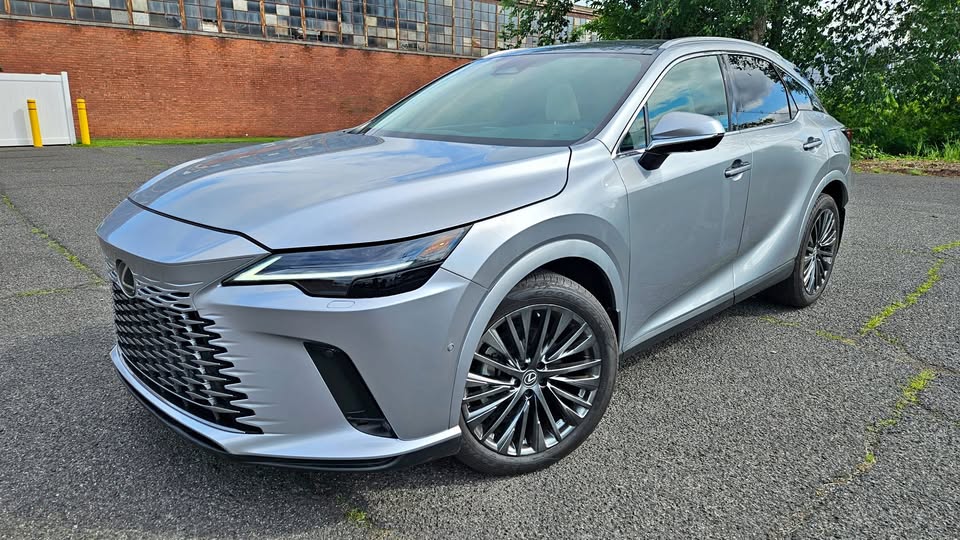
1. RX 350 tow ratings and powertrain differences
Where the 3,500 lb rating actually applies
List the trims. The 2023–2025 Lexus RX 350, RX 350h, RX 500h, and RX 450h+ all advertise up to 3,500 lb when equipped with the factory Towing Prep Package. No prep package, no 3,500 lb rating. Some regional guides even flag “no towing” on certain builds without that hardware.
FWD and AWD RX 350 models share the same 3,500 lb ceiling in most U.S. specs. The cap does not change for F Sport. Tongue weight stays at 350 lb, which aligns with a 10% load rule on a 2-inch receiver.
The rating assumes a loaded vehicle that stays within GVWR and GCWR. Exceed those, and the tow number drops fast.
Turbo torque vs hybrid torque under load
Replace the old V6 with the 2.4L turbo T24A-FTS. Output sits around 275 hp and 317 lb-ft. Peak torque hits at roughly 1,700 rpm. That low-end shove matters when a 3,200 lb camper starts rolling uphill.
The 8-speed automatic runs a short 5.52:1 first gear. Launch torque multiplies hard off the line. Under steady tow at 65 mph, it often holds 6th or 7th gear, not 8th, to stay in boost and keep EGT in check.
The RX 350h uses a 2.5L hybrid with about 246 hp combined. Electric motors deliver instant torque at zero rpm. Launch feels smooth with a trailer. Sustained highway pull leans on the gas engine, and total system output limits the same 3,500 lb cap.
The RX 500h pairs the 2.4T with a performance hybrid system and DIRECT4 AWD. Output lands near 366 hp and 406 lb-ft. Rear torque bias under load stabilizes the chassis during acceleration. Tow rating still stops at 3,500 lb.
| Model | Powertrain | Drive | Max Tow (lb) | Max Tongue (lb) | HP | Torque (lb-ft) |
|---|---|---|---|---|---|---|
| RX 350 | 2.4L turbo, 8-speed auto | FWD or AWD | 3,500 | 350 | 275 | 317 |
| RX 350h | 2.5L hybrid, eCVT | AWD | 3,500 | 350 | 246 | 233 + e-motor |
| RX 500h | 2.4L turbo hybrid, 6-speed AT | DIRECT4 AWD | 3,500 | 350 | 366 | 406 |
| RX 450h+ | 2.5L plug-in hybrid | AWD | 3,500 | 350 | 304 | Not published |
All variants share the same published tow ceiling. Cooling capacity and combined weight ratings enforce that limit, not horsepower alone.
2. Towing Prep Package: Cooling, lubrication, and the $160 decision
What actually changes under the skin
Check the tow box and Lexus swaps hardware, not stickers. Radiator core thickness grows from about 27 mm to 30 mm. That adds roughly 11% more coolant volume and surface area. Long grades at 3,500 to 4,000 rpm expose that difference fast.
Cooling fans move to higher-output dual assemblies. The fan control module runs a heavy-duty logic map. It commands higher speed sooner when temps rise. Heat soak recovery improves after a fuel stop in 95°F traffic.
Engine oil cooling also steps up. The 2.4L turbo holds 317 lb-ft from around 1,700 rpm. Sustained boost drives oil temps past 240°F under load. The added or upsized oil cooler protects turbo bearings from coking.
Transmission cooling upgrades matter just as much. The 8-speed automatic depends on stable ATF viscosity. Towing increases torque converter slip at low speed and on inclines. Extra cooling slows oxidation and reduces flare shifts over time.
Standard cooling vs Towing Prep hardware
| Component | Standard RX Spec | Towing Prep Spec | Towing Impact |
|---|---|---|---|
| Radiator core | ~27 mm thickness | ~30 mm heavy-duty core | ~11% more thermal capacity on long climbs |
| Cooling fans | Dual electric, comfort-tuned | High-output dual assemblies | Faster airflow at low speed |
| Fan control module | Standard mapping | Heavy-duty mapping | Earlier response to temp spikes |
| Engine oil cooling | Base oil-to-coolant circuit | Added or upsized oil cooler | Protects turbo under sustained boost |
| Transmission cooling | Integrated only | Auxiliary / upgraded ATF cooler | Slows ATF breakdown and clutch glazing |
Thermal margin increases with the prep package. Without it, coolant and ATF reach higher steady-state temps under identical loads.
Heat load, boost pressure, and what fails first
Tow 3,200 to 3,500 lb and the 2.4T stays in boost longer. Exhaust gas temperature rises. Oil film thins under sustained heat. Turbo bearings depend on clean, stable oil to survive.
ATF suffers next. Converter slip during launch and tight campground maneuvers builds heat fast. Sustained ATF temps above 230°F shorten fluid life sharply. Dark fluid and delayed engagement follow.
Run near max rating without prep hardware and wear accelerates quietly. Severe service fluid changes move toward 60,000 miles or sooner under heavy towing. The mechanical cap stays at 3,500 lb with prep hardware installed.
3. Hitch hardware, unibody stress, and the kick sensor clash
How the TNGA-K chassis carries trailer load
Bolt a hitch to a body-on-frame truck and the rails take the hit. The RX rides on a TNGA-K unibody. Load spreads through rear frame rails and welded reinforcements. Mounting points use factory weld nuts designed for a Class III-style receiver.
Torque matters here. Hitch bolts typically land in the 70 to 80 lb-ft range depending on kit. Under-torque leads to movement and ovaled holes. Over-torque risks stripping weld nuts buried in thin-gauge structure.
Tongue weight pushes down behind the axle. That creates a lever effect. Front axle load drops as rear springs compress. Lexus caps tongue weight at 350 lb for a reason.
OEM vs aftermarket hitches in the real world
The OEM Lexus receiver integrates cleanly with the bumper. Part numbers like PT974-48230 align with factory valance cutouts. Sensor brackets and wiring support come in the box. Price often runs $700 to $1,200 installed at a dealer.
Aftermarket units from Curt or Draw-Tite cost less. Many land between $250 and $450 for the hitch itself. Some designs tuck the crossbar higher for better departure angle. Most skip kick sensor relocation hardware.
Torklift’s EcoHitch hides the cross tube behind the bumper. Only the 2-inch receiver shows. That preserves aesthetics but still blocks the center kick sensor. No relocation kit, no hands-free tailgate.
When the power liftgate stops listening
The kick sensor sits behind the bumper centerline. Install a 2-inch receiver there, and the steel blocks the signal field. Result: no response when you wave a foot under the hatch.
Lexus offers a relocation bracket, such as PT413-48240-AB, and in some cases an updated sensor. The bracket shifts detection to one side. Owners must kick off-center after the move.
Skip the bracket and the feature dies. Keep it, and expect a narrower trigger zone.
| Part Number | Function |
|---|---|
| PT974-48230 | OEM tow hitch receiver |
| PT413-48240-AB | Kick sensor relocation bracket |
| PT83P-48240-AB | Updated kick sensor unit |
| PT938-48242 | Rear valance with hitch cutout |
| PT725-48140-CV | Tow converter wiring interface |
Unibody rating stays fixed at 3,500 lb and 350 lb tongue weight, regardless of hitch brand.
4. Weight math that breaks the 3,500 lb promise
GCWR, GVWR, and the numbers that actually govern you
Load the cabin with four adults and gear, then hook 3,500 lb behind it. The badge still says 3,500. The scale may disagree.
A typical RX 350 AWD carries a curb weight around 4,310 lb. GVWR sits near 5,620 lb. That leaves about 1,310 lb of payload for people, cargo, and tongue weight.
GCWR on recent RX 350 AWD models lands around 9,360 lb. Add vehicle weight plus trailer weight, and that total must stay under that number. Exceed it and you’re outside the engineered cooling and brake envelope.
| Spec | RX 350 AWD (approx) | RX 350h AWD (approx) |
|---|---|---|
| Curb weight | 4,310 lb | 4,455 lb |
| GVWR | 5,620 lb | 5,750 lb |
| Max payload | 1,310 lb | 1,295 lb |
| Max tow rating | 3,500 lb | 3,494–3,500 lb |
| Max tongue weight | 350 lb | 349–350 lb |
| GCWR | ~9,360 lbs* | ~9,360–9,400 lbs* |
*The Gross Combined Weight Rating (GCWR) is frequently cited as approximately 9,360 lbs. However, it is crucial to verify the exact rating on your vehicle’s door jamb sticker, as it can vary based on specific configuration and regional equipment.
Payload disappears fast once you count real bodies and real luggage; exceeding this engineered limit can compromise braking and cooling performance.
Tongue weight and rear suspension reality
Tongue weight should run near 10% of trailer weight. A 3,200 lb camper often carries 320 to 400 lb on the hitch. The RX caps that at 350 lb.
That force sits behind the rear axle. Rear multi-link springs compress. Front axle load drops, which lightens steering and changes brake balance.
Exceed 350 lb tongue weight and the rear sags deeper. Headlights aim high. Stability control works harder to correct sway. The hardware limit remains 350 lb.
Real-world load example that tips the scale
Start with an RX 350 AWD at 4,310 lb curb weight. Add four adults at 170 lb each. That’s 680 lb. Add 150 lb of luggage. Now vehicle weight sits at 5,140 lb before the trailer.
Hook a 3,200 lb camper with 12% tongue weight. Tongue load hits 384 lb. That already exceeds the 350 lb tongue cap.
Vehicle weight becomes 5,524 lb with tongue load included. Trailer adds 3,200 lb. Combined weight reaches 8,724 lb. Push to the full 3,500 lb trailer and the combined number approaches 9,024 lb before extra cargo. GCWR sits around 9,360 lb, leaving roughly 336 lb of margin.
One extra cooler, generator, or bike rack can wipe that out. GCWR stays fixed at about 9,360 lb.
5. Electronics, driver aids, and the trailer that confuses them
Blind Spot Monitor and RCTA under a trailer
Hook a box trailer and the rear radar sees a wall. The Blind Spot Monitor and Rear Cross-Traffic Alert use sensors in the rear bumper corners. A trailer body sits inside that radar field.
False alerts start flashing in the mirrors. In some cases, the system may ignore real traffic because the trailer blocks the view. Lexus directs drivers to disable BSM and RCTA while towing.
Leave them on and expect constant warnings. The system calibration assumes no object permanently attached behind the bumper.
Parking sensors and automatic rear braking
Shift into reverse with a trailer attached. Ultrasonic sensors detect the trailer as a fixed obstacle. Intuitive Parking Assist may trigger immediate warnings.
If automatic rear braking stays active, the RX can slam the brakes as soon as reverse engages. Drivers report abrupt stops while backing up to adjust hitch position. That behavior stems from the system interpreting the trailer as a collision threat.
Disable park assist and rear auto-brake before reversing with a trailer. The system cannot distinguish between your camper and a concrete wall.
Trailer Sway Control that stays active
Vehicle Stability Control integrates Trailer Sway Control. Yaw sensors monitor lateral oscillation. Steering angle and wheel speed data feed into the algorithm.
If sway begins, the RX applies brake pressure to individual wheels. Engine torque reduces at the same time. The intervention occurs without driver input.
This system does not raise the 3,500 lb limit. It activates only after sway starts.
4-pin, 7-pin, and brake controller realities
Light utility trailers run on a 4-pin connector. That handles brake lights, turn signals, and running lights. Factory tow-prepped RX models include a wiring port in the rear cargo area or underbody.
Heavier trailers require brakes in many states once they exceed 1,500 to 3,000 lb. That demands a 7-pin connector. The 7-pin adds 12V charge, ground, and a brake signal line.
Traditional brake controllers mount under the dash. Many owners choose wireless units that plug into the 7-pin socket. Units like Curt Echo avoid cutting interior panels but still require a proper 7-pin harness. A full 7-pin wiring kit and controller setup can run $250 to $600 installed.
6. Fuel burn, heat load, and mountain reality
What happens to MPG once boost stays on
Cruise at 65 mph with a full-height camper. The 2.4T stays in boost to hold speed. Manifold pressure rises, fuel flow spikes, and MPG drops hard.
RX 350 AWD carries an EPA combined rating near 24 mpg. Towing near 3,500 lb often drags that into the 11 to 14 mpg range. That is a 40% to 60% hit in real use.
The RX 350h posts about 36 mpg combined unloaded. Under tow, expect 18 to 22 mpg in mixed traffic. On steady highway pulls, the gas engine does most of the work.
| Model | EPA Combined (Unloaded) | Realistic Towing MPG | Approx Towing Range (15–18 gal usable) |
|---|---|---|---|
| RX 350 FWD | 25 mpg | 12–15 mpg | 210–260 miles |
| RX 350 AWD | 24 mpg | 11–14 mpg | 195–245 miles |
| RX 350h AWD | 36 mpg | 18–22 mpg | 310–370 miles |
| RX 500h AWD | 27 mpg | 14–17 mpg | 240–290 miles |
Fuel range shrinks fast once boost stays active for long stretches.
Speed and drag eat power fast
Aero drag rises sharply with speed. At 70 mph, power demand can approach double what it takes at 55 mph. A box trailer amplifies that effect.
Transmission logic reacts by downshifting. Expect the 8-speed to hold 6th or 7th on grades. Engine speed climbs into the 2,500 to 4,000 rpm band under sustained pull.
Run 70 mph into a headwind with a tall camper and coolant temps climb sooner. Lexus recommends keeping tow speeds near 65 mph for stability and heat control.
Altitude, thinner air, and cooling limits
Climb above 5,000 feet and air density drops. The turbo compensates for power by increasing boost. Cooling systems do not gain that advantage.
Radiator heat rejection falls as air thins. Brake cooling also suffers on long descents. Load that felt safe at sea level can strain the system in mountain heat.
Reduce trailer weight when towing at elevation. A practical rule is trimming roughly 10% of trailer weight per 1,000 feet in extreme mountain use. The published tow rating remains 3,500 lb at sea level conditions.
7. Severe service rules once a trailer lives back there
Oil intervals shrink under sustained boost
Tow regularly and the RX falls into severe service. The 2.4T runs higher cylinder pressure and oil temp under load. Turbo bearings see more heat and shear.
Factory intervals often stretch to 10,000 miles under light use. Cut that in half when towing often. Many techs recommend 5,000 miles or 6 months for oil and filter under repeat trailer duty.
Used oil analysis on turbo engines often shows faster viscosity breakdown when towing. Ignore that and oil consumption can creep up past 1 qt per 1,000 miles on high-mileage units.
ATF, AWD fluid, and brake wear under load
The 8-speed automatic works harder with a trailer. Converter slip increases at low speed and on grades. Lexus severe service guidance points toward fluid inspection and replacement around 60,000 miles.
Rear differential and AWD coupling fluid should follow the same severe-use mindset. Heat and load stress those components. Fluid breakdown there leads to noise or binding under tight turns.
Brakes convert far more energy when towing. Pads can glaze. Rotors can warp after repeated downhill stops. Pad life may drop below 30,000 miles in heavy towing use.
Hitch hardware and trailer-side failures
Hitch bolts settle after initial miles. Re-torque after the first few hundred miles of towing. Check again at regular intervals.
Inspect the receiver for cracks or rust scale. Check 4-pin or 7-pin connectors for corrosion and loose pins. Trailer-side bearings and brakes fail more often than tow vehicles.
A seized trailer brake or blown bearing can overload the RX brakes fast. Replacement trailer brake assemblies run $150 to $400 per axle, and a full bearing service often lands in the same range.
8. Where the RX fits in the Lexus tow ladder
RX vs NX, TX, GX, and LX on real hardware
Line up the platforms and the story changes fast. The RX rides on TNGA-K unibody architecture. So does the NX, and the stretched TX. The GX and LX move to GA-F body-on-frame construction.
The RX caps at 3,500 lb with prep hardware. The TX stretches wheelbase and cooling capacity and reaches 5,000 lb in many trims. The GX 550 and LX 600 push into the 8,000 to 9,000 lb range with ladder frames and heavier axles.
Frame construction absorbs tongue load differently. Body-on-frame rigs handle higher vertical and pull forces with thicker rails and stronger crossmembers. The RX relies on reinforced sheetmetal and weld nuts.
| Model | Platform Type | Max Tow (approx) | Engine Type |
|---|---|---|---|
| NX | TNGA-K | 2,000 lb | 2.4L turbo |
| RX | TNGA-K | 3,500 lb | 2.4L turbo / hybrid options |
| TX | TNGA-K (long) | 5,000 lb | 2.4L turbo / hybrid |
| GX | GA-F frame | 9,000+ lb | 3.4L twin-turbo V6 |
| LX | GA-F frame | 8,000 lb | 3.4L twin-turbo V6 |
Cooling, frame strength, and axle rating set those limits, not badge prestige.
When the RX is the right tool and when it is not
Tow a 2,800 lb boat twice a month and the RX fits the job. Pull a small A-frame camper a few weekends a year and stay inside payload math, and it works. Daily driving stays quiet and efficient the rest of the time.
Load five adults, bikes, coolers, and a 3,500 lb tall camper for cross-country trips and the margins shrink. Long mountain grades and high heat expose cooling limits sooner. Brake wear accelerates under repeated heavy descents.
Plan for 4,500 to 5,000 lb trailers or frequent high-altitude towing and step into a TX. Plan for 7,000 lb plus and look at GX or LX. The RX hard-stops at 3,500 lb and 350 lb tongue weight, no matter the trim.
Sources & References
- 2023 Lexus RX 350 Towing Capacity | Lexus of Palm Beach
- 2024 Lexus RX Performance – Lexus of Cherry Hill
- 2026 Lexus Towing Capacity | How Much Can Lexus GX, RX, NX, LX, UX Tow – Lexus of Akron-Canton
- 2025 Lexus SUV Towing Ratings: Your Complete Guide
- Towing Package? : r/LexusRX350 – Reddit
- Lexus RX Towing Capacity | Ira Lexus of Danvers, MA
- 2026 Lexus RX Review, Pricing, and Specs – Car and Driver
- 2025 Lexus RX 350 Specs & Features – Edmunds
- Lexus say no towing on ’25 RX. Would you ignore them? – Reddit
- 2023-2025 Lexus RX350 Radiator – CSF 3954 – PartsGeek.com
- Get the Best Priced Lexus RX350 Radiator – Parts Geek
- For 16-22 Lexus RX350 V6/3.5L W/O Towing Dual Radiator Cooling Fan Assembly
- Lexus RX350 Engine Cooling Fan Assembly Replacement – Go-Parts
- Cooling Fan for 2022 Lexus RX350 | Lexus of Stevens Creek Parts
- 2023 Lexus RX 350 Towing Capacity | Lexus of Seattle
- 2022 Lexus RX 350 Towing Capacity – Lexus of Clearwater
- 2024 Lexus RX RX 350 FWD Features and Specs – Car and Driver
- Lexus RX 350 Towing Features – Lexus of Huntsville
- Should You Choose the 2025 Lexus RX 350h or RX 500h? | Erin …
- 2025 Lexus RX 500h vs 2025 Lexus RX 350h – Driving
- Which 2025 Lexus SUVs Can Tow Over 1500 Pounds
- Step-By-Step Installation Tutorial for the Curt Trailer Hitch Receiver on a 2011 Lexus RX 350
- For Lexus RX350h Trailer Hitch + Wiring 4 Plug All Models 2″ | TrailerJacks.com
- Genuine Lexus Tow Hitch
- 13143 INSTALLATION INSTRUCTIONS 9″ – CURT
- Expert Answers about Lexus – etrailer.com
- 2023-2026 Lexus RX350 | U-Haul Trailer Hitch Installation | CMF13579 – YouTube
- 2023 Lexus RX 350h Installation And Review Videos – etrailer.com
- 2023 Lexus RX 350 Draw-Tite Trailer Hitch Receiver – Custom Fit – 2″
- Lexus RX350 — 2020 – 2022 — Stainless Steel EcoHitch® Trailer Hitch – Torklift Central
- Lexus RX Trailer Hitch – 2023 – 2026 – Stainless Steel EcoHitch® Trailer Hitch
- 23′ Lexus RX350h install a trailer hitch? – Reddit
- Which Lexus Models Come with Power Rear Door with Kick Sensor? – Lexus of Mt. Kisco
- Installing a hitch with power lift gate kick sensor : r/LexusRX350 – Reddit
- Lexus TX OEM Tow Hitch – Reddit
- Lexus Bracket. Kick Sensor, Black – PT413-48240-AB
- Used 2022 Lexus RX 350 F SPORT Appearance w/ Power Moonroof near Fredericksburg, VA
- How Much Does a GMC Sierra 2500 HD Weigh? Houston Buyers Guide
- How Large An RV Can Your Vehicle Tow? What You Need To Consider.
- 2024 Lexus RX 350h Specs & Features – Edmunds
- 2024 Lexus RX 350 Specs & Features – Edmunds
- SELECTING A TOW VEHICLE TOWING TIPS HITCHING BASICS TRAILER-BRAKE CONTROLLERS – Cheyenne Camping Center
- Comprehensive Guide to the Lexus RX 350: Safety Features, Trim Differences, and Advanced Technologies | Lexus of Kendall
- Lexus Safety System+ Settings Guide
- Lexus RX 350 – Park Assist/Blind Spot Monitor Review – YouTube
- 2024 Lexus RX 350 Towing Capacity – Lexus of Seattle
- 2024 Lexus RX 350 Towing Capacity
- 2017 Lexus RX – How To Use: Park Assist & Blind Spot Monitor Features – YouTube
- 2024 Lexus RX 350 Towing Capacity
- Lexus Towing Capacity Guide | Butler Lexus of South Atlanta
- 2012 Lexus RX 350 Trailer Wiring – etrailer.com
- 2010-2022 Lexus RX350 Wiring Harness Installation | CQT118255 – YouTube
- For Lexus RX350 Trailer Wiring 7 Pin & Bracket Curt | TrailerJacks.com
- For 2022 Lexus RX350 7 Pin Trailer Wiring Plug Fits All Models Curt 7 Prong Wire | eBay
- Trailer Hitch 7 Way RV Wiring Kit For 10-21 Lexus RX350 18-21 RX350L 10-21 RX450h w/Factory Tow Plug Prong Pin Brake Control Ready | TrailerJacks.com
- 07 – 12 Lexus RX350 CURT Trailer Brake Controller 7-Way Upgrade Kit 7WK1703
- 2.4 Turbo – any issues this far? : r/ToyotaHighlander – Reddit
- I can’t believe Toyota was dumb enough to put a 2.4L 4 cylinder turbo into this truck, it’s going to be so unreliable! What were they even thinking?! :
- 2023 Lexus RX 350 Towing Capacity | Lexus of Tampa Bay
- 2024 Lexus RX 350 Towing Capacity – Lexus of Clearwater
- Lexus RX, GX, NX, LX, TX, UX Towing Capacity | 2025 Model Guide
- 2025 Lexus RX 350h vs Lexus TX 500h | Chicago IL
- 2026 Lexus TX 500h – Luxury 3-Row SUV
- 2021 Lexus RX 350 Towing Capacity
- Genuine Lexus RX350 Cooling Fan Assembly
- Lexus Towing Capacity Guide | Butler Lexus
- Genuine Lexus RX350 Radiator – Lexus Parts
- The 2023 Lexus RX Towing Capacity