
Load the trailer, merge into traffic, watch the temp gauge inch upward. The CVT hums, revs climb, and that 1,500 lb rating feels thin on a long grade. Crosstrek towing lives at the edge of cooling capacity and payload math.
Since 2013, most trims have stayed capped at 1,500 lb with a 150 lb tongue limit. The hybrid dropped to 1,000 lb. For 2024, the Wilderness jumps to 3,500 lb and 350 lb on the hitch, backed by 4.11 gears and an external CVT cooler.
Here’s what changed, what didn’t, and where the limits actually bite. Payload math, tongue weight reality, CVT heat control, and when a standard Crosstrek works versus when the Wilderness is the right tool.
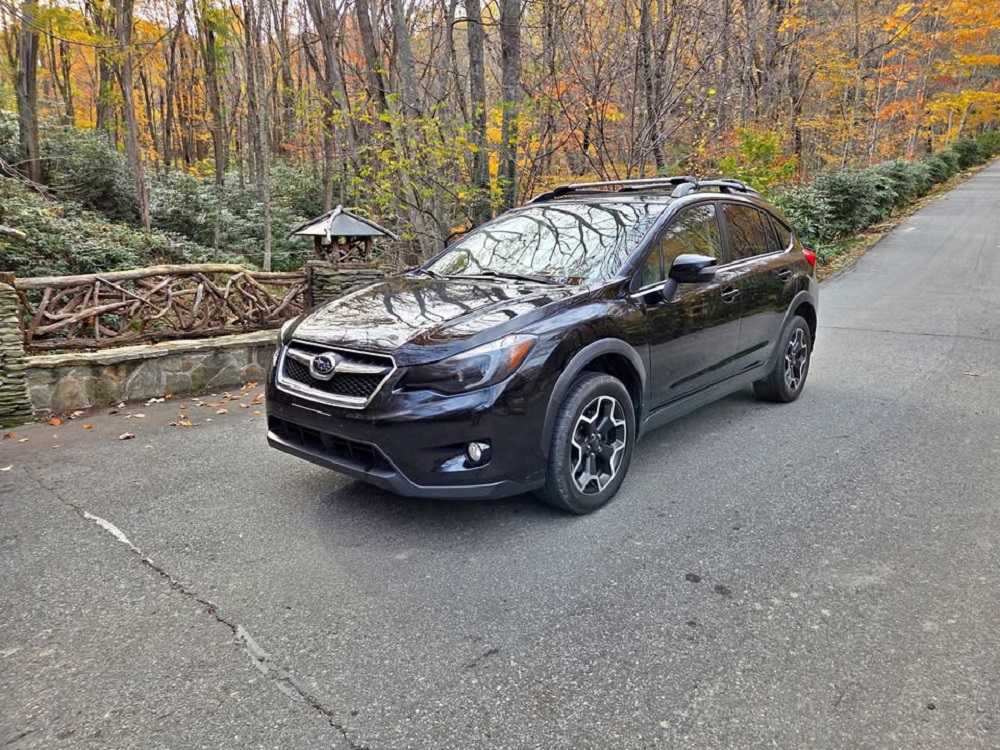
1. Crosstrek tow ratings by generation and trim
First-gen XV Crosstrek sets the 1,500 lb ceiling
Launch in 2013, Subaru stamps 1,500 lb on gas models. Tongue weight caps at 150 lb. The 2.0L FB20 makes 148 hp and 145 lb-ft, routed through the early Lineartronic CVT. Rear brakes and GP chassis stiffness set the structural ceiling.
Hybrid trims from 2014–2016 drop to 1,000 lb with a 100 lb tongue cap. The NiMH battery pack adds mass and heat load. Cooling headroom shrinks under sustained pull. Subaru lowers the rating to protect the CVT and rear structure.
Expect light work only. A 5×8 utility trailer, a single PWC, a small aluminum boat. The hard stop remains 1,500 lb and 150 lb on the hitch.
Subaru Global Platform stiffens the shell, rating stays frozen
Redesign in 2018 moves Crosstrek to Subaru Global Platform. Torsional rigidity jumps roughly 70 percent over the old chassis. Rear subframe mounting points strengthen. Paper tow rating does not move.
From 2018–2020, the 2.0L keeps the same 1,500 lb and 150 lb limits. In 2021, the 2.5L arrives in Sport and Limited trims. Output climbs to 182 hp and 176 lb-ft. Tow rating still holds at 1,500 lb.
The 2.5L pulls grades with fewer full-throttle moments. At 5,000 ft elevation, power drops about 15 percent. That loss hits the 2.0L harder than the 2.5L. The legal ceiling remains 1,500 lb and 150 lb tongue.
Wilderness unlocks 3,500 lb with gears and cooling
Model year 2024 brings the Wilderness trim. Final drive changes from 3.70:1 to 4.11:1. Wheel torque rises about 11 percent at launch. The CVT chain sees less slip during takeoff.
Subaru adds a dedicated external CVT cooler. Fluid temps that would push 240–250°F on long grades drop by roughly 20–30°F under the same load. Cooler fluid keeps clamp force stable across the pulleys.
Tow rating jumps to 3,500 lb. Tongue weight rises to 350 lb. Other trims remain locked at 1,500 lb and 150 lb.
Crosstrek tow and tongue ratings by generation and trim
| Generation | Model Years | Trim / Variant | Engine | Max Tow (lb) | Max Tongue (lb) | Notes |
|---|---|---|---|---|---|---|
| 1st (GP) | 2013–2017 | XV Crosstrek | 2.0L Boxer (NA) | 1,500 | 150 | Baseline rating |
| 1st (GP) | 2014–2016 | XV Crosstrek Hybrid | 2.0L Hybrid | 1,000 | 100 | Battery mass reduces tow and tongue |
| 2nd (SGP) | 2018–2020 | Crosstrek | 2.0L Boxer (NA) | 1,500 | 150 | Stiffer chassis, unchanged limit |
| 2nd (SGP) | 2021–2023 | Sport / Limited | 2.5L Boxer (NA) | 1,500 | 150 | More torque, same structural cap |
| 2nd (SGP) | 2019–2023 | Hybrid PHEV | 2.0L Hybrid PHEV | 1,000 | 100 | Added hybrid weight, reduced rating |
| 3rd (SGP) | 2024–2026 | Base / Premium | 2.0L Boxer (NA) | 1,500 | 150 | Carryover light-duty rating |
| 3rd (SGP) | 2024–2026 | Sport / Limited | 2.5L Boxer (NA) | 1,500 | 150 | Same cap despite stronger engine |
| 3rd (SGP) | 2024–2026 | Wilderness | 2.5L Boxer (NA) | 3,500 | 350 | 4.11 gears and external CVT cooler |
Standard trims stop at 1,500 lb and 150 lb on the hitch. Wilderness alone carries the 3,500 lb and 350 lb numbers in the owner’s manual.
2. Powertrain, CVT, and cooling limits under load
2.0 vs 2.5 Boxer torque under a trailer
The 2.0L FB20 peaks at 145 lb-ft at 4,000 rpm. It needs revs to move weight. With 1,300–1,500 lb behind it, throttle stays deep on grades. Expect frequent 4,000–5,000 rpm pulls at highway speeds.
The 2.5L FB25 makes 176 lb-ft around 4,400 rpm. It holds speed with less pedal. Passing gaps shrink less when loaded. The rating still caps at 1,500 lb outside Wilderness.
Altitude cuts power fast. Rule of thumb runs near 3 percent per 1,000 ft. At 6,000 ft, a 152 hp engine loses roughly 27 hp. That loss shows up as slower merges and longer climbs at the same trailer weight.
Lineartronic CVT heat and how it fails
Crosstrek uses a chain-driven Lineartronic CVT. Steel chain rides between adjustable pulleys. High load forces the pulleys to clamp hard. Clamp force generates heat.
Standard trims cool CVT fluid through a radiator heat exchanger. Long grades push fluid temps toward 230–250°F. Fluid thins at those temps. Clamp pressure drops and slip risk rises.
Dash may show “AT Oil Temp” warning under sustained load. Ignore it and fluid degrades fast. Burnt fluid darkens and smells sharp. CVT rebuilds commonly run $4,000–$7,000 once pulley faces score.
Wilderness cooler and 4.11 gears change the stress curve
Wilderness adds an external air-to-oil CVT cooler. Ambient airflow pulls heat before fluid returns to the case. Field data shows 20–30°F lower temps under the same trailer weight. Cooler fluid keeps clamp force stable.
Final drive shifts from 3.70:1 to 4.11:1. Wheel torque rises about 11 percent at launch. Engine stays in a stronger part of the torque curve at lower road speeds. Chain sees less initial shock when pulling out.
Tow rating climbs to 3,500 lb. Tongue cap rises to 350 lb. Other trims keep the shared radiator exchanger and the 1,500 lb ceiling.
Engine, gearing, and tow rating relationships
| Engine / Trim | Final Drive | CVT Cooling Setup | Rated Tow (lb) | Real-World Towing Behavior |
|---|---|---|---|---|
| 2.0L (1st gen gas) | 3.70:1 | Radiator heat exchanger | 1,500 | High revs on grades, heat builds fast |
| 2.0L (2nd/3rd gen) | 3.70:1 | Radiator heat exchanger | 1,500 | Acceptable on flats, temp warnings in mountains |
| 2.5L (2nd gen Sport/Ltd) | 3.70:1 | Radiator heat exchanger | 1,500 | Better pull, same thermal ceiling |
| 2.5L (3rd gen non-Wild.) | 3.70:1 | Radiator heat exchanger | 1,500 | Stronger feel, identical rating limit |
| 2.5L Wilderness | 4.11:1 | External air-to-oil CVT cooler | 3,500 | Stable temps with brakes and proper tongue weight |
CVT fluid that lives above 240°F degrades rapidly. Repeated overheating shortens service life and pushes rebuild risk past 80,000–120,000 miles under heavy towing.
3. Hitch hardware and how the unibody carries the load
OEM hitch replaces the bumper beam and ties into the rails
Remove the rear fascia and the aluminum bumper beam comes off. The OEM hitch bolts directly into the unibody frame rails. It takes the beam’s place as a structural member. Load paths stay aligned with factory crash design.
Subaru part numbers like L101SFL003 and L101SFN001 follow this layout. Mounting bolts are typically M12 hardware. Torque spec runs near 74 ft-lb, about 100 Nm. Under-torqued bolts loosen under trailer shock and oval the mounting holes.
Receiver exits through a fascia cutout. Ground clearance and departure angle stay close to stock. The hitch becomes part of the rear crash structure.
Curt and Draw-Tite bolt underneath and hang lower
Aftermarket Class I or III hitches bolt to existing frame holes. The bumper beam stays in place. Cross tube hangs below the fascia. Departure angle drops about 2–3 inches.
Install time can run under 1 hour with hand tools. Some kits use fish-wire to pull carriage bolts through frame rails. Typical installed cost runs $250–$450. Rated capacity on the hitch may say 3,500–5,000 lb, but the Crosstrek still caps at 1,500 lb unless Wilderness.
Lower receiver drags sooner on steep ramps. Off-road departures can bend the cross tube. The vehicle’s tow rating remains the legal limit.
EcoHitch hides the crossbar and keeps a 2-inch receiver
EcoHitch replaces the bumper beam like OEM. Crossbar hides behind the fascia. Only the 2-inch receiver shows through a cutout or plate area. Clearance matches factory geometry.
2-inch receivers handle heavier bike racks and cargo trays. Accessory stability improves with thicker shanks. Corrosion protection matters here. Powder coat and e-coat quality decide how long the hitch survives salted roads.
Typical installed cost runs $500–$800. Installation requires full bumper removal and trimming.
OEM vs common aftermarket vs EcoHitch
| Hitch Type | Mount Style | Receiver Size | Ground Clearance Impact | Install Complexity | Typical Installed Cost (USD) | Structural Integration |
|---|---|---|---|---|---|---|
| OEM Subaru | Replaces bumper beam | 1.25″ or 2″ | Near factory | High | 600–1,000 | Direct to frame rails |
| Curt / Draw-Tite | Bolts under frame | 1.25″ or 2″ | -2 to -3 inches | Low–Medium | 250–450 | Under-rail attachment |
| EcoHitch (Torklift) | Replaces bumper beam | 2″ | Near factory | High | 500–800 | Direct to frame rails |
A Class III label does not raise the vehicle’s rating. Standard Crosstrek models remain limited to 1,500 lb and 150 lb tongue weight by the owner’s manual.
4. Wiring, brake control, and what the driver aids do with a trailer
Factory 4-pin harness and its hard limits
Crosstrek leaves the factory pre-wired in the rear cargo area. Subaru harness kits plug into that connector. Output runs to a 4-pin flat at the bumper. Circuits cover ground, running lights, left brake/turn, right brake/turn.
No 12V charge line. No electric brake output. Tow a 2,000 lb camper on a 4-pin and the car’s brakes do all the work.
Most states require trailer brakes above 1,500–3,000 lb. Ignore that and you lengthen stopping distance by 20–40 percent with a 1,500 lb trailer.
7-pin conversion and real brake control for 3,500 lb loads
Wilderness owners pushing past 2,000 lb need a 7-pin. That adds a 12V feed and brake control circuit. Install runs from the rear to the battery and cabin. Labor often lands between $300 and $700 depending on routing.
Traditional brake controllers mount under the dash. They tap brake signal and battery power. Proportional units sense deceleration and match trailer braking force. Quality units cost $120–$300.
Wireless controllers plug into the 7-pin at the bumper. Setup runs through a smartphone. They still require a clean 12V supply and proper ground.
A 3,000 lb trailer without working brakes will overheat Crosstrek rotors on a long downhill. Front rotors can exceed 800°F under repeated heavy stops.
EyeSight, blind spot radar, and reverse auto-brake behavior
Blind Spot Detection and Rear Cross Traffic Alert use rear corner radar. A trailer blocks those sensors. Dash lights up with constant warnings. Disable BSD/RCTA when towing or the alerts never stop.
Reverse Automatic Braking uses rear ultrasonic sensors. It sees the trailer as an obstacle. Shift into reverse and the system can slam the brakes. Turn it off before backing with a trailer attached.
While EyeSight forward cameras remain active, Subaru explicitly advises against using Adaptive Cruise Control when towing a trailer, as the system may not operate correctly under the added load and altered vehicle dynamics.
Additionally, the effectiveness of pre-collision braking can be compromised when a trailer is attached. Trailer sway control works through the VDC system and yaw sensors.
Stability control applies individual wheel brakes when sway oscillation is detected. Disable VDC and you lose that intervention above roughly 35 mph.
Tow-related electrical and ADAS behavior
| System | Sensor Location | Trailer Impact | Driver Action When Towing | Failure Risk If Ignored |
|---|---|---|---|---|
| 4-pin lighting harness | Rear cargo connector | No brake circuit, no charge line | Verify lights before each trip | No trailer brake lights or turn signals |
| 7-pin + brake controller | Added wiring + controller | Enables proportional trailer braking | Required above ~1,500–2,000 lb | Overheated car brakes, longer stops |
| Blind Spot Detection (BSD) | Rear bumper radar corners | Radar blocked by trailer | Disable via dash switch | Constant false alerts |
| Reverse Automatic Braking (RAB) | Rear ultrasonic sensors | Detects trailer as obstacle | Disable before reversing | Sudden full brake application |
| Trailer sway control (VDC) | ABS + yaw sensors | Uses vehicle motion to detect sway | Leave VDC on | Loss of automatic sway correction above 35 mph |
A standard 4-pin setup cannot power electric trailer brakes. Wilderness at 3,500 lb requires a 7-pin and working brake controller to stay within legal and thermal limits.
5. Tow-package installation and what actually gets cut
Bumper off, beam out, hitch in
Rear fascia comes off first. Wheel arch clips break if rushed. Tail lamps unbolt to expose upper fasteners. Sensor harnesses unplug before the fascia drops.
Factory bumper beam unbolts from the frame rails. OEM and EcoHitch units slide into the same rail pockets. M12 bolts torque to about 74 ft-lb, roughly 100 Nm. Under-torque leads to bolt stretch and rail slot wear.
Recheck torque after the first 500–600 miles of towing. Settling happens under load. Loose hardware shifts under trailer tongue shock.
Cutting the fascia clean and sealing the edge
OEM and beam-replacement hitches require a fascia cutout. Subaru supplies a template in the kit. Cut is centered and U-shaped. Air saw or rotary tool works best.
Edges must be deburred. Raw plastic cracks over time. Rubber edge trim seals and stiffens the cut line. Skip trim and winter cold can split the bumper skin.
Poor cuts show gaps around the receiver. Clean trim job keeps factory appearance. Mistakes here mean a new rear fascia, often $400–$800 painted.
Bolt-on installs and what DIY gains cost
Curt and Draw-Tite units bolt under the rails. No bumper removal needed. Fish-wire pulls carriage bolts through frame holes. Torque still matters on every fastener.
Install time can run 45–90 minutes on jack stands. Labor at a shop runs about $100–$200. Receiver hangs lower than beam-replacement designs. Departure angle drops by about 2–3 inches.
Lower cross tube drags first on steep driveways. Bent tubes misalign the receiver. Standard Crosstrek still caps at 1,500 lb and 150 lb tongue weight regardless of hitch class.
6. Weight ratings and the math that decides if you’re legal
GVWR, GCWR, and why tongue weight eats payload first
Every Crosstrek carries a GVWR sticker on the driver door jamb. Most trims show payload around 850–1,000 lb. Payload includes passengers, cargo, and trailer tongue weight. Exceed it and rear suspension compresses past design range.
Tongue weight counts against payload, not trailer rating. A 150 lb tongue on a standard trim uses 150 lb of that 900 lb payload. Add four adults at 700 lb combined and you’re nearly done. Roof racks and coolers push you past GVWR fast.
GCWR sets the max for vehicle plus trailer combined. Subaru does not publish a generous margin here. Tow 1,500 lb and load the cabin heavily, and you approach combined limits quickly. Overload shows up as sag, long braking, and overheated fluid.
Tongue weight balance and how the car reacts
Subaru recommends 8–11 percent tongue weight. On a 1,500 lb trailer, that’s 120–165 lb. Standard trims cap at 150 lb, so 10 percent lands right on the limit. Wilderness allows up to 350 lb.
Too much tongue weight squats the rear. Front axle unloads and steering lightens. Headlights aim high and blind traffic. Rear tire wear accelerates.
Too little tongue weight invites sway. Trailer starts to oscillate above 45–55 mph. Stability control will try to brake individual wheels. It cannot fix a badly balanced load.
Crosstrek trims, tow, tongue, and typical payload
| Trim / Variant | Engine | Tow Rating (lb) | Max Tongue (lb) | Typical Payload (lb) |
|---|---|---|---|---|
| Base / Premium 2.0L | 2.0L NA | 1,500 | 150 | ~900 |
| Sport 2.5L | 2.5L NA | 1,500 | 150 | ~900 |
| Limited 2.5L | 2.5L NA | 1,500 | 150 | ~850 |
| Hybrid / PHEV | 2.0L Hybrid | 1,000 | 100 | ~800 |
| Wilderness | 2.5L NA 4.11 | 3,500 | 350 | ~1,000 |
Fully loaded Limited trims lose payload to added features. Hybrid trims sacrifice both tow and payload to battery mass.
Worked example with four adults and a teardrop
Assume a 2.0L Crosstrek with 900 lb payload. Four adults weigh 700 lb combined. That leaves 200 lb for cargo and tongue weight. A 1,400 lb teardrop at 10 percent tongue weight adds 140 lb.
Now you have 60 lb left for bags and gear. Add a 70 lb cooler and you exceed GVWR. Rear springs compress beyond design height and front braking suffers.
One visit to a CAT scale costs about $15. Axle weights and gross weight print on the ticket. Exceed GVWR or rear axle rating and you’re outside Subaru’s published limits.
7. What a Crosstrek can actually haul on real roads
1,500 lb setups that stay inside the comfort zone
Keep trailer weight under 1,500 lb on standard trims. A 5×8 utility trailer weighs about 400 lb empty. That leaves roughly 1,100 lb for cargo. Yard debris, small furniture, light building materials fit this window.
Single PWC setups often land between 1,000 and 1,200 lb with trailer. Small aluminum boats on single-axle trailers fit here too. Expect slower merges and steady 4,000 rpm climbs on long grades. Fuel economy drops from 30+ mpg solo to 15–18 mpg with a boxy trailer.
Brake fade shows up fast on downhill runs. Plan longer stopping distances. Front rotors carry most of the load without trailer brakes.
3,500 lb Wilderness loads that make sense
Wilderness expands the range to 3,500 lb. Fully equipped teardrops often weigh 1,300–1,800 lb dry. Add water, gear, propane, and you approach 2,000–2,500 lb ready to camp. Mid-size pop-ups sit in that range as well.
Small 16-foot fishing boats with trailer and fuel can run 2,000–3,000 lb. 4.11 gears help at boat ramps. External CVT cooler holds temps below the 240°F danger zone under sustained pull.
Push past 3,000 lb without trailer brakes and stopping distances stretch fast. At 3,500 lb, electric brakes are mandatory for control and legal compliance in many states.
Driving a CVT Crosstrek with a trailer attached
Use manual mode or low range on grades. Hold rpm steady instead of letting the CVT hunt. Hunting builds heat. Stable rpm reduces clamp shock in the pulleys.
Watch coolant and transmission warnings. “AT Oil Temp” light means fluid is near breakdown range. Back off throttle and reduce speed. Sustained overheating shortens CVT life and leads to $4,000–$7,000 rebuild territory.
Wind and altitude change the equation. Headwinds act like added weight. At 7,000 ft, power drops over 20 percent. Keep speed moderate and stay under rated limits of 1,500 lb or 3,500 lb depending on trim.
8. Where Crosstrek towing fits and when to step up
Crosstrek against the subcompact field
Many subcompact crossovers carry no tow rating at all. Some list “not recommended” in the manual. Crosstrek posts 1,500 lb standard across most trims. Wilderness raises that to 3,500 lb.
Mazda CX-30 often lists 2,000 lb. Corolla Cross sits at 1,500 lb. HR-V and Kona commonly show 0 lb in U.S. manuals. Crosstrek stands out in a segment that often avoids towing.
| Model | Standard Tow (lb) | Max Tow (lb) | AWD Standard | Notes |
|---|---|---|---|---|
| Subaru Crosstrek | 1,500 | 3,500 | Yes | Wilderness adds cooler + 4.11 gearing |
| Mazda CX-30 | 2,000 | 2,000 | Yes | Higher base rating, no 3,500 lb trim |
| Toyota Corolla Cross | 1,500 | 1,500 | Optional | Light-duty only |
| Honda HR-V | 0 | 0 | Optional | Not rated for towing in many markets |
| Hyundai Kona | 0 | 0 | Optional | Often sold without tow rating |
Crosstrek Wilderness overlaps with larger compact SUVs on paper. The rest of the lineup stays in light-duty territory at 1,500 lb.
Warranty law, overloading, and real liability
Federal law under Magnuson-Moss blocks blanket warranty denial for aftermarket parts. Install a Curt hitch and Subaru cannot void the whole warranty. They must prove the hitch caused the failure. Documentation matters.
Exceed the published 1,500 lb or 3,500 lb rating and the situation changes. Overload the vehicle and damage the CVT, and coverage can be denied. Insurers may cite negligent operation after a crash if weights exceed ratings.
Keep receipts for hitch installs and brake controller wiring. Log service intervals when towing frequently. Tow above rated limits and you operate outside Subaru’s design parameters.
Base Crosstrek, Wilderness, or move up to Outback
Standard Crosstrek fits light trailers and occasional use. Utility runs, single PWCs, ultralight campers. Payload limits hit first in family use.
Wilderness fits regular towing up to 3,500 lb. Shorter gears and external cooler handle sustained grades better. Still a small SUV with compact brakes and limited wheelbase.
Step up to Outback or Forester for heavier campers and full-family loads. Those platforms offer longer wheelbase and higher GCWR margins. Crosstrek remains capped at 1,500 lb on standard trims and 3,500 lb on Wilderness, with 150 lb or 350 lb tongue limits as the hard stop.
Sources & References
- How Much Can A Subaru Crosstrek Tow?
- 2026 Subaru Crosstrek Wilderness Features & Technology | Subaru
- 2026 Subaru Crosstrek Review, Pricing, and Specs – Car and Driver
- How Much Can My Subaru Tow? | Subaru Towing Guide – Wilsonville Subaru
- 2013 XV Crosstrek Owner Manual – Subaru Canada
- Find Your Subaru’s Towing Capacity
- Subaru Crosstrek Towing Capacity | Santa Cruz Subaru
- The best thing about the wilderness isn’t the lift… : r/Crosstrek – Reddit
- OEM CVT cooler install on non-wilderness models? : r/SubaruForester – Reddit
- 2013 Subaru XV Crosstrek Trailer Hitch Receiver, Curt 13135, 3,500 Lbs, Fits 2″ inch Hitch
- 34160SC020 Genuine Subaru Tie Rod Complete – Subaru Parts
- How Much Can My Subaru Tow?
- Subaru Crosstrek Towing Capacity | 2022-2025 Model Years
- What Is The Subaru Crosstrek Towing Capacity?
- 2025 Subaru Crosstrek Towing Capacity & Engines | 2.0L vs. 2.5L
- Subaru Crosstrek Specs – MPG, Engine, Towing Capacity – Quantrell Auto Group
- Towing Capacity of the Subaru Lineup
- 2024 Subaru Crosstrek MPG
- 2024 Subaru Crosstrek Wilderness Features: What Makes It Different?
- 2025 Subaru Crosstrek Towing Capacity | Ira Subaru of Manchester
- New Subaru Crosstrek Wilderness Model Comparison
- Can the Subaru Outback Tow a Camper? Specs, Trims & Real-World Examples
- CVT Cooler for 2024 Limited : r/Crosstrek – Reddit
- CVT Transmission Oil Cooler Kit for 2018-2025 Forester, Crosstrek, Impreza | PERRIN
- 2024 Subaru Crosstrek Wilderness: Towing, Specs, Features
- Factory Hitch vs Aftermarket: Performance, Cost … – Torklift Central
- Tow hitches: dealer/OEM versus aftermarket? : r/Subaru_Outback – Reddit
- What’s The Difference Between A Factory-Installed And An Aftermarket Tow Hitch?
- OEM Hitch vs other hitches for Crosstrek Wilderness : r/subaru – Reddit
- SUBARU OF AMERICA
- 2024 Subaru Crosstrek Trailer Hitch L101SFN001 | Shop Subaru Parts
- 2018-2023 Subaru Crosstrek – Trailer Hitch Receiver – Subaru (L101SFL003)
- Trailer Hitch; Trailer Hitch Ball Mount – 2024 Subaru Crosstrek
- 2024 Subaru Crosstrek Trailer Hitch L101SFN001 | OEM Parts Online
- Class III Trailer Hitch, 2″ Receiver fits Select Subaru Crosstrek Wilderness | Curt
- 84209 | Class 3 Trailer Hitch, 2 Inch Square Receiver, Black, Compatible with Subaru Crosstrek, Impreza
- Class 2 Trailer Hitch, 1-1/4″ Receiver, Select Subaru Crosstrek #12184 – CURT
- 76084 | Class 3 Trailer Hitch, 2 Inch Square Receiver, Black, Compatible with Subaru Crosstrek, XV Crosstrek – DRAW-TITE
- Subaru XV Crosstrek — 2013 – 2017 — EcoHitch® Trailer Hitch – Torklift Central
- EcoHitch Invisi – 2013-2017 Subaru XV Crosstrek – LP Aventure
- Expert Answers about Subaru trailer hitch compare | etrailer
- Subaru Crosstrek Trailer Hitches – CURT
- Need Advice, mixed info on my Subaru crosstrek tow capacity – Reddit
- PART NUMBER: L101SFL000 CROSSTREK TRAILER HITCH
- H771SFJ000 Trailer Hitch Harness Subaru Genuine for sale online | eBay
- 2016 Subaru Crosstrek Wire Harness For Trailer Hitch H771SFJ100 – SubaruParts.com
- Subaru Crosstrek 18-23 Rear Trailer Hitch Wiring Harness … – eBay
- Trailer Tow Hitch For 18-24 Subaru Crosstrek Hybrid w/ Wiring Harness Kit – 76209 119148
- PART NUMBER: L101SAN000 DESCRIPTION: 2020 OUTBACK TRAILER HITCH – Subaru
- DIY – OEM Hitch install – 2024 Crosstrek Wilderness – Reddit
- Fascia Trimming Techniques | U-Haul Trailer Hitch Installations – YouTube
- Subaru Crosstrek Towing Capacity
- Will this void my Subarus warranty? : r/subaru – Reddit
- A Guide to Trailer Weights by Trailer Type – CURT
- Teardrop Camper Weight Guide: How Much Do They Really Weigh? – Wellness Hub
- Teardrop Trailer Weight: Everything You Need To Know – Vistabule
- Upgrade option for towing reliability: intercooler vs CVT oil cooler? : r/Subaru_Outback
- Will adding a hitch in my garage void the Subaru Warranty? 2024 Forester Wilderness
- Will Installing a Trailer Hitch Void My Warranty on a 2020 Subaru Outback | etrailer
- Does Installing a Hitch Void the Warranty on a 2024 Subaru Outback? – etrailer.com
- Added Security Extended Coverage – Subaru
- Comparing 2025 Subaru Crosstrek Vs. Honda HR-V: Which Wins? – Wallace Subaru Of Bristol