
Stare at a $15 quart on the counter. Question what that price really buys. Hear “25,000 miles” and wonder if that’s protection or marketing. That’s where the Amsoil debate starts.
Amsoil built its name on long drains and stronger chemistry. Modern engines run hotter, tighter, and dirtier than ever. Oil now handles heat, fuel dilution, and timing control, not just lubrication. Some oils hold up. Others fall apart under stress.
The payoff depends on how the car is used and how long it’s kept. High-mile drivers may save time and money. Short-term owners often won’t see a return. Price per quart only tells part of the story. Drain strategy, engine design, and ownership length decide the real value.
Let’s break down where it earns its keep and where it doesn’t.
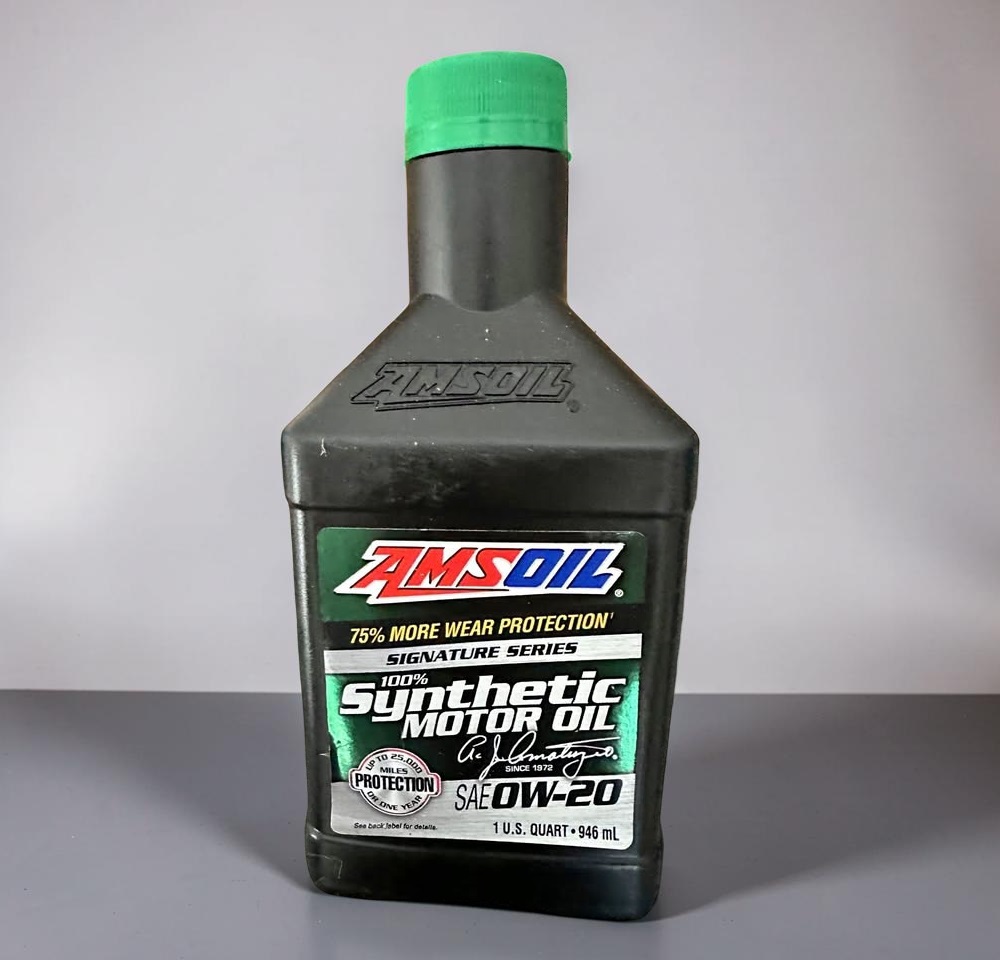
1. The real question starts with the label on the bottle
Three oil lines, three completely different maintenance strategies
Grab the wrong Amsoil line, and the whole value argument collapses.
OE targets factory intervals, usually 5,000 to 10,000 miles. It carries API licensing and behaves like a high-quality shelf synthetic. Base stocks are solid, but additive loading stays conservative to meet spec limits.
XL / Extended-Life pushes farther, around 12,000 miles or one year. Detergent and dispersant levels increase to handle sludge and fuel dilution. That matters in stop-and-go driving where oil never reaches full temperature.
Signature Series runs the heavy chemistry. High PAO content, higher TBN around 12.5, and stronger anti-wear packages. It’s built to survive up to 25,000 miles under normal service and 15,000 under severe duty.
Using OE and expecting Signature results leads to early oxidation and deposit buildup past 10,000 miles.
Signature Series carries the entire “worth it” argument
Most “Amsoil is worth it” claims point straight at Signature Series.
Independent Sequence IVA testing shows about 20 microns of cam wear versus the API limit of 90. That’s a 75% reduction in metal loss under stop-and-go conditions. Lower wear metals show up in used oil analysis, especially iron and lead.
NOACK volatility sits around 6–7%, far below the 15% limit. That reduces oil burn-off in turbo engines running 250°F sump temps. Less evaporation means viscosity stays stable longer.
Sequence IIIH testing shows almost zero thickening at 304°F. API allows up to 150% viscosity increase. Signature Series stays near baseline, even under extended heat cycles.
Run this oil short at 5,000 miles, and those margins never get used.
Matching the oil line to the driver decides the outcome
| Amsoil Line | Drain Interval Target | Suggested Correction / Refinement |
|---|---|---|
| OE | 5,000–10,000 miles | Follow the OEM / factory recommended interval only. This line is built for standard drains, not extended intervals. |
| XL / Extended | Up to 12,000 miles | Rated for Normal Service use. Severe service typically cuts that to about 10,000 miles or 6 months, whichever comes first. |
| Signature Series | Up to 25,000 miles | Normal service rating is 25,000 miles or 1 year. Severe Service limit is 15,000 miles or 700 hours, critical for turbo, towing, and high-load use. |
Short-trip engines with fuel dilution can destroy Signature Series before 15,000 miles. Turbocharged GDI engines benefit most from higher detergent and anti-wear reserves. Low-mile engines changing oil early never reach the chemical limits that justify Signature pricing.
2. The real advantage shows up under heat, load, and contamination
Heat stability separates premium oil from shelf-grade synthetics
Run a turbo engine hard, oil temps climb past 230°F within minutes.
At that heat, weak oil starts to shear and thin out. Film strength drops, and metal contact increases at cam lobes and turbo bearings. That’s where wear metals spike in used oil reports.
Signature Series holds viscosity under sustained heat. Sequence IIIH testing at 304°F shows near-zero thickening. API allows up to 150% increase, which means many oils turn thick and sluggish long before failure.
Turbocharger bearings see localized temps above 400°F, where cheap oil carbonizes and restricts oil flow.
Volatility control decides oil consumption and deposit buildup
Oil doesn’t just wear out, it evaporates under heat.
NOACK volatility measures how much oil burns off at high temperature. The API cap sits around 15%. Signature Series lands near 6–7%, cutting evaporation by more than half.
Lower volatility reduces oil consumption in engines already prone to burn, like GDI turbo setups. It also slows down intake valve deposits, since fewer vapors recirculate through the PCV system.
High-volatility oil thickens as lighter fractions burn off, which raises viscosity and stresses oil pumps.
Additive reserve controls acid, sludge, and long-interval survival
Oil collects fuel, moisture, and combustion acids every mile.
Total Base Number, TBN, measures how long the oil can neutralize those acids. Signature Series starts around 12.5. Many mainstream synthetics sit closer to 8–9.
As TBN drops below 3, corrosion risk rises fast. Bearings and cam journals start to show etching under load. That’s where extended intervals fail if the oil runs out of chemical reserve.
Higher detergent levels also keep piston rings cleaner, which slows oil consumption and compression loss past 100,000 miles.
Modern engines punish weak oil faster than older designs
GDI engines dump raw fuel into the crankcase during cold starts.
Fuel dilution lowers viscosity and strips protective film from bearings. Short trips make it worse, since oil never reaches full temperature to burn fuel off.
Variable valve timing systems rely on clean oil to control solenoids and cam phasers. Sludge buildup causes timing drift, rough idle, and DTCs like P0011 or P0016.
Turbo engines combine heat, pressure, and shear forces that break down weak oil fast. Oil that holds up past 10,000 miles must resist all three at once.
3. The long-drain promise works on paper, but real engines decide the outcome
Stretch the interval correctly, and the math flips fast
Run 25,000 miles per year, and oil choice becomes a cost equation.
A standard 5,000-mile interval means 5 oil changes. Each service runs $60 to $120 at a shop. That adds up to $300–$600 yearly just in oil service.
Signature Series targets one change over that same mileage. Even at $90 to $140 per service, total yearly cost drops. Labor, downtime, and filter count all shrink with it.
Five service visits versus one equals a reduction of 4 labor cycles and about 20 quarts of waste oil.
Dump it early, and the premium never pays back
Change Signature Series at 5,000 miles, and the economics collapse.
The oil still carries most of its additive reserve at that point. TBN remains high, viscosity stable, and wear metals low. The expensive chemistry gets thrown away before it does real work.
Mainstream synthetics at $25–$35 per change can deliver the same protection at short intervals. The performance gap only shows up when intervals stretch past 10,000 miles.
Running premium oil on short intervals shifts value from measurable savings to personal comfort.
Engine condition sets the real limit, not the label on the bottle
Extended drains fail when the engine feeds the oil garbage.
Fuel dilution above 3% drops viscosity and weakens film strength. Coolant leaks introduce glycol, which forms sludge and wipes bearings fast. Dust ingestion adds silica that grinds surfaces like sandpaper.
Used oil analysis tracks these conditions through iron, copper, and fuel percentage. High wear metals at 10,000 miles signal the engine, not the oil, is the problem.
Pushing toward 25,000 miles without monitoring can lead to bearing damage that costs $3,000–$6,000 to repair.
Driving pattern decides whether long drains survive or fail
| Driving Pattern | Oil Condition Trend | Real Outcome |
|---|---|---|
| Highway, steady load | Stable viscosity, low dilution | Extended intervals hold up near 20,000–25,000 miles. |
| Mixed city and highway | Moderate dilution, rising acids | Safe range drops near 12,000–15,000 miles. |
| Short trips, cold starts | High fuel dilution, moisture accumulation | Oil degrades before 8,000–10,000 miles or 6 months, whichever comes first. |
| Towing, heavy load, high heat | Oxidation and shear increase | Severe-service limit near 15,000 miles. |
Fuel dilution above 4% and TBN below 3 mark the cutoff where extended drain becomes mechanical risk.
4. Many engines won’t return the premium, no matter how good the oil is
Modern engines already survive on standard synthetics
Most engines built after 2010 run tight tolerances and cleaner combustion.
API SP and dexos1 Gen 3 oils already meet strict wear and LSPI standards. They control timing chain wear, piston deposits, and turbo heat under normal intervals. For many daily drivers, that baseline protection holds up to 150,000 miles.
Used oil reports from 5,000–7,500 mile intervals often show low iron and copper even on mid-tier oils. Wear rates stay within safe limits without premium additives.
Engines maintained on schedule rarely fail due to oil quality alone before 120,000 miles.
Short ownership cycles erase most of the financial upside
Sell a vehicle at 60,000–90,000 miles, and long-term wear never shows.
Ring sealing, bearing polish, and cam wear differences appear slowly over high mileage. Those gains benefit the second or third owner, not the first. The original owner pays the premium without seeing measurable durability gains.
Lease cycles and short ownership patterns shift value away from extended-drain oils. Oil cost becomes a sunk expense with no return.
A driver trading every 3 years avoids the mileage range where oil chemistry changes engine condition.
Low-mile driving keeps oil from reaching its limits
Drive 6,000–8,000 miles per year, and oil rarely faces real stress.
Short annual mileage leads to early oil changes based on time, not wear. Additives remain active, and oxidation stays low even on cheaper synthetics. High-end oil never reaches depletion thresholds like low TBN or high oxidation.
Cold starts dominate wear in these cases, not long-term breakdown. Premium oil offers better cold flow, but the difference stays small over limited mileage.
Changing oil once per year at low mileage leaves most of the additive package unused.
Excess shows up when the engine never stresses the oil
Engines without turbochargers or high load run cooler and cleaner.
Naturally aspirated engines often hold oil temps near 200–220°F under normal driving. That range slows oxidation and volatility loss. Oil stays stable longer, even with basic formulations.
Deposit formation remains low without high-pressure injection and turbo heat. Sludge and varnish build slower across the valve train and piston rings.
In these engines, the difference between $30 and $90 oil changes rarely shows up in wear data before 150,000 miles.
5. Cheap filters quietly end long-drain oil before it fails on its own
Filter capacity decides whether extended intervals survive
Run oil to 15,000 miles, and the filter becomes the weak link.
Standard cellulose filters load up with debris fast. Dirt, carbon, and metal particles fill the media and reduce flow. Once restriction climbs, the bypass valve opens and unfiltered oil circulates.
Bypass flow sends abrasive particles straight through bearings and cam journals. Wear metals spike even if the oil itself still tests strong. That’s how engines show high iron despite premium oil use.
Most standard filters reach capacity around 7,500 to 10,000 miles under normal conditions.
Synthetic media filters hold efficiency and flow longer
Amsoil Ea filters use synthetic nanofiber media with tighter pore control.
Efficiency reaches about 98.7% at 20 microns, where many basic filters sit near 70–80%. Smaller particles get trapped before they circulate through tight clearances. That matters in modern engines with tighter bearing tolerances.
Wire-backed media resists collapse under high pressure and heat cycles. Silicone anti-drainback valves stay flexible below 0°F and above 250°F. That keeps oil in the galleries during cold starts.
Low-quality filters can collapse or tear under high flow, especially during cold starts above 80 psi.
Extended oil intervals require matching filter life
Run 20,000 miles on oil and 10,000 on the filter, and the system breaks.
A saturated filter forces bypass operation during normal driving. That means constant circulation of contaminated oil. The oil’s additive package cannot remove solid debris once filtration fails.
Long-drain setups need filters rated for the same interval. Synthetic media filters with higher dirt-holding capacity handle extended service better. Mixing long-life oil with a short-life filter cancels the benefit.
Oil filter bypass valves typically open within a range of 12-15 psi.
The real cost includes oil, filter, and system planning
Extended intervals require planning, not just buying expensive oil.
Premium filters cost $15–$25 versus $5–$10 for basic units. Over a year, fewer oil changes offset that cost, but only if intervals stretch properly. Skipping filter upgrades while extending oil life leads to higher wear rates.
Full long-drain setups combine high TBN oil, low volatility, and high-capacity filtration. Drop one element, and the system loses balance.
Bearing wear accelerates when particle size exceeds 15–25 microns, even with high-quality oil.
6. Warranty fights start when oil specs and labels don’t line up
API licensing gaps create confusion at the worst time
Check the bottle, and not every Amsoil product carries the API donut.
OE oils meet API and OEM specs, which keeps dealers comfortable. Signature Series often skips full API licensing to allow higher additive levels. That includes elevated zinc and phosphorus, which exceed some emission-system limits.
Some engines require exact specs like dexos1 Gen 3 or VW 504.00. Using oil outside those specs can trigger warranty pushback if a failure occurs.
Dealers often flag non-licensed oil first during engine teardown inspections.
Warranty denial depends on proof, not brand choice
Federal law requires the manufacturer to prove the oil caused the failure.
Magnuson-Moss rules prevent blanket warranty denial based on oil brand alone. The burden shifts to the manufacturer to link oil choice to damage. That usually involves oil analysis, teardown evidence, and service records.
Missing required specs weakens the owner’s position during claims. Sludge, varnish, or bearing damage tied to oil breakdown becomes the focus.
Engine teardown inspections often look for oil starvation marks, scoring, and deposit buildup.
Spec compliance matters more than marketing claims
Modern engines demand exact viscosity and certification targets.
Turbo GDI engines often require low-speed pre-ignition protection under SP or dexos standards. European engines require ACEA specs tied to emission systems and oil intervals. Using the wrong oil can affect cam timing, turbo deposits, and emissions hardware.
Matching the oil spec ensures compatibility with variable valve timing systems and catalytic converters. Additive levels outside spec can damage emission components over time.
Catalytic converter poisoning occurs when phosphorus exceeds about 800 ppm over extended use.
Documentation decides the outcome when engines fail
Keep records, or the argument shifts fast.
Oil change intervals, receipts, and product specs all become evidence. Missing documentation weakens any warranty claim, even with correct oil. Service history gaps raise questions about maintenance neglect.
Used oil analysis can support claims by showing normal wear patterns. High contamination or breakdown data can work against the owner.
Engine replacements tied to disputed maintenance often run $5,000 to $12,000 out of pocket.
7. Pricing, membership, and availability change the real cost fast
Membership pricing shifts Amsoil closer to mainstream synthetics
Retail pricing puts Signature Series near $13–$15 per quart.
Preferred Customer pricing drops that by about 25%. That lands closer to $10–$11 per quart depending on viscosity. A 5-quart fill saves around $15–$20 per oil change.
The membership fee runs $10–$16 per year depending on renewal setup. One oil change often offsets that fee through lower per-quart cost.
Without membership, Amsoil stays priced above Mobil 1 EP, Pennzoil Ultra Platinum, and Valvoline Advanced.
Buying friction matters more than most owners admit
Walk into most stores, and Amsoil isn’t on the shelf.
Ordering online requires planning ahead for maintenance. Shipping delays can stall service if oil isn’t stocked at home. Local dealer availability varies by region and shop networks.
Impulse oil changes favor brands available at Walmart, AutoZone, or dealer parts counters. Convenience often overrides small performance gains.
Miss a change window due to supply delay, and oil degradation continues past the safe interval.
Bulk buying and high mileage improve the cost equation
High-mile drivers benefit most from bulk purchasing.
Buying by the case lowers per-quart cost further. Long intervals reduce total oil and filter purchases over time. Fewer service events reduce labor charges and downtime.
Fleet operators see measurable savings through reduced service frequency. Labor alone can drop from $300–$600 yearly to under $150 with extended intervals.
Time savings add up to 3–5 hours per year for DIY maintenance cycles.
The buying model fits planners and frustrates last-minute owners
| Buyer type | Buying behavior | Outcome |
|---|---|---|
| Planned DIY owner | Orders ahead, stocks oil | Lower cost and fewer service interruptions |
| High-mile driver | Tracks intervals closely | Maximum benefit from long-drain strategy |
| Impulse buyer | Buys oil when needed | Higher cost and missed availability |
| Low-mile driver | Changes infrequently | Membership savings rarely offset effort |
Running out of oil mid-interval forces substitution, which breaks the long-drain strategy and resets the maintenance cycle.
8. Amsoil only pays off under three conditions: mileage, ownership, discipline
Long-term owners and high-mile drivers see the real gains
Run a vehicle past 150,000 miles, and oil choice starts to show.
Lower wear metals slow bearing clearance growth over time. Cleaner piston rings reduce oil consumption past 100,000 miles. Turbochargers last longer when deposits stay low at the shaft bearings.
Extended intervals cut service events from 5 per year to 1 in high-mile use. That reduces downtime, labor cost, and waste oil volume. Fleet data shows up to 35% lower total lubrication cost despite higher oil price.
Engines maintained this way often reach 200,000–250,000 miles without internal teardown.
Short-term ownership limits any measurable return
Sell a vehicle under 100,000 miles, and long-term wear benefits never surface.
Camshaft polish, ring sealing, and deposit control build over extended mileage. Those gains remain hidden during early ownership cycles. The next owner inherits the cleaner engine and lower wear rates.
Oil cost becomes front-loaded without payback during ownership. Premium oil shifts value forward in time.
Trading early leaves durability gains unrealized before 120,000 miles.
Maintenance discipline decides whether the oil performs as designed
Extended drains require strict interval tracking and engine monitoring.
Skipping oil checks leads to low oil level, which raises temperature and oxidation rate. Ignoring fuel dilution or coolant contamination shortens oil life regardless of quality. Long intervals demand consistent filter changes and proper spec matching.
Used oil analysis verifies whether the interval is safe. Without data, extended drains rely on assumptions rather than measured wear.
Running extended intervals without monitoring increases the risk of bearing damage and sludge formation.
The oil works best when the whole system supports it
High-quality oil needs matching conditions to deliver results.
Clean air filtration prevents silica from entering the oil system. Proper cooling keeps oil temperatures below 250°F during sustained load. Stable fuel control limits dilution and maintains viscosity.
Break one part of the system, and oil performance drops fast. High-end oil cannot compensate for poor maintenance or mechanical faults. Oil film failure can occur when viscosity drops below approximately 8 cSt.
Sources & References
- AMSOIL SAE 5W-30 Signature Series 100% Synthetic Motor Oil (ASL)
- Amsoil 25K – Ever Done It? : r/ToyotaTacoma – Reddit
- Synthetic Oil Change vs Regular: Which is Better in 2025? – Express Lube & Car Care
- AMSOIL Signature Series 5W-30 100% Synthetic Motor Oil
- Amsoil Vs Mobil 1 – Million Mile Chevy
- ILSAC GF-6, API SP & dexos: Motor Oil Specifications – AMSOIL Blog
- AMSOIL Signature Series 5W-30 100% Synthetic Motor Oil
- Signature Series 100% Synthetic Motor Oil
- Comparing AMSOIL’s OE, XL Boosted, and Signature Series Oils
- AMSOIL vs Conventional Oil: Complete Cost Analysis – SyntheticsTX
- Is AMSOIL Worth It? | Real Performance vs Long-Term Cost – Vyscocity
- AMSOIL Comparison: Signature Series vs. European vs. OE vs. XL vs. High-Mileage
- AMSOIL Signature Series vs XL motor oils, how do they compare?
- AMSOIL and API Licensing – The Best Oil
- AMSOIL Preferred Customer vs Dealership: Which is Right for You?
- AMSOIL Performance Test
- Stretch Every Dollar in Your Garage: A Data-Driven Guide to Slashing Maintenance Costs with AMSOIL
- AMSOIL vs Red Line: Which is Best?
- AMSOIL Signature Series 5W-30 100% Synthetic Max-Duty Diesel Oil | DHD
- AMSOIL Comparative Testing – The Best Oil
- AMSOIL Signature Series 5W-30 100% Synthetic Motor Oil – SWRDZ.com
- Liqui Moly vs Mobil 1: Engine Oil Comparison – AMSOIL
- Preferred Customer Registration | PREG – AMSOIL
- AMSOIL Preferred Customer Program – Purchase at Dealer Cost
- AMSOIL | Online Store for Premium Synthetic Lubricants – AMSOIL
- Amsoil Synthetic Oil Review – Vehicle Inspection
- 25,000 MIle Oil Change – General Discussion – Car Talk Community
- oil change – Blackstone Laboratories
- Amsoil EA Synthetic Oil Filters EAO42
- AMSOIL Ea Oil Filter EAO26 – Automotive/Light Truck & Commercial – EQUIPMENT
- AMSOIL Ea Nanofiber Oil Filters (EaO, Ea15K)
- Superior Oil Filtration – AMSOIL Blog
- AMSOIL Ea® Oil Filters with Full-Synthetic Media – The Best Oil
- I’m doing the oil change on my car. Which oil filter should I use? Fram is $14.97 and Mob1 is $11.44. Which would be your personal choice? : r/mechanics – Reddit
- Is AMSOIL a Scam? See the answers to the common questions.
- AMSOIL Guarantee
- G2488 – Warranties and AMSOIL
- AMSOIL Limited Warranty | Coverage & Guarantee Explained – Vyscocity
- AMSOIL Limited Warranty
- Motul vs Amsoil for engine oil. Would Amsoil void your warranty even though its not API certified? : r/Civic_Type_R – Reddit
- Cracking the AMSOIL Scam myth
- Is AMSOIL Pyramid Scheme? The Truth About the Business Model – Vyscocity
- Are you a Frustrated AMSOIL Dealer? You might not be alone
- Best practical engine oil: Pennzoil Platinum or Ultra Platinum : r/cars – Reddit
- 25,000 mile AMSOIL oil changes?? : r/Diesel – Reddit
- Blackstone Laboratories: Oil Analysis
- What’s the better oil? Amsoil signature series vs pennzoil ultra platinum? – Reddit