
Hesitate at the pump. Scan 87, 91, 93. Wonder which one quietly costs later. That’s where most Honda Civic fuel mistakes start. The badge says Civic, but the engine underneath decides everything.
Since 2016, this platform split into two worlds. The 2.0L stays simple and forgiving. The 1.5T runs hotter with boost and direct injection. Then come the Si and Type R, pushing cylinder pressure far past commuter levels.
Some trims handle regular all day. Others tolerate it, then pull timing, heat up, and lose efficiency. A few expect premium as part of the calibration, not a suggestion. One wrong habit won’t end it today. Keep doing it, and the repair bill shows up later.
Let’s break down which Civics take regular, which ones benefit from premium, and where cheap fuel turns expensive.
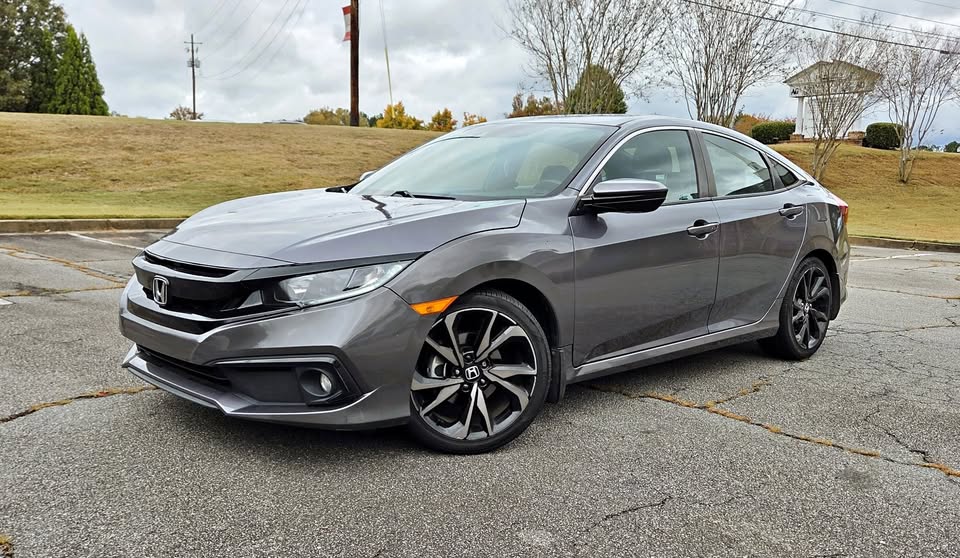
1. Split the Civic by engine first, or the fuel advice goes wrong fast
Four Civic personalities hiding behind one badge
Walk up to two Civics at the same pump. One shrugs off 87. The other quietly pulls timing under load. The difference sits under the hood, not on the trunk.
Honda runs four real fuel personalities here. The K20C2 2.0L stays low-stress and port-injected. The 1.5T L15B7/L15CA adds boost and direct injection. The Si sharpens that turbo tune. The Type R pushes boost past 20 psi and lives on premium.
The newer hybrid adds a fifth angle. It uses a 2.0L Atkinson-cycle engine with direct injection and high compression. That setup runs regular by spec, but combustion stability gets tighter under heat and load.
| Civic era / trim | Engine | Induction | Fuel baseline | Real fuel question |
|---|---|---|---|---|
| 10th/11th gen LX, Sport | K20C2 2.0L | Naturally aspirated | 87 octane | Is premium wasted money? |
| 10th/11th gen EX, Touring, Hatchback 1.5T | L15B7 / L15CA 1.5T | Turbo DI | 87 minimum | Does 91 hold timing and reduce heat? |
| Civic Si | 1.5T performance tune | Turbo DI | 91 recommended / manual context | How much power is lost on 87? |
| Civic Type R | K20C1/K20C8 2.0T | Turbo DI | Premium territory | What happens if you cheap out? |
| 2025–2026 Civic Hybrid | 2.0L hybrid | Atkinson + DI | Regular on spec sheets | Does octane affect stability under load? |
Same Civic name, completely different combustion stress
Look at cylinder pressure, not marketing names. The 2.0L NA engine runs moderate compression and steady heat. It lives far from knock limits in normal driving.
Now step into the 1.5T. Boost pushes effective compression far past the static ratio. Intake air heats up. Cylinder pressure spikes during acceleration. That’s where octane margin starts to matter.
The Si and Type R raise the stakes again. Higher boost, tighter timing targets, and more aggressive ignition maps. These engines sit closer to knock even on good fuel.
One engine cruises at 150 hp with wide safety margins. Another pushes past 300 hp under boost. Both wear the Civic badge, and both react very differently to the same tank of gas.
2. What actually happens inside the cylinder when octane drops
Knock starts before you hear it, the ECU already feels it
Roll into the throttle on a warm day. The engine feels flat for a split second. No noise, no warning light. That’s the knock sensors doing their job early.
Modern Civics run piezoelectric knock sensors bolted to the block. They listen for vibration spikes in the 5–15 kHz range. The ECU flags those signals before audible ping shows up.
Once detected, ignition timing gets pulled back in degrees. Fuel trims shift richer to cool the chamber. Boost gets trimmed on turbo models. All of that happens in milliseconds.
You never hear knock most of the time. You just lose power and efficiency while the ECU protects the engine.
Timing pull hits torque first, not top-end numbers
Step on it merging onto a highway. The car moves, but it feels softer than expected. That’s timing reduction cutting cylinder pressure.
Each degree of timing pulled costs torque. On turbo Civics, a 3–6° pull under load is common on low-octane fuel. That shows up as slower midrange, not just peak horsepower loss.
The ECU targets safe combustion, not maximum output. It would rather give up 20–40 hp than risk detonation damage.
You feel it most between 2,500 and 4,500 rpm. That’s where boost and load stack together.
Turbo engines stack heat, octane becomes a thermal buffer
Boost compresses air. Compressed air heats up. Hot intake charge raises combustion temperature before the spark even fires.
Intercoolers knock some heat out, but not all. Under repeated pulls, intake temps climb fast. That pushes the engine closer to knock limits.
Higher octane resists spontaneous combustion under that heat. It buys the ECU more timing room and steadier boost control.
Low octane removes that buffer. The ECU reacts by cutting boost and timing together.
Direct injection changes knock behavior but does not eliminate it
Fuel sprays directly into the cylinder under high pressure. That cools the charge during injection. It helps delay knock compared to port injection.
But DI engines run higher compression and leaner mixtures under light load. Under boost, they still hit knock limits when octane drops.
Carbon buildup on intake valves and piston crowns can raise compression over time. That shrinks knock margin further, especially past 60,000–80,000 miles.
The system fights knock better than older engines. It does not make octane irrelevant.
What the ECU will not do, no matter the fuel
The ECU won’t advance timing beyond its mapped ceiling just because you added premium. If the tune is built for 87, gains stay small.
It won’t save a bad tank instantly either. Learned knock correction tables take drive cycles to reset.
And it won’t protect forever if knock is severe. Sustained detonation can still damage pistons, rings, or rod bearings.
Severe knock events can push cylinder pressure past safe limits in under 1 second.
3. Civic engines don’t all react the same, some are far less tolerant
Naturally aspirated engines stay stable, but still give up efficiency
Start a base Civic with the 2.0L K20C2. It runs a modest compression ratio around 10.8:1. That gives it more room to handle 87 without stress.
Under load, the ECU still trims timing when fuel quality drops. The change stays small, often 1–3°. You feel it as slightly slower response, not a major loss.
Fuel economy takes a quiet hit. The engine burns a bit richer to stay stable. That shows up as a 1–2 mpg drop in mixed driving.
Long-term damage risk stays low here. The system rarely reaches true knock under normal driving.
The 1.5T lives on the edge, boost turns octane into a hard limit
Drive a 1.5L turbo Civic in summer traffic. Intake temps climb. You roll into boost, and the ECU starts pulling timing fast.
This engine runs higher effective compression under boost. Even at stock levels, cylinder pressure spikes hard between 2,000 and 4,000 rpm.
On 87 octane, knock correction ramps up quickly. Expect 3–6° timing pull under moderate load, sometimes more in heat.
Boost control follows timing. The ECU reduces pressure to keep combustion stable. Power drops where the engine should feel strongest.
Repeated heat cycles make it worse. After a few hard pulls, the system holds back even sooner.
Hybrid Civics run cooler, but still rely on octane under load
The 2.0L Atkinson-cycle engine in hybrid models works differently. It keeps intake valves open longer to lower effective compression.
Most driving loads shift to the electric motor. That reduces knock exposure during light throttle.
Under sustained highway load, the gas engine carries more of the work. At that point, octane still matters.
Timing adjustments stay mild compared to the turbo engine. But efficiency still drops when the ECU adds fuel to control heat.
Older Civics behave differently, but knock control still applies
Pre-2016 Civics with port injection run lower injection pressure and simpler control logic. Knock sensors still feed timing correction, but response is slower.
You’re more likely to hear light ping under load in older models. The ECU reacts, but not as quickly as newer systems.
Carbon buildup affects these engines too. Higher mileage raises effective compression and narrows the safety margin.
They tolerate 87 well when healthy. But poor fuel or heavy load can still trigger audible knock.
Where each engine lands under low octane stress
| Engine | Compression / Boost Behavior | Typical Timing Pull | Driver Impact |
|---|---|---|---|
| 2.0L NA (K20C2) | Moderate compression, no boost | 1–3° | Slight power loss, minor MPG drop |
| 1.5L Turbo (L15B7/L15CA) | High effective compression under boost | 3–6°+ | Noticeable midrange loss, reduced boost |
| 2.0L Hybrid (Atkinson) | Lower effective compression, electric assist | 1–2° | Small efficiency drop under load |
| Older NA (R18/K-series) | Lower pressure, slower ECU response | 2–4° | Occasional ping, moderate response loss |
The 1.5T sees the highest cylinder pressure spikes. That makes it the most sensitive to fuel quality in real driving.
4. When the wrong fuel turns into real damage
LSPI hits fast in small turbo engines, and octane plays a role
Cruise at low rpm. Tap the throttle. The engine stumbles hard for a split second. That’s how Low-Speed Pre-Ignition shows up.
LSPI fires the mixture before the spark. Pressure spikes hit while the piston is still rising. Rods and pistons take the shock.
The 1.5T Civic sits in the risk zone. Small displacement, high boost, low rpm torque demand. All the ingredients line up.
Octane helps resist uncontrolled ignition. It doesn’t eliminate LSPI, but poor fuel raises the chance during heavy low-rpm load.
A single LSPI event can bend a connecting rod. That’s a teardown-level failure.
Sustained knock wears parts even without a failure event
Drive on low octane for weeks. The engine keeps pulling timing to stay alive. Combustion stays controlled, but not clean.
Higher cylinder temps stress piston crowns and ring lands. Oil film breaks down faster under heat.
Over time, rings lose seal. Blow-by increases. Oil consumption starts creeping up. You won’t see it in one tank. You see it over 30,000–60,000 miles of poor fuel use.
Turbo heat and weak fuel push exhaust components hard
Under boost, exhaust gas temps climb fast. Add timing retard and richer fueling, and heat moves downstream.
Turbo housings and exhaust valves take the load. Catalytic converters see higher thermal stress.
Repeated high-temp cycles age the catalyst faster. Efficiency drops. Eventually, codes like P0420 can show up.
Turbo bearings also rely on stable oil under heat. Poor combustion control raises that stress.
Carbon buildup tightens the margin over time
Direct injection leaves intake valves unwashed by fuel. Oil vapors stick and form deposits.
Deposits raise compression and create hot spots in the chamber. That makes knock easier to trigger.
Low-octane fuel in a carbon-heavy engine forces more timing pull. The ECU works harder to keep things stable.
Past 80,000 miles, buildup can shift the knock threshold noticeably. Walnut blasting or chemical cleaning becomes necessary.
What failure actually costs when it goes wrong
| Failure Type | What Fails | Typical Cost |
|---|---|---|
| LSPI damage | Bent rod, cracked piston | $4,000–$8,000 engine rebuild |
| Chronic knock wear | Rings, piston crowns | $2,500–$5,000 partial rebuild |
| Catalyst overheating | Catalytic converter | $900–$2,500 |
| Turbo heat stress | Turbocharger | $1,200–$3,000 |
LSPI damage can happen in a single event. Repairs often exceed $5,000 once labor and parts add up.
5. What premium fuel actually changes in a Civic
Premium unlocks timing the ECU already holds back
Fill with 91 or 93. Drive the same stretch again. The engine feels sharper off the same throttle.
Higher octane slows uncontrolled combustion. The ECU sees fewer knock events. It allows more spark advance within its mapped window.
On the 1.5T, that often means 2–4° more timing under load. Cylinder pressure builds at the right moment, not early.
The gain shows up in midrange pull, not just peak numbers. Expect a 10–20 hp swing in real conditions.
Boost holds steadier when knock margin improves
Turbo Civics rely on stable combustion to keep boost targets. When knock drops, the ECU stops reducing pressure.
Wastegate duty stays higher. The turbo holds commanded boost longer through the pull.
That keeps torque flat instead of tapering early. You feel it climbing from 2,500 rpm without the soft fade.
On low octane, boost often dips under sustained load. Premium keeps it closer to target.
Heat control improves, especially in repeated pulls
Run back-to-back accelerations. Intake temps climb. On 87, the ECU steps in sooner each time.
With premium, knock margin stays wider under heat. Timing corrections stay smaller across repeated runs.
That stabilizes combustion temps. Exhaust gas temps stay more predictable. The system recovers faster between pulls.
Track use or hot climates make this difference obvious. Street driving shows it during long highway climbs.
Fuel economy can offset part of the cost
More complete combustion means less enrichment under load. The ECU doesn’t need to dump extra fuel as often.
In steady driving, gains stay small. Around 1–2 mpg is typical when switching from 87 to 91 in the 1.5T.
In mixed or aggressive driving, the gap widens. The engine spends less time in knock-avoidance mode.
Cost per mile can narrow more than pump price suggests. The math depends on how hard you drive.
Where premium actually makes sense
The 2.0L NA Civic sees limited benefit. The ECU already runs near optimal timing on 87.
The 1.5T responds the most. Heat, load, and boost make octane a real limiter.
Hybrids sit in the middle. Gains show under sustained engine load, not daily stop-and-go.
Premium makes the biggest difference in high temps, heavy traffic, or repeated acceleration.
6. What to run in real driving, not brochure conditions
Daily commuting on flat roads stays within 87’s comfort zone
Start the car cold. Roll through city traffic. Short bursts, low load, steady temps. The engine rarely reaches knock limits here.
The ECU keeps timing close to base maps. Knock correction stays minimal. Fuel trims stay stable.
The 2.0L handles this without effort. The 1.5T stays out of heavy boost most of the time.
You won’t feel a strong gain from premium in this pattern. Real-world difference stays small below 40% load.
Heat, traffic, and load push the engine into knock control
Sit in summer traffic. Intake temps climb past 120°F. Oil thins. You accelerate into a gap, and load spikes.
Now the ECU starts working. Timing drops. Boost tapers on the turbo engine. The car feels softer than expected.
This is where octane matters. Higher resistance to knock keeps timing closer to target.
In hot climates, premium reduces how often the ECU pulls power under normal driving loads.
Highway climbs and full-throttle pulls expose fuel limits
Merge uphill at 70 mph. The engine loads hard and stays there. Cylinder pressure stays high for longer than a quick burst.
On 87, knock correction ramps quickly. Timing drops several degrees. The engine holds less torque through the climb.
On 91+, timing stays steadier. Boost holds closer to target. The car maintains speed with less throttle.
Sustained load is where octane differences become obvious, not quick city bursts.
Towing, passengers, and cargo shift the equation fast
Load the trunk. Add passengers. The engine works harder even at the same speed.
More load raises cylinder pressure at lower throttle angles. That pushes the engine toward knock sooner.
Turbo models feel this first. The ECU limits boost earlier to protect the engine.
Premium helps hold usable torque under load. Without it, power cuts show up sooner under the same conditions.
How to decide without guessing
| Driving Pattern | Fuel That Fits Best | Why |
|---|---|---|
| Short trips, flat roads | 87 octane | Low load, minimal knock activity |
| Hot climate, daily traffic | 91+ octane | Higher temps reduce knock margin |
| Highway hills, long drives | 91+ octane | Sustained load raises cylinder pressure |
| Heavy passengers or cargo | 91+ octane | Added load pushes boost and timing limits |
| Mixed normal driving | 87 or 91+ | Depends on how often you push the engine |
The 1.5T shows clear gains under load and heat. The 2.0L stays stable on 87 unless conditions push it harder.
7. What happens when you switch fuels, and how fast the engine adapts
The ECU learns fuel quality, but not instantly
Fill up with a different grade. Drive off. The engine doesn’t change behavior right away.
Honda ECUs use knock control history tables. They store how much timing correction was needed in past conditions.
Those learned values carry over after a refill. The system assumes the same fuel until it proves otherwise.
Full adaptation usually takes 2–3 drive cycles. That means varied load, not just idle or short trips.
Switching to premium needs load to show gains
Pour in 91 after running 87. Drive gently. The engine feels almost the same.
The ECU won’t advance timing unless it sees low knock under load. Light throttle gives it no reason to change.
You need moderate acceleration or a highway pull. That’s where the system tests knock limits and adjusts timing upward.
Until then, the engine stays conservative. Gains don’t appear just from the fuel sitting in the tank.
Going back to 87 triggers fast correction
Switch from premium back to 87. The ECU reacts quickly once knock appears.
Timing gets pulled within milliseconds of detection. Boost trims follow on turbo engines.
The system protects immediately, even if it hasn’t relearned long-term tables yet.
Short-term knock control always overrides learned values. That keeps the engine safe under sudden fuel changes.
Resetting the ECU wipes learned knock history
Disconnect the battery or clear adaptive memory. The ECU loses its stored correction data.
It returns to base timing maps. From there, it relearns knock behavior from scratch.
This can make the engine feel stronger briefly on lower octane. That doesn’t last once knock is detected again.
Relearning typically stabilizes within 50–100 miles of mixed driving.
Why mixed fuel tanks blur results
Top off with premium over half a tank of 87. The effective octane lands somewhere in between.
The ECU sees inconsistent knock signals. Timing adjustments fluctuate more than usual.
This makes performance feel uneven. One pull feels strong, the next feels muted.
Consistent fuel choice gives the ECU cleaner data. Mixed tanks slow adaptation and hide real gains.
8. The cost math, where fuel price meets real engine behavior
Pump price looks simple, cost per mile isn’t
Look at the pump. 87 costs less per gallon. That part is obvious.
What matters is how far each gallon takes you under real load. Knock control changes that distance.
When timing gets pulled, the engine makes less torque per combustion cycle. You press the throttle deeper to compensate.
That increases fuel flow. The gap between 87 and 91 shrinks once driving conditions get harder.
Turbo Civics show the biggest swing in real cost
Run a 1.5T on mixed driving. Expect around 32 mpg on 87 under moderate load.
Switch to 91 in the same conditions. MPG can climb to 33–34 when knock correction drops.
That 1–2 mpg gain offsets part of the price difference. The harder you drive, the more that gap matters.
Under heavy load or heat, the efficiency gap widens further. The engine spends less time in enrichment.
Naturally aspirated models rarely justify premium on cost alone
The 2.0L engine runs near optimal timing on 87. There’s little efficiency left to unlock.
Switching to premium might add 0–1 mpg at best. Often it shows no measurable gain.
You pay more per gallon without meaningful return. The math doesn’t close in normal driving.
Performance gains also stay small. The ECU already sits near its timing ceiling.
Long-term wear carries hidden cost, not seen at the pump
Consistent low-octane use under heavy load increases thermal stress. That shows up later, not during fill-ups.
More knock correction means more heat cycles on pistons, valves, and catalysts. Wear accumulates slowly.
Turbo engines feel this more. Higher cylinder pressure and heat amplify the effect. You won’t track this in MPG. You see it when parts age faster or fail earlier.
Real-world cost comparison under mixed driving
| Engine | Fuel | Avg MPG | Fuel Price (example) | Cost per 100 miles |
|---|---|---|---|---|
| 1.5T | 87 | 32 mpg | $3.50/gal | $10.94 |
| 1.5T | 91 | 34 mpg | $4.00/gal | $11.76 |
| 2.0L NA | 87 | 34 mpg | $3.50/gal | $10.29 |
| 2.0L NA | 91 | 35 mpg | $4.00/gal | $11.43 |
The 1.5T narrows the gap when driven hard. The 2.0L keeps 87 as the cheaper option in most cases.
Sources & References
- Premium vs. Regular Gas Escondido CA
- Is There A Big Difference Between 91 And 93 Octane? – YouTube
- PSA: 1.5T / 2.0T Octane Ratings & Why You Probably Don’t Want 87oct : r/civic – Reddit
- 2026 Honda Accord LX and SE – Honda Now Recommends 91 Octane Gas – Reddit
- 2021 Civic Sedan Specifications & Features – Honda Newsroom
- Civic Si: Affordable Fun | WardsAuto
- 2018 Honda Civic Lx, what gas do I really use? – Reddit
- 11th Gen Fuel Octane Answered : r/CivicSi – Reddit
- Question regarding Octane grade : r/civic – Reddit
- Premium Gas | Inside EVs Forum
- 2016 Civic Model Specifications and Features – McConnell Honda
- Honda Civic (tenth generation) – Wikipedia
- De-Carbonizing Intake Valves on Gasoline Direct Injection Engines – CMD Charlotte Auto Repair
- Is there any benefit to putting premium fuel in Honda’s 1.5T or 2.0T engines? – Reddit
- Used 2021 Honda Civic Specs & Features | Edmunds
- Honda’s Civic Engine Is The Most Efficient Non-Hybrid Inline-Four In Current Production
- 2026’s Most Reliable Engine in Affordable Cars: Honda Civic’s K-Series – CarBuzz
- How can Mazda put a 2.5L in every Mazda3 trim yet other manufacturers like Honda feel they need a small displacement turbo for emission regulations? : r/cars – Reddit
- 2026 Honda Civic Sedan Specifications & Features
- The Definitive Guide To Building a Honda L15B/C (1.5T) Engine – Wunderladen Racing
- 2026 Honda Civic Type R | Features & Specifications
- Filling up with 87 vs 89 gas for a Honda accord Ex, does it really make a difference? – Reddit
- Fuel Information | CIVIC SEDAN 2024 | Honda
- Fuel Information | CIVIC SEDAN 2022 – Honda TechInfo
- Enhancing Fuel Standards for Gasoline Direct Injection (GDI) Engines | Afton Chemical
- Service Bulletin – nhtsa
- Service Bulletin – nhtsa
- Honda 1.5-Liter Turbo Engine
- About – Top Tier Gas
- Honda CIVIC SEDAN Owner’s Guide
- Fuel Information | CIVIC HATCHBACK 2025 | Owner’s Manual – Honda TechInfo
- What Is TOP TIER™ Gasoline? – YouTube
- Service Bulletin 22-019, Carbon Buildup with Misfire DTCs repair procedure. – nhtsa
- Service Bulletin – Honda TechInfo
- Fuel Recommendations – Honda Engines
- Everything You Need to Know About E15 – Renewable Fuels Association
- Ethanol Gas Guide for Drivers | E10, E15, E85 & E30 – Nebraska Corn Board
- TSP Stage 1 Tune for 2016-2021 Honda Civic 1.5T Non-Si – Two Step Performance
- DYNO TESTED (87 vs. 91 Octane) – How much HP gained? // 10th Gen (2018+) Honda Accord 2.0
- Would any of Honda’s 1.5T engines benefit to put 91-93 octane gas in them? – Reddit
- Regular gasoline on the 2023 11th gen? : r/accord – Reddit
- 91 vs 93 Octane on a Civic Type R — The Truth About Power Gains #hondata #fl5 #typer – YouTube
- Is Higher Octane Fuel Better? Better MPGs? More HP? Let’s find out! – YouTube
- EPA Fuel-Economy Ratings – 2025 Honda Civic Si
- Top Tier gas makes a difference. 2.4L : r/accord – Reddit