
Buck at a stop. Watch the tach jump. Feel the next gear hit like a boot. That’s where many Jeep Grand Cherokee transmission problems begin.
Since 1993, the Grand Cherokee has used a long list of gearboxes. Early ones were simple and rough. Later ones added more gears, more modules, and more ways to fail. That opened the door to limp mode, shudder, bad shift logic, rollaway trouble, and costly clutch damage.
This guide sorts the problem by transmission era. That matters, because a worn 42RE, a leaking NAG1, and a modern 850RE do not fail the same way. Some Grand Cherokees break old-school. Some break through software first.
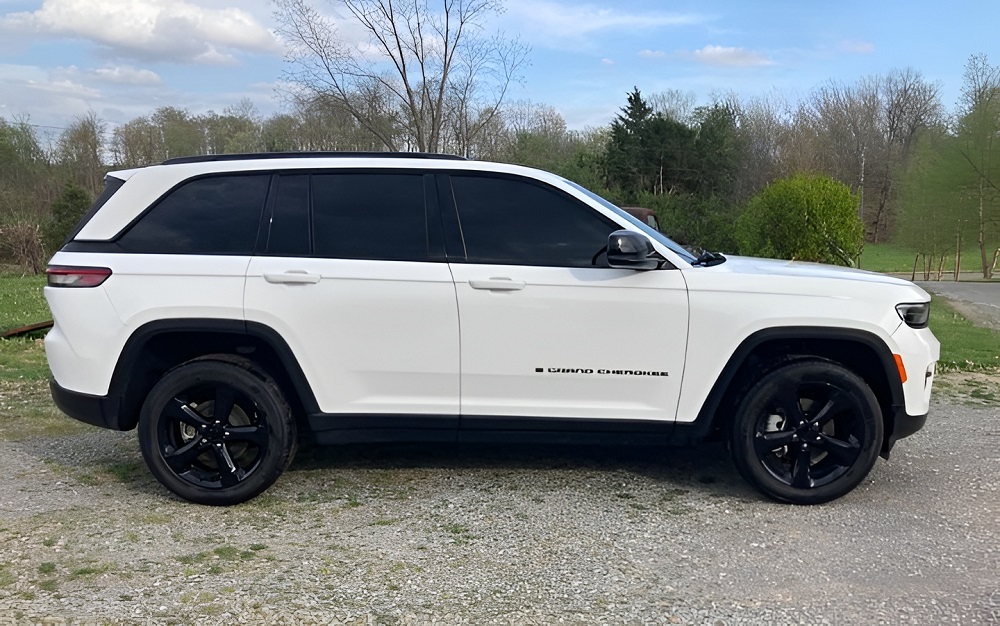
1. Split the Grand Cherokee by gearbox first
One badge, several very different transmissions
Grand Cherokee transmission problems don’t track cleanly by model year. They track by gearbox family. A ZJ with a 42RE fails one way. A WJ with a 545RFE fails another. A WK with a NAG1 brings fluid and connector trouble. A WL with an 850RE can throw P0733 or P1DA8 and lose reverse or higher gears.
The early trucks used AW4, 42RE, 46RH, and AX15 units. The WJ years centered on 45RFE and 545RFE. The WK years brought the W5A580/NAG1. The WK2 years added 845RE, 8HP70, and 8HP95. The WL generation moved to 850RE and the hybrid 8P75PH.
| Generation | Code | Years | Main transmissions |
|---|---|---|---|
| 1st | ZJ | 1993–1998 | AW4, 42RE, 46RH, AX15 |
| 2nd | WJ | 1999–2004 | 45RFE, 545RFE |
| 3rd | WK | 2005–2010 | W5A580/NAG1, 545RFE |
| 4th | WK2 | 2011–2021 | 545RFE, 65RFE, 845RE, 8HP70, 8HP95 |
| 5th | WL | 2021–present | 850RE, 8P75PH |
The old boxes were crude, but easier to read
Older Jeep transmissions usually failed in direct sight. They held gears too long. They downshifted late. They dropped into limp mode. The fault path was often hydraulic, solenoid-based, or tied to worn internals.
The newer units are sharper, faster, and far more sensitive. They need clean fluid, steady voltage, and clean module signals. When voltage drops during cranking, the TCM can fail to wake up right and set P0702. That can lock the vehicle into limp mode even when the hard parts are still fine.
Why this split matters before the first repair guess
A bad 42RE does not need the same path as a wet NAG1. A wet NAG1 does not need the same path as a clutch-fault 850RE. One may need hydraulic diagnosis.
One may need leak repair and harness cleanup. One may need D-clutch work or full replacement. Some WL failures end there because dealers do not service those internals piece by piece.
2. The early trucks fail through hydraulics first, then control logic
The ZJ boxes show their problems without much mystery
The ZJ years ran simpler units like the AW4, 42RE, and 46RH. These transmissions were rough by modern standards, but they telegraphed failure early.
The common pattern was governor pressure trouble. When the solenoid or sensor went bad, the truck held gears too long or refused to downshift when road speed dropped.
That gave the driver a clear set of symptoms. Revs stayed high after lift-off. The transmission hung in gear longer than it should. Downshifts came late, or not at all. Heat and age made it worse, because worn hydraulic circuits had less margin once fluid got hot.
The WJ moved the fight into adaptive control
The WJ brought in the 45RFE and later 545RFE. Those units had three planetary gear sets and a hidden second overdrive for highway use. They earned a better reputation than the old 42RE family when fluid and wiring stayed healthy. They also pushed the Grand Cherokee deeper into TCM-managed behavior.
That changed the failure style. A worn hydraulic unit still acted worn. A control-side fault could now force limp-in mode and lock the transmission in third gear to prevent harder damage.
The truck might feel dead off the line, then rev too high on the highway because third gear was the only gear left. Electrical noise and bad grounds were enough to trigger that behavior.
The 545RFE lasts better than the older boxes, but it won’t forgive bad inputs
The 545RFE is one of the stronger early Grand Cherokee automatics. It is not a miracle unit. Once the TCM sees the wrong signal, shift quality can fall off fast even before the hard parts fail.
That’s why some WJ trucks feel mechanically broken when the core problem sits in voltage, grounding, or controller logic.
Limp mode in these years was a protection move, not random chaos. The control system locked the transmission in third gear to keep the internals alive when it saw a threat. That left the truck slow from a stop, blunt on hills, and stuck with a hard real-world limit of one forward gear ratio.
3. The WK years brought the NAG1, and small leaks started causing big damage
The NAG1 can take power, but it hates contaminated fluid
The WK years moved part of the Grand Cherokee line to the Mercedes-based W5A580, better known as the NAG1. The unit itself had real strength.
The weak spot was fluid condition. Once contamination got into the oil, shift quality fell fast and torque-converter lockup shudder moved to the front of the complaint list.
One Chrysler bulletin tied that shudder to water entry through the dipstick tube seal. The threshold in 21-011-05 was about 0.5% water concentration in the fluid. That was enough to disrupt friction behavior and trigger converter shudder during lockup.
The connector leak turns a fluid problem into an electrical one
The NAG1 also carried the 13-pin connector leak problem. Fluid could seep past the connector adapter, move through the harness by capillary action, and reach the control side of the system.
At that point, the transmission was no longer dealing with oil loss alone. It was dealing with electronic contamination.
That changes the repair path. A simple seep at the case can become erratic shifting, module faults, or full control trouble once the fluid reaches sensitive circuits. This is one of the first Grand Cherokee transmission stories where a leak can end with electrical damage far away from the original seal.
The WK sits between the old Jeep world and the modern one
This generation still had solid mechanical bones. It also demanded cleaner fluid and cleaner wiring than the earlier trucks. That made it a bridge-era gearbox, stronger than the oldest units in some ways, but less forgiving when fluid or electronics went off line.
A bad O-ring or leaking connector could trigger shudder before any clutch pack was physically burned up.
4. The WK2 shifter turned a transmission control problem into a safety scandal
The early WK2 danger started at the selector, not inside the clutch packs
The 2014–2015 WK2 brought in the monostable electronic shifter. It always sprang back to center after the driver moved it. That removed the old visual cue drivers used to trust. Many thought the Jeep was in Park when it was still in Neutral or Reverse.
That defect sat in the control side of the transmission system. The gearbox did not need to slip, flare, or burn a clutch to create danger. The problem was feedback. The selector did not give a clear parked state, and the vehicle could roll when the driver stepped out.
The rollaway numbers made it a real defect, not a weird owner mistake
Federal investigators opened 16V-240 after reports tied the shifter design to more than 300 rollaway incidents, 117 crashes, and 28 injuries.
The issue became national news after a 2015 Grand Cherokee rolled and caused the death of actor Anton Yelchin. Court records and the recall file pushed the same point. Drivers could exit the vehicle believing it was secure when it was not.
That is why this belongs in a transmission-problems guide. Normal owners do not split hairs between internal geartrain failure and transmission-control failure. If the shifter can leave the Jeep rolling, the transmission system has failed in the only way that matters.
| Recall item | Record |
|---|---|
| NHTSA campaign | 16V-240 |
| Main Grand Cherokee scope | 2014–2015 |
| Core defect | Driver may believe the vehicle is in Park when it is not |
| Main remedy | Auto Park software update |
Auto Park was the fix, because the hardware stayed the same
The remedy was Auto Park software. If the engine was running, the vehicle was in gear, and the driver opened the door, the system could command Park on its own. That added the missing guardrail after the fact. It did not turn the shifter into a gated lever.
So the first big WK2 transmission story was not a blown eight-speed. It was a human-machine failure wrapped around the shifter and control logic. The affected Grand Cherokees were 2014–2015 models under campaign 16V-240.
5. The eight-speed brought speed, then shudder, flare, and pressure loss
The 845RE and 8HP70 shift well until the oil and hydraulics fall off
The WK2 changed hard when the ZF-based eight-speeds arrived for 2014. Jeep used the Chrysler-built 845RE and the ZF-sourced 8HP70.
These units gave the Grand Cherokee quicker shifts, better ratio spread, and better fuel economy. They also came in with early calibration trouble and more dependence on mechatronics than older Jeep owners were used to.
The weak points sit inside the converter, clutch circuits, and valve body. One major failure lane starts at the E-clutch, which sits farther from the pump and can lose margin first under heat or oil starvation.
Another starts inside the mechatronic unit, where internal cross-leaks at relief valves and end plugs reduce line pressure. That is when rpm flares before the next gear lands with a thud.
The failure usually climbs a ladder instead of showing up dead in one day
The first clue is often light-throttle shudder at 50–60 mph. That points at lockup clutch slip in the torque converter. Keep driving it that way and the oil starts carrying varnish and fine clutch debris. Once that trash reaches the mechatronic circuits, solenoids and valve-body passages stop working clean.
Heat makes the next step worse. Clutches glaze, line pressure falls off harder, and neutral-drop events start entering the picture. By the end of the chain, the unit may lose drive, slam shifts, or suffer a full hydraulic collapse. That is the stage where rebuild talk starts because the damage is no longer just calibration-deep.
| Failure stage | What the driver feels | Primary Cause |
|---|---|---|
| 1 | Shudder at light throttle, 50–60 mph | Converter lockup clutch slip |
| 2 | Dirtier fluid, harsher feel | Clutch debris and varnish in the oil |
| 3 | Flare, delayed engagement, erratic shifts | Valve-body and solenoid contamination |
| 4 | Hot operation, slipping under load | Clutch glazing and thermal damage |
| 5 | Neutral drop or total failure | Hydraulic collapse or hard-part damage |
Chrysler kept flashing the TCM because the early shift logic needed work
Factory bulletins back that up. 21-030-16 covered 2015 WK2 models and called for TCM reprogramming to improve 4-3 and 3-2 downshifts, high-altitude shift timing, passing downshifts, torque-converter engagement, and some flare and garage-shift complaints.
Later, 21-009-17 Rev. E laid out the Clear Adaptives and Quick Learn path for WK2 applications after shift flare or clutch repair.
That matters because adaptive learning can hide wear for a while. The TCM watches clutch-apply time in milliseconds and keeps changing pressure to chase the shift target.
Replace a solenoid or clutch-related part and skip Quick Learn, and the transmission can overapply pressure to the new hardware. The result can be fast wear and the same complaint coming right back.
6. Lifetime fluid talk is where many good gearboxes start dying early
Jeep sold low service. ZF sold a service interval
A lot of Grand Cherokee owners were told the 8-speed had lifetime fluid. That sounds good on a brochure. ZF’s service guidance points to an oil change at about 150,000 km, or about 93,000 miles, under normal use. In heavier service, many shops move that target forward to about 50,000 to 60,000 miles.
Severe use comes sooner than most owners think
A Grand Cherokee hits severe-duty conditions fast. Towing, summer heat, short trips, stop-and-go traffic, and AWD load all work the fluid harder.
Once the oil starts to oxidize, friction control drifts, valve lubrication falls off, and the integrated pan filter starts loading up with fine clutch material. Leave it there long enough, and weak clutch circuits start losing hydraulic margin first.
If you want, I can also patch the exact paragraphs in-place so they match the final article wording line for line.
Dirty fluid can fake a major failure before the hard parts are done
This is where “sealed for life” gets expensive. A transmission with degraded fluid can shudder, delay engagement, or bang into gear before the clutch packs are fully worn.
Owners often read that as full mechanical death. Sometimes the unit is already there. Sometimes the fluid and filter were left in place too long and the hydraulics are now working with reduced margin.
The 8-speed pan and filter are tied together, so service is not just a drain-and-fill shortcut. Once the filter loads up, line pressure can drop where the weak clutch circuits feel it first.
Leave it long enough, and the transmission starts spending its life with less hydraulic reserve than it was built to have. ZF’s published interval lands around 93,000 miles, not “never.”
7. The WL years brought clutch-code failures and hybrid handoff trouble
The modern paper trail starts with the D-clutch
The WL generation moved to the 850RE and a more software-heavy control setup. Early trouble did not wait for high mileage. Bulletin 21-039-24 Rev.
D tied 2021–2023 Grand Cherokee and Grand Cherokee L models to P0733, P1DA8, and P1D92. The symptom list was blunt, slip, no reverse, or refusal to shift above third gear.
Those codes point at Clutch D trouble, not vague bad behavior. The repair path in the bulletin was D-clutch replacement. Later campaign paperwork kept that lane alive into 2024–2025 applications. This is current-era hard-part failure, not just a rough shift complaint.
Low-mileage failures hit harder when the truck is still new
Some WL complaints showed up early enough to destroy owner confidence fast. Reports and complaint patterns describe failures under 1,000 miles in some cases.
That changes the math. A worn transmission at 180,000 miles is one story. A new SUV that slips, loses reverse, or stays stuck in lower gears is another.
The service limit matters here too. Dealers do not rebuild these units piece by piece the way old-school shops handled earlier automatics.
When the failure path lands in clutch or valve-body territory, replacement becomes the real answer fast. That system limit is part of why a modern Grand Cherokee transmission failure gets expensive in a hurry.
The 4xe added a second power source and a second way to shift badly
The 4xe changed the transmission’s job. The hybrid setup uses the gearbox as part of the handoff between the electric motor and the 2.0L turbo engine.
That means rough operation can come from clutch control, thermal control, software timing, or bad coordination between modules. Owners describe hesitation, rough transitions, and reduced-power behavior when that handoff goes wrong.
Bulletin 18-013-23 Rev. A shows how tied together those systems are on the 2022 WL 4xe. The update path involved the PCM, TCM, and hybrid control strategy, with complaints that included oil dilution, reduced electric-mode availability, and performance issues that affect how the transmission behaves in the real world.
Once that chain goes sideways, the gearbox is no longer working alone. The hybrid side can push the vehicle into limp or reduced-power operation before any classic rebuild symptom appears.
8. Sort the years by risk before the repair bill picks for you
The highest-risk lane sits in the early WK2 years
The worst Grand Cherokee years for transmission trouble land in the 2014–2015 WK2 range. Those trucks carry the monostable shifter problem and early eight-speed calibration trouble in the same window.
One issue could let the vehicle roll away. The other could bring flare, harsh downshifts, bad converter behavior, and repeat TCM flash visits.
That stack matters more than raw parts count. A truck can have a strong gearbox on paper and still be a bad bet if the shifter logic and early software work against it.
These years sit in the red zone because they combine safety exposure with early control-side transmission problems. The shifter recall covered 2014–2015 WK2 models under 16V-240.
The old trucks are simpler, but age now decides a lot of the outcome
The ZJ and early WJ years fall into a different bucket. Their transmissions are easier to read and more direct to diagnose. Governor issues, limp mode, and worn hydraulic behavior are familiar problems. What hurts them now is age, heat cycles, and years of fluid neglect more than clever software.
That makes them less deceptive, not cheap. A healthy old 545RFE can still be a better bet than a newer Jeep with unresolved control trouble.
A neglected old unit can also turn into a hard-parts job fast once pressure loss and clutch wear pile up. Third-gear limp mode is still third-gear limp mode, no matter how honest the fault path looks.
The mature WK2 years are usually the safer eight-speed bet
The stronger buy zone sits later in the WK2 run, mainly 2018–2021. By then, the eight-speed hardware and software had more time behind them. The units still want clean fluid and proper adaptive procedures. They just do not carry the same early-launch baggage as the first WK2 eight-speed years.
That does not make them maintenance-free. Ignore fluid service, run them hot, or skip relearn work after repairs, and they can still flare, shudder, or lose pressure the same way.
The difference is that the later WK2 years start from a better baseline. They still live under the same hard limit of fluid, filter, and mechatronic condition.
The WL years drive better when healthy, but they still carry real risk
The WL trucks feel more polished when everything works. They also bring fresh ways to fail. Standard models can hit D-clutch faults with P0733, P1DA8, or P1D92.
The 4xe adds another layer, where handoff timing, battery or thermal control, and module sync can push the vehicle into reduced-power or limp behavior.
That leaves the newest Grand Cherokees with a split outcome. They are not stuck with the old shifter scandal. They are still exposed to low-mileage clutch faults and hybrid coordination trouble that can end in major transmission work or full replacement.
On some WL failures, the dealership answer is a unit swap, not an internal rebuild.
| Grand Cherokee bucket | Risk level | What usually defines it |
|---|---|---|
| ZJ / early WJ | Moderate, age-driven | Simple hydraulics, clearer fault paths, old age and neglect now matter most |
| Late WJ / WK | Moderate | Stronger hardware, but fluid contamination and electronic faults start shaping failures |
| 2014–2015 WK2 | High | Monostable shifter recall plus early 8-speed calibration and performance trouble |
| 2018–2021 WK2 | Lower | More sorted eight-speed behavior, still wants fluid service well before “lifetime” claims |
| WL / WL 4xe | Moderate to high | D-clutch faults, wrong-ratio codes, low-mileage failures, and hybrid handoff problems |
Sources & References
- A Journey Through the Jeep Grand Cherokee Generations | Complete Comparison Guide
- Jeep Grand Cherokee Reliability Guide | Common Problems & Best Years – Stivers CDJR
- What is the Most Common Problem with the Jeep Grand Cherokee?(2026 Update)
- Jeep Grand Cherokee – Wikipedia
- ZF 8HP Transmission • Problems & Solutions – Next Gen Drivetrain, Inc.
- Jeep Grand Cherokee Reliability: Problems, Recalls & Complaints – autopom!
- The Jeep Cherokee and Grand Cherokee Widely Reported Transmission Problems
- 2011-2020 Jeep Grand Cherokee Problems – Car City Wholesale
- 45 Rfe 545 Rfe | PDF | Transmission (Mechanics) – Scribd
- 545RFE Transmission: Key Features, Issues, and Specification – upi auto parts
- Nag1 Transmissions: 5 Things to Be Conscious Of
- NAG1 (W5A580) Transmission – Shudder When Torque Converter Clutch Engages OVERVIEW: This bulletin involves thoroughly f
- Jeep Transmissions Options | Twin Lakes Chrysler Dodge Jeep Ram
- A Quick Guide to the ZF 8-Speed Transmission – In The Garage with CarParts.com
- Jeep Cherokee Transmission Problems Explained – Endurance Warranty
- ZF 8HP70 / 8HP45 Transmission Problems – Brisbane Tuning and …
- 8 speed fluid+filter change as preventative maintenance? : r/ram_trucks – Reddit
- The Definitive Guide To The ZF 8-Speed Transmission (8HP45 …
- Jeep Grand Cherokee (WK2) – Wikipedia
- Jeep Grand Cherokee Generations: Key Updates Across All Model Years – CarBuzz
- 96 grand cherokee 5.2L still going into limp mode after transmission rebuild no codes
- Tips – Jeep Grand Cherokee P0702 FIX
- 722.6 or the NAG1? – IDParts Blog
- 8HP45 vs 845RE | Which 8-Speed Transmission Will Last Longer? – YouTube
- Jeep Recalls 2014 Cherokee Again as ZF Nine-Speed Transmission Problems Continue
- 2011-2018 Grand Cherokee & Durango Shifter Guide: Recalls …
- UNITED STATES DISTRICT COURT EASTERN DISTRICT OF MICHIGAN SOUTHERN DIVISION IN RE: FCA US LLC MONOSTABLE ELECTRONIC GEARSHIFT LI
- Fiat Chrysler Jeep Dodge Gear Shifter Recall Class Action | Kessler Topaz
- Safety Recall S27042216: Monostable Gear Selector – Garden City Jeep Chrysler Dodge
- Part 573 Safety Recall Report 16V-240 | NHTSA
- J21 FSAR-TSB-4958 – nhtsa
- Z21 FSAR-TSB-4547 – nhtsa
- 2025 GC L limited Transmission issues : r/GrandCherokee – Reddit
- Transmission Failure 2024 Grand Cherokee L : r/JeepGrandCherokee – Reddit
- Technical Service Bulletin (TSB) – Flash – OEMDTC
- Help! Potential new owner of 2025 Jeep GC L Concerned about reliability : r/GrandCherokee – Reddit
- Electrical fault causing limp mode? : r/Jeep – Reddit
- 2022 Jeep Grand Cherokee Transmission Issues: What You Need To Know – Ae5-app
- Limp mode 2016 jeep grand Cherokee : r/MechanicAdvice – Reddit
- Should I change the transmission fluid? : r/GrandCherokee – Reddit
- Replacing ZF 8 speed transmission fluid at 45K miles? : r/BmwTech – Reddit
- The Not-So-Lifetime ZF 8HP Transmission Fill – BimmerLife
- Common Problems with the ZF 8HP (8-Speed Torque Converter) – ASR Gearbox Repairs
- In brief – ZF Oil change kits – ZF Aftermarket
- RAM Radio Software Update TSB 08-076-23 | PDF | Computer File | Usb – Scribd
- THIS BULLETIN SUPERSEDES SERVICE BULLETINS 21-039-14, DATED NOVEMBER 25, 2014, 21-027-15 REV. C, DATED OCTOBER 09, 2015 AND 21-0 – nhtsa
- 21-009-17 REV. E GROUP: 21 – Transmission and Transfer Case – nhtsa
- 2022 Jeep Grand Cherokee transmission problems | CarComplaints …