
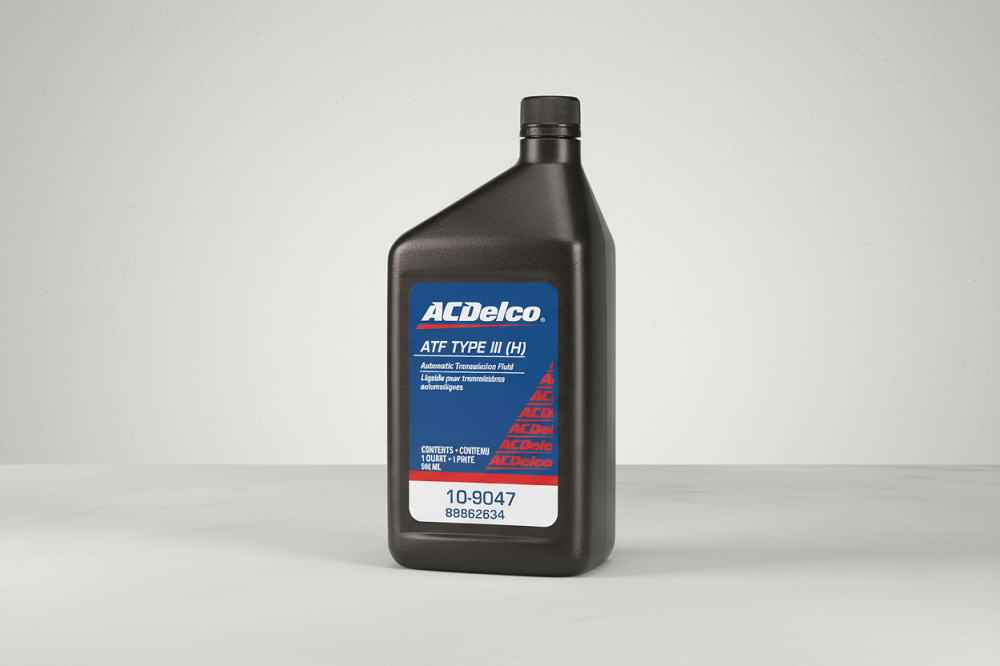
Pull the dipstick and the fluid tells on itself: dark red, thin, burnt, overdue. Now the shelf choice gets risky. Dexron III and Dexron VI share the GM name, but the bottle label does not make them equal.
Most older GM automatics that called for Dexron III can run Dexron VI. That includes many 4L60E and 4L80E services. A manual gearbox or transfer case may need GM Manual Transmission Fluid p/n 88861800 instead.
Match the fluid to the unit, not the old Dexron name. One wrong pour can turn a cheap service into a worn synchronizer, noisy transfer case, or slipping automatic.
1. The rule that saves the transmission
Dexron VI fits most older GM automatics
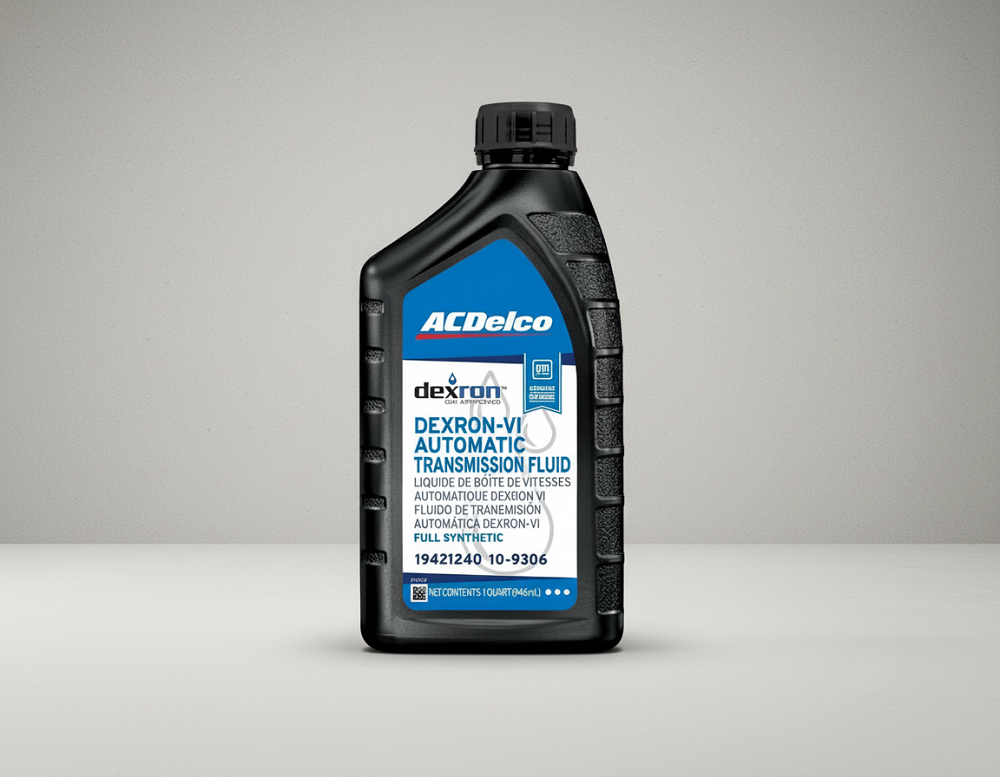
GM gives Dexron VI a wide automatic-transmission lane. It lists Dexron VI for GM automatics that call for Dexron VI, older Dexron fluids, or AW-1. It also says Dexron VI replaces Dexron III(H) and Dexron II(E).
That covers many older GM automatics. A 4L60E, 4L65E, or 4L80E that once called for Dexron III can usually run Dexron VI. The newer fluid gives the pump, valve body, and clutch packs a more stable base.
GM had a reason to move on. By the 2006 model year, units like the 6L80 needed tighter shift control. Dexron III could shear down too fast and lose its feel under heat.
Dexron VI became the factory fill for 2006 GM vehicles. GM also stopped licensing Dexron III specs in 2006. So a new “Dex/Merc” bottle may not carry the same GM approval the old fluid had.
Dexron III does not belong in Dexron VI automatics
Dexron VI can go backward in many GM automatics. Dexron III should not go forward into Dexron VI units.
ACDelco’s Dexron III(H) data says it is not recommended where GM Dexron VI is required. That line matters. Newer GM automatics were built around Dexron VI’s lower viscosity and tighter friction control.
Wrong fluid changes shift timing. The solenoids expect a certain flow rate. The clutch packs expect a certain apply feel. Miss that window and you can get flare, harsh shifts, delayed Drive, or converter shudder.
The 6L80 has less room for bad fluid choices than an old 4-speed. Its clutch-to-clutch shifts need clean pressure handoff. If the fluid misses the spec, the clutch material pays first.
Match the bottle to the unit
| Component or situation | Better fluid choice | Why |
|---|---|---|
| GM automatic that originally called for Dexron III | Dexron VI | GM treats it as the replacement fill |
| GM automatic that calls for Dexron VI | Dexron VI only | Dexron III is not forward compatible |
| Manual transmission that called for Dexron III | GM Manual Transmission Fluid p/n 88861800 or exact OE callout | GM warned against Dexron VI here |
| Transfer case that called for Dexron III | GM Manual Transmission Fluid p/n 88861800 or exact OE callout | Many transfer cases follow the same exception |
| Allison heavy-duty transmission | Allison-approved TES fluid when specified | Allison schedules often follow their own fluid path. |
2. Viscosity is where the fluids part ways
Dexron VI starts thinner and stays closer to spec
Dexron III(H) is the thicker fluid on paper. ACDelco data puts it around 7.0 to 7.8 cSt at 100°C. Dexron VI sits lower, about 5.8 to 6.0 cSt at the same heat.
That thinner start was planned. GM built Dexron VI for lower drag and tighter shift control in units like the 6L80. The fluid had to move fast through small passages without falling apart under pump load.
Dexron III(H) leaned harder on viscosity-index improvers. Those long-chain polymers can shear in pumps, gears, and tight hydraulic circuits. Once they shear, the fluid loses body and shift feel starts to drift.
Dexron VI works from a different base. GM’s development path used more stable Group III base oil and tested more than 700 blends before the final formula won approval in 2003. The target was simple: start thinner, then stay near the working range longer.
Cold flow changes the first shifts of the day
Cold ATF moves like syrup through a valve body. Dexron III(H) shows about 17,430 to 18,500 cP at -40°C. Dexron VI data lands much lower, about 8,500 to 12,030 cP.
That number matters before the truck warms up. The pump has to pull fluid from the pan, feed the valve body, and apply clutches cleanly. Thick cold fluid can slow that pressure rise.
You feel it as a lazy first shift, delayed Drive, or a firmer apply on a cold morning. Dexron VI moves through the same small passages with less drag. The pump does less fighting before the fluid reaches working temp.
Lower cold viscosity also helps old automatics after a sit. It does not fix worn seals or a tired pump. It only helps the fluid reach the parts faster.
The numbers explain the feel
| Fluid trait | Dexron III(H) | Dexron VI | Why owners should care |
|---|---|---|---|
| Viscosity at 100°C | About 7.0 to 7.8 cSt | About 5.8 to 6.0 cSt | Dexron VI starts thinner |
| Cold viscosity at -40°C | About 17,430 to 18,500 cP | About 8,500 to 12,030 cP | Dexron VI moves easier cold |
| Shear behavior | Can shear down faster | Built to stay near grade | Shift feel drifts less |
| Best automatic role | Legacy fluid where still required | Main GM service-fill upgrade | Better fit for most older GM automatics |
3. Shift feel is where Dexron VI earns its keep
Old automatics like fluid that stops changing
Dexron III can feel fine after a service. Then heat and miles start working on it. As it shears, the valve body sees a different fluid than the one poured in.
That change shows up in the seat. Delayed Drive, lazy reverse, shudder, flare, or rough lockup can all follow tired ATF. Older converter clutch systems were sensitive to friction drift, especially after long heat cycles.
Dexron III(G) was created in 1998 to fight VCCC shudder. Dexron III(H) followed in 2003 with better friction modifiers and a longer normal-service target. GM still moved to Dexron VI because the older formula had reached its limit.
Dexron VI gives an older automatic a steadier hydraulic baseline. The pump sees lower cold drag. The clutch packs see friction behavior that stays closer to spec. Burnt friction material, black pan sludge, or metal glitter still means the damage has already started.
Newer 6-speeds needed tighter fluid control
The 6L80 changed the fluid job. GM’s 6-speed automatics used clutch-to-clutch shifts instead of leaning on older one-way clutch behavior. That made timing far less forgiving.
Each shift needs clean pressure handoff. One clutch releases while another applies. If the fluid shears, aerates, or drifts out of friction range, the shift can flare or hit too hard.
Dexron VI launched with the 2006 model-year GM factory fill. It was built for low viscosity, better shear control, and longer friction life. Dexron III was not built for that 6-speed control window.
A Dexron VI automatic needs Dexron VI. Dexron III can change apply timing, converter clutch feel, and solenoid response. The clutch material pays before the bottle label looks wrong.
Fresh fluid will not rebuild worn clutches
Dexron VI can clean up a fluid problem. It cannot fix a hard-part failure. A worn valve body, leaking seal, weak pump, burnt 3-4 clutch pack, or failing converter will still show symptoms.
Start with the pan, not the bottle. Dark fluid with a burnt smell points to heat. Black sludge points to clutch wear. Silver glitter points to metal loss from bushings, bearings, gears, or hard parts.
Codes matter too. A converter-clutch complaint like P0741 needs more than a fluid brand debate. Level, cooler flow, TCC apply, solenoid control, and pan debris all come before another drain-and-fill.
A healthy unit can benefit from Dexron VI. A slipping unit with debris in the pan needs diagnosis before fluid choice becomes the smallest part of the bill.
4. Manuals and transfer cases are the trap door
GM warned against Dexron VI in these units
GM’s 2007 TechLink note drew a hard line. If Dexron III was listed for certain manual transmissions or transfer cases, do not pour in Dexron VI. GM pointed those units to Manual Transmission Fluid p/n 88861800 instead.
That warning matters because many owners only read the Dexron name. They see Dexron III in an old manual, then grab Dexron VI as the newer bottle. That shortcut can put low-viscosity ATF into a unit that was not built for it.
PIP3836B carried the same message. Dexron VI was for automatic-transmission service paths, not a blanket replacement for every older Dexron III callout. Manual gearsets and transfer cases live under a different friction load.
A gearbox asks fluid to do a different job
A manual transmission cares about synchronizer bite. Brass rings need the right friction feel to slow gear speed before engagement. Wrong fluid can make the shifter baulk, grind, or feel slick when hot.
A transfer case adds its own problems. Chain drive, splash lube, pump pickup, bearings, and clutch materials all need the fluid the case was designed around. Lower viscosity can change how fast oil reaches loaded parts.
Dexron VI was built around automatic clutch packs, solenoids, and hydraulic control. A manual gearbox does not shift through a 6L80 valve body. Its weak point may be synchro friction, gear tooth film, or pump feed.
The color will not save you. Red fluid in the wrong case can still leave noisy bearings, rough shifts, or worn synchronizers.
Trust the unit callout, not the Dexron name
Start with the hardware. If the pan belongs to a GM automatic that once called for Dexron III, Dexron VI is usually the right modern fill. If the fill plug belongs to a manual transmission or transfer case, slow down.
Look for the exact GM fluid callout, part number, or later service note. GM Manual Transmission Fluid p/n 88861800 exists because those exceptions mattered. Some Tremec units may need TREMEC HP-MTF or GM Synchromesh instead.
Allison hardware needs the same caution. Some older Allison units used Dexron III, but severe-duty service can point toward TES-295 or TES-389 fluids. Allison schedules often follow their own fluid path.
The bay rule stays simple. Automatic pan, older Dexron III callout, Dexron VI usually fits. Manual case, transfer case, Allison schedule, or exact OE fluid note, the bottle name stops being enough.
5. Seals, leaks, and power steering need care
Dexron VI can expose old seal wear
Dexron VI was built to work with older GM automatic seals. ACDelco describes it as a replacement fluid for older automatic transmissions and vehicles. GM also treats it as backward compatible in many older automatics.
That does not make every leak a fluid failure. A 20-year-old output seal can harden, shrink, or groove the yoke. Fresh, thinner fluid can find that weak spot faster than burnt Dexron III.
Seal material matters. Nitrile, Viton, polyacrylate, and HNBR all react differently to heat, oil, and age. EPDM belongs in coolant service, and ATF can swell it badly.
A leak after service needs inspection, not guesswork. Check the pan gasket, cooler lines, axle seals, front pump seal, tailhousing seal, and vent before blaming Dexron VI. A wet bellhousing can turn into a transmission-out repair.
Power steering depends on the exact GM callout
GM used Dexron-style ATF in many power steering systems for years. Later guidance moved many of those systems toward Dexron VI. That does not mean every old pump likes every low-viscosity ATF change.
Power steering runs hot in traffic. Dexron III can brown, smell burnt, and lose its feel under heat. Dexron VI resists oxidation better and can quiet some whine tied to worn fluid.
Older hardware can still push back. GM issued special coverage for 2007 to 2011 Buick Enclave and GMC Acadia power steering assist problems. Dealers were told to replace the pump and steering gear valve housing during the repair path.
Use the owner’s manual, service bulletin, or GM fluid chart for the exact year. A power steering pump can whine from low fluid, air, belt slip, rack wear, or a weak pump. Dexron VI cannot fix a scored vane pump.
Flush only when the unit is healthy enough
A clean, healthy automatic can take a planned fluid exchange. The pan should show light paste on the magnet, not chunks or glitter. The fluid should smell old, not scorched.
A high-mileage unit with delayed Drive needs a slower call. Burnt fluid, clutch debris, and slip mean the friction material may already be thin. A hard flush can stir trash into the valve body and solenoids.
Start with level, leak points, pan debris, and cooler flow. Scan for shift, pressure, and converter codes before chasing the bottle. P0741, harsh 1-2 apply, flare, or delayed reverse changes the service plan.
A drain-and-fill leaves more old fluid behind, but it disturbs less debris. A full exchange gives cleaner fluid faster, but it asks more from seals, clutches, and valves. Black pan sludge means inspection comes before the machine.
6. Service intervals depend on heat, not bottle claims
Dexron VI lasts longer until the truck works hard
Dexron VI brought longer fluid life than Dexron III. GM literature tied it to better oxidation control and longer friction stability. Normal-service claims reached 100,000 miles in some Dexron III(H) and Dexron VI discussion.
Heat cuts that number fast. Towing, mountain grades, stop-and-go traffic, off-road use, and old coolers all cook ATF. Once the fluid browns and smells burnt, the additive package has already taken the hit.
Severe use often pulls service down to 30,000 to 50,000 miles. That range fits work trucks, tow rigs, hot-climate drivers, and high-mileage GM automatics with tired cooler lines. A 6L80 with dark fluid at 90,000 miles is already past the clean-service window.
Dexron III-era vehicles still need old-school checks
A 4L60E or 4L80E still needs pan service discipline. Check level hot, inspect the pan, clean the magnet, and replace the filter when the service plan calls for it. The bottle spec does not cancel age.
Older power steering pumps need the same care. Fluid can brown from heat, foam from air entry, or whine when the pump vanes wear. A fresh Dexron VI fill will not fix a suction leak or grooved pump housing.
Transfer cases and manual gearboxes need closer attention. Some units have small fluid capacity, chain load, splash lube, or synchronizer demands. Low fluid can chew bearings and synchros before the driver sees a warning light.
Bad fluid symptoms point to inspection first
Burnt smell means heat. Dark fluid with black sludge points to clutch wear. Silver glitter points to metal loss from bushings, bearings, gears, or pump parts.
Delayed Drive or reverse points to low pressure, seal leakage, worn clutches, or a weak pump. Shudder can come from converter clutch wear, fluid breakdown, or TCC control trouble. Whine can mean aeration, low level, pump wear, or cooler restriction.
Foam needs a level and leak check before another fluid change. Overfill can whip air into the sump. A cracked pickup seal can pull air on the suction side.
Scan before guessing. P0741, pressure-control codes, shift-solenoid codes, flare, slip, or delayed engagement all change the repair path. Burnt fluid and pan debris mean the next step is inspection, not a better bottle.
7. Service intervals follow heat, not the label
Dexron VI lasts longer until severe use cuts it down
Dexron VI has better oxidation control than Dexron III. It also holds friction feel longer under heat. GM literature tied Dexron VI to a 100,000-mile normal-service interval.
Normal service is the easy lane. Towing, stop-and-go heat, mountain grades, off-road use, and work-truck duty change the fluid faster. Severe use can pull the interval down to 30,000 to 50,000 miles.
Heat does the damage. ATF carries clutch heat, feeds hydraulic pressure, and cools hard parts at the same time. Once it oxidizes, the fluid darkens, smells burnt, and leaves varnish in the valve body.
Dexron VI buys more time than Dexron III. It does not cancel a loaded trailer, weak cooler, slipping converter, or plugged heat exchanger.
Dexron III-era trucks still need old-school checks
A 4L60E or 4L80E still needs pan-service discipline. The bottle does not inspect the magnet. It does not tighten cooler lines or stop a pump seal leak.
Older GM hardware has age on every rubber part. Pan gaskets flatten. Cooler hoses sweat. Tailhousing seals harden and start throwing ATF onto the driveshaft.
Power steering systems need the same caution. Old Dexron-serviced pumps can brown fluid and whine when hot. Low fluid or air can make the pump howl before the steering rack fails.
Check level hot, on level ground, by the correct procedure. A quart low can flare a shift. Overfill can foam the fluid and feed air through the pump.
Bad fluid symptoms mean inspect before you pour
Burnt smell points to heat. Delayed Drive or Reverse points to low pressure, worn seals, or clutch wear. Shudder can come from converter clutch slip, bad fluid, or a valve-body control fault.
Dark fluid with debris changes the job. Black sludge means clutch material. Silver glitter means metal loss from bushings, bearings, gears, or hard parts.
Whining, foaming, slipping, and harsh shifts need level checks first. Then check cooler flow, pan debris, scan data, and codes. A converter code like P0741 puts the TCC circuit on the bench.
Fresh Dexron VI can improve a healthy automatic with tired fluid. It cannot put friction material back on a burnt clutch pack. A pan full of debris means the service interval already expired.
8. Match the fluid to the hardware
Dexron VI wins in most older GM automatics
Dexron VI is the right call for most GM automatics that once used Dexron III. That covers many 4L60E, 4L65E, 4L80E, and older Hydra-Matic services. GM treats Dexron VI as the replacement fill for earlier Dexron automatic-transmission specs.
Newer Dexron VI automatics get no debate. Use Dexron VI where the unit calls for Dexron VI. Dexron III does not belong in that pan.
Manual transmissions and transfer cases need a harder look. GM’s 2007 TechLink warning pointed many older Dexron III manual and transfer-case units toward Manual Transmission Fluid p/n 88861800. A newer bottle cannot override the unit’s friction needs.
Allison severe-duty units also sit outside the simple GM passenger-car rule. TES-295, TES-389, or another Allison-approved fluid may control the service path. The schedule on that transmission matters more than the Dexron name.
The fluid tag decides the fill
Dexron VI replaces Dexron III in most GM automatic transmissions. It does not replace Dexron III everywhere GM once printed that name.
Do not pour Dexron VI into an older manual transmission or transfer case just because Dexron III was listed. Check the current GM callout, the owner’s manual, the fill tag, or the service bulletin. GM Manual Transmission Fluid p/n 88861800 exists for that reason.
Do not use Dexron III in a Dexron VI automatic. The newer unit expects Dexron VI viscosity, friction control, and cold-flow behavior. Wrong fluid can change clutch apply timing and converter lockup feel.
Dexron ULV is its own lane. GM Service Insights says Dexron ULV is not a replacement for Dexron III or Dexron VI. A 10-speed or later low-viscosity unit can fail the fluid test before the first shift complaint shows up.
Sources & References
- DEXRON – Wikipedia
- The Lubricant Lab: Understanding Dexron III – Key Features and Applications
- Dexron – Knowledge and References – Taylor & Francis
- Dexron-VI: The Test of Time – Lubes’N’Greases
- DEXRON®-III (H) AUTOMATIC – ACDelco
- ATF PDS 2-10 – Red Line Synthetic Oil
- PRODUCT BULLETIN ATF DEXRON III/MERCON – CAM2 International LLC
- HP ATF DEX IIIH Transmission Fluid | PDF – Scribd
- automatic transmission fluid – atf dexron iii hmv
- MULTI-PURPOSE ATF DEXRON® III & MERCON® – Sinclair Oil
- DEXRON®-VI ATF AutomAtic trAnsmission Fluid
- Pennzoil ATF Dexron VI Technical Datasheet – SCL – Lubricants
- s@fuels
- Dexron III vs Dexron VI ATF Fluid- My truck can’t make up its mind. – Reddit
- General Motors DEXRON®-VI – Center of Learning
- Used the wrong power steering fluid. How quickly should I flush and change? – Reddit
- Technical Service Bulletin – Transmission Fluid Guide – Martin Lubricants
- AUTOMATOR ATF VI – Repsol Lubricants
- Will mixing Dexron VI with another transmission fluid damage the transmission? – Mechanics Stack Exchange
- Dexron® VI Automatic Transmission Fluid (1136) – Product Information
- Chevrolet ACDelco GM Original Equipment Dexron VI Automatic Transmission Fluid – 1 qt
- DuraMAX® DEXRON®-VI ATF | RelaDyne
- Product Data Sheet – Petroleum Service Company
- Mobil™ Dexron-VI ATF
- Dexron® VI Automatic Transmission Fluid (1136) – Lubrication Technologies
- 6L80E Service Intervals: When to Change Fluid, Filters, and Why It Matters
- USE THE RIGHT TRANSMISSION FLUID – GM Service Insights
- ATF (Automatic Transmission Fluids) – quick comparison table
- Service Bulletin No.1108 | ABC Companies
- Service Bulletin INFORMATION – nhtsa
- Transfer Case Fluid – Dexron III is deprecated – HMMWV Systems
- 99′ Chevy transmission – DoItYourself.com Community Forums
- Dealer used a transmission fluid different from the one specified in the service manual? Can it cause issues? : r/camaro – Reddit
- Manual Transmission Fluid | TREMEC
- Are You Using The Correct Fluid In Your TREMEC Transmission? – Chevy Hardcore
- Material Compatibility | Southwest Research Institute
- Volumetric Swell vs. Hardness Shift in Elastomers – Global O-Ring and Seal
- Chemicals The chemical compatibility of a seal with the fluids in a system is critical to obtaining a reliable, long-lasting sea – Trelleborg
- AUTOMATIC TRANSMISSION FLUID Resistant O-Rings and Seals
- Nitrile vs Viton Rubber: Which Seal Material Should You Specify?
- Automotive O-Rings and Seals
- Service Bulletin – nhtsa
- 3.0 Duramax Maintenance: Intervals and Fluids
- Understanding the Different Types of Automatic Transmission Fluid – Valvoline™ Global