
Restart it after an oil change. Oil light stays on. Top end starts ticking. That’s how a healthy Ford Transit 3.2L diesel can get hurt in the bay.
The 3.2L Power Stroke was the inline-5 Transit diesel, rated at 185 hp and 350 lb-ft. Leave the sump draining too long, and its vane-style oil pump can pull air instead of oil.
The common trouble spots aren’t random. EGR coolers can leak coolant inside. Recall 16S32 / 16V-618 covered fuel-pump debris that could stall the van.
Bad injector washers can chuff and bake black tar around the injectors. Cowl leaks can soak the air filter and choke boost. A good 3.2L can work. Low oil pressure after service means shut it down now. Bearings don’t wait.
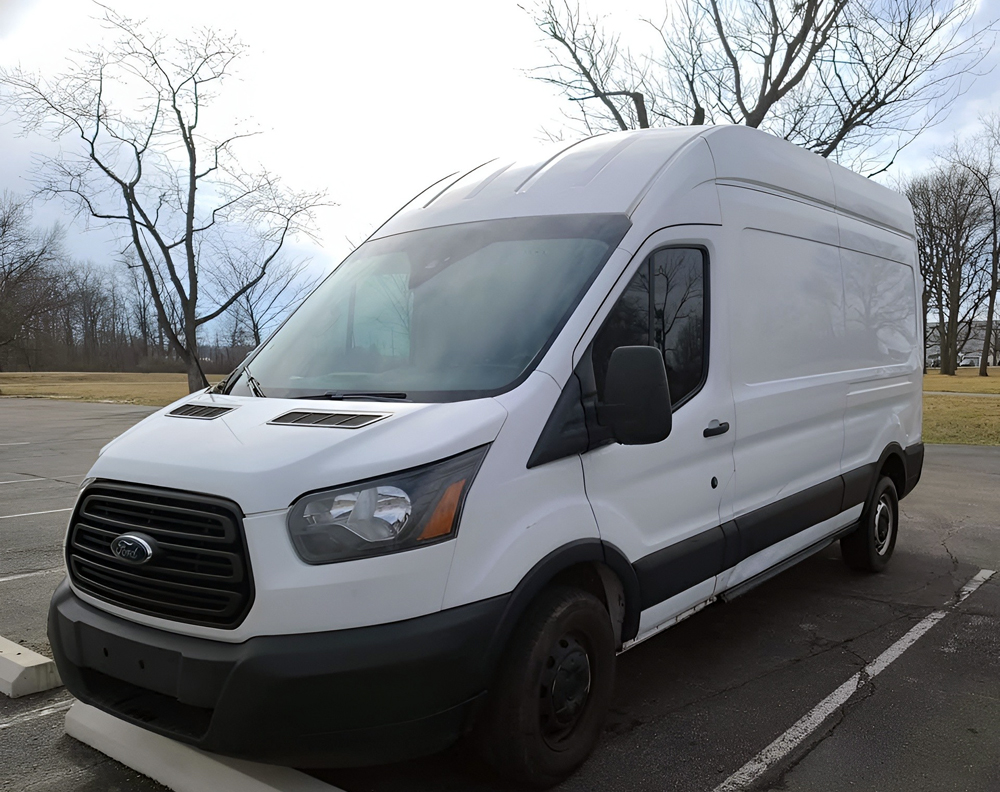
1. Know the 3.2L first, because this Transit diesel lived in a narrow lane
The engine badge matters before the failure list
The North American Transit 3.2L diesel was the inline-5 Power Stroke. Ford rated it at 185 hp and 350 lb-ft of torque, with peak torque spread from 1,500 to 2,500 rpm. That torque band made sense for loaded vans, highway routes, and steady fleet work.
This engine came from the global Duratorq/Puma family. It used a cast-iron block, aluminum head, common-rail injection, and a BorgWarner variable-geometry turbo.
The layout gave the van strong low-rpm pull, but it also packed diesel heat, soot, oil pressure, and emissions hardware into a tight Transit nose.
That tight bay matters when repairs start. The EGR cooler, rear injectors, turbo plumbing, and aftertreatment parts don’t sit in open pickup-truck space. Labor climbs fast when a van needs diesel work behind the cowl.
Don’t judge it like a 6.7 Power Stroke or a gas Transit
The 3.2L does not share the same failure map as a Super Duty diesel. It does not have the space, cooling margin, or service access of a 6.7L Power Stroke. It is a compact van diesel with EGR, DPF, SCR/DEF hardware, piezo injectors, and a variable-flow vane-style oil pump.
It also does not behave like the gas Transit engines. A 3.7L or EcoBoost gas van can rack up city miles without worrying about DPF soot load. The 3.2L needs heat, clean oil, and complete regeneration cycles.
Short trips hurt this engine in a different way. Idle time loads the DPF, soot sticks the VGT vanes, and weak oil service beats up the timing chain tensioner. A diesel route that never gets hot turns emissions hardware into the repair bill.
The known trouble spots
| Problem area | Main years to watch | What you notice | Why it matters |
|---|---|---|---|
| Oil pump losing prime | 2015–2019 | Oil light stays on after service, top-end tick, knock | Can wipe bearings and turbo fast |
| EGR cooler internal leak | 2015–2019 | Coolant drops with no driveway leak, overheat warning | Ford SSM 48543 points to revised cooler CK4Z-9U433-B |
| Fuel pump debris recall | 2015–2016 | Stall, no-start, fuel system contamination | Safety recall 16S32 / 16V-618 covered 2,013 vans |
| Cowl water intrusion | 2015–2018 | Wet air filter, limp mode, low boost codes | TSB 19-2091 added water-management parts |
| DPF regen faults | 2015–2018 | Drive-to-clean messages, limp mode, soot load | TSB 18-2223 ties it to low-speed duty |
| DPF substrate crack | 2015–2019 | P2002, tailpipe soot | Ford TSB 20-2087 points to DPF replacement |
| Injector seal blow-by | Higher-mile vans | Exhaust smell, chuffing, black tar near injectors | Carbon can lock injectors into the head |
2. The oil pump mistake that can wreck a good engine
The 10-minute drain rule is the big service trap
The 3.2L diesel uses a variable-flow vane-style oil pump. That pump can lose prime if the oil drains too long during service. Ford Transit 3.2L owner and technician reports often point to the same warning, do not leave the sump open past about 10 minutes.
Here’s where the damage starts. The drain plug comes out, the oil column falls back, and air can enter the pump. Refill the crankcase after that, and the pump may spin without pulling oil from the sump.
Quick-lube habits make this worse. A tech drains the van, walks to another bay, then comes back 15 or 20 minutes later. On restart, the oil light can stay on while the crank bearings, cam journals, chain tensioner, and turbo bearings wait for pressure.
A dry restart gives you seconds, not minutes
The first sign is simple. The oil pressure light does not go out right after startup. You may also hear top-end ticking as the lifters and cam journals run short on oil.
Bottom-end knock is the bad sound. That means the crank bearings are already taking a hit. Diesel torque loads those bearings hard, and oil film loss turns smooth rotation into metal contact.
The turbo also sits in the danger zone. Its shaft rides on a thin oil film at very high speed. Start the van with no pressure, and the turbo journals can score before the coolant gauge even moves.
Shut the engine down if the oil light stays on after service. Do not rev it. Do not wait for the noise to clear. Low pressure after an oil change means pressure-test the engine before the next restart.
Dirty oil beats up the chain and turbo next
Even when the pump primes, weak oil habits still shorten this engine’s life. The 3.2L carries 12.0 quarts, but capacity does not protect it from soot, fuel dilution, and long idle hours. Commercial vans can dirty oil before the dash reminder gets honest.
The timing chain tensioner uses oil pressure to keep the chain tight. Sludge or low pressure lets the chain slap the guides, most often on cold start. Keep ignoring that rattle, and cam-crank sync can drift far enough to set timing codes or cause a no-start.
The VGT turbo needs clean oil for the bearing cartridge and actuator life. Soot-heavy oil, heat soak, and long drain intervals can turn a good turbo into a noisy underboost complaint. Once the oil shows metal, the repair is no longer an oil change.
3. EGR cooler leaks hide the coolant loss
SSM 48543 gives this failure a paper trail
Ford SSM 48543 covers 2015–2019 Transit vans with the 3.2L diesel. It points to overheat complaints from coolant loss with no external leak. The fix centers on an internally leaking EGR cooler and revised cooler CK4Z-9U433-B.
That matters because the leak can stay invisible. You will not always see a wet driveway, crusted hose, or dripping radiator seam. The coolant can leave through the exhaust stream or intake path.
A pressure test has to include the EGR cooler. A quick glance under the van can miss it. Keep topping off the bottle, and the cylinder head takes the heat.
The leak can look like a head gasket problem
An internal EGR cooler leak can mimic worse engine trouble. You may see white smoke on startup, coolant loss, or an overheat warning with no clear puddle. Some vans also show cooling-system pressure that makes the reservoir look angry under load.
The cooler handles exhaust gas and engine coolant in one tight package. Thermal cycling can crack the internal passages. Once coolant crosses into the wrong side, the engine burns or pushes it through parts that should stay dry.
That delay gets expensive. Coolant in the exhaust path can hurt DPF regeneration. Repeated overheating can point the diagnosis toward a warped head or failed head gasket. A cooler job can turn into cylinder-head work if the van keeps running hot.
Orange coolant deposits can stack heat on top of the leak
Ford TSB 21-2038 covers some 2015–2019 Transit vehicles built on or before Dec. 31, 2018. The bulletin ties Motorcraft Orange coolant deposits to radiator restriction and engine or transmission overheating. The repair path calls for flushing, radiator replacement, and Motorcraft Yellow coolant.
That heat path matters on a working van. A clogged radiator sheds less heat. If the internal transmission cooler cannot dump heat either, the van can show engine and transmission overheat complaints from the same coolant mess.
Do not chase the thermostat alone on these vans. Check coolant history, radiator flow, EGR cooler leakage, and the build date. Orange coolant sludge in the radiator means the cooling stack is already loaded.
4. Fuel trouble starts with recall debris, then gets ugly at the injector seals
Recall 16S32 was about metal in the wrong place
Ford recall 16S32 covered 2,013 Transit vans with the 3.2L diesel. NHTSA campaign 16V-618 listed 2015–2016 vans built from July 15, 2015, through April 14, 2016. The defect involved metallic debris in the fuel system.
That debris could clog an injector or the fuel volume control valve. Once fuel control breaks down, the van can stall while moving or refuse to restart. Ford’s remedy called for fuel injection pump replacement, fuel filter replacement when needed, and system flushing.
This is the recall record you want before buying an early 3.2L Transit. A fuel system with loose metal does not stop at one injector. Shavings can travel through the rail, lines, pump, and return side.
Black tar around the injectors means the copper seal is leaking
Injector blow-by starts at the copper washer under the injector. Combustion gas slips past the seal and pushes soot up the injector bore. You may hear a sharp chuff near the valve cover or smell exhaust in the cabin.
The black crust is baked carbon, soot, and fuel residue. It can harden around the injector body like tar. Once it stacks up, the injector can seize in the head.
A fresh seal can fix an early leak. The seat must be cleaned and cut flat, or the new washer can fail again. Reusing a damaged seat sends combustion gas right back up the bore.
Waiting turns a cheap seal into a head job
The first repair is small if the injector still comes out clean. A copper washer, hold-down hardware, and a cleaned seat can save the job. Labor climbs when carbon locks the injector in place.
A stuck injector may need a hydraulic puller. A damaged seat may need cutting. A chewed-up bore can push the repair toward injector replacement or cylinder-head work.
That jump hurts because this engine has 5 injectors, not 4. Full injector set estimates can run about $3,500 to $4,500 with parts and labor. Black tar around the injector means stop driving and fix the seal before the seat erodes.
5. Water from the cowl can choke the turbo
TSB 19-2091 puts the leak path on paper
Ford TSB 19-2091 covers 2015–2018 Transit vans built on or before July 24, 2018. It lists hard starts, misfires, MIL, and codes P1247, P1548, P0171, P0172, P0174, and P0175. Ford tied the fault to unwanted water over powertrain parts.
The fix used better water management, not a new turbo first. Ford called for updated hardware and, on 3.2L diesels, a revised air cleaner cover. The repair record also points to cowl deflectors, foam seals, and sealant at the body joint.
That matters after rain or a car wash. Water can run off the windshield, pass weak cowl sealing, and reach the intake side. Once the paper filter gets soaked, the turbo starts fighting a blocked air path.
A wet air filter makes boost fall on its face
A soaked paper filter acts like a plugged intake. The engine asks for air, the turbo spins, and the restriction keeps boost from building. You feel a flat pedal, limp mode, or a van that will not pull under load.
The PCM may flag P1247 for low turbo boost. P1548 can point toward internal air cleaner restriction. Rich or lean codes can show up when the MAF reading no longer matches the air the engine can actually move.
A wet filter can also come apart. Paper media can break down under turbo suction and send debris toward the compressor wheel. Check the air box before pricing a BorgWarner VGT.
Soot-stuck VGT vanes need a separate diagnosis
The 3.2L uses a BorgWarner variable-geometry turbo. Its vanes move inside the turbine housing to control boost at low and high engine load. Soot can make those vanes drag, especially on vans that idle or crawl all day.
A stuck VGT can act 2 ways. Closed vanes can trigger overboost. Open vanes can leave the van lazy, smoky, and short on boost.
Do not mix this up with a cowl-water event. A wet-filter P1247 starts at the air box. A soot-stuck VGT starts at vane movement, actuator command, boost data, and exhaust-side drag.
6. DPF and SCR faults start with bad duty cycle
Low-speed routes load the DPF fast
Ford TSB 18-2223 covers 2015–2018 Transit 3.2L diesel vans with “Drive To Clean” messages, MIL, P2459, P2463, or P246C. The bulletin ties many cases to stationary use, off-highway use, or low-speed driving. Those routes do not give the DPF enough heat for a full burn.
That is common fleet life. A van idles at job sites, crawls through town, then shuts off before exhaust temperature climbs. Soot keeps stacking in the filter.
Once soot load gets too high, the PCM protects the engine. Power drops, regeneration becomes harder, and backpressure climbs. A van that keeps seeing DPF warnings needs regen history pulled with a scan tool.
The fuel vaporizer glow plug can stop the burn
The 3.2L uses a fuel vaporizer in the exhaust stream for DPF regeneration. It feeds fuel ahead of the diesel oxidation catalyst so the exhaust can get hot enough to burn soot. If the vaporizer or glow plug fails, the DPF never gets the heat it needs.
Ford TSB 19-2016 covers some 2016–2018 Transit 3.2L Duratorq diesels built on or before Feb. 13, 2018. It calls out MIL with P24A0 or P26A0. The repair replaces the fuel vaporizer system glow plug and reprograms the PCM.
You will feel this as repeat regen trouble, weak fuel economy, or limp mode. The filter may not be cracked or ruined yet. A failed vaporizer glow plug can make a good DPF look plugged.
P2002 can mean the DPF substrate cracked
Code P2002 means particulate filter efficiency fell below threshold. On the 3.2L Transit, Ford TSB 20-2087 points to a cracked DPF substrate on some 2015–2019 vans. A cracked filter can pass soot instead of trapping it.
That failure leaves a different clue. The tailpipe may show black soot, which a working DPF should stop. Cleaning a cracked filter will not seal the broken substrate.
This is where diagnosis needs discipline. Check differential pressure data, tailpipe soot, sensor readings, and regen history before approving parts. If P2002 comes with soot bypass, the repair path is DPF replacement, often around $3,000 to $5,000.
7. Timing chain noise, sensor faults, and codes need a real diagnosis
Chain rattle starts with oil pressure
The 3.2L diesel uses a timing chain, not a service belt. The chain drives the camshafts and the high-pressure fuel pump. A hydraulic tensioner uses oil pressure to keep that chain tight.
Cold-start rattle means the tensioner may not hold pressure. Sludge can slow oil flow to the tensioner. Worn chain pins and bushings can stretch the chain enough to throw cam-crank timing off.
This engine is an interference design. If the chain jumps, valves can hit pistons. Bent valves, broken rockers, and head damage can follow one skipped tooth.
Cheap sensor faults can feel expensive
A dirty MAP sensor can make the van feel gutless. Oil mist from the crankcase vent and soot from EGR flow can clog the MAP port. Bad boost data can push the VGT actuator into the wrong position.
The MAF sensor sits in the intake path, so cowl-water problems can dirty it fast. A bad reading can set rich or lean codes such as P0172 or P0175. It can also overfuel the engine and load the DPF with soot.
A failing crank sensor can cause long crank, no-start, rough running, or a stall. Codes like P0335 or P0340 can point toward sensor failure or chain sync trouble. Check wiring, sensor data, intake leaks, and boost hoses before pricing injectors or a turbo.
Use the code trail before buying parts
| Symptom or code | First area to inspect | Why it fits the 3.2L |
|---|---|---|
| Oil light after service | Oil pump prime, oil level, filter, pressure test | Pump prime loss can destroy the engine fast |
| Coolant loss, no external leak | EGR cooler pressure test | SSM 48543 points to internal EGR cooler leakage |
| P1247 | Wet air filter, intake path, turbo control | TSB 19-2091 water intrusion can choke the engine |
| P1548 | Air cleaner restriction | Saturated filter or intake restriction fits the cowl fault |
| P2459 / P2463 / P246C | DPF soot load and regen history | Low-speed duty can block full regen |
| P24A0 / P26A0 | Fuel vaporizer glow plug | Ford TSB 19-2016 calls out this part and PCM update |
| P2002 | DPF substrate, soot bypass | Ford TSB 20-2087 points to cracked DPF substrate |
| Chuffing and black tar near injector | Injector copper washer and seat | Blow-by can cement injectors in place |
| Cold-start chain rattle | Tensioner, guides, oil pressure | Chain control depends on clean oil and pressure |
8. Buy the duty cycle, not the odometer
The best 3.2L vans worked hot and steady
The 3.2L diesel fits vans that run highway miles, carry weight, and stay hot long enough to finish DPF regens. That work pattern suits its 350 lb-ft torque band from 1,500 to 2,500 rpm. Long pulls keep exhaust heat up and help the aftertreatment do its job.
Short urban routes are harder on it. Idle time loads the DPF, cool exhaust stalls regen, and soot can stick the VGT vanes. A van that spent its life crawling between stops can look clean and still carry a tired DPF.
Engine hours matter here. A low-mile van with high idle time can be rougher than a 180,000-mile van with steady highway work. Repeated “Drive To Clean” messages mean the route already fought the emissions hardware.
Diesel parts and Transit access raise the bill
The Transit nose makes diesel repairs tight. The rear injectors, EGR cooler, turbo plumbing, and cooling parts sit under the cowl. Jobs that feel open on a pickup can eat hours in this van.
Parts costs do not help. A DPF assembly can run about $3,000 to $5,000 installed. A full injector set can land near $3,500 to $4,500. Timing chain work can reach about $2,500 to $3,800 with labor.
That changes the used-van math. Cheap purchase price means little if the van needs an EGR cooler, DPF, injectors, and cowl repair. One bad diesel stack can wipe out the deal.
Records beat mileage on this engine
A strong 3.2L folder should show oil-service discipline. Look for short drain times, correct oil, clean pressure behavior after service, and no cold-start chain rattle. The first restart after an oil change tells more truth than a fresh detail job.
Recall 16S32 / 16V-618 matters on 2015–2016 vans. So does proof of cowl work under TSB 19-2091, EGR cooler history under SSM 48543, and cooling work tied to TSB 21-2038. Scan data should show regen history, soot load, and no repeat P2459, P2463, P246C, P24A0, P26A0, or P2002.
Mileage alone can lie. A 180,000-mile van with clean records, no coolant loss, no water-intrusion codes, and stable regen data can beat a low-mile idler. No oil discipline, no coolant-loss answer, repeated DPF warnings, or black injector tar means the price needs room for diesel repairs.
Sources & References
- Ford Duratorq engine – Wikipedia
- US Legal 3.2 diesel in a Defender – codex exerro
- 3.2-Liter Turbo Diesel Slated for Ford’s Upcoming Transit Van | Heavy Duty Trucking
- 3.2-Liter Engines | Ford 3.2 Motors For Sale – Reman Engine
- Are Ford Transit Vans Reliable? – John Kennedy Ford Feasterville …
- 3.2L Diesel Duratorq engine in Ford Transit – Engine, Transmission …
- Puma 3.2 Duratorq | PDF – Scribd
- Ford Power Stroke engine – Wikipedia
- Diesel Injector Pricing Guide – What to Expect in 2025
- Ford Ranger 3.2 Engine Problems: EGR Cooler and Turbocharger Issues
- Ford Ranger 3.2 Litre PX1 PX2 – Blown Head Gasket – UMR Engines
- Ford Transit Oil Pump Replacement – AutoGuru
- How To Deal With A Failing Ford Oil Pump
- Bad Oil Pump Symptoms: Signs the Oil Pump is Failing – AutoZone
- Oil pump Ford Transit
- How To Deal With A Failing Ford Oil Pump – Fairway Ford of Ohio
- 6.0 Powerstroke Oil Cooler Symptoms: What to Watch For and When to Replace It
- 3.2L Powerstroke Problems: Ford Transit 2015-2020 | ABCO Diesel …
- 12 Common Problems With The Ford Transit Van Engine – Volksmaster
- Ford Ranger & Mazda BT50 3.2L 5 Cylinder Issues – ETP Engine Parts
- SSM 48543 – 2015-2019 Transit – 3.2L Diesel – Overheat Due To Coolant Loss Without An External Coolant Leak – nhtsa
- Ford Ranger 3.2L Diesel 2020 Bubbling coolant tank!! EGR Cooler or head gasket??
- 2024 Ford Transit-250 Coolant Leak Causes & Solutions – RepairPal
- TECHNICAL SERVICE BULLETIN 3.2L Diesel – Drive To Clean Maintenance Message And/Or An Illuminated MIL With DTCs P2459, P2463 And – nhtsa
- DPF Issues on a Ford Transit – Nationwide Auto Service Centre
- TECHNICAL SERVICE BULLETIN 3.7L/3.5L/3.2L/6.8L – Engine Or Transmission Overheating – Built On Or Before 31-Dec-2018 21- 2038 – nhtsa
- Ford Transit Van Diesel Engine Recall – Asbury Automotive Group
- Injector Blow-By or Black Death? | United Performance Guides
- Black Death in Diesel Injectors: Causes, Prevention, and Solutions – Intake Cleaning
- How to Prevent ‘Black Death’ in Diesel Engines (Before It’s Too Late) – Beyer Motorsports
- Made a new video: How to fix black death on a Sprinter. It’s easy if you catch it soon. Does your HVAC smell like exhaust? – Reddit
- P1247 on 2015-2018 Ford Transit: Causes of Low Turbo Boost and …
- P1548 on 2015-2018 Ford Transit: Air Filter Restriction Causes and Fixes – Go-Parts
- TECHNICAL SERVICE BULLETIN Various Drivability … – nhtsa
- P2198 on 2015-2018 Ford Transit: Causes for O2 Sensor Stuck Rich | Go-Parts.com
- 11 Mistakes That DESTROY EGR Valves & DPF – Do THIS To Avoid Problems & Faults
- TECHNICAL SERVICE BULLETIN 3.2L Duratorq Diesel – Illuminated Malfunction Indicator Lamp (MIL) – DTCs P24A0 And/Or P26A0 – nhtsa
- [EN] Symptoms of a leaking diesel injector | Masters of Motion – YouTube
- Clogged DPF Filter Warning Signs – OTR Performance
- 7 WARNING Signs Your DPF is CLOGGED and Why You Should Care – YouTube
- 2015 Transit – nhtsa
- Timing Chain Replacement Cost (2026) – Consumer Affairs
- Signs That a Timing Chain Needs Replacement – eBay
- Ford F-250 Super Duty Timing Chain Tensioner Replacement Cost Estimate – RepairPal
- Ford Ranger Timing Chain and Gear Set Replacement Cost – RepairPal
- Symptoms of a Bad or Failing Timing Chain | YourMechanic Advice
- Early Warning Signs of a Failing Timing Chain – Chico Car Care
- 7 Signs Your Van’s Timing Chain is Failing – VanServ
- Timing chain stretch advice : r/MechanicAdvice – Reddit
- 6 Most Common Crankshaft Position Sensor Symptoms – Car From Japan
- 2015 MY OBD System Operation Summary for Diesel Engines – IIS Windows Server
- 2019 my obd system operation summary for diesel engines – IIS Windows Server
- Ford Transit Reliability: Recalls, Complaints and Known Issues – autopom!
- Transit Diesel VS Gas? : r/VanLife – Reddit
- The Symptoms of a Bad Mass Air Flow Sensor – AutoZone.com
- What Problems Can a Bad Mass Air Flow Sensor Cause? | Firestone Complete Auto Care
- A Bad MAP Sensor – Symptoms, Causes, and EASY Fixes! – YouTube
- Causes and Fixes P0108 Code: Manifold Absolute Pressure/Barometric Pressure High
- Volvo ECM Error Codes Overview | PDF | Throttle | Fuel Injection – Scribd
- Ford Transit Diesel Engine Options: Your Complete Guide – Ftp
- FORD RANGER 2020 3.2 litre vs 2.0 litre BI-TURBO TOW TEST – YouTube
- Ford Transit Common Problem You Need to Know – YouTube
- 2015-2025 Ford Transit-350 Fuel Injector – Replacement 902-224-K6 – PartsGeek.com
- How Much Does the EGR Cooler Replacement Cost in 2025? – FridayParts
- 2022 Ford Transit-350 HD EGR Valve Replacement Cost Estimate – RepairPal
- egr replacement costs….ARE YOU FRICKIN KIDDING ME?!?!?! – Truckers Report