
Fresh black undercoating can hide rust holes where a 4Runner’s suspension mounts meet its frame. Some 2003–2005 4.0-liter V6 owners also report head-gasket leaks. Those reports don’t show how often the fault occurs. This guide sorts the years needing extra checks by engine, frame condition, and recall history.
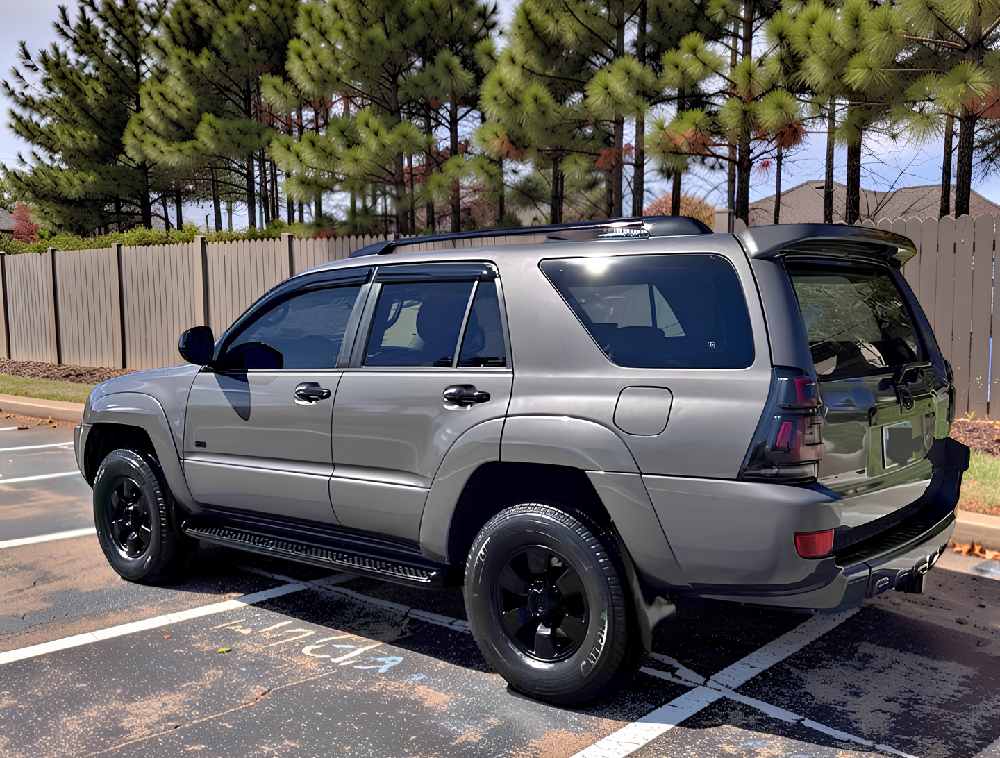
1. The 4Runner years that need extra checks
Two V6 engines carry different warning signs
The older 3.0-liter V6 and early 4.0-liter V6 deserve close attention for head-gasket trouble. The evidence differs. Toyota documented the 3.0-liter concern through its head-gasket service programs. Early 4.0-liter leaks appear in owner reports, which don’t establish how often these engines fail.
A completed recall can address a specific defect before you buy. Severe rust can weaken suspension mounts until they tear away from the frame. NHTSA reviewed reports alleging this damage in older trucks. Those allegations don’t establish a failure rate.
Complaint totals lack the full count of trucks exposed to the same conditions. Mileage, salt exposure, service history, and years of use also differ. The year groups below identify checks to make before purchase. They don’t rank measured reliability.
Which faults should change the deal?
| Model years and engine | Main concern | Checks before purchase |
|---|---|---|
| 1988–1995, 3.0-liter V6 | Documented head-gasket campaigns for certain 3VZ-E trucks; coolant loss and past overheating need diagnosis. | Verify repair history and cooling-system condition. Campaign eligibility doesn’t establish a failure rate. |
| 1996–2002 automatics | An internal radiator cooler leak can mix coolant with transmission fluid | Consider after radiator and transmission checks. Past coolant contamination needs a transmission assessment. |
| Certain 2001–2002 models | Lower ball joints can separate. Recall 05V225000 / 50J covers certain trucks. | Require recall confirmation and a current joint inspection. An old repair doesn’t rule out later wear. |
| 2003–2005, 4.0-liter V6 | Owner-reported head-gasket leaks; no representative failure rate established. | Put the purchase on hold if coolant loss or cold-start misfires remain unexplained. |
| Older 4Runners, especially 2003–2009 vehicles exposed to road salt | Condition-based frame corrosion, metal loss, and damaged suspension mounts. | Require a qualified assessment of structural damage. Model year alone doesn’t establish a frame defect. |
| 2005–2009, 4.7-liter V8 | Timing-belt upkeep and air-injection faults described in T-SB-0230-12. | Use the year-specific belt schedule. Diagnose pump, valve, and electrical faults. The bulletin doesn’t guarantee a free repair. |
| Certain 2014–2015 and 2018–2019 models | A recalled low-pressure fuel pump can stop and stall the engine. Toyota’s recall notice lists these groups. | Keep these in the recall-verification group. Confirm inclusion and completed pump replacement through the VIN. |
| 2025–2026 | New engines and transmissions with limited long-term history | Check condition, recall status, and warranty terms. Reliable long-term failure rates haven’t yet been established. |
2. The 1988–1995 V6 needs proof it can hold coolant
Toyota’s old gasket campaign has expired
The 3.0-liter 3VZ-E V6 has a documented head-gasket history. Toyota offered a warranty adjustment for certain 1988 through early-1990 models. Special Service Campaign V06 covered qualifying late-production 1990 through early-1995 models. That campaign expired on September 24, 2018, ending the campaign route to a free repair.
Eligibility depended on the engine and production details. The campaign doesn’t show that every 3VZ-E failed or that every eligible truck received repairs. A repair invoice must identify the work actually completed.
New gaskets need sound metal beneath them
A failed gasket can let coolant enter a cylinder. Persistent white exhaust after warmup raises concern, especially if you keep adding coolant. Cold-start vapor alone proves little. A leaking hose or water pump can also explain coolant loss.
Combustion gas can cross the failed seal and pressurize the cooling passages. That pressure can force coolant into the overflow bottle. Continued coolant loss can leave the engine overheating, with warped cylinder heads adding to the repair.
A useful invoice should name the gasket work and document checks for warped or eroded sealing faces. Toyota capped material removed from the head and block combined at 0.010 inch (0.25 mm). Replacement decisions depend on each part’s damage and Toyota’s inspection limits. The combined machining limit isn’t a separate allowance for each part.
The 4-cylinder brings its own age-related bills
The 2.4-liter 22R and 22RE engines fall outside the 3VZ-E gasket campaign. They can still suffer head-gasket failure or cooling leaks. Expect modest power, especially on hills. A restored body can still sit on a rusty frame with old cooling hoses.
Timing-chain wear deserves attention on the later single-row engines. Broken plastic guides can let the chain slap against the front cover, producing a rattle. Continued contact can wear through to a coolant passage and let coolant enter the engine oil. LC Engineering’s timing-chain guidance describes this failure.
3. Third-generation bargains can hide costly damage
Recalled lower ball joints can let go
Recall 05V225000, Toyota campaign 50J, applies to certain 2001–2002 4Runners. Toyota identified possible scratches on the lower ball-joint surfaces during assembly. Those scratches can speed up wear. With enough wear, the joint can separate and cause loss of steering control.
Front-end knocks need more than a quick wheel shake
Front-end knocks, loose steering, or poor steering return after a turn warrant an inspection before further road testing. Several worn parts can cause those symptoms. A technician must support and load the suspension correctly to measure play in the lower joint.
An old recall invoice doesn’t establish the current wear in replacement joints. Later invoices should identify the fitted parts, installation date, and mileage. Toyota calls for periodic inspections, with replacement based on condition and applicable service guidance. Its recall notice sets no universal 100,000-mile replacement interval.
The radiator can contaminate the transmission
On 1996–2002 automatics, transmission fluid passes through a cooler inside the radiator. A metal wall separates it from engine coolant. A breach can mix the fluids into a cloudy pink emulsion called a “strawberry milkshake.” Manual-transmission trucks don’t share this ATF cooler circuit.
Coolant contamination can damage clutch friction material and internal bearings. Shudder or slipping may follow. Clear-looking ATF doesn’t rule out contamination, since small amounts of glycol can require a chemical test. Certified Transmission’s contamination analysis explains why appearance alone can miss it.
Fresh fluid also cannot establish whether earlier contamination damaged the transmission. A seller’s radiator receipt needs a reason for the repair. Replacement after coolant mixing calls for a closer transmission assessment than replacement due to an external radiator leak.
An extra cooler may still use the radiator
A documented radiator replacement helps establish the replacement date and, if the part number is recorded, the cooler configuration; it does not by itself prove the cooler’s condition. A suitable replacement can retain the factory cooling layout. Adding an external cooler in series still sends ATF through the radiator, leaving the internal leak risk in place. Fully isolating the transmission requires plumbing that bypasses the radiator cooler.
An external-only cooler needs enough capacity for the truck’s load and temperature control suited to its climate. Secure hoses and fittings matter. A loose connection or chafed hose can drain ATF.
Past coolant mixing needs a transmission assessment even after the radiator has been replaced. The repair must address contamination remaining in the cooling lines and any auxiliary cooler. Coolant trapped in an old auxiliary cooler can contaminate fresh transmission fluid again in some transmission-service cases, as Certified Transmission documented. This is a general service risk, not evidence of a recurring 4Runner-specific defect.Certified Transmission documented
4. Fourth-generation engine choice changes the repair bill
A brief V6 shake can signal a head-gasket leak
Some owners report head-gasket leaks in 2003–2005 trucks with the 4.0-liter 1GR-FE V6. Coolant can seep into a cylinder while the truck sits overnight. The engine may shake at startup, then settle as the cylinder clears. One 2004 owner reported this at 128,000 miles without signs of overheating.
Owner and forum reports don’t establish a reliable failure rate or a Toyota head-gasket campaign for these years. Claims of revised gaskets also don’t prove that 2006 marks a guaranteed fix. Later V6s can still lose coolant through head gaskets, hoses, or water pumps.
Coolant loss gives a cold misfire more weight
Code P0306 means cylinder 6 has misfired. A worn plug, weak ignition coil, faulty injector, or low compression can cause it. Coolant entering that cylinder can produce the same code.
The shop needs your coolant-level history alongside the scan results. A cooling-system pressure test can expose leaks. If pressure drops without a visible leak, a borescope can check inside the cylinders for coolant. A combustion-gas test checks whether gases from combustion reach the coolant.
You need to see the truck start after sitting overnight. A short drive with a warm engine can miss a fault that appears only at cold startup.
The V8 brings a belt deadline and air-pump faults
The 4.7-liter 2UZ-FE V8 uses a timing belt. Toyota’s U.S. 2008 guide lists replacement at 90,000 miles or 108 months, whichever comes first. Match the schedule to the truck’s model year and market. The invoice needs both date and mileage to show when the last belt was fitted.
The 2005–2009 V8 also uses a secondary-air-injection system associated with emissions control. An electric pump feeds fresh air into the exhaust during the system’s operating cycle. Toyota’s T-SB-0230-12 describes pump filter debris and fan fragments spreading through the system. This service bulletin supplies repair guidance; it doesn’t grant a free repair or extend every truck’s warranty.
| Code | Fault description and diagnostic limits |
|---|---|
| P0418 | Electrical fault in the air-injection relay/control “A” circuit |
| P2440 | Bank 1 air-switching valve detected open when it should be closed |
| P2445 | Bank 1 air-pump fault. T-SB-0230-12 lists “stuck off” for 2005 and “stuck on” in its 2006–2009 references. Its introduction also says “stuck off.” Confirm the description and tests in the model-year repair manual. |
Follow the model-year repair manual before replacing a pump, valve, or control driver. When inspection finds pump debris, the bulletin calls for pump replacement. Other contaminated parts can be cleaned and tested. Parts that still fail their operation checks must be replaced.
5. Frame rust can end the deal before the road test
Clean outer rails can hide rust inside
Look past the frame’s outer face before you trust fresh paint on an older 4Runner. Moisture and road salt can collect inside the boxed rails. A shop can use a borescope through existing openings to inspect those cavities.
Crossmembers, body mounts, and suspension brackets need close checks too. Light surface rust may leave sound steel beneath it. Thick flakes, deep pits, and holes point to lost metal.
Fresh undercoating needs photos showing the steel before treatment. The coating can hide rust scale, patch edges, and holes. Thin steel around a suspension mount has less strength to carry braking and cornering loads.
Other Toyota frame programs don’t establish 4Runner coverage
Toyota’s Tacoma, Tundra, and Sequoia frame programs covered specific trucks with Dana-built frames. Third- and fourth-generation 4Runners didn’t use frames from that supplier. Those programs don’t establish coverage for your 4Runner.
NHTSA denied petition DP18-002 on March 24, 2022. The petition sought an investigation into alleged premature frame corrosion in 2002–2006 4Runners. The agency found insufficient evidence of a design or manufacturing defect trend.
NHTSA’s broader review counted 1,024 corrosion records involving 2003–2009 4Runners. Of those, 70 alleged suspension-link detachment. These are report counts, not confirmed failures or a failure rate. Most involved older trucks in states with high corrosion exposure.
A welded patch needs sound steel around it
A plate can cover one hole while rust thins the rail beside it. Structural repairs must reach sound metal that can carry the load. A patch cannot restore steel lost farther along the frame.
Repair photos should show the damage before welding and coating. You also need records identifying the repair method and shop. A qualified frame specialist must assess the welds, remaining metal, and suspension-mount alignment before another road test.
Toyota’s ZE6 warranty enhancement included certain 2003–2005 4Runners with heat- or humidity-related dashboard damage. It addressed cracking or melting and wasn’t a safety recall. A crack alone doesn’t prove an airbag fault. Toyota’s specified repair replaced the affected dashboard, subject to program eligibility.
6. Fifth-generation 4Runners need VIN proof and brake checks
A 4Runner that stalls at highway speed leaves no time to read the warning lights.
A long-running V6 still needs a close look
Most fifth-generation 4Runners use the 4.0-liter 1GR-FE V6 with a five-speed automatic. Toyota also sold some 2010 two-wheel-drive trucks with a 2.7-liter 2TR-FE four-cylinder and four-speed automatic.
That four-cylinder has different power and transmission behavior. Don’t apply V6 service assumptions to it. Check the actual engine, drivetrain, stored codes, shift quality, and repair history shown by the VIN.
Broad complaint lists don’t make every 2010–2013 truck unreliable. A specific truck with delayed shifts, repeated electrical faults, or warning lights still needs diagnosis before pricing.
A weak fuel-pump impeller can stop the engine
Certain 2014–2015 4Runners fall under recall 20V012000. Certain 2018–2019 trucks fall under 20V682000. Both campaigns involve specific Denso fuel pumps, so the model year alone cannot establish coverage.
The affected impeller can absorb fuel, swell, and rub against the pump housing. The pump may then stop working. Symptoms include rough running, warning lights, a no-start, or a stall while driving.
Toyota’s remedy replaces the pump assembly with an improved unit. Run the VIN through NHTSA or Toyota, then match the result to the repair invoice. An invoice that says only “fuel system repair” doesn’t prove recall completion.
A previous Takata repair may still leave the wrong inflator
Recall 19V741000 covers certain 2010–2016 4Runners that received a previous like-for-like Takata inflator. The replacement could still contain non-desiccated ammonium-nitrate propellant. Heat and humidity can degrade that propellant, causing the inflator to rupture and send metal fragments into the cabin.
An old invoice needs the campaign number or replacement part details. “Airbag recall completed” leaves too much unknown. Confirm the final VIN status before anyone occupies the passenger seat.
Brake shake and stuck locks change the repair math
A steering wheel that shakes only during braking points toward rotor thickness variation, hub runout, deposits, or caliper drag. A vibration at steady speed points toward tires, wheels, bearings, or driveline parts.
Check the brake warning lamp, pedal effort, booster operation, and fluid level. A hard pedal or brake-assist warning means power assist may be missing. Stop the road test until the fault is diagnosed.
A door-lock actuator that clicks without moving the latch adds repair cost. Repeated lock faults also warrant checks for water intrusion and damaged door wiring. Lost brake assist requires diagnosis before the truck returns to the road.
7. The 2025–2026 redesign brings new hardware and little history
A blank gauge screen can hide a brake warning while your 4Runner keeps moving down the road.
Turbo-four power replaces the old V6
The sixth generation starts with the 2025 model. Toyota replaced the long-running 4.0-liter V6 with a 2.4-liter turbocharged four-cylinder. A new eight-speed automatic handles the power.
The standard i-FORCE engine makes 278 horsepower and 317 lb-ft of torque. The available i-FORCE MAX hybrid produces 326 net combined horsepower and 465 lb-ft. The hybrid adds a traction battery and electric motor, along with associated power electronics and high-voltage wiring.
Those parts create new diagnostic paths. A drivetrain warning may involve software, battery cooling, inverter output, or transmission control. Identify the exact powertrain before comparing repair history.
A blank 12.3-inch display can hide safety warnings
Recall 25V595000, Toyota 25TA08, includes certain 2025 4Runner and 4Runner Hybrid vehicles. Toyota’s January 2026 update lists 3 conventional trucks and 4 hybrids built in early August 2024. All 7 use a 12.3-inch combination meter. Check VIN eligibility before repair.
Faulty software writes unnecessary data to the meter’s memory. The memory can wear out early. When it fails, the screen may stay blank when you switch on the ignition. Speed, brake, and tire-pressure warnings may then be missed.
Toyota’s 4Runner instructions call for replacing the combination meter at no cost. They state that a software update isn’t required for these vehicles. Confirm VIN eligibility and completed meter replacement with Toyota. A working center display doesn’t close the recall.
Early shift complaints need VIN-matched records
A harsh upshift, delayed reverse engagement, gear flare, or low-speed shudder needs a full road test. Scan the transmission module for stored codes and pending faults. Check for leaks, damaged wiring, and fluid contaminated with metal.
A transmission replacement invoice should identify the failed part, diagnostic code, and calibration work. Tacoma recalls or bulletins don’t automatically apply to a 4Runner. Toyota’s document must list the same model, model year, engine, and transmission.
By September 2026, this generation has had less than 2 years of broad U.S. customer use. Reliable long-term failure rates haven’t yet been established.
8. Match the year to your budget and equipment needs
A clean title can hide a rusted mount, an overdue timing belt, or a missed fuel-pump campaign. These year groups offer different engine and equipment choices. They aren’t proven reliability rankings. Actual condition, service records, and VIN-specific recall status should guide the purchase.
1999–2000 offers the older 3.4-liter V6
V6 versions of the 1999 and 2000 4Runner use Toyota’s 3.4-liter 5VZ-FE. Check engine identity before applying its maintenance schedule. Certain 2000 models offered a factory rear locker. Its absence isn’t a reliability defect.
Check the radiator before the road test. A restricted or leaking unit can raise coolant temperature and damage cylinder heads. Inspect lower ball joints for looseness. Confirm timing-belt, tensioner, and water-pump service with invoices.
Inspect the frame rails, crossmembers, and suspension mounts before pricing an older truck. Heavy scale can hide deeper metal loss. A frame specialist must assess structural damage before the road test.
2008–2009 keeps the V8 option open
The 2008 and 2009 years offer a later fourth-generation package. Buyers can choose the 4.0-liter V6 or available 4.7-liter V8. These choices don’t establish lower failure rates than earlier trucks.
V8 trucks need timing-belt records matched to their service schedule. The 2UZ-FE also uses secondary air injection. P0418 identifies a relay or control-circuit fault, which needs electrical testing. Toyota’s service bulletin describes pump debris and repair steps.
Start the engine cold and check coolant level before it warms. Confirm transmission engagement and four-wheel-drive operation where fitted. Put the purchase on hold for unexplained coolant loss or returning warning lights. Structural metal loss needs a qualified frame assessment.
2017–2019 pairs the V6 with a five-speed automatic
The 2017–2019 window retains the established 4.0-liter V6 and five-speed automatic. Compare mileage and maintenance records against the asking price. A newer registration year doesn’t establish less wear.
Certain 2018–2019 trucks fall under fuel-pump recall 20V682. Check VIN status and the completed pump-replacement record before purchase. An invoice should identify the campaign, since routine fuel-system work doesn’t establish recall completion.
A modified truck needs records for its wiring, suspension, and any calibration changes. Check harness splices, tire clearance, and alignment after a lift. Poor installation can add repair costs beyond the price of the fitted parts.
2020–2024 adds useful safety and screen upgrades
Toyota made Safety Sense P standard for 2020. The same update added an 8-inch touchscreen with Apple CarPlay and Android Auto.
This window suits buyers seeking newer driver-assist equipment with the established V6 drivetrain. After front-end or windshield repairs, ask for required radar and camera calibration records. A qualified shop should scan the driver-assist systems and follow Toyota’s inspection procedures. Don’t deliberately trigger automatic emergency braking during a buyer’s road test.
Purchase price still needs to account for accident repairs, trail damage, and missed fluid changes. The 2024 4Runner uses the 4.0-liter V6 and five-speed automatic.
Sources & References
Editorial note: Primary factual claims in this guide should be checked against Toyota, NHTSA, owner-manual, and service-bulletin records. Forum posts, videos, aftermarket pages, and legal or dealer pages are background or anecdotal sources and do not establish failure rates.
- Toyota 4Runner Buying Guide: Cost, Reliability, and the Best Years
- The Truth About the Toyota 4Runner’s V6 Problems – MotorBiscuit
- Here Are The Toyota 4Runner Years To Avoid – CoPilot
- 5 Toyota 4Runner Years To Never Buy Used – SlashGear
- Avoid These Toyota 4Runner Years If Reliability Matters – Top Speed
- These Are the Toyota 4Runner Years to Avoid – MotorBiscuit
- Repair advice? Blown head gasket on 4th Gen 4Runner? | Page 7
- Questions about 3rd gen pink milkshake : r/4Runner – Reddit
- Lower Ball Joint Failure on 3rd Gen Toyota 4Runners – TEQ Offroad
- 4Runner 3VZE Head Gasket LEAK Test | WORST Toyota Engine?
- Best and Worst Years for Toyota 4Runner – RealTruck
- toyota customer services – nhtsa
- toyota customer services – nhtsa
- LBJ Recall Confusion : r/3rdGen4Runner – Reddit
- 2nd Gen 4Runner Automatic Transmission Guide: Care, Warning
- How to clean up “strawberry milkshake” transmission fluid crossed
- Toyota 4Runner Misfires on morning start up Bad Head Gasket
- Head gasket issue on 2004 SR5 – 4Runner Forum
- Owners of 2003-2009 Toyota 4Runners Experiencing Excessive
- Toyota Frame Rust Repair & Preventive Treatment – YouTube
- Toyota 4Runner Lawsuit – The Lake Law Firm
- Toyota Fuel Pump Recall
- What You Need To Know About the Denso Fuel Pump Recall
- TOYOTA – nhtsa
- This $0.50 Part Forced Toyota To Recall 3.3 Million Cars – CarBuzz
- A 50-Cent Fuel Pump Part Has Been Stalling Toyotas for Six Years
- Toyota 4runner Problems by Year, Recalls & Years to Avoid
- Avoid the strawberry milkshake. How to install a transmission fluid
- Toyota Settles Rust-Prone Truck Frame Class Action Lawsuit
- 3rd Gen 4Runner Lower Ball Joint Failure & Replacement – YouTube
- OEM Toyota 4Runner Front Lower Ball Joints (LH+RH) FITS 2001
- Bypass Kits – Hewitt-Tech
- Hewitt-Tech Secondary Air Injection Bypass kit (2012+ 4.0
- How prevalent are head gasket issues among 02-05 4Runners
- Toyota’s V06 campaign packet
- Transmission specialist’s contamination analysis
- Toyota 2008 4Runner scheduled maintenance guide
- Toyota T-SB-0230-12 secondary-air-injection bulletin
- NHTSA denial of petition DP18-002
- Toyota ZE6 dashboard warranty-enhancement bulletin
- Toyota/NHTSA 20V012 fuel-pump recall report
- Toyota/NHTSA 20V682 fuel-pump recall report
- Toyota/NHTSA 19V741 Takata recall report
- Toyota 2010 4Runner specifications release
- Toyota 2020 4Runner safety and multimedia release
- Toyota 2024 4Runner brochure
- Toyota 2025 4Runner powertrain release
- NHTSA recall 25V595000
- Toyota/NHTSA 25TA08 model-specific remedy update