
A 2019–2021 Forester’s check-engine light can point to a thermo control valve fault. Cold cabin air can have other causes, so diagnose both symptoms before discussing the price.
Older Foresters bring different risks, from oil-burning engines to worn transmissions and rusted suspension parts. The year alone will not tell you which repairs lurk ahead. Engine type, transmission, and proof of past repairs can change what’s worth buying.
This guide explains which Forester years need scrutiny, what can fail, and which repair records deserve your attention.
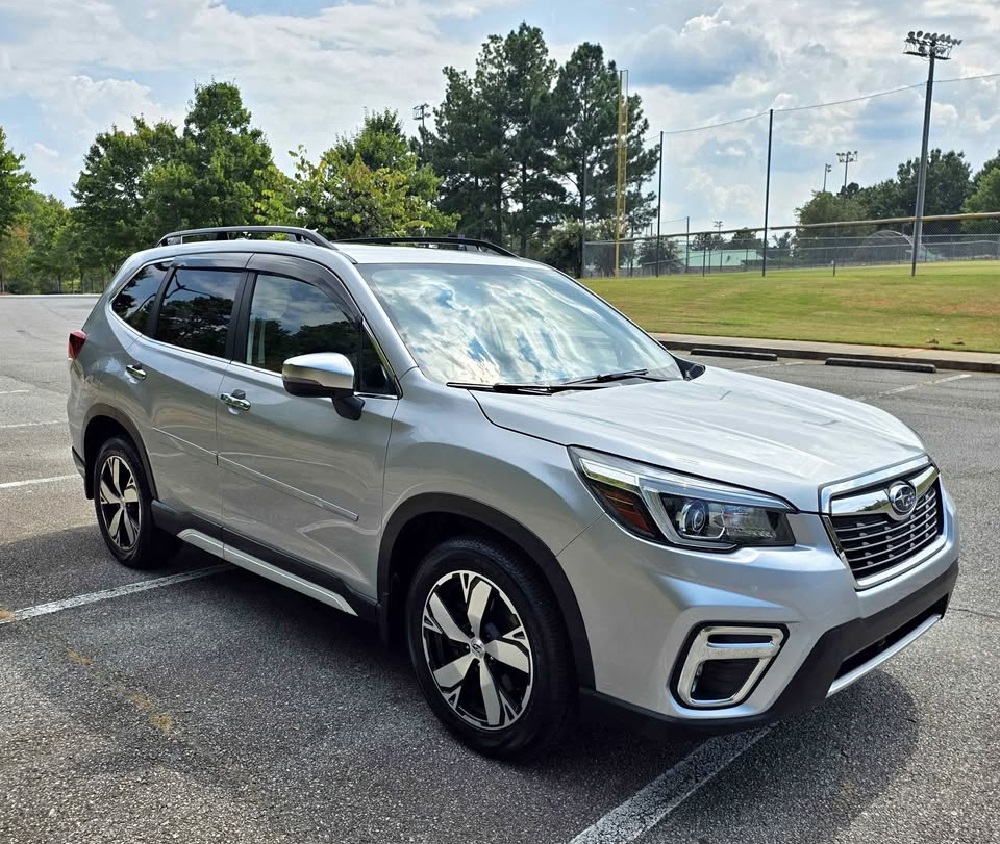
1. Which Forester years need the closest look
Match the year to the engine and transmission
| Model years and configuration | Main reason for scrutiny | Evidence to check before buying |
|---|---|---|
| 2011–2013 non-turbo 2.5L | Certain FB25 engines are covered by Subaru’s oil-consumption bulletin. | Oil-use records and invoices for any engine repair. |
| 2014 non-turbo 2.5L and 2.0XT | CVT coverage extensions apply to specified vehicles; certain non-turbo 2.5L engines also fall within the oil-use bulletin. The rear-spring program applies to selected vehicles. | Confirm engine and transmission, VIN eligibility, diagnosis, and spring repair history. |
| 2015 | CVT coverage extensions apply to specified vehicles. The oil-use bulletin includes certain manual models but does not list the 2015 CVT configuration. | Check transmission type, production identifiers, and repair invoices. |
| 2019–2021 | Thermo control valve faults are documented for this range. Separate programs cover certain vehicles or parts. | Ask for valve part and repair records; check all programs by VIN. |
Subaru’s oil-consumption bulletin, 02-157-14R, covers specified non-turbo 2.5L FB25 engines, not the turbocharged XT. The 2011–2013 automatic Forester used a conventional automatic transmission; CVT availability began with the 2014 model year. The 2014 lineup also included a manual transmission, so check the actual configuration rather than inferring it from the year.
A transmission shudder needs diagnosis before you price a repair. A failed valve-body solenoid and worn internal transmission parts call for different work. The invoice should identify what the shop found and replaced, not simply say “transmission serviced.”
Overlapping faults put 2014 under pressure
The 2014 Forester has several documented concerns, but each applies to a different population. Certain non-turbo engines fall within the oil-use bulletin. Subaru’s CVT warranty extensions cover specified vehicles with either engine, and selected Foresters fall under the rear-spring program.
That overlap does not prove that 2014 has the highest failure rate. Complaint totals alone are not a fair comparison without accounting for sales, vehicle age, mileage, and reporting dates. Repeat reports can also inflate totals.
A service bulletin describes a condition and repair procedure. A warranty extension changes coverage under stated terms. A safety recall addresses a safety defect or failure to meet a safety standard. None means that every vehicle in the listed model years will fail, and non-safety service programs may not appear in NHTSA’s recall lookup.
Documented repairs can make a flagged year worth considering, but the invoice needs detail. A short-block replacement should be followed by oil-use records. CVT coverage is generally limited to 10 years or 100,000 miles, whichever comes first, subject to the applicable bulletin and VIN eligibility. Used possession does not restart the time limit.
2. Older Foresters can hide leaks and rust
“The head gaskets were done” needs proof
Older non-turbo Foresters with EJ25 engines deserve close checks for coolant and oil leaks. Engine configurations varied, so do not rely on a blanket claim that all 1998–2001 Foresters had the same DOHC engine. Verify the actual engine and repair history for the vehicle being considered. Subaru’s owner information distinguishes engine configurations; the exact vehicle’s records should control.
Subaru’s WWP-99 service campaign concerned cooling-system conditioner on a defined group of 1999–2002 Foresters. It was not a safety recall and did not cover every vehicle or every later cooling-system leak. Age, overheating, and poor repairs can create problems beyond a campaign’s scope. A Subaru technician reference lists the campaign; confirm any vehicle’s history by VIN where possible.
Look where each cylinder head meets the engine block. Wet seams or dried coolant tracks call for closer inspection. A cooling-system pressure test can help find an external leak. Suspected combustion leakage needs further testing.
Ask why the shop replaced the gaskets. The invoice should show whether the shop checked the heads for cracks and warping. Past overheating makes those checks especially important. New gaskets will not straighten a warped head.
XT turbochargers need a clear oil history
Turbocharged XT engines carry different risks from non-turbo models. Subaru’s oil-supply-pipe recall covered certain early-production 2009 Forester 2.5XT vehicles. A misaligned pipe could crack and leak oil, creating a fire risk. The recall did not cover every 2009 or 2010 Forester.
Subaru also published guidance about the mesh screen in the turbo oil-feed fitting. A clogged screen can restrict oil flow to the turbo bearings. Oil-change records matter, especially when a seller claims a recent turbo replacement. See Subaru bulletin 02-103-07R.
The replacement invoice should show whether the shop checked the oil supply. A new turbo can be damaged if a restriction remains. The later FB25 oil-consumption bulletin does not apply to these EJ-powered XT engines.
Rust keeps 2007 and 2008 off any guaranteed-safe list
A clean body can hide corrosion underneath a 2007 or 2008 Forester. The front lower control-arm recall covered certain 2003–2008 vehicles with specified salt-belt histories. Corrosion can weaken an arm until it breaks, reducing steering control. Check recall 11V-464 for the defined population and remedy.
Recall records show what work took place; they do not establish the arm’s condition today. Have a shop inspect the arms, mounting points, and nearby structure on a lift. An old repair entry cannot rule out years of further corrosion.
Certain 2009–2013 Foresters face a separate brake-line corrosion recall. Rust can perforate the lines and let brake fluid escape, increasing pedal travel and reducing braking performance. Eligibility depends on the recall’s VIN and registration-history terms; see recall 14V-311.
3. Oil use makes the engine and gearbox matter
The 2013 model did not escape the oil-use bulletin
Subaru bulletin 02-157-14R includes non-turbo FB25 Foresters from 2011 through specified 2015 builds. Its scope changes by transmission and production identifiers. A 2013 badge offers no exemption.
| Model years | Transmission | Production scope in the bulletin |
|---|---|---|
| 2011–2014 | Manual | Listed FB25 applications. |
| 2015 | Manual | Before VIN F*543624 and engine number 527514. |
| 2011–2013 | Conventional automatic | Listed FB25 applications. |
| 2014 | CVT | Before VIN E*529004 and engine number 132164. |
Have a Subaru retailer match the VIN and engine number against the bulletin. The bulletin does not list the 2015 CVT configuration, though any used engine can still develop oil loss.
Measure what disappears between oil changes
A fresh oil change can hide how much oil an engine uses. A clean tailpipe proves little, and a short test drive will not measure consumption. You need mileage and oil-level records between services.
Start by checking for external leaks. Oil escaping through a seal or gasket needs a different repair from oil burning inside the cylinders. Subaru’s procedure requires checks before the measured consumption test determines the repair path.
The bulletin sets its repair threshold at more than 1/3 quart in 1,200 miles. Qualifying cases follow a short-block replacement procedure after the required checks. The historical warranty extension ran for eight years or 100,000 miles, whichever came first. That coverage has generally elapsed on these model years.
A short-block invoice should identify the work, mileage, and repair date. Follow-up records should show how much oil the engine needed afterward. “Engine replaced” alone leaves the replacement’s condition and oil use unknown.
Check the dipstick as the owner’s manual directs, rather than waiting for an oil-pressure warning. Low oil pressure can starve bearings and other lubricated parts. If the warning stays on while the engine is running, stop safely and shut the engine off.
4. A CVT shudder needs a diagnosis before a price
A warning light does not condemn the whole transmission
The 2014 Forester introduced CVT choices alongside the manual gearbox. The non-turbo 2.5L uses the TR580, while the 2.0XT uses the higher-torque TR690. Earlier 2011–2013 automatics use conventional gears, so CVT fault claims do not apply to those cars.
Test the transmission after it reaches normal operating temperature. Watch for delayed engagement, shudder under light throttle, or engine speed rising without matching acceleration. Note when each symptom appears. Those details help a shop distinguish an electrical fault from hydraulic trouble or internal wear.
Codes P2763 and P2764 concern the torque-converter-clutch pressure-control-solenoid circuit. They do not prove that the torque converter itself has failed. Subaru’s CVT diagnostic guidance calls for circuit checks and reference to the vehicle-specific service procedure. Wiring, connections, and solenoid faults can require different repairs.
A valve-body repair replaces the assembly that controls fluid flow through the transmission. It will not repair worn internal drive parts. Subaru’s torque-converter thrust-washer bulletin for 2010–2012 Legacy and Outback models does not establish a Forester diagnosis; see bulletin 16-90-13R.
Coverage runs from the original warranty start date
| Forester model years | Engine configuration | Bulletin | Extended CVT limit |
|---|---|---|---|
| 2014–2015 | Non-turbo 2.5L and turbo 2.0L | 16-107-17R | 10 years/100,000 miles |
| 2016–2017 | Non-turbo 2.5L and turbo 2.0L | 16-115-18 | 10 years/100,000 miles |
| 2018 | Non-turbo 2.5L and turbo 2.0L | 16-117-18 | 10 years/100,000 miles |
| 2019–2020 | Non-turbo 2.5L | 16-155-25R | 10 years/100,000 miles |
The time and mileage limits apply on a whichever-comes-first basis, subject to eligibility. Ask Subaru to confirm the original warranty start date and VIN-specific coverage. Buying the car used does not restart that clock.
The 2019–2020 extension included a temporary window that disregarded age and mileage. That window ended June 30, 2026. A listed model year alone no longer gives a vehicle over 100,000 miles coverage under that provision.
Replacement history can also affect eligibility under 16-155-25R. The bulletin covers original CVTs and qualifying genuine Subaru replacements, including Subaru-remanufactured units. Salvage-yard transmissions and rebuilds from unapproved suppliers fall outside its terms. Subaru must confirm eligibility for the individual vehicle.
Wilderness connector faults follow a narrower pattern
Subaru bulletin 16-149-25 covers a separate fault on applicable 2022–2023 Forester Wilderness models. Condensation can collect beneath the transmission cover and reach the valve-body harness connector. Moisture can disrupt electrical connections and trigger solenoid-circuit codes.
The listed codes include P2721, P2763, P0974, and P0977. Subaru developed a revised control-valve assembly and connector cover for this condition. The diagnostic procedure determines whether the harness or transmission control module also needs replacement. This Forester application does not extend to every 2019–2024 trim.
Subaru’s procedure checks the relevant circuit near 68°F and again at 176°F or higher. A cold-only check may miss a fault that appears after the transmission warms up.
5. Springs, airbags, and A/C add repair traps
A low rear corner can mean a broken spring
Certain 2014–2016 Foresters fall under Subaru’s WUT-05 rear coil-spring service program. Stones and road debris can damage the spring’s outer coating. Rust then pits the exposed steel until a small section breaks away.
You might find a curved metal fragment near a parking spot. One rear corner may also sit lower. Have a shop inspect both springs, including the lower coils where damage can hide.
WUT-05 is a service program, not an NHTSA safety recall. Subaru requires a vehicle-specific coverage check and inspection of the installed springs. The revised procedure replaces springs that lack the updated design. Updated springs have a gray protective tube around the lower coils, but that feature alone does not prove the program repair was completed. See Subaru’s WUT-05R procedure.
A seat connection can disable the passenger airbag
Recall 19V-701, Subaru campaign WUM-98, covers certain 2015–2018 Foresters with heated front seats. A connection in the passenger occupant-detection sensor-mat harness can loosen. The fault can disable the front passenger airbag, leaving it unable to deploy in a crash.
The remedy addresses the harness connection. Check the recall-completion record before accepting a seller’s claim that someone fixed the warning light. Clearing a fault code does not repair a loose connection. See the Subaru/NHTSA campaign bulletin.
Certain 2014–2016 Foresters also fall under brake-light-switch recall 19V-149, Subaru campaign WUE-90. The switch can lose electrical contact and stop the brake lamps from working. Depending on equipment, the fault can also prevent starting or keep the selector locked in Park.
Subaru’s remedy replaces the switch. This electrical fault does not establish a failure of the hydraulic brakes. The brake lamps can fail even while the pedal still applies the brakes. See the campaign bulletin.
Warm A/C can hide a leaking condenser
Subaru’s WRB-21 campaign covers certain 2017–2018 Foresters with an affected A/C condenser. Corrosion can open a leak and let refrigerant escape. As the charge falls, the vents can lose their cooling.
The condenser sits ahead of the radiator and sheds heat from the refrigerant. A leak there needs a different repair from a failed compressor or an electrical fault. Ask for leak-test findings before accepting “it only needs a recharge.”
Eligibility is narrower than the model-year range: Subaru specifies production and VIN limits and an affected condenser part number. Have Subaru confirm coverage and whether the remedy was completed. Adding refrigerant will not seal a corroded tube. See service program WRB-21.
6. A cold heater puts the thermo control valve under suspicion
Coolant vapor can damage the valve’s sensor
The thermo control valve manages coolant flow as the engine warms up. On certain 2019–2021 Foresters, coolant vapor can enter the sensor portion. Corrosion can then trigger a check-engine light and affect valve operation.
Subaru identifies P2682 and P26A-series codes in its valve bulletins. Cabin heat may be part of the complaint, but cold vents alone do not prove the valve failed. Low coolant and other cooling-system faults also need checking. See bulletin 09-80-21 and bulletin 09-119-24.
A stored valve code does not establish that the engine overheated. The shop should compare the codes, coolant temperature, and actual symptoms. If an overheating warning appears, stop safely and shut the engine off.
A 2021 badge does not guarantee the revised valve
Subaru’s bulletin 09-80-21 lists Forester starting VIN MH567225 as the production change point. The revised valve uses an improved stainless-steel shaft and better sensor waterproofing. Subaru also changed the resin-molding process to help prevent sensor corrosion.
Every valve carrying part number 21319AA040 includes the design change. Part number 21319AA010 spans both versions, so that number alone cannot confirm the update. Subaru identifies revised examples through their production date code.
Revised valve production began June 7, 2021. Subaru states that technicians cannot read the date code with the valve installed. A quick glance under the hood will not settle which version an earlier replacement used.
Ask for an invoice identifying the installed valve, repair date, and vehicle VIN. “New thermostat” leaves too much unclear. The repair also requires replacement of specified one-use parts, including intake gaskets and the high-pressure fuel-delivery pipe. See Subaru bulletin 09-119-24.
The extension covers a defined fault
Bulletin 09-119-24 extends coverage for the covered valve condition on applicable 2019–2021 Foresters. The limit is 15 years or 150,000 miles, whichever comes first. Subaru requires a VIN-specific coverage inquiry before the repair.
A qualifying repair may cover the valve replacement, but the extension is not blanket coverage for the radiator, water pump, hoses, or every cause of lost heat. A coolant leak elsewhere needs its own diagnosis and coverage decision.
7. A dead battery and a frozen screen need different repairs
The 3G shutdown left some modules searching
Certain 2016–2018 Foresters can drain their batteries through the data communication module, or DCM. Without the required update, the module can keep trying to reach the discontinued 3G network. Those repeated attempts draw power while the car sits.
Subaru’s 15-317-24R bulletin extends DCM coverage to eight years or 100,000 miles, whichever comes first. Its separate one-year window, starting February 21, 2024, has ended. Have Subaru check the VIN and original warranty start date before assuming coverage remains.
For eligible vehicles without a subscription, Subaru specifies reprogramming the DCM into “Factory” status to reduce parked draw. Battery replacement under this program requires proof that the DCM caused the failure. The battery must also fail Subaru’s specified test.
Repeated battery replacements call for battery, charging, and parked-current tests. A resting-voltage reading can show charge level, but it will not identify which module draws power. The shop must measure current after the car’s electronics enter sleep mode, then isolate the drain.
The battery settlement covers a different group
The battery-drain settlement includes 2015–2020 Foresters. That range does not establish one cause for every dead battery. Its battery coverage follows separate terms from the DCM extension, including replacement history, age, mileage, and a qualifying battery condition.
The settlement FAQ excludes 2015–2016 Foresters from the alleged engine-computer charging-logic fault. For those years, it specifies scanning for relevant charging, low-voltage, or power-liftgate codes. Any covered repair follows the codes found, rather than an automatic charging-software update.
Settlement reimbursement claims closed May 8, 2023. Remaining warranty eligibility needs a separate check against the vehicle’s age, mileage, replacement history, and qualifying battery condition. A past settlement notice does not guarantee payment for today’s battery.
A failing touchscreen may qualify for one replacement
Bulletin 15-322-25R covers qualifying Gen 3.1 head-unit faults on applicable 2019–2023 Foresters. The extension runs for eight years or 150,000 miles, whichever comes first. Its Forester application does not include 2024.
Covered symptoms can include a blank or bubbled screen, repeated reboots, lost audio, or failed touch controls. Specified CarPlay, Android Auto, navigation, and Bluetooth faults can also qualify. The shop must confirm that the head unit causes the complaint.
Subaru requires a software update first when newer software is available. If the fault remains with current software, the procedure calls for head-unit replacement. Replacement parts and labor receive coverage once under this extension.
A silent speaker alone does not establish a failed head unit. Amplifiers, speakers, and wiring fall outside this extension. Physical damage, including water intrusion or screen impact, also falls outside its coverage. See bulletin 15-322-25R.
8. A windshield crack brings two separate checks
The crack pattern decides glass coverage
Subaru’s 12-257-25R bulletin covers qualifying windshield damage on applicable 2019–2022 Foresters. It extends coverage to eight years or 100,000 miles, whichever comes first. Eligible vehicles receive a one-time replacement.
The inspection starts with the Subaru marking on the glass. A non-Subaru windshield falls outside this extension. The technician then checks the crack’s shape and starting point.
A small chip within a straight crack can qualify under Subaru’s defined Type 3 damage pattern. Stress during vehicle use can extend the crack from that chip. Star-shaped or spiderweb impact damage falls outside the extension. A crack starting at the deicer terminal also falls outside this coverage.
Replacement glass needs an EyeSight calibration record
EyeSight cameras look through the windshield to assess objects ahead. Subaru requires inspection and calibration after windshield replacement on equipped vehicles. Ask for the calibration record alongside the glass invoice.
Subaru specifies genuine, low-distortion glass for EyeSight and cautions that other glass can affect system operation. That warning does not establish that every aftermarket windshield makes EyeSight unusable. Subaru’s service guidance should be followed for the vehicle and repair.
Poor visibility can temporarily interrupt camera operation, while persistent warnings after glass replacement need diagnosis. Have the shop check stored faults, installation, and calibration history. A cracked windshield alone does not prove the camera assembly has failed.
EyeSight settlement terms do not match the glass extension
The separate EyeSight settlement includes certain VINs within the 2014–2021 Forester range. Its defined repairs concern specified driver-assistance failures caused by the camera assembly or rear sonar sensors. A model-year match alone does not establish eligibility.
The settlement terms provide 75% coverage for qualifying repairs through an authorized Subaru retailer, subject to the stated time and mileage limits; generally four years or 48,000 miles from the original in-service date, whichever comes first. The temporary time extension has passed. The reimbursement-claim deadline was September 27, 2025.
These terms do not replace the windshield program or cover every EyeSight warning. Qualifying repair coverage leaves the owner responsible for the remaining 25% of the covered amount.
9. Which newer Foresters deserve a closer look
Later years still need repair records
The 2016–2018 Foresters offer the later fourth-generation design without the newer thermo control valve setup. They can be reasonable candidates when service records support the sale. The remaining checks differ by year, so a blanket “best years” label hides too much.
For 2016, verify rear-spring work alongside CVT condition, passenger-airbag recall completion, and DCM repair history. The 2017–2018 models add the condenser program to those CVT, airbag, and DCM checks. Test the A/C long enough to confirm it keeps cooling, and verify the VIN and condenser part before assuming the program applies.
The 2022–2024 models sit outside the 2019–2021 thermo control valve extension’s model-year scope. That makes them worth considering, but does not prove superior lifetime durability. Younger vehicles have had less time to build complaint records.
The 2022–2023 Wilderness connector bulletin still matters, along with overlapping glass and head-unit programs. A 2022 example can fall within both the windshield and head-unit extensions. A 2023 example can fall within the head-unit extension, while the cited windshield extension stops at 2022. Eligibility depends on VIN, equipment, and the specific fault.
The 2025 Wilderness kept the older design
The regular 2025 Forester introduced the sixth generation. The 2025 Wilderness carried over the preceding design, so the shared year hides a major difference. Confirm the trim before comparing engines, equipment, or service history. See Subaru’s 2025 Forester press kit and Wilderness announcement.
Neither 2025 nor 2026 has enough years on the road to establish long-term durability. Early complaints can flag a fault, but low totals do not prove lasting reliability. Known recalls give you specific parts to check now.
Newer recalls reach wheels, roof glass, and fuel caps
Recall 25V-033, Subaru campaign WRB-25, covers certain 2025 Foresters with 18-inch alloy wheels. Some wheels have incorrectly manufactured lug-seat surfaces, which can affect vehicle stability. Dealers inspect all four wheels and replace any affected wheels. Eligibility depends on the VIN. Check the NHTSA recall report.
Recall 26V-346, Subaru campaign WRF-26, covers certain 2026 Foresters and Forester Hybrids. Improper bonding can let the sliding moonroof glass separate from its frame. A detached panel can become a road hazard. Dealers inspect the bond and replace the glass-panel assembly where needed. Follow any current interim instructions shown in the vehicle’s recall notice. See the NHTSA recall report.
The 2025 Forester Hybrid has a separate fuel-cap recall, 26V-106, Subaru campaign WRD-26. With a nearly full tank, rising temperatures can increase fuel pressure and force fuel past the cap seal. The remedy uses an improved gasket with an O-ring.
Until repair, the NHTSA recall report’s interim instructions call for parking outside and keeping the tank no more than half full. Have Subaru confirm the individual VIN’s completed remedy before treating that restriction as lifted. See the NHTSA recall report.
Sources & References
- Subaru Service Bulletin 02-157-14R — Engine Oil Consumption
- Subaru 2002 Forester Owner’s Manual
- Subaru Technician Reference Manual — WWP-99 listing
- Subaru Recall WVF-16 — Turbocharger Oil Supply Pipe
- Subaru Service Bulletin 02-103-07R — Turbo Oil-Supply Mesh Screen
- NHTSA Recall 11V-464 — Front Lower Control-Arm Corrosion
- NHTSA Recall 14V-311 — Brake-Line Corrosion
- Subaru Service Bulletin 16-131-20R — Updated CVT Diagnostics
- Subaru Service Bulletin 16-90-13R — Lock-Up Torque Converter Design Change
- Subaru Service Bulletin 16-107-17R — CVT Warranty Extension
- Subaru Service Bulletin 16-115-18 — CVT Warranty Extension
- Subaru Service Bulletin 16-117-18 — CVT Warranty Extension
- Subaru Service Bulletin 16-155-25R — CVT Warranty Extension, revised April 24, 2026
- Subaru Service Bulletin 16-149-25 — Wilderness CVT Control Valve and Connector Cover
- Subaru Service Program WUT-05R — Rear Coil Springs
- Subaru Campaign WUM-98R / NHTSA Recall 19V-701 — Passenger Occupant-Detection Harness
- Subaru Campaign WUE-90 / NHTSA Recall 19V-149 — Brake-Light Switch
- Subaru Service Program WRB-21 — A/C Condenser
- Subaru Service Bulletin 09-80-21 — Thermo Control Valve Design Change
- Subaru Service Bulletin 09-119-24 — Thermo Control Valve Warranty Extension
- Subaru Service Bulletin 15-317-24R — DCM Warranty Extension
- Official Subaru Battery Settlement FAQ
- Subaru Service Bulletin 15-322-25R — Head-Unit Warranty Extension
- Subaru Service Bulletin 12-257-25R — Windshield Warranty Extension and Inspection
- Subaru Service Bulletin 12-154-13 — EyeSight Windshield Guidance
- Official Subaru EyeSight Settlement
- Subaru 2025 Forester Press Kit
- Subaru 2025 Forester Wilderness Announcement
- NHTSA Recall 25V-033 / Subaru WRB-25 — 2025 Wheel Recall
- NHTSA Recall 26V-346 / Subaru WRF-26 — 2026 Moonroof Recall
- NHTSA Recall 26V-106 / Subaru WRD-26 — 2025 Forester Hybrid Fuel-Cap Recall