
The Outback’s low oil light comes on halfway between oil changes. Nothing drips onto the driveway. On affected 2013–2014 2.5L cars, piston-ring problems can send oil through the engine instead. Subaru’s prescribed repair for qualifying cases called for a replacement short block.
That can turn a clean-looking used car into an expensive purchase. But the Subaru Outback years to avoid depend on more than the date on the registration. Engine choice, transmission type, and proof of repairs change what you’re taking on.
This guide pinpoints the years that need caution, explains their costly faults, and shows which repair records matter.
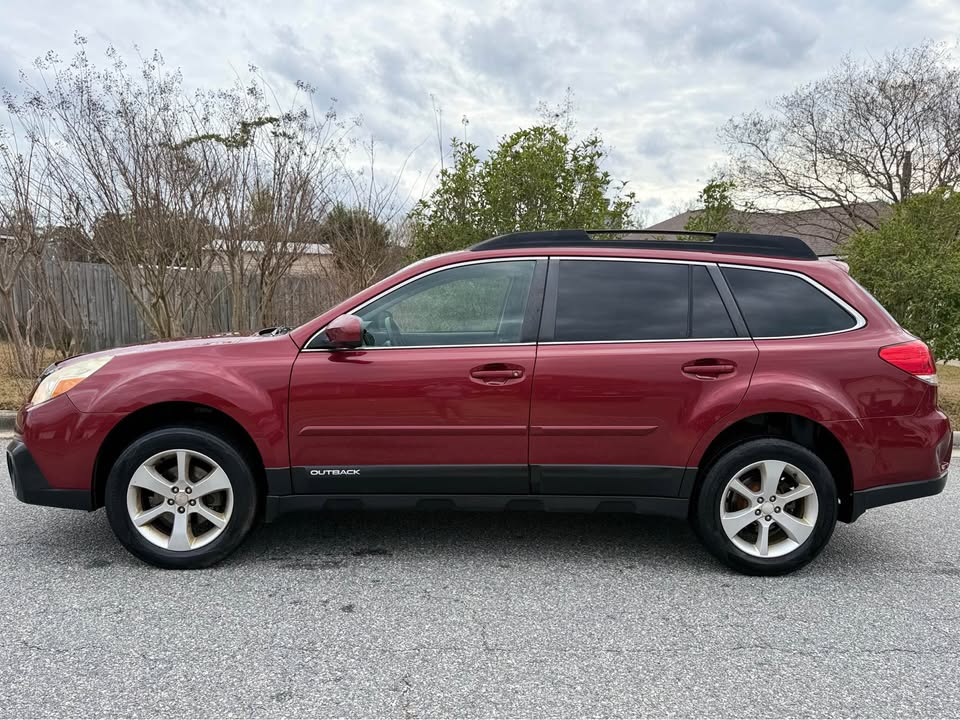
1. Which Subaru Outback years deserve the most caution?
The engine and gearbox narrow the risk
Two Outbacks from the same year can carry different repair risks. The 2013 2.5L illustrates the difference. Subaru’s oil-consumption bulletin covers all manuals, but only CVT cars before specified production cutoffs.
The groups below flag documented faults and repair-program exposure; they do not rank failure rates. Complaint totals and bulletin coverage lack the sales, mileage, and repair data needed to compare failure rates.
| Model years and configuration | Main reason for caution | Evidence that matters before purchase |
|---|---|---|
| 2000–2009, especially certain 2.5L cars and turbo models | External coolant leaks on certain 2000–2002 2.5L cars; turbo oil-feed screen concerns; salt-belt brake-pipe corrosion on certain vehicles | Cooling-system tests, turbo oil-supply records, VIN-specific recall status, and an underbody inspection |
| 2010–2012 2.5L with CVT | Torque-converter lockup can drag engine speed down or stall the engine at stops | A warm road test and converter repair records if symptoms occurred |
| Affected 2013 2.5L CVTs below the bulletin’s VIN and engine-number cutoffs; 2013–2014 2.5L manuals | Excess oil consumption covered by Subaru’s piston-ring bulletin | Production eligibility, measured oil use, and any short-block replacement record |
| 2015–2017 | Battery complaints; specific windshield coverage on certain 2015–2016 cars; and a steering recall affecting certain vehicles | Battery diagnosis, glass history, and VIN-specific recall completion |
| 2018–2019 | Documented telematics battery-drain and head-unit issues, with different programs and conditions by year | Module repair records, installed head-unit details, and a full screen test |
| 2020–2022 | Thermo control valve, infotainment, and windshield issues covered by specific programs, plus VIN-limited safety recalls | Engine-specific repairs, software history, and completed recall records |
An unresolved symptom can end the deal
A low-rpm event or stall as the car stops needs diagnosis before you agree on price. On applicable 2010–2012 2.5L CVTs, delayed release of torque-converter lockup pressure can keep loading the engine as the car slows. Subaru introduced a revised torque converter for this condition. A receipt for transmission fluid alone doesn’t establish that someone fixed it.
Oil-use claims need measured results, too. Subaru bulletin 02-157-14R uses a threshold of more than one-third quart (10.6 fluid ounces) per 1,200 miles under its prescribed test. That threshold applies to the listed vehicles and condition. A seller’s claim that “all Subarus burn oil” tells you nothing about this engine’s consumption.
A documented repair can change whether a car deserves consideration. The invoice should name the failed part, the work performed, and the mileage. After a short-block replacement, later oil-use records help show whether the repair held.
Recall counts can’t establish which year fails most often. Nor does a redesign alone make every car unreliable. Walk away if the seller won’t allow diagnosis of a warm stall, ongoing coolant loss, or repeated low oil readings.
2. Older Outbacks need more than a head-gasket receipt
Follow the coolant before blaming the engine
Subaru documented an external coolant-leak condition on certain 2000–2002 2.5L Legacy and Outback models under campaign WWP-99. Coolant escaped at the joint between the cylinder head and engine block. That differs from a breach that lets combustion gases enter the cooling passages. The campaign did not find that every vehicle in those years would leak, and its extended coverage was conditional.
An external leak can leave dried coolant deposits along that joint. You might notice a falling reservoir level or coolant drops beneath the engine. Those signs alone don’t prove coolant has entered a cylinder or mixed with the oil.
Later EJ25 cars need the same close inspection, without assuming every engine shares one failure path. Oil leaks can also wet the head-to-block area. A technician should follow the fluid before quoting a head-gasket job.
A cooling-system pressure test can expose an active external leak. Repeated overheating or unexplained coolant loss may warrant combustion-gas testing and further engine checks. An external seep doesn’t automatically become an internal breach at a set mileage.
Read any previous repair invoice closely. Look for cylinder-head inspection, flatness measurements, machining where needed, and the gaskets installed. A gasket replacement receipt alone doesn’t establish that the shop checked for heat damage.
An XT needs proof that oil reached the turbo
The 2005–2009 Outback XT adds a turbocharger and another costly oil-fed bearing assembly. Subaru bulletin 02-103-07R describes a mesh screen inside the turbo oil-supply banjo bolt. The bulletin applies to turbo-equipped vehicles generally and is informational maintenance guidance, not a recall or proof that every Outback XT has a restricted screen. A restricted screen can reduce oil flow and cause turbo failure.
Oil-change records carry extra weight here. Missing records leave you guessing about sludge and deposits in the oil supply. A quiet turbo during a short test drive can’t establish that the feed passage is clear.
A replacement turbo invoice should explain how the shop checked and addressed the oil supply. A new turbo still needs oil through that fitting. Leaving a restriction in place can starve its bearings again.
Brake-pipe rust can outweigh a repaired engine
Recall 14V-311, Subaru campaign WQK-47, covers certain 2005–2009 Outbacks with qualifying salt-belt registration histories. Salt-related corrosion can perforate the brake pipes and let brake fluid escape. WQK-47 superseded an earlier brake-line recall. Under the campaign, dealers inspected for leakage, applied anti-corrosion wax when no leak was found, and replaced piping when leakage was verified; surface rust alone did not automatically require replacement.
A car’s current location won’t reveal every winter it spent on salted roads. Check its registration history and the VIN-specific campaign record. Then have a technician inspect the brake pipes and surrounding underbody on a lift.
Keep brake-pipe corrosion separate from rust at structural mounting points. The recall repair doesn’t certify the whole underside as sound. Perforated pipes can leak hydraulic pressure, while severe mounting-point corrosion requires its own repair assessment.
3. The 2010–2014 cars hide two different repair risks
A stop-related low-rpm event can point to the torque converter
On applicable 2010–2012 2.5L Outbacks with a CVT, engine speed may fall very low as the car comes to a stop; some drivers may experience shuddering or stalling. Subaru bulletin 16-90-13R describes delayed or absent release of torque-converter lockup pressure associated with thrust-washer wear and a restricted oil passage. It does not establish that the symptom occurs only when warm or that every affected vehicle will stall.
Subaru introduced a revised torque converter. The bulletin’s repair path calls for diagnosis and, when confirmed, torque-converter replacement; not automatic replacement of the entire CVT. A valve-body repair may be needed in rare cases if the condition persists; other transmission damage requires separate diagnosis.
Test the car after the engine and transmission warm up. Include several normal stops and watch for a sharp rpm drop or shudder. Repeated stalling needs diagnosis before purchase, even if the car restarts at once.
The 2013 engine change brought a different oil problem
The Outback received the FB25 2.5L engine for 2013, alongside a second-generation CVT. Earlier FB25 use in the Forester doesn’t change that Outback timeline. A 2011 or 2012 Outback 2.5L belongs to the earlier engine family.
On affected FB25 engines, the piston rings can leave excess oil on the cylinder walls. That oil burns during combustion, lowering the sump level between services. A dry driveway won’t rule it out.
Subaru’s oil-consumption bulletin lists all 2013–2014 Outback 2.5L manuals. For the 2013 CVT, it lists production before VIN breakpoint D*321435 and engine number 151602. A Subaru dealer should check those identifiers against the actual car.
The prescribed test uses a threshold above one-third quart per 1,200 miles. Qualifying cases called for short-block replacement. The historical warranty extension ran for 8 years or 100,000 miles, whichever came first.
An old warranty letter doesn’t establish current eligibility. Ask for the test result and repair invoice, then check oil-use records after the repair. A fresh oil change alone can hide how quickly the level falls.
A 2014 badge doesn’t settle the question
The 2014 2.5L manual remains within the oil-consumption bulletin’s production table. The 2014 2.5L CVT does not. The 3.6R uses a different engine and also falls outside that FB25 program.
Those boundaries describe a specific defect program, not every possible cause of oil loss. A 2014 CVT car can still leak or consume oil through wear or another fault. Its condition needs evidence beyond its absence from the bulletin.
Ask how much oil the seller adds and over what distance. Receipts for oil changes rarely record top-ups between visits. One dipstick reading shows the current level; measuring consumption requires a known starting level and distance traveled.
4. A CVT warning doesn’t settle the repair bill
Find the fault before pricing a transmission
Codes P2763 and P2764 indicate high/low electrical circuit faults associated with torque-converter-clutch pressure-control solenoids. They do not, by themselves, prove that the chain, belt, or pulleys have failed. Subaru bulletin 16-131-20R gives diagnostic flowcharts for specified 2010–2020 vehicles, including Outbacks. The charts are generic; technicians must consult the applicable service manual for model-specific wiring, connectors, and terminal details.
The diagnosis needs to separate wiring faults, valve-body faults, converter trouble, leaks, and internal damage. Subaru’s repair guidance permits individual repairs when they correct the failure. Its valve-body and converter provisions also account for whether an internal failure has contaminated the fluid.
That distinction matters when you read an estimate. A failed electrical circuit needs different evidence from damaged pulleys or a slipping chain. Ask what tests support the proposed repair and whether the shop found internal debris.
Fluid selection also needs the exact vehicle application. A transmission-family name or fluid color alone won’t establish the correct specification. The service invoice should identify the fluid used, not merely say “CVT service.”
Coverage follows the powertrain and original start date
| Outback application | Subaru bulletin | Extended CVT coverage |
|---|---|---|
| 2010–2015 2.5L CVT; 2015 3.6L CVT | 16-107-17 | 10 years/100,000 miles |
| 2016–2017 2.5L and 3.6L CVT | 16-115-18 | 10 years/100,000 miles |
| 2018 2.5L and 3.6L CVT | 16-117-18 | 10 years/100,000 miles |
| 2019 2.5L CVT; 2020 2.4L turbo CVT | 16-155-25R | 10 years/100,000 miles |
The clock starts from the original warranty start date, not your purchase date. Coverage ends when either the time or mileage limit arrives. Have Subaru confirm eligibility against the VIN before counting on a covered repair.
A temporary one-year bridge for specified vehicles already beyond the normal mileage limit ended June 30, 2026. That date was not a universal end to every vehicle’s ordinary 10-year/100,000-mile coverage. The bulletin’s Legacy/Outback application table lists neither the 2019 3.6R nor the 2020 2.5L Outback; confirm any vehicle’s status by VIN.
Replacement history can also affect eligibility under that bulletin. It excludes salvage-yard CVTs and units rebuilt or remanufactured by parties Subaru has not approved. A replacement transmission receipt therefore needs to identify who supplied the unit.
Early turbo cars need a complete chain-slip recall record
Recall 21V-955, Subaru campaign WRK-21, includes certain 2020 turbo Outbacks. The much smaller 22V-485, or WRK-22, population is a narrow expansion covering certain 2020–2021 vehicles; neither campaign covers every turbo Outback from those years. These campaigns address a programming fault that can allow the CVT chain to slip.
Chain slip can break the chain guide. Loose fragments can interfere with the shift mechanism, and continued slipping can eventually break the chain. A broken drive chain can leave the car without propulsion.
The remedy includes transmission-control reprogramming, analysis of stored transmission data, and a prescribed videoscope inspection of the chain guide. Confirmed chain slip or an abnormal guide result can call for transmission replacement under the campaign instructions. A software-update receipt alone doesn’t document those inspection results.
5. The 2015–2019 electrical faults need separate diagnoses
A fresh battery can hide an active drain
A new battery can start the engine while leaving the cause of repeated failures untouched. A weak battery, poor charging, and excess current draw while parked need different repairs. Several battery receipts without a diagnosis leave that question open.
The battery settlement includes 2015–2020 Outbacks, subject to its class and claim terms. It does not establish that every dead battery comes from the telematics module or that every vehicle has a defect. Battery age, charging performance, and current draw still need testing on the actual car.
A technician should test the battery and assess charging before following a parked drain. Current measurements need to account for modules that remain awake after shutdown. One reading taken at an arbitrary waiting time can misidentify normal activity as a fault.
The 2018 and 2019 cars can drain batteries differently
On affected 2016–2018 Outbacks, an unupdated data communication module can keep seeking the discontinued 3G network. Subaru addresses this fault in bulletin 15-317-24R. The repeated connection attempts can draw power while the car sits parked.
That program extends qualifying DCM coverage to 8 years or 100,000 miles, whichever comes first. A separate one-year period began February 21, 2024, and has expired. Eligibility also depends on the original warranty start date, mileage, VIN, and diagnosis that the DCM caused the battery drain.
The 2019 Outback has a separate documented fault. The 2025 revision of bulletin 15-318-24R addresses excess DCM current draw linked to internal memory corruption and states an 8-year/150,000-mile extension, whichever comes first, for qualifying cases. This is not a blanket replacement entitlement; Subaru’s current revised procedure and VIN-level eligibility control.
The prescribed DCM repair can depend on the bulletin revision and STARLINK subscription status; Subaru changed the 2019 repair procedure in 2025. Ask which bulletin revision the shop followed and whether it reset, bypassed, or replaced the module as directed for that VIN. An unplugged DCM doesn’t establish completion of Subaru’s repair and can leave telematics services unavailable.
Similar screen faults can leave different bills
Test the touchscreen long enough to move through audio, phone, and vehicle menus. Watch for freezing, delayed responses, or commands that appear without a touch. Visible bubbles or separation within the display also deserve close inspection.
A reboot may restore a frozen screen for the rest of a short test drive. It won’t establish that the fault has stopped recurring. Ask the seller to demonstrate any reported fault and show earlier software or head-unit repairs.
The 2018 Harman Gen 3.0 program extended coverage to 5 years or 100,000 miles for qualifying units and conditions. By October 2026, that time limit has generally expired. Low mileage alone won’t preserve coverage beyond the original warranty clock.
The 2019 Gen 3.1 unit and the 2020–2022 CP1 units are separate applications. The applicable later program provides up to 8 years or 150,000 miles for qualifying faults, subject to the installed unit, VIN, diagnosis, and program terms. Confirm the installed unit, original warranty start date, and any earlier covered replacement with Subaru. A 2018 car doesn’t gain that longer coverage merely because its screen shows the same symptoms.
6. A cracked windshield can add camera work to the bill
The early glass fault has narrow boundaries
Subaru bulletin 12-192-15 covers certain original factory windshields on specified 2015–2016 Outbacks. Subaru traced the fault to materials in the black printed border and silver wiper-deicer area. Minor damage in that area could start a crack.
Eligibility depended on the production range, glass markings, and wiper-deicer equipment. The original program allowed one qualifying replacement within 5 years, with unlimited mileage. Subaru later extended the term for qualifying original windshields to 8 years, also with unlimited mileage; the extension remained limited by vehicle, glass, and program terms. Neither program provides blanket coverage for cracked glass on all 2015–2019 Outbacks.
Replacement records matter on an EyeSight-equipped car. Subaru’s instructions require camera inspection and calibration after windshield replacement. A glass invoice without those results leaves part of the repair unverified.
The 2020–2022 extension won’t cover every crack
Bulletin 12-257-25R extends qualifying windshield coverage on 2020–2022 Outbacks to 8 years or 100,000 miles. It allows a one-time replacement, subject to inspection. The installed windshield must be an eligible genuine Subaru part.
The covered damage pattern involves a small chip within the straight section of a crack. Continued stress from body movement can extend that crack. Star or spiderweb damage concentrated around an impact point falls outside the extension’s covered pattern. The bulletin’s size example does not create a universal 5 mm eligibility rule; the damage pattern and inspection determine coverage.
A technician may use a ballpoint pen to locate a chip along the crack. That inspection aid doesn’t create a universal “under 5 mm means covered” rule. Damage location and crack pattern still control the assessment.
Ask whether a replacement quote includes the required EyeSight calibration. Subaru recommends genuine glass designed for its camera system. The repair record should identify the windshield and document successful calibration, not merely installation.
A blocked camera and a failed camera need different repairs
Glare, fog, or snow can limit the cameras’ view and temporarily disable EyeSight functions. A visibility warning alone doesn’t establish camera failure. The owner’s manual describes operating conditions that can interrupt assistance.
Repeated unexplained braking or warnings that persist in clear conditions need diagnosis. Record the displayed message and conditions when it happens. A windshield replacement, camera fault, and temporary loss of visibility shouldn’t receive the same diagnosis.
The EyeSight settlement covers specific VINs among 2013–2022 Outbacks, not every vehicle in those years and not 2024 Outbacks. The court approved it in November 2025; its legal effective date was December 30, 2025. The benefit commencement date was July 29, 2025. Subaru denies the defect allegations.
The settlement provides a 75% contribution toward one qualifying repair during the applicable extension period, up to 4 years or 48,000 miles from the in-service date. Qualifying repairs within the original warranty follow the original warranty terms. Covered failures involve specified EyeSight functions and the camera assembly or rear sonar sensors. Ordinary windshield replacement doesn’t qualify as an EyeSight settlement repair.
The reimbursement claim deadline passed on September 27, 2025. The separate four-month time extension for vehicles whose warranty extension had already expired ended November 29, 2025. Settlement approval didn’t restart a fresh 4-year warranty on every eligible car.
7. The 2020–2022 cars need cooling-valve and screen checks
The thermo control valve can fail at its sensor
The thermo control valve controls coolant flow. Coolant vapor can enter its sensor housing and cause corrosion. That damage can trigger P2682 or related P26A-series codes, along with a check-engine light.
A failed valve can disrupt coolant-flow control without causing immediate overheating in every case. The stored codes and coolant-temperature readings help establish what has gone wrong. An overheating warning needs its own assessment, even when the valve already has a documented fault.
Subaru bulletin 09-119-24 lists 2020–2022 Outbacks for qualifying thermo control valve coverage. The extension runs for 15 years or 150,000 miles, whichever comes first. Subaru must confirm eligibility against the VIN and diagnosed condition.
Keep the diagnosis and coverage tied to the actual vehicle and VIN. The bulletin’s model-year listing does not expressly state a blanket exclusion for 2.4L-turbo Outbacks; ask Subaru to confirm eligibility rather than infer it from the engine alone.
A 2022 badge doesn’t identify the valve inside
The latest Subaru bulletin 09-80-21R posted to NHTSA lists the Outback production-change VIN as “TBD”; it does not support VIN N3172367. The revision adds a more durable stainless steel shaft and better sensor waterproofing. It also changes the resin molding used to protect the sensor.
Bulletin 09-119-24 states that replacement part 21319AA040 incorporates the design change. For part 21319AA010, the part number remained unchanged through the revision, so its production date code matters. An invoice showing that older part number alone can’t establish which design the shop installed.
A correctly repaired car still needs stable coolant temperatures and no unexplained coolant loss. Any recorded overheating deserves inspection beyond the replacement valve. Subaru also notes that technicians can’t read the valve’s production date code while it remains installed.
A screen reboot won’t prove the repair held
The 2020–2022 CP1 infotainment units can show black screens, repeated reboots, audio loss, or failed phone connections. On cars with the large display, faults can also block access to touchscreen climate controls. Test those functions during the road test, after the display has had time to run.
Pair your phone and check calls, audio playback, and phone integration. Then change the temperature and fan settings through the display where fitted. Note whether a failure affects one function or takes down the whole screen.
Subaru’s 15-322-25R program extends qualifying CP1 head-unit coverage to 8 years or 150,000 miles, subject to VIN and diagnosis. Reprogramming is the first step when applicable new software is available; replacement may follow if the unit already has the latest software or the qualifying fault remains.
Ask for the installed software version and the diagnosis behind any previous replacement. Audio loss alone doesn’t establish that the head unit failed. Speakers, amplifiers, and wiring fall outside this particular warranty extension.
8. An open safety recall can stop the purchase
Steering, welds, and airbags carry different risks
| Affected Outbacks and recall | Defect and consequence | Evidence needed before purchase |
|---|---|---|
| Certain 2016–2017 cars, 16V-292 / WTD-65 | An incorrectly machined steering shaft can prevent the steering wheel from directing the wheels. | VIN-specific inspection and steering-column replacement if required. Subaru told affected owners not to drive before inspection; Subaru arranged towing, but towing was not required for every vehicle. |
| Certain 2019 cars, 19V-493 / WUH-93 | Improper front duct-panel welds can reduce body strength. | VIN-specific inspection results and documentation of Subaru’s official resolution; the campaign terms should not be reduced to a routine dealer weld repair. |
| Certain 2020–2022 cars, 24V-227 / WRA-24 | Passenger-seat occupant-detection sensors can short, potentially affecting passenger-airbag deployment. | A completed campaign record showing the required replacement of all four sensors; this does not mean all four had independently failed. |
| Certain 2021–2023 cars, 23V-755 / WRQ-23 | Water can enter the inhibitor switch, causing lost reversing images, failed backup lamps, or starting trouble. | Completed switch replacement, plus normal starting, reverse-camera, and backup-lamp operation. |
Subaru instructed owners of affected cars not to drive before inspection and arranged towing support. A short test drive can’t establish whether the shaft meets its manufacturing specification. Subaru’s inspection determines whether the steering column needs replacement.
The weld campaign identifies 1,965 Outbacks, rather than the entire 2019 model year. The affected panel sits below the cowl near the windshield base. A clean exterior and an accident-free history won’t establish the strength of those factory welds.
An inhibitor-switch fault can also blank the transmission gear display. The recall filing follows water entry to an insufficient weld between the switch cover and stator. Moisture can then corrode the electrical contacts over time.
A recall notice doesn’t prove the repair happened
Subaru phased the occupant-sensor remedy by model year and passenger-seat configuration. An old parts-release schedule doesn’t establish availability for a specific VIN today. Ask the dealer to confirm the current remedy status and any remaining work.
When a seller says the recall is complete, request the dated repair order. Match its VIN and campaign number to the car. An appointment confirmation or inspection receipt may document only part of the required work.
For the occupant-sensor campaign, the repair requires replacement of all four sensors beneath the passenger-seat cushion. Subaru’s instructions also require checks after installation. A cleared airbag warning light alone doesn’t document sensor replacement.
9. Which Outbacks are worth a closer look?
The 2010–2014 3.6R avoids two named 2.5L programs
The 2010–2014 3.6R pairs a six-cylinder engine with a conventional 5-speed automatic. Subaru rated the 3.6L engine at 256 hp and specified regular-grade fuel. This combination is outside the specifically listed early 2.5L CVT torque-converter and FB25 oil-consumption programs; that does not make it trouble-free or establish a lower overall failure rate.
Age still brings repair exposure. Check for oil leaks, coolant loss, and delayed transmission engagement when cold and warm. Higher fuel use also belongs in your budget, especially if most trips involve stop-and-go traffic.
The 2015–2019 3.6R uses a CVT, which changes the buying decision. Its six-cylinder engine doesn’t remove transmission, screen, or telematics concerns. Subaru specifically included the 2015 3.6L CVT in its 10-year/100,000-mile extension.
The 2016–2017 cars offer an earlier dashboard, with conditions
A 2016–2017 Outback gives you the fifth-generation body and an earlier infotainment application than the 2018 multimedia update. That may suit you if you want to avoid that particular screen application. It doesn’t establish a lower overall failure rate.
These years are within the model-year range of the documented 2016–2018 DCM battery-drain program, but VIN and diagnostic eligibility still apply. Ask what caused any repeated battery failures and which module repair the shop performed. A new battery without that diagnosis leaves the parked-current problem unresolved.
The CVT still needs a warm road test and service-history review. Remaining warranty time depends on the original in-service date, even below 100,000 miles. For a VIN under the steering recall, Subaru requires inspection before driving.
The 2023–2025 cars need their own coverage check
The 2023–2025 Outbacks fall outside the model-year ranges listed for the 2020–2022 TCV, windshield, and CP1 head-unit extensions. Those boundaries don’t prove that every later part is fault-free. They also don’t give later cars access to the older programs.
For these cars, compare the actual engine, equipment, and repair history. Test the screen and phone connection, and check for repeat visits after software updates. Confirm the remaining factory coverage or read the terms of any purchased service contract.
Certain 2023 Outbacks are included in the inhibitor-switch recall. Water intrusion can disable the reversing image, backup lamps, or engine starting. A newer registration date doesn’t replace proof of switch replacement on an affected VIN.
The 2026 redesign needs time to prove itself
The sixth-generation Outback ends with 2025. Subaru introduced the seventh generation for 2026, with a standard 12.1-inch infotainment display and other substantial changes. Its screen hardware should be assessed separately from the earlier CP1 units.
A redesign alone doesn’t establish poor reliability. Equally, a quiet first few months can’t establish long-term durability. As of October 2026, the new generation lacks the years in service needed to judge age-related failures.
Sources & References
These primary records support the article’s technical, warranty, recall, and settlement claims. Eligibility is VIN- and condition-specific; confirm current status with Subaru or the relevant settlement administrator.
- NHTSA recall 14V-311 / Subaru WQK-47: brake-pipe corrosion
- Subaru TSB 02-103-07R: turbocharger oil-supply mesh screen
- Subaru TSB 16-90-13R: CVT torque-converter low-rpm condition
- Subaru TSB 02-157-14R: excessive oil-consumption test and remedy
- Subaru TSB 16-131-20R: CVT solenoid-circuit diagnostics
- Subaru TSB 16-107-17R: CVT warranty extension
- Subaru TSB 16-115-18: CVT warranty extension
- Subaru TSB 16-117-18: CVT warranty extension
- Subaru TSB 16-155-25R: CVT warranty extension and 2026 revision
- NHTSA recall 21V-955 / WRK-21: CVT chain slip
- NHTSA recall 22V-485 / WRK-22: CVT chain-slip expansion
- Subaru campaign procedure for WRK-21/WRK-22
- Subaru Battery Settlement administrator
- Subaru TSB 15-317-24R: 2016–2018 DCM coverage
- Subaru TSB 15-318-24R, 2025 revision: DCM coverage
- Subaru TSB 15-263-20: 2018 Gen 3.0 head-unit coverage
- Subaru TSB 15-322-25R: head-unit coverage
- Subaru TSB 12-192-15R: 2015–2016 windshield program
- Subaru 2021 windshield-extension notice
- Subaru EyeSight settlement administrator FAQ
- Subaru EyeSight settlement dates
- Subaru bulletin 07-235-25R: EyeSight settlement warranty terms
- Subaru TSB 09-119-24: thermo control valve coverage
- Subaru TSB 09-80-21R: thermo control valve revision
- NHTSA recall 16V-292: steering column
- NHTSA recall 19V-493: front duct-panel welds
- NHTSA recall 24V-227: passenger-seat occupant sensors
- NHTSA recall 23V-755: inhibitor switch
- Subaru’s 2010 Outback specification release
- Subaru’s 2026 Outback generation announcement