
The Crosstrek’s dipstick reads low before the next oil change comes due. Certain early 2.0-liter engines burn oil fast enough to need a short-block replacement. Topping up the oil hides the drop, but it does not fix the fault.
That puts 2013 models and affected 2014–2015 manuals under closer scrutiny. Some 2018–2019 cars carry a different risk; recalled ignition coils that can fail and cut engine power. The year narrows your search. The engine, transmission, and repair records decide how much risk remains.
This guide explains which Crosstrek years need caution, which repairs matter, and what to check before paying.
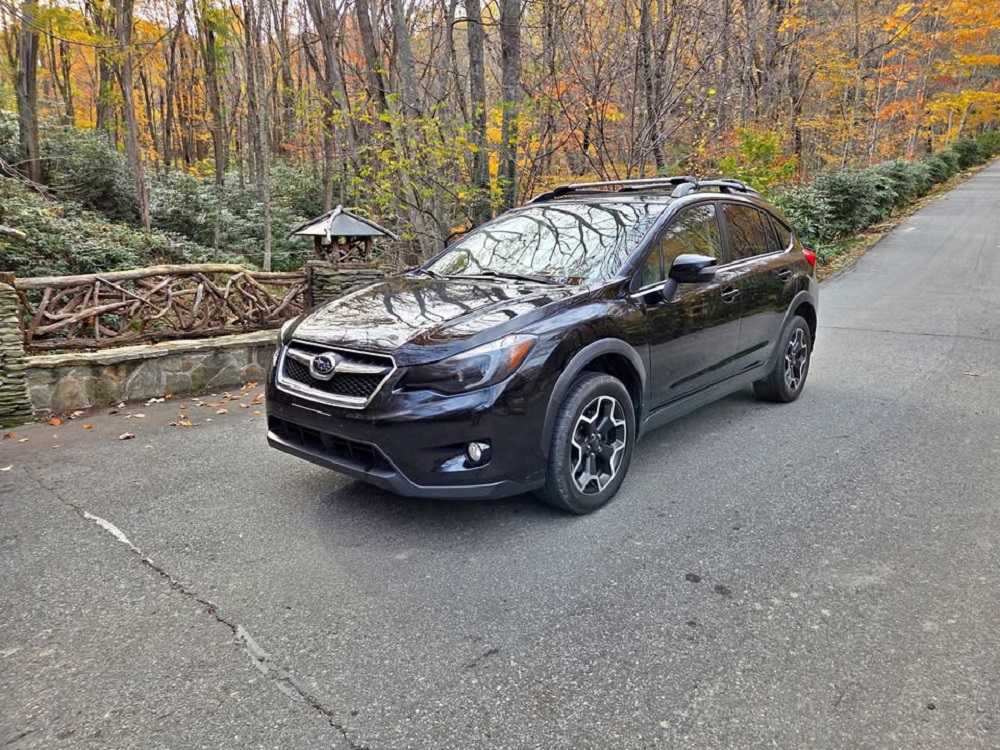
1. Which Crosstrek years carry the biggest repair risks?
A model year can help you identify what to investigate, but it cannot establish that a particular vehicle has a defect. Several of the issues below affect only vehicles within specific production ranges, and many are covered by a service bulletin or warranty extension rather than a safety recall. Check the VIN and repair history before drawing conclusions about an individual Crosstrek.
| Model year or version | Buying position | Main items to verify |
|---|---|---|
| 2013 XV Crosstrek | Review engine and recall records carefully | Oil-consumption program eligibility is production-specific; check the valve-spring recall by VIN. |
| 2014–2015 2.0-liter manuals | Ask for oil-use history and check the production limits | The oil-consumption program covers only listed vehicles and engines; the 2015 manual cutoff is VIN- and engine-number-specific. |
| 2016–2017 | Assess the individual car, not the year as a whole | Certain CVTs have extended coverage; the brake-light-switch recall includes certain 2013–2017 cars. |
| 2018–2019 | Check recall completion and diagnose unexplained power loss | Certain vehicles have ignition-coil, stabilizer-bracket, PCV, steering, or glass campaigns. |
| 2020–2023 | Review service records and verify the specific powertrain | A bulletin documents a moisture-related CVT connector condition on applicable vehicles. The 2021 thermo control valve (TCV) has an extended warranty program; verify eligibility by VIN. |
| 2024–2025 | Confirm recall work and retain camera-calibration records | Certain 2024 vehicles have wiring or driveshaft recalls. A bulletin documents mirror-glass vibration on listed 2024–2025 vehicles. |
| 2026 Hybrid | Check current recall status before purchase | Certain vehicles are covered by a fuel-cap recall. Confirm completion by VIN. |
The transmission changes the buying risk
Two Crosstreks from the same year may have different repair-program eligibility. Subaru’s early oil-consumption bulletin distinguishes manual transmissions from CVTs and sets production and engine-number limits. Hybrid models also need a separate review; their powertrains and coverage terms can differ from those of conventional Crosstreks.
For any recall or warranty extension, use the VIN and the vehicle’s original in-service date, mileage, and powertrain to confirm eligibility. A model-year badge alone is not enough.
A recall count can’t measure your odds
A recall population counts vehicles that may be affected; it does not count confirmed failures. Owner complaints are reports, not a tally of independently verified failures. Raw counts also need context such as the number of vehicles sold, vehicle age, mileage, time in service, and reporting behavior before they can support comparisons.
For that reason, the available record does not establish that 2019 is the “worst” Crosstrek year or that 2016 suffered a broad reliability collapse. A bulletin or recall tells you what to inspect on an eligible vehicle. It does not, by itself, tell you how often the fault occurs.
A model-year badge also does not prove that revised parts were installed in a particular car. Ask for invoices that identify the parts and work performed. A valve-spring repair, for example, does not establish that an oil-consumption problem was fixed.
2. Early engine trouble has 2 separate causes
Oil top-ups can hide an expensive repair
A full dipstick at the time of a viewing does not show how much oil the engine used between services. Ask for records that show the mileage and quantity of oil added. If those records are missing, a Subaru dealer or qualified shop can advise whether a controlled oil-consumption test is appropriate.
Subaru bulletin 02-157-14R documents a production change to piston rings and an oil-consumption program for certain XV Crosstreks. Its scope is limited; it includes 2013–2014 manual-transmission vehicles, 2015 manuals below the listed VIN and engine-number limits, and certain 2013 CVTs below their own limits. The bulletin does not cover every 2013–2015 Crosstrek.
The bulletin’s test threshold is more than one-third quart in 1,200 miles. A dealer must follow the specified test and confirm that the vehicle and condition qualify before approving the program repair. Qualifying vehicles receive a short-block assembly. The bulletin does not say that every oil leak is caused by the piston rings or that every vehicle within the listed production groups will consume excessive oil.
An external oil leak and internal oil consumption are different conditions. Oil around a gasket does not, on its own, prove that the oil-control rings are faulty. Ask for the diagnosis, repair invoice, and any follow-up oil-use records.
The bulletin extended coverage to 8 years or 100,000 miles, whichever came first, measured from the original warranty start date. Most 2013–2015 vehicles will have passed the time limit by October 2026, but the vehicle’s VIN, in-service date, mileage, and Subaru coverage inquiry determine its status. Low mileage alone does not restore expired coverage.
A broken valve spring can stop the engine
Certain 2013 XV Crosstreks are covered by safety recall 18V-772 / WTY-84. A valve spring may fracture, potentially causing abnormal engine operation, a stall, or an inability to restart. The recall is VIN-specific; the model year alone does not establish that a car is included. See the NHTSA recall report and check the vehicle’s campaign status.
Subaru’s remedy replaces the valve springs with improved parts. Ask for the completed campaign record or repair order. A vague invoice that says only “engine work” does not show which repair was performed.
The short-block oil-consumption repair and valve-spring recall address different components and conditions. Completion of one does not establish completion of the other. If both apply to a 2013 vehicle, check the records for both repairs separately.
3. A CVT warning can mean very different repair bills
The fault code comes before the replacement quote
Delayed engagement, shudder, warning lights, or stalling at a stop need diagnosis. Those symptoms alone do not identify whether the cause is wiring, the valve body, or internal transmission damage. Ask a qualified shop to identify the stored codes and explain what tests led to its recommendation before approving a major repair.
Subaru bulletin 16-131-20R gives diagnostic procedures for solenoid-related codes including P2763 and P2764. A code points to a circuit condition; it does not automatically prove the whole CVT has failed. The bulletin directs technicians to use the applicable service-manual diagnostics as well.
The shop may need to check wiring, connectors, and control circuits. A valve-body repair addresses a different fault from damaged internal transmission parts. Replacing the CVT without locating the cause can leave an external wiring or connector fault unresolved.
A road test and scan can help reproduce symptoms and link them to stored faults, but the test should follow the vehicle’s service procedure. Compare written quotes by the work each shop proposes. A valve-body repair and a replacement transmission are not equivalent; ask what unit is being installed, where it came from, and what parts and labor warranty applies.
Moisture can disrupt the later CVT’s connector
For applicable 2020–2023 Crosstreks with the TR580 transmission, Subaru bulletin 16-149-25 documents condensation reaching the control-valve harness connector. The condition can disrupt electrical connections and trigger transmission warnings.
The bulletin lists codes including P2721, P2763, P0974, and P0977. It provides diagnostic steps and identifies revised parts, including a connector cover and control-valve design. The technician should follow the bulletin’s checks before selecting parts. It is a service bulletin, not a recall or a measure of how often the issue occurs.
If the car has been repaired, ask for an invoice that identifies the diagnosis and parts installed. An invoice that names only an electrical part may not tell you whether the moisture-related condition was investigated. The VIN and repair history determine whether this bulletin applies.
The model year decides which coverage applies
Several U.S. Subaru programs extend coverage for certain CVT repairs to 10 years or 100,000 miles, whichever comes first. The clock generally runs from the original warranty start date; buying a used car does not restart it. The vehicle and repair must meet the specific program’s terms.
| Subaru bulletin | Crosstrek group listed in the program | Coverage point to check |
|---|---|---|
| 16-107-17R | Certain 2013–2015 conventional CVTs and 2014–2015 Hybrid CVTs | Check the exact VIN, powertrain, in-service date, and diagnosed fault. |
| 16-115-18 | Certain 2016–2017 conventional CVTs and 2016 Hybrid CVTs | Some vehicles may remain within both limits; confirm with Subaru. |
| 16-117-18 | Certain 2018 2.0-liter CVTs | Eligibility is vehicle- and repair-specific. |
| 16-155-25R | Certain 2019 2.0-liter CVTs, excluding Hybrid | Ordinary extension coverage may remain for some vehicles; verify the VIN. |
For the 2019 program, a temporary coverage period that waived mileage and warranty-start-date limits ended June 30, 2026. That temporary period is separate from the ordinary extension. Have a Subaru dealer check the VIN before assigning value to possible remaining coverage. These programs are warranty extensions, not safety recalls.
4. Why 2018–2019 recall records need a closer look
The first coil repair may not have finished the job
On certain 2018–2019 Crosstreks, an ignition coil could remain energized too long after engine shutdown. Excess heat could damage the coil, cause a short, and lead to poor running or loss of motive power. The first campaign was 19V-743 / WUQ-02.
The later campaign, 21V-264 / WRE-21, superseded the earlier one. Vehicles repaired under WUQ-02 still needed the later remedy. Subaru’s procedure checks the engine-control-module software and replaces all four ignition coils as specified. A receipt for the first campaign alone does not establish that WRE-21 is complete. Check the NHTSA recall information and the VIN-specific campaign record.
Loose brackets and steering faults affect different cars
| Campaign | Affected Crosstrek group | Fault and repair record to check |
|---|---|---|
| 21V-263 / WRD-21 | Certain 2018–2019 cars, including certain 2019 Hybrids | Rear stabilizer-bracket bolts may loosen or detach. Check for the specified inspection and tightening, and for replacement of missing bolts. |
| 19V-744 / WUP-01 | Certain 2018 cars | A PCV valve can separate. Check the required inspection and any PCV, hardware, or engine repair. |
| 19V-065 / WUC-88 | Certain 2019 cars | An electric power-steering connection can short and remove steering assistance. Check the steering-gear inspection or replacement record. |
| 19V-404 / WUG-92 | A narrow group of 2019 cars | Certain left-rear door glass may break into larger fragments. Check whether the specified glass replacement was completed. |
Loss of electric steering assistance can make the steering wheel harder to turn, especially at low speeds. It is not the same as a loss of the mechanical connection between the steering wheel and the front wheels. The campaign’s inspection determines whether the affected steering assembly needs replacement.
The rear-door-glass campaign covered 256 Crosstreks in the cited filing. It concerns how that door glass may break, which is different from windshield-cracking complaints. Recall eligibility is VIN-specific, so the model year alone cannot establish whether any of these repairs apply.
Coolant loss needs a diagnosis, not a head-gasket guess
An overheating history deserves attention on any used Crosstrek. But the available record does not establish 35,000 miles as a predictable head-gasket failure point for the 2019 model, and the 2.0-liter engine’s output does not prove that its head gaskets overheat.
A separating PCV valve, excessive oil use, and a head-gasket leak require different repairs. Blue exhaust smoke or a falling oil level alone does not establish a head-gasket breach. For unexplained coolant loss, a technician should look for external leaks and test the cooling system. If combustion leakage is suspected, further tests should be chosen based on the symptoms.
A seller’s claim that the engine “just needs coolant” leaves the cause of the loss unresolved. Ask for a diagnosis and repair documentation rather than treating a symptom as a confirmed fault.
5. Rear-end howl and brake lights that stay dark
A new bearing can leave the cause behind
A rear-wheel howl may persist or return if the mounting surface is uneven. Subaru bulletin 05-70-19R addresses applicable 2013–2019 Crosstreks. It explains that an uneven rear backing-plate surface can affect hub/bearing concentricity when the bolts are tightened.
When the condition described in the bulletin is present, Subaru specifies replacing the affected hub/bearing assembly and backing plate together. Before replacing parts, have the shop distinguish bearing noise from tire noise; uneven tread wear can also create a hum that changes with road speed.
An earlier invoice that lists only a hub does not prove that the repair was wrong. It does leave the backing plate’s condition unclear if the noise returned. Ask the shop to identify the noisy side, the suspected cause, and which parts need replacement.
One small switch can block several functions
Certain 2013–2017 Crosstreks are covered by brake-light-switch recall 19V-149 / WUE-90. Contamination can prevent the switch’s electrical contacts from working, so the brake lights may not illuminate when the pedal is pressed.
Depending on the vehicle’s equipment, the same switch fault can affect shifting from Park, push-button starting, ABS, stability-control, or EyeSight functions. Subaru says the fault does not eliminate basic braking, but following traffic may not receive a brake-light warning. Several related warnings can stem from the same switch signal; they do not necessarily indicate several failed parts.
Check the campaign record even if the brake lights work during a viewing. The recall remedy replaces the affected switch, and a single successful test does not establish that the campaign was completed. Use the VIN to confirm status.
6. A dead screen or battery needs more than a quick fix
Similar screen faults carry different warranty limits
A screen that freezes, goes blank, or repeatedly reboots needs more than a brief check before purchase. Test audio, phone pairing, and touchscreen response during the drive. Note whether restarting the unit fixes the problem only temporarily.
Subaru bulletin 15-263-20 covers the Harman Gen. 3.0 head unit in applicable 2018 models. Its extension is 5 years or 100,000 miles, whichever comes first, so ordinary time coverage will usually have expired by October 2026.
Bulletin 15-322-25R covers applicable 2019–2023 Gen. 3.1 head units and extends coverage to 8 years or 150,000 miles, with a one-time replacement provision. Where specified, the procedure calls for available software updates before replacement.
These extensions do not automatically cover speakers, amplifiers, wiring, or physical damage. Have the dealer confirm the head unit is the source of the fault, check VIN eligibility, and determine whether the covered replacement has already been used.
A fresh battery can leave the drain untouched
A Crosstrek that starts after a battery replacement may still drain the battery while parked. For applicable 2016–2018 vehicles, Subaru bulletin 15-317-24R documents a condition in which the telematics module repeatedly attempts to access the discontinued 3G network, drawing power after shutdown.
The bulletin provides an 8-year/100,000-mile warranty extension, subject to the diagnosed fault and program terms. Its temporary period without the usual time or mileage limits has ended. Remaining eligibility depends on the original warranty start date, mileage, VIN, and confirmed cause.
The shop should test battery condition and standby current using the applicable diagnostic procedure. Measurements taken before the vehicle’s electronics settle can be misleading. Ask for the measured draw and the repair performed. A weak battery and a telematics fault can exist together; replacing the battery alone does not correct repeated network attempts.
Windshield paperwork should include camera work
For an EyeSight-equipped Crosstrek, keep the windshield invoice and any required camera-calibration records. Clear glass does not establish that the cameras are correctly aligned.
For equipped 2024 vehicles, Subaru bulletin 07-211-23 provides the wide-angle mono-camera adjustment procedure after windshield work. Subaru also describes separate procedures for the stereo-camera system; the required checks depend on the work performed. The bulletin identifier is 07-211-23, without an “R” suffix in the official document reviewed.
A windshield crack or unexpected EyeSight behavior does not establish a failure rate for an entire model year. A dashboard without warnings is not proof that required camera adjustments were completed. Ask for the service record.
7. The 2.5-liter adds power and another part to check
More pull doesn’t prove longer engine life
For 2021, the Sport and Limited trims used a 182-hp 2.5-liter engine. Base and Premium trims used a 152-hp 2.0-liter engine. The larger engine provides more power for merging, hills, and a loaded cabin.
That 30-hp difference does not establish a lower head-gasket failure rate or longer engine life. Subaru’s output figures describe performance, not long-term durability. A 2.0-liter example can still be worth considering if its condition and service records are sound.
Coolant vapor can reach the valve’s sensor
Subaru bulletin 09-119-24 addresses thermo control valve conditions on 2021 Crosstreks. The bulletin identifies coolant-vapor intrusion into the TCV sensor area and lists P2682 and P26A-family codes. The documents reviewed do not establish that the condition applies only to the 2.5-liter engine or that the 2.0-liter is excluded. Confirm applicability for the specific vehicle by VIN and engine.
Subaru extended qualifying TCV coverage to 15 years or 150,000 miles, whichever comes first. That extension applies to the covered TCV condition; a cooling-system complaint alone does not establish coverage for every hose, pump, or radiator repair.
Part 21319AA040 incorporates the design change. Earlier part numbers need to be checked against the applicable production-date guidance. Ask for an invoice that identifies the part installed, rather than relying only on a generic description such as “coolant valve replaced.”
Later cars still need targeted checks
Well-documented 2022–2023 models can be part of a used-car search, but they still need the same targeted checks as other years. The CVT connector bulletin and Gen. 3.1 head-unit extension apply to listed vehicles. Not being covered by the 2021 TCV extension does not prove that a car is immune to unrelated coolant leaks or valve problems.
A 2021 candidate should also be checked for inhibitor-switch recall 23V-755 / WRQ-23. On certain vehicles, water can enter the switch and affect reverse-light operation or the rearview-camera image. A completed TCV repair does not complete this separate recall. Check the campaign record by VIN.
8. Newer Crosstreks still need recall proof
Chafed wiring and cracked driveshafts can stop a 2024
Certain 2024 Crosstreks are covered by wiring recall 23V-551 / WRL-23. The instrument-panel harness may contact the steering-beam bracket because of insufficient clearance. Contact can wear through insulation and cause a short or loss of power.
The remedy includes inspecting and securing the harness. If inspection finds damage, the repair depends on its extent and may require wiring repair or replacement. Ask for the repair order showing what the dealer found and corrected.
A separate campaign, 23V-754 / WRP-23, concerns certain front driveshafts. Improper cooling during manufacture can leave an outer race prone to cracking. If it fails, the vehicle may lose propulsion. Subaru’s remedy calls for inspection and replacement where specified. Both campaigns apply to specific VINs and production groups; a 2024 badge alone does not show whether a car is affected.
A shaking mirror needs a road test after repair
Subaru bulletin 12-268-25 documents driver-side mirror-glass vibration at highway speeds on listed 2024–2025 Crosstreks. It describes a repair concern, but does not establish that mirror vibration is the model’s most common fault.
If the mirror vibration blurs the rearward view, ask for diagnosis and a repair record. The shop should follow the current bulletin revision and verify the result under the conditions that triggered the symptom. A 2025 vehicle also has a shorter history in service than an older model, so raw complaint totals are not directly comparable without context.
9. Hybrid models carry their own repair risks
The Hybrid badge covers 3 different powertrains
The 2014–2016 Crosstrek Hybrid was not plug-in. Subaru introduced a plug-in version for 2019 and sold it through 2023. The 2026 Hybrid uses a different, non-plug-in series-parallel powertrain.
These differences matter for battery checks, transmission diagnosis, and warranty eligibility. Do not assume that a conventional Crosstrek’s CVT program automatically does—or does not—cover a Hybrid from the same year. Ask Subaru to match the specific VIN and powertrain to the relevant program.
For an older Hybrid, arrange a battery assessment with a shop familiar with that version. For a 2019–2023 plug-in, test external charging as well. An engine start does not establish traction-battery health or prove that charging works.
A broken charging terminal can cut drive power
Recall 23V-080 / WRD-23 covers certain 2019–2022 Crosstrek Hybrids. Corrosion can damage the terminal that carries power from the converter to the 12-volt battery. If the battery stops charging, the vehicle may lose drive power.
The remedy includes a revised terminal-mounting bracket. If corrosion is found, Subaru specifies harness and terminal repairs; where applicable, the repair procedure also includes a protective cap. Replacing an aging 12-volt battery does not document that the recall remedy was completed. Ask for the campaign record and repair order.
The 2026 fuel-cap recall needs proof of repair
Recall 26V-106 / WRD-26 addresses an insufficient fuel-cap seal on certain 2026 Crosstrek Hybrids. When a nearly full tank warms, pressure can push fuel toward the filler neck and allow leakage past the cap. Leaking gasoline creates a fire risk if an ignition source is present.
The remedy replaces the fuel-filler-cap gasket with an improved seal. NHTSA and Subaru have issued interim advice for unrepaired affected vehicles, including keeping the fuel level at or below half a tank and parking outside when the tank is above that level. Follow the current instructions on the NHTSA recall page and confirm completion by VIN before buying.
The affected-vehicle population has been revised in later filings. If you quote a total, identify the filing date and version; the count refers to potentially affected vehicles, not confirmed leaks or fires. For an individual Crosstrek, VIN-specific recall status is what matters.
Sources & References
- Subaru oil-consumption bulletin 02-157-14R
- NHTSA valve-spring recall 18V-772
- Subaru CVT bulletin 16-131-20R
- Subaru CVT connector bulletin 16-149-25
- Subaru CVT warranty bulletins: 16-107-17R, 16-115-18, 16-117-18, and 16-155-25R
- NHTSA ignition-coil recall 19V-743 and 21V-264
- NHTSA rear stabilizer-bracket recall 21V-263
- NHTSA PCV recall 19V-744
- Subaru steering bulletin for 19V-065
- NHTSA rear-door glass recall 19V-404
- Subaru rear bearing bulletin 05-70-19R
- Subaru brake-light-switch recall WUE-90
- Subaru head-unit bulletins 15-263-20 and 15-322-25R
- Subaru telematics bulletin 15-317-24R
- Subaru camera bulletin 07-211-23 and EyeSight calibration guidance
- Subaru 2021 Crosstrek press kit
- Subaru TCV bulletin 09-119-24
- NHTSA inhibitor-switch recall 23V-755
- NHTSA 2024 harness recall 23V-551 and driveshaft recall 23V-754
- Subaru mirror bulletin 12-268-25
- Subaru 2014 Hybrid overview, 2019 plug-in Hybrid announcement, and 2026 Hybrid features
- NHTSA Hybrid harness recall 23V-080
- NHTSA fuel-cap recall 26V-106
- Subaru VIN recall lookup