
A Yukon’s V8 knocks under load, then stalls before the next exit. In certain 2021–2024 6.2-liter engines, manufacturing defects can damage bearings and stop the engine. Recall 25V274 puts those trucks under scrutiny, but older Yukons carry different repair risks.
Early AFM-equipped V8s can burn oil between changes. Some later trucks develop lifter faults or torque-converter shudder. For you, that means checking which engine and gearbox sit behind the asking price. A clean body won’t reveal worn bearings or a failing converter clutch.
This guide covers the GMC Yukon years to scrutinize, the failures behind them, and the repair records worth demanding.
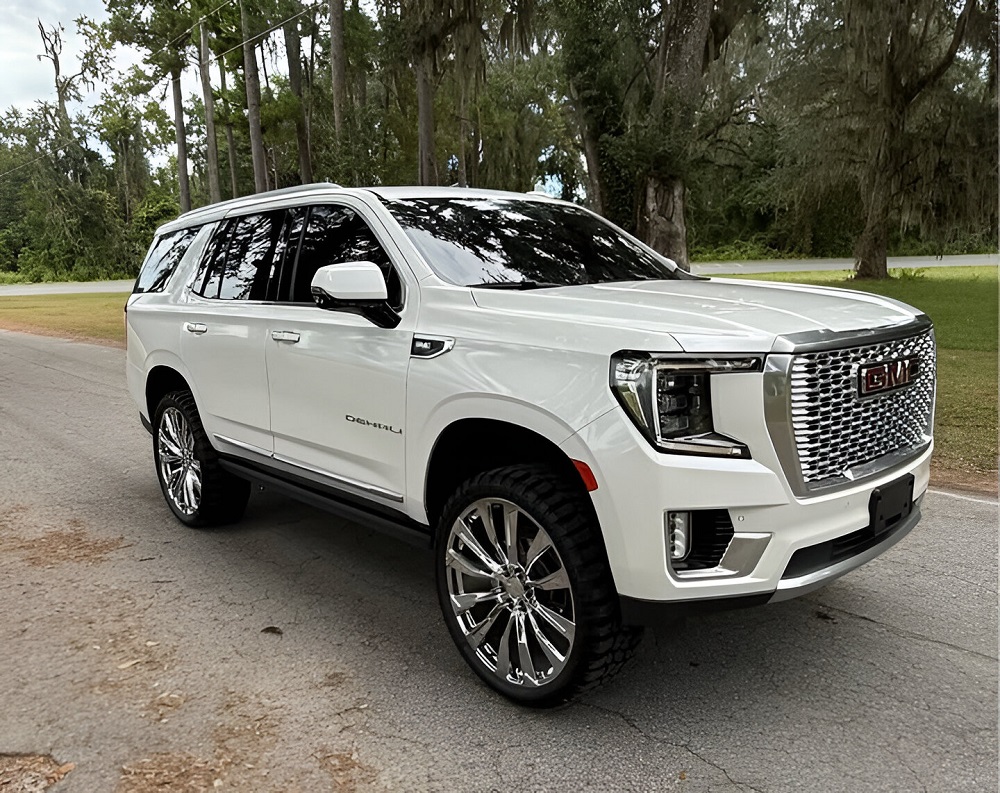
1. The badge hides different repair risks
Match the model year to the trouble underneath
Use the following as a checklist of issues to investigate, not as a measured ranking of the Yukon’s least-reliable years. Engine, transmission, build date, maintenance and VIN-specific campaign status all matter.
| Model year and equipment | Buying position | Evidence to request |
|---|---|---|
| 2007–2009 with an AFM-equipped V8 | Be especially cautious if oil top-ups or misfires keep returning. | Oil-use records, valve-cover or AFM oil-deflector work, and a diagnosis of any current misfire. |
| 2010–2014 with a listed AFM-equipped V8 | Compare vehicles with documented oil use and evidence of sound engine condition. GM bulletin 10-06-01-008M includes certain 2014 Yukon applications, not every engine. | Confirm the engine/RPO and build details; review applicable repairs and oil-consumption measurements. |
| 2015–2017 | Investigate unresolved engine, transmission, A/C and rear-lamp symptoms. | Confirm the engine and transmission RPOs; request misfire diagnosis and receipts for any condenser or lamp repair. |
| 2018–2020 | Compare individual vehicles on condition and records, rather than model year alone. Engine deactivation systems vary; the 6.2L L87 uses DFM, not the earlier AFM system. | Review lifter and engine-repair history, identify the transmission, and road-test it when warm. |
| 2021–2024 with the 6.2-liter L87 | Check carefully for open or completed recall 25V274. Only certain VINs are covered. | Verify the VIN, obtain the recall repair order, identify whether the engine passed inspection or was repaired/replaced, and investigate any continuing symptoms. |
| 2021–2022 with other engines | Assess the engine and transmission separately; other campaigns may apply. | Check VIN-specific transmission campaigns, 2021 fuel-pump actions and any applicable 2022 gasoline-transmission campaign. |
| 2025–2026 with the 6.2-liter L87 | Do not assume that being newer resolves the concern; these model years are within investigation EA26005, not automatically within recall 25V274. | Check build details, service history and VIN-specific campaign status. An investigation is not a recall. |
Complaint counts leave out miles and engines
The 2007–2014, 2015–2020 and 2021-onward generations mark major changes in Yukon hardware. Engine choice creates further differences within each group. Two Yukons from the same year can have different transmissions and repair needs.
Yukon and Yukon XL share many engines and gearboxes, but their complaint totals are separate. A bulletin or recall can cover both when it lists the same affected hardware. A Yukon XL complaint count cannot establish how often the standard Yukon fails.
Raw complaint totals also leave out essential context. Older vehicles have had more time and miles to develop faults. Sales volume and owners’ reporting habits vary. Without an exposure denominator and confirmed diagnoses, complaint totals cannot establish a failure rate.
Some third-party sites label complaints “severe” using their own scoring rules. Those are not NHTSA classifications. A reported stall also needs a diagnosis before it can be attributed to bearing damage, lifter failure or lost fuel pressure.
Later production still carries older hardware
A 2014 Yukon deserves comparison with earlier trucks, but its model year does not rule out oil consumption. GM’s bulletin 10-06-01-008M lists certain 2014 applications with specified AFM V8 engines. A repair record should identify what was changed and whether oil use continued afterward.
The same care applies to 2019–2020 trucks. Compare them when service records and current condition support the asking price. A 2020 Denali pairs its 6.2-liter V8 with a 10-speed automatic. That L87 engine uses Dynamic Fuel Management (DFM) lifters; it is not the older AFM system. The specific engine and repair history still matter.
2. The 6.2-liter recall goes deeper than a lifter tick
Debris and crankshaft defects can damage bearings
Recall 25V274 covers certain 2021–2024 GMC Yukon and Yukon XL models equipped with the L87 6.2-liter V8. The campaign’s suspect build window is March 1, 2021, through May 31, 2024, and involvement must be checked by VIN. GM identified debris affecting connecting-rod bearings or crankshaft oil passages, as well as crankshafts with incorrect dimensions or surface finish.
Those faults can damage the bearings that support the crankshaft and connecting rods. Engine damage or failure can lead to loss of propulsion. Knocking, loss of power or other symptoms may occur, but the recall does not guarantee advance warning.
This failure involves different parts from a collapsed cylinder-deactivation lifter. A lifter fault disrupts valve movement; recall 25V274 concerns connecting-rod and crankshaft defects. The 5.3-liter V8 and 3.0-liter diesel are outside this L87 engine recall.
“Recall completed” does not tell you which repair happened
GM’s remedy begins with an engine inspection. Depending on the findings, the dealer repairs or replaces the engine. Engines that pass inspection receive higher-viscosity 0W-40 oil, a new filter and oil-fill cap, and an insert for the owner’s manual.
That leaves two different repair paths for vehicles with a completed campaign. One may have received an engine repair or replacement. Another may have passed inspection and received the revised oil service. Ask for the repair order rather than inferring the work from a brief status label.
For later oil changes, follow the current instructions that apply to the VIN and recall repair. Do not assume that an unchanged owner’s-manual specification covers the revised recall procedure.
Failures after repairs widened the investigation
On August 20, 2026, NHTSA opened engineering analysis EA26005. It covers 2021–2026 GM vehicles equipped with the L87 engine and examines reported failures after recall work as well as engines built outside the original recall’s production window.
NHTSA’s opening report lists 499 complaints alleging engine failure after the recall remedy: 473 following an oil-viscosity change and 26 following engine replacement. Those counts cover several GM nameplates, not only the Yukon. NHTSA also recorded 191 reports involving engines built after the production period named in the recall.
These are reported failures, not a measured failure rate. The engineering analysis does not establish that every engine in its scope has the defect, and it does not itself add vehicles to recall 25V274. Check campaign eligibility by VIN. If a vehicle develops knocking or power loss after recall work, it still needs diagnosis; a replacement-engine receipt alone does not explain a new symptom.
3. Early AFM engines can drain the dipstick between oil changes
Oil can reach the cylinders by two routes
GM bulletin 10-06-01-008M addresses oil consumption in specified 2007–2014 Yukon applications with AFM-equipped V8s. It identifies oil drawn through the crankcase-ventilation system and oil spray from the AFM pressure-relief valve. Which repair applies depends on the cause and engine configuration.
Oil carried through the ventilation system can enter the intake and then the cylinders. The bulletin also describes oil sprayed toward the cylinder walls by the AFM relief valve. Under certain operating conditions and part tolerances, deposits can form in piston-ring grooves and contribute to excessive oil use.
A driver may need to add oil well before the next service. Fouled spark plugs and rough running can accompany the condition. Replacing plugs may restore ignition, but it does not correct an unresolved source of oil entering the combustion chamber.
Oil consumption alone does not prove that an AFM lifter has collapsed. A collapsed lifter disrupts valve movement and needs a separate diagnosis. Repeated misfires should be checked for ignition, compression, valve-motion and other possible causes.
Build dates matter more than a seller’s “fixed” claim
GM’s bulletin describes an updated valve cover and an AFM oil shield. The valve cover addresses oil entering through crankcase ventilation. The shield helps protect cylinders from oil spray at the AFM pressure-relief valve. The bulletin lists a February 1, 2011, valve-cover production breakpoint and an October 2010 breakpoint for the shield; procedures also vary by engine block.
Updated parts do not prove that existing ring deposits or wear have disappeared. Ask how much oil the engine used after the repair and over what mileage. A receipt for a valve cover establishes the work, not its outcome.
Track oil added against miles traveled, using consistent dipstick checks. A fresh oil change gives you a starting point; it cannot establish consumption without a measured distance and a later level check.
A cracked dash says nothing about the inflator repair
Inspect the dashboard for cracks, especially around the passenger-airbag opening. Cracks can add repair costs, but they do not by themselves prove that the airbag will deploy incorrectly. Dashboard condition and inflator campaign status are separate checks.
Takata passenger-airbag campaigns cover certain 2007–2014 Yukon and Yukon XL vehicles. The inflator defect can cause a rupture and release metal fragments when the airbag deploys. Check the individual VIN and the repair history.
A replacement dashboard does not establish that the inflator was replaced. A completed inflator campaign does not establish that the dashboard was repaired. The repair order should document the applicable inflator work.
4. A misfire code cannot condemn the engine
A stuck lifter can leave a valve barely moving
GM bulletin 15-06-01-002L covers relevant 2015–2020 Yukon applications with specified 5.3-liter and 6.2-liter V8 engines. It addresses AFM lifters that collapse or stick. A failed lifter can interrupt the normal movement from the camshaft through the pushrod to the rocker arm.
A persistent tick and engine shake can occur when a cylinder stops contributing. A bent pushrod can further reduce valve movement. Damage to the lifter roller or camshaft lobe can turn a lifter repair into a larger repair.
Code P0300 indicates detected misfires, but it does not identify the failed part. A spark plug, ignition coil, injector, compression loss or valvetrain fault can cause a misfire. The diagnosis needs to connect the affected cylinder to a demonstrated fault.
Ignition and injector checks help rule out faults outside the valvetrain. Compression testing checks whether the cylinder can build pressure. Rocker movement can reveal reduced valve travel, but the shop still needs to identify the damaged part.
The 2021 engines have their own lifter record
A February 2021 GM TechLink article references preliminary information PIP5776 for certain 2021 Yukons with L84 5.3-liter and L87 6.2-liter engines. It describes collapsed or separated lifters and bent pushrods. The later PIP5776C document was published in April 2021 and lists 2021 Yukon applications with those engines.
These failures can trigger codes P0300–P0308, depending on the detected misfires. A cylinder-specific code helps locate the fault, but it still cannot distinguish a failed lifter from an ignition or injector problem.
Earlier AFM systems deactivate a fixed group of cylinders under suitable conditions. DFM can deactivate different cylinders in varying patterns. Both systems use specialized lifters, but their oil-control arrangements differ. An earlier AFM oil-manifold description should not be applied to every later DFM engine.
The damaged parts decide the repair bill
GM’s AFM bulletin calls for inspection of the camshaft and lifter rollers. That inspection helps determine whether the repair involves lifters alone or also a camshaft. Excessive cam or lifter wear does not automatically require engine replacement, although GM’s procedure notes that an engine may need replacement if a stuck lifter cannot be removed using the approved methods.
A broader repair needs evidence of broader damage. The estimate should identify the failed parts and explain any damage beyond the valvetrain. “Needs an engine” leaves important questions unanswered without those findings.
An electronic AFM/DFM disabler does not repair a worn lifter, bent pushrod or damaged camshaft. Its presence does not establish that the engine is healthy. For previous work, ask for the diagnosis, parts replaced and warranty terms.
A receipt saying “misfire repaired” may document little more than new plugs. It does not establish that the shop inspected the lifter rollers or camshaft. Reduced rocker travel still calls for inspection of the pushrod, lifter and cam lobe.
5. Three gearboxes put different repairs on the table
Count the gears before blaming the converter
| Yukon application | Transmission | Fault or campaign to investigate |
|---|---|---|
| Six-speed configurations, including 2015–2020 trucks with the 5.3-liter V8 | 6L80, depending on model year and equipment | Converter-clutch damage, low hydraulic pressure and internal wear. Verify the individual vehicle’s RPO. |
| Specified 2015–2017 6.2-liter Yukon models | 8L90 on listed L86/M5U applications | Light-throttle converter-clutch shudder covered by bulletin 18-NA-355. Verify equipment, especially on 2015 trucks. |
| 2018–2020 Denali | 10-speed automatic | Diagnose its own shift or vibration symptoms. The 8-speed fluid bulletin does not apply. |
| Certain 2021–2022 diesel models | 10-speed automatic | Control-valve wear covered by recall 24V797 and revised GM campaign instructions. Verify VIN eligibility. |
| Certain 2022 gasoline models | 10-speed with electronic range selection | Separate control-valve wear and rear-wheel-lock concern under recall 26V085. Verify VIN eligibility. |
GM bulletin 19-NA-153 guides diagnosis of relevant six-speed converter faults. Code P0741 can accompany damaged torque-converter-clutch friction material. The code describes converter-clutch performance; a shop still needs to confirm the cause.
Low line pressure adds a separate concern because the transmission needs hydraulic pressure to apply its clutches. The bulletin calls for pump investigation when pressure falls short. Shudder alone does not establish that every clutch pack or the whole transmission needs replacement.
The eight-speed shudder feels like rumble strips
The 8L90 can shake under steady, light throttle while it is not changing gears. A driver may feel a rapid vibration through the seat or floor. Bulletin 18-NA-355 addresses this pattern at roughly 25–80 mph on listed applications.
Its Yukon coverage identifies 2015–2017 models with the L86 engine and M5U transmission. As the converter clutch applies, it can alternate between slipping and gripping, producing a rumble-strip sensation.
GM specifies a fluid exchange using revised Mobil 1 Synthetic LV ATF HP. The procedure uses the specified fluid rather than an additive-only treatment. A receipt marked only “transmission service” does not show that the required exchange was performed.
If vibration persists, the shop should confirm whether it comes from the converter clutch. Engine misfires, tires and driveline faults can also cause vibration. Confirmed converter shudder after the specified service warrants reassessment for clutch damage.
The 10-speed recalls address two wheel-lock hazards
Recall 24V797 covers certain diesel applications. The revised GM campaign material lists certain 2021–2022 Yukon and Yukon XL models. Wear in a transmission control valve can reduce hydraulic pressure, causing harsh shifts and, in rare circumstances, momentary rear-wheel lock.
The remedy adds software that monitors for excess valve wear. When it detects the defined condition, it can restrict the transmission to fifth gear and display warnings. That restriction limits operation while the vehicle needs further diagnosis and repair.
Recall 26V085 addresses a separate condition in certain 2022 gasoline SUVs with a 10-speed transmission and electronic range selection. Control-valve wear can cause the rear wheels to remain locked until the vehicle stops. Its remedy also adds monitoring software.
The recall report states that listed 2023-and-later SUVs received that monitoring during production. Software monitoring does not itself document replacement of a worn valve. Treat a reduced-propulsion message or fifth-gear restriction as a reason to seek diagnosis, including after recall programming.
6. A hard brake pedal and a steering jolt need separate repairs
Brake software cannot prove the vacuum pump is healthy
Recall 19V645 / GM campaign N192268490 covers certain 2015–2018 Yukon and Yukon XL models. The engine-driven vacuum pump can lose output, reducing power-brake assistance. A driver may notice a hard pedal, especially during low-speed stops.
The brakes remain functional, but stopping can require much more pedal force and stopping distance may increase. A truck that needs unusual pedal force should be diagnosed before normal driving continues.
The recall updates the electronic brake control module to improve backup hydraulic assistance. It does not automatically replace the vacuum pump. A completed recall entry may therefore document software work alone.
If symptoms continue, ask whether the shop tested vacuum output and replaced any failed parts. The repair order should distinguish that work from recall programming. Updated software cannot restore vacuum output from a worn pump.
The 2015 steering fault can change effort mid-turn
Recall 18V586 / GM campaign 18289 covers certain 2015 GMC Yukon vehicles with electric power steering. It does not cover every 2015 Yukon and does not extend to all 2016–2018 models. Check eligibility by VIN.
Steering assistance can briefly disappear and then return. During a low-speed turn, that change can make the steering wheel suddenly harder and then easier to move. The steering linkage remains connected; the concern is the abrupt change in steering effort.
GM’s remedy updates the steering-control software. Recurring warnings or sudden effort changes still need diagnosis after programming. A technician can retrieve stored faults and check electrical power and ground connections. Treat further component-health checks as service advice; software-recall completion is not a substitute for diagnosing continuing symptoms.
7. Lamps, A/C and suspension can swallow the price savings
A dead rear lamp can mean replacing the assembly
GM special coverage N182180270 addresses certain 2015–2017 Yukon models with failed rear-lamp functions. The stop-lamp or tail-lamp function can fail inside the assembly. GM’s specified repair replaces an inoperative lamp assembly.
Test both functions on each side. A working tail lamp does not prove that the brake light works. Have someone press the brake pedal while you check both rear assemblies.
This was a special-coverage program, not a safety recall. Its original limit was six years or 72,000 miles, whichever came first. Confirm coverage and VIN eligibility rather than assuming GM will cover a repair today.
A recharge leaves a cracked condenser leaking
Special coverage 17336 addresses a defined condenser leak on certain 2015–2017 vehicles. Repeated heating and cooling can crack the specified coupler area. Refrigerant escapes through the crack, reducing A/C cooling.
A recharge may restore cooling temporarily if a leak remains. Ask where the shop found the leak and what it repaired. A receipt listing refrigerant alone does not document a condenser repair.
The shop should locate the leak before condemning the compressor or evaporator. Road debris can also damage a condenser, while seals and other connections can leak. Those faults fall outside this special coverage’s defined condition.
The original Yukon coverage lasted five years or 60,000 miles, whichever came first. A seller’s claim that the A/C “only needs gas” leaves the cause unresolved. Adding refrigerant cannot seal a cracked coupler.
Magnetic dampers and air springs fail in different ways
Magnetic Ride Control changes damping force through electronically controlled shock absorbers. Air Ride uses air springs to adjust vehicle height. A truck can have both, so a suspension warning needs more detail than “bad air shocks.”
For 2021, GMC lists passive suspension as standard on SLE and SLT models. AT4 and Denali models have Magnetic Ride Control, with Air Ride available. Verify the actual equipment before pricing replacement parts.
Inspect dampers for leakage and test for repeated bouncing after bumps. On an Air Ride truck, check for uneven height and stored suspension faults. A low corner needs diagnosis before anyone blames the compressor.
Repeated height adjustments can overheat Air Ride and temporarily disable further changes. GMC says cooldown can take up to 15 minutes. That temporary lockout alone does not establish compressor failure.
8. A failed fuel-pump controller can shut the engine down
The stall may start outside the engine
Recall 21V739 / GM campaign N212332040 covers certain 2021 Yukon and Yukon XL models. A manufacturing defect in the fuel-pump power-control module can interrupt fuel delivery. The engine may run unevenly, lose power or stall.
A sudden stall does not prove that the crankshaft bearings failed or the engine seized. The campaign documents a possible fuel-control-module failure; diagnosis must establish why an individual vehicle stopped before anyone recommends engine replacement.
The campaign replaces the fuel-pump controller. It does not call for blanket replacement of every in-tank or high-pressure fuel pump. An engine that restarts may still need diagnosis for an intermittent fault.
The later campaign has a different coverage list
GM issued emission recall N252516900 in September 2025 for fuel-pump control-module faults. Its application table lists certain 2021 Yukon and Yukon XL models. Other vehicles in the table span different years, which does not extend Yukon coverage to every 2022 model.
Ask a dealer to check campaign history against the VIN. A public safety-recall lookup may not show an emission campaign, so check the manufacturer’s field-action records as well. The dealer’s records should establish whether the campaign applies and whether the repair is complete.
The bulletin lists more than one replacement module number. Correct parts selection depends on the VIN and parts catalog. A module number copied from another Yukon repair order does not establish compatibility.
9. The diesel trades V8 faults for different service demands
The 3.0-liter changes what needs checking
The 3.0-liter Duramax is outside the L87 6.2-liter engine recall. It also does not use the V8’s AFM/DFM lifter systems. Availability varies by model year and trim, so confirm the engine in the actual truck.
Certain 2021–2022 diesel Yukons fall under transmission recall 24V797 / GM campaign N242454440. That campaign addresses control-valve wear in the transmission. Check the VIN-specific repair history and investigate harsh shifts or reduced-propulsion warnings after programming.
Short trips can leave the exhaust filter loaded
The diesel particulate filter traps soot and periodically burns it off during regeneration. Frequent idling and very short trips can prevent cleaning from finishing. Soot can then build until the truck requests continued driving or service.
The 2021 diesel supplement instructs drivers to continue safely at a steady speed until the cleaning message clears. Under the stated conditions, this can take up to 30 minutes. Follow the displayed instructions; persistent warnings or reduced power can require service.
Ask how the previous owner used the truck. Repeated reduced-power complaints deserve diagnosis, especially when the emissions-repair history lacks detail. Stored faults can help distinguish incomplete filter cleaning from another exhaust-treatment problem.
Check records for diesel exhaust fluid warnings and fuel-filter service. DEF serves the exhaust-treatment system; the fuel filter protects the fuel supply. These are separate maintenance items, so a repair to one system should not be assumed to correct a fault in the other.
The oil-pump belt has a firm replacement interval
The 3.0-liter diesel uses an oil-pump drive belt. This belt drives the oil pump, not the camshafts. A timing-chain service entry therefore does not document oil-pump belt replacement.
Use the maintenance schedule for the truck’s exact model year. Do not transfer a later diesel engine’s interval to an earlier Yukon. The 2021 supplement specifies replacement at 150,000 miles or 15 years, whichever comes first.
Sources & References
- NHTSA Part 573 Safety Recall Report 25V-274: GM L87 Engine Loss of Propulsion
- GM Safety Recall N252494001: L87 Engine Loss of Propulsion
- NHTSA ODI Resume EA26005: Loss of Motive Power Due to Engine Failure Post Recall Remedy
- GM bulletin 10-06-01-008M: Engine Oil Consumption on Engines with AFM
- NHTSA Part 573 Recall Report 21V-053: Certain Yukon and Yukon XL Takata Inflators
- GM recall bulletin N212328760: Front Passenger Takata Inflator and Dashboard-Crack Information
- GM bulletin 15-06-01-002L: Engine Misfire or Tick Noise with DTC P0300
- GM preliminary information PIP5776C: Misfire Due to Collapsed Lifter
- GM TechLink: Misfire Due to Collapsed Lifter, February 2021
- GM bulletin 20-NA-038: AFM and DFM Application Information
- GM bulletin 19-NA-219: Misfire Diagnostic Guidance
- GM preliminary information PIP5628: Misfire Diagnostic Template
- GM bulletin 18-NA-355: 8L90 Shudder Diagnosis and Fluid Exchange
- GM bulletin 19-NA-153: DTC P0741 Diagnosis
- NHTSA Part 573 Recall Report 24V-797: Transmission Control-Valve Wear
- GM recall bulletin N242454440: Momentary Rear-Wheel Lock-Up
- NHTSA Part 573 Recall Report 26V-085: Transmission Control-Valve Wear in Certain Gasoline SUVs
- NHTSA Part 573 Recall Report 19V-645: Reduced Power Brake Assist
- GM recall bulletin N192268490: Increased Brake Pedal Effort
- NHTSA Part 573 Recall Report 18V-586: Loss of Electric Power Steering Assist
- GM recall bulletin 18289: Loss of Steering Assist
- GM bulletin 18-NA-161: Reduced or Lost Electric Power Steering Assist Diagnosis
- GM Special Coverage N182180270-01: Inoperative Rear Tail Lamps
- GM Special Coverage 17336: A/C Condenser Refrigerant Leak
- 2021 GMC Yukon and Yukon XL Specifications
- GMC Air Ride Adaptive Suspension Troubleshooting
- 2020 GMC Yukon Catalog
- NHTSA Datasets and APIs
- NHTSA Consumer Complaint Data Dictionary
- NHTSA Part 573 Recall Report 21V-739: Fuel-Pump Power-Control Module
- GM recall bulletin N212332040: Stall While Driving
- GM Emission Recall N252516900: Fuel-Pump Power-Control Module
- NHTSA Recall Lookup
- GM Recalls, Field Actions and Warranty Center
- 2021 GMC 3.0L Duramax Diesel Supplement
- GM bulletin 20-NA-137: 3.0L LM2 Duramax Diesel Engine
- Later GM 3.0L Duramax Diesel Supplement