
Reach for the seat heater in a cold Prius LE. There’s no switch. Toyota puts heated front seats and a heated steering wheel in the 2027 XLE. With front-wheel drive, that step costs $3,445 and takes you from 17-inch wheels to 19s.
On a used lot, one word in the listing can change your daily commute. A 2022 Prius LE and a 2022 Prius Prime LE both take gas. Only the Prime lets you charge at home and leave for work on battery power.
This guide compares Toyota Prius trim levels by model year, from older U.S. models to the 2027 lineup. It shows what each upgrade buys in comfort, how it affects fuel use, and which models offer AWD or plug-in charging.
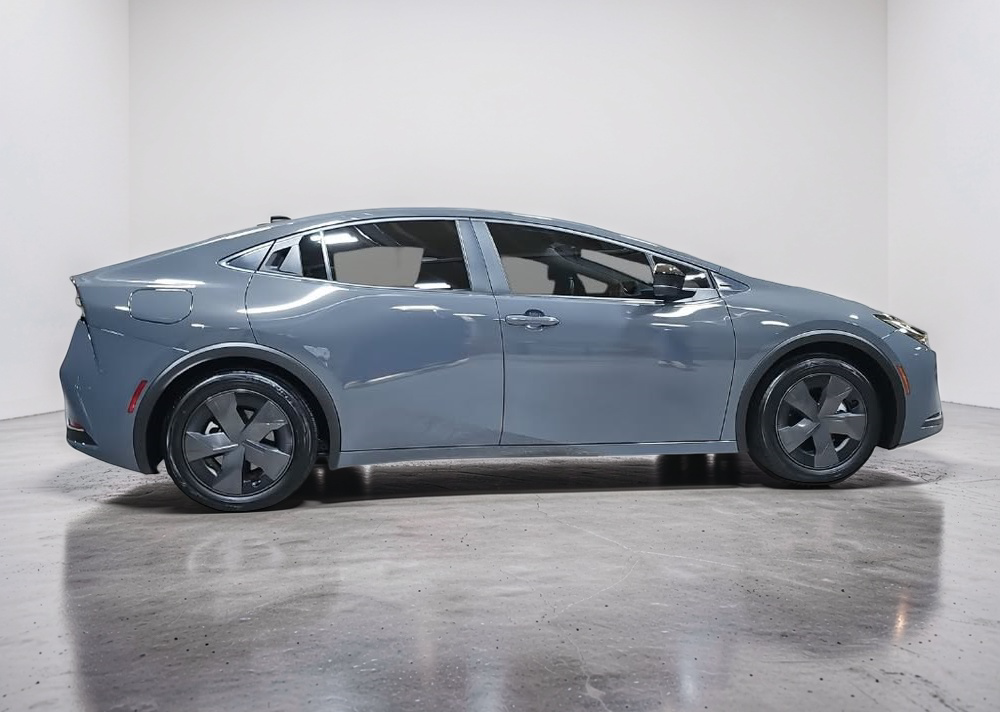
1. The Same Prius Badge Can Mean Two Different Cars
What the model year tells you about the trim
A used listing marked “Prius XLE” leaves out one detail that matters. On a 2022 car, XLE could mean a regular hybrid with available all-wheel drive or a Prime with a charging port. Ask for a photo of the original window sticker. It names the model, trim, and factory options.
| U.S. model | Model years | Trim names | What to watch for |
|---|---|---|---|
| Prius | 2010–2015 | 2010: I, II, III, IV, V. Later years: Two, Three, Four, Five. | Some listings show a fleet trim or Persona Series badge. Equipment varies by year. |
| Prius | 2016–2018 | Two, Two Eco, Three, Three Touring, Four, Four Touring. One also appears in later years. | Two Eco has its own fuel economy rating. The Touring trims came with 17-inch wheels. |
| Prius | 2019–2022 | L Eco, LE, XLE, Limited. Nightshade joined for 2022. | LE and XLE offered AWD-e, Toyota’s electric all-wheel drive. The 2022 Nightshade offered it, too. |
| Prius | 2023–2027 | 2023–2024: LE, XLE, Limited. 2025–2027: LE, XLE, Nightshade, Limited. | Nightshade joined for 2025. All four 2027 trims offer front-wheel drive or AWD. |
| Prius Plug-in Hybrid | 2012–2015 | Prius Plug-in (standard model), Prius Plug-in Advanced | Toyota sold this plug-in before it used the Prime name. |
| Prius Prime | 2017–2019 | Plus, Premium, Advanced | Plus was the entry trim. Premium sat in the middle, below Advanced. |
| Prius Prime | 2020–2022 | LE, XLE, Limited | These badges overlap with the regular Prius. Every Prime in this group has front-wheel drive. |
| Prius Prime | 2023–2024 | SE, XSE, XSE Premium | The redesigned Prime kept front-wheel drive across all three trims. |
| Prius Plug-in Hybrid | 2025–2027 | 2025: SE, XSE, XSE Premium. 2026–2027: SE, XSE, Nightshade, XSE Premium. | Toyota dropped the Prime name for 2025. Nightshade is based on XSE and joined for 2026. |
One letter can point to a different body
A seller may type “Prius V” for two different cars. On an early third-generation liftback, the Roman numeral V means Five, the trim. Toyota also sold the Prius v, a larger wagon with a longer roof and more space behind the rear seats. The Prius c is a separate, smaller hatchback.
On a 2001–2009 Prius, look for the exact year and factory option package. Toyota didn’t use today’s LE, XLE, or Limited badges on those cars. Even Touring needs a year beside it. The U.S. 2007 Prius Touring Edition rode on 16-inch wheels. The 2017 Three Touring rode on 17s.
2. What Each 2027 Prius Trim Costs
The $28,755 Prius crosses $30,000 with delivery
The 2027 Prius LE starts at $28,755 with front-wheel drive. Toyota’s $1,295 Dealer Processing and Handling charge brings it to $30,050 before options, taxes, registration, or other dealer fees. The lowest-priced plug-in, the SE, costs $35,275 with the same charge.
| 2027 U.S. model and trim | Front-wheel drive, base MSRP | All-wheel drive, base MSRP |
|---|---|---|
| Prius LE | $28,755 | $30,155 |
| Prius XLE | $32,200 | $33,600 |
| Prius Nightshade | $33,005 | $34,405 |
| Prius Limited | $35,770 | $37,170 |
| Prius Plug-in Hybrid SE | $33,980 | Unavailable |
| Prius Plug-in Hybrid XSE | $37,230 | Unavailable |
| Prius Plug-in Hybrid Nightshade | $38,000 | Unavailable |
| Prius Plug-in Hybrid XSE Premium | $40,675 | Unavailable |
Two XLE quotes can start $1,400 apart
Match the drivetrain first. Toyota charges $1,400 for AWD on every regular Prius trim. A dealer quoting an XLE AWD starts $1,400 above a front-wheel-drive XLE before either car has a single option.
Then check whether both quotes include the Dealer Processing and Handling charge. Compare factory options on the window stickers, and keep dealer add-ons and fees on separate lines. The Limited includes the fixed glass roof and 12.3-inch screen as standard. Availability and prices for those features on an XLE depend on model year, so check the specific sticker before comparing its equipped price with the Limited’s $3,570 higher base MSRP.
3. What Each Regular Prius Trim Adds for 2023–2027
The LE keeps the smaller wheels and the best mileage
Set the LE’s cloth driver’s seat by hand. That’s easy enough when one person drives the car. Share it with someone taller, and you’ll reach for the seat lever each time you switch.
The LE rides on 17-inch alloy wheels with covers. It also gets an 8-inch touchscreen with wireless Apple CarPlay and Android Auto, so phone maps work without a cable. For 2027, the front-wheel-drive LE has the lowest starting price and the highest combined fuel economy in the regular Prius lineup.
The XLE puts $3,445 into more than the seats
The 2027 XLE swaps cloth for SofTex, Toyota’s synthetic upholstery. Both front seats have heat, and the driver gets eight-way power adjustment. A switch lets you fine-tune the seat angle, but the XLE won’t save your position for the next drive.
The $3,445 step from LE to XLE also buys 19-inch wheels, rain-sensing wipers, and a wireless phone charger. Front and rear parking sensors can warn you as you close in on an obstacle. At low speeds, the car can also apply the brakes.
Check the model year before counting on a heated steering wheel. Toyota listed it under Limited at the 2023 launch. By 2027, it came standard on XLE.
The Limited remembers your seat, but parking cameras cost extra
The 2027 Limited costs $3,570 more than an XLE with the same drivetrain. Seat memory lets you call back your driving position after someone else takes the wheel. On hot days, fans move air through the front seats. At the hatch, a power liftback saves you the overhead pull.
Inside, the Limited pairs a 12.3-inch touchscreen with eight JBL speakers. The fixed glass roof lets light in but doesn’t open. Toyota listed heated rear seats and a digital rearview mirror as options at the 2023 launch; availability can vary by model year, so check the sticker on a used Limited.
The 2027 Limited Premium Package adds two features that matter in a tight garage. Advanced Park can help steer the car into a space. The Panoramic View Monitor gives you a bird’s-eye view of the car and nearby obstacles.
A big screen in the listing photo can fool you
An XLE can have the same 12.3-inch screen and fixed glass roof as a Limited. Both were factory options on the 2023 XLE, which came standard with an 8-inch screen. A dealer’s stock photo won’t settle what’s in the car for sale. The original window sticker lists the factory options for that car.
Climate controls changed within the same generation. For 2027, both the regular Prius and the Prius Plug-in Hybrid gained dual-zone climate control. The driver and front passenger can now set separate temperatures, even on the base trims.
Nightshade arrived in different years on different cars
Toyota offered a fourth-generation Prius Nightshade for 2022. On the redesigned regular Prius, Nightshade returned for 2025 and used the XLE as its base. The plug-in got its own Nightshade for 2026, based on the XSE.
What the $805 Nightshade premium actually buys
On the 2027 regular Prius, Nightshade adds $805 over an XLE with the same drivetrain. Both ride on 19-inch wheels. Nightshade finishes them in black and carries that finish to the badges, bumper trim, and roof antenna. Inside, gray stitching runs across black SofTex seats. The dash gets a carbon-fiber pattern.
Karashi, Toyota’s mustard-yellow paint, is exclusive to Nightshade in the 2027 regular Prius lineup. Inked joined the paint range that year as a new black. Match the drivetrain and factory options before judging a dealer’s price gap. An XLE and a Nightshade make the same 194 horsepower with front-wheel drive or 196 with AWD.
4. What Each Prius Plug-in Trim Buys Beyond the Charge Port
The plug-in changed shape in 2023 and names in 2025
Search for a 2024 Prius Prime XSE and a 2025 Prius Plug-in Hybrid XSE, and you’ll find the same generation. Toyota introduced the SE, XSE, and XSE Premium trims with the 2023 redesign. It kept the Prime name for 2024, then dropped it for 2025. Every U.S. plug-in in the 2023–2027 lineup drives the front wheels.
The SE goes farthest on a charge
The 2027 SE has a $33,980 base MSRP and the longest rated electric range of the four trims. It rides on 17-inch wheels and comes with an 8-inch touchscreen. Like the regular Prius LE, it has cloth front seats you adjust by hand. The plug-in SE also gets a heated steering wheel and rain-sensing wipers.
Front and rear parking sensors with automatic braking are optional on the SE. For a commute near the car’s electric range, the base trim has a practical edge. It gives you the best chance of getting home before the gas engine needs to run.
The XSE adds seat heat and parking sensors for $3,250
The 2027 XSE swaps cloth for heated SofTex front seats and gives the driver power adjustment. It adds 19-inch wheels, a wireless phone charger, and standard front and rear parking assist with automatic braking. With the key in your pocket, you can unlock the car at either front door or the liftback. The rear side doors lack their own touch sensors.
The XSE still comes with an 8-inch screen. Toyota offers the 12.3-inch screen and fixed glass roof as options. If you want both, compare the sticker price on that XSE with an XSE Premium, which includes both as standard.
Nightshade costs $770 more and goes just as far as the XSE
On the 2027 plug-in, that $770 buys black 19-inch wheels, dark badges, and black exterior trim. Compare cars with matching options to see what you’re paying for the finish. Nightshade carries the same electric-range rating as the XSE. Its front seats have heat, but seat ventilation starts with XSE Premium.
XSE Premium remembers your seat and powers the hatch
At a $3,445 higher base MSRP than the 2027 XSE, XSE Premium adds an eight-speaker JBL stereo alongside the larger screen and fixed glass roof. Fans draw air through the front seats, and seat memory restores the driver’s saved position. The power liftback closes at the push of a button.
The Premium badge alone won’t tell you whether a car has the surround-view camera, Advanced Park, or a digital rearview mirror. Heated rear seats and the solar charging roof are options, too. Check the window sticker for the exact car, since package choices vary by year. Every 2027 plug-in, from the SE to the $40,675 XSE Premium, makes the same 220 combined horsepower.
5. What the Trim Badge Buys on a Used Prius
A 2015 Prius Four gets heated seats. A Persona can look the part.
On a 2015 Prius Two, the cloth driver’s seat adjusts by hand. The Three keeps that seat but adds built-in navigation. The Four adds heated SofTex front seats and an eight-way power driver’s seat with lumbar support. The Five adds LED headlights and 17-inch wheels.
The 2015 Persona Series is easy to misread in used-car photos. It has gray-stitched SofTex seats and 17-inch wheels, but the driver’s seat still adjusts by hand. Early 2010–2015 listings may use Roman numerals, such as IV for Four. A former fleet car can also carry an entry-grade One badge.
Two Eco changes what’s under the cargo floor
The 2016 Prius Two Eco traded the Two’s compact spare for a tire repair kit to save weight. Lift the cargo floor before buying one. A pump and sealant can help with a small tread puncture. They can’t fix a torn sidewall.
Three Touring and Four Touring had 17-inch wheels; only the Four Touring had SofTex seats. Toyota offered six main trims for 2016 and seven for 2018, when One was part of the lineup. The 2018 Four and Four Touring also came with an 11.6-inch screen. A 2016 Four didn’t get that screen from the factory.
From 2019, the LE badge opened the door to AWD
Toyota renamed the regular Prius trims L Eco, LE, XLE, and Limited for 2019. L Eco kept front-wheel drive. LE and XLE buyers could choose AWD-e, which uses a separate electric motor to drive the rear wheels. Even the pricier Limited stayed front-wheel drive.
The 2022 Nightshade offered both drivetrains, and the choice changed the tires. The front-drive car came on 215/45R17 tires. The AWD-e version used 195/65R15 tires, with a taller sidewall on a smaller wheel. Those factory sizes matter when pricing a set of four.
The first plug-in had heated seats even in base trim
Toyota sold the 2012–2015 Prius Plug-in Hybrid in standard and Advanced trims. On the 2012 standard model, heated front seats, navigation, and a backup camera came standard. Buying the Advanced added SofTex upholstery, a power driver’s seat, and a head-up display that projected speed onto the windshield. Heated-seat switches alone won’t identify an Advanced.
The 2020 Prius Prime gained a seat where it counts
Open the rear door of a 2017–2019 Prius Prime. A fixed console sits between the two rear seats, so even the top Advanced trim carries only four people. Plus was the entry trim. Premium added an 11.6-inch screen, while Advanced added equipment such as a head-up display and blind-spot monitoring.
For 2020, Toyota replaced those names with LE, XLE, and Limited. All three gained Apple CarPlay and a fifth seat. Families shopping for three rear seat belts can start with 2020, three model years before the redesign.
A 2021 Prime XLE has a charge port, an 11.6-inch screen, and 19.8 cubic feet of cargo space behind the rear seats. The regular 2021 Prius XLE has a 7-inch screen, more luggage room, and no plug. Bring your phone to the test drive, too. On the 2021 Prime, the LE’s 7-inch screen supports Android Auto, while the XLE’s larger screen does not.
A higher trim can come with a bigger first repair bill
Mileage, crash repairs, factory options, and local supply all affect asking prices. Compare service records before paying extra for a Four or Limited. A lower-mileage car with collision damage and uneven tire wear can need more work than a higher-mileage car with documented service.
On a used plug-in, ask the seller to leave it unplugged with room in the battery. Plug it in during the visit and confirm the car starts charging. A gas-powered test drive alone won’t tell you whether the charge port, cable, and onboard charger work together.
6. What a Prius Trim Change Costs at the Pump
The same LE badge can mean 57 or 55 mpg
| Regular Prius trim and drivetrain | Standard wheels | 2026 EPA combined | 2027 EPA combined |
|---|---|---|---|
| LE, front-wheel drive | 17 inches | 57 mpg | 55 mpg |
| LE, all-wheel drive | 17 inches | 54 mpg | 53 mpg |
| XLE, Nightshade, Limited, front-wheel drive | 19 inches | 52 mpg | 51 mpg |
| XLE, Nightshade, Limited, all-wheel drive | 19 inches | 49 mpg | 48 mpg |
At 12,000 miles a year, a 2027 front-drive LE would burn about 218 gallons at its rated mileage. A front-drive XLE would use about 235. That puts the estimated cost of the trim change at 17 extra gallons a year, before you factor in local gas prices.
Electric miles tell you how far. MPG tells you what happens after.
Toyota lists 44 miles of electric range for the 2027 Prius Plug-in Hybrid SE. The XSE, Nightshade, and XSE Premium carry a 39-mile rating. A 42-mile round trip is within the SE’s estimate, but that does not guarantee the car will stay in electric mode for the whole trip. Cold weather or sustained highway speeds can reduce electric range and bring the engine in sooner.
Once the plug-in uses its available charge, it runs as a gas-electric hybrid. That’s when gasoline mpg matters. Toyota’s 2027 materials conflict on the SE’s combined gasoline rating: the performance description gives 51 mpg, while the trim listing gives 52 mpg. Toyota lists 47 mpg for the upper trims. Check the EPA fuel-economy label on the specific car before estimating gasoline use.
MPGe measures energy use on a common scale. One gallon of gasoline contains about as much energy as 33.7 kilowatt-hours of electricity. The SE’s published 128 MPGe tells you how far it can travel on that much energy. Its electric range tells you how far it can go on one charge.
AWD adds grip. The 19-inch wheels change the ride.
On the 2023–2027 regular Prius, front-wheel drive delivers 194 combined horsepower. AWD adds a rear electric motor and brings combined output to 196 hp. The front-drive plug-in makes 220 hp. These are whole-car ratings. The engine and motors reach peak power at different speeds, so adding their separate ratings gives the wrong total.
The rear motor helps an AWD Prius pull away on a snowy incline. It adds no tire grip when you hit the brakes. On packed snow, suitable winter tires still matter for stopping and turning.
The LE’s 17-inch wheels generally allow taller-profile tires than the upper trims’ 19-inch wheels, which can add impact cushioning. The larger wheels typically leave less sidewall cushion. Price both sizes before buying a replacement set. Tire design, vehicle weight, and trim equipment also differ, so wheel diameter alone cannot explain the mileage gap.
7. Can You Charge Where You Park?
A 30-mile commute can work on a household outlet
Plug in a 2027 Prius Plug-in Hybrid at 8 p.m. on a 120-volt outlet. Even with its electric range used up, it can finish charging by about 7 a.m. Toyota quotes roughly 11 hours on 120 volts or 4 hours on a 240-volt Level 2 connection under ideal conditions. The 2027 Prius Plug-in Hybrid comes with a cable that handles both voltages.
A 30-mile round trip leaves 14 miles to spare against Toyota’s 44-mile rating for the SE. The upper trims have a 9-mile cushion. Cold weather, cabin heat, and highway speeds can use up that margin, and the engine can start before the display reaches zero. Once the usable plug-in charge runs low, the car keeps going as a hybrid.
On a used Prius Prime, check the label on the cable that comes with the car. An older cable may support only 120 volts. A listing that says “charging cable included” leaves its voltage and the car’s charge time open.
What does the same 30-mile trip cost on gas?
Say your charger draws 9 kilowatt-hours from the wall to replace the charge used on that trip. At $0.16 per kWh, that costs $1.44. Using the wall reading counts the energy lost during charging. For a public charger, add any session or parking fee.
A regular Prius averaging 50 mpg would burn 0.6 gallon over the same 30 miles. At $3.50 a gallon, that’s $2.10, a difference of 66 cents for that trip. How often you plug in determines how often you earn that difference back against the purchase price. In this example, a public charging fee of just $1 makes the electric trip cost $2.44.
One solar roof charges the battery. An older one runs a fan.
The 2027 XSE Premium offers a 185-watt solar roof, which Toyota lists as limited in availability. In sunlight, it can feed the drive battery while the car sits parked. On the road, it can help power accessories. Toyota described the 2015 Prius Solar Roof Package as using sunlight to run the cabin ventilation fan while parked.
Where you park sets the value of the newer roof. Even if the panel held its full 185-watt output for five hours, it would produce just 0.925 kWh before losses. Shade, clouds, and a low sun angle reduce that figure.
8. Which Prius Safety Features Come Standard?
A parking warning doesn’t mean the car will brake
Back a 2027 Prius LE out between two parked vans. If a car crosses behind you, standard rear cross-traffic alert can sound a warning. Parking Assist with Automatic Braking is a separate system; confirm its availability on the specific LE, because Toyota’s published 2027 regular-Prius materials do not establish it for that grade. Hearing the warning tells you the car detected traffic. It does not tell you the brakes will engage.
Starting with the 2023 redesign, Toyota made Safety Sense 3.0 standard. It can warn of a possible crash ahead and apply emergency braking. Adaptive cruise can adjust speed to maintain a gap, while lane assistance can warn of drift and help steer. Blind-spot monitoring and Safe Exit Assist also came standard. The exit alert can warn you about an approaching cyclist, but you can still open the door into their path.
On older cars, the year and factory package matter. A 2015 Prius Five, for example, offered radar cruise and pre-collision assistance in its Advanced Technology Package. The Five badge alone bought neither feature.
Traffic Jam Assist has a 25-mph limit
In slow traffic on a controlled-access freeway, the 2027 Prius Plug-in Hybrid can steer, brake, and accelerate hands-free. Traffic Jam Assist works below 25 mph, with Lane Tracing Assist on and an active Drive Connect trial or subscription. You still have to watch the road and be ready to take over.
Toyota includes a three-month Drive Connect trial with the new 2027 plug-in. On a used Prime or regular Prius, check eligibility for that specific car. A dealer listing that mentions adaptive cruise tells you nothing about hands-free capability or how much trial time remains.
Unlocking a Prius by phone doesn’t mean you can drive it
Wireless Apple CarPlay and Android Auto put maps and music on the dash. A remote unlock command can open the doors through the Toyota app. Digital Key goes a step further. With a compatible phone paired over Bluetooth, you can unlock and start an equipped Prius while the key fob stays home.
Toyota advertises a five-year Remote Connect trial for the 2027 plug-in, separate from the shorter Drive Connect trial. Digital Key needs active Remote Connect access and factory hardware offered on select trims. Paying for Remote Connect can’t add Digital Key to a Prius built without that hardware.
9. Will Your Gear and Passengers Fit?
A stroller can clear the hatch and still hit the glass
Load your usual stroller or largest suitcase with the rear seats upright. Then lower the liftback slowly. A tall handle can clear the opening but catch the sloping glass before the hatch latches.
Toyota lists 23.8 cubic feet of cargo capacity behind the rear seats for the 2027 regular Prius LE. Its overview does not distinguish LE front-wheel drive from all-wheel drive, and the figure does not tell you how much height you have above a suitcase near the hatch. The plug-in SE and older Prius models have their own cargo dimensions. Try the same load in each car you’re considering.
For a long bag, fold the narrow side of the 60/40 rear seatback first. That leaves two rear seats upright. Fold the wider side instead, and only one rear passenger can ride beside the load.
Set the driver’s seat before you try the back seat
On the 2027 Prius, Toyota specifies a standard 7-inch top-mounted digital gauge display above the steering wheel. Set the seat for a comfortable reach to the pedals, then adjust the wheel and check whether its rim hides the speed readout.
The XLE’s power seat lets you fine-tune the height and tilt. The Limited can save that position if two drivers share the car. Leave the front seat where the taller driver needs it before anyone climbs into the back.
Have your tallest regular passenger get in behind that seat. Check whether they need to duck through the doorway, then have them sit back with both feet under the front seat. If their knees press into the seatback, sliding the driver forward costs pedal room. If their head brushes the roof, a higher trim won’t raise it.
Sources & References
- Toyota Announces Prices for 2010 Prius
- 2012 Toyota Prius Model Information
- 2015 Toyota Prius Liftback Product News
- 2015 Toyota Prius Persona Special Edition
- All-New 2016 Toyota Prius
- 2016 Toyota Prius eBrochure
- 2018 Toyota Prius Product Information
- 2019 Toyota Prius AWD-e
- 2020 Toyota Prius Product Information
- 2022 Toyota Prius Model-Year Changes
- Toyota Introduces 2012 Prius Plug-in Hybrid
- 2012 Prius v and Prius Plug-in Hybrid Pricing
- 2017 Toyota Prius Prime
- 2020 Toyota Prius Prime
- 2021 Toyota Prius Prime eBrochure
- 2021 Toyota Prius eBrochure
- 2023 Toyota Prius Product Information
- 2023 Toyota Prius Prime
- 2025 Toyota Prius Plug-in Hybrid
- 2025 Toyota Prius Nightshade
- 2026 Toyota Prius Plug-in Hybrid Nightshade
- 2026 Toyota Prius eBrochure
- 2027 Toyota Prius Pricing and Features
- 2027 Toyota Prius Plug-in Hybrid Pricing and Features
- 2027 Toyota Prius Specifications
- 2027 Toyota Prius Plug-in Hybrid Specifications
- EPA Fuel Economy Records for 2027 Toyota Prius
- EPA and DOE Plug-in Hybrid Fuel Economy Label Guide
- EPA Fuel Economy and EV Range Testing
- Toyota Safety Sense
- Toyota Digital Key
- Bridgestone: AWD and Winter Tires