
Losing every key to your car is more than just an inconvenience—it’s a full-blown headache. Without a working key, you’re stuck, and dealership solutions can be expensive and time-consuming. That’s where the Autel KM100 comes in.
This professional-grade key programming tool is designed for all-keys-lost (AKL) scenarios, helping locksmiths and technicians generate and program new transponder keys when no functional key is available. It supports a wide range of vehicles and has built-in NFC and RFID capabilities, making it a versatile tool for key replacement jobs.
However, not all vehicles are easy to work with, and recent security updates have made things even trickier—especially for Toyota and Lexus owners. In this guide, we’ll break down how the Autel KM100 works, its capabilities, and what you need to know if you’re using it for an AKL situation.
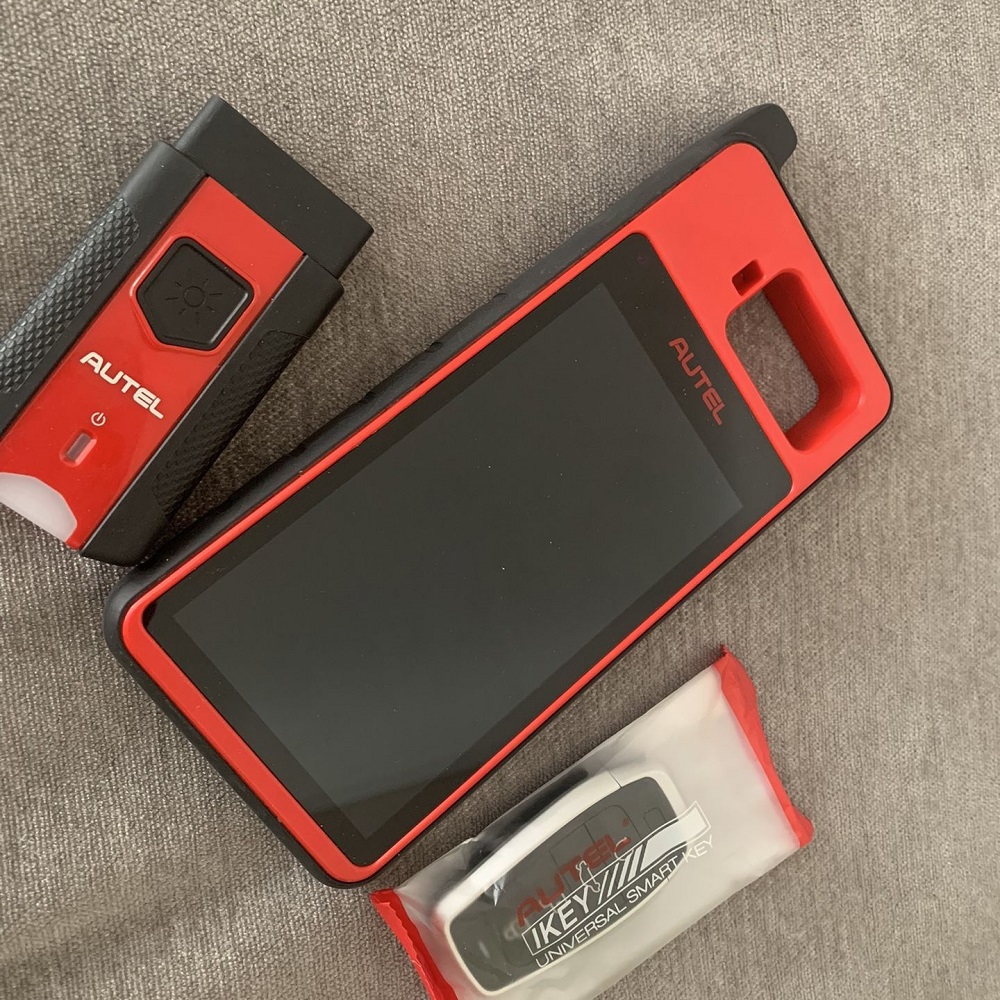
1. What Makes the Autel KM100 a Go-To for Key Programming?
A Compact Powerhouse with Smart Features
The Autel KM100 isn’t just another key programmer—it’s a portable, touchscreen-powered tool that packs serious capability into a handheld device.
Designed with locksmiths and technicians in mind, it offers a user-friendly interface, making it easier to generate, clone, and program new transponder keys on the spot.
What sets it apart? Built-in NFC and RFID technology allow the device to detect and program transponders without extra accessories. It also runs on an onboard battery, meaning you don’t have to stay plugged into a power source while working.
Which Cars Can It Program?
The KM100 supports a wide range of vehicles, including:
• Honda, Ford, GM, Nissan, Volkswagen, and more—covering most major brands from the mid-2000s onward.
• Toyota and Lexus—previously supported, but recent security restrictions have removed AKL feature.
• European models (BMW, Audi, Mercedes, Volkswagen)—some require additional security bypasses.
The device gets frequent updates, expanding compatibility, but it’s always best to check Autel’s official database before assuming a vehicle is supported.
Not Everything is Free—Subscriptions and Licensing
While the KM100 is a powerful tool, some advanced functions require an active subscription. Depending on the vehicle brand, certain key programming features may be locked behind software licensing. Before purchasing, make sure to check whether your intended use will require an additional fee.
2. Setting Up for Success—What You Need Before Programming
Will the KM100 Work on Your Car? Here’s How to Check
Before diving into key programming, you need to confirm that the Autel KM100 supports your vehicle’s immobilizer system. Not all cars use the same security protocols, and some models require extra steps.
Here’s what to check before starting:
• Vehicle Make, Model, and Year – The KM100 works best with cars from the mid-2000s onward, but some older or high-security models might be tricky.
• Immobilizer Type – Some vehicles require a security PIN or a bypass procedure before programming a new key.
• Toyota & Lexus Owners, Take Note – If you’re working on a Toyota or Lexus, Autel removed AKL function in mid-2024 due to security restrictions. That means the KM100 will no longer generate keys for all-keys-lost situations on these models.
Have the Right Documents Ready—Or Risk a Lockout
Most modern vehicles have theft-prevention systems that require proof of ownership before programming new keys. If you’re working on a customer’s car, skipping this step could lead to legal issues. Be sure to have:
• Vehicle Identification Number (VIN)
• Proof of ownership (registration or title)
• Existing ECU or immobilizer info (if available)
Skipping this step could leave you halfway through programming only to realize you don’t have the necessary security data.
Keep the Car’s Battery Steady—Or Risk a Failed Programming
Key programming can take several minutes, and a sudden voltage drop can brick the process. To avoid this:
• Ensure the battery is fully charged (above 12V) before starting.
• Use a battery maintainer if needed to keep power stable.
• Turn off unnecessary electrical systems (lights, AC, radio) during the process.
Nothing’s worse than a programming failure because of a low battery—especially if you already erased the old keys.
3. Step-by-Step: Programming a New Key with the Autel KM100
Connecting the KM100—Your First Move
To get started, you’ll need to establish a connection between the Autel KM100 and the vehicle’s immobilizer system. Most vehicles allow direct programming through the OBD-II port, but some may require additional steps.
• Locate the OBD-II Port – Usually found under the dashboard, near the driver’s side.
• Plug in the KM100 – Ensure the device powers on and recognizes the connection.
• Check for Additional Steps – Some models require EEPROM or MCU readout for security code extraction.
For Ford, Honda, and GM, the process is straightforward. But for Volkswagen, Audi, and BMW, expect extra security layers that might require dealer codes or specialized bypass tools.
Picking the Right Programming Mode—Don’t Guess
Once connected, the KM100 will ask you to select a programming mode. This depends on the vehicle’s immobilizer system:
• Standard Key Programming – For cars that allow direct transponder registration.
• Cloning Mode – If you’re copying an existing working key.
• All-Keys-Lost (AKL) Mode – Used when there are no working keys at all (not available for Toyota/Lexus anymore).
Picking the wrong mode can lock you out of programming or even erase existing keys, so always double-check the selection.
Retrieving the Security Code—The Make-or-Break Step
Some vehicles require a security PIN or an incode/outcode system before key programming can proceed. Here’s how it works:
• Automatic Extraction – Some cars let the KM100 pull the security code directly from the ECU.
• Manual PIN Entry – For models that require a dealer or third-party service to provide the code.
• Bypass Methods – Some brands (like Ford’s older PATS system) allow bypassing with a timed security wait.
If you’re working on a Volkswagen, Audi, or Mercedes, you may need additional tools to retrieve the PIN before the KM100 can continue.
Registering the New Key—Almost There
Now it’s time to pair the blank transponder with the car:
• Insert the blank key into the KM100 (or hold it near the built-in antenna if it’s a keyless fob).
• Follow the on-screen prompts to begin the pairing process.
• Cycle the key in the ignition (if required) to confirm the system recognizes it.
The KM100 will walk you through the necessary ignition cycles to complete the registration. If done correctly, the new key should now be linked to the car’s immobilizer system.
Final Test—Don’t Walk Away Just Yet
Before calling it a success, you need to make sure the key actually works. Check for:
• Successful engine start – If the car won’t start, the key wasn’t properly paired.
• Remote lock/unlock function – Some transponders need an extra step to sync remote functions.
• No error codes or immobilizer warnings – Scan for any stored errors before finishing up.
If everything checks out, congrats—you’ve successfully programmed a new key! If not, double-check the immobilizer settings and security code.
4. Key Programming in Action—What to Expect for Specific Models
Honda Civic (2006–2012)—One of the Easiest Vehicles to Program
If you’re working on a Honda Civic from 2006 to 2012, consider yourself lucky. These models are among the easiest for the Autel KM100 to handle.
The immobilizer system allows direct OBD-II programming without extra security steps. Once the KM100 is connected, the device pulls the necessary data, and the new key is registered within minutes. Unlike some brands, Honda doesn’t require PIN codes or additional bypass methods for most models in this range.
Testing the key after programming is just as smooth. If the vehicle starts without hesitation and the remote functions work properly, you’re good to go. If there’s an issue, reattempting the pairing process usually solves it.
Ford Ranger (2002–2012)—Straightforward but Requires Extra Steps
Ford’s Passive Anti-Theft System (PATS) makes key programming slightly more involved, but it’s still manageable. The Autel KM100 can communicate directly with the immobilizer via the OBD-II port, but in some cases, the process requires a time delay before the key is accepted.
On older models, the system may ask for an incode/outcode, which can be retrieved using the KM100 or a third-party PIN code calculator. If the programming stalls, leaving the ignition on for a set period often allows the process to continue. Once completed, a quick ignition test confirms whether the key was successfully registered.
Toyota and Lexus—No More All-Keys-Lost Programming
For years, the Autel KM100 was a go-to tool for programming keys on Toyota and Lexus vehicles, especially for G and H chip transponders. However, as of mid-2024, Autel removed all-keys-lost (AKL) function for these brands.
This means if all keys are lost, the KM100 can no longer generate a working key. It may still handle duplicate key programming when at least one working key is available, but for AKL cases, locksmiths and technicians will need to explore alternative solutions.
Volkswagen, Audi, and Other European Models—Not as Simple as It Looks
European vehicles come with stronger security encryption, making key programming more complex. While the Autel KM100 does support some Volkswagen, Audi, and BMW models, success often depends on whether the PIN code can be retrieved.
Unlike Ford or Honda, many VAG (Volkswagen Auto Group) models require pre-coded dealer keys, which means the KM100 may not be able to generate a brand-new key from scratch. If the immobilizer refuses to accept the key, additional tools may be needed to extract the PIN or bypass security measures.
Nissan and Infiniti—A Mixed Bag of Success
Nissan models from the mid-2000s onward are generally compatible with the KM100, but some have complex immobilizer systems that require specific transponders. The programming process is usually straightforward, but cases of keys working temporarily and then failing after ignition cycles have been reported.
When dealing with Nissan or Infiniti, always check whether the system requires manual PIN entry. If the key stops working after a few starts, reprogramming with a different key profile or manually entering the correct security code usually resolves the issue.
5. Why Locksmiths and Technicians Rely on the Autel KM100
Faster Programming with Less Hassle
Time is everything in the locksmith business, and the Autel KM100 is built to speed up the key programming process. Unlike older key programmers that require manual code entry and complicated procedures, the KM100 automates many of these steps.
For most vehicles, it can pull immobilizer data directly, retrieve security codes, and register new keys within minutes. This means less trial and error, fewer failed attempts, and no need to rely on separate PIN readers or dealer tools.
Works on a Wide Range of Vehicles
The KM100 covers an impressive number of makes and models, making it a versatile tool for locksmiths who deal with different vehicles daily. It supports most major brands, including Honda, Ford, GM, Volkswagen, Nissan, and Hyundai, along with select European models like Audi and BMW.
Regular software updates expand its compatibility, ensuring that even newer cars get added to its supported vehicle list. However, it’s always smart to check the latest Autel database before taking on a job.
Portable and Wireless for On-the-Go Jobs
Unlike bulky key programming tools that require constant external power, the KM100 is compact and battery-powered, making it perfect for mobile locksmiths and roadside assistance services.
Its built-in NFC and RFID technology allow it to detect and program transponder keys wirelessly, cutting down on the need for extra accessories.
This mobility makes it ideal for emergency lockouts and all-keys-lost scenarios where customers need a replacement key immediately.
Easier to Use, Even for Beginners
Some key programmers require extensive training and complicated menus, but the KM100 simplifies the process with its touchscreen interface and intuitive navigation. The device walks users through each step, reducing the learning curve for technicians who are new to key programming.
For experienced locksmiths, it removes unnecessary steps and speeds up the workflow, while for beginners, it provides a straightforward, guided experience that minimizes errors.
6. Where the Autel KM100 Falls Short—Limitations You Should Know
Toyota and Lexus Owners Are Out of Luck
One of the biggest setbacks for the Autel KM100 came in mid-2024, when all-keys-lost (AKL) programming for Toyota and Lexus models was removed.
Previously, the KM100 was a reliable solution for generating new transponder keys for these brands, but security concerns forced Autel to disable the feature.
This means if you’re dealing with a Toyota or Lexus AKL case, the KM100 won’t help. You’ll either need a dealer-programmed key or another tool that supports bypassing Toyota’s immobilizer system—which is becoming harder to find.
Some Functions Require Paid Subscriptions
While the KM100 offers a lot straight out of the box, some advanced features require an active subscription. Certain vehicles and transponders may need additional software licensing, which means locksmiths and technicians might have to pay extra to unlock their full potential.
This isn’t always an issue, but if you’re expecting to use the KM100 on every vehicle without limitations, it’s worth checking whether your specific needs require additional fees.
Compatibility Isn’t Always Guaranteed
Autel updates the KM100 frequently, but that doesn’t mean every vehicle will be supported. Some European models, luxury brands, and newer vehicles with high-security immobilizer systems can still pose challenges.
Even for supported vehicles, some users have reported inconsistencies, where the device successfully programs one key but fails on another identical model.
If you’re working on Volkswagen, Audi, BMW, or Mercedes, be prepared for potential roadblocks that require additional PIN extraction tools or workarounds.
Software Bugs Can Cause Frustration
No key programmer is perfect, and the KM100 isn’t immune to software bugs. Some users have reported issues like:
• Keys programming successfully but failing after a few ignition cycles.
• Random connection dropouts while reading immobilizer data.
• Transponders not being detected properly, requiring multiple attempts.
Most of these issues can be resolved through firmware updates, but it’s something to be aware of, especially when working on newer or less common vehicles.
Key Programming Laws and Restrictions
Depending on where you operate, some regions have strict regulations on key programming to prevent unauthorized duplication. This means locksmiths and technicians may need to provide proof of ownership, licensing, or certifications before programming a new key.
If you’re working in an area with tighter security laws, make sure you’re compliant to avoid legal trouble when handling lost-key situations.
7. When Things Don’t Go as Planned—Troubleshooting the Autel KM100
Device Won’t Connect? Here’s What to Check First
If the Autel KM100 refuses to connect to a vehicle, the issue usually comes down to a bad connection, outdated software, or an immobilizer that requires extra steps. The first thing to do is ensure the OBD-II port is functioning properly and that the device is securely plugged in.
If the connection still isn’t working, restart the KM100 and try selecting the vehicle manually instead of using automatic detection. Some cars, especially older models or European brands, may require additional steps, such as a security bypass or a PIN retrieval process before communication is established.
Key Programs Successfully but Fails After a Few Starts
This is a frustrating issue that some users encounter, and it usually happens when the immobilizer doesn’t fully recognize the new key. In most cases, the solution is to repeat the programming process and ensure that all required ignition cycles are completed properly.
For some brands, such as Nissan, Volkswagen, and Ford, this issue can be linked to missing security verification steps. If the key loses its programming after a few starts, checking for additional immobilizer settings in the KM100 menu can often resolve the issue.
Transponder Not Detected? It Might Not Be Compatible
The KM100 supports a wide range of transponders, but not all key blanks will work. If the device fails to recognize a transponder, the first step is to confirm that the key type matches the vehicle’s immobilizer system.
Certain high-security transponders, particularly those used in BMW, Audi, and Mercedes models, may require a specialized key blank. If the transponder isn’t being read, switching to a different blank that matches the correct chip specifications usually fixes the problem.
Immobilizer System Rejects the New Key
If the car’s immobilizer refuses to accept the newly programmed key, the most likely reasons include:
• The wrong programming mode was selected. Some vehicles have multiple programming options, and choosing the incorrect one can cause the process to fail.
• A security timeout is in place, requiring a waiting period before another programming attempt. This is common in Ford’s PATS system, which sometimes enforces a 10-minute security delay between attempts.
• The vehicle requires additional PIN verification before accepting the key. If a PIN is needed, retrieving it through a dealer or using an advanced key programming tool may be necessary.
Software Issues? Keeping the KM100 Updated is Essential
Like any advanced diagnostic tool, the KM100 relies on regular software updates to improve compatibility and fix known bugs. If a vehicle suddenly becomes unresponsive or a previously working function stops operating correctly, checking for a firmware update is a good first step.
Most updates can be installed directly from Autel’s system, and keeping the device up to date ensures the widest vehicle coverage and best performance.
Final Thoughts—Is the Autel KM100 Worth It?
A Must-Have for Locksmiths and Technicians
For professionals who deal with lost car keys regularly, the Autel KM100 is a game-changer. It simplifies key programming, supports a broad range of vehicles, and speeds up the process compared to older tools.
Its touchscreen interface, built-in NFC capabilities, and wireless feature make it an efficient solution for on-the-go locksmiths handling emergencies.
While some vehicles require extra steps, the KM100 delivers fast, reliable results on most mainstream brands. If you work with Honda, Ford, GM, Nissan, and Volkswagen models, it’s a valuable addition to your toolkit.
Not Perfect, but Still One of the Best Options Available
Like any tool, the KM100 isn’t flawless. The removal of Toyota/Lexus AKL function is a major downside, and European brands with advanced security systems may still require dealer involvement or additional programming devices.
Software bugs and occasional compatibility issues also exist, but these are minor setbacks compared to the overall versatility and ease of use. Keeping the device updated and understanding which vehicles need extra steps can help minimize frustration.
The Smart Move—Know Its Strengths and Limitations
If you’re looking for a fast, portable, and user-friendly key programmer, the Autel KM100 is one of the best options available. It’s not a magic fix for every vehicle, but for the cars it does support, it gets the job done faster and with fewer headaches than many competing tools.
For locksmiths and technicians handling all-keys-lost cases daily, this tool pays for itself. Just don’t expect it to work miracles on every vehicle, especially those with high-security immobilizer systems.
AUTEL KM100E DOES IT HAVE AKL FEATURE???
Hi Archer,
Yeah, the KM100E can do All Keys Lost on a lot of vehicles. Just a heads-up though, Autel recently pulled AKL support for some models like Toyota and GM in the U.S. If you’re planning to use it for those, it’s worth double-checking the latest coverage or looking into something like the Lonsdor K518 as a backup.
Hope that clears it up.