
If you’re shopping for an electric vehicle from General Motors next year, your usual driving companion—Apple CarPlay or Android Auto—won’t be riding along.
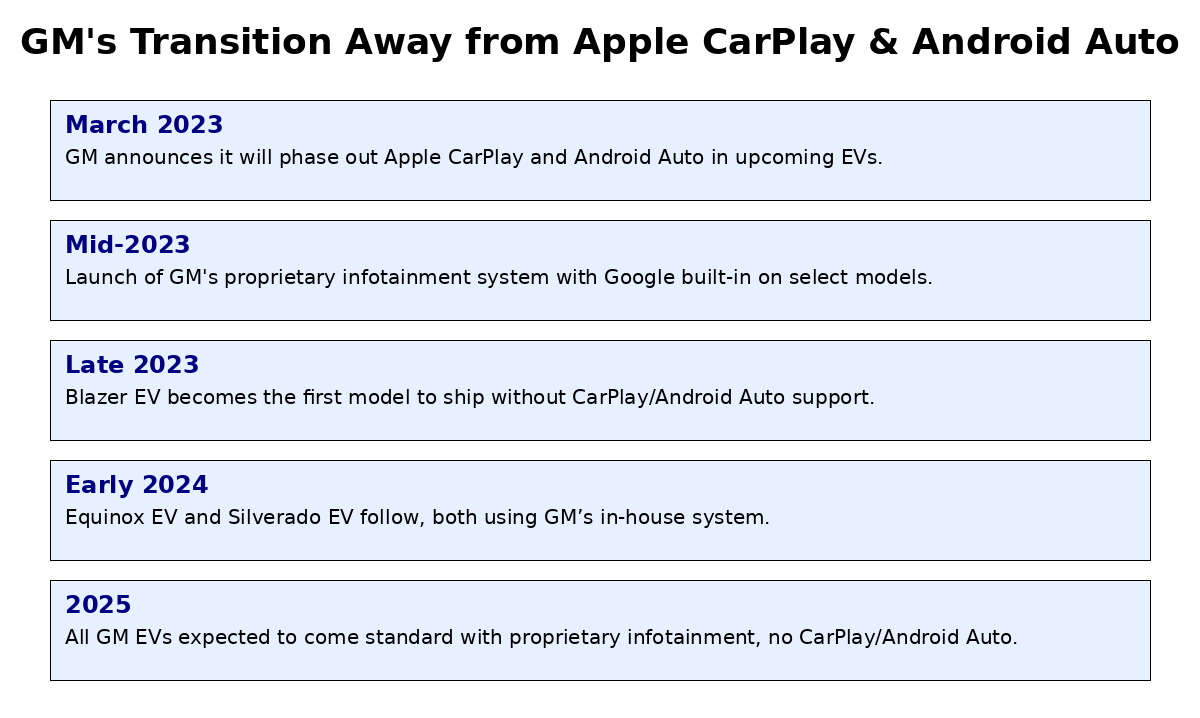
Starting with the 2024 Chevrolet Blazer EV, GM is ditching these smartphone integrations and betting big on its own infotainment system. For current owners of gas-powered GM vehicles, don’t worry: your setup stays untouched, at least for now.
But let’s get real—losing CarPlay and Android Auto is a huge deal for most drivers. You’ve probably gotten used to seamlessly pulling up Spotify playlists, texting hands-free, or navigating with Google Maps right from your car’s screen.
GM says going solo will improve how your car works and unlock new features faster. But is it really about a better driving experience, or is GM eyeing a new revenue stream?
We’ll break down GM’s reasons, explore what other automakers are doing, and help you decide if this move is worth sticking around for—or if it’s time to look elsewhere.
Why GM Is Dropping CarPlay and Android Auto—What’s Behind the Decision?
GM Wants Total Control Over Your Dashboard
GM’s move isn’t random—it’s about having tight integration between your car’s software and hardware. Right now, Apple CarPlay and Android Auto are like guests in GM’s house: they work well, but GM doesn’t fully control what they do or how they do it.
By creating its own system built on Google’s Android Automotive OS (a platform entirely different from Android Auto), GM can make sure every app and service syncs smoothly with features like battery monitoring, driving assistance, and real-time updates.
Think of it like this: GM wants its software to be as integrated as Tesla’s. Instead of relying on third-party apps, your car’s infotainment, diagnostics, and driver-assistance features will work together seamlessly.
Baris Cetinok, GM’s Senior VP of Software and Services, says this in-house approach means quicker updates, better performance, and a smoother user experience overall.
Aiming for Your Wallet—Subscriptions and Data Revenue
Let’s cut through the noise—this is also about money. GM sees its infotainment system as a new cash stream. By eliminating third-party smartphone integrations, GM gets direct access to data about how and where you drive, the apps you use, and the services you prefer.
Why does that matter? Because your dashboard could soon function like a smartphone, with subscription-based features and paid upgrades. Want extra navigation features? That could cost a monthly fee. Looking for advanced diagnostic tools or custom themes? Those might become premium upgrades.
GM isn’t alone here; automakers across the industry increasingly see dashboards as prime digital real estate. But not every driver loves this idea—many prefer the simplicity and privacy they get from their phones.
GM is taking a calculated risk, and how drivers react could set the stage for how other car brands move forward.
Drivers Aren’t Happy—Why GM’s Decision is Causing Frustration
Losing the Familiarity of CarPlay and Android Auto
Most drivers don’t think twice about plugging in their phones and instantly having maps, audio, or messages at their fingertips. Apple CarPlay and Android Auto offer simplicity, familiarity, and easy access to apps you use daily.
Losing them means you’ll suddenly have to navigate GM’s new menus, learn different voice commands, and adapt to unfamiliar interfaces—all while driving.
This isn’t just a minor inconvenience. Many GM drivers chose their cars specifically because of smartphone integration. Taking that away feels like a step backward, and it has plenty of people wondering if the brand truly understands what drivers want from their tech.
GM is Blocking Third-Party Workarounds
Some third-party companies, like White Automotive and Media Services, have already started offering retrofits that re-enable CarPlay and Android Auto. Sounds great, right? Well, not so fast.
GM quickly stepped in and told its dealerships not to install these aftermarket kits, warning they could interfere with essential systems and might even void warranties.
GM’s firm stance against third-party solutions leaves drivers stuck between accepting the new system or shopping elsewhere. For some loyal customers, losing smartphone connectivity might be a deal-breaker. And with GM actively discouraging workarounds, many drivers feel like they’ve lost control over their own vehicle experience.
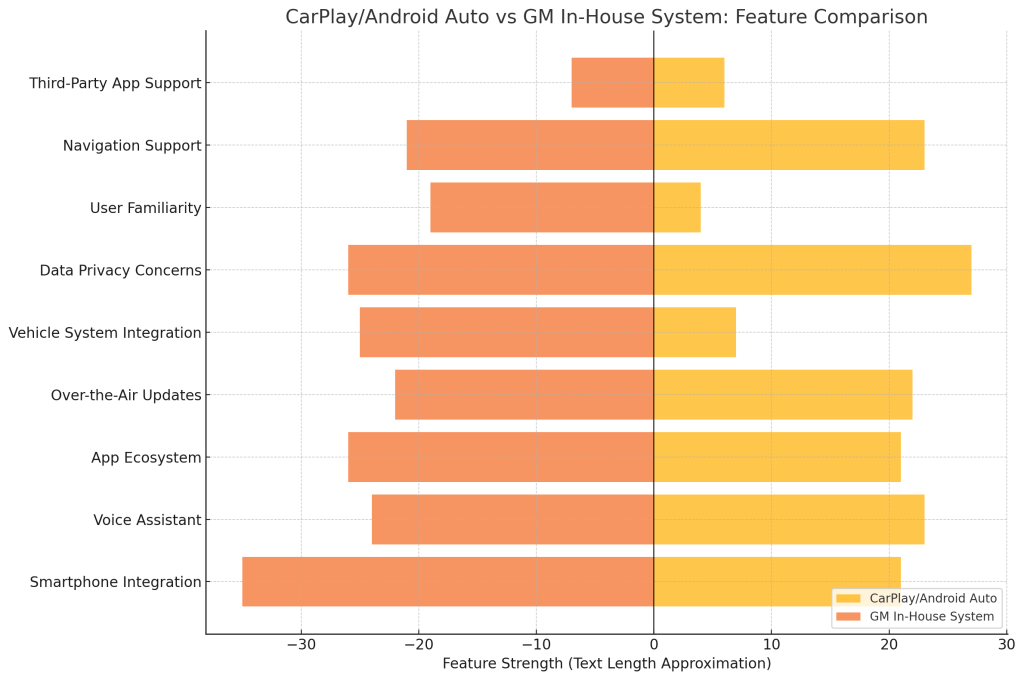
How Other Automakers Are Responding—Is GM Alone in This Move?
Hyundai Doubles Down on Smartphone Connectivity
While GM cuts ties with Apple CarPlay and Android Auto, Hyundai is making it crystal clear they’re not following suit. Hyundai executives, like Olabisi Boyle, openly emphasize their commitment to smartphone integration.
They know drivers love familiar apps, easy navigation, and hands-free communication. Hyundai believes staying connected to your phone isn’t just convenient—it’s essential for today’s drivers.
That stance is winning points with consumers, especially those frustrated by GM’s move. Hyundai is betting that drivers aren’t ready to trade the comfort and convenience of their phones for an automaker’s custom platform just yet.
Other Brands Are Watching Closely
GM’s decision has the whole industry paying attention. Automakers like Toyota, Ford, and Stellantis haven’t shown signs of dropping CarPlay or Android Auto—at least not now. But they’re definitely watching.
If GM succeeds in turning its dashboard into a profitable digital hub, competitors may start reevaluating their own relationships with third-party platforms.
But here’s the catch: If GM faces backlash or loses customers over this move, other brands will likely double down on smartphone integration to win those customers over. In the end, drivers’ reactions could steer the entire industry one way or another.
What GM Gains (and Risks) by Dropping CarPlay and Android Auto
The Upsides—Why GM Thinks It’s Worth It
GM sees clear benefits in cutting ties with Apple CarPlay and Android Auto. By taking complete control of its infotainment system, GM can deeply integrate it with your car’s internal systems—like battery management, driver-assistance technology, and vehicle diagnostics.
That means quicker software updates, smoother performance, and a unified design that fits perfectly with GM’s brand.
Think about Tesla: their vehicles operate seamlessly because everything’s built under one roof. GM wants that same level of integration. Plus, with direct control over your car’s data, GM can offer personalized services, advanced diagnostics, and subscription-based features—opening up a significant new revenue stream.
The Risks—Why It Might Backfire
But here’s the reality check: drivers are deeply attached to their smartphones and the apps they trust. Removing CarPlay and Android Auto isn’t just a minor inconvenience—it could be enough to push loyal customers away.
If GM’s new platform feels clunky, unfamiliar, or restrictive compared to the smartphone experience, frustration will follow.
Privacy concerns add another layer of complexity. With GM controlling more of your driving data, drivers are asking tough questions about who owns that information, how it’s used, and how securely it’s stored.
If competitors keep supporting smartphone integration and GM struggles to match that seamless experience, drivers might start shopping elsewhere. GM’s bold move could pay off big, but only if drivers embrace it wholeheartedly.
What GM’s Move Means for the Future of In-Car Tech
The Battle Between Automaker Control and Driver Convenience
GM’s decision highlights a major crossroads in the auto industry. Automakers must choose: do they maintain smartphone integration to keep drivers comfortable and happy, or do they develop their own infotainment systems for tighter integration, better data control, and more revenue?
Right now, the industry is divided. Brands like Hyundai strongly support keeping smartphone connectivity, while GM believes in building its own ecosystem. The outcome of GM’s decision will set a strong precedent.
If GM succeeds, expect other car companies to quickly follow suit. But if GM stumbles, automakers will likely stick with what drivers already know and love.
EV Buyers Are the Real Test
Electric vehicle buyers are usually tech-savvy, eager for advanced features, and willing to try something new. GM is betting these buyers will happily trade familiar smartphone integration for better system performance and advanced vehicle controls.
But here’s the problem—EV buyers also expect smooth, hassle-free technology that integrates easily with their digital lives. GM’s standalone system has to deliver something noticeably better to win these drivers over.
If GM misses the mark, EV buyers might move to competitors who still offer familiar smartphone connections.
Data Privacy Is Now Front and Center
With GM controlling more of your data, privacy concerns become impossible to ignore. Regulators and drivers alike are already questioning how automakers handle sensitive driving information, what exactly they do with it, and how securely they store it.
As more automakers follow GM’s path, expect increased scrutiny. Drivers will demand transparency and clear boundaries around data usage, and automakers that fail to reassure customers could face serious backlash—or even regulatory action.
Final Thoughts—Will GM’s Risk Pay Off?
GM’s decision to remove Apple CarPlay and Android Auto from its upcoming EV lineup is bold, but it’s far from a sure thing.
On one hand, taking full control of their infotainment systems allows GM to offer deeper integration, quicker updates, and new subscription services that could reshape how you interact with your car. On the other, they’re asking drivers to let go of a simple, familiar system they know and love.
The success or failure of GM’s decision depends entirely on how smoothly their new infotainment system works—and how willing drivers are to give up their smartphone convenience for something untested.
If GM can deliver a clearly superior experience, it might redefine how we view in-car technology. But if it falls short, drivers won’t hesitate to seek out automakers who keep them connected to their phones.
GM’s move sets the stage for a bigger conversation about what matters most in a connected car: Is it seamless integration with your vehicle or seamless integration with your life? The answer will shape the auto industry’s tech strategy for years to come.