
When you pop the hood on a Chevy Equinox—whether it’s a 2.4L Ecotec four-cylinder or one of the V-6s—the timing chain buried behind the front cover is what keeps the whole show running in sync.
It’s the lifeline between the crankshaft spinning at the bottom and the camshafts up top controlling air, fuel, and spark. If that chain slips, stretches, or snaps, you’re staring at a mess that can quickly spiral from a rough idle to a dead engine.
The 2.4L engines, especially from the 2010 to 2013 model years, have earned a rough reputation for eating their timing chains early, thanks to a nasty combination of tensioner failures and oil starvation.
On the 3.0L V-6, it’s usually chain elongation that shows up first, often announced by a cold-start rattle you can hear from across the parking lot. Worst-case scenario? The chain skips timing far enough that valves crash into pistons, leaving you with a repair bill bigger than the value of the car itself.
Owners of high-risk models, particularly 2010–2013 Equinoxes with the 2.4L four and 2010–2012 builds with the 3.0L V-6, face real budget risks, with chain repairs easily topping $1,400 to $1,800 if caught early—and a lot more if caught late.
GM did issue limited “special coverage” on some balance-chain failures for the 2.4L engines, but you’re only eligible if you’re inside a 10-year or 120,000-mile window.
If you’re driving—or shopping for—a second-gen Equinox, knowing which engines and years are walking a thin line could save you from a roadside breakdown or a four-figure mechanic’s bill.
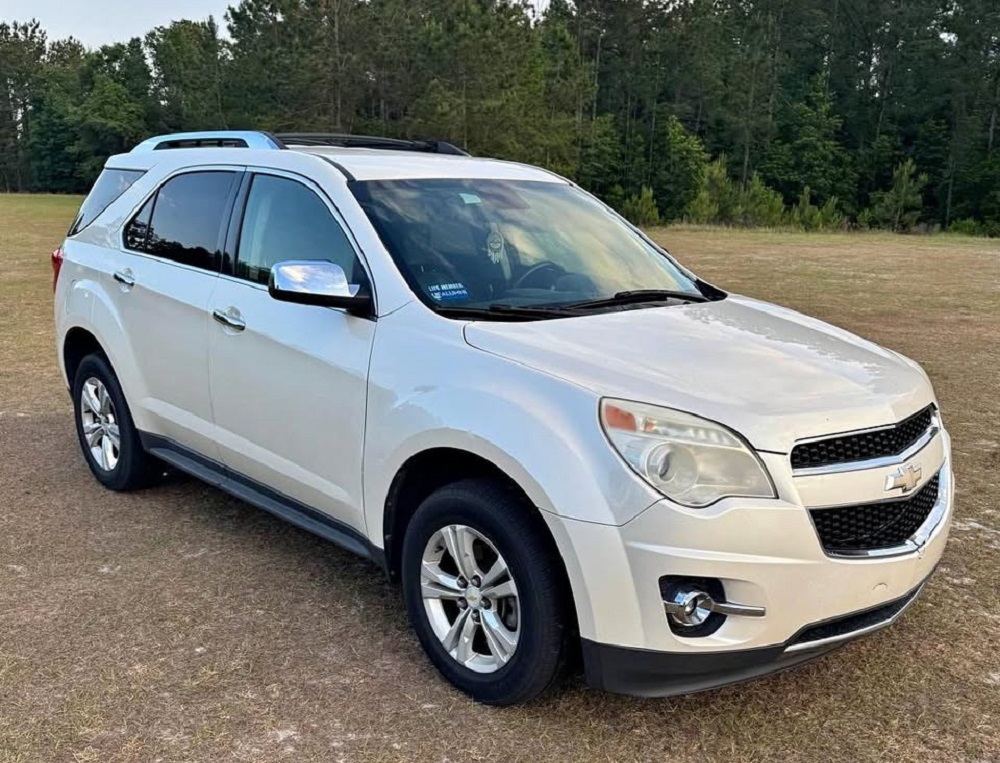
1. Behind the Cover: Why the Equinox Timing Chain Doesn’t Always Stay in Line
Chain Construction, Guides, and the Fragile Balance-Shaft Setup
Underneath the plastic engine shroud, the timing chain on the Equinox’s 2.4L and V-6 engines was supposed to be a lifetime component. In theory.
What GM built was a chain-driven setup relying on oil-fed tensioners, plastic guides, and in the case of the 2.4L Ecotec, a little sub-chain running a balance shaft buried inside the block.
The main chain wraps around the crank sprocket at the bottom and climbs up to meet the cam gears. Tension is applied by a hydraulic plunger that pushes a guide rail against the chain, keeping it snug.
The 2.4L engines add another wrinkle—a secondary, smaller chain drives the balance shafts that cancel out vibrations. It’s a neat idea for smoothness, but it adds another failure point hidden deep inside the engine.
Low Oil Pressure: The Chain’s Worst Enemy
Here’s the design flaw that bites so many Equinox owners: if oil pressure drops—whether from neglect, oil thinning out past its service life, or high oil consumption—the tensioner can’t stay fully extended. Instead of keeping the chain tight, it lets slack creep in.
At first, you’ll hear a faint rattle at startup. Over time, the slack gets bad enough that the chain starts “whipping” between gears, hammering the plastic guides, and risking a jump. Once timing shifts far enough, the engine can’t keep the valves and pistons in sync, and you’ve got serious mechanical damage on your hands.
This isn’t just theory either. GM’s own bulletins and dozens of owner reports point to tensioner collapse as the real starting point for stretched chains on 2.4L Ecotecs.
Interference Engines: Why Late Repairs Get Expensive Fast
Now for the bad news: every 2.4L and V-6 Equinox engine involved here is an interference design. That means there’s no margin for error. If the chain slips or snaps, the pistons and valves slam into each other with enough force to bend valves, crack pistons, and sometimes destroy the head.
It’s not just a matter of replacing a chain and guides at that point—you’re looking at full engine tear-down, head rebuilds, or even a replacement long-block.
Catch a bad chain early, and you might escape with a $1,500 repair bill. Ignore the warnings, and it can turn into a $4,000–$6,000 engine replacement before you know it.
2. Which Equinox Engines Are at Risk? Here’s How the Numbers Stack Up
How the Trouble Lines Up: Sources We Pulled From
Before you get spooked—or feel falsely safe—it’s worth knowing this risk map isn’t guesswork. It’s pieced together from GM’s own service bulletins, special coverage programs like SC 12313, NHTSA complaint data, independent repair stats like RepairPal, and the sheer flood of owner reports across forums. Put all of that together, and clear patterns start to show up.
Quick-Reference Breakdown: Engines and Years That Deserve a Second Look
| Model-Years | Engine | Issue Hot-Spots | Notes |
| 2010–2013 | 2.4L I4 (Ecotec) | Chain stretch, tensioner collapse, balance-chain pin wear | Tied to oil-consumption complaints and Special Coverage 12313 |
| 2010–2012 | 3.0L V-6 (HFV6) | Premature chain elongation, noisy cold starts | GM issued chain kit updates in 2013 |
| 2013–2017 | 3.6L V-6 (LFX) | Far fewer timing issues; failures usually tied to extreme oil neglect | Lower failure rates overall, especially with regular maintenance |
| 2018–2024 | 1.5L turbo I4 (LFV) | Some isolated P0016/P0017 codes reported, no widespread chain failures yet | Monitor with oil-life monitor (OLM) resets |
Those “Boundary” Builds You Need to Double-Check
One more catch—if you own or are buying a 2012 Equinox, pay attention to the production date. Some late-2011 builds got lumped into 2012 VINs before GM’s midstream fixes rolled out.
That means you could technically have an “early” 2012 that behaves more like a 2011 mechanically—higher oil consumption, higher chain-stretch risk.
If you’re not sure, a quick VIN history lookup or a dealer service check can tell you whether you’ve got a safer “late build” or one you need to baby.
3. Early Red Flags: What Your Equinox Is Trying to Tell You
Cold-Start Rattle: The First Warning Shot
If you start your Equinox first thing in the morning and hear a rattling noise that fades out once you rev past 1,200 rpm, you’re hearing the chain slap against the guides. That sound isn’t normal. It’s the tensioner failing to fully load the chain when oil pressure is low, especially after the car’s been sitting overnight.
Plenty of Equinox owners mistake it for harmless “old engine” noise—until a few months later, when the chain skips and triggers a dashboard full of lights.
Check Engine Light and Timing Codes You Can’t Ignore
If your check engine light flicks on and the scanner throws codes like P0016, P0017, P0008, or P0009, that’s your cam and crank sensors disagreeing about where the engine’s internals are positioned. In plain English: the timing is off.
P0016 and P0017 usually pop first. They’re classic cam-crank correlation errors, especially in 2.4L Ecotec engines with timing chains starting to stretch. Ignore these codes, and you’re basically betting the house on your chain not snapping while merging onto the freeway.
Rough Idle, Misfires, and a Tank That Runs Dry Too Fast
When the chain goes slack, timing isn’t crisp anymore. You might feel a rough, shaky idle at stoplights, maybe a misfire here and there under light throttle, or notice that your gas mileage tanks for no obvious reason. It’s not just an annoying quirk—it’s a hint that combustion timing is slipping out of sync.
Some drivers even report a sluggish feel when accelerating, like the engine has to catch its breath before pulling. That slight hesitation is timing chain slack making a mess out of cam advance and spark firing angles.
Low Oil Between Changes: The Quiet Culprit Behind It All
One huge hidden warning sign on the 2.4L engines? Finding the oil level consistently down a quart—or more—before you’re even halfway between oil changes. High oil consumption starves the chain tensioners, the chain itself, and all the guides that rely on a steady oil bath to survive.
If you’ve been topping off more than once between oil changes, your chain isn’t getting the life it was designed for. And the longer you let it go, the more expensive the final repair bill is going to be.
4. What’s Really Going Wrong Under the Hood
The Hydraulic Tensioner Gamble That Didn’t Always Pay Off
GM bet big on using a hydraulic tensioner setup for the Equinox timing chains. The idea was simple: use oil pressure to push a small piston that kept steady tension on the chain as it wore in over time. Sounds good on paper.
The real-world problem? That tensioner needs solid, reliable oil pressure at startup, and that’s exactly what 2.4L Ecotec engines started losing thanks to chronic oil consumption.
When oil levels drop, or the oil gets too thin and sheared out from overextended oil changes, the tensioner can’t stay locked out. It collapses just enough to let the chain whip and hammer the guides.
By the time the chain stretch triggers a check engine light, you’re already way into the danger zone.
Chrome Flake from Balance-Chain Pins: A Hidden Threat to Your Engine
On the 2.4L engines, it wasn’t just the main timing chain getting chewed up. GM also had a nasty materials issue where the chrome coating on the pins inside the balance shaft chain started flaking off. Once those flakes got loose, they acted like microscopic sandpaper, grinding away at the sub-chain and wearing out the guides even faster.
GM’s Special Coverage 12313 flat-out admits the problem, but coverage was limited to certain VINs and service dates. If you missed the window—or bought used—you’re likely on your own for the repairs.
Overdue Oil Changes That Turned Bad into Worse
The original Oil Life Monitor (OLM) settings on early second-gen Equinox models were overly optimistic. They let owners stretch oil changes to 8,000 or even 10,000 miles under “normal” driving. That might have sounded convenient at the time, but it was a terrible move for engines already prone to burning oil.
With old, broken-down oil circulating through the tensioners and guides, wear accelerated fast. Sludge started to form. And once that happens, you can forget about reliable chain tension.
Wrong Oil, Cheap Oil, and DIY Mistakes That Cost Big
One more real-world kicker: a lot of chain failures happened after owners—or even quick-lube shops—put the wrong oil in these engines. Using a cheap bulk oil instead of a proper Dexos-approved 5W-30 synthetic could thin out faster under heat, starving the tensioners of the pressure they needed.
It didn’t matter if you changed it every 5,000 miles—bad oil chemistry still set the timing chain up for an early death.
5. What It Costs When It Goes South
Parts and Labor: The “Best Case” Isn’t Cheap
If you catch a stretched or rattling chain early, before it blows up the engine, you’re looking at a basic timing-chain kit replacement. That usually includes the chain itself, new guides, tensioners, and fresh seals. Parts alone can run anywhere from $350 to $550, depending on brand and how complete the kit is.
Labor is the real gut-punch. Swapping the timing chain on a second-gen Equinox isn’t a quick job. Shops quote between 8 to 12 hours depending on the engine, the shop’s hourly rate, and how ugly the teardown gets. In real-world dollars, that means you’re staring at $800 to $1,100 at a trusted independent shop, or $1,400 to $1,800 at a dealership.
And that’s for a clean, by-the-book chain job.
When It Gets Worse: Hidden Add-Ons That Kill Budgets
If the chain has already jumped timing or if the guides shattered and sent debris through the engine, the damage doesn’t stop at the chain. You might also be forced into replacing variable cam phasers, the oil pump, and even the cylinder head gasket if the pistons and valves kissed.
Once you add those extra parts and labor hours, it’s not unusual for a final repair bill to creep past $4,000. Some owners even get the bad news that a full engine swap would be cheaper than trying to rebuild the wrecked top end.
GM’s “Special Coverage” and Warranty Hopes
There’s a sliver of hope for owners of affected 2.4L engines built between 2010 and early 2012. GM’s Special Coverage Adjustment 12313 covered balance chain failures out to 10 years or 120,000 miles.
But—and it’s a big but—you needed to show symptoms (like a check engine light for cam/crank correlation) before the deadline, and not all timing-chain related failures qualified.
If you’re lucky enough to have a vehicle still inside that coverage window, GM would replace the balance chain components at no charge. Otherwise, it’s all out of pocket.
6. GM’s Paper Trail: How They Handled the Timing Chain Mess
Special Coverage 12313: A Halfway Lifeline
In 2013, GM issued Special Coverage Adjustment 12313, targeting 2010–2011 Equinox and Terrain models with the 2.4L Ecotec. This wasn’t a full-blown recall. It was a quiet move to cover balance chain failures under warranty up to 10 years or 120,000 miles.
If your chain stretched enough to trigger cam/crank timing codes but hadn’t yet shattered the engine, GM would cover the fix. But—and this tripped up a lot of owners—you had to show active symptoms. No symptoms, no fix. If your chain gave up right after the coverage expired, you were on your own.
And here’s the catch: the coverage targeted the balance shaft chain specifically, not the main timing chain. Some owners got the repair and still had the main chain fail later.
Technician Bulletin SB-10052863: Chain Kit Updates for the V-6
For 3.0L V-6 owners, GM put out Service Bulletin SB-10052863 around August 2013. It offered updated timing-chain kits and guide replacements for engines that were already rattling or throwing timing codes.
This bulletin didn’t trigger free repairs, though—it was just guidance for dealership techs when customers complained about noisy startups or check engine lights. If you weren’t inside warranty, you footed the entire bill.
The Class-Action Over Oil Consumption: A Major Warning Sign
While the timing chain issue was nasty, it was often tied to a bigger defect: excessive oil consumption. A 2018 class-action lawsuit slammed GM over 2010–2017 Equinox and Terrain models with 2.4L engines for burning oil at insane rates—and indirectly, starving timing chains of the lubrication they needed to survive.
The lawsuit argued GM should’ve known that oil-starved engines would eat through timing chains and tensioners way before 100,000 miles. Settlements and service bulletins trickled out, but they didn’t cover everyone, and they didn’t erase the cost owners already faced.
How to Check If Your VIN Has Open Actions
If you’re driving—or thinking about buying—an Equinox from the rough model years, punch your VIN into the NHTSA recall lookup tool or GM Owner Centre website.
Even if you missed the boat on Special Coverage 12313, there might be smaller open campaigns (for fuel pumps, cam actuators, etc.) that tie into broader engine reliability.
It’s five minutes that could save you thousands in surprise repairs.
7. What Equinox Owners and Mechanics Are Really Saying
DIY Pitfalls: How Some Good Intentions Went Sideways
Plenty of Equinox owners and DIYers tried tackling the timing chain job themselves after facing brutal dealer quotes. Some got it right. Others, not so much.
One common DIY tripwire? Skipping the oil-jet screen buried inside the engine. This tiny screen clogs up with sludge when oil maintenance has been sloppy, starving the tensioner even after you install a brand-new chain kit. Miss that, and you’re right back where you started—except now you’ve eaten a weekend and a few hundred bucks.
Another pitfall: mistiming the phasers. Getting the cam phasers perfectly lined up during reassembly is no joke. A tooth off, and your engine will throw cam-crank correlation codes the second you fire it up—or worse, eat a valve.
Replacing Chains Twice: When the Primary Cause Remained Unfixed
There are heartbreaking stories across the Equinox forums of owners who ponied up for a full timing chain repair, only to have the exact same problem reappear within 20,000 miles.
In almost every case, the root cause wasn’t the chain itself. It was ongoing oil consumption that nobody fully addressed. If the engine’s still burning a quart every 1,000 miles, no tensioner or guide kit is going to save it long-term. It’s like installing new tires on a car with a bent frame.
Some owners ended up going through two chain jobs and eventually junking the SUV when the math didn’t add up anymore.
The 3.6L V-6: A Small Bright Spot in a Rough Story
Amid the sea of frustrated 2.4L owners, a different tone pops up when you read posts from 3.6L V-6 Equinox drivers. Most of them report much better chain durability, as long as they stuck to 5,000-mile full synthetic oil changes instead of trusting the original oil-life monitor settings.
Owners with 3.6Ls and strict oil habits often hit 150,000+ miles without a whiff of chain trouble. It’s one of the few bright spots in a generation that otherwise left a lot of drivers nursing expensive engine bills.
8. How to Keep Your Equinox’s Timing Chain Out of Trouble
Oil Changes: 5,000 Miles or 6 Months—No Excuses
If you’re running a 2.4L Equinox, especially from the 2010–2013 window, you can’t treat oil changes casually. Forget what the Oil Life Monitor tells you. Stick to every 5,000 miles or every 6 months, whichever hits first.
And don’t just grab any jug off the shelf. It’s got to be Dexos-approved 5W-30 full synthetic. Cheap bulk oil shears down too fast under heat, starving the tensioner and chain of the pressure and protection they need.
It’s not overkill—it’s survival.
Top-Off Discipline: Mid-Dipstick or Higher, Always
You can’t trust the Equinox oil level to behave between services. Many 2.4L engines will burn oil whether they smoke or not.
The golden rule? Never let the oil level fall below halfway on the dipstick. Top off the moment it drops. If you wait until the oil light flickers—or worse, if you ignore it altogether—you’re running the chain dry when it needs lubrication most.
Ears, Eyes, and Scanners: Catching Problems Early
Listen carefully on cold starts. That rattle between ignition and about 1,200 rpm? That’s your warning shot. Catch it early, and you might just need a chain kit. Ignore it, and you’re rolling the dice on a full engine swap.
Every oil change, have a basic scan done—even a cheap $30 scanner will flag cam-crank timing codes like P0016 or P0017 before the chain jumps teeth. If you see them? Don’t wait.
Playing Offense: Preemptive Kit Swaps for the Cautious
If you’re driving an early-build 2.4L (especially 2010–2012), and your oil use is creeping up past a quart every 1,500 miles, it might be smart to preemptively replace the timing chain kit around 100,000 miles.
Yes, it’s expensive up front. But it’s a lot cheaper than waiting until you hear the death rattle and end up with bent valves or a cracked piston.
9. When Timing Chains Go Bad: Should You Fix It, Sell It, or Swap the Engine?
Repair vs. Engine Swap: Where the Numbers Tip Over
If your timing chain is stretched but hasn’t trashed the valves yet, a standard chain kit replacement will likely cost $1,500 to $2,000 at a shop. Painful, but doable if the SUV’s still in good shape otherwise.
But once the chain jumps teeth and pistons start smacking valves? You’re looking at $4,000 or more for a head rebuild—or $5,000+ for a full engine swap. At that point, if your Equinox has over 120,000 miles, you’ve got a hard choice.
More than a few owners found themselves here and decided to cut their losses instead of sinking serious cash into a vehicle that might have other hidden issues.
Buying Used? Target These Safer Bets
If you’re shopping for a used Equinox, steer toward either:
• 2014–2017 models with the 3.6L V-6 (fewer chain complaints, stronger top-end reliability).
• Lightly used 2.4L models with ironclad service records showing strict 5,000-mile oil changes and no signs of oil consumption.
A well-documented, one-owner car that’s had timing service already done—or shows no oil usage after 100,000 miles—is a safer bet than rolling the dice on a random Craigslist find.
Negotiation Leverage: Using OLM History and Oil Reports
If you’re looking at a used Equinox, pull the Oil Life Monitor history if possible. Frequent resets without matching mileage can hint that the previous owner was stretching oil changes dangerously long. That’s ammunition to bargain hard—or walk away.
Bonus move: if the seller has an oil analysis report from labs like Blackstone, showing low metal content and good oil health? That’s gold. It’s proof the engine hasn’t been chewing itself up behind the scenes.
Wrapping Up the Equinox Timing Chain Story
If you’re driving a 2010–2013 Equinox with the 2.4L, or a 2010–2012 with the 3.0L V-6, timing chain trouble isn’t just some distant risk—it’s a real threat that can hit hard if you’re not on top of it.
Regular oil changes with the right full synthetic, keeping oil levels up, and paying attention to early warnings like startup rattles or timing codes can buy you a lot of extra life.
But once the chain stretches too far, repairs can get ugly fast, especially if valves and pistons get involved.
If you’re facing the choice between fixing or walking away, it often comes down to mileage, overall condition, and whether you’re willing to invest more into a platform that’s had its fair share of hard miles.
Catch it early, maintain it right, and an Equinox can still be a solid runner. Let it go too long, and you might find yourself shopping for something else sooner than you planned.