
Ball joints aren’t just another wear part—they hold your steering and suspension together. When they fail, your front end doesn’t just sag—it can collapse. For years, Moog was the name most mechanics reached for without thinking twice.
Their parts were everywhere, and their “Problem Solver” line had a reputation for fixing the design flaws that plagued factory parts. But that reputation has started to crack.
In recent years, complaints about torn boots, early failure, and hit-or-miss quality have flooded forums and reviews. Some shops still swear by Moog—especially the K-series—but others are steering clear.
If you’re wondering whether Moog ball joints are still worth your money, this guide breaks it down with real-world feedback, recall data, and expert comparisons. Let’s see if Moog’s still got it, or if it’s time to look elsewhere.
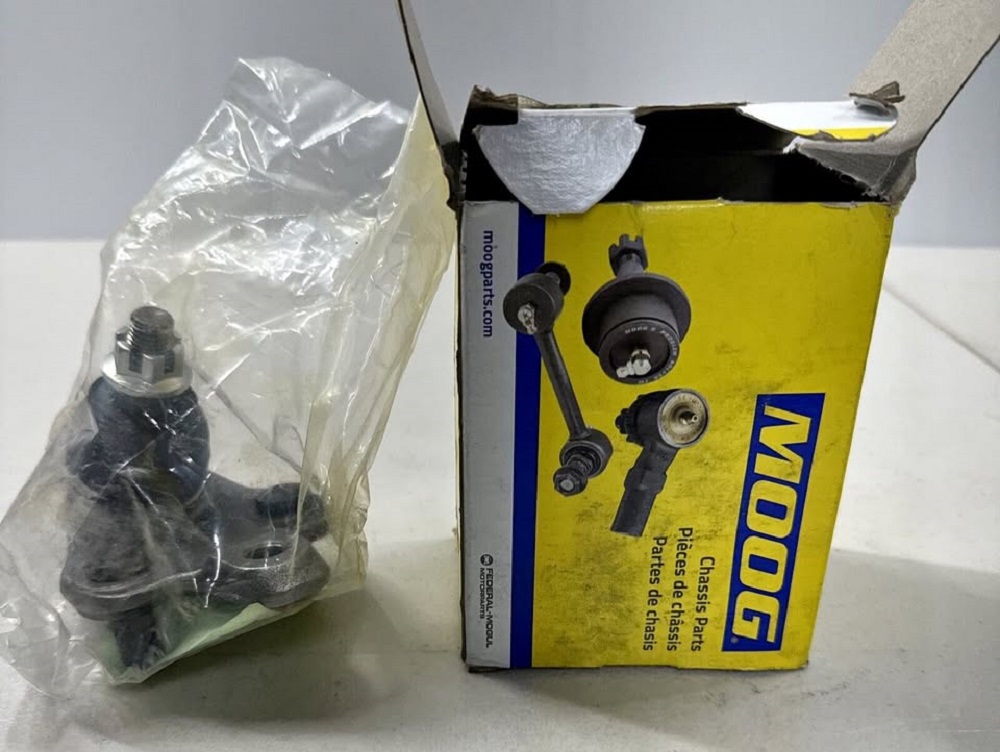
Moog’s Product Lines Aren’t All Built the Same
Problem Solver, Severe Duty, or R-Series? Know What You’re Buying
Moog doesn’t sell just one type of ball joint—they’ve got three main lines, and lumping them together is where most of the confusion starts.
• Problem Solver (K-Series) is Moog’s premium line, built to fix OE flaws. These are greaseable, come with hardened studs, and often feature upgraded bearings. This is the version old-school mechanics trusted.
• Severe Duty (SD-Series) targets fleet trucks and heavy off-road use. Same core idea as Problem Solver—just with extra muscle for commercial applications.
• R-Series (RK-Series) is Moog’s budget offering. These are often sealed (not greaseable), built to OE specs, and generally lack the enhanced internals or hardware. They’re designed for price-sensitive repairs, not long-term durability.
If a part fails early or fits poorly, odds are it came from the R-Series, not the K-Series. That’s a big reason Moog gets such mixed feedback.
Not All Moog Ball Joints Are Made in the USA
Another reason for the shift in quality? Moog’s global production. Their parts come from all over: the U.S., China, Turkey, Italy, and Japan. Some K-Series ball joints are made by Sankei 555 in Japan, a name highly respected by Toyota owners. But others—especially R-Series—are coming out of lower-cost factories.
You’ll often find the country of origin stamped on the box or etched on the part. The issue is consistency. Some customers get a flawless Japanese unit, others end up with a part from China that squeaks within a year. That manufacturing variability fuels most of the quality complaints you’ll read online.
Mechanics Used to Swear by Moog—Not So Much Anymore
From “Install and Forget” to “Hope for the Best”
Talk to mechanics who were wrenching in the ‘90s or early 2000s, and they’ll tell you—Moog was the gold standard. Greaseable, easy to install, and they’d outlast most of the vehicles they went on. Back then, if a customer asked for the best, shops reached for Moog without thinking twice.
But that loyalty has thinned out over the last decade. Many technicians now hesitate to recommend Moog unless they’re sure it’s from the Problem Solver line.
The reason? Too many stories of premature wear, boots tearing right after install, and ball joints squeaking after just a few thousand miles. Some even say Moog’s coasting on its old reputation while quietly cutting corners on materials and QC.
What Still Earns Moog Respect in the Bay
That said, not all techs have given up on the brand. Many still stand by the Problem Solver and Severe Duty lines, especially for American trucks and SUVs. These parts are still built with service in mind—grease fittings, beefier housings, and upgraded internals that outmatch OE design flaws.
But it’s a case of “know your part.” Drop in an R-Series joint thinking it’s the same as a K-Series, and you’ll be back in the shop before your next oil change. The name Moog doesn’t guarantee durability anymore—it’s the prefix on the box that matters.
Split Opinions from the Street—Moog Owners Speak Up
When It Works, It Really Works
Plenty of Moog customers are still happy with what they got. Reviews across major sites often hover around 4.3 out of 5 stars. The positive comments usually hit the same notes: smooth fitment, easy install, and reliable performance that goes 50,000 miles or more. Some even call Moog’s design an upgrade over factory parts, especially for trucks and older SUVs.
Owners who grease their joints regularly say they hold up well. One Tacoma owner logged over 90,000 miles on a set of K-series lower ball joints with just a grease gun and some diligence. For those doing their own maintenance, Moog’s Zerk fittings are a big plus.
But the Complaints Are Too Loud to Ignore
Still, there’s a growing chorus of frustration online. Many users report boots tearing within months, joints squeaking on turns, or play developing far too soon.
A common theme? Parts failing just outside the return window. And when these joints go bad, they don’t ease into it—they let you know with every bump and corner.
Some buyers even say they received parts that looked off—no Zerk fittings, cheap hardware, or vague stamping. In several cases, users suspected counterfeits or poor quality control from third-party sellers.
The warning signs? Squeaks, grease that won’t take, boots cracking before the first tire rotation. And once the boot fails, it’s a countdown until grit gets in and the joint gives out.
Recalls and Repeat Offenders – When Moog Got It Wrong
Recent Safety Recalls That Raised Eyebrows
Moog’s reputation has taken a few hits in recent years—some of them documented by official recalls. One of the biggest red flags came in 2024, when part number K500063, used on the Ford Escape, was recalled due to cracking at the ball stud.
That’s not just a nuisance—it’s a serious safety hazard. If that stud lets go, the wheel could separate from the suspension. Not something you want happening at 70 mph.
Back in 2022, Toyota owners were on alert, too. Moog’s K90255, fitted on certain Tundra and Sequoia models, was recalled for improper hardening of the joint. Translation: it wasn’t tough enough to take the abuse those heavy-duty trucks dish out, and failures were happening way too soon.
These aren’t isolated quirks. They’re proof that not every Moog part makes it out of the factory in top shape—and that even trusted lines like the K-series can run into serious quality lapses.
The Stuff That Doesn’t Make Headlines—But Still Fails
Beyond formal recalls, real-world users report recurring issues that haven’t made it to the NHTSA database. The biggest one? Dust boots splitting early, sometimes within months.
Once the boot is compromised, moisture and debris start wrecking the joint from the inside. And unless you catch it early and re-pack it with fresh grease, you’re in for clunking, wandering, or worse.
Counterfeit warnings have also popped up. Some users received Moog-branded boxes with joints that had no markings, missing fittings, or cheap rubber boots.
It’s hard to say if these are knockoffs or just poor factory quality, but either way, it’s a gamble you shouldn’t have to take when buying a supposedly premium part.
Guts and Gimmicks – Where Moog Shines and Where It Slips
Gusher Bearings and Grease Fittings—Smart Ideas That Need Support
Moog’s “Problem Solver” line isn’t just a marketing term—it actually packs in a few clever upgrades over stock ball joints. One standout is the gusher-style powdered metal bearing.
It’s designed to distribute grease evenly across the bearing surface, cutting down friction and wear. When paired with Moog’s signature Zerk fitting, you can flush out old grease and contaminants, keeping the joint smooth longer.
But here’s the catch—it only works if the boot holds. Once that rubber seal rips or loosens, all the grease in the world won’t save you. You’ll end up pumping fresh grease into a joint already packed with dirt and water.
Carbon-Fiber Liners and PTFE—Cool Tech, Limited Track Record
Some newer K-series ball joints now use carbon-fiber-reinforced inserts with PTFE (Teflon) to reduce internal friction. In theory, this should reduce play and last longer than traditional designs.
It sounds impressive—and might be, long-term—but the reality is we just don’t have enough field data to know how it stacks up against old-school metal bearings over 100,000 miles.
Built to Be Serviced—But Only If You Stay on Top of It
The ability to re-grease a ball joint used to be the mark of a pro-grade part. Moog leans into that hard with most of their higher-end models. If you’re someone who does your own maintenance and doesn’t mind hitting a grease gun every 5,000 miles, that’s a win.
But if you’re like most drivers who forget until something clunks, a grease fitting won’t save you. Worse, some users report Zerks that strip out, refuse to take grease, or snap off entirely during install. So even a “feature” can become a flaw if the execution isn’t right.
Moog vs. The Field – How It Stacks Up Against the Competition
Mevotech TTX – Built for the Long Haul, Not Just the Driveway
Ask around in any truck forum, and you’ll hear one name thrown in with Moog: Mevotech, especially their TTX line. These joints are built for severe conditions—think salted roads, lifted trucks, and trail abuse.
What makes them different? NK Armor-coated studs, beefy dust boots, and a tight focus on corrosion resistance. Many mechanics say they install TTX parts where Moog used to be their go-to.
And here’s the kicker: Mevotech TTX usually lands in the same price range as Moog’s Problem Solver series—sometimes even cheaper if you’re not tied to brand loyalty.
Delphi and 555 – The OE Purists’ Pick
If you’re after the same part your car rolled off the line with, Delphi and Sankei 555 are names to trust. Delphi’s a heavy hitter in the Euro and GM space, while 555, made in Japan, is often Toyota’s original supplier.
Both brands focus more on long-term reliability than fancy features. No Zerks, no carbon inserts—just forged steel and precision machining. The tradeoff? They’re not serviceable, and in rough driving conditions, you can’t grease them back to life.
Spicer – The Off-Road King
If you drive a Dana 44 or 60 axle setup—think Jeeps and heavy-duty pickups—Spicer is hard to beat. These ball joints are heat-treated and designed to take abuse.
Moog can’t touch them when it comes to axle articulation under load. But that performance comes with a price tag. Spicer is usually more expensive and overkill unless you’re hitting serious terrain.
Where Moog Still Makes Sense
Moog’s Problem Solver K-series fits a niche. If you want an OE+ experience with greaseable joints and plan to maintain them, they’re still a solid bet, especially for domestic trucks and SUVs.
But if you’re chasing 100,000+ miles without touching a grease gun, or you’re working on a Toyota with a sketchy track record on Moog parts, you may want to look elsewhere.
Real-World Results – What Longevity Looks Like for Moog Ball Joints
When Moog Holds Up: Stories That Build Trust
Some drivers swear by Moog, and their mileage logs back it up. One Tacoma owner logged over 90,000 miles on a pair of lower Moog Problem Solver joints, with nothing but routine greasing every 5,000 miles. No looseness, no squeaks, just reliable performance. That kind of lifespan is what Moog built its name on.
Another example? A Dodge Ram 1500 driver shared that after upgrading from cheap generics to Moog K-series joints, their front-end clunk vanished and didn’t return for nearly 80,000 miles of mixed towing and highway driving.
When Moog Falls Short: The 12,000-Mile Letdown
But then there’s the flip side. A Chevy 1500 owner, using the budget-friendly RK-series, started noticing play in the upper ball joint after just 12,000 miles.
No off-road use. No harsh driving. Just daily commuting. It didn’t fail outright, but that kind of early wear throws a wrench into Moog’s reputation for reliability.
In some cases, owners found the boots torn during routine oil changes, long before the joint itself failed. And if you’re not checking them regularly—or skipping greasing—the wear sneaks up fast.
What’s the Pattern?
Here’s the pattern we’re seeing from owner stories: longevity depends on three things—the series you choose (K vs RK), whether it’s greaseable, and how consistently you maintain it. The K-series joints often go the distance when greased on schedule. The RK-series? More of a roll of the dice.
So if you’re expecting 80,000 miles of quiet, smooth steering, the joint you pick—and how you care for it—makes all the difference.
Do the Numbers Add Up? Moog Ball Joint Pricing vs Performance
The Upfront Cost: What You’ll Actually Pay
If you’re buying Moog, prices vary depending on which series you’re after. A pair of RK-series ball joints will typically set you back $40 to $80, while the higher-end K-series Problem Solver joints fall in the $70 to $120 range.
Step into Mevotech’s TTX line, and you’re looking at roughly $80 to $110 per pair, right in Moog’s ballpark. But if you’re comparing to Toyota OEM, expect to shell out $140 to $180, and that’s just for the parts.
In short, Moog doesn’t dominate on price, but it stays competitive, especially when compared to dealership OEM options.
Installation: DIY or Drop It Off?
Here’s where the cost can really swing. If you’re comfortable with basic tools, Moog ball joints are DIY-friendly. Just budget a couple hours in the driveway and maybe a rental press or pickle fork. But if you’re handing it off to a shop, expect $100 to $200 in labor, depending on your setup.
Total cost for RK-series including pro install? $150 to $250. K-series with install? $200 to $300. Compare that to OEM with dealer install, and you’re flirting with the $400 mark or higher.
Warranty Breakdown: Moog vs the Rest
The K-series and Severe Duty options come with a limited lifetime warranty, but there’s a catch—it usually only applies if installed by an authorized shop.
The R-series cuts that down to three years or 36,000 miles, which aligns more with budget-tier expectations. Mevotech TTX? Also lifetime. Toyota OEM? Typically just 12 months.
So while Moog’s warranty sounds great on paper, don’t assume it covers everything, especially if you DIY or buy from a sketchy third-party seller online.
Bottom line? Moog’s pricing makes sense if you choose the right series and don’t skimp on maintenance. But the value proposition falls apart fast if you go with the cheaper line and expect premium results.
When Moog Makes Sense—And When It’s Better to Walk Away
Moog’s Strong Suit: When It’s a Smart Pick
If you’re running a domestic truck or SUV, especially one that sees regular duty on pavement or light trails, Moog’s Problem Solver or Severe Duty lines are still worth considering. They shine in setups where:
• Greaseable joints matter. You want to service them yourself and don’t mind crawling under the rig every 5k miles.
• You’ve had issues with OE design. Moog’s claim to fame is addressing factory flaws, so if your original ball joint failed early, Moog might’ve already fixed that weak point.
• You’re buying from a trusted source. Counterfeit risk is real. If it’s not from a legit parts house or big-name retailer, skip it.
When Moog’s Not the Right Call
On the flip side, there are scenarios where Moog just doesn’t measure up.
• If you’re running a Toyota with critical LBJ applications. Tacoma, Tundra, Sequoia—these are picky when it comes to ball joints. Aftermarket parts like Moog don’t always cut it here. Stick with OEM or Sankei 555 for peace of mind.
• You want a “set it and forget it” part. Even the best Moog joints need regular greasing to survive. If maintenance isn’t your thing, look elsewhere.
• You expect 100k+ miles without fuss. That’s a tall order for any brand, but especially for Moog’s mid-tier lines. Spicer or OEM may last longer, especially in harsh environments.
Moog isn’t junk, but it’s not bulletproof either. The key is matching the product line to your expectations and being honest about how hard you’ll push the part.
Don’t Just Slap It In—How to Install Moog Ball Joints the Right Way
Check the Box Before You Touch the Tools
Before you even grab a wrench, open the box and inspect what you’ve got. Look for the Moog hologram sticker and the part number. If the boot looks loose, the grease fitting is missing, or there’s no country-of-origin marking, send it back. Counterfeits are a growing issue, especially with popular K-series joints.
Also, verify whether it’s a press-in or bolt-on style, and double-check fitment against your vehicle’s specs. Don’t assume it’s right because the listing said so—several users have gotten oversized or undersized parts by mistake.
Grease Before You Go—and Don’t Skip the Torque
If you’re installing a greaseable joint, hit it with grease before you install it. That first shot helps flush out any metal shavings or assembly residue. After install, grease it again—until clean grease oozes out the relief valve or boot edge.
And don’t freehand torque it. You’ve got two torque specs to follow:
• The ball stud nut, which should be torqued with the suspension loaded—meaning, the car is on the ground or supported at ride height.
• The housing bolts or sleeve, if applicable, need to be snugged to factory torque specs. Overtightening can damage control arm sleeves or deform the knuckle bore.
Service Like You Mean It
Moog joints with Zerk fittings live or die by your grease gun. Re-grease every oil change or 5,000–7,000 miles, whichever comes first. Off-roaders or salt-belt drivers? Grease more often. Neglect this step, and even the Problem Solver joints will start popping early.
And don’t forget the boot—inspect it annually. If you see cracks or it’s leaking grease, it’s time to replace just the boot or the whole joint, depending on the severity.
Done right, a Moog joint can give you solid mileage. Done wrong? You’ll be redoing the job before your next tire rotation.
Final Call: Is Moog Still Worth Your Money?
If you asked a mechanic back in the early 2000s, Moog was the brand to beat—reliable, easy to install, and known for lasting longer than the OE parts they replaced. But things have shifted.
These days, the Moog name doesn’t carry the same across-the-board confidence, especially among techs who’ve seen newer joints wear out way too fast or show up with damaged boots right out of the box.
That said, not all Moog parts are created equal. The Problem Solver line still earns respect, especially for domestic trucks and SUVs. It’s greaseable, often fixes known factory flaws, and if you keep up with maintenance, it’ll hold its own.
But you’ve got to buy from a trusted source. Counterfeits and questionable batches are out there, and they’re part of the reason why Moog’s rep has taken a hit.
If you drive a Toyota or depend on your rig in off-road or fleet settings, don’t gamble. Stick with OEM or high-grade brands like 555, Spicer, or Mevotech TTX.
They’re better suited for critical joints where failure isn’t an option. And if your goal is 100K miles without touching the suspension again, Moog might not get you there, especially with the R-Series.
Bottom line? Moog still has a place in the garage, but it’s not the automatic go-to it once was. You’ve got to be selective, do your homework, and weigh the trade-offs.
If you go with the right product line, install it right, and stay on top of greasing, Moog can still pull its weight. But if you’re expecting the indestructible joints of the past, you might be in for a letdown.