
Chasing down a crank-no-start on a 2012 Silverado? Swapping coils on a high-mile BMW N52? No matter what you’re wrenching on, Delphi pops up in the parts search.
It’s the brand your dealer might recommend and the one Amazon sells for half the price. But is it true OE quality… or just a trusted name slapped on offshore leftovers?
That’s the catch. Delphi’s name still carries real OEM weight, but after years of corporate shakeups, global outsourcing, and repackaging games online, that trust isn’t automatic anymore. Some Delphi parts earn high marks from pro techs. Others turn up in forums tied to gas leaks, early failures, or mismatched specs.
This guide cuts through the noise, who owns Delphi today, where their parts are actually made, which ones are solid bets, and which ones you should double-check before clicking “buy.” If you’re counting on that box to clear a code or fix a rough idle, here’s what to know before you bolt it on.
The long road from GM to PHINIA: How Delphi got here
Delphi didn’t start as a parts brand. It started as General Motors’ in-house powerhouse. Back in the ’90s, it was the brain behind Rochester fuel systems and Packard Electric wiring, real OEM muscle behind the badge.
But once GM spun it off, Delphi went through nearly three decades of shakeups. Each one chipped away at what the brand stood for in the aftermarket.
GM roots, bankruptcy, and the 2017 split
Delphi Automotive was born when GM spun off its parts division in the late ’90s. At first, it stuck close to its roots, supplying OEM-grade parts to GM and beyond. But in 2005, the company filed for Chapter 11. That triggered a long period of restructuring that finally came to a head in 2017.
That’s when Delphi split into two. Aptiv took over the software, safety, and autonomous driving side. Delphi Technologies got the engine parts, sensors, coils, fuel systems, and other combustion-era hardware.
From that point on, the Delphi name in the parts aisle meant one thing: supporting internal combustion. No more EV experiments. No more high-end electronics. Just the guts techs still replace every day.
BorgWarner steps in, PHINIA takes over
In 2020, BorgWarner bought Delphi Technologies for $3.3 billion to beef up its combustion and hybrid parts portfolio. But it didn’t hang on to the whole thing for long.
By 2023, BorgWarner spun off its entire aftermarket division, including Delphi, into a new company: PHINIA Inc. Now, PHINIA runs Delphi as a dedicated repair-market brand. No EV distractions. No crossover with Aptiv. Just straight-up engine parts, fuel system gear, and diagnostics.
That move gave Delphi a cleaner focus and a clearer mission: support the global repair market, not chase the future at the expense of the present.
Key Milestones in Delphi’s Corporate History
| Year | Event | Delphi Brand Owner | Impact on Aftermarket Parts |
|---|---|---|---|
| 1990s | Spun off from GM as Delphi Automotive | Delphi Automotive | Retained GM OE specs and supply links |
| 2005 | Filed Chapter 11 bankruptcy | Delphi Automotive | Restructuring, plant closures, global sourcing shifts |
| 2017 | Split into Aptiv and Delphi Technologies | Delphi Technologies | Aftermarket arm gains independence |
| 2020 | Acquired by BorgWarner | BorgWarner | Hybrid and combustion tech expansion |
| 2023 | Spun off into PHINIA Inc. | PHINIA | Focused entirely on aftermarket support |
What backs the badge: Why Delphi quality still holds weight
Delphi doesn’t just throw around the “OE-quality” label. They’ve built a test-heavy, lab-backed system to make sure it sticks, especially in their high-volume parts. From factory audits to ethanol-soaked fuel pump torture tests, this brand leans hard on engineering repeatability.
From OE supplier to aftermarket promise
Delphi’s go-to pitch? Same spec, different box. In other words, their aftermarket parts are supposed to match the OE spec they once supplied directly to GM, Ford, or VW.
That’s not just spin. Delphi is still certified to IATF 16949, the global quality standard for Tier 1 suppliers. It covers everything: design, manufacturing, testing, install procedures, and long-term support.
So when Delphi says their coil packs or MAP sensors meet OEM standards, they’re not guessing. They’ve got the same quality control processes behind them as the factory-installed stuff.
Lab torture tests built for real-world abuse
Delphi doesn’t just sign off on paperwork. They run full-on stress tests that mimic what parts actually go through under the hood.
Here’s how they break it down:
• Fuel pumps sit in ethanol-rich baths to simulate corrosive E85 blends. In one 2016 lab test, Delphi’s pump outlasted competitors that seized or wore out early.
• Control arms get slammed on a 3-axis rig that simulates twisting, flexing, and forward loads, like real suspension abuse on rough roads.
• MAF and O2 sensors get heat-cycled, vibrated, and shock-tested to prove they won’t flake out after 20,000 miles.
• Brake pads are blended from over 130 compounds to match OE bite and fade resistance. Their rotors even copy OE vanes and parting lines to manage heat and cracking.
This isn’t parts-bin fluff. It’s component-level validation built to avoid comebacks, misfires, and premature failures.
Be careful when purchasing Delphi products; some off-brand companies misuse the Delphi name. Only the version associated with PHINIA, linked to IATF 16949, provides OE-grade parts that undergo real testing.
The good, the solid, and the watch-list: How Delphi parts stack up
Delphi doesn’t just make one type of part. Their catalog covers everything from ignition coils to sway bar links. Some lines still reflect their OE roots. Others? You’ll want to read a few reviews before clicking “buy.”
Here’s the scorecard: what Delphi does right, where the pros put their trust, and which parts might need a closer look.
Fuel pumps that last and run quiet
This is Delphi’s sweet spot. Their electric fuel pumps get high marks for smooth pressure, quiet operation, and long-term durability. Techs say they install clean, hold pressure, and don’t start whining after 10,000 miles.
But not every pump is a win. Some older-style mechanical pumps, especially for classic cars, have been called out on forums like Corvair Center. Complaints include sloppy casting, off-angle fittings, and early leaks.
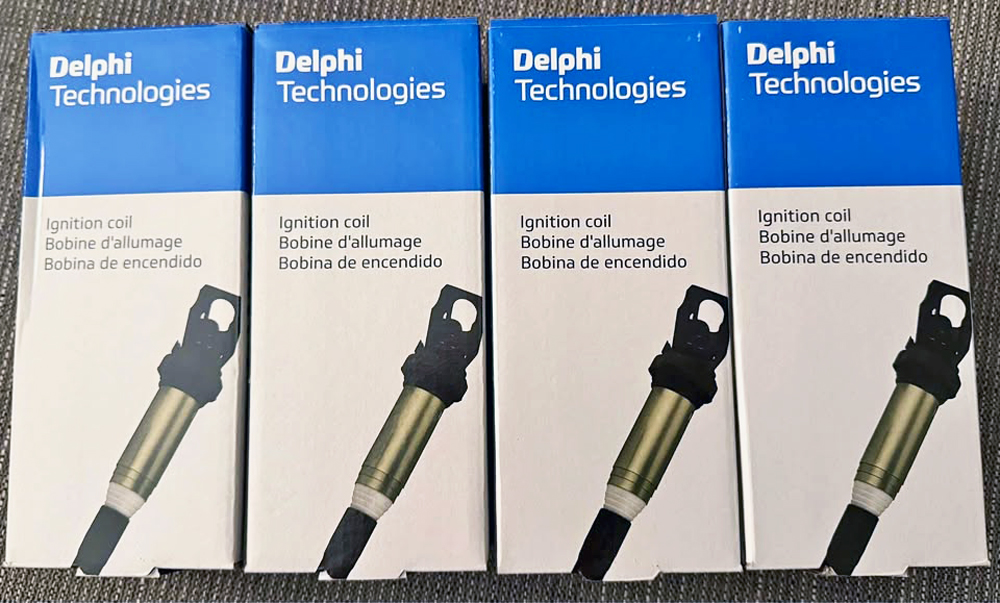
Ignition coils trusted by techs and dealers
This is where Delphi punches above its weight. In BMW forums, Delphi coils regularly replace stock Bosch units after repeat failures. Many techs rank them alongside NGK and Denso as coils they can install without expecting a comeback.
They’re backed by a 3-year / 36,000-mile warranty, stronger than the 1-year coverage from most mid-tier brands.
Sensors that usually just work
From MAP to MAF, crank to cam, Delphi makes the full suite of engine sensors. Fitment is consistent, calibration is solid, and failure rates are low. They don’t get much hype, but they also don’t cause drama.
Steering and suspension that split opinions
This is where feedback gets mixed. Delphi offers complete kits with OE-style control arms, tie rods, and bushings. They test well and often install fine. But some techs prefer Moog for one simple reason: grease fittings.
Delphi’s parts are typically sealed. Some folks like the zero-maintenance setup. Others see it as a downgrade in longevity.
Also, Delphi suspension parts sometimes show “Turkey” or “China” stamps, which makes some buyers pause, even if the part quality holds up.
Brake and A/C parts that get the job done
Delphi rotors follow OE vane layouts, and their pads are blended from over 130 ingredients. They don’t generate much buzz, good or bad. Same with their A/C compressors: install clean, backed by solid instructions, and usually come with the needed flush/seal kit.
Delphi Product Scorecard
| Category | Delphi Strength | Typical Warranty | Pro Feedback | Caveats |
|---|---|---|---|---|
| Fuel pumps (electric) | Quiet, consistent, long-lived | 1 yr / 12,000 miles | Matches Bosch, Denso | Mechanical versions have leak complaints |
| Ignition coils | Trusted by BMW techs, often outlast OE | 3 yr / 36,000 miles | Ranked with NGK and Denso | Minor batch issues reported |
| Engine sensors | Wide coverage, good calibration | 1 yr / 12,000 miles | Reliable, no chronic issues | No major concerns |
| Suspension | OE-style kits, decent durability | 1 yr / 12,000 miles | Mixed views vs. Moog | Sealed joints, country-of-origin hesitations |
| Braking | OE-style rotors, advanced pad formulas | 1 yr / 12,000 miles | Quiet, decent bite | Needs more long-term field data |
| A/C compressors | Full kits, clear install guides | 1 yr unlimited miles | Clean installs with flush kits | Warranty requires proof of full system flush |
What the forums say when Delphi isn’t listening
Specs and warranties only go so far. Real trust comes from techs who live with these parts, bolting them on, sending customers home, and hoping they don’t come back next week. When Delphi shows up in the bay or the garage, the feedback gets blunt fast.
Here’s what pro mechanics and gearheads say when the box hits the bench.
The ignition coils that rarely come back
In BMW, Honda, and Subaru threads, Delphi ignition coils come up again and again, as the fix when OE coils keep failing. One BMW tech summed it up: “Delphi’s the fix. Bosch coils kept failing, customers kept coming back. Switched to Delphi, problem gone.”
Others rank Delphi alongside NGK and Denso, the only coil brands that don’t boomerang through the return desk every week. That’s not something you fake with branding.
Takeaway: For ignition parts, Delphi has real-world cred from the folks who deal with failures daily.
The fuel pump double-take on older rides
Things get shakier in the classic car crowd. On forums like Corvair Center, several users reported serious failures with Delphi-branded mechanical fuel pumps. Issues included warped diaphragms, gas leaks, and even fuel spraying under pressure, within minutes of install.
One poster didn’t mince words: “Bought it off eBay. Delphi label, but probably a generic China part. Almost lit the car on fire.”
These failures aren’t common, but they’re severe. Many believe these low-volume mechanical pumps are reboxed generics, not true Delphi builds.
Takeaway: Delphi electric pumps are solid. Mechanical pumps for classics? Check the supplier and part number twice.
“Made in Turkey” and the trust gap
Plenty of Delphi suspension and steering parts come stamped Turkey or China. Delphi says the testing is the same across all plants but in shop forums and r/MechanicAdvice, some techs still hesitate. For old-school buyers, country-of-origin still matters, fair or not.
Takeaway: If you’re picky about part origin or working on a critical system, look twice before you click “buy.”
Read the fine print before the wrench comes out
Delphi talks a big game about OE-level quality. But when something fails, the warranty’s what really counts, and like most brands, the coverage can be solid or worthless depending on where you bought the part, how you installed it, and what system you’re working on.
Warranties by part: it’s not one-size-fits-all
Delphi doesn’t blanket every part with the same policy. Some categories get strong protection. Others? You’re lucky to get 90 days.
Here’s how it breaks down:
Delphi Warranty Snapshot
| Part Category | Warranty Term |
|---|---|
| Ignition coils | 36 months / 36,000 miles |
| Ignition wire sets | Limited lifetime |
| Fuel pumps (electric) | 12 months or 12,000 miles |
| Mechanical fuel pumps | 12 months flat |
| A/C compressors | 1 year, unlimited mileage |
| EGR valves | 90 days or 3,000 miles |
| Sensors (MAF, MAP, etc.) | 12 months or 12,000 miles |
| Diesel injectors | 12 months, unlimited mileage |
Strong coverage on ignition parts. Much shorter leash on emissions parts and older fuel systems.
Don’t expect help if you bought from a random seller
Here’s the catch: Delphi won’t honor the warranty if you bought from an unauthorized third-party, especially on Amazon or eBay. It’s right there in the fine print. No legit receipt from a listed dealer? No support. You’re stuck dealing with the seller, not Delphi.
So if that cheap fuel pump came from “CarPartsUnlimited_123,” and it fails in a week, you’re probably out of luck.
Install it wrong, and it’s your problem
Even if the part is real and the seller is approved, the warranty can disappear fast if you miss key install steps:
• Skip the torque specs? Void.
• Don’t flush the A/C lines before swapping the compressor? Void.
• Use stop-leak, sealants, or dye in the system? Definitely void.
Same goes for race use, off-roading, over-towing, or anything outside standard service. If Delphi gets the part back and sees signs of abuse or sloppy install, they’re not covering it.
They won’t even review the claim unless you can prove who bought it, when, and where. So save every receipt. Screenshot your cart. Print your order page. Whatever it takes.
How to buy Delphi without getting burned
Buying Delphi isn’t just about picking the cheapest listing. With lookalikes, reboxed parts, and warranty minefields, you’ve got to shop smart and install smarter if you want the part to last and stay covered.
Stick to authorized sellers or roll the dice
The safest move? Buy from Delphi’s official distributors or trusted names like O’Reilly, NAPA, or RockAuto (make sure they’re marked “authorized”). These boxes usually come with the right holograms, barcodes, and the real PHINIA-backed warranty.
Sketchy Amazon storefronts and eBay sellers may list “Delphi” parts, but if the packaging’s off, faded logos, weird fonts, missing seals, you’re likely looking at a rebox or knockoff. If it shows up in a plain brown box or without install paperwork, send it back.
For vintage parts, double-check the build date
Delphi’s mechanical fuel pumps for older GM and Corvair models have been flagged for leaks and early failures. Some of these units sat on shelves for years or were made overseas under the same SKU.
Restoring a classic? Ask for recent production dates. Check forums. And if in doubt, brands like Carter or Airtex may offer better long-term reliability for mechanical-style pumps.
Follow the install sheet, or forget the warranty
Delphi includes install instructions for a reason. Whether it’s a flush kit for an A/C compressor or torque specs for a control arm, skipping a step can void your warranty on the spot.
Some Delphi parts even come with revised fittings, updated spacers, or pinouts that differ slightly from the OE version. Don’t assume it bolts in the same way. Snap photos of the part, box label, and torque sheet during install. If you ever file a warranty claim, that’s your proof.
Save every receipt, every time
Delphi won’t review your warranty claim unless you’ve got full proof of purchase. Save the invoice, shoot a pic of the box label, and keep any shop paperwork if someone else did the install. No paper trail means no support.
What you get for the money: How Delphi compares to the rest
Delphi lives in that tricky middle ground, above no-name budget parts, but usually cheaper than OEM. The value depends on what you’re buying.
Mid-tier price with top-shelf performance in key parts
In ignition coils and electric fuel pumps, Delphi punches well above its price. A coil for a BMW N52 runs $30 to $40 from Delphi. OE Bosch versions often cost $60. But in the forums? Delphi gets the nod for outlasting stock.
Same with fuel pumps. Delphi’s electric modules usually land in the $120 to $180 range. That’s less than OE, but a big step up in quality from the $50 eBay specials. You’re not just paying for a name, you’re paying for pressure stability and fewer comebacks.
Dead heat with Denso and NGK on sensors
Need a MAF, knock sensor, or cam sensor? Delphi sits right next to NGK and Denso on price and performance. The differences are so small that most techs just go with what their scan tool likes better or what’s on the shelf.
Suspension and chassis? It’s a gray zone
On paper, Delphi’s control arms and tie rods are priced below Moog and TRW. But Moog often includes grease fittings and heavier finishes. Delphi sticks to OE-style sealed designs, quiet and low-maintenance, but not always built for abuse.
If you’re hauling, off-roading, or just prefer rebuildable parts, Moog’s extra $20 per arm might be worth it.
Classic car parts and rare SKUs, check twice
Working on a carbureted ’70s Chevy? Delphi might list the cheapest mechanical fuel pump. But like we said earlier, that bargain can come with headaches: leaky seals, off-angle fittings, or poorly labeled knockoffs.
For vintage fuel delivery, Carter and Airtex usually offer tighter specs and better reliability, especially when you’re dealing with rare setups.
What’s next for Delphi now that EVs are stealing the spotlight
PHINIA, Delphi’s new parent company, isn’t chasing full electrification like the rest of the pack. While other brands double down on EV-only platforms, PHINIA is betting big on what’s still on the road: internal combustion and hybrids.
That means more investment in traditional fuel systems, diesel injection, and hybrid-ready components. Delphi’s already producing inverters, traction modules, and onboard chargers designed for mild hybrids. As the fleet shifts toward blended drivetrains, this segment is expected to grow fast.
But one big question still hangs in the air: can PHINIA tighten Delphi’s quality control? Offshore plants and inconsistent packaging have created a trust gap that still lingers.
Fixing that, through better part traceability, cleaner supply chains, and fewer reboxed units, could be what finally restores Delphi’s full reputation in the aftermarket.
Final call: When Delphi’s a smart buy and when to look again
Delphi still pulls its weight. For ignition coils, electronic fuel pumps, and key engine sensors, the parts hold up, install clean, and offer OE-level performance without the dealership markup. Mechanics trust them. Comebacks are rare.
But you’ve got to buy smart. Some Delphi product lines, like mechanical fuel pumps for classic engines, have shown cracks in consistency. And if you buy from a no-name seller, you’re risking warranty coverage and return headaches the moment something goes sideways.
Delphi makes sense when you’re dealing with critical systems ignition, fuel delivery, and emissions sensors, especially in high-mileage vehicles where reliability matters. These parts are backed by real testing, real history, and often better warranties than competitors in the same price tier.
On the suspension side, they’re fine for daily drivers. But if you want greasable joints or heavier hardware, it’s worth comparing with brands like Moog or TRW before you commit.
And for classic car parts or low-run SKUs, caution goes a long way. Delphi’s vintage offerings have been hit-or-miss, so check production dates, review forums, and consider alternatives if the part looks like old stock or a rebox.
In the end, Delphi can still be a rock-solid choice, but only if you treat it like the real thing. Buy from authorized distributors. Follow the install sheets like gospel. Save your receipts. Do that, and Delphi parts won’t just fit, they’ll earn their keep for the long haul.
Sources & References
- Delphi Technologies – Wikipedia
- Delphi Auto Parts in GM Vehicles – Reddit
- The Evolution from Delphi to Aptiv – Custom Connector Kits
- History – BorgWarner
- Delphi Autoparts – Official Website
- Delphi – Quality Aftermarket Auto Parts – Sixity Auto
- About Us – Delphi Technologies
- Delphi OE Quality Guaranteed
- Aftermarket vs. Manufacturer Car Parts – Edmunds
- Global Quality System Leader – PHINIA Careers
- IATF 16949 Certification Guide – Raj Startup
- Ultimate Ignition Coils Buying Guide – PartsAvatar
- Delphi Fuel Pump Hazards – Corvair Center Forum
- Ignition Coil Advice – r/MechanicAdvice
- Bosch vs. Delphi Coils – BMW E90Post Forum
- Delphi Fuel Pump Review – Kemso Racing
- Moog or Delphi for Ball Joints – Reddit
- Suspension Parts Comparison – Reddit
- Delphi Mechanical Fuel Pump Warranty – NAPA
- Delphi Ignition Coils GN10328 – Summit Racing Reviews
Was This Article Helpful?