
Watch a Sequoia claw up a grade with a camper in tow and the old 5.7L barely warming up. That’s the kind of moment that built the “forever truck” myth. But one rotten frame on a first-gen or a main-bearing knock on the new hybrid shuts that story down fast.
Forget the brochure gloss. The V8 years earned their rep mile by mile, quiet, steady, and low-drama. But early frames rusted out in salt states, and the latest twin-turbo hybrid already carries a high-risk engine recall. Same badge, different risk every generation.
Some go 300,000 miles without flinching. Others fall apart from rot or internal damage before 100K. The build year decides everything.
1. Built like a Tundra, but not always bulletproof
The V8 trucks take hits and keep going
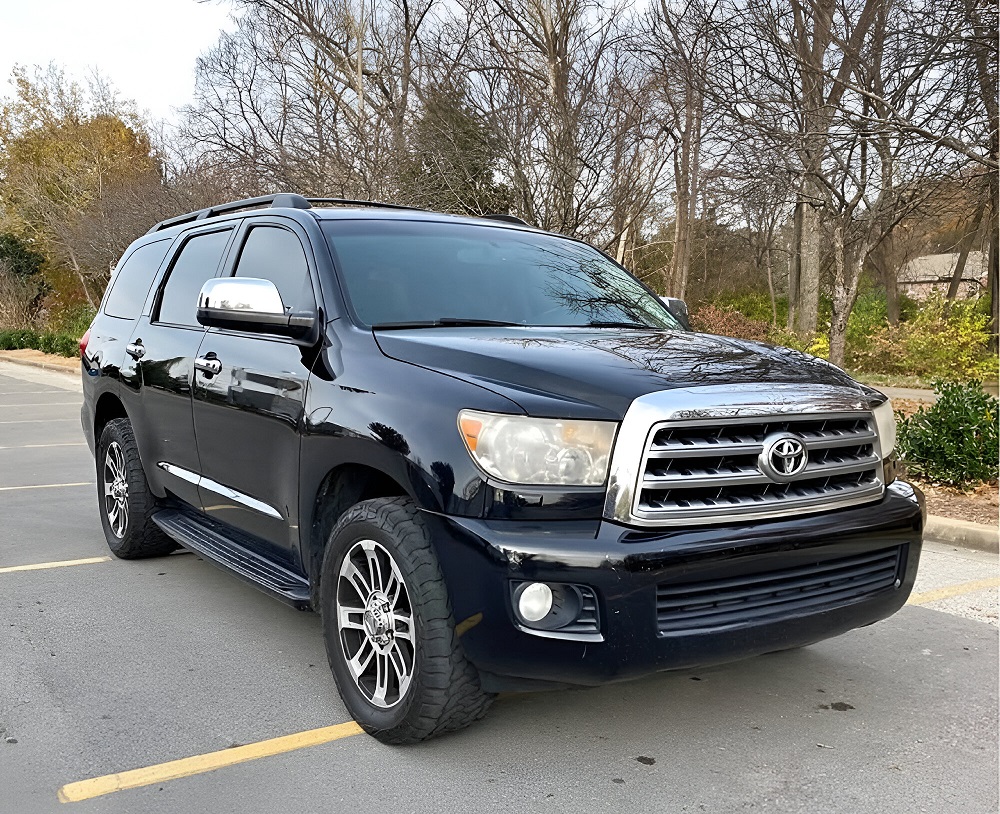
Sequoias ride on a full Tundra frame. That’s no secret. The 5.7L V8 backs it up with a layout that runs cool under load, breathes easy, and shrugs off long heat cycles. These trucks get worked, trailers, heat, bad roads, and don’t complain.
The hybrid’s different. Tighter packaging crams in turbos, intercoolers, narrow oil passages, and an electric motor. One flaw, a bit of casting grit or a drop in oil pressure, and things go sideways fast. It’s not a simple setup, and it hasn’t earned its stripes yet.
The data says they go long, but not all of them
iSeeCars puts Sequoia’s average lifespan at 188,739 miles. About 44% make it past 200,000. The best of the bunch? Nearly 296,509. J.D. Power scores hover around 79/100, solid, but those numbers lean heavy on the V8 years.
Compared to Tahoe, Suburban, and Expedition, the Sequoia’s simpler guts hold up longer. Where the others drop off from transmission slips or glitchy electronics, older Sequoias just keep stacking miles.
What breaks, what doesn’t, and what takes one off the road
The 5.7L and 6-speed auto almost never fold early. Most V8 Sequoias go down from rusted frames, shot suspensions, or a pileup of age-related repairs. It’s rarely the engine that taps out first.
With the new hybrid, that flips. The twin-turbo V6 (V35A-FTS) has already chewed up main bearings from machining debris, on 2023–2025 trucks. That’s not wear. That’s an issue. Until the recall fixes hold, every mile’s a risk.
2. Three generations, three different risks
What actually fails by generation
You don’t need a chart to see the pattern, but here’s what it looks like in plain numbers.
| Generation | Model years | Reliability rank | Key scores / data points | Major high-cost risks |
|---|---|---|---|---|
| Gen 1 | 2001–2007 | Weakest | Often Low/Average by year | Frame rust (ZH8), ball joints, brakes, exhaust failures |
| Gen 2 | 2008–2022 | Strongest | Very High ratings, many 200k–300k trucks | Cam tower leaks, water pumps, suspension sag, underbody rust |
| Gen 3 | 2023–present | High-risk start | Early strong scores, not battle-tested yet | V35A-FTS recall, throttle lag, electrical faults |
First-gens die from the bottom up, frame rot and rusted-out suspension parts. Second-gens hold steady, mostly fighting oil leaks and old rubber. Third-gens? It’s the engine. Plain and simple.
Why the surveys don’t tell the full story
Most owner scores catch new-car headaches, touchscreens, squeaks, dealer visits. They miss the stuff that shuts a truck down at 150,000 miles. That’s why Gen-1 rust doesn’t show up on the charts and Gen-3 hybrids look solid on paper.
Those scores don’t mean much until a truck’s been beaten up and run long. You want the truth? Watch recall filings, engine teardowns, and what shops say, not surveys from the first oil change.
3. First-gen Sequoia (2001–2007) – solid powertrains on borrowed time
Frame rot that writes the expiration date
Early Sequoia frames trapped road salt and moisture, especially up north. By the time rust showed on the surface, boxed sections were already flaking from the inside out. On some 2005–2007 trucks, you could punch a hole through the rail with a hammer. Toyota’s ZH8 program responded with inspections, CRC coating, or full frame swaps, depending on how far the rust had crept.
If that frame wasn’t replaced under the campaign, it’s a risk. Doesn’t matter how clean the engine or trans looks, once rust hits the suspension mounts or rail flanges, that truck’s on borrowed time.
Lower ball joints that could rip out steering
Toyota shipped early Sequoias with front lower ball joints that wore out fast. Once the joint loosened, the knuckle could separate from the control arm under load. Steering vanished instantly. That failure led to a formal recall on both the Sequoia and Tundra.
Plenty of these trucks changed hands without proof the job was done right. If you’re looking at a first-gen, check the VIN and get documents. No verified fix? Walk away.
Wear-and-tear that adds up but won’t shut it down
The rest of the issues follow a familiar old-truck script. Frozen calipers in salt belts. Warped rotors. Exhaust manifolds that crack clean through. O2 sensors that age out early. Suspension sag, electrical glitches, seat wear, it’s all typical past the 15-year mark.
None of these shut the truck down on their own. But if the frame’s soft or the ball joints weren’t replaced, the rest doesn’t matter. The platform’s fate is already sealed.
4. Second-gen Sequoia (2008–2022) – the one that earned its reputation
Why this generation keeps going past 200K
Toyota fixed the early flaws. The second-gen Sequoia rode on a stiffer frame, got stronger suspension hardware, and paired it all with a drivetrain that barely flinched under stress. The 5.7L V8 and 6-speed auto worked in sync, running hot, hauling weight, and stacking miles without drama.
By 2014, the truck had hit its stride. Models from 2014 to 2020 show the cleanest high-mileage records in the class. Many pass 200,000 miles untouched. Plenty clear 300,000 with nothing worse than oil leaks, a water pump, and some rust repair.
The V8 holds firm, but the edges wear
The 5.7L doesn’t run hot, doesn’t sludge, and doesn’t carry any surprise timing failures. Its weak points sit on the perimeter. Cam tower sealant tends to seep with age, dripping oil down the side of the block. Water pumps get noisy or start leaking after 100,000–150,000 miles. Left too long, a failed pump can drag the cooling system with it.
Neither issue is fatal if you’re paying attention. Catch them early, handle them right, and the V8 settles back into its usual rhythm.
Rust creeps back in, and brings labor with it
The second-gen frame’s better, but it’s not immune. Trucks from snowbelt states still pick up rust on suspension bolts, alignment cams, and subframes. Once the threads seize, a simple bushing job can turn into a torch-and-replace affair. It doesn’t show up until you need to replace parts, then it hits fast and costs plenty.
Inside, the wear shows too. Seats flatten on long trips. The cabin feels dated. Gas mileage? Still stuck in the low teens. It won’t stop the truck from running, but it dulls the ride.
What years rise to the top, and which need a closer look
The early 2008–2010 builds still run strong but usually come with worn suspension, tired bushings, and flickering dash lights. The real value sits between 2014 and 2020, where the platform matured and most bugs were ironed out. 2015, 2017–2018, and 2020–2021 stand out as the most trouble-free.
The final V8s, 2021 and 2022, bring the cleanest version of the drivetrain. They’re priced higher but offer the smoothest ownership path if you plan to keep the truck into six-digit mileage.
5. Third-gen Sequoia (2023–present) – modern power, early red flags
A drivetrain with more power, and more pressure
Toyota ditched the V8 for a 3.4L twin-turbo V6 with hybrid assist. On paper, torque goes up, and fuel use drops. But everything under the hood runs hotter and tighter. Turbos, charge pipes, electric motors, and narrow oil galleries all squeeze into the same bay.
This isn’t a refined carryover, it’s a first-run setup dropped into a 6,000 lb SUV. Some do well when everything’s clean. But one bad casting or poor oil flow and the whole unit’s at risk. We’re not looking at slow, predictable wear anymore, this one hits fast when it fails.
The bearing defect that rewrote the scorecard
A batch of V35A-FTS engines left the factory with leftover metal in the block. That debris rode the oil lines and chewed into crank bearings. Some trucks knocked. Others stalled mid-drive or never started again. Toyota’s recall now covers 2023–2025 Sequoias, Tundras, and Lexus variants.
This isn’t a wear issue, it starts on day one. The only fix is a full recall job with verified documentation. Until those repairs show they hold up past 100,000 miles, the third-gen Sequoia stays in the high-risk column.
Teething issues from Toyota’s hybrid shift
Owners report hesitation when merging or accelerating under light throttle. Some cases triggered full technical reviews, pointing to ECU calibration quirks still being worked out. Other complaints include no-starts, battery faults, and bad alternator signals, often tied to tight wiring layouts.
Even the infotainment hasn’t been spared. Toyota issued a recall for the 14-inch screen used in early trucks due to software failures. In this generation, reliability isn’t just about drivetrain strength, it depends on stable code and clean wiring, too.
Interior issues and road trip drawbacks
Hybrid packaging cut into usable space. Cargo behind the third row shrank, and some owners note more body roll and road noise than expected at speed. The ride’s still planted, but the polish isn’t quite there, especially when stacked against smoother, full-gas competitors.
These quirks don’t shut the truck down, but they do drive trade-ins and second thoughts. With the engine recall still fresh, many shoppers are watching the third-gen from a distance.
6. Long-term cost: where Sequoia saves you and where it doesn’t
Why Toyota’s repair numbers look good on paper
Toyota’s 10-year average sits at $5,470 for maintenance and repairs, well below most competitors. The odds of a major fix? Around 15% in that span. That rep was built by decades of simple, solid drivetrains that didn’t surprise anyone.
Second-gen Sequoias fit that mold. You’ll deal with rust, leaks, and the occasional pump, but major repairs stay rare. The hybrid? It may fall in line down the road, but that call’s still premature, especially with a recall this early in the cycle.
What ownership looks like after year 9
For the first 4 years, costs hover in the $350–$400 range, with almost no major repairs. By years 5–8, tires, brakes, and fluids start stacking, pushing totals to $650–$900 per year. Past year 9, it gets heavier.
Between years 9–12, annual costs break $1,000. Suspension parts sag. HVAC motors seize. Steering gear wears out. The engine might be fine at 200,000 miles, but the support systems start cracking, and that’s where the money goes.
Fuel bills, resale, and why some still stick with the V8
Second-gen Sequoias burn fuel fast. That 5.7L V8 drinks like a ¾-ton, especially when towing or commuting long distance. Depreciation is mild, but fuel costs rack up quick.
The new hybrid cuts those fuel bills. But until its track record’s clearer, the savings come with strings. That’s why plenty of buyers still bet on a clean V8 Sequoia with known issues, rather than risk a hybrid drivetrain still proving itself mile by mile.
7. When a Sequoia makes sense and when it doesn’t
The V8-era sweet spot still wins on dependability
If you’re chasing long-term reliability, look at 2014–2020 trucks. The standouts, 2015, 2017–2018, 2020–2021, rack up high miles with few surprises. They suit owners who want a truck that feels the same at 180,000 as it did at 80,000. Repairs tend to fall into known buckets: cam tower seep, water pumps, suspension wear.
Before buying, get under it. Check for rust if it lived in a salt state. Spot leaks. Test the ride. A clean Gen 2, maintained early with decent parts, will run hard for years with nothing worse than gasket jobs and routine service.
First-gens can work, but only with proof
Early trucks only earn a second life if they’ve got ZH8 frame paperwork. That means an official inspection, CRC coating, or a full frame swap. No documentation? No deal. Same goes for the lower ball joint recall, if that’s not confirmed, the truck’s not safe.
Even with both boxes checked, expect rusted brake lines, exhaust rot, clunky bushings, and aging wiring. These aren’t casual buys, they’re weekend rigs for hands-on owners. Get sloppy with the upkeep, and they won’t last.
The new hybrid’s still a question mark
Third-gen Sequoias don’t get a pass just because they’re new. Every one needs VIN-confirmed recall proof, engine and infotainment both. A lot of dealers will say “it’s been done,” but don’t move forward without hard paperwork.
Take a long test drive. Feel for throttle lag. Check idle. Scan for dash warnings. Right now, cautious buyers are holding back until post-repair trucks rack up serious miles. That’s smart. This generation hasn’t earned trust the way the V8s did, and it’s not a risk to take lightly.
Sources & References
- Toyota Sequoia Reliability for 2025 – iSeeCars.com
- Most Reliable Full-Size SUV: Chevrolet Suburban vs Ford …
- Which Vehicles Can Last the Longest? Hint: Most Are Toyotas – Autoweek
- Best Toyota Sequoia Years to Buy Used – Autotrader
- Toyota Engine Failure Recall Expanded: 2022-2024 Tundra, LX, 2024 GX 550
- TOYOTA – NHTSA
- 2026 Toyota Sequoia Reliability, Consumer Ratings & Pricing – J.D. Power
- 2025 Toyota Sequoia Limited 4WD Average Price & Local Incentives – J.D. Power
- 2002 Sequoia just hit 300k Miles tonight!! OH What a feeling!! : r/Toyota
- Warranty Policy Bulletin – NHTSA
- IMPORTANT UPDATE – NHTSA
- Toyota Sequoia Complaints, Problems and TSBs
- Toyota Customer Services – NHTSA
- 2007 TOYOTA Sequoia Recalls, Complaints and Investigations – The Center for Auto Safety
- Toyota Sequoia Reliability Rating by Year – Lasts Over 250,000 Miles – FLEX Automotive
- Common 1st Gen Toyota Sequoia Problems – (2001 to 2007) – 1A Auto
- Top 5 Problems Toyota Sequoia SUV 1st Generation 2001-07 – YouTube
- Best and Worst Years of Toyota Sequoia Revealed – Expert Tips Included!
- Toyota’s 5.7L V8 (3UR-FE) | 3 Common Problems & Reliability – YouTube
- 2010 TOYOTA Tundra Recalls, Complaints and Investigations – The Center for Auto Safety
- 2011 TOYOTA Tundra Recalls, Complaints and Investigations – The Center for Auto Safety
- 5 Reasons You Should NOT BUY A 2nd Gen Sequoia – YouTube
- Tundra/Sequoia V6 Engine Recall – Towing an Oliver
- Toyota Recalls Certain Tundra, Tundra HEV and Sequoia Models – Toyota USA Newsroom
- Toyota Tundra 3.5L I-Force V6 MASSIVE Engine Issues *Heavy Mechanic Review
- Toyota’s 2nd Engine Recall: Is Your Fix Broken? – YouTube
- 2024 Sequoia; Issues? : r/toyotasequoia
- 2023 Toyota Sequoia Won’t Start – RepairPal
- 2023 electrical issue : r/toyotasequoia
- Realistically, how long can a Toyota hybrid vehicle battery last? – Reddit
- Hybrid Battery Lifespan: What Cleveland Owners Should Expect
- I Laughed at These Complaints About the 2024 Toyota Sequoia Before I Bought One – Torque News
- Toyota Sequoia vs Ford Expedition – Car Comparison – Edmunds
- Toyota Maintenance Schedule and Costs – CarEdge
- Toyota Sequoia Maintenance Schedule and Costs – CarEdge
- Toyota Sequoia Costs – CarEdge
- 2024 Toyota Sequoia Cost to Own | Kelley Blue Book
- Check for Recalls: Vehicle, Car Seat, Tire, Equipment – NHTSA