
Watch the rear bumper sag as a trailer settles onto the hitch; the strain says more than any sales sheet. The Equinox started life pulling 3,500 lb with ease. Today’s models? They top out at 1,500 lb and run hotter doing it.
That drop isn’t just about hitch size. The early V6 and 2.0T builds came with real cooling upgrades and calibrated tow modes. The 1.5L trims? They get a basic hitch and a drivetrain that doesn’t like stress. Towing turns into a careful dance with heat, throttle, and stopping distance.
This guide cuts through the sales fluff to show what each generation can safely handle, which factory packages actually mattered, and where the real tow ceiling sits; before the fluid cooks or the brakes fade.
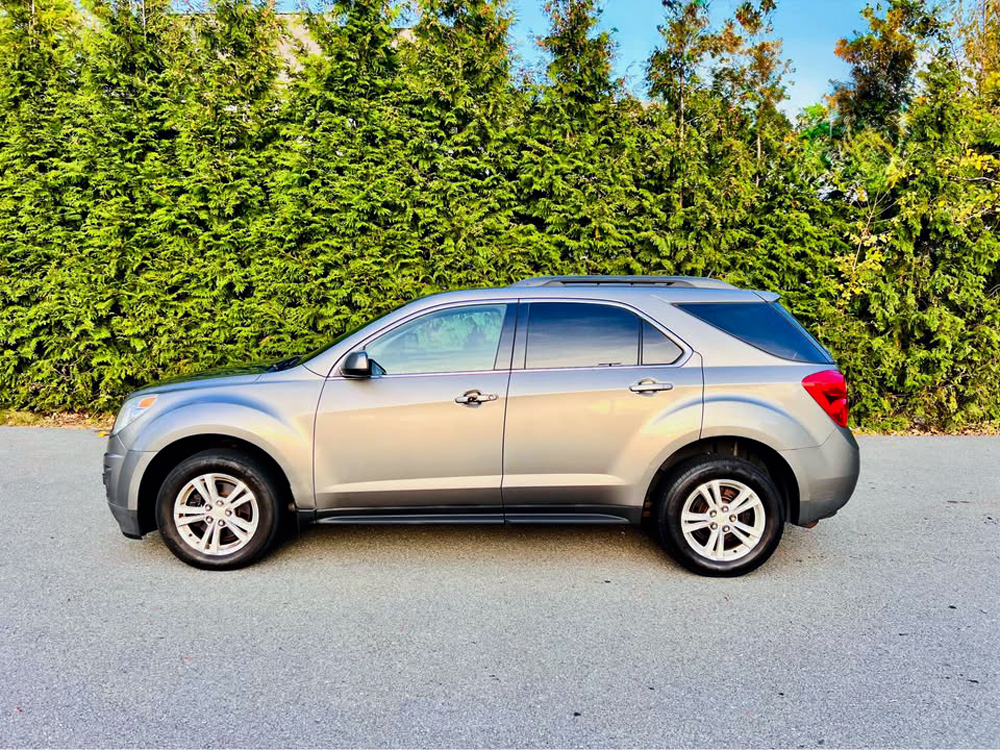
1. Why the Equinox Lost 2,000 Pounds of Tow Muscle
Early Equinox models could yank 3,500 lb when built with the right engine and cooling. Today’s 1.5L versions are capped at 1,500 lb; held back by lower GCWR, tighter thermal margins, and gear ratios built for fuel economy. That shift locked newer models into light-duty duty only.
Two towing eras with a hard split
First-gen, second-gen, and early 2018 2.0T models had the muscle and cooling to tow real weight. They carried higher GCWR ratings, extra radiator capacity, and tow-mode calibrations to manage the load.
From 2019 onward, the 1.5L turbo marked a clean break. These trims were built for mpg, not pulling power, and the total weight window just doesn’t leave room for serious towing.
Drivetrains that decide the ceiling
The V6 and early 2.0T setups earned their 3,500 lb rating because they lived in a GCWR band around 7,600–7,700 lb. That gave headroom for passengers, gear, and a decent trailer; all without cooking the fluids.
By contrast, the 1.5L platform sits around 5,200–5,500 lb GCWR. That smaller envelope forces the 1,500 lb cap. AWD helps, especially when launching on grades, but it’s still boxed in by the drivetrain’s limits.
Tongue weight stops before the rating does
It’s not just total trailer weight. GTW, GCWR, and tongue load all bite down on what’s safe. The ~2,500 lb GCWR gap between a 2.0T and a 1.5L tells the story: modern Equinoxes aren’t built for bulk.
Tongue weight is where things go sideways fast. A 1,500 lb trailer means just 150 lb on the ball. That gets eaten up quickly by even a small utility trailer. Rear sag and floaty steering often show up long before you hit the numbers on paper.
Tow ratings by generation and powertrain
| Years / Gen | Engine | Drivetrain notes | Max GTW | GCWR band | Tow code | Notes |
|---|---|---|---|---|---|---|
| 2019–2025 (Gen 3/4) | 1.5L turbo I4 | AWD often needed for full rating | 1,500 | ~5,200–5,500 | Hitch only | No path above 1,500. |
| 2018 (Gen 3 early) | 2.0L turbo I4 | AWD with factory package | 3,500 | ~7,600–7,700 | V92 / K5L | Short-run high-output. |
| 2010–2017 (Gen 2) | 2.4L / 3.6L V6 | V6 preferred | 3,500 | ~7,000–7,500 | Tow package | Stronger cooling. |
| 2005–2009 (Gen 1) | 3.4L V6 | Needs proper tow equipment | 3,500 | ~6,800–7,200 | Dealer/aftermarket | Early platform. |
2. What the Factory Tow Package Really Meant
The heavy-duty cooling that made early models real haulers
The V92 and K5L packages did more than check a box; they gave the Equinox towing muscle. GM added a dedicated transmission cooler, and many builds got an oil cooler too. That combo kept temps in check on long climbs and hot days.
The rear suspension got beefed up to stay level under tongue load, and the tow-mode calibration locked in smarter shift points under strain. That meant fewer downshifts, steadier engine speeds, and a lot less thermal punishment on the gearbox.
The new hitch kit stops at the edge of the drivetrain
Modern 1.5L models play a different game. The 1,500 lb hitch kit (GM part 86580822) adds a receiver and wiring harness, but that’s it. No transmission cooler, no shift mapping, no GCWR bump.
It preps the rear bumper for a trailer but leaves the drivetrain exposed. Once the load nears the 1,500 lb ceiling, the turbo engine and 6-speed sit near their thermal limits, and no amount of bolt-on upgrades will raise the numbers.
Why there’s no way to upgrade a 1.5L Equinox into a hauler
GM locked the door on retrofits. The 1.5L platform can’t be backdated into a V92 equivalent. The coolers, shift logic, and GCWR certification from earlier builds simply don’t carry over.
Even a Class III hitch rated for 4,500 lb won’t change the VIN-based tow rating. Push it harder and the transmission heat spikes fast, which is why the manual holds the line at 1,500 lb; no matter the hardware you install.
Factory Package Comparison: V92 vs. 1.5L Hitch Kit
| Package / type | Years / engines | Added coolers | Tow/haul mapping | Wiring included | Supported rating | Use case |
|---|---|---|---|---|---|---|
| V92 / K5L heavy cooling | Gen 1–2 V6, early Gen 3 2.0T | Transmission and often oil | Yes | Full harness | 3,500 lb | Real trailer load, long grades |
| 1,500 lb hitch kit 86580822 | 2019–2025 1.5L turbo | None | No | Receiver plus harness | 1,500 lb | Light utility work only |
3. Where Aftermarket Hitches Help, and Where They Don’t
Sticker ratings that overshoot the Equinox’s real limits
Slap a Class III hitch on an Equinox and the label might brag about handling 3,500 to 4,500 lb of trailer and 500+ lb of tongue load. Structurally, that steel’s no slouch; it can take a hit. But the crossover bolted to it isn’t built for that kind of weight.
The cap still comes from the manual, not the hitch. A 1.5L Equinox is locked at 1,500 lb and about 150 lb of tongue weight, no matter what the receiver says. Even the older V6 and 2.0T builds answer to their GCWR and factory tow package; not whatever number the hitch company prints.
Light-duty towing without cooling support builds heat fast
Towing near the 1,500 lb limit on a bare 1.5L setup pushes the transmission hard. Without a dedicated cooler like the old V92 rigs had, fluid temps spike fast; especially on hills, in traffic, or with an enclosed trailer. Once the oil overheats, shifts lag, gears slip, and the transmission starts chewing through its own life.
Plenty of shops draw the line at 750 lb for regular towing on the 1.5L. That covers flat-ground errands with a light trailer. Anything more, especially in heat or on grades, can overheat fluid unless you add an auxiliary cooler and watch your gears like a hawk.
What the tow setup really costs depending on who installs it
Getting a hitch and wiring on an Equinox runs the spectrum from a DIY weekend to a dealer invoice. Handy owners can bolt on a custom-fit receiver and plug-in harness for a few hundred bucks and some driveway time. Chain stores or local shops charge more but save your knees, and your Saturday.
Dealers sit at the top. They use OEM parts, charge a premium for labor, and often tear into interior panels to route wiring cleanly through the vehicle’s control network. You’ll pay for it, but the wiring’s tucked tight and less likely to trip sensors or throw codes on newer, tech-heavy models.
Equinox hitch and wiring install cost by installer type
| Installer type | Hitch parts cost (est.) | Wiring kit cost (est.) | Labor estimate (est.) | Typical total range (est.) | Notes |
|---|---|---|---|---|---|
| DIY, skilled owner | $150 to $400 | $26 to $65+ | $0 | $176 to $465+ | Cheapest option, time and tools required. |
| U-Haul or chain shop | $200 to $500 | Included or extra | $100 to $200 | $300 to $700 | Fast turnaround, standard installs. |
| Local independent shop | $200 to $500 | Included or extra | $150 to $400 | $350 to $900 | Flexible, quality varies by shop. |
| Chevy dealer, OEM kit | High OEM parts pricing | High OEM parts pricing | $300 to $600+ | $500 to $1,300+ | Best OEM integration, highest cost. |
4. Staying Safe with Brakes, Balance, and Suspension Limits
Braking rules that draw a hard line at 1,000 pounds
Chevy draws a clear boundary: any trailer over 1,000 lb needs its own brakes. Stay under that and the Equinox’s factory pads and rotors do fine. Go past it without trailer brakes, and stopping gets sluggish fast; especially in the 1.5L, where long grades and repeated hills soften the pedal and heat up the pads.
Rear sag, front lift, and how tongue weight pushes around a crossover
Aim for 10–15% of the trailer’s weight on the ball. That puts the tongue load at about 150 lb max on a 1,500 lb trailer; right where the Equinox’s rear suspension starts to squat.
Nose-heavy loads shove the rear down and lift weight off the front tires. That reduces steering feel and cornering grip. Shift too far back, and sway sets in. A tongue scale keeps things honest.
Weight distribution hitches may do more harm than good on a unibody
Some Class III hitches list weight distribution ratings up to 4,000 lb. That’s a statement about the hitch, not the unibody shell it bolts to. Spring bars add leverage the Equinox frame was never built to handle.
If the manual doesn’t approve weight distribution systems, stick with balanced loads and let the tongue do the work, not the bars.
Safe towing thresholds and real-world limits
| Limit type | Typical value | Road effect |
|---|---|---|
| Max GTW, 1.5L | 1,500 lb | Modern light-duty ceiling |
| Max GTW, V6 or 2.0T | 3,500 lb | Older heavy-cooled capability |
| Tongue limit, 1.5L | About 150 lb | Controls squat and steering stability |
| No brake threshold | 1,000 lb | Trailer brakes required above this point |
| Tongue percent target | 10–15 percent | Keeps sway controlled and rear load in check |
| GCWR, 1.5L | ~5,200–5,500 lb | Combined weight window |
| GCWR, 2.0T or V6 | ~7,000–7,700 lb | Extra room for 3,500 lb towing |
5. What Each Generation of Equinox Can Actually Tow
What fits the 1.5L without pushing it too far
The 1.5L Equinox pairs well with small utility trailers, a single jet ski, or two dirt bikes; anything in the 800 to 1,400 lb range. A light teardrop camper might squeeze in, but many flirt with the tongue weight limit even when the total load looks okay on paper.
And every extra passenger or bag chips away at your margin. Most setups work best when they stay a few hundred pounds under the 1,500 lb ceiling.
Where the older 3,500 lb builds still hold steady
The V6 and early 2.0T rigs with the full V92 cooling stack handle bigger jobs with confidence. Medium pop-up campers, small enclosed cargo trailers, and single-axle boat haulers fall squarely in their wheelhouse.
Their higher GCWR ratings and dedicated tow mapping expect that kind of load, though tall or wind-catching trailers can still tax them on long grades or open highways.
When the trailer outgrows the crossover
Anything with real mass, full-height campers, ATV haulers, or steel car trailers, goes beyond what the Equinox was built to handle. These loads blow past GCWR, max tongue weight, and braking capacity all at once.
Even the best-equipped 3,500 lb models strain under that kind of burden. When the trailer crosses into the 4,000+ lb zone, it’s time to reach for a Traverse, Tahoe, or a proper half-ton.
Real-world trailer setups that fit or exceed Equinox capabilities
| Trailer type | Loaded weight | 1.5L rating | 3,500 lb rigs | Notes |
|---|---|---|---|---|
| Small utility trailer | 800–1,200 lb | Yes | Yes | Watch tongue load. |
| Single jet ski | 900–1,300 lb | Yes | Yes | Good match with light cargo. |
| Two dirt bikes | 1,000–1,400 lb | Yes, tight | Yes | Brakes needed above 1,000 lb. |
| Small teardrop camper | 1,200–1,800 lb | Marginal | Yes | Many exceed tongue limit. |
| Medium pop-up camper | 2,000–3,000 lb | No | Yes | Best suited to 3,500 lb rigs. |
| Small enclosed trailer | 2,500–3,500 lb | No | Yes, edge | Wind load can push limits. |
| Full-height travel trailer | 3,500–5,000+ lb | No | No | Needs larger tow vehicle. |
| Steel car hauler + vehicle | 4,500–7,000+ lb | No | No | Far beyond GCWR. |
6. Towing Wear and How to Keep the Equinox Alive
Heat is the enemy; watch for early warning signs
Towing puts every Equinox into the severe-duty zone. The transmission works harder, the converter slips more often, and temps climb faster than most drivers realize.
On the 1.5L, the red flags come early: sluggish shifts, mild flare during light throttle, or transmission fluid that darkens long before the monitor calls for service. If engine coolant gets too hot, the AC compressor shuts off; a built-in warning that the cooling system is running near the edge.
Service intervals that match the real-world load
Chevy calls for a transmission fluid change every 45,000 miles on tow-equipped models. That goes for both the 8-speed auto and the CVT. CVT versions also need a filter swap at the same mark.
These aren’t soft recommendations; they reflect what the cooling stack can handle once the truck’s pulling weight. Oil changes still follow the onboard monitor, but heat, hills, and heavy trailers usually trigger shorter intervals all on their own.
Smart add-ons and habits that keep heat in check
Adding a transmission cooler gives the 1.5L some breathing room; especially on long climbs or summer runs. A tongue scale helps avoid nose-heavy loads that squat the rear and stress the converter at launch.
Wider mirrors or backup cameras improve visibility when a trailer blocks the rear view. And smoother driving, gentle throttle, early downshifts, and avoiding wide-open cruise speeds, cuts heat across the board and buys the transmission a longer life.
Where the Equinox Tow Package Really Stands
Strip the numbers down and the picture’s clear. The 1.5L Equinox is a light-duty tow rig. It handles small trailers just fine; as long as you stay under 1,500 lb, keep tongue weight around 150 lb, and add brakes once you pass 1,000 lb. Push past those marks, and you’re working against the drivetrain, not with it.
The older V6 and 2.0T models with the full V92 package still carry real 3,500 lb capability, but only if you follow the same rules: proper cooling, enough GCWR headroom, and a trailer brake system that shares the stop. Skip any piece of that, and you’re not towing within spec.
If the trailer is tall, heavy, or steel-framed, the Equinox isn’t the right tool for the job. Think of it as a commuter with weekend strength, not a foundation for hauling big loads.
Sources & References
- How Much Can A Chevy Equinox Tow – Pinkerton Chevrolet
- 2018-Chevrolet-Trailering-Guide.pdf – Cloudfront.net
- 2021 Chevy Equinox Towing Capacity | John Holt Chevrolet
- 2025 Chevy Equinox Towing Capacity & Engine Specs | Columbia
- An Overview of the 2025 Chevy Equinox – Kemna Auto of Fort Dodge
- 2024 Chevrolet Equinox LT Grand Rapids MI | Near Muskegon Kalamazoo Lansing Michigan 3GNAXKEG9RS114951
- 2021 Chevy Equinox Towing Capacity & Specs – Ken Garff Chevrolet
- CH-CAT-GEN-TRBRND020_2025 Chevrolet Trailering Guide.indd
- Chevy Equinox Towing Capacity Explained | Wheelers Family Auto Group
- 2023 Chevy Trailering Guide
- Determining Maximum Tongue Weight Capacity Of A 2022 Chevy Equinox | etrailer.com
- Service Bulletin INFORMATION – nhtsa
- How to Tell if you Have the Factory Towing Package 2018 Chevrolet Equinox – etrailer.com
- RPO Codes and Descriptions – AWS
- U-Haul Tow Hitch Install vs Dealer tow package. Is one better than the other? – Reddit
- 7 Common Chevy Silverado Transmission Issues & Prevention – Applegate Chevrolet
- Equinox Owner’s Manual – Chevrolet
- Chevrolet Equinox Trailer Hitches – Advance Auto Parts
- Chevrolet 1500-lb.-Capacity Hitch Trailering Package | 86580822
- Chevrolet Equinox Towing Products – Advance Auto Parts
- Expert Answers about Chevrolet Equinox dimensions – etrailer.com
- Fit for Chevrolet Equinox 2018-2025/ GMC Terrain 2018-2024
- Trailer Hitch For 18-25 GMC Terrain 18-26 Equinox Except Diesel w/ Wiring Kit | eBay
- Common Transmission Problems in the Chevrolet Equinox – Chevrolet of Milford Blog
- Chevrolet Equinox Trailer Hitches – Curt Manufacturing
- Hitch Installation Cost Near Me: Real Prices, Options & Guide – Leoguar Ebikes
- Trailer Hitch Installation Cost (2025 Guide) – This Old House
- 5 Things to Know About Weight Distribution Hitches – etrailer.com
- 2016 Chevy Equinox Owner’s Manual – Dealer E Process
- Chevy Equinox Maintenance Schedule – Quality Chevrolet
- Chevy Equinox Maintenance Schedule – Rick Hendrick Chevrolet Norfolk
- Chevy Equinox Maintenance Schedule | Preston Hood Chevrolet, Inc.
- How Often Should You Change the Transmission Fluid in Your Chevy? – Brown Daub Chevrolet Of Nazareth
- How Many Miles Can a Chevy Equinox Last? [2026] – Carr Chevrolet