
A Civic rolls past with a twitch in the front end, and the same question keeps circling back; what’s going on with Honda’s wheels? Two major safety campaigns are in play, both tied to how the car holds its line.
One covers accessory wheels that can loosen until the whole corner walks away. The other targets a steering glitch that locks up just long enough to end a clean recovery.
Different faults, same risk. If the steering sticks mid-bend or a lug works loose, control drops in a blink. This guide drills into which models are flagged, what’s breaking inside the parts, and how to fix the risk before it turns into a crash.
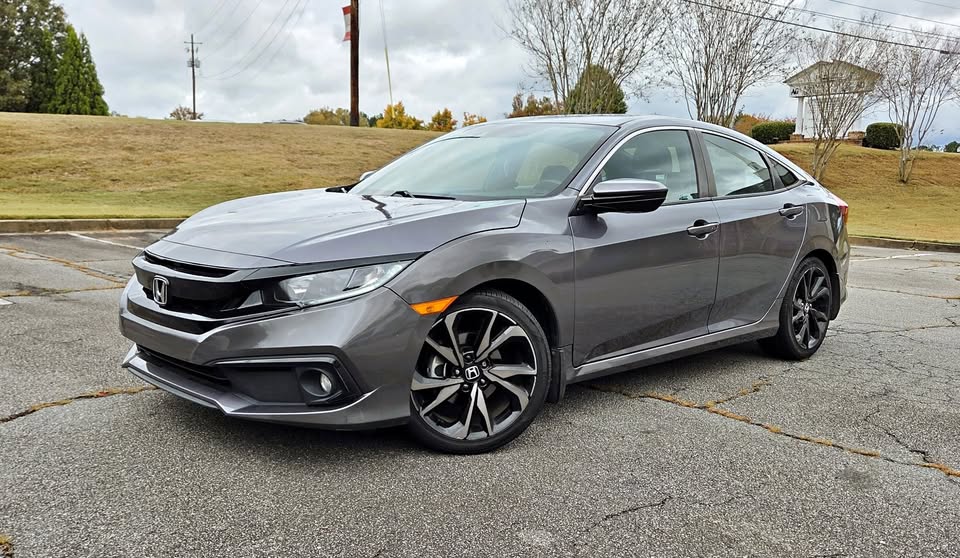
1. What people call the Honda wheel recall
One phrase, two very different failures
When drivers search for the “Honda wheel recall,” they’re usually chasing one of two problems. First is 25E071 / MMZ, the Civic accessory wheel campaign tied to missing steel lug-seat inserts on a batch of 18-inch dealer-installed wheels.
Second is 24V-744, a sticky steering issue caused by internal friction in the EPS gearbox on newer Civics, CR-Vs, HR-Vs, and Integras.
Both problems strike the same corner of the car, but they don’t fail the same way. The Civic wheel flaw can lead to full separation if the aluminum seats give way.
The steering issue binds around center and then snaps loose when pressure builds. Drivers lump them together because the outcome feels the same: loss of control when it matters most.
Recall size vs. real-world risk
The steering recall is the big one. Nearly 1.7 million vehicles are involved in 24V-744, and warranty logs show the bind isn’t rare. The wheel defect? 406,290 Civics were flagged for inspection, but Honda estimates fewer than 3,300 wheels were actually built without steel inserts.
Risk flips the numbers. The steering problem shows up more often but usually just makes the wheel feel jerky or tight mid-lane. The accessory wheel defect is rare, but when it hits, the whole wheel can walk off.
One’s a high-frequency annoyance with sharp control loss. The other is a low-frequency failure with no margin for recovery.
The two “wheel” recalls that get mixed together
| Recall ID (NHTSA / Honda) | System at fault | Approx. U.S. vehicles | Core defect | Driver complaint | Worst-case outcome |
|---|---|---|---|---|---|
| 25E071 / MMZ | Civic accessory wheel | 406,290 inspected | Missing steel lug inserts | Vibration, loose lugs | Wheel detachment, total corner drop |
| 24V-744 / SJS, MJU, QJT, VJV | EPS steering gearbox | 1,693,199 | Excess friction in gear assembly | Sticky or notchy steering | Loss of directional control at speed |
2. Civic accessory wheel flaw lets the lug seats collapse
Which Civics are in the firing line
This campaign targets 2016–2021 Civic sedans and hatchbacks equipped with the 18-inch accessory alloy wheel part number 08W18-TEA-100A. These weren’t factory wheels; they were dealer-installed upgrades, often sold with EX, Touring, and Sport trims.
While 406,290 cars got flagged for checks, only about 3,276 wheels were likely built wrong. But since the supplier couldn’t track exactly where they landed, every candidate car gets pulled into the recall.
The failure started at the factory in Italy. A separation barrier inside a Honda Access Europe plant got removed during an equipment change. That mistake let unfinished wheels, missing the crucial steel lug-seat inserts, get mixed into finished batches. From there, bare-seat wheels shipped out looking complete.
What happens when steel inserts go missing
Proper accessory wheels use steel rings pressed into each lug hole. These rings distribute the clamping force, resist wear, and keep torque readings stable over time.
Skip that insert, and the lug nut bites straight into raw aluminum, a soft metal that warps under stress. The seat distorts, the torque fades, and the wheel starts working loose.
How torque fades until the wheel breaks free
Once the seat starts crushing, a torque wrench doesn’t tell the full story. Clamp load drops even if the nut feels tight. The wheel shifts slightly, the stud holes stretch, and vibration sets in. You might re-torque the lugs, only to find them loose again in a few hundred miles.
If the cycle keeps rolling, the studs can shear or the nuts can back off completely. When that happens, the wheel separates from the car, and the entire corner crashes onto the suspension and brake gear.
Civic models most likely to carry these 18-inch accessory wheels
| Civic family | Years | Common factory wheel sizes | Likelihood of 18″ accessory install |
|---|---|---|---|
| 10th-gen Sedan (LX, EX, Touring) | 2016–2021 | 16–17″ alloys | High on EX and Touring trims |
| 10th-gen Hatchback | 2017–2021 | 16–18″ alloys | Common on Sport and EX |
| Civic Si | 2017–2020 | 18″ standard | Rare (only cosmetic swaps occasionally) |
3. When the Civic wheel flaw shows up before the wheel lets go
Shake at speed, lugs that won’t hold torque
The first warning is subtle, a new front-end shake, usually around 65 mph. As the aluminum lug seats cave in, the wheel shifts slightly on the studs. Over time, you may hear a soft clunk during slow turns or parking moves.
One day the lugs feel tight. Next day? They’re loose again. The load keeps crushing the seat underneath, no matter how many times you re-torque.
Techs usually spot metal smears around the lug holes and wear rings where the nuts have been walking. But none of that’s visible with the wheel mounted; it has to come off to confirm the crush.
What the dealer looks for with the wheel off
First step: check the part number. If it’s 08W18-TEA-100A, it’s the recall wheel. From there, every lug seat gets inspected. If a steel insert is missing or the seat’s crushed or egg-shaped, the wheel gets replaced, no debate.
Next up are the studs and the hub face. If threads show signs of stretch or galling from low clamp load, those parts go too. Any damage to the hub hardware is a sign the wheel’s already been walking under load.
How symptoms track the failure stages
| Driver symptom | Wheel seat condition | Urgency |
|---|---|---|
| Vibration at freeway speeds | Early seat crush, clamp fading | High |
| Lug nuts won’t stay tight | Heavy seat crush, clamp unstable | Critical |
| Clunk or visible wobble | Severe deformation, studs overloaded | Critical |
| Wheel separation | Total loss of clamp and retention | Immediate tow |
4. Sticky steering that makes the front wheels lag behind input
Why a rack defect gets blamed on the wheels
Even though the fault lives inside the steering gearbox, most drivers feel the problem through the front wheels. That’s why recall 24V-744 keeps showing up under “wheel” complaints.
When friction builds up inside the EPS unit, the steering rack sticks near center. Inputs lag, the car drifts wide, and then snaps back when you force it.
This flaw spans a long list of cars, 1,693,199 units, including the 2022–2025 Civic, 2023–2025 CR-V, HR-V, and Integra, plus hybrid and FCEV variants.
Honda claims the failure rate is around 1%, but warranty records and NHTSA filings show thousands of cases and multiple crashes tied to the hesitation.
One shared EPS design across four platforms
Civic, CR-V, HR-V, and Integra all use the same EPS rack. That includes the worm gear, spring tension, and grease system. The trouble starts when heat and moisture cycle through the unit. The worm wheel material swells. Grease film thins. Friction climbs.
Instead of smooth movement, the gears drag tooth-to-tooth. That drag creates a sticky notch around center, the same one that’s been showing up in customer complaints since 2021.
Honda traced it to tooth edge deformation by 2023, tweaked the supplier process, and still saw new failures. NHTSA launched PE23005, escalated to EA23003, and linked crashes to that same bind around center.
How high friction locks the rack mid-lane
The spring load squeezes the gear teeth harder than intended. When the grease film can’t hold and the tooth faces deform, the parts scrape. The steering stays smooth until you hit the bind, usually between 40 and 75 mph. Then it sticks, hesitates, and suddenly breaks free.
That catch-and-snap throws off precision. Drivers report drifting on gentle curves, followed by a jolt when the rack finally moves. Every model shows the same rhythm: hesitation around center, then an abrupt correction.
How sticky steering shows up in real driving
| Steering feel | Condition inside rack | Typical speed |
|---|---|---|
| Smooth effort | Normal preload and lubrication | All speeds |
| Small on-center notch | Local friction spike at tooth contact | 40–75 mph |
| Hesitation then sudden shift | Tooth dragging past a distorted section | Highway bends |
4. How Honda is tightening up both failures
What actually happens in the bay for Civic wheels
The 25E071 / MMZ fix is all hardware. Dealers pull the 18-inch accessory wheels and check each lug seat for pressed-in steel inserts. If a wheel’s missing its insert or the seat’s crushed or distorted, it goes straight to scrap.
Replacement wheels come with verified steel rings already seated. That means torque now holds through hardened steel instead of soft aluminum, restoring real clamp load.
If a tech finds stretched studs or chewed-up hub threads, common signs of low clamping force, those parts get swapped too, all under the recall. No charge. NHTSA flagged this as a safety defect, not wear and tear.
How Honda fixed the rack so it doesn’t bind again
For 24V-744, the job’s inside the EPS. Techs open the rack and install a new worm gear spring that eases the preload and resets how tightly the gear teeth mesh.
They also apply or redistribute high-grade grease where the worm and wheel make contact, rebuilding the layer that should keep the parts gliding instead of grinding.
On the factory line, Honda went deeper. As of August 30, 2024, racks now ship with tighter tooth-angle specs, revised spring loads, and an updated grease process.
The changes cut sliding force and stabilize the film that separates the gear teeth. That fix is baked into late 2025 Civics, CR-Vs, HR-Vs, and Integras, no patch needed.
What the recall fixes vs. what the factory changed
| Recall | In-dealer repair on existing vehicles | Change built into new production racks and wheels |
|---|---|---|
| 25E071 (wheel) | Inspect accessory wheels, replace bad wheels and hubs | Supplier controls restored, unfinished wheels blocked from shipping |
| 24V-744 (EPS) | Install revised worm gear spring, service grease in rack | New tooth geometry, spring spec, and mesh-zone grease application |
5. What owners can do when something feels off
VIN checks that skip the guesswork
Every recall rides on one number: the 17-digit VIN. Run it through NHTSA’s recall lookup, Honda’s MyGarage, or the SaferCar app, and you’ll see if the vehicle’s affected, not just the model, but that exact car.
A 2020 Civic, for example, might be totally clean or flagged, depending on whether it ever got the dealer-installed accessory wheels. A newer Civic or CR-V might carry the EPS issue, or not. The VIN’s the only way to know.
These lookups also tell you if the recall’s open or already fixed. Just be aware that brand-new campaigns can take a few weeks to fully activate in the system. Rechecking isn’t unusual if the timing’s tight.
How to book the visit and keep it free
When you call or book online, use the recall numbers. Say 25E071 for Civic wheel inspections or 24V-744 for sticky steering on Civic, CR-V, HR-V, or Integra. Once the dealer has your VIN, they can check status instantly and let you know if parts are ready.
These are safety recalls, so they’re covered 100%. No charge for labor or parts. Doesn’t matter how many miles are on the car. Doesn’t matter if the warranty’s expired. If your VIN is in, you’re covered. Some dealers may ask about symptoms, but once the car’s flagged, the repair is mandatory.
Getting reimbursed for fixes done before the recall
Plenty of owners already paid out of pocket before these recalls dropped, wheels, hubs, racks, you name it. If the part or problem lines up with 25E071 or 24V-744, Honda will reimburse under its NHTSA-filed plans.
Paperwork matters here. Keep the invoice, dates, part numbers, and labor lines. If the claim draws a straight line to the recalled part, the odds of payout go way up. No paperwork? No shot.
Owner steps based on model, symptoms, and next move
| Vehicle and current symptom | Recall to discuss | First move once the VIN result shows up |
|---|---|---|
| 2016–2021 Civic with 18″ accessory wheels, no issues | 25E071 (MMZ) | Schedule wheel inspection |
| Civic shaking or loosening lugs on one corner | 25E071 (MMZ) | Stop long trips, book inspection fast |
| 2022–2025 Civic or 2023–2025 CR-V or HR-V with bind | 24V-744 | Schedule EPS repair |
| Acura Integra with on-center notchiness | 24V-744 | Same path as Civic and CR-V |
6. What these failures say about Honda’s wheel-end and steering gear
One isolated defect, one exposed system
The Civic wheel issue came from a single breakdown, an assembly slip at Honda Access Europe. A missing barrier let unfinished 08W18-TEA-100A wheels sneak into finished stock.
Only a few thousand out of 406,290 inspected vehicles are expected to carry the defect, and the whole mess stays confined to one accessory part.
The EPS recall’s on a different scale. 1.69 million vehicles share the same steering rack, and all showed sensitivity to spring preload, tooth geometry, and grease degradation.
Complaints piled up early. NHTSA launched a formal probe. And by late 2024, warranty claims had crossed 10,328. This wasn’t a one-off flaw; it was a core design stretched across too many models.
New shakes or steering binds deserve zero delay
If the front end starts shaking, a lug keeps loosening, or the wheel catches near center, don’t wait. One problem can shear studs. The other can break steering feel in the middle of a high-speed bend. Both sit squarely in the safety zone and both can flip from minor to dangerous fast.
Any sudden change in road feel, whether it’s a wobble at speed or steering hesitation, warrants a VIN check and immediate dealer visit. These recalls proved how quickly small faults near the wheels can snowball into major hazards.
Where Honda drivers stand now
These two recalls split at the root but end up in the same place, compromised control at the front axle. One targeted a small batch of Civic accessory wheels that could lose torque and walk off the hub.
The other exposed a rack flaw baked into the EPS system across over 1.6 million late-model Civics, CR-Vs, HR-Vs, and Integras, after a wave of real-world complaints and confirmed crashes.
Both faults hit the same critical link, the parts that keep the wheels pointed where you aim. If anything feels off, don’t push the car. Act fast: run the VIN and book the recall before a warning becomes a crash report.
Sources & References
- Part 573 Safety Recall Report 25E071 | NHTSA
- National Highway Traffic Safety Administration Brand/Model/Part Number
- Part 573 Safety Recall Report 24V-744 | NHTSA
- Honda Recalls Almost 1.7 Million Vehicles for Potential Steering Defect
- American Honda Recalls Approximately 406,000 2016-2021 MY Honda Civics in the U.S. to Inspect and Replace Improperly Manufactured Accessory Wheels
- 2024 Honda Sticky Steering Recall Affects 1.7 Million Vehicles – The Lemon Law Experts
- Honda Sticky Steering EPS Recall: Safety and Affected Models | Lemon Law Help
- Resources Related to Investigations and Recalls – NHTSA
- Check for Recalls: Vehicle, Car Seat, Tire, Equipment – NHTSA
- Vehicle Safety Resources – NHTSA
- Check Honda Recalls: VIN Lookup Tool – FX Caprara Honda
- Honda recalls 1.7 million U.S. vehicles over steering risk – CBS News
- Honda Recalls Over 400,000 Civic Alloy Wheels for Manufacturing Error – autoevolution
- Honda recalling more than 400,000 vehicles because wheels can come off
- American Honda Recalls Approximately 406,000 2016-2021 MY Honda Civics in the U.S. to Inspect and Replace Improperly Manufactured Accessory Wheels : r/CivicX – Reddit
- Honda recalls more than 406,000 vehicles because wheels can come off – CBS News
- Honda recalls more than 400,000 Civic vehicles due to a wheel detachment risk
- Recall Search – MyGarage – Honda
- Honda Recalls Civic Accessory Wheels for Detachment – Cars.com