
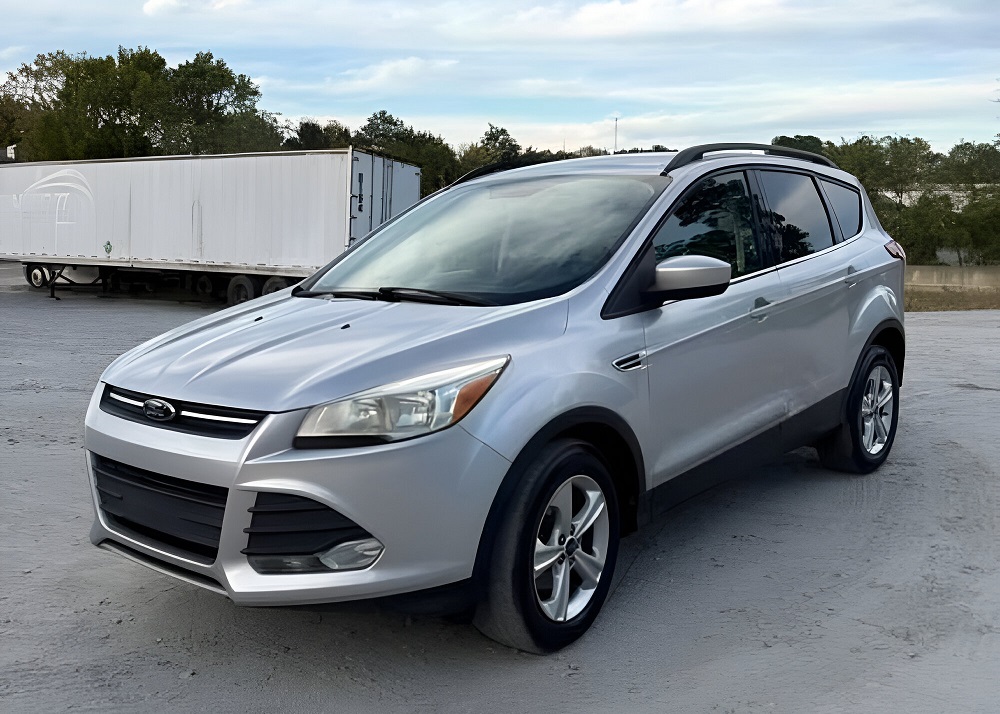
Hear the latch click, catch the chime anyway, and feel that instant doubt settle in. A cracked pawl spring tab can fake a solid close, sit quiet for a few miles, then let the door slip off the striker. That tiny tab turned routine shut cycles into a real safety threat on 2013–2015 Escapes.
Watch the scale grow. Ford replaced millions of latches under 16S30, then had to audit its own repairs with 20S30 when too many cars were marked fixed but still carried the weak hardware. The job now is making sure every Escape actually runs the revised latch, not the one that quits under normal use.
1. How a Small Latch Defect Turned Into a Wide-Reach Escape Problem
A tiny spring tab that quits under real use
Open the latch and the weak point sits right where the pawl relies on a thin spring tab to stay locked on the striker. That tab flexes every time the door cycles, taking hundreds of small hits a week.
Enough cycles and the metal starts to crack until the pawl can no longer stay anchored. Once the tab gives way, the latch either refuses to catch at all or grabs just enough to fool the eye while staying one good bump from releasing.
The same latch design stamped across half the lineup
Ford didn’t isolate this layout to the Escape. The same internal architecture showed up in Focus, C-MAX, Mustang, MKC, and Transit Connect during the 2012–2016 run.
Each platform used the latch in different duty cycles, but the part’s weak spot stayed consistent across them. That shared design turned a single tab flaw into a multi-model headache that hit high-volume commuter cars, family SUVs, and delivery vans.
A defect that spread across borders and into regulator crosshairs
Regulators counted more than 2.38 million affected units once Canada and Mexico were added. They logged crash and injury reports tied to doors letting go at speed, which pushed the matter from a parts shortage nuisance into a high-severity event.
A latch that can’t guarantee a closed door under load breaks one of the basic safety expectations in any vehicle, and the size of the affected fleet amplified the urgency.
Platforms that shared the defective latch family
| Platform | Model years in scope | Body style(s) using latch design | Notes on usage severity |
|---|---|---|---|
| Escape | 2013–2015 | Compact SUV | Heavy door-cycle use in family duty |
| Focus | 2012–2015 | Sedan/Hatch | High commuter volume |
| C-MAX | 2013–2015 | Hybrid MPV | Fleet and rideshare use in some cities |
| Mustang | 2015 | Coupe/Convertible | Lower door count, same latch family |
| MKC | 2015 | Compact luxury SUV | Premium variant of shared latch |
| Transit Connect | 2014–2016 | Van | High door-cycle count in delivery duty |
2. Where the Escape Door Latch Actually Gives Up
Inside the latch where the weak tab hides
Crack the latch open and the failure point sits right on the small spring tab that pulls the pawl into place. That tab flexes every time the door cycles, taking thousands of bends that slowly chew into the metal.
Once cracks start, the pawl no longer wraps the striker with full bite. Some latches stop grabbing entirely, while others give a convincing click but hold with almost no reserve.
Fatigue takes over long before weather does
The break follows a clean fatigue pattern. Stress stays low, but repetition eats the tab until it snaps or folds out of position.
Escapes in warm, dry states show the same fracture shape as units that lived through winters and road salt, so climate hardly moves the needle here. Ford’s other latch recalls tied to freezing or corrosion never showed this uniform spread.
How the failing latch shows itself in daily use
Drivers notice doors bouncing off the striker, dome lights that won’t go dark, or a chime that hits every bump. Some latches still fake a good close, only to let go when the body twists on a driveway or a pothole lands hard. That false-secure feel turned this from an inconvenience into a full safety case.
Symptom versus actual latch condition
| What shows up in daily use | Likely latch condition | Risk level while driving |
|---|---|---|
| Door will not latch and must be held shut | Pawl tab likely fractured, no engagement | Very high |
| Door seems closed but “door ajar” light stays on | Partial engagement, pawl not fully seated | High |
| Random door chime over bumps | Intermittent latch hold, tab cracking | High |
| Door swings open over bumps or driveways | Pawl tab fracture with false closed feel | Critical |
3. Safety Recall 16S30 and the Push to Replace Every Escape Latch
How 16S30 pulled every suspect latch off the Escape
Ford and NHTSA tagged 16S30 to every 2013–2015 Escape carrying the weak spring-tab latch. The campaign called for all four side doors to receive the revised hardware, not just the door that acted up.
The updated latch used stronger geometry and a sturdier spring tab to survive the door-cycle load that broke the original part. Dealers had to ground any Escape with a door that wouldn’t stay shut, since the failure meant zero retention margin.
Delays, shortages, and the long wait for revised parts
The scale of the recall strained supply from day one. Ford sent interim letters first, confirming the hazard but telling owners to wait until new latches hit distribution. Final notices followed once parts lined up in volume.
Some Escapes ran for months with known bad latches because the updated stock hadn’t cleared production bottlenecks yet. The backlog exposed how hard it is to replace millions of identical components across multiple platforms.
What dealers were mandated to do during 16S30
Dealers had a clear set of steps: confirm the VIN, check each door for latch function, replace every latch with the improved part, then log the job in Ford’s systems so the vehicle could be marked complete.
Any Escape showing signs of a loose or bouncing door had to be held until the repair was done. Accurate reporting mattered, since that database entry would later decide whether the vehicle passed or failed the verification campaign in 2020.
16S30 at a glance for 2013–2015 Escape
| Item | What it meant for an Escape owner |
|---|---|
| Campaign ID | Ford 16S30 / NHTSA 16V643 |
| Fix type | Replacement of all four side-door latches with improved parts |
| Cost to owner | $0 (parts and labor covered) |
| Main risk addressed | Door opening while driving due to spring-tab fracture |
| Notice timing | Interim in late 2016, final notices once parts were available |
4. Safety Recall 20S30 and the Push to Verify the Fix Was Real
Why Ford had to chase its earlier repair work
By 2020, Ford confirmed that a chunk of vehicles marked complete under earlier latch campaigns still carried the original weak hardware. Some dealers never installed the revised latches at all. Others used parts that didn’t meet the updated build window.
The gap forced Ford and NHTSA to issue 20S30, a second campaign aimed at checking the work from 2016 and cleaning up every Escape that slipped through the cracks.
How 20S30 checks the latch without guesswork
The 20S30 process leans on date codes stamped into each latch. Those codes show the production window and tell a tech whether the part is the improved design or the older version prone to spring-tab failure.
Every door has to be inspected, and any latch built outside the approved window gets replaced. The structure removes uncertainty and ties each Escape’s repair history to a physical mark on the part.
Owner self-checks and when the dealer takes over
Ford rolled out a self-inspection option during the early COVID period, letting owners read the codes and enter them online. It was a quick filter to flag Escapes that were clearly safe or clearly not.
Anything ambiguous, damaged, or paired with latch trouble still had to go to a dealer for a hands-on inspection and possible replacement. The campaign didn’t rely on owner judgment; it simply widened the net to speed the verification effort.
16S30 versus 20S30 for 2013–2015 Escape
| Campaign | Primary goal | What happens at the door latch | What owners must confirm now |
|---|---|---|---|
| 16S30 | Replace defective latch design | All four latches swapped for improved parts | That the job was originally done |
| 20S30 | Verify 16S30 was completed | Date codes inspected, latches re-done if needed | That 20S30 shows complete |
5. How the Escape Latch Recall Exposed Ford’s Broader Door-Latch Trouble
Fatigue failures versus climate-driven latch problems
The Escape latch issue carried the same fracture pattern across warm states, cold states, and everything between. That uniform spread separated it from Ford’s other latch trouble spots.
F-150 trucks suffered frozen latches from water intrusion and low temperatures under 19N06, and older Focus models corroded their latch internals in high-salt regions under 05S27.
Those failures depended on weather. The Escape failure depended on a tab that couldn’t survive normal cycling. The contrast made the defect stand out inside Ford’s own recall history.
Regulatory pressure that followed the cracked-tab pattern
A single weak part across multiple platforms drew hard attention from regulators. They saw a common supplier footprint, repeated spring-tab fractures, and incomplete recall execution years after the first campaign.
That combination triggered closer oversight on latch quality, traceability, and reporting. The issue didn’t stay boxed inside the Escape line. It pushed regulators to scrutinize how Ford validated shared components and how dealers documented high-volume safety repairs.
6. What Escape Owners Must Check Before Calling It Safe
Confirming recall status without wasting time
Pull the VIN and run it through Ford’s recall page and NHTSA’s tool. If 16S30 or 20S30 appear, the work isn’t done. If NHTSA shows a clean record, you still need Ford’s system or a dealer printout to prove 20S30 was logged, since earlier miscoded repairs can mask the real status.
Any Escape with a bouncing door, a warning that won’t clear, or a latch that refuses to grab should be treated as unsafe. That vehicle belongs at a Ford bay or on a flatbed.
What the dealer must actually do
A proper visit starts with a VIN pull and a campaign check. Techs open each door, run the latch through its travel, and read the date codes stamped into the housing. Any latch outside the approved range gets replaced with the revised part.
Safety-recall work carries no cost, and a door that won’t stay shut should trigger a safety hold until the new hardware is in. Towing is often arranged when the defect makes the vehicle unsafe to drive.
Reimbursement for earlier latch repairs
If an owner paid for a latch job before the recall letter arrived, the receipts can go through Ford’s reimbursement process. The dealer needs proof of the earlier work, then submits the claim once the recall repair is complete and logged.
Large latch failures on other Ford lines have led to separate legal actions, so owners who experienced doors opening in motion can monitor those developments as well.
Escape owner action map by situation
| Your situation right now | What you should do next | Who pays |
|---|---|---|
| 2013–2015 Escape, never checked VIN for recalls | Run VIN on Ford and NHTSA sites, ask dealer about 16S30/20S30 | Ford |
| VIN shows 16S30 done but no record of 20S30 | Book dealer visit for latch date-code inspection | Ford |
| Door will not latch or opens while driving | Stop driving, arrange tow to dealer, demand recall inspection | Ford |
| Paid for latch repair before official recall notice | Bring receipts, ask dealer to process reimbursement claim | Ford |
7. What the Latch Crisis Reveals About Long-Term Escape Safety
How one stamped tab forced a full reset inside Ford
A single spring tab buried in the latch pushed Ford into a global parts campaign, a second audit-style recall, and tighter oversight on how dealers report safety work.
The scale exposed how fast a shared component can ripple across an entire lineup when the weak spot repeats from Focus to Escape to Transit Connect.
Ford had to tighten supplier checks and traceability because the defect didn’t stay isolated; it moved through the portfolio with the same fracture pattern.
The mindset Escape owners need going forward
Any odd latch behavior now carries weight. A stubborn warning light, a door that shifts on a bump, or a close that doesn’t feel confident should be treated as a safety issue, not an inconvenience.
Buyers looking at used 2013–2015 Escapes should expect proof that 16S30 and 20S30 were completed with the correct latch generation. A door that stays shut under load is as critical to occupant protection as brakes or airbags, and this recall history makes that clear.
Where the Escape Door-Latch Story Lands Now
The cracked-tab failure exposed how a small part can undermine a core safety function and force a manufacturer into years of audits, replacements, and verification checks. Owners of 2013–2015 Escapes need clear proof that both 16S30 and 20S30 were completed with the correct latch generation, not just logged as done. Any hint of a weak latch demands immediate attention, because a door that won’t hold under real load turns a routine drive into a high-risk situation.
Sources & References
- Ford Expands Door Latch Safety Recall in North America – nhtsa
- Door Latch Recall | David McDavid Ford
- U.S. Ford and Lincoln Dealers SUBJECT: Advance Notice – Safety Recall 20S30 Certain 2011-2014 Fiesta, 2013 – nhtsa
- Recall – Ford
- Ford | NHTSA
- Door Latch Recall: HOW TO ESCAPE – YouTube
- Transport Canada Recall – 2017183 – FORD
- Ford Recalls Focus, C-Max, Escape, Mustang, Transit, and Lincoln MKC Models | AutoTrader.ca
- A Mechanic’s Story: Basic Component Fatigue – Reliability Center Inc.
- U.S. Ford and Lincoln Dealers SUBJECT: Customer Satisfaction Program 19N06 Certain 2018-2019 Model Year – nhtsa
- 2013 Ford Escape. Door closes but doesn’t latch. : r/MechanicAdvice – Reddit
- SAFETY RECALL 05S27 – REAR DOOR LATCH CORROSION – REQUESTS FOR RECALL SERVICE ACTION – BUILT ON OR BEFORE 1/26/2005 TSB 16-0067 – nhtsa
- Ford Recalls | Ford Owner Support
- All U.S. Ford and Lincoln Dealers SUBJECT: DEMONSTRATION / DELIVERY HOLD – Safety Recall 16S30 – About
- U.S. Ford and Lincoln Dealers SUBJECT: DEMONSTRATION / DELIVERY HOLD – Safety Recall 16S30 – Supplement – nhtsa
- Ford Latch Recall 20S30 – How to do your own inspection – YouTube
- Check for Recalls: Vehicle, Car Seat, Tire, Equipment – NHTSA
- 2013 Escape driver’s side door actuator/latch issue : r/Ford – Reddit
- Is There a Recall on My Ford Vehicle?
- Recall – Ford
- Can I get a refund for a recall repair on my vehicle? – Ford
- Is my Ford vehicle included in a Customer Satisfaction Program?
- Ford Door Latch Claim Form Instructions