
Fire up a 2025 Bronco, and the screen might stay dark. No speed. No seatbelt chime. No warnings. Just a quiet cluster while the engine settles into idle.
That blank glass triggered Recall 25V788 / 25SC3, covering nearly 230,000 Broncos and Bronco Sports, even though only 12 drivers filed warranty claims. One missed startup sequence is all it takes to violate federal safety rules.
The fault traces back to a microsecond timing slip in the cluster’s sleep code. If a CAN wake signal hits during the wrong slice of that cycle, the module throws a memory fault. Next ignition? Black screen. Not cosmetic. Not optional. A straight-up compliance failure.
This guide breaks down how the bug hits, which builds carry it, what Ford’s OTA or dealer flash actually does, and why a dead dash goes far beyond minor annoyance.
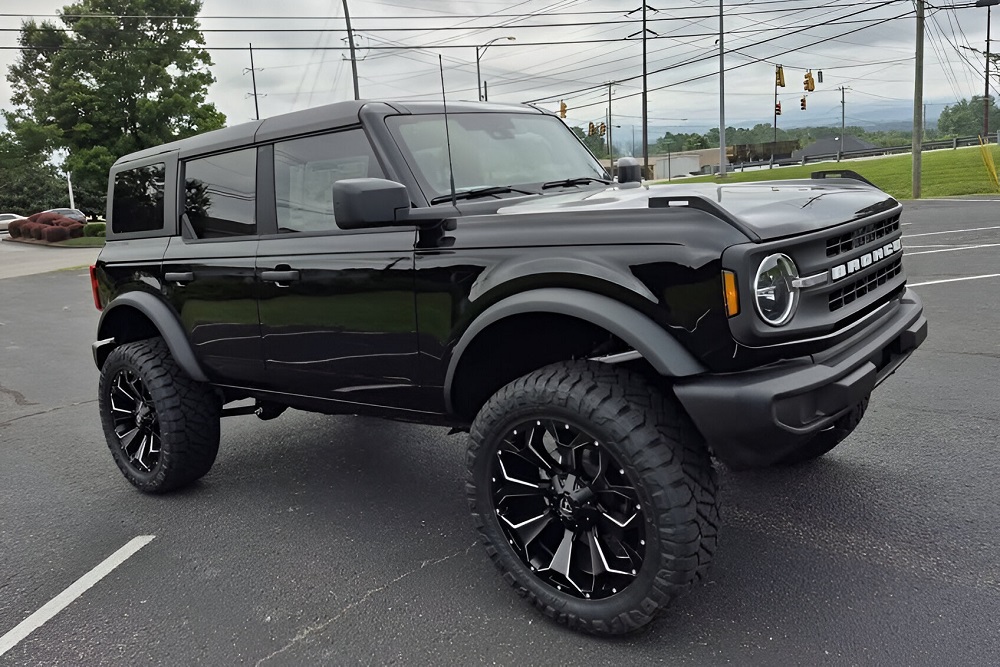
1. What Recall 25V788 Really Covers on Bronco Clusters
The defect behind the black glass
The cluster boots up, but the screen stays black. Ford’s IPC software can stall during wake-up, leaving the panel blank for the entire key cycle. No speed. No warnings. No gauges. One failed startup is enough to break federal safety rules, which is why this glitch triggered a full safety recall.
The Issue is a narrow timing fault buried in the cluster’s shutdown logic. If a CAN wake signal hits mid-routine, the module throws a memory error that blocks the next boot. The screen might come back on the next start, but that bad timing window doesn’t close until the software’s updated.
Scope and ID codes behind the Bronco cluster recall
| Field | Value |
|---|---|
| NHTSA campaign number | 25V788 |
| Ford internal code | 25SC3 |
| Affected component | Instrument Panel Cluster software |
| Vehicle lines | Bronco, Bronco Sport |
| Model years | 2025–2026 |
| Total U.S. units involved | 229,609 |
The Broncos caught in the recall net
On Bronco Sport, the faulty software runs in roughly 128,607 units built from March 7, 2024 through November 3, 2025. Trims and options don’t change anything. If the truck has that IPC file, it’s in.
The same story plays out on full-size Broncos. About 101,002 were built with the same code between May 31, 2024 and November 3, 2025. Doesn’t matter if it’s a two-door base or a loaded four-door Wildtrak, if the cluster matches, it qualifies.
There’s no clean VIN range. Build dates help narrow it down, but owners need a lookup through Ford or NHTSA to confirm for sure.
Why NHTSA treated the fault as high-risk
Only 12 warranty claims were logged, but every one took out critical driver alerts in a single key cycle. Speed, brake, airbag, and engine warnings all vanished the moment the screen stayed black.
That’s all NHTSA needed. Even with low incident counts, the safety system itself went dark. If a truck can start with no cluster, it’s in violation. That’s why all 229,609 affected Broncos fall under Recall 25V788 / 25SC3, and why Ford must update every one.
2. How the Bronco Cluster Trips Over Its Own Startup
What the IPC’s trying to do in the first second
The cluster doesn’t wait. It wakes as soon as the CAN traffic flows, grabbing speed, RPM, temp, and fault data, then loads the graphics fast enough to meet federal timing rules. Cold starts, hot restarts, short stops, it runs that routine over and over, every single drive.
Like any CAN-connected ECU, the IPC drops into low-power mode after shutdown. It listens for network wake-up, then snaps back to full processing. If that sequence gets interrupted, the rest of the truck may look fine, but the screen stays dark. That moment, the first second, is what regulators care about.
Where the timing fault hits and why the glass stays dark
The failure hides in the cluster’s shutdown code. During sleep-entry, if a wake signal lands mid-process, it corrupts the memory state. That prevents the next boot from completing, even though the screen powers on, nothing gets drawn.
Restarting the vehicle usually resets the fault. But the timing window stays open. Fast shutdowns, quick key cycles, or mid-message power-offs can trigger the same freeze again. There’s no fallback display, if the IPC hangs, the panel shows nothing for that entire drive.
How a timing fault in sleep mode blanks the cluster
| Step | System state | Event | Result inside IPC ECU | What driver sees |
|---|---|---|---|---|
| 1 | IPC entering sleep | Normal shutdown | Sleep-entry code running | Cluster powers down |
| 2 | Sleep-entry in progress | CAN wake-up interrupt arrives | Timing collision in software | No visible symptom yet |
| 3 | Fault handling | Memory protection fault raised | Boot logic blocked | Next start = black screen |
| 4 | Driver restarts vehicle | No successful IPC boot | Module stays hung | No speed, no indicators |
What this reveals about Ford’s software testing limits
This recall shows how easy it is to miss a rare timing collision in bench testing. Lab setups fire off clean cycles, but real trucks shut down hot, cold, mid-message, or mid-reboot. That’s where the bugs hide.
The IPC software had no strong recovery path once a memory fault fired. When it tripped, the module just froze until a fresh shutdown cleared it. These digital clusters now carry as much weight as an engine ECU, and this failure shows how little room they have for mistakes.
3. Which Broncos Carry the Faulty Cluster Software
Bronco Sport builds caught in the software window
Bronco Sport picked up the faulty IPC code early. From March 7, 2024 through November 3, 2025, every build ran the same flawed calibration. Roughly 128,607 units fall in that span, covering all trims. Once the code entered production, every digital cluster built with it carried the same startup risk.
Ford cut the bad file on November 3, 2025. That marks the hard stop. Model years, trims, and option groups don’t matter. Production order isn’t clean either, only a VIN check confirms what’s running in the dash.
Bronco builds that shipped with the same faulty branch
The full-size Bronco got hit later. Trucks built between May 31, 2024 and November 3, 2025 used the same IPC software, making them just as vulnerable to the blank-screen failure. About 101,002 Broncos are affected, from base models to fully loaded off-road builds.
Trim level, screen size, and packages don’t decide eligibility. The only thing that matters is whether the cluster runs that timing-sensitive code. If it does, it qualifies under Recall 25V788 / 25SC3.
Production windows and recall volume by model
| Model | Model years | Approx. units involved | Faulty software in use from | Software corrected from |
|---|---|---|---|---|
| Bronco Sport | 2025–2026 | 128,607 | March 7, 2024 | November 3, 2025 |
| Bronco | 2025–2026 | 101,002 | May 31, 2024 | November 3, 2025 |
| Total | – | 229,609 | – | – |
How owners, buyers, and shops confirm a VIN
NHTSA’s lookup tool or Ford’s recall portal gives a clear answer, if 25V788 / 25SC3 is still open, the truck’s running old software. Ford dealers check the same status through OASIS and log the reflash once complete.
Used buyers and fleet managers rely on that VIN confirmation. Build dates aren’t proof. A truck built near the cutoff or sold across states might still show the recall as open. Only the VIN ties the vehicle to Ford’s service record and clears up the story.
4. How Bronco Owners Get This Recall Fixed
What the new cluster software changes
The updated IPC calibration tightens the sleep-wake sequence, closing the timing gap that let the wake signal crash mid-shutdown. The shutdown routine now clears fully before wake-up traffic hits, avoiding the memory fault that bricked the screen.
It also hardens fault handling. If a glitch does land, the cluster now restarts clean instead of freezing with a black display. Ford expects the software fix to hold on healthy modules. Cluster swaps are reserved for rare cases, units damaged by earlier faults, failed flashes, or unrelated issues.
When the fix shows up as an over-the-air update
Many Broncos will get this fix through the modem. The IPC file downloads over cellular or Wi-Fi, then prompts the driver through the center screen or FordPass app. Some updates run quietly while the truck’s parked. Others need a full key-off window where the system stays shut.
Trucks with poor signal or inactive FordPass profiles may never trigger the update. In those cases, the job shifts to a dealer. A tech connects through the diagnostic port, powers the system with a charger, and loads the new software directly. Either way, the result’s the same: a cluster that boots without the timing trap.
Update paths and options for Bronco owners
| Scenario | Update route | Owner steps | Pros | Cons / risks |
|---|---|---|---|---|
| Good connectivity, app in use | OTA at home/work | Enable updates, park with signal, follow prompts | No dealer visit, minimal downtime | Depends on signal and app use |
| Poor connectivity or failed OTA | Dealer flash | Book recall visit, leave vehicle for reprogramming | Tech verifies and logs completion | Time at dealer, scheduling |
| Cluster already blank, unsafe drive | Tow to dealer | Call dealer or Ford, request recall tow | Highest safety margin, documented | Inconvenient, requires towing |
Records to keep once the cluster is patched
After the reflash, the repair order should show Recall 25V788 / 25SC3, along with a line noting the IPC software update. That record protects owners in warranty disputes, resale talks, or lemon-law cases. Screenshots from FordPass or NHTSA’s tracker help lock in the paper trail.
Newly flashed clusters deserve a shakeout run. A few cold starts over several days with normal use is enough to confirm that the display wakes clean, no lag, no flicker, no fault. Later software updates may stack on top of this one, but once this fix is installed, the original timing bug won’t come back.
5. How Dangerous a Dead Cluster Gets Once the Truck Starts Moving
Why a Dead Cluster Cuts Off Critical Safety Data
When the cluster goes dark, it takes everything with it, speed, brake alerts, airbag lights, engine warnings, and temp readings. The truck still drives, but the driver’s flying blind. No regulated cues. No legal speed readout. And no way to catch a fault in time.
That gap gets worse in real-world conditions. Night driving, heavy traffic, bad weather, every scenario that depends on quick, clear information now runs with a blank screen. It’s more than inconvenient. It’s a safety system gone silent.
How the failure behaves at startup versus mid-drive
Most failures hit during startup. The IPC never boots, the screen stays dead, and the vehicle runs without a display. Ford warns against driving in that state, even a short trip without speed or warnings puts the driver at elevated crash risk.
Mid-drive failures are less common, but more dangerous. When the cluster dies in motion, the driver loses all cues with no warning. Best-case response: hazards on, steady steering, pull off safely. Staying on the road without display backup means rolling blind on critical systems like ABS, brake pressure, or overheating.
Risk severity based on failure type
| Situation | Cluster state | Recommended driver response | Relative risk level |
|---|---|---|---|
| Black on startup, engine runs | No display | Do not drive, arrange repair or tow | High |
| Goes black mid-drive on highway | Fails while moving | Hazards, controlled pull-over, stop use | Very high |
| Intermittent blanking, then normal | Comes and goes | Treat as active defect, schedule recall fix ASAP | High |
| No failures after recall completed | Normal operation | Monitor and keep software current | Low |
Why towing, trails, and fleet use raise the stakes
The cluster matters most when the truck’s working hard or far from help. Long tows, steep climbs, soft sand, all push the powertrain near its limits. A dead panel erases the temperature and system alerts needed to protect engine and brake components during high-load use.
Fleet and rental operators face legal exposure too. Running a truck with an open safety recall tied to speed and warning systems becomes a liability risk if there’s a crash. A blank screen might look like a fluke, but in court, it’s treated as failure to maintain required safety information.
6. Where This Recall Sits in Bronco’s Software Hit List
The earlier cluster recall that only messed with the lights
Ford had cluster trouble before. Campaign 24V140 / 24C01 went after IPC lighting bugs that made indicators too dim or completely missing. The screen still worked, but some key warnings either faded into the background or never lit at all.
That fix was another software update, but this one only touched how alerts were lit, not whether the entire display came up. In contrast, 25V788 targets a full system blackout where nothing boots. It’s a tier higher in risk, and far more disruptive when it strikes.
The separate power-loss recall that hit Bronco Sport and Maverick
Bronco Sport also got hit under Recall 24S24, but for a different reason. That campaign targeted logic flaws in the BCM and PCM, specifically, how they handled weak 12-volt battery conditions. When voltage dropped low, the system could stall or fail to restart because the modules didn’t respond properly.
That one hit 2021–2024 Bronco Sports and 2022–2023 Mavericks. Not the newer 2025–2026 models caught in the current cluster recall. But it still landed as a safety issue because it involved sudden power loss. Ford patched it with a software update focused on power management and cold-start behavior, not the IPC.
Recent software recalls tied to Bronco and Bronco Sport
| Campaign | Module affected | Symptom for driver | Safety risk focus |
|---|---|---|---|
| 24V140 / 24C01 | IPC illumination | Indicators or gauges hard to read or unlit | Warnings unreadable |
| 24S24 | BCM / PCM (power control) | Stall or no restart under low 12V conditions | Loss of motive power |
| 25V788 / 25SC3 | IPC boot / core software | Entire cluster blank at startup | No speed and no warning lamps |
What this string of recalls says about Ford’s code discipline
Three back-to-back campaigns all point to weak spots in Ford’s software pipeline. These weren’t hardware flaws, they were timing bugs, voltage faults, and display errors buried in ECU logic. In each case, the code cracked under startup or low-power stress, pushing straight into safety territory.
For Bronco and Bronco Sport buyers, this changes the checklist. Software version now matters as much as axle ratio or tow rating. Ford’s hardware still holds up, but without strong code discipline, even solid trucks can run vulnerable. A clean recall history and updated software now rank right next to service records and rust checks when shopping used.
7. The owner options when the cluster can go dark
First moves current Bronco owners should lock in
Start with a VIN check, build dates alone don’t cut it. Ford’s recall portal and NHTSA’s lookup tool confirm whether 25V788 / 25SC3 is still open, completed, or waiting for an OTA push. If the truck shows as involved, keep wireless updates enabled and park where the signal’s strong so the IPC file can land.
If the screen goes black, snap a photo or video. Capture the ignition state, odometer, and blank panel. That record can back warranty claims and clear up disputes about when the fault actually hit.
When the cluster already failed and won’t wake
If the cluster stays black on startup, park it. No speed and no warning lights mean the truck’s not safe to drive, even around the block. Ford covers recall towing through dealers or its customer service line, and that handoff gives the shop a clean chain of documentation.
If the screen flickers back on later, it doesn’t mean the truck’s fixed. The Issue lives in timing, not hardware, and the risk stays until the software is updated. Intermittent startups are still recall-worthy.
How buyers and sellers should handle the recall window
Anyone shopping for a 2025–2026 Bronco or Bronco Sport should expect proof the recall’s closed. A screenshot from Ford’s recall checker or a service record showing 25V788 / 25SC3 is the cleanest way to confirm it. Don’t assume “late 2025” means exempt, VIN order and build dates don’t follow a straight line.
Sellers should close the recall before listing. It avoids price drops, clears up buyer doubts, and shows well on Carfax or a dealer VIN scan. A Bronco with clean IPC software will move faster, and likely for more, than one still waiting on a fix.
8. Where Broncos stand after the cluster software fix
A narrow timing bug the new code should bury
This wasn’t a hardware flaw. The glitch lived in a sliver of timing, only when a wake signal hit mid-sleep did it scramble the cluster’s memory state. The new calibration closes that gap. It reshuffles the shutdown and startup sequence so the fault never lands in the same spot twice.
If a hiccup still happens, the module now restarts clean. No more dead glass, no more stuck boots. That fix targets the same failure chain NHTSA logged, and once the patch is in, that bug’s buried.
Making software upkeep part of Bronco ownership
Broncos now run like smartphones, they need regular updates to stay sharp. OTA pushes and dealer flashes keep IPC, BCM, PCM, and SYNC code current. That means recall patches, performance tweaks, and stability fixes all ride the same pipeline.
Before a long haul, or right after buying used, a VIN check and update scan matter as much as tire pressure or oil life. Trucks that show 25V788 / 25SC3 closed sit in a lower risk bracket. Keeping the software current is part of owning this platform, not just a nice-to-have.
How the recall reshapes Bronco’s story and resale
Pulling nearly 230,000 trucks for a startup bug puts a dent in Ford’s software record. When you stack 24V140, 24S24, and now 25V788, a pattern shows up: the trouble isn’t in the hardware, it’s in the timing, startup, and power logic buried deep in the code.
Still, Ford caught it, moved fast, and offered a clean fix. If completion rates stay high, the long-term sting fades.
On the used lot, a Bronco with confirmed recall repairs and current software holds more weight. Buyers and lenders look hard at safety flags, and a blank cluster tied to lost speed and warnings sits near the top. Trucks with the IPC update on file are simply easier to sell, finance, and trust.
What this recall really changes for Bronco owners
The bug came from a blink-of-an-eye timing fault, but it triggered a recall covering nearly 230,000 Broncos and Bronco Sports. The new calibration seals that crack. It rewires the cluster’s shutdown and wake logic, forcing a clean restart instead of leaving the screen dead. Once patched, the startup blackout that drove 25V788 / 25SC3 should stay gone.
What’s changed is the upkeep. Bronco owners now manage software the same way they handle tires and oil. OTA updates, dealer flashes, and regular VIN checks are part of the job. These digital modules can knock out speed, warnings, or even power, even when the hardware’s solid underneath.
A Bronco that’s patched and logged shows up stronger on every front, daily driving, road trips, resale, and warranty talks. One that’s still unpatched turns the key with risk every time. In a system where a split-second delay can black out the dash, the safest Bronco is the one running the fix and showing it in writing.
Sources & References
- Recall: Instrument Cluster Panel Display Failure (NHTSA Recall 25V788) — 2025-2026 Bronco Sport
- National Highway Traffic Safety Administration Makes/Models/Model Years
- Ford recalls nearly 230,000 U.S. vehicles over instrument panel display failure – CBS News
- This is just great. I’ve had mine less than 6 months. Could be worse, I suppose. : r/BroncoSport – Reddit
- 2025-2026 Bronco and Bronco Sport Instrument Panel Failure – California Lemon Law blog
- Ford Recalls 229,000-Plus Broncos, Bronco Sports for Instrument Panel Failure – Cars.com
- Recall: Instrument Cluster Panel Display Failure (NHTSA Recall 25V788) — 2025-2026 Bronco | Bronco6G
- Part 573 Safety Recall Report 25V788 | NHTSA
- Recall – Ford
- Software Error Triggers Recall of Nearly 230,000 Ford Bronco SUVs
- Is There a Recall on My Ford Vehicle?
- 24S24: Bronco Sport (2021-2024) and Maverick (2022-2023) Loss of Power Recall – Ford
- Ford Recalls | Ford Owner Support
- How do I schedule software updates for my Ford?
- Ford OTA Software Update Guide | Moon Township Ford
- Software Update FAQs – Ford
- Software Updates for SYNC® 4 & 4A | Ford Owner Support