
Chase a darker stance in traffic. Watch chrome disappear into black. See the Durango look lower and meaner. That’s where the Blacktop Package lands.
The Durango already has muscle SUV shape. Long hood. Wide stance. Rear-drive roots. Blacktop sharpens that with black wheels, dark badges, and blackout trim.
Trim choice changes everything. SXT gets a full visual upgrade. GT hits the sweet spot with V6 cost. HEMI models finally look as aggressive as they sound.
Pick the wrong setup and it’s just styling. Pick the right one and the whole build makes sense.
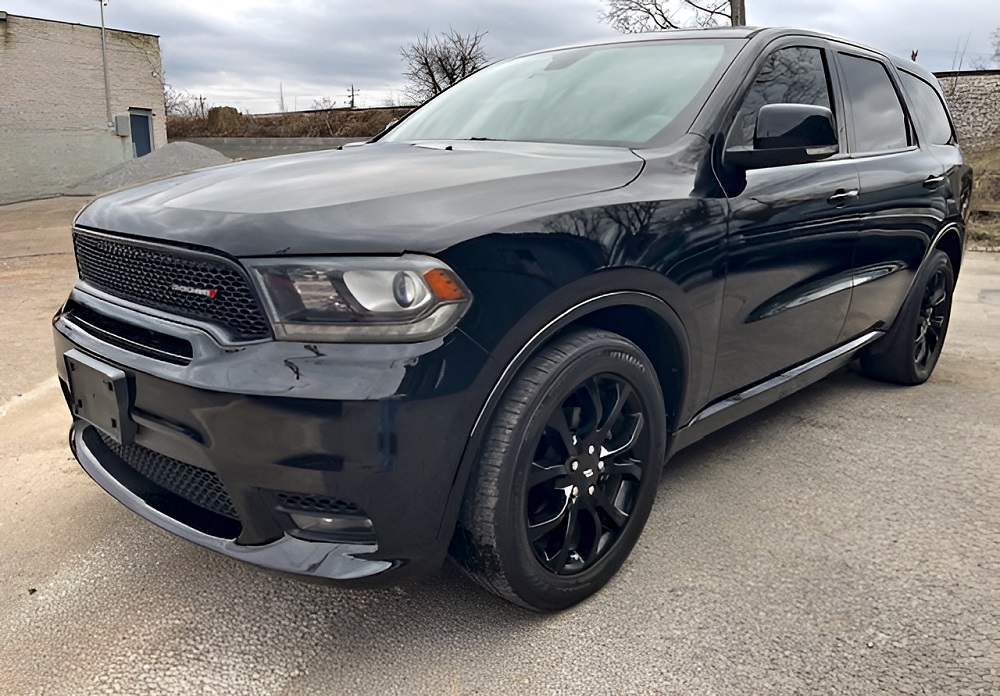
1. Blacktop sharpens the Durango’s shape by removing chrome and loading visual weight low
The package leans on contrast, not new hardware
Start with what actually changes. Blacktop swaps bright trim for gloss-black parts across the body. That includes grille surround, badges, mirror caps, roof rails, and exhaust tips. Wheel design shifts to 20×8-inch Black Noise alloys with 265/50R20 tires.
None of this touches the engine, suspension, or drivetrain. The chassis stays the same across SXT, GT, and R/T. No added horsepower. No revised spring rates. No brake upgrade in the base package.
That’s why buyers expecting a performance jump feel nothing behind the wheel. The package leaves the Durango at 295 hp V6 or 360 hp HEMI output, unchanged.
Black trim changes how the body reads at speed and at rest
Chrome reflects light and breaks up panels. Black trim absorbs light and hides edges. That shifts attention to the hood, fenders, and wheel arches.
The Durango already carries a long hood and wide stance. Blacktop deepens that effect by removing visual distractions. Wheels look larger. Sidewalls look thinner. The body appears lower even though ride height stays fixed.
This is why the same SUV can look fleet-spec or aggressive based on trim alone. The physical dimensions never change. The perception does.
Dodge uses Blacktop to keep the Durango aligned with Charger and Challenger identity
Dodge keeps one visual language across its lineup. Dark wheels, blackout trim, and minimal chrome define that look. Blacktop pushes the Durango into that same lane.
That matters as the platform ages. The current Durango rides on architecture dating back over a decade. Visual updates carry the weight that new hardware would normally handle.
Internal data shows a large share of GT and R/T buyers choosing blackout-style packages. The package stays because demand stays strong, not because the hardware evolved.
| Theme | Standard Durango | Blacktop Durango |
|---|---|---|
| Exterior trim | Chrome or bright accents | Gloss-black trim throughout |
| Wheels | Silver or satin finishes | Black Noise dark alloys |
| Visual stance | Neutral, family-oriented | Lower, wider visual presence |
| Brand alignment | Generic SUV identity | Matches Dodge muscle styling |
2. Trim choice decides whether Blacktop transforms the truck or barely moves the needle
SXT Blacktop removes the base model of its fleet look in one shot
Start with the base truck. SXT runs 18-inch silver wheels, chrome grille trim, and lighter badges. It reads like a rental spec even when new.
Blacktop flips that fast. You get 20-inch Black Noise wheels, 265/50R20 tires, gloss-black grille, black mirror caps, and dark badging. Headlamp bezels turn black, and lower fascias go body color.
That combination removes every bright surface on the truck. The visual jump is bigger here than on any other trim. The hardware change is limited to wheels and tires, with no change to brake size or suspension geometry.
GT Blacktop hits the balance between look, cost, and daily use
GT already carries sport trim cues. LED lighting, larger screens, and upgraded interior trim come standard. Blacktop layers on darker wheels, black rails, black badging, and Eclipse Black exhaust tips.
Power stays with the 3.6L Pentastar V6 at 295 hp and 260 lb-ft. That keeps fuel use lower than the V8 while holding the same visual stance. Tire spec stays in the 265/50R20 range with all-season Pirelli compounds.
This is where most buyers land. Insurance, fuel, and maintenance stay closer to midsize SUV norms. The engine still runs a single oil cooler circuit and standard cooling package, not the upgraded systems used on HEMI models.
HEMI Blacktop aligns the visuals with real output and thermal load
Move into R/T and HEMI trims. The truck already carries the 5.7L V8 with 360 hp and 390 lb-ft. It also runs heavier cooling, larger radiator capacity, and higher thermal load under tow.
Blacktop here focuses on finishing the exterior. HEMI fender badges turn black. Exhaust tips go dark. Wheels stay 20-inch, with optional upgrades when paired with performance packages.
The driving character stays unchanged by Blacktop alone. No change to brake rotor size, caliper spec, or damping. The engine still runs cylinder deactivation and holds a tow rating up to 7,400 lbs without Tow N Go.
| Trim | Blacktop impact level | Key change focus | Mechanical change |
|---|---|---|---|
| SXT | High | Wheels, trim, full blackout | Wheels only |
| GT | Medium | Visual upgrade, exhaust finish | None |
| R/T HEMI | Low to medium | Visual match to V8 hardware | None |
3. Blacktop Redline pulls the Durango closer to SRT territory with real cabin and aero changes
Redline brings SRT hardware into the cabin, not just darker trim
Step inside a Redline truck and the shift hits fast. Standard cloth or basic leather disappears. You get SRT Performance seats with leather and Alcantara, plus red stitching across seats, doors, and console.
Seat bolsters tighten up compared to base GT trim. That changes how the driver sits under load and during hard braking. The cabin also adds laser-etched “Crypto Sweep” inlays, replacing plain plastic trim with textured panels.
Second row switches to Fold & Tumble captain’s chairs on many builds. That drops seating from 7 to 6. The change trades capacity for access and a more premium second-row layout.
Exterior changes add real aero pieces, not just dark accents
Redline adds front and rear SRT spoilers. These are not flat cosmetic lips. They extend airflow control at highway speed and change how air leaves the rear hatch.
Rear spoiler length increases compared to standard Blacktop. That reduces lift at higher speeds and stabilizes the rear under load. The front piece manages airflow around the bumper and wheel openings.
Badging stays blacked out, including HEMI fender logos on V8 trims. Optional red tracer decals mark the package, usually on the liftgate and fenders.
On 2026 R/T, Redline pricing depends on trim stacking and package bundles
Dodge expands Redline across higher trims with clear price tiers. On GT Plus and GT Premium, the package lands around $3,495 MSRP. That price reflects interior upgrades, SRT-style seating, and added aero parts.
R/T builds vary more. Base Redline pricing stays close to Blacktop upgrade levels, but bundled configurations can push total package cost higher. Some builds tied to premium groups and performance options approach $5,990.
Wheel spec stays at 20×8 Black Noise alloys unless paired with Tow N Go. Engine output holds at 360 hp and 390 lb-ft, with no change to factory cooling or exhaust routing.
4. Tow N Go turns Blacktop from visual upgrade into real hardware with heat capacity and braking to match
Tow N Go adds the missing mechanical backbone the Blacktop look suggests
Start with what actually changes under the truck. Tow N Go adds Brembo brakes, larger rotors, and performance pads. Front calipers jump to multi-piston units, built to handle repeated high-heat stops.
Suspension shifts to adaptive damping. The system adjusts in real time across Track, Sport, Snow, and Tow modes. Rear axle upgrades to an electronic limited-slip differential, changing how torque transfers under load.
Cooling capacity rises to match towing stress. The system supports up to 8,700 lbs towing, pushing coolant and transmission temps higher than standard R/T duty cycles.
The package changes how the Durango behaves under load, not just how it looks
Brake feel tightens under repeated stops. Fade resistance improves due to larger thermal mass and airflow through bigger rotors. Steering calibration shifts with SRT-tuned steering maps, giving quicker response at speed.
Exhaust routing changes with a performance-tuned system, reducing backpressure and raising sound output. Drive modes alter shift points, throttle mapping, and AWD bias depending on load.
Wheel spec expands to handle this hardware. You get access to 20×10-inch forged “Lights Out” wheels, built to clear larger brakes and wider tires.
Pairing Tow N Go with Blacktop finally aligns visual stance with real capability
Blacktop alone keeps standard brake sizing and axle setup. Add Tow N Go and the truck gains real stopping power and traction hardware. The visual mass from dark wheels now matches the mechanical load capacity.
Track width increases with wider wheel setup. Tire footprint grows, improving grip during towing and aggressive driving. Brake rotor diameter and pad surface area increase to handle repeated heat cycles.
Without Tow N Go, Blacktop trucks retain standard braking limits and thermal thresholds. Rotor size, caliper design, and axle behavior stay in base R/T spec, rated below the 8,700 lb towing ceiling.
5. GT Blacktop sells the look without dragging fuel, heat, and maintenance costs into V8 territory
The Pentastar V6 keeps load, heat, and fuel use within predictable limits
GT runs the 3.6L Pentastar V6 at 295 hp and 260 lb-ft. Cooling remains simpler than HEMI setups, with no added oil or radiator capacity. Thermal load stays lower in daily driving and light towing.
EPA ratings for AWD models sit at 17 mpg city, 24 mpg highway, 20 mpg combined. Real-world combined numbers can reach 21 to 23 mpg on steady highway runs. Mixed driving and stop-and-go traffic pull that closer to 18 to 20 mpg.
Service stays straightforward. Oil capacity and spark plug count remain lower than V8 models, with no added cooling circuits or performance hardware increasing maintenance load.
HEMI models carry higher thermal load, fuel burn, and wear under the same use
Step into the 5.7L HEMI V8 and everything runs hotter. Combustion load rises, and the engine pushes more heat into coolant and oil systems. Cylinder deactivation helps at cruise but does not reduce peak load.
Fuel consumption drops fast under city driving. Real-world combined numbers often sit between 14 and 17 mpg. Oil volume increases, and spark plug count doubles to 16 plugs.
Maintenance costs follow that load. A full plug service can run $300 to $600 depending on labor rates. Oil changes require more capacity and higher cost per service.
GT Blacktop holds the same visual footprint without adding mechanical stress
Wheel and tire specs match across GT Blacktop and many R/T setups. You still get 20-inch wheels and 265-width tires, keeping the same road presence. Ride height and suspension geometry remain unchanged.
No added brake hardware means pad and rotor wear stay within standard ranges. No adaptive damping or eLSD adds complexity or future repair cost. The drivetrain remains simpler and easier to service long term.
This setup keeps operating cost stable while delivering the same exterior stance, with no jump in fuel burn or heat load beyond V6 limits.
6. Blacktop keeps the Durango useful, but Redline changes how the cabin actually works
Cargo space and towing stay intact across Blacktop builds
The body shell does not change with Blacktop. Interior dimensions hold steady across trims. You still get up to 85.1 cubic feet of cargo space with rear seats folded.
Third-row space remains tight but usable. Legroom sits around 33.5 inches, enough for short trips. Second-row clearance stays near 38.6 inches with standard bench setups.
Towing capacity depends on engine and package, not Blacktop. V6 models cap lower, while R/T pushes higher when properly equipped. Base Blacktop builds do not raise tow limits beyond factory ratings.
Redline shifts second-row layout and changes passenger use
Redline introduces second-row captain’s chairs on many builds. That cuts seating from 7 to 6. The center pass-through improves third-row access but removes a seating position.
Seat design changes as well. SRT Performance seats add thicker bolsters and suede surfaces. That improves grip during cornering but reduces slide-in comfort for daily use.
Cabin materials upgrade across touch points. Door panels, console, and dash surfaces use more leather wrap. Interior trim adds textured inlays instead of smooth plastic panels.
Interior changes affect real-world use more than the exterior package suggests
Captain’s chairs change how families load passengers. Fewer seats means less flexibility for larger groups. The change favors comfort and access over total capacity.
Seat bolsters can feel tight on longer drives. Heavier padding traps more heat, especially in warmer climates without active ventilation. Entry and exit require more movement compared to flat base seats.
Cargo flexibility remains strong with fold-and-tumble systems. Third-row access improves with the center aisle, but total seating never exceeds 6 once captain’s chairs are installed.
7. Gloss black looks sharp on day one, then shows every mistake you make washing it
Swirl marks show up fast on Blacktop surfaces
Gloss-black trim highlights every micro-scratch. Wash it wrong once and you’ll see circular marks under sunlight. Those marks come from dirt dragging across the clear coat.
Automatic car washes speed this up. Brushes trap grit and grind it into the surface. Black mirror caps, pillars, and wheels take the worst damage first.
Paint correction to fix this runs $300 to $800 depending on severity. Deep defects can require multi-stage polishing and clear coat leveling.
Heat and UV exposure wear black trim faster than lighter finishes
Black surfaces absorb more heat. Exterior temps can exceed 150°F under direct sun in summer conditions. That heat cycles plastics and clear coat daily.
Mirror caps and roof rails expand and contract with each cycle. Over time, that leads to fading, haze, and micro-cracking. UV exposure accelerates breakdown of surface resins.
Wheels also trap brake dust and heat. Dark finishes show etching faster when dust sits too long. Chemical cleaners become necessary to prevent permanent staining.
Proper care requires different tools, not just more effort
Basic wash habits will damage the finish. You need separate wash media, clean rinse water, and soft drying towels. Contaminants must be removed without dragging across paint.
Protective coatings help reduce damage. Ceramic coatings add a sacrificial layer that resists UV and makes cleaning easier. Entry-level coatings cost $500 to $1,500, with professional installs higher.
Neglect shows quickly on Blacktop trucks. Within 12 months, untreated gloss-black trim often develops visible swirl patterns and surface haze.
8. Picking the right Blacktop build comes down to how much hardware sits under the look
Standard Blacktop fits buyers who want the stance without adding system complexity
Start with the base package. You get dark wheels, blackout trim, and no added mechanical systems. That keeps service simple and long-term repair risk low.
No adaptive dampers, no eLSD, no upgraded brake system. Fewer components mean fewer failure points as mileage climbs past 80,000 miles. Brake jobs stay standard, usually $400 to $900 per axle depending on parts.
This setup suits daily driving with minimal added cost. The truck keeps factory cooling, standard axle behavior, and baseline electrical load across all trims.
Redline fits buyers who want the SRT feel without stepping into SRT service cost
Redline adds interior hardware and aero parts that change daily use. Seats, trim, and spoilers bring the cabin closer to SRT builds. No engine or drivetrain upgrades come with it.
Service costs stay tied to the base trim. V6 models keep lower oil capacity and fewer spark plugs. HEMI models still carry higher service costs tied to 16 plugs and larger oil volume.
The package adds price without adding drivetrain stress. Entry cost lands around $3,495 MSRP, with no change to power output or tow rating.
Blacktop with Tow N Go fits buyers who expect real performance under load
This setup brings full hardware upgrades. Brembo brakes, adaptive damping, and eLSD change how the truck behaves under stress. Heat management, braking, and traction all improve.
Maintenance cost rises with that hardware. Brake service can exceed $1,200 per axle due to performance pads and larger rotors. Adaptive dampers cost more to replace once out of warranty.
This build carries the highest capability in the lineup short of SRT. Tow rating reaches 8,700 lbs, with full system load handled by upgraded cooling, braking, and axle hardware.
Sources & References
- 2024 Dodge Durango Price, Value, Ratings & Reviews | Kelley Blue …
- 2026 Dodge Durango Trim Levels: Find Your Perfect SUV
- What is the best Dodge Durango package?
- Dodge Durango GT Packages and Options
- Dodge Durango – Frequently Asked Questions, Answered
- 2026 Dodge Durango Price, Reviews, Pictures & More | Kelley Blue Book
- 2024 Dodge Durango Specs | Crown Chrysler Dodge Jeep RAM FIAT
- Understanding the Dodge SUVs | Fresno CDJR
- 2026 Dodge Durango Design – Over 50 Seating Configurations Available
- Dodge Durango / Durango SRT Fact Sheet
- Dodge Announces 2026 Dodge Durango Lineup, Expands HEMI®-powered Durango R/T Choices With New Blacktop Redline Package, Refreshed Wheel Lineup | DodgeGarage
- 2024 Dodge Durango Trim Levels Overview
- Compare Midsize SUVs | 2025 Dodge Durango vs 2024 vs 2023 vs 2022
- 2024 Dodge Durango Overview – Sid Dillon
- 2024 D0DGE DURANGO
- 2024 Dodge Durango Trim Comparison | Lima Dodge Dealership
- 2024 Dodge Durango Configurations: SRT Hellcat, Citadel, and more – Bud Clary Auburn CDJR
- 2025 Dodge Durango Package Options CT
- Exploring the Differences Between Dodge Durango Models: Which Trim Is Best for Your Family?
- 2022 Dodge Durango / Durango SRT ® Fact Sheet | DodgeGarage
- 2025 Dodge Durango Specs, Features, & Configurations
- 2026 Dodge Durango R/T Debuts New Blacktop Redline Package | Hoover Chrysler Jeep Dodge Ram of Summerville
- Purchasing 2026 Durango : r/DodgeDurango – Reddit
- 2026 Dodge Durango Trim Levels in Kokomo, IN | Button CDJR
- Dodge Adds New Blacktop Redline Package to 2025 Durango GT Plus – YouTube
- Considering buying this 2026 GT Hemi Premium with Blacktop package for an incredible price. Looking for someone to tell me why I shouldn’t? I really want a 6.4 R/T but I’m tired of waiting. : r/DodgeDurango – Reddit
- 2026 Dodge Durango Performance – HEMI V8 Available
- DURANGO – Dealer E Process
- 2025 Dodge Durango Review, Specs, & Exterior – Wickstrom CDJR
- 2026 Dodge Durango Interior | Sid Dillon
- 2026 Dodge Durango – The 3-Row SUV with More Horsepower
- Top Interior Features in the 2026 Dodge Durango You Don’t Want To Miss
- 2024 Dodge Durango SXT Specs & Features – Edmunds
- Comparing the 2024 and 2025 Dodge Durango: What’s New for the Rugged SUV
- 2025 vs. 2024 Dodge Durango | Countryside Chrysler
- Compare 2025 vs 2024 Dodge Durango | Midwest City OK
- 2025 Dodge Durango Price, Reviews, Pictures & More | Kelley Blue Book
- 2026 Dodge Durango vs. 2025 Dodge Durango: What’s Changed? – Firkins CDJR
- Swirl Marks on Black Paint: 7 Expert Tips to Protect Your Car’s Finish – DBR Auto Detail
- Revitalize Your Car’s Faded Black Trim This Summer! – YouTube
- Best coating to prevent swirl marks on the gloss black plastic trim pieces? : r/Civic_Type_R – Reddit
- Best solution to turn this trim black again? : r/DodgeDurango – Reddit
- Do Dodge Durango Models Hold Their Value? | Woodhouse CDJR
- 2026 Dodge Durango Review, Pricing, and Specs – Car and Driver
- Exploring the Trim Levels of the Dodge Durango
Was This Article Helpful?