
Smell coolant at a stoplight. Hear chain rattle behind the front cover. Watch white smoke drift in the mirror. That’s how many Ford Edge engine problems start.
Since 2007, the Edge has carried the 3.5L and 3.7L Cyclone V6, the 2.0L EcoBoost four-cylinder, and the 2.7L twin-turbo Nano V6. Early models center on an internal water pump that can dump coolant into the oil.
Mid-cycle 2015–2018 2.0L trucks built a record for coolant intrusion under TSB 19-2346. Newer 2021–2022 ST trims faced intake-valve fracture recall 24V-635.
Some engines cross 180,000 miles with strict service. Others need a long block before 100,000. Let’s sort the safe years from the mechanical traps.
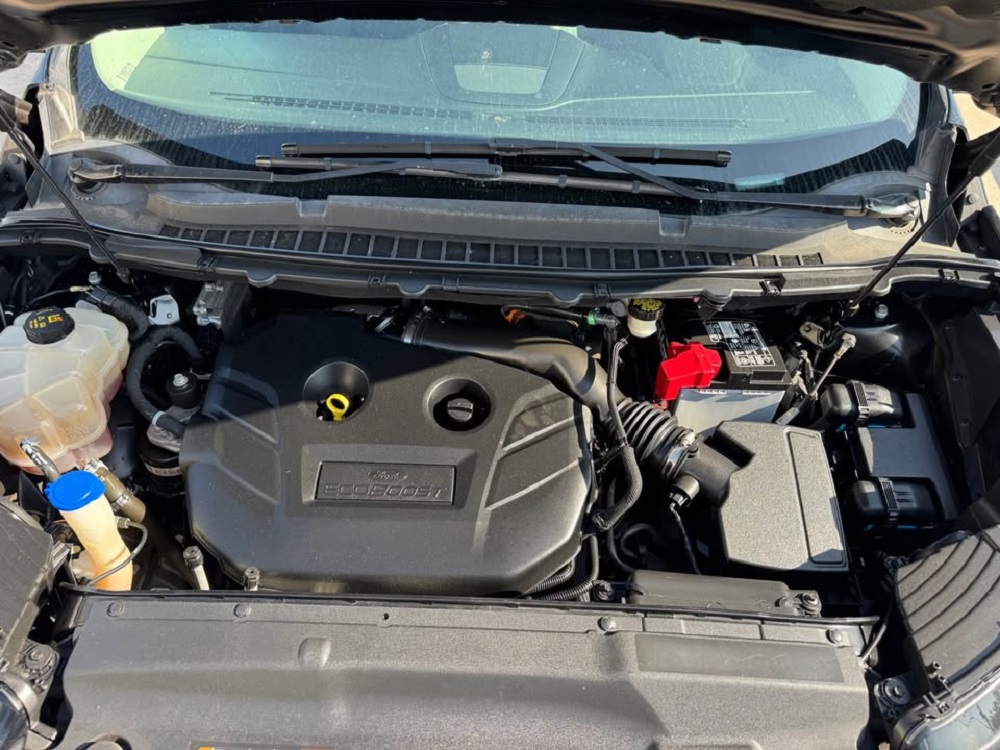
1. The Edge changed engines, and each era carried a different risk
First generation V6 power hid a coolant time bomb inside the timing cover
Ford launched the 2007–2014 Edge on the CD3 platform with the 3.5L Duratec 35. The 3.7L Duratec 37 joined in 2011. Both are Cyclone-family V6 engines mounted sideways in a tight bay. That packaging choice forced the water pump behind the front timing cover, driven by the primary chain.
When the pump seal fails, coolant doesn’t drip on the ground. It pours into the crankcase. Owners report coolant loss between 80,000 and 150,000 miles, then see milky oil and rising temps. Repair runs 12–14 labor hours and typically lands between $1,500 and $2,400 before any bearing damage is counted.
Early 2007–2008 trucks also fought 6-speed automatic slip and sensor faults near 80,000 miles. Those transmission failures can mask an engine issue because both trigger clunks, stalls, and warning lights.
Second generation turbos raised torque and raised cylinder pressure
The 2015 redesign pivoted hard to turbo power. Most trims ran the 2.0L EcoBoost inline-four. Sport and later ST trims packed the 2.7L twin-turbo Nano V6 with a Compacted Graphite Iron block rated at 315–335 hp.
The 2015–2018 2.0L built a pattern of coolant intrusion tied to block design. Cylinders 2 and 3 show misfire codes P0302 and P0303. Cold starts bring white smoke and a sweet exhaust smell. Ford’s fix under TSB 19-2346 directs long-block replacement once intrusion is confirmed.
From 2019 forward, Ford revised the 2.0L block casting. Later trucks still lose coolant at times, often traced to EGR cooler failure instead of block cracking. Diagnosis shifts toward pressure testing and EGR inspection before condemning the engine.
Engine families and their defining failure paths
| Edge Years | Engine | Core Design | Dominant Failure Pattern | Factory Track |
|---|---|---|---|---|
| 2007–2018 | 3.5L V6 | Chain-driven internal water pump | Coolant in oil, bearing damage | No broad recall |
| 2011–2014 | 3.7L V6 | Same internal pump layout | Same coolant-to-oil risk | No broad recall |
| 2015–2018 | 2.0L EcoBoost | Open-deck turbo block | Coolant intrusion, misfire | TSB 19-2346 |
| 2019–2020 | 2.0L EcoBoost | Revised casting | EGR cooler coolant loss | TSB 20-2234 |
| 2015–2024 | 2.7L EcoBoost | CGI twin-turbo V6 | Oil pan leaks, later valve recall | TSB 19-2332, 24V-635 |
The first generation’s threat sits inside the timing cover. The 2015–2018 2.0L’s threat sits between the cylinders. The 2021–2022 2.7L’s threat sits in brittle intake valves that can fracture and drop into the chamber under recall 24V-635, affecting about 90,736 vehicles.
2. How Ford Edge engines actually fail in the real world
Coolant slips past the Cyclone pump seal and wipes out bearings
The 3.5L and 3.7L Cyclone V6 run a chain-driven internal water pump. The pump seal sits inches from the crankshaft oil supply. When that seal fails, coolant dumps straight into the pan. No warning puddle forms under the truck.
Owners report steady coolant loss around 90,000 to 130,000 miles. Oil turns tan and frothy. Timing chains start to rattle on cold start as lubrication breaks down. If driven hot, rod bearings score fast and the engine can seize.
Access requires tearing down the front cover and timing set. Labor runs 12–14 hours. A proactive pump job averages $1,800. A spun bearing pushes the repair into full engine replacement, often $5,000 to $8,000 installed.
The 2015–2018 2.0 EcoBoost cracks between cylinders and burns coolant
The second-generation 2.0L EcoBoost uses an open-deck block. Grooves between cylinders reduce rigidity under heat. Coolant seeps into cylinders 2 and 3 under pressure. Cold starts produce white smoke and a sweet exhaust odor.
Scan data often shows P0302 or P0303. Coolant level drops without visible leaks. Spark plugs in affected cylinders look steam-cleaned. Ford documents this under TSB 19-2346 and directs long-block replacement once intrusion is confirmed.
Out-of-warranty replacement frequently clears $8,000 to $10,000. Some owners report failure before 70,000 miles. Continued driving risks piston crown erosion and cylinder wall scoring.
Later 2.0 models mimic block failure but often trace to the EGR cooler
The 2019+ 2.0L received a revised block casting. Reports of white smoke still surface. In many cases, coolant enters the intake through a leaking EGR cooler. Combustion chambers fill with steam without internal block cracking.
Drivers see overheat warnings and low coolant messages. DTCs may include EGR flow faults. TSB 20-2234 directs inspection of the EGR cooler and PCM calibration before engine teardown.
EGR cooler replacement runs $700 to $1,200 depending on labor rate. Misdiagnosing it as a cracked block can double that bill.
The 2.7 Nano V6 leaks oil or drops a valve
The 2.7L EcoBoost uses a Compacted Graphite Iron block. Early builds relied on RTV sealing for the oil pan. Heat cycles cause seepage along the lower pan rail. Oil collects on the crossmember and burns on the exhaust.
Ford addressed this under TSB 19-2332 and later bulletins with an updated press-in-place gasket pan. Resealing costs $1,000 to $1,500 depending on shop rate.
The larger threat sits in certain 2021–2022 engines under recall 24V-635. Intake valves made from Silchrome Lite alloy can crack after improper heat treatment. A fractured valve drops into the cylinder, bending valves and damaging pistons.
Ford replaces the engine if it fails the high-RPM cycle test. Engine replacement under recall prevents a $9,000 to $12,000 out-of-pocket failure.
3. The internal water pump defines the first-generation Edge risk
The pump sits behind the timing chain and hides its failure
The 3.5L and 3.7L V6 mount the water pump inside the front cover. The timing chain spins it at crank speed. The only barrier between coolant and oil is a small mechanical seal. Once that seal wears, coolant drains into the crankcase.
No external leak shows up at first. Coolant level drops with no puddle under the truck. Oil dilution cuts viscosity fast, especially at 220°F operating temp. Bearing clearance tightens and chain tensioners lose pressure.
Many failures surface between 80,000 and 150,000 miles. Some die earlier under heavy towing or heat cycles. Seizure can occur without a prior overheat warning once bearings wipe.
Labor cost comes from teardown, not the pump itself
The pump casting costs a few hundred dollars. The labor drives the bill. The front cover, timing chains, guides, and tensioners must come off. On AWD models, access tightens further.
Shops quote 12 to 14 hours. At $130 per hour, labor alone can clear $1,800. Full service with chains and guides often lands near $2,400. Add bearing damage and the engine total jumps to $6,000 or more.
Preventive replacement is common around 100,000 miles
Experienced techs flag the 100,000-mile mark. Coolant service alone won’t stop seal wear. Some owners swap the pump and timing set before symptoms start. Others wait and risk internal failure.
There is no broad U.S. recall for this layout, and prior U.S. class-action litigation over the internal water pump was dismissed in January 2024 without a nationwide settlement.
Failures fall on the owner once out of warranty. A contaminated oil sample with glycol confirms internal breach and ends the debate.
4. The 2015–2018 2.0 EcoBoost is the Edge’s most expensive trap
TSB 19-2346 centers on coolant entering the cylinders
Ford documents the defect under TSB 19-2346 for 2015–2018 Edge 2.0L models. Coolant leaks into cylinders 2 and 3 through the block-to-head interface. Cold starts produce white smoke that clears after a few seconds. Misfire codes P0302 and P0303 show up early.
Compression drops as coolant washes the cylinder walls. Spark plugs show steam cleaning on the affected holes. Pressure testing often reveals slow coolant loss with no external leak. The prescribed fix is long-block replacement, not a gasket swap.
Dealer quotes commonly run $8,000 to $10,000 once out of warranty.
Early symptoms trick owners into topping off and driving
Many drivers see the coolant reservoir dip and add fluid. The engine runs rough for 10 seconds, then smooths out. The check engine light may clear after a few cycles. That lull hides active cylinder wash.
Coolant removes oil film from the bore. Piston rings lose seal. Corrosion pits the cylinder wall. Continued driving raises the chance of hydro-lock or piston damage before 80,000 miles.
The 2019+ 2.0 split changed diagnosis and risk
Ford revised the block casting for 2019. The groove between cylinders was eliminated. True block intrusion complaints drop sharply after that change. Failures still occur, but the pattern shifts.
Some 2019–2020 models lose coolant through the EGR cooler. White smoke can still appear. DTCs may include EGR flow or temperature faults instead of direct misfire codes. Replacing the EGR cooler usually costs $700 to $1,200, far below a long block.
Used market risk by 2.0L production window
| Model Years | Primary Failure Path | Common DTCs | Typical Repair Range |
|---|---|---|---|
| 2015–2018 | Coolant intrusion into cylinders | P0302, P0303, P0300 | $8,000–$10,000 long block |
| 2019–2020 | EGR cooler coolant leak | EGR flow/temp codes, occasional P0300 | $700–$1,200 EGR service |
| 2021–2024 | No wide intrusion bulletin | Standard turbo-related faults | Varies by component |
A smooth test drive does not clear a 2016 or 2017 2.0L. Only documented engine replacement or pressure test history reduces the exposure.
5. The 2.7L Nano V6 delivers torque, then demands scrutiny
Oil pan sealing failures marked early 2.7 builds
The 2.7L EcoBoost uses a CGI block and aluminum heads. Early 2015–2017 engines relied on RTV sealant at the oil pan. Heat cycles and block flex break that seal line. Oil seeps along the lower pan rail and onto the subframe.
Drivers smell burnt oil at stops. Light smoke can rise from the rear bank near the turbo. TSB 19-2332 and later updates specify resealing or installing an updated pan with a press-in-place gasket. Repair runs $1,000 to $1,500 depending on labor rate and AWD packaging.
Ignoring seepage can drop oil level below the 6-quart capacity and trigger low-pressure warnings.
Recall 24V-635 targets brittle intake valves
Certain 2021–2022 2.7L engines received intake valves made from Silchrome Lite alloy. Improper heat treatment during grinding left the material overly hard and brittle. Under normal combustion loads, a valve head can crack and separate. When it drops, it strikes the piston at several thousand RPM.
Drivers report sudden misfire, rough running, or immediate power loss. Compression in the affected cylinder falls near zero. Ford’s recall 24S55 / 24V-635 covers roughly 90,000 vehicles across multiple lines, including the Edge ST. Dealers perform an engine cycle test and replace the engine if it fails.
A fractured valve outside recall coverage can lead to a $9,000 to $12,000 engine replacement.
Turbo heat and tight packaging raise long-term service cost
The 2.7 runs twin turbos mounted close to the heads. Exhaust gas temperatures can exceed 1,600°F under load. Oil quality and change intervals matter to protect the turbo bearings. Sludge buildup restricts oil flow to the center housing.
Turbo replacement per bank can exceed $2,000 in parts alone. Labor adds several more hours due to tight crossover packaging. A neglected 2.7 can stack oil pan, turbo, and recall-related risk into one repair cycle that clears $5,000 even without internal engine damage.
6. Some “engine failures” are driveline parts breaking under it
22N12 flexplate cracks rattle like internal damage
The 2015–2018 Edge 2.0L pairs with the 6F35 automatic. A thin steel flexplate connects the crankshaft to the torque converter. Over time, stress cracks form around the crank bolt circle. The crack spreads until the plate flexes at idle.
Drivers hear a metallic rattle in Park or Neutral. Vibration travels through the floor at stoplights. In severe cases, the engine won’t crank because the plate can’t transmit torque. Customer Satisfaction Program 22N12 covers inspection and replacement up to 10 years or 100,000 miles.
Out of coverage, flexplate and related parts replacement can run $1,500 to $2,500.
22V-413 shifter bushing failure creates false “transmission” panic
Many 2015–2018 Edges carry recall 22S43 / 22V-413. The transmission shifter cable bushing can detach from the selector arm. The cabin shifter moves, but the transmission stays in gear. Drivers think the gearbox slipped or failed.
The truck may roll when placed in Park. Dash indication may not match actual gear position. The fix installs a new bushing and cap at no charge under recall. If ignored and out of campaign, parts are cheap but the safety risk is high.
Nearly 3 million Ford vehicles were included in that recall population.
AWD PTU failure drags the drivetrain and mimics engine strain
All-wheel-drive Edges use a Power Transfer Unit bolted to the transaxle. The PTU holds less than 1 quart of fluid. It sits near the exhaust and runs hot under load. Fluid cooks, turns thick, and loses lubrication.
Drivers smell burnt gear oil after highway runs. A whining or grinding noise develops from the front driveline. Drag can feel like engine power loss. Replacement often exceeds $1,000, with the unit itself near $800 before labor.
Ford originally labeled the PTU fluid as filled for life, with no routine service interval.
7. The best and worst Edge years hinge on the engine under the hood
Highest-risk combinations sit in clear production windows
The 2007–2014 V6 models carry the internal water pump risk. Failures cluster between 80,000 and 150,000 miles. Repair cost spikes once coolant contaminates oil. No U.S. recall offsets that exposure.
The 2015–2018 2.0L EcoBoost stands out as the most documented engine defect cycle. TSB 19-2346 directs long-block replacement for confirmed intrusion. Out-of-warranty bills often exceed $8,000. Many failures show up before 100,000 miles.
The 2021–2022 2.7L ST requires VIN confirmation for 24V-635. Intake valve fracture can destroy a cylinder in seconds. Recall completion determines whether the risk is covered or lands on the owner.
Middle-cycle trucks offer cleaner mechanical footing
The 2019–2020 2.0L benefits from the revised block casting. Intrusion cases drop compared to 2015–2018. EGR cooler leaks still occur, but repair cost stays under $1,200 in most cases. That gap in repair scale changes the ownership math.
The 2019–2020 2.7L avoids the intake valve recall window. Oil pan gasket updates were already in place. Regular oil service remains critical due to turbo heat. Neglect can still trigger $2,000-plus turbo work.
Reliability scores hide high-cost outliers
RepairPal rates the Edge at 3.5 out of 5.0. Average annual repair cost sits near $492. Major repair probability is about 14% and rises with age. CarEdge estimates a 27.48% chance of a major repair by year 10.
Those figures average minor and major work together. One coolant intrusion or internal pump failure outweighs years of small repairs. A single engine replacement can equal 15 years of average annual repair cost.
8. Maintenance discipline decides whether an Edge lasts or folds early
Short oil intervals protect turbos and timing components
The 2.0L and 2.7L EcoBoost engines run hot and under boost. Turbocharger bearings depend on clean, high-quality synthetic oil. Ford’s monitor may stretch intervals past 7,500 miles under light use. Many techs cut that to 5,000 miles to limit sludge and coking.
Oil that shears down loses film strength at 230°F sump temps. Turbo center housings cook residual oil after shutdown. Restricted oil flow accelerates bearing wear. A failed turbo can run $2,000 per unit before labor.
Coolant service ties directly to the biggest engine failures
The Cyclone V6 water pump seal lives in hot coolant. Old coolant turns acidic and attacks internal components. Flush intervals matter more here than on simpler layouts. Many shops recommend coolant exchange by 100,000 miles at the latest.
On 2.0L EcoBoost engines, low coolant levels must never be ignored. Repeated top-offs without diagnosis raise the risk of intrusion damage. A pressure test costs under $150 and can confirm a leak path early. Waiting until white smoke thickens often pushes repair into long-block territory above $8,000.
High-mile service prevents stacked drivetrain failures
At 100,000 miles, spark plugs, drive belts, and coolant service should already be complete. AWD models need PTU fluid exchange every 30,000 to 50,000 miles despite early “filled for life” messaging. Neglected PTU fluid turns black and thick from heat soak.
Transmission fluid service on the 6F35 and 8F-series units reduces shudder and converter wear. Skipping fluid service raises internal heat and clutch slip. A transmission rebuild can exceed $4,000. Routine fluid service runs a few hundred dollars and buys time.
Sources & References
- Ford Edge 2007-2014: Pros and Cons, Common Problems – Samarins.com
- Why does the water pump in the Ford 3.5 EcoBoost fail, and how can I prevent it from leaking coolant into the engine oil? – Quora
- 7 Common Ford Engine Problems Mechanics See Every Day – Elite Truck & Fleet Service
- 2.7 leaking oil pan TSB 24-2098 – F150Ecoboost.net
- The Most Problematic Ford Edge Years: What You Need to Know – Google Docs
- Ford Edge Reliability and Common Problems – In The Garage with CarParts.com
- Ford Edge Generations Ranked By Reliability – CarBuzz
- How many miles can a twin-turbo Ford 3.5L EcoBoost V6 run for with regular maintenance? – Quora
- WHICH FORD ENGINES HAVE INTERNAL WATER PUMP – Durango Ford
- 3.7 V6 internal water pump. Worth it to fix? : r/Ford – Reddit
- Ford Water Pump Class Action – Koskie Minsky LLP
- Ford Water Pump Defect Class Action Lawsuit Gets Certified
- Water Pump Replacement : r/FordExplorer – Reddit
- TECHNICAL SERVICE BULLETIN 2.0L EcoBoost – Coolant … – nhtsa
- Ford Ecoboost Engine Coolant Leaks – Lieff Cabraser
- Ford 2.0 EcoBoost Recall: Explaining the Problems and Recent Legal Developments
- Ford EcoBoost Engine Lawsuits | Coolant Problems | ClassAction.org
- Ford EcoBoost Coolant Intrusion – Block Crack Fix (14-19 Fusion/Escape) – YouTube
- 2016 Edge SE with 86k miles on it, what should I be on the look out for? : r/FordEdge
- 2019 Edge 2.0 eco – Possible Head Gasket? : r/FordEdge
- Ford Sued Over ‘Band-Aid’ Fix for Allegedly Defective EcoBoost Engines
- Ford Motor Company – KND Complex Litigation
- What years had the coolant intrusion issue on the 2.0 EcoBoost? : r/FordEdge
- Considering a 2019 Ford Edge with 80K+ miles — how reliable are these motors long-term?
- Explore Generations and Year-by-Year Changes of the Ford Edge – CarMax
- Are Ford EcoBoost Engines Good and Reliable?
- VitalLaw.com – CCH
- Safety Issue Type: Recalls Engine Intake Valves May Break Affected Products (12) Associated Documents (3)
- Over 90000 Vehicles Affected by Ford 2.7 and 3.0 EcoBoost Recall
- Ford Recall – Eco-Boost Engines – LemonAuto.com
- Why Ford Is Being Sued Over Its EcoBoost V6 – CarBuzz
- 24V-635 August 30, 2024 Mr. Tom Single Assistant Director Ford Motor Co – nhtsa
- 24S55: Bronco Edge Explorer F-150 (2021-2022) Engine Intake Valves Recall – Ford
- Customer Satisfaction Program 22N12 Certain 2015-2018 – nhtsa
- Recall Information – Ford Recalls | Ford Owner Support
- 2015 Ford Edge Recalls | Cars.com
- 2015 Ford Edge Recalls – RepairPal
- Recall Information – Ford Recalls | Ford Owner Support
- How Long Do Ford Edges Last? Lifespan and More | Stivers Ford of Montgomery Blog
- What is the Maintenance Schedule for Ford Edge? – sealight
- How long do Ford EcoBoost engines last? – Quora
- 2024 Ford Edge Maintenance Schedule I Sam Leman Ford I Bloomington
- Ford Edge Recommended Maintenance Schedule – Joe Machens Capital City Ford
- Ford Edge Maintenance Schedule and Costs – CarEdge
- The Ford Edge Recommended Maintenance Schedule
- 2.7 EcoBoost Problems & Lemon Law Help Solutions!
- Ford Edge Named To Best Crossover List By Consumer Reports | Torque News
- Find Existing Ford Edge Car Recalls – DealerRater
- 2019 Ford Edge Recalls | Cars.com
- Ford Edge Recalls – RepairPal
- Ford Issues Recall for 1.7 Million SUVs Over Backup Camera Issues – Car and Driver
- Ford recalls 1.7 million US vehicles over camera faults – Just Auto
- J.D. Powers’ dependability study shows vehicle reliability is in freefall – How-To Geek
- Understanding Ford Cost | Moon Township Ford | Pittsburgh, PA
Was This Article Helpful?