
Crack open a budget oil jug. Pour it in. Wonder if the savings just cost you an engine. That’s the tension behind SuperTech oil.
Modern engines run hot and tight. Turbochargers spin past 150,000 rpm. Direct injection raises cylinder pressure and invites LSPI that can shatter pistons. Oil now has to control heat, fight sludge, protect chains, and stop pre-ignition in one thin film.
Walmart sells SuperTech in Full Synthetic, High Mileage Full Synthetic, and Advanced Full Synthetic lines. The Advanced tier advertises protection up to 20,000 miles or 1 year under stated conditions. Price sits far below Mobil 1 and Pennzoil Platinum on the same shelf.
Some drivers swear by it for 200,000 miles. Others assume cheap means risky. Let’s test the chemistry, the certifications, and the real-world data before trusting the cap.
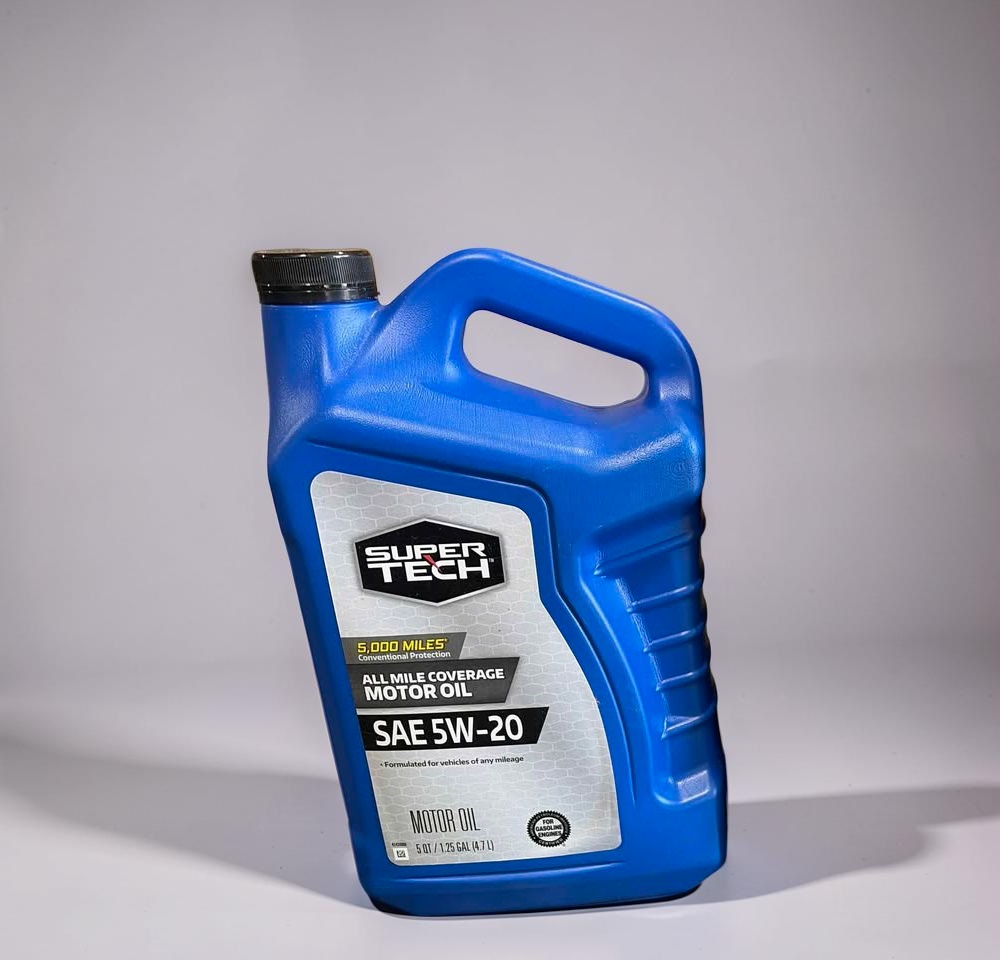
1. Who actually makes SuperTech oil, and why that matters more than the Walmart label
Warren’s blending footprint carries real industrial weight
Peel the label back. SuperTech isn’t refined by Walmart. Production runs through Warren Oil Company, also known as Warren Distribution or Warren Performance Products.
Warren operates multiple large blending and packaging plants across six states, with over 1,000,000 square feet of manufacturing space and large bulk storage capacity to support national retail volume.
That scale matters. Walmart moves oil by the truckload. A blender that can’t hold viscosity and additive balance across massive batches loses contracts fast. The “WPP” stamp molded into the bottle base links it to Warren’s production lines.
Regional supply shifts don’t erase the certification printed on the bottle
House brands can source regionally. Early 2000s supply included major refiners like ExxonMobil. Current production centers on Warren, with occasional regional partnerships depending on logistics.
Formula control stays centralized. The oil still has to meet the printed specs on the label. If the jug carries API SP or dexos1 Gen 3, it must pass those tests, no matter which blending plant filled it.
API licensing isn’t decorative. Random batch testing can pull product from shelves and verify compliance. Failing a licensed spec risks fines, recalls, and lost retail contracts.
The price gap comes from retail structure, not weaker chemistry
Mobil 1 pays for factory-fill contracts and global marketing. NASCAR decals don’t come cheap. SuperTech skips that overhead.
Walmart leverages bulk purchasing and shelf dominance. Fewer marketing dollars mean lower retail cost per quart. The chemistry still has to survive the same API and GM test cycles.
A 5-quart jug can sell for $18 to $25, depending on grade. That price doesn’t waive LSPI testing or oxidation limits under dexos1 Gen 3.
2. The certifications decide whether the oil survives modern engine abuse
API SP and ILSAC GF-6A set the modern survival baseline
Scan the donut on the back label. API SP marks the current gasoline standard. It addresses LSPI, timing-chain wear, sludge control, and turbo heat.
LSPI can crack ring lands in a single event. Turbo DI engines see cylinder pressures above 1,000 psi during boost. API SP oils must reduce that pre-ignition risk in standardized engine tests.
ILSAC GF-6A adds fuel economy and deposit control targets. It limits phosphorus to protect catalytic converters. It also tightens sludge and varnish thresholds under Sequence VH testing.
dexos1 Gen 3 pushes harder than the basic API bar
GM’s dexos1 Gen 3 spec goes further. It layers proprietary tests on top of API SP. Passing it requires tighter oxidation control and LSPI resistance.
The GMLSPI test runs boosted direct-injection hardware under controlled stress. The Sequence X test tracks timing-chain elongation in high-soot environments. Excess wear shows up as measurable chain stretch.
Turbo coking tests expose oil to sustained high heat. Oil that fails leaves carbon on hot bearings and turbine shafts. Carbon buildup chokes oil flow and cooks seals, leading to blue smoke and shaft play.
SuperTech Full Synthetic in relevant grades carries active dexos1 Gen 3 licensing. That means it cleared GM’s oxidation, deposit, and wear limits under controlled lab cycles.
What those specs mean for real engines in the driveway
Small turbo engines like GM’s 1.5L and Ford’s 2.0L run tight ring packs. LSPI events can spike pressure fast enough to bend rods. A compliant oil lowers that risk under low-speed, high-load pulls.
Timing chains in DI engines see soot contamination. Excessive wear can trigger cam correlation codes like P0016 or P0017. Sequence X testing targets that exact failure path.
High-temperature oxidation thickens oil. Thickened oil can trip VVT faults or clog fine oil control passages. dexos1 Gen 3 limits viscosity increase and deposit formation during extended high-heat operation.
GM requires dexos1 approval to maintain powertrain warranty coverage on many gasoline models. Using a non-licensed oil can complicate a $5,000 to $8,000 engine claim.
3. The additive package shows whether this oil plays in the modern league
The elemental mix inside SuperTech 5W-30
Lab data from PQIA tested SuperTech High Mileage Full Synthetic 5W-30. The numbers show 1,382 ppm calcium and 561 ppm magnesium. Zinc measured 868 ppm. Phosphorus came in at 769 ppm. Molybdenum sat at 82 ppm. Boron measured 257 ppm.
Calcium and magnesium handle detergency and acid control. Zinc and phosphorus form the ZDDP anti-wear layer on cams and lifters. Moly reduces boundary friction under startup load. Boron helps suspend soot and stabilize wear protection.
These levels sit in the same range as mainstream API SP synthetics. Nothing in that profile screams cut-rate chemistry. ZDDP remains capped by emissions rules, so extreme zinc numbers aren’t legal in modern passenger oil.
| Additive family | Function inside the engine | Failure risk if weak |
|---|---|---|
| Calcium / Magnesium | Neutralize acids, control deposits | Sludge, ring sticking, LSPI spikes |
| Zinc / Phosphorus | Form anti-wear film on metal surfaces | Cam scuffing, lifter pitting |
| Molybdenum | Reduce friction under boundary lubrication | Higher wear at cold start |
| Boron | Disperse soot and boost anti-wear chemistry | Deposit buildup, varnish formation |
The magnesium level signals LSPI awareness
Older SN-era oils leaned heavy on calcium. High calcium blends showed higher LSPI frequency in some turbo DI engines. Broken pistons and cracked ring lands forced a chemistry rethink.
Magnesium rose in modern formulas to offset that risk. SuperTech’s 561 ppm magnesium shows it follows that shift. That ratio supports LSPI control under boosted low-speed load.
Engines like GM’s 2.0L LSY and Ford’s 2.7L EcoBoost depend on that balance. A single LSPI event can bend a rod and trigger a $6,000 short-block job.
Where premium blends may still stretch further
Group III base stocks dominate mainstream full synthetics. Premium extended-drain oils may use heavier antioxidant loading or boutique base stock mixes. That can buy more oxidation reserve at 15,000 miles and beyond.
High-output track use pushes oil past 260°F sump temps. Sustained heat accelerates shear and oxidation. Some premium lines market stronger long-drain confidence for that abuse.
SuperTech’s additive profile supports normal 5,000 to 10,000 mile service in modern gasoline engines. Stretching to extreme intervals without oil analysis turns any oil into a risk past the filter’s dirt-holding limit.
4. The lab numbers decide how this oil handles cold starts and turbo heat
Viscosity index shows how stable the film stays
PQIA measured a viscosity index of 172 for SuperTech High Mileage Full Synthetic 5W-30. That’s strong for a mainstream Group III synthetic. A higher VI means the oil thins less as temperature climbs.
Cold starts cause most wear. Oil must flow fast at 0°F and still protect at 220°F sump temps. A 172 VI keeps startup flow quick while holding film strength when the turbo spools.
At operating temp, kinematic viscosity at 100°C measured about 11.2 cSt. That lands squarely in mid-range 5W-30 territory. Too thin risks bearing wear. Too thick can slow VVT response and fuel economy.
NOACK volatility exposes weak base stocks fast
NOACK measures evaporation under heat. PQIA recorded about 10.8% for SuperTech 0W-20 High Mileage Full Synthetic. The dexos1 Gen 3 limit sits at 13%.
Lower volatility means less oil burn-off. Evaporation thickens remaining oil and leaves deposits behind. Turbocharger bearings can see localized temps above 900°F during shutdown heat soak.
High volatility oils increase consumption. That leads to top-offs and intake valve deposits in DI engines. Stay under 13% NOACK or expect higher oil use and carbon buildup.
How the numbers sit next to Mobil 1 and Pennzoil
Mobil 1 5W-30 often shows a VI between 167 and 175. Pennzoil Platinum 5W-30 sits around 170. SuperTech’s 172 fits inside that band.
| Property | SuperTech FS 5W-30 | Mobil 1 5W-30 | Pennzoil Platinum 5W-30 |
|---|---|---|---|
| Viscosity @ 100°C | ~11.2 cSt | ~11.0–11.3 cSt | ~10.3–10.5 cSt |
| Viscosity Index | 172 | 167–175 | ~170 |
| NOACK Volatility | ~10–11% | ~10% | ~10% |
| Cold Crank @ -30°C | ~3,690 cP | ~3,800–4,000 cP | ~4,000 cP |
Mobil 1’s NOACK for comparable grades runs near 10%. Pennzoil Platinum posts similar low volatility. SuperTech’s 10–11% range keeps it in the same functional zone for normal service.
Cold crank viscosity for SuperTech 5W-30 tested around 3,690 cP at -30°C. That clears SAE limits for winter start flow. Fail that test and engines grind dry during sub-zero startup.
5. Real-world durability testing exposes weak oil fast
Dyno torture data from Lake Speed Jr.
EngineLabs documented a controlled comparison led by tribologist Lake Speed Jr. The test used a 450-hp small-block Chevrolet with a flat-tappet cam. Flat tappets punish oil hard under boundary lubrication.
Post-test oil analysis showed wear metals dropped from 11 ppm to 8 ppm when switching from name-brand conventional to SuperTech synthetic. That’s a 27% reduction in measured wear. Oxidation stability started at 71 minutes and fell to 63 minutes after testing. The conventional comparator dropped from 45 to 40 minutes.
The synthetic run produced slightly higher horsepower on the dyno. Reduced internal friction can show up as small power gains. Lower friction also reduces heat load under sustained pull.
Independent stress tests back up the lab numbers
Enthusiast channels like Project Farm ran cold-flow and friction comparisons. SuperTech consistently cleared pour-point and flow tests in winter grades. Lubricity demonstrations showed competitive film strength against mainstream synthetics.
These tests aren’t SAE certification labs. They do expose gross weakness fast. An oil that shears or fails friction tests quickly shows metal scoring and temperature spikes.
No controlled test showed catastrophic failure under standard passenger-car loads. Oils that fail here often leave visible varnish or elevated wear in short order.
Long-mileage use proves whether sludge builds or not
Mechanic forums and teardown reports show engines crossing 200,000 miles on SuperTech with 5,000 to 7,500 mile intervals. A Ford Edge at 120,000 miles showed clean cam lobes and no sludge during water pump service. The timing chain showed no measurable abnormal wear.
A 2005 Honda Accord reached 291,000 miles on 10,000 mile intervals. No internal sludge was reported at teardown-level inspection. That reflects stable oxidation control and contaminant suspension.
Extended drains without filter capacity or oil analysis change the outcome. A saturated filter can open its bypass valve and circulate unfiltered oil through bearings at 60 psi.
6. The three SuperTech tiers don’t share the same mission
Full Synthetic covers the mainstream daily grind
SuperTech Full Synthetic targets normal gasoline engines under standard intervals. It carries API SP and, in many grades, dexos1 Gen 3 licensing. That makes it viable for modern DI and turbo engines.
Most owners follow 5,000 to 10,000 mile intervals. City driving, short trips, and towing push toward the lower end. Stretching past that without oil analysis invites viscosity increase and additive depletion.
Typical cost runs $18 to $25 for a 5-quart jug. Pair it with a $8 to $15 quality filter and total service stays under $40 in many cases.
High Mileage adds seal chemistry for worn engines
High Mileage Full Synthetic targets engines past 75,000 miles. PQIA testing shows it still carries modern magnesium-supported detergent chemistry. The additive balance mirrors current API SP requirements.
Seal conditioners aim at aging crankshaft and cam seals. Over time, elastomers harden and shrink. Minor seepage around timing covers or rear mains can slow with the right conditioning package.
It won’t repair torn gaskets or worn rings. Engines burning a quart every 800 miles need mechanical repair, not thicker oil.
Advanced Full Synthetic stretches the drain window
SuperTech Advanced Full Synthetic advertises up to 20,000 miles or 1 year under stated conditions. That extended claim depends on stronger antioxidant reserves and shear stability. Oxidation control slows acid formation and viscosity thickening.
Long highway cycles favor extended drains. Stop-and-go traffic, short trips, and cold starts accelerate fuel dilution and moisture buildup. Oil filters often cap out before the oil chemistry does.
Most spin-on filters hold limited debris mass. Once saturated, the bypass valve can open and circulate unfiltered oil at 40 to 70 psi.
| Product Line | Best For | Drain Claim | Technical Limitation |
|---|---|---|---|
| Full Synthetic | Daily drivers, API SP engines | 5,000–10,000 miles typical | Interval discipline still required |
| High Mileage FS | 75k+ engines, minor seal seepage | 5,000–10,000 miles typical | Won’t fix mechanical wear |
| Advanced FS | Long highway use, extended buffer | Up to 20,000 miles / 1 year | Filter capacity and fuel dilution limit real-world use |
7. Where SuperTech makes sense, and where spending more can buy margin
Daily commuters and mainstream turbo engines sit in the sweet spot
Most modern gasoline engines call for API SP and often dexos1 Gen 3. SuperTech meets those specs in common grades like 0W-20 and 5W-30. That covers engines in Camrys, Silverados, F-150s, and CR-Vs.
Naturally aspirated engines place lower thermal stress on oil. Moderate turbo engines running factory boost levels fall within tested spec limits. Regular 5,000 to 7,500 mile intervals keep oxidation and fuel dilution in check.
In that use case, paying double per jug rarely changes bearing wear trends. Clean oil at sane intervals protects better than premium oil pushed too long.
Severe service narrows the margin fast
Tow 7,000 pounds in summer heat and oil temps climb past 250°F. Track days can push sump temps higher for sustained periods. High-output turbo engines create more shear and oxidation stress.
European engines often require ACEA A3/B4 or C3 approvals. Those demand higher high-temperature high-shear viscosity and stricter deposit control. SuperTech mainstream lines focus on North American gasoline specs.
Extended drains beyond 10,000 miles without oil analysis increase risk. Fuel dilution in short-trip driving can thin oil below grade. Bearings don’t forgive thin film under load.
The filter and interval decide engine life more than the logo
Oil circulates debris until the filter traps it. Cheap filters with low dirt-holding capacity saturate early. Once the bypass opens, abrasive particles flow straight to rod and main bearings.
A quality synthetic-media filter often costs $10 to $18. Skipping that to save $5 can increase wear under high load. Dirty oil at 60 psi still carries grit.
Most sludge failures link to missed changes. Oil left 15,000 miles in city traffic thickens and forms varnish. That can trigger VVT faults like P0011 or P0021 and lead to $1,500 timing repairs.
8. The final answer on SuperTech oil
The straight answer most drivers need
SuperTech oil meets current API SP and, in many grades, dexos1 Gen 3. That places it inside the same certification envelope as Mobil 1 and Pennzoil Platinum for mainstream gasoline engines. Lab data shows competitive viscosity index, NOACK volatility, and additive balance.
Wear testing recorded lower wear metals than a conventional comparator under dyno stress. Real-world reports show engines clearing 200,000 miles on sane intervals. There’s no mechanical red flag in the chemistry when the grade and spec match the engine.
Use the wrong viscosity or ignore the OEM spec and protection drops fast. A turbo DI engine that calls for 0W-20 dexos1 can suffer LSPI damage if filled with off-spec oil.
The sharper call by driver type
Budget-focused commuters gain real value. A $20 jug changed every 5,000 miles protects better than a $45 jug stretched to 15,000. Consistency beats brand loyalty.
High-mileage engines with minor seepage can benefit from the High Mileage line. Seal conditioners may slow small leaks around timing covers and valve covers. They won’t stop a rear main seal pouring oil onto the flexplate.
Severe-service drivers should shorten intervals. Towing, heat, and short trips demand fresh oil sooner. Push any oil too far and oxidation, fuel dilution, and filter saturation add up.
The mistake that ruins good oil
Most oil “failures” link to neglect. Wrong viscosity, missed changes, cheap filters, or engines already burning oil skew the outcome. Blaming the bottle ignores the service history.
Oil that meets spec and gets changed on time does its job. Bearings fail when film collapses from dilution or contamination. A spun rod bearing can turn a $40 oil change into a $6,000 rebuild.
Sources & References
- accessed March 12, 2026, https://carfromjapan.com/article/who-makes-super-tech-oil/#:~:text=Currently%2C%20Supertech%20oil%20is%20made,Auto%20Parts%20and%20O’Reilly’s.
- Who Makes Super Tech Oil? – Car From Japan
- About – Warren Oil Company
- Warren Oil History: Founding, Timeline, and Milestones – Zippia
- Who Makes Supertech Oil For Walmart? How Good is It? – YouTube
- Full synthetic oil vs. Advanced full synthetic oil : r/cars – Reddit
- Supertech Oil Review – Why Is It the Choice of Every Car Owner?
- Ultra1Plus SAE 5W-30 Full Synthetic Motor Oil, Dexos1™ Gen 3 GM-Approved
- PRODUCT DATA SHEET – Universal Oil Inc.
- Super Tech High Mileage Full Synthetic SAE 5W-30 Motor Oil | The …
- Super Tech Advanced High Mileage Full Synthetic SAE 5W-30 Motor Oil, 5 Quarts – Walmart
- VALVOLINE™ ADVANCED FULL SYNTHETIC SAE 5W-30 MOTOR OIL – Petroleum Service Company
- GM dexos ® 1 Gen 3 Tests – Lubrizol
- Super S® Full Synthetic Dexos™1-Gen 3 SAE 5W30 3/5 Quart
- Is Walmart brand oil good or bad or does it matter? : r/mechanic – Reddit
- Mobil 1™ ESP 5W-30 Page 1 of 3 13.08.2025
- Supertech vs Mobil 1 : r/MechanicAdvice – Reddit
- Popular Synthetic Oil Brands Ranked Worst To Best
- Full Synthetic vs Advanced Full Synthetic. What’s the difference? This pic is from the back of a SuperTech oil container, and the internet is void of any explanation of differences. : r/auto – Reddit
- Super Tech vs. Name-Brand: Oil Durability and Performance Test – EngineLabs
- What is the difference between these oils? The price was the same. 2004 CRV 211k miles.
- Super S® SuperSyn™ Full Synthetic dexos™1-Gen 3 SAE 5W-30 API SP – Smitty’s Supply
- Pennzoil Platinum® Euro SAE 5W-30 Full Synthetic Motor Oil
- Super Tech High Mileage Full Synthetic SAE 5W-30 Motor Oil, 5 Quarts – Walmart.com
- Mobil 1™ 5W-30
- Mobil 1™ ESP 5W-30 Page 1 of 3 22.10.2024
- PENNZOIL PLATINUM 5W-30 – Petroleum Service Company
- Super Tech SAE 0W-20 High Mileage Full Synthetic Motor Oil | The …
- Mobil 1 vs Pennzoil Platinum synthetic : r/MechanicAdvice – Reddit
- Are They All The Same Motor Oil? Let’s Settle This! Four Types of SuperTech Motor Oil Compared – YouTube
- Supertech vs Mobil 1 : r/AskAMechanic – Reddit
- Is “High Mileage” Motor Oil Safe? Let’s find out! Mobil 1 vs Mobil 1 High Mileage; SuperTech vs STHM – YouTube
- Mobil 1 vs super tech motor oil 0w-20 – YouTube
- (4 pack) Super Tech Full Synthetic SAE 5W-30 Motor Oil, 5 Quarts – Walmart.com
- Mobil 1™ High Mileage 5W-30
- Super Tech High Mileage Full Synthetic SAE 5W-30 Motor Oil, 1 Quart 2 Pack | eBay
- Super Tech Advanced Full Synthetic Motor Oil SAE 5W-30, 1 Quart – Walmart.com
- Super Tech Full Synthetic SAE 5W-30 Motor Oil, 5 Quarts – Walmart.com
- Mobil 1™ 5W-30
- Customer reviews for Super Tech Conventional Motor Oil, Protects from Sludge and Deposits, SAE 5W-20, 5 qt – Walmart
- Customer reviews for Super Tech High Mileage Full Synthetic SAE 5W-30 Motor Oil, 5 Quarts | Walmart.com
- Warren Oil Company