
Cold start. Rough idle. White smoke. That cheap Fusion now feels expensive. Ford Fusion engine problems don’t hit every car the same way.
The engine matters more than the badge. A 1.5L EcoBoost, 2.0L EcoBoost, 1.6L EcoBoost, 3.5L V6, 2.5L Duratec, Hybrid, and Energi all carry different risks.
This guide sorts the failures by engine and year. We’ll cover coolant intrusion, 17S09 fire-risk cooling faults, the 3.5L internal water pump, throttle-body limp mode, purge-valve trouble, HF35 hybrid transaxle wear, and the 23S33 Energi battery recall.
A Fusion can be a safe commuter or a hidden engine bill. The VIN and powertrain decide.
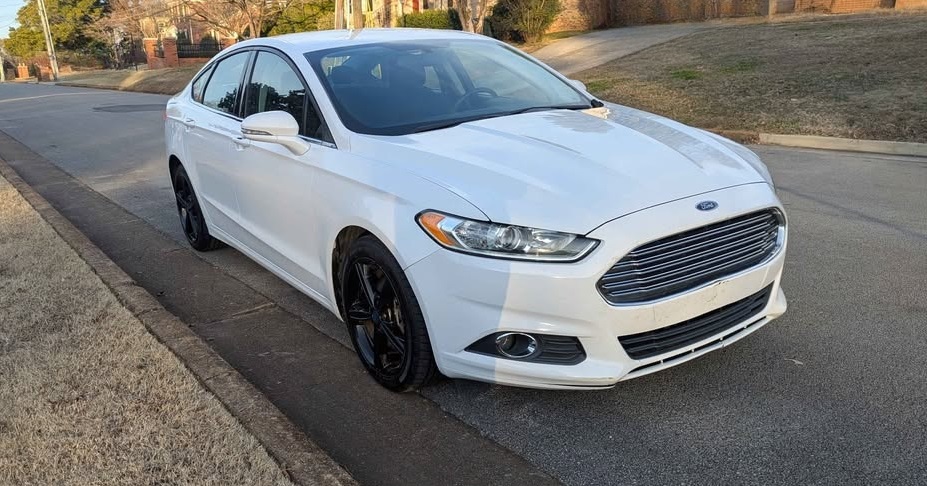
1. Sort the Fusion by engine first, or the risk picture gets muddy fast
The bad years cluster around a few engines
The Fusion doesn’t have one engine story. The risk changes hard by year and powertrain.
The 2006–2012 cars used simpler gas engines, mostly 2.3L, 2.5L, and 3.0L layouts. They can still leak, idle rough, or wear out parts, but they don’t carry the same block-failure pattern as the later EcoBoost cars.
The second-generation Fusion, sold from 2013–2020, is where the bigger repair bills show up. The 1.6L EcoBoost brings cooling and fire-risk history. The 1.5L and 2.0L EcoBoost bring coolant-intrusion risk. The 2.5L Duratec stays the safest gas-engine bet.
Hybrid and Energi cars dodge the worst EcoBoost block failures. Early cars can still develop HF35 transaxle bearing noise, while 2019–2020 Energi models fall under the 23S33 high-voltage battery recall.
The Fusion risk map by powertrain
| Fusion powertrain bucket | Main years | Core risk |
|---|---|---|
| 2.3L / 2.5L / 3.0L first-gen gas cars | 2006–2012 | Simpler engines, lower catastrophic engine risk |
| 3.5L V6 Fusion Sport | 2010–2012 | Internal water pump can dump coolant into oil |
| 1.6L EcoBoost | 2013–2014 | Localized overheating, cracked head, oil leak, fire risk |
| 1.5L EcoBoost | 2014–2019 | Coolant intrusion into cylinders |
| 2.0L EcoBoost | 2017–2019 | Coolant intrusion, white smoke, rough running |
| 2.5L Duratec | 2013–2020 | Safest mainstream gas-engine bet, with manageable leaks and VCT faults |
| Hybrid / Energi early HF35 era | 2013–2016 | Transaxle bearing noise, whine, rubbing, or grinding |
| Energi late recall era | 2019–2020 | High-voltage battery / BECM fire and power-loss risk |
Late 2020 cars sit outside the worst EcoBoost paper trail
The 2020 Fusion needs a cleaner split than most buyers give it. Ford’s major Fusion coolant-intrusion coverage and TSB logic focus on earlier EcoBoost danger years, especially 2017–2019.
That doesn’t make every 2020 EcoBoost harmless. It means the worst official intrusion pattern points harder at the earlier block design and campaign years. A late car still needs a coolant-level check, cold-start test, and service-record review.
The cutoff matters most when buying used. A 2018 2.0L EcoBoost with white smoke and coolant loss is in a different repair lane than a clean 2020 car with no cold-start misfire. Coolant loss with no external leak still calls for a pressure test, not guesswork.
2. The 1.5L and 2.0L EcoBoost failures are the Fusion’s biggest engine story
Coolant intrusion starts at the block, not the radiator cap
A bad Fusion EcoBoost often starts small. You see low coolant, a rough cold start, or white smoke after sitting overnight.
On the 1.5L and 2.0L EcoBoost, the deeper fault sits at the block and head-gasket interface. Repeated heat cycles and boost pressure can let coolant slip past the seal and enter a cylinder. Once coolant lands in the bore, the first few combustion strokes stumble.
The early misfire can vanish as the engine warms. Aluminum expands, the gap tightens, and the symptom hides for another drive cycle. That makes some cars pass a quick look while still losing coolant with no puddle under the car.
Ford’s EcoBoost diagnostic path uses a cooling-system pressure test at 138 kPa, or 20 psi, for at least 5 hours. A pressure drop over 27.57 kPa, or 4 psi, points toward an internal leak when no external leak shows.
The 1.5L and 2.0L don’t get the same repair path
The 1.5L EcoBoost has the broader Fusion paper trail. TSB coverage reaches 2014–2019 Fusion builds on or before June 10, 2019, when symptoms match coolant intrusion.
Ford’s 21N12 program narrows the official coverage focus to certain 2017–2019 Fusion models with the 1.5L GTDI. It allows a one-time short-block repair after confirmed coolant intrusion. The limit is 7 years or 84,000 miles from warranty start.
The 2.0L EcoBoost repair lane is harsher. Ford’s 2019 TSB covers certain 2017–2019 Fusion and MKZ models with coolant in the cylinders, white smoke, or an illuminated MIL. Once confirmed, the repair can call for a long-block assembly.
That long-block call matters. The cylinder head, valves, turbo plumbing, and oiling side may already have seen heat, steam, and coolant contamination. A short block fixes the lower engine. A long block replaces more of the damaged core.
EcoBoost intrusion years and repair lanes
| Engine | Main Fusion years in Ford documents | Typical signs | Main repair path |
|---|---|---|---|
| 1.5L EcoBoost | 2014–2019 TSB scope, 2017–2019 21N12 focus | Low coolant, white smoke, rough cold start, misfire codes | Confirm intrusion, then short block if criteria are met |
| 2.0L EcoBoost | 2017–2019 | Low coolant, white smoke, rough run, MIL | Confirm intrusion, then long block |
Coolant keeps damaging parts after the block fails
Burned coolant doesn’t leave clean. Ethylene glycol coats oxygen sensors and can poison the catalytic converter after repeated white-smoke events.
Coolant in the oil is worse. It turns the lubricant into a thin, corrosive mess that can chew turbocharger journal bearings and VCT hardware. The engine may get a new block while the turbo and exhaust parts still carry the bill.
That’s why a used Fusion with coolant loss needs more than a top-off. Check the coolant bottle, cold-start behavior, exhaust smoke, oil condition, and misfire history before pricing the car. A failed pressure test at 20 psi ends the guessing.
3. The 1.6L EcoBoost fails by heat, cracked heads, and fire risk
The 1.6L problem starts with narrow cooling margin
The 1.6L EcoBoost sits in its own trouble lane. It mainly affects 2013–2014 Fusion models, and the core risk is heat.
Ford’s 17S09 recall describes localized cylinder-head overheating. If coolant drops low, the aluminum head can crack near the hot exhaust side. Once that crack opens, pressurized oil can escape.
That oil leak turns dangerous fast. The turbocharger and exhaust parts sit close enough to ignite leaked oil under the right heat load. This is why the 1.6L story belongs apart from the later 1.5L and 2.0L coolant-intrusion failures.
The scary part is the warning gap. A normal temperature gauge may not catch a local hot spot before the head cracks. By the time smoke or oil smell shows up, the leak may already be near the exhaust manifold.
The recall fix warned sooner, but it didn’t rebuild the engine
Ford’s remedy path for 17S09 focused on warning and control. Dealers installed a coolant-level sensor system and updated the PCM logic.
That fix gave the car a better chance to detect low coolant before the head cooked itself. The updated logic could also force limp mode when the cooling fault looked severe. It bought reaction time.
The hardware risk still stayed with the engine. A sensor can warn about low coolant, but it can’t add metal back to a stressed head casting. A cracked head still leaves oil with a path toward hot engine parts.
Court filings and owner complaints have criticized the fix as incomplete. The sharp owner move is VIN-level recall proof, coolant-level history, and a cold inspection for oil seepage around the head and turbo side.
4. The 3.5L V6 hides its worst leak inside the timing cover
The water pump location is the real trap
The 3.5L Duratec V6 sounds like the safer old-school choice at first. No turbo. No EcoBoost block-slit drama. Then the water pump enters the bill.
On the 2010–2012 Fusion Sport, the 3.5L water pump sits behind the timing cover. The timing chain drives it, so the pump lives inside the engine’s front case. When the seal fails, coolant can leak into the oil pan.
An external pump usually gives you a puddle, a sweet smell, or crust around the pulley. This pump can fail with almost no driveway warning. Coolant mixes with oil and turns the crankcase into a gray sludge bath.
Owner and technician reports often place the danger window around 100,000 to 150,000 miles. Once bearings lose clean oil, the crankshaft and cam journals can wear fast. Some engines don’t warn clearly before they seize.
The repair hurts because the labor swallows the car
The part itself isn’t the issue. The labor is. A normal external water pump may take a few hours. The 3.5L internal pump can demand 10 to 15 hours of timing-side work. In the Fusion’s transverse layout, access gets tight fast.
Repair bills often climb past $1,500 before the shop finds damaged chains, guides, or sludge. If coolant already reached the bearings, a pump job may no longer save the engine. At that point, the estimate moves toward engine replacement.
This is where the V6 becomes a math problem. A high-mile 2010–2012 Fusion Sport may not be worth a deep timing-cover job unless the rest of the car is clean. Waiting for obvious symptoms can turn one pump into a full engine.
5. The 2.5L Duratec is the safest gas-engine bet, not a perfect one
The 2.5L keeps life simpler
The 2.5L Duratec is the calm spot in the 2013–2020 Fusion lineup. It skips the turbo, high boost, direct-injection heat load, and EcoBoost coolant-intrusion pattern.
That simpler layout matters in old-car money. Port injection keeps intake-valve deposits less ugly than many GDI engines. No turbo means no cooked journal bearings after coolant or oil trouble.
Fleet buyers liked this engine for a reason. Owner reports commonly treat it as a high-mileage engine when oil changes stay regular. Many examples push past 250,000 miles without the block trouble tied to the EcoBoost cars.
The bigger bill often sits behind the engine, in the 6F35 automatic.
Its common faults are cheaper and easier to trace
The 2.5L still leaks oil. Valve cover seepage can fill spark-plug wells and stop ignition coils. A timing-cover seep can also leave a slow oil mess along the front of the engine.
Oil quality matters because the Ti-VCT system uses fine control passages. Dirty oil can clog VCT solenoid screens and trigger P0011, usually tied to over-advanced cam timing. A solenoid and cleaner oil schedule often fix that lane before it becomes major engine work.
Purge-valve trouble can make the car act sicker than it is. A stuck-open purge valve can cause a hard start after fueling, unstable idle, or a vapor-rich stumble. That failure points to the EVAP side before anyone prices an engine.
6. Throttle-body and EVAP faults can feel like engine failure
The electronic throttle body can cut power fast
A Fusion can lose power without losing the engine. The electronic throttle body can fail and throw the car into limp mode.
Ford’s 16B32 program covered electronic throttle body replacement on certain affected vehicles, including 2016 Fusion models. The failure traces to contamination inside the throttle-body motor contacts. Resistance rises, the PCM loses clean throttle control, and the wrench light comes on.
The common codes are P2111 and P2112. One points to the throttle actuator stuck open. The other points to it stuck closed. Either way, the car can drop into Failure Mode Effects Management.
From the driver’s seat, it feels serious. You press the pedal, the Fusion barely responds, and traffic keeps moving around you. Brakes and steering still work, but acceleration gets cut hard.
Purge-valve trouble can fake a fuel or engine problem
The canister purge valve causes a different scare. It often shows up right after refueling.
A stuck-open purge valve lets fuel vapor flood the intake when the car should be starting clean. You fill the tank, crank the engine, and it stumbles like it has a weak fuel pump. The idle may surge or dip before it steadies.
Fusion owners often see EVAP behavior before major engine trouble. Hard starts after fueling, rough idle, and fuel-vapor smell point toward the purge side. That check belongs before pricing injectors, pumps, or engine work.
The Focus fuel-tank deformation recalls, 18S32 and 19S22, should not be dragged into the Fusion by accident. Fusion purge-valve symptoms matter, but that specific recall history belongs to the Focus record.
7. Hybrid and Energi models dodge EcoBoost block trouble, then add their own risks
The hybrid gas engine is usually the easy part
Fusion Hybrid and Energi models use a 2.0L Atkinson-cycle gas engine with the HF35 eCVT. They don’t run the same turbocharged block layout that gave the 1.5L and 2.0L EcoBoost their coolant-intrusion record.
The early risk sits in the transaxle. Some 2013–2016 Hybrid and Energi cars develop thumping, rubbing, whining, or grinding from the HF35. The noise often rises with road speed, not engine rpm.
The failure path starts with bearing wear inside the eCVT. If the car keeps driving that way, vibration can damage motor rotors and stators. Later service paths allow bearing overhaul or transaxle replacement, depending on damage.
The “lifetime fluid” label doesn’t help an old HF35 that’s shedding metal. Many hybrid techs prefer a 30,000 to 50,000-mile fluid exchange on these units. Dirty fluid turns bearing wear into a louder bill.
The late Energi battery recall is the big 2019–2020 warning
The 2019–2020 Fusion Energi has a separate high-voltage risk. Ford recall 23S33 covers battery and BECM damage that can cause power loss or thermal damage.
The fault centers on the high-voltage battery and Battery Energy Control Module. When the system fails, the driver may see a “Stop Safely Now” message. The car can lose motive power.
Ford first told owners not to charge affected Energi models. That kept state of charge lower and reduced electrical stress. Later recall supplements moved the remedy toward high-voltage battery replacement.
A used 2019–2020 Energi needs VIN-level recall proof before purchase. A clean gas engine doesn’t cancel an open high-voltage battery campaign.
8. The safest Fusion depends on the engine, not the badge
The highest-risk engines need no sugarcoating
The worst Fusion engine years cluster in 3 places. The 2013–2014 1.6L EcoBoost carries the fire-risk cooling record. The 2014–2019 1.5L EcoBoost carries the broad coolant-intrusion trail, with 21N12 focused on 2017–2019 cars.
The 2017–2019 2.0L EcoBoost belongs in the same caution lane. Coolant loss, white smoke, rough starts, or a MIL can push that engine toward long-block replacement. That repair math can outrun the value of a tired Fusion fast.
The 2.5L Duratec is the safer gas-engine pick. It still leaks oil, fouls coils, and can throw VCT or purge-valve faults. Those repairs usually stay far below EcoBoost short-block or long-block money.
The 3.5L V6 has power, but the internal water pump sets the trap. A pump leak can dump coolant into the oil around 100,000 to 150,000 miles. Once the bearings see sludge, the engine may already be past saving.
Ford Fusion engine risk by year
| Fusion powertrain | Best owner call |
|---|---|
| 2013–2014 1.6L EcoBoost | Highest caution, fire-risk cooling history makes it the hardest sell |
| 2014–2019 1.5L EcoBoost | Strong caution, especially with coolant loss, rough cold starts, or white smoke |
| 2017–2019 2.0L EcoBoost | Strong caution, long-block failure lane is too expensive to shrug off |
| 2013–2020 2.5L Duratec | Best gas-engine bet for long use |
| 2010–2012 3.5L V6 | Good power, but only with water-pump risk understood and budgeted |
| 2013–2016 Hybrid / Energi | Better than bad EcoBoost years, but listen hard for HF35 noise |
| 2019–2020 Energi | Only worth serious consideration with 23S33 remedy confirmed |
Before buying, run the VIN, cold-start the car, and match the inspection to the engine. Coolant loss needs a pressure test. HF35 whine needs transaxle diagnosis. Open 23S33 stops the deal.
Sources & References
- TSB 19-2346: EcoBoost Engine Issues | PDF | Axle | Motor Oil – Scribd
- Consumer Class Action Lawsuit Against Ford
- What should I look for? : r/fordfusion – Reddit
- Are Ford Fusions even reliable anymore? : r/fordfusion – Reddit
- 2016 – worried about coolant intrusion : r/fordfusion – Reddit
- June 09, 2022 TO: All U.S. Ford and Lincoln Dealers … – nhtsa
- 2015-2024 Edge, MKX & Nautilus Coolant Reservoir: Leaks, Cracks, and the 2.0L Engine Warning – Go-Parts
- TECHNICAL SERVICE BULLETIN 2.0L EcoBoost – Coolant In Cylinders, White Exhaust Smoke And/Or Illuminated MIL 19-2346 – nhtsa
- January 19, 2018 TO: All U.S. Ford and Lincoln Dealers … – nhtsa
- Recall Information – Ford Recalls | Ford Owner Support
- Let’s talk about the 2.5L Duratec reliability! : r/fordfusion – Reddit
- Ford 1.6L EcoBoost Intake Manifold Issues: 2013-19 Escape, Fiesta, Fusion & Transit Connect – Go-Parts
- ORDER signed by District Judge Dale A for Trevor Nelson, et al. v. Ford Motor Company :: Justia Dockets & Filings
- Warning if you have a Ford 3.5 Duratec engines. | Glamisdunes
- What models of the Fusion model to STAY AWAY from : r/fordfusion
- Ford 2.5L Duratec problems | DOCX – Slideshare
- Ford 2.5 Duratec Engine: Common Problems and Reliability – YouTube
- P0011 on 2015-2020 Ford Fusion: Camshaft Timing Over-Advanced Causes & Fixes
- Is This Potentially a Common Issue on Ford Fusion’s with the Cap-less Fuel? – Reddit
- Is Ford’s 2.5L Duratec Engine Bulletproof? Here’s the Truth! – YouTube
- Ford & Lincoln Throttle Body Issues (2014-2022): Wrench Light, Limp Mode, and Stalling Explained – Go-Parts
- Ford Fusion Throttle Body Guide (2013-2020): Symptoms and …
- Ford Electronic Throttle Body Recall Affects Models Across The Brand – Lemon Law
- NEW VEHICLE DEMONSTRATION / DELIVERY HOLD – CUSTOMER SATISFACTION PROGRAM 16B32 – ELECTRONIC THROTTLE BODY REPLACEMENT
- Fusion Energi Error Message Relates to Hybrid Drivetrain | The Yankee Express
- How an eCVT Works Ford Hybrid Transmission FAIL – YouTube
- Ford Fusion Hybrid Energi Transmission Noise and Repair HF35 Failure, it drove in!
- For the fellow Hybrid and Energi owners with towing questions. Good writeup in the hybrid forum. Many owners don’t understand that the eCVT contains no belts or chains like other CVTs. You’re always in a solid gearset though all “shifting” . This puts you in a better spot than normal transmissions. : r – Reddit
- 2019–2020 Ford Fusion ® Energi Plug-in Hybrid – Battery and Power Loss Recall
- Battery Replacement – nhtsa
- Ford Fusion PHEV Battery Problem Risk Of Stall Or Fire – California Lemon Law
- Ford Focus Recall: Excessive Vacuum In The Fuel Vapor Management System Causes The Engine To Stall – RepairPal
- Ford Recalls More Than One Million Vehicles for Stalling Issues | MotorSafety.org
- U.S. Ford and Lincoln Dealers SUBJECT: NEW VEHICLE DEMONSTRATION / DELIVERY HOLD – Safety Recall 19S22 Cer – nhtsa
- Recall – Ford
- 2014-2020 FORD FUSION 1.5L – Vapor Canister Purge Valve – YouTube
- Ford Fusion Repair: Service and Maintenance Cost – RepairPal
- Ford Fusion Problems and Complaints – 190 Issues – RepairPal