
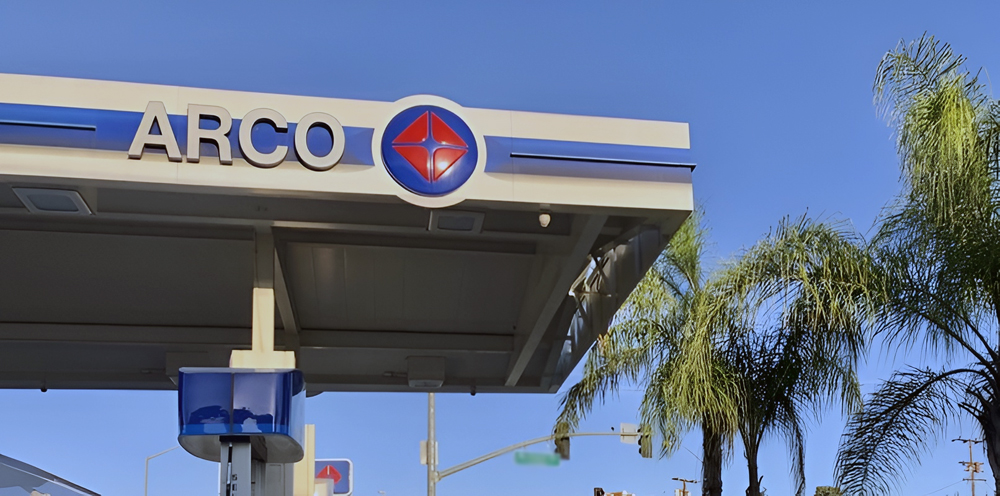
Pull into ARCO. Spot the lower price. Pause for a second. Cheap gas still carries old baggage. ARCO clears a modern standard. It’s a TOP TIER™ brand, and that covers every octane grade sold at licensed stations.
That shows up in the deposits. AAA found TOP TIER fuel left 19x fewer intake valve deposits than non-TOP TIER gas. Cleaner injectors and cleaner valves usually mean fewer rough-idle and hesitation complaints later.
1. Good gas starts with the detergent package
ARCO clears the quality floor that matters
ARCO carries old cheap-gas baggage. The current standard matters more. ARCO is a TOP TIER™ gasoline brand, and that standard covers all grades sold at licensed stations.
That puts ARCO above the bare federal minimum. EPA-minimum gas was built to control emissions. It was not built around long-term engine cleanliness. Automakers pushed the higher standard after seeing intake valves and injectors foul up in as little as 10,000 miles.
That buildup can cost fuel economy. It can also bring rough idle, hesitation, and dirtier emissions. TOP TIER also bars metallic additives like MMT and ferrocene, which can hurt oxygen sensors and catalytic converters.
The deposit numbers are why the sticker matters
AAA put numbers on the gap. Using the ASTM D6201 intake-valve-deposit test, it found TOP TIER fuel left 34.1 mg of deposits per valve. Non-TOP TIER fuel left 660.6 mg. That is a 19x spread.
AAA also tied better detergent fuel to about 95% less carbon buildup in its testing. Its report also showed lower-detergent gas can trim fuel economy by 2% to 4% over time. That loss shows up as dirty injectors, weaker burn quality, and a car that feels flat before any warning light comes on.
Modern GDI engines are less forgiving. Small deposits can distort the spray pattern. That can raise knock risk and feed LSPI in hard-loaded turbo engines.
2. Cheap price does not mean cheap fuel
ARCO saves money with structure, not weak chemistry
ARCO’s low price feeds the old stigma. The business model explains more than the fuel does. ARCO sits inside Marathon Petroleum, and Marathon says it runs 13 refineries with about 3 million barrels per calendar day of crude capacity.
That scale matters before fuel ever reaches the nozzle. Marathon also runs a huge transport and terminal network through MPLX, with more than 40 million barrels of storage in the chain. Fewer middlemen usually means fewer markups.
ARCO also keeps the retail side lean. Simpler stations cost less to run. That helps explain how ARCO can undercut nearby Shell, Chevron, or 76 while still selling TOP TIER gas.
The payment setup is part of the price story
A lot of ARCO’s savings show up in how the sale gets handled. ARCO’s own FAQ says Southwest stations take cash, debit, and mobile wallet payments, and it says PIN debit carries a 35-cent processing fee in that market.
That fee trims the gap, but usually does not wipe it out. On a 20-gallon fill, a 10-cent-per-gallon price edge saves $2.00. Take out the 35-cent debit fee and the net still lands at $1.65.
So part of ARCO’s cheap-gas image comes from transaction design, not weaker fuel chemistry.
3. Where ARCO helps most is inside the injectors and valves
Deposit control is the real mechanical case for ARCO
Pump branding does not clean an engine. Detergent chemistry does. ARCO sells its gasoline with the PROclean additive package, and the deposit-control goal lines up with the broader TOP TIER™ standard.
That work happens in the fuel path and intake tract. High-detergent fuel helps keep injector tips clean, slows intake valve deposit growth, and cuts the carbon that can harden into rough-idle and hesitation complaints later.
AAA’s test record showed about 95% less carbon buildup with TOP TIER fuel than the baseline fuel in its study.
ARCO’s chemistry also has a clean-up role, not just a keep-clean role. AAA’s record says a dirty high-mileage engine run on TOP TIER fuel for 1,000 miles showed a meaningful reduction in existing deposits. That matters when a car has spent years on weaker detergent gas and then starts to feel lazy off idle.
GDI and turbo engines punish dirty fuel faster
Modern GDI engines are less forgiving than older port-injected commuters. Fuel no longer washes the back of the intake valve, and injector nozzles work under very high pressure with tight spray targets. Small deposits can upset the pattern and leave combustion less even.
That matters more in turbo engines. Bad spray and dirty combustion can help create hot spots, knock, and in harder cases LSPI. When the fuel keeps injectors cleaner, the engine has a better shot at holding its intended burn pattern under load.
BASF’s gasoline-additive literature points the same way. Their Keropur additives are built to leave a thin protective film on metal surfaces, slow deposit adhesion, and protect both port and direct-injection hardware. The same record ties ARCO’s additive environment to that chemistry.
The base fuel and additive package are not mystery fluid
ARCO’s CARB gasoline safety data lays out the basic fuel mix in broad ranges. The blend is mainly gasoline at 90% to 100%, with heptane isomers at 2.5% to 26%, toluene at 1% to 20%, and pentane isomers at 6% to 19%.
Those numbers matter because they show ordinary refinery fuel built to spec, then treated with detergent and corrosion-control chemistry at the terminal.
The detergents work in parts per million, not in headline-rich percentages, but they do the job that shapes long-term cleanliness. Oxygen sensors and catalytic converters also benefit from the TOP TIER ban on metallic additives like MMT and ferrocene.
4. Where ARCO loses ground is feel, not fuel safety
ARCO wins on value, not status
ARCO clears the detergent bar. That does not give it the same image as Shell or Chevron. Those brands sell a stronger premium story, and many drivers still pay for that extra confidence at the pump.
That gap is mostly about perception and product marketing. While ARCO consistently meets the TOP TIER™ detergent standard required by major automakers, it is positioned as a value-focused brand.
In contrast, premium brands like Shell and Chevron often rank higher in consumer satisfaction surveys due to their ‘halo’ products, such as V-Power NiTRO+ or Techron, which are marketed as offering additional engine cleaning benefits beyond the base TOP TIER™ requirements
For a normal commuter, that difference usually stays invisible. For a driver chasing the cleanest brand image, the nicest station, or every last premium-fuel talking point, ARCO feels more plain. The fuel still meets the same top-level detergent floor.
Most drivers will not feel a dramatic difference tank to tank
That matters because a lot of fuel talk drifts into myth. Owner chatter does include claims of sluggish pull or slightly worse mpg on ARCO premium in performance cars. Those reports are real as anecdotes, but they do not come with controlled test proof that ARCO’s detergent package is hurting engines.
Blend details can blur the seat-of-the-pants feel. E10 gasoline carries about 3.3% less energy by volume than pure gasoline, so a local ethanol split can change range or throttle feel without saying much about detergency.
A tuned car, a heat-soaked turbo engine, or a driver watching instant mpg can notice that faster than a stock commuter ever will.
That is where ARCO loses ground with picky owners. The brand does not buy the same halo as Shell or Chevron, and halo matters more once the car is tuned, premium-required, or driven hard in hot weather.
Station experience still counts, even when the fuel clears the standard
Fuel quality is only part of the stop. ARCO often saves money with simpler station formats, leaner retail operations, and tighter payment rules. That can leave the whole experience feeling more bare-bones than a full-featured Shell or Chevron site.
Some buyers care about that more than the chemistry. They want easier card use, cleaner lots, more pumps, better food options, or a station they trust at 11 p.m. ARCO’s weak spot is usually that retail feel, not a failure in the fuel itself. The cheaper gallon can still come with a 35-cent PIN debit fee.
5. Octane mistakes create a lot of fake ARCO hate
Use the grade the engine asks for
A lot of bad-fuel complaints start with the wrong octane. ARCO’s own FAQ explains octane the standard way. Higher octane gives the fuel more knock resistance under heat and cylinder pressure.
That matters most in turbo and high-compression engines. If the engine calls for premium and gets regular, the PCM can pull timing to protect the motor. You feel that as softer throttle, weaker pull, and sometimes worse mpg.
So the first fuel check is simple. Match the pump to the sticker. Cheap premium that meets spec does a better job than expensive regular in a car calibrated for 91 or 93.
Bad grade choice gets blamed on the brand all the time
That is where a lot of ARCO complaints go sideways. A driver fills a premium-required turbo car with regular, feels the car go flat, then blames the station. The detergent package did not cause that drop. The knock control did.
The same mix-up shows up with tuned cars. Some calibrations are touchy about octane consistency, heat, and ethanol blend. In those cases, the fuel brand gets blamed for a problem that starts with fuel grade, local blend, or a tune with narrow tolerance.
Ethanol can cloud the picture too. E10 carries about 3.3% less energy by volume than pure gasoline, so a tank can show less range even when the fuel is clean and fully on spec. That is a blend effect, not proof of weak detergency.
Different engines need different standards
A regular-fuel commuter usually does fine on ARCO if the station is busy and the site is maintained. A stock premium-required turbo car can also run ARCO premium without breaking the rules of the engine. The hard line is the octane requirement, not the price sign.
The tougher cases are tuned or heavily heat-loaded builds. Those owners often chase the most consistent premium fuel they can find, and local blend variation matters more there than brand mythology alone. Run the wrong grade long enough and timing gets pulled every time the cylinders load up.
| Vehicle type | Best fuel call | Why it matters |
|---|---|---|
| Regular-fuel commuter | ARCO regular is a safe buy | If the engine calls for 87, detergent quality matters more than premium branding |
| Modern GDI daily driver | ARCO is still a solid choice | TOP TIER detergents help control injector and intake deposit load over time |
| Premium-required stock turbo car | Use ARCO premium if the car calls for it | The octane requirement protects timing and knock control more than brand image does |
| Tuned or hard-driven build | Case-by-case call | Local blend consistency, heat load, and tune sensitivity matter more here |
6. ARCO is a real regional player, not a random discount pump
The brand still lives strongest in the West
ARCO’s identity still sits in the western U.S. That is where the brand built its cheap-gas reputation, and where most drivers still judge it against Shell, Chevron, Costco, and 76. ARCO’s own regional pages keep pushing the same pitch, TOP TIER gas for less.
That regional weight is not small. As of mid-2024, ARCO had 1,603 U.S. locations across 17 states. California alone held about 1,100 of them, or roughly 69% of the whole network.
That matters because California fuel is not easy-mode gasoline. CARB fuel has tighter rules and higher production cost than standard federal gasoline. ARCO still competes as a value brand inside that stricter market.
The supply chain behind ARCO is big, boring, and heavily watched
ARCO is not some orphan station buying mystery fuel off the side of a truck. The brand sits under Marathon Petroleum, and Marathon’s filings say it is the largest U.S. refiner by capacity. That puts ARCO inside a giant refining and transport network before additives even hit the terminal rack.
Marathon’s 2025 record also showed a 94% refining utilization rate and 105% margin capture. Those are not driver-facing numbers, but they point to a supply chain that is running hard and staying efficient. That cuts against the old story that ARCO fuel comes from some low-grade side stream.
The same network has to meet federal and state fuel specs before sale, including CARB requirements in California. So the base gasoline starts in a tightly controlled system, not in a backyard blender. The hard limit is geography, not fuel legality. ARCO is still absent from 39 states and territories.
7. The final call depends on what you drive and what you value
Most daily drivers can buy ARCO without worrying about the fuel
For a normal commuter, ARCO clears the important bar. It meets the TOP TIER™ detergent standard, covers all octane grades at licensed stations, and comes from a major refining chain with broad supply control. That gives most engines what they need, especially stock cars that call for regular.
That includes modern family crossovers and GDI daily drivers. Cleaner injectors and lower intake-valve deposit load matter more there than brand image. AAA’s deposit data points to the same thing, 34.1 mg per valve on TOP TIER fuel versus 660.6 mg on non-TOP TIER fuel in its test.
Premium cars can run it, but picky owners may still want something else
A premium-required stock turbo car can use ARCO premium if that is the grade the fuel door or owner’s manual calls for. The detergent standard is there, and the octane requirement is what protects timing and knock control. Put 87 in a 91-tuned turbo engine and the PCM can pull timing fast.
The more personal calls start above that line. Tuned engines, track-day cars, and owners chasing the most consistent premium fuel often stick with Shell or Chevron.
That usually comes down to confidence, local blend preference, and how much variation the owner will tolerate when the engine is hot and loaded. E10 alone can carry about 3.3% less energy by volume than pure gasoline.
| Driver type | Best call |
|---|---|
| Everyday commuter | ARCO is a strong value buy |
| Family crossover or GDI daily driver | ARCO makes sense because the detergent floor is what counts |
| Premium-required stock turbo car | ARCO premium works if you use the required grade |
| Track-day or heavily tuned owner | ARCO may still work, but fuel-consistency preference gets more personal |
| Driver who wants the nicest station experience | ARCO fuel can be good, but the stop may still feel plain |
ARCO’s weak spot stays outside the tank
ARCO’s weak spot shows up after the fuel leaves the nozzle. Some stations feel plain. Fewer extras, tighter payment rules, less polish around the pump.
That does not change the fuel call. For most drivers, ARCO is good gas. The real choice is price versus station feel. On a 20-gallon fill, a 10-cent gap still saves $2.00 before fees.
Sources & References
- ARCO Northwest | Frequently Asked Questions
- About Us – MarathonFuel.com
- Marathon Petroleum – Wikipedia
- Marathon Petroleum Corporation – Providing Energy Solutions
- 2025 ANNUAL REPORT
- ARCO CARB Gasoline – SAFETY DATA SHEET
- Best Gas for Cars: Is Top-Tier Gas The Best? | AAA Automotive
- TOP TIER™ Approved Gasoline Brands
- AAA study finds Top Tier gas brands offer big advantages
- Retail | Marathon Petroleum Operations
- ARCO Northwest | Quality TOP TIER™ Gas
- Arco Gas Prices: Everything You Need To Know – CoPilot for Car Shopping
- Top Tier Detergent Gasoline – Wikipedia
- Fuel Quality – AAA Gas Prices
- Consumer FAQs – Top Tier Gas
- Top 5 Gas Stations For Quality Gas Ranked In 2025 – The Engineering Choice
- Is costco gasoline better or equal quality as opposed to a shell, etc? – Reddit
- Proprietary research into the effectiveness of fuel additive packages in commercially-available gasoline – AAA
- Is it true that Arco gas is inferior? I get whatever is cheap and close to me but friends and family tell me to never get Arco, get Shell or Chevron instead because Arco is bad for the car. – Quora
- ARCO Southwest | Quality TOP TIER™ Gas Benefits
- Which Gas Is Best For Your Car? Ranking the Top Oil Marketing …
- For those that don’t like Arco gas : r/LosAngeles – Reddit
- Keropur G Gasoline Additive – BASF
- Gas station pricing tiers, worth it or just branding? : r/Frugal – Reddit
- Gasoline Performance Additives – BASF Fuel & Lubricant Solutions
- KEROPUR® G Gasoline Additive – KEMAT Polybutenes
- Fuel Performance Packages – BASF Fuel & Lubricant Solutions
- SAFETY DATA SHEET – Arco
- Brenntag Energy Services designated distributorship with BASF for Keropur
- Is there a difference between using shell gas and gas from Costco or samsclub? – Reddit
- ARCO Southwest | Frequently Asked Questions
- Why is arco’s gas always cheaper than other gas stations ? : r/Seattle – Reddit
- PSA: If you buy using your debit card at Arco, they recently started giving it the same price as credit – Reddit
- Fuel Price Dynamics Across Gas Station Brands: What Drives Costs in 2025 – xMap AI
- Number of ARCO locations in the USA in 2024 – ScrapeHero
- Number of ARCO Gas Station Locations in the USA – 2026 | LocationsCloud
- In 2025, U.S. retail gasoline prices decreased for third consecutive year – U.S. Energy Information Administration (EIA)
- Number of ARCO Gas Stations in the USA & Location Data Insights – xMap AI
- Is Arco Gas Good? Everything You Need To Know – CoPilot for Car Shopping
- ARCO gas bad? : r/askcarguys – Reddit
- Shell vs Chevron vs Arco/Other 91 gas : r/Audi – Reddit
- MPG with different gas stations for 2025 Sport-L : r/crv – Reddit
- Expert Automotive – 9864 Dino Dr – Elk Grove, CA – Carfax
- Expert Automotive – 20 Ludlow Rd – Parsippany, NJ | CARFAX
- Expert Automotive Repair – 1377 W Busa Dr – San Tan Valley, AZ – Carfax