
Floor it. One truck snaps. The other digs in and pulls. GM built these 2 for different jobs. The 6.2 makes 420 hp and 460 lb-ft.
The 3.0 LZ0 diesel makes 305 hp and 495 lb-ft, with peak torque at 1,500 rpm. Empty and light, the V8 feels quicker. Loaded or climbing, the diesel feels easier.
Then the bill shows up. Some 2021 to 2024 GM 6.2 trucks and SUVs fall under recall 25V-274. The diesel saves fuel, but it brings DEF, regen, and less payload. That fight starts at the crank, not the badge.
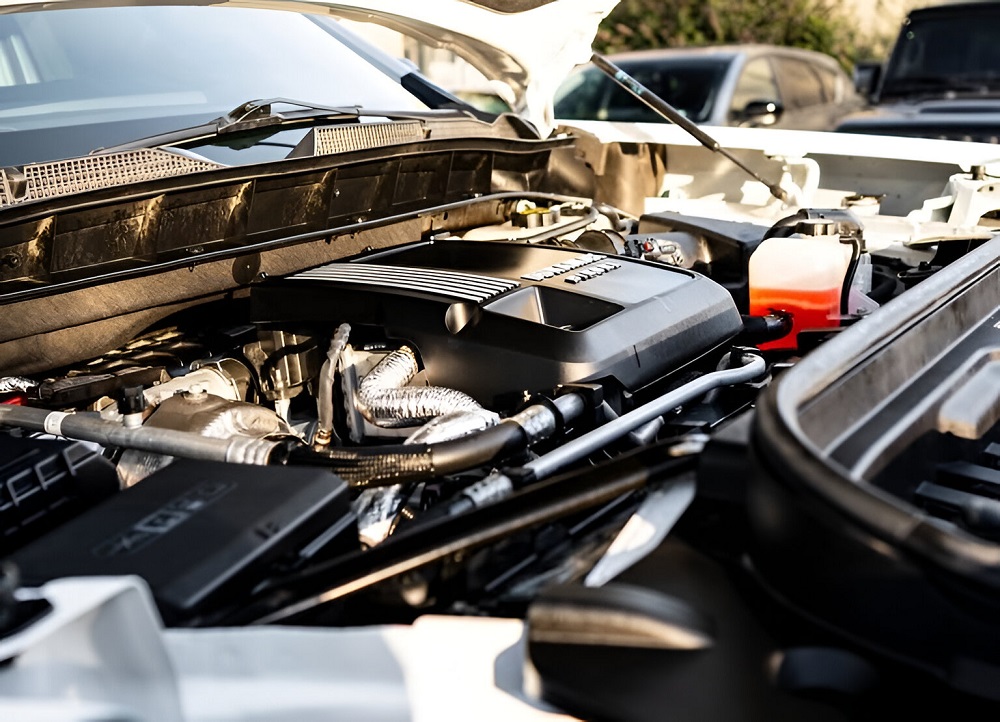
1. Same badge, opposite engine brains
One chases speed with revs, the other builds force down low
GM sells these as top engines, but they do the job in opposite ways. The 6.2L L87 makes 420 hp and 460 lb-ft. The 3.0L LZ0 diesel makes 305 hp and 495 lb-ft, and it hits that torque at 1,500 rpm. Chevrolet’s own specs tell you where each one lives, the V8 higher in the rev range, the diesel down low.
That shows up fast from the driver’s seat. The 6.2 answers quicker when you crack the throttle. The diesel feels heavier on its feet at first, then pulls hard without asking for much rpm. On a grade or with weight behind it, that low-rpm torque changes how often the 10-speed has to drop gears.
| Core comparison | 3.0 Duramax LZ0 | 6.2L EcoTec3 L87 |
|---|---|---|
| Layout | Turbo-diesel inline-6 | Naturally aspirated V8 |
| Horsepower | 305 hp @ 3,750 rpm | 420 hp @ 5,600 rpm |
| Torque | 495 lb-ft @ 1,500 rpm | 460 lb-ft @ 4,100 rpm |
| Valvetrain | DOHC, 4 valves per cylinder | OHV, 2 valves per cylinder |
| First feel | Early pull, steady shove | Sharper hit, stronger top-end |
The hardware tells you why they feel this far apart
The L87 sticks with the old small-block approach, big displacement, no turbo, and power that builds with rpm. GM pairs it with Dynamic Fuel Management, an aluminum block, and a 10-speed. The hard point here is simple. This engine makes its best shove at 4,100 rpm, not 1,500.
The LZ0 comes at the same job from the other direction. It’s an inline-6 turbo-diesel, so the layout itself helps smoothness. The newer LZ0 revision also moved to steel pistons and updated injector, turbo-compressor, and temperature-control hardware, then pushed output to 305 hp and 495 lb-ft.
GM said the newer diesel gained 10% in horsepower and 7.6% in torque over the earlier version.
The first test drive usually hides the real choice
An empty truck flatters the 6.2. It feels lighter, louder, and more eager when road speed climbs. That tracks with the 115-hp gap, and it’s why the V8 tends to own quick merges and fast passes.
The diesel makes its case later. In traffic, on grades, and with a trailer, it leans on that 1,500-rpm torque peak and stays calmer. Owners notice fewer busy downshifts and less engine flare in normal pulling work. The whole argument starts with where each engine makes force, 4,100 rpm for the V8, 1,500 rpm for the diesel.
2. The difference gets real once the truck is rolling
The 6.2 hits harder when speed matters
The 6.2L L87 owns the first clean punch. It carries a 115-hp edge, 420 hp to 305, and that shows up in 0-60 runs, freeway merges, and quick passes at highway speed. The V8 keeps pulling as rpm climbs. The diesel starts to run out of breath sooner.
That feel tracks with where each engine makes torque. The 6.2 peaks at 460 lb-ft at 4,100 rpm, so it wants revs before it gives you its best hit.
Crack the throttle empty, and the 10-speed lets the V8 jump on the lower gears fast. In trims like AT4X and ZR2, owners also get the sound that makes the truck feel quicker than the stopwatch alone.
The diesel feels stronger in the work zone
The 3.0L LZ0 makes its case at 1,500 rpm. Peak torque lands at 495 lb-ft, so the truck pulls early and stays relaxed in normal driving. Roll away from a stop, ease into traffic, or climb a grade with weight behind you, and the diesel needs fewer downshifts. That cuts flare and keeps the engine in a calmer band.
This is where the spec sheet can fool people. The diesel gives up 115 hp, but it often feels less busy in the kind of driving truck owners do every day. Some owners still call it weak on fast highway passes, and that complaint fits the power curve. Ask for speed at the top end, and the V8 has more to give.
The SUV version widens the gap
Drop these same engines into a Tahoe, Yukon, or Escalade, and the mood changes. The 6.2L sells itself with sound, throttle hit, and a more eager feel when the truck is lightly loaded.
The 3.0L sells itself with a smoother cabin, quieter cruising once warm, and longer range on interstate miles. Full-size SUVs make those traits easier to notice because they spend more time carrying people than hauling bed cargo.
GM’s own SUV pitch leans into that range and torque angle with the diesel. That makes sense in a family hauler or luxury SUV, where low-rpm pull and fewer fuel stops matter more than exhaust bark.
The debate lands different there than it does in a Silverado with nothing in the bed. The V8 wins the grin test. The diesel wins the 600-mile day.
3. Towing numbers sit close, but the work feels different
Max tow sells the truck, but axle, cooling, and gearing do the work
Both engines can sit in the same towing conversation. In Silverado 1500 form, both can reach the 13,300-lb class when the truck is built right.
That means the Max Trailering Package, not just the engine badge. GM ties that package to heavy-duty springs, more cooling, and a larger 9.76-inch rear axle instead of the standard 8.625-inch unit.
The gearing also changes. The 3.0 Duramax jumps from a 3.23 axle to a 3.73. The 6.2L moves from 3.23 to 3.42. Those ratios matter once the trailer starts pushing back, because they change how hard the 10-speed has to work to keep the engine in its power band.
The diesel stays calmer on a long pull
The LZ0 diesel fits steady towing better. Peak torque lands at 1,500 rpm, so it can hold load without chasing rpm all day.
That usually means fewer downshifts, less gear hunting, and less noise in the cab when you drag a travel trailer through wind or grade. Owner reports and tow testing keep circling the same point, the diesel feels less busy over distance.
That showed up on the Ike Gauntlet, a 7% Colorado grade that punishes half-ton trucks. The 3.0 Duramax LZ0 held 5.9 to 6.0 mpg under maximum load. It was not the quickest truck to the top, but the low-rpm torque kept the transmission from hunting the way gas trucks often do when the climb drags on.
The 6.2 climbs harder, then drinks harder
The 6.2L L87 answers faster when you want speed with the trailer still attached. It has 420 hp, and that extra horsepower shows up when you ask the truck to accelerate uphill instead of just maintain pace. You feel more snap when the road opens up. The diesel does not answer that kind of request the same way.
That pace costs fuel. The same tow testing that flatters the diesel for calm manners shows the V8 burning fuel much harder under load, often down in the single digits.
So the 6.2 fits the owner who tows sometimes and still wants a lively truck the rest of the week. Hook up often enough, and the fuel receipts start doing the talking.
| Utility metric | 3.0 Duramax | 6.2L V8 |
|---|---|---|
| Max available towing | Up to 13,300 lbs | In the same max-tow class when properly equipped |
| Payload tendency | Lower, because the diesel package is heavier | Usually higher |
| Best towing feel | Long-distance, lower-rpm, calmer pull | Faster, louder, more aggressive pull |
| Hidden issue | Payload can run out before tow rating does | Fuel use falls harder under load |
Payload is where diesel owners run out of room first
Tow rating and payload are not the same number. The diesel’s turbo, intercooler, and emissions hardware add weight, and that weight cuts into what the truck can carry.
In the figures collected here, a 4WD 6.2L Silverado can reach 2,050 lbs of payload, while the comparable 3.0L diesel lands around 1,970 lbs. Curb weight also runs about 200 to 300 lbs heavier on the diesel truck.
That gap gets real fast with a travel trailer. Tongue weight usually eats 10% to 15% of trailer weight before you count passengers, a hitch, tools, or bed cargo.
An 8,000-lb trailer can put 800 to 1,200 lbs right on the truck. Run the numbers wrong, and the diesel hits payload before it hits tow rating.
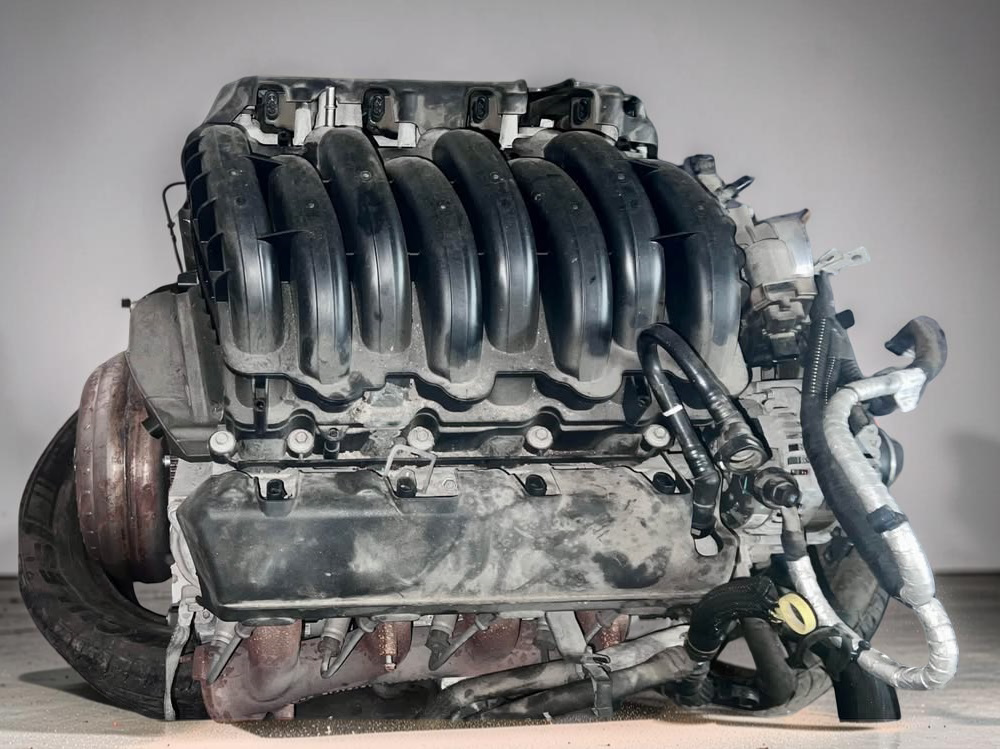
4. Fuel economy is the diesel’s sharpest tool, but diesel life has its own bill
The diesel opens a real gap at the pump
The 3.0 Duramax wins the mileage fight by a wide margin. Chevrolet still markets the 2026 Silverado diesel at 28 mpg highway. Real-world owner reports and comparison testing in the supplied record stretch that edge farther, often by 7 to 10 mpg depending on trim, tires, speed, and load.
That spread gets expensive fast on a half-ton truck. Car and Driver logged 26 mpg on its 75-mph highway route with a 4WD diesel Silverado, while a 4WD 6.2L truck returned 19 mpg on the same route. That is a 7-mpg gap at real highway speed, not a brochure loop.
Premium gas and diesel prices narrow the win, but they do not erase it
The fuel-price math is tighter than simple mpg bragging makes it sound. AAA listed the U.S. national average on April 23, 2026 at $4.908 for premium and $5.471 for diesel. The diesel costs more per gallon before the truck even leaves the station.
The 6.2 also wants premium for full output. Chevrolet dealer research pages for the 2026 Silverado line state that the 6.2L EcoTec3 V8 requires premium 91-octane or higher for maximum performance, while the diesel requires ultra-low-sulfur diesel. So the gas truck is not playing in the cheap-fuel lane either.
The annual math still leans diesel if you pile on miles. Using the working figures in the supplied record, 20,000 miles a year at 17 mpg for the 6.2 and 25 mpg for the diesel leaves the Duramax ahead by about $1,357.88 a year in fuel alone at current national averages.
That gap shrinks if your diesel runs mostly short trips or the fuel spread blows out in your state.
DEF and regen are where the easy diesel fantasy breaks down
The diesel’s extra chores start with DEF. The record here puts normal DEF-tank life at about 3,000 to 6,000 miles in unladen driving. Heavy towing can cut that hard, with some owners reporting refills every 500 to 1,200 miles.
Then there is DPF regeneration. The same record shows regen cycles hitting about every 150 to 380 miles, and each one needs roughly 12 to 15 minutes of sustained driving to finish cleanly.
That requirement matters more than most buyers think. Cut the trip short often enough, and soot loading starts to become your problem instead of the truck’s.
Short commutes are where the diesel can turn sour. The record flags trips under 6 miles as a bad match because the engine may never stay hot long enough to complete regen consistently.
That is how a mileage winner turns into an emissions-service truck. Under that kind of use, the 6.2 gives up fuel money but skips DEF and regen altogether.
5. Reliability is where this choice can turn expensive fast
The 6.2’s big shadow is no longer just lifter noise
The 6.2L L87 already had a bad name for Dynamic Fuel Management lifter failures. When those lifters collapse, owners report ticking, misfires, and cam damage. The bill can run from about $4,000 to $8,000 once a camshaft and lifters go bad out of warranty.
Then GM’s 2025 recall made the risk much bigger. NHTSA recall 25V-274 covers certain 2021 to 2024 Silverado 1500, Sierra 1500, Tahoe, Suburban, Yukon, Yukon XL, Escalade, and Escalade ESV models with the 6.2L V8.
NHTSA says the connecting rod and or crankshaft components may have manufacturing defects that can lead to engine damage and engine failure.
The remedy also tells you how serious the concern is. Dealers inspect the engine, and if needed, repair or replace it. If the engine passes inspection, GM still calls for higher-viscosity oil, a new oil-fill cap, a new oil filter, and an owner’s-manual update. The recall covers 597,630 vehicles.
The diesel’s pain lands later, deeper, and slower
The 3.0 Duramax usually does not fail with the same sudden drama. Its big long-run bill is the rear-mounted oil-pump belt. On the newer LZ0, GM extended the service target to 200,000 miles. The older LM2 was set at 150,000 miles.
That belt job is ugly because of where GM put it. The belt sits at the rear of the engine, so replacing it means pulling the transmission. The labor estimate in the record runs up to 17 hours, and dealer quotes can reach about $3,000.
The diesel also carries the usual emissions-side risks. DPF problems, DEF leaks, and soot-management trouble can show up if the truck spends its life on short runs. That does not make the engine weak. It makes it expensive when the use case is wrong.
Early LM2 baggage does not map cleanly onto the newer LZ0
A lot of diesel fear online came from the earlier LM2. That engine had cold-start complaints, long-crank stories, and timing-related chatter in the field.
The LZ0 changed key hardware, including steel pistons, a retuned turbo compressor, higher-flow injectors, revised piston-cooling oil jets, and improved temperature control. GM also said the second-generation diesel gained 10% in horsepower and 7.6% in torque.
Those changes matter, but they do not erase every question. High-mileage proof on the newer version is still building. So the right comparison is not “all 3.0 diesels” against the V8. It is early LM2 history against the newer LZ0 as it ages past 100,000 miles.
| Risk area | 3.0 Duramax | 6.2L V8 |
|---|---|---|
| Signature headache | Rear oil-pump belt service, emissions upkeep | DFM lifters, recall 25V-274 exposure |
| Best long-haul trait | Strong mileage and relaxed highway pull | No DEF or regen |
| Worst short-trip trait | Regen and soot headaches | Heavy fuel burn |
| Repair-shop reality | Diesel and emissions work can get pricey fast | More shops know the engine, but big failures are brutal |
6. Daily use makes the gap feel even wider
The diesel turns into the easy long-haul truck
The 3.0 Duramax keeps winning once the trip gets long. The inline-6 layout is naturally smoother than a V8, and that shows up at idle and steady highway speed.
Once warm, the diesel stays quiet enough that many owners stop thinking about it as a diesel at all. Highway range can push past 600 miles per tank in the right truck or SUV setup.
That changes how the truck feels over a week, not just a test drive. Fewer fuel stops matter on interstate work, family road trips, and back-to-back tow days.
The diesel also stays relaxed at low rpm, so the cabin feels less busy when the road tilts up or wind starts shoving the trailer around. The record here notes overlanding appeal for the same reason, more range, low-rpm control, and less fuel stress when the next station is far away.
The 6.2 keeps the fun in the truck
The 6.2L wins the part buyers feel in the seat and hear through the floor. It responds faster, revs harder, and sounds like a proper top engine should. In trims like AT4X, ZR2, Denali, and Escalade, that sharper hit helps justify the price tag in a way a fuel-economy chart never will.
That matters more than some buyers admit. A full-size truck or SUV with the 6.2 feels lighter on its feet when it is empty. The throttle reacts sooner, the engine note carries more character, and quick lane changes or short passes feel easier. You pay for that in fuel, but the V8’s whole pitch lives in that first half-second.
Off-road use splits into slow control or fast throttle
The diesel fits slower trail work better. Its torque comes in low, so rock crawling, loose climbs, and careful throttle work feel easier to meter.
The extra range also matters in backcountry use, where a 600-mile tank can mean the difference between planning the route and cutting it short. The record here shows the diesel gaining traction with overlanding buyers for exactly that reason.
The 6.2 fits a different kind of dirt driving. It gives you quicker response for sand, mud, and faster open-terrain running where engine speed matters.
GM’s off-road trims often lean that way, with the 6.2 standard in many ZR2 and AT4X setups before the diesel spread wider into those lines. One small hardware limitation also shows up in the record, the AEV Edition’s steel bumpers delete the corner steps found on standard trucks.
7. Pick by how the truck will live, not by which engine sounds cooler
The right choice starts with mileage, trip length, and what stays hooked to the hitch
The 3.0 Duramax fits the owner who piles on miles. If the truck spends its life on highway runs, long tow days, or cross-state trips, the diesel’s fuel economy and range carry real weight.
The same goes for owners towing in the 5,000 to 10,000-lb range often enough to care how calm the powertrain stays under load. That is where low-rpm torque, fewer fuel stops, and steadier towing manners start to pay back the diesel hardware.
The 6.2L fits a different week. Short hops, unloaded driving, and buyers who still want the truck to feel quick every time they leave a light.
It also fits owners who do not want to deal with DEF, regen behavior, or the diesel’s 200,000-mile oil-pump-belt job that can run about $3,000 with transmission removal. On the other side of the ledger, the 6.2 still carries the weight of recall 25V-274 and the older DFM lifter reputation.
Luxury SUV buyers split the same way. The diesel works better for quiet range and smoother highway miles in a Tahoe, Yukon, or Escalade. The V8 works better for buyers who want sharper throttle, more sound, and a stronger empty-truck feel.
The decision gets easier once you stop chasing the top spec and start looking at commute length, annual mileage, and how often the trailer stays attached for hours.
| Owner type | Better fit | Why |
|---|---|---|
| High-mileage highway driver | 3.0 Duramax | Fuel economy and range are too strong to ignore |
| Frequent long-distance tower | 3.0 Duramax | Low-rpm torque and calmer towing manners |
| Short-trip suburban owner | 6.2L V8 | Avoids regen and DEF headaches |
| Buyer who wants the quickest, loudest top engine | 6.2L V8 | More horsepower, more sound, more punch |
| Luxury SUV owner who wants quiet range | 3.0 Duramax | Smoother highway character |
| Owner worried about current 6.2 recall baggage | 3.0 Duramax | Avoids the L87 recall cloud |
| Owner worried about long-run diesel service costs | 6.2L V8 | No oil-pump-belt service or diesel emissions upkeep |
| Overlander or long-range road-tripper | 3.0 Duramax | Better range and low-speed torque |
| Weekend toy buyer who values sound over savings | 6.2L V8 | Sharper hit, more character |
Sources & References
- 2026 Chevy Tahoe Engine Options: V8 vs. Duramax Diesel | Sidney, OH
- Is the 3.0 Duramax Right for You? Reliability, Pros & Cons – Diesel Power Products
- Half-Ton Heavies: Chevy & GMC 3.0 Duramax Diesel vs 6.2 Gas V8 | DrivingLine
- GMC Sierra 1500 AT4X Showdown: 6.2L V8 AEV Edition vs. 3.0L …
- Chevrolet Silverado 1500 LZ0 Duramax vs. L87 Small Block: Which …
- GM L87 Engine Problems & California Lemon Law | RV Auto Legal
- New 2026 Chevrolet Silverado 1500 LTZ 4WD Crew Cab Pickup – Luther Automotive
- Chevy Silverado Engine Problems (1999-2025): Every Issue
- GMC 6.2 Engine Problems: Lifter Failure Defect, Recall, and Lawsuit Updates (2025)
- Video: New 2023 GMC Sierra 1500 Duramax LZ0 Diesel vs the Ike Gauntlet – the World’s Toughest Towing Test – The Fast Lane Truck
- 2026 Chevy Tahoe FAQs & Specs – Chesrown Chevrolet GMC of Sidney
- I Just Went From a 2024 Chevy Silverado 5.3L to a 2025 3.0L …
- Duramax 3.0 vs. 6.2 V8 : r/gmcsierra – Reddit
- 2025 GMC Denali 1500 3.0 or 6.2 : r/gmcsierra – Reddit
- Serra Sterling Heights Blog | News, Updates, and Info
- 3.0 Duramax with 3.23 or 3.73 rear axle? : r/gmcsierra – Reddit
- 2025 Chevy Silverado 1500 MPG Guide – Volume Chevrolet
- 6.2 or 3.0 : r/gmcsierra – Reddit
- Realistic 3.0 diesel mpg : r/gmcsierra – Reddit
- Gas prices today April 21: Check daily average rates in California, Texas, Florida, New York, Washington a
- Gas prices today April 22: Check daily average rates in California, Texas, Florida, New York, Washington a
- AAA: National Average Gas Prices Spiked In March 2026 – Kelley Blue Book
- Def usage and regens : r/gmcsierra – Reddit
- 3.0L def consumption : r/Silverado – Reddit
- 2k miles towing: 2023 Chevy Silverado 1500 3.0L Duramax Diesel
- 3.0 vs 6.2 : r/gmcsierra – Reddit
- GMC Sierra 6.2L V8 vs 3.0L Diesel : r/gmcsierra – Reddit
- What Did GMC Fix on 2025+ 6.2L Engines : r/gmcsierra – Reddit
- New NHTSA Investigation Focuses On 877000 GM Trucks And SUVs for 6.2L V8 Engine Failures
- Literally every time I tell someone my pickup has a 3.0 Duramax. – Reddit
- Exclusive: New 3.0L LZ0 Duramax Diesel fixes long-crank issue, extends belt life
- The $10,000 3.0 Duramax Timing Chain Flaw – What GM Fixed and How to Protect Your Truck
- People seem to either love or hate these 3.0 Duramax engines. : r/Diesel – Reddit
- Max Towing : r/Silverado – Reddit
- 3.23 or 3.42 axle ratio : r/Silverado – Reddit
- Do max towing packages with higher rear axle ratios impact MPG? – Pickup Truck +SUV Talk
- Advice Needed- 6.2 or 3.0 Duramax? AT4/AT4X or Denali/Denali Ultimate? : r/gmcsierra
- 2025 Silverado LT Trail-Boss LZ0 Duramax fuel economy after 1100 miles – Reddit
- Comparing The 2026 Chevrolet Silverado 1500 vs 2025: Which Is Better?