
Shifter clicks into Park. Door swings shut. Fusion creeps down the driveway anyway. That single fault; soft plastic cracking in the shift cable bushing; fueled a 3-million-vehicle safety recall and years of lawsuits. But the bushing failure wasn’t the only thing dragging the Fusion’s name through the dirt.
Behind the headlines sits a bigger mess: a 6-speed automatic that shudders, slips, or just quits. A cracked flexplate that severs power mid-commute.
A torque converter that turns cruise mode into a vibrating rattletrap. Add hybrids with weird drivetrain noises and dealers swapping transmissions while owners argue over recall codes.
This guide breaks it down. What Ford actually covers. What they don’t. What to check, what to fix, and what can empty your wallet fast.
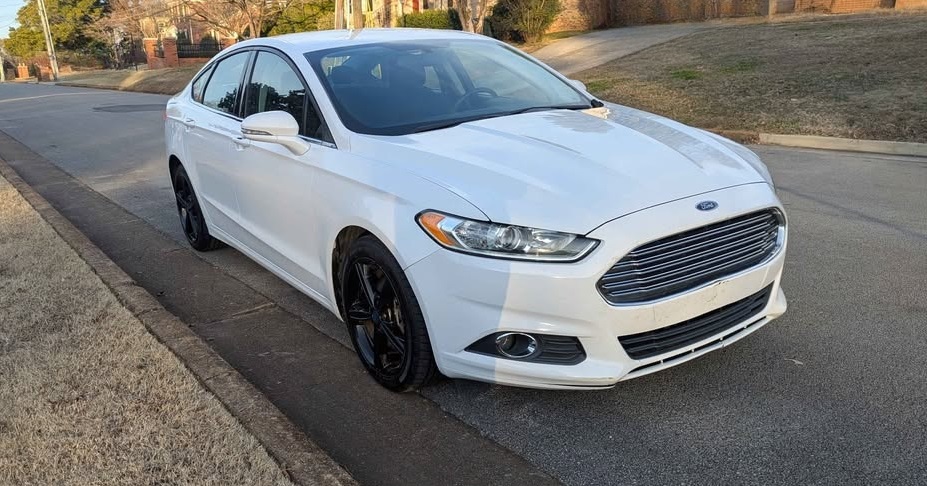
1. What transmissions really failed and which ones got recalled
One badge, three gearboxes, and a long trail of complaints
Fusion ran more than one transmission. From 2010 to 2020, the lineup split across three main types: early 6F35 automatics, later 6F35 revisions, and the HF35 eCVT used in hybrids and Energi plug-ins. A few rare manual G6M boxes exist, but nearly every problem stems from the 6F35.
Early Gen 1 6F35 units (2010–2012) paired with non-turbo 2.5L engines frequently exhibited issues such as slipping, harsh upshifts, and premature valve-body wear.
While these specific problems did not result in official safety recalls, they are widely documented in owner reports and automotive forums, indicating a prevalent concern that often necessitated repairs outside of warranty coverage, typically addressed through Technical Service Bulletins (TSBs) rather than mandatory recalls.
Second-gen Fusions (2013–2020) kept using the 6F35 but updated internals and tuning. That didn’t fix much. The newer units added torque converter failures, flexplate cracking, and a recall-worthy bushing that could slip off and cause rollaways.
Hybrids dodged most of it. They used the HF35 eCVT, a planetary-split setup with no clutch packs or torque converter. Problems here are rare and tied to bearing noise, not failure to drive or shift.
Engine label shows your transmission and your risk
Open the driver door and check the white Safety Compliance sticker. Look for the TR code:
• W = 6F35 automatic
• 6 = G6M manual
• X or Y = HF35 hybrid eCVT
That sticker ties to how the drivetrain was built, and how it breaks. Non-turbo 2.5L engines nearly always pair with the 6F35. So do the early 1.6L and 1.5L EcoBoosts. The 2.0L EcoBoost often got a beefed-up 6F35 with more tuning quirks and flexplate risk.
If your Fusion’s TR code reads “W,” and the VIN lands between 2013 and 2016, it likely falls under Recall 22S43 for shifter cable bushing failure. If it’s a 2017–2020 2.0 EcoBoost, flexplate cracks and torque converter issues are more likely, especially after 80,000 miles.
What owners report, and what Ford actually covers
Reports fall into five buckets: rollaway risk, rough shifts, cruise-speed shudder, no-move failures, and sudden loss of power. The worst overlap with known defects, but plenty don’t trigger any recall.
Shifter bushing failures got full safety coverage under 22S43. So did a narrow torque converter weld defect in 2017 models under 17S16. Flexplate cracking in 2019–2020 models led to CSP 22N12, which helps, but only up to 120,000 miles.
Anything outside those campaigns? You’re likely paying. Most early 6F35 clutch and valve-body issues fall into TSB or denial territory. Even valid claims often require multiple visits, deep documentation, and a dealer that’s seen the failure before.
Ford Fusion transmissions by model year, risk profile, and main failure type
| Model Years | Transmission | Typical Drivetrain | Main Worry Zone | Recall / CSP Touchpoint |
|---|---|---|---|---|
| 2010–2012 | 6F35 Gen 1 | Gas only | Early slipping, harsh shifts | Litigation / TSB focus |
| 2013–2016 | 6F35 Gen 2 | Gas only | Shudder, leaks, bushing rollaway | 22S43 + multiple TSBs/CSPs |
| 2013–2020 | HF35 eCVT | Hybrid / Energi | Noise, rare bearing issues | Noise TSBs, no major safety recall |
| 2017–2020 | 6F35 revised | 2.0 EB / others | Torque converter, flexplate cracking | 17S16, 22N12, software CSPs |
2. Shifter cable bushing failures that led to rollaway recalls
One cheap bushing, three million recalls, and a real safety threat
At the end of the shifter cable sits a soft polymer bushing that locks the cable to the transmission’s range selector arm. That’s the only thing keeping Park from becoming Drive.
Ford used a Hytrel 4556 elastomer bushing from 2013 to 2016. Moisture, engine bay heat, and lube exposure broke it down. Some cracked. Some slipped free. Once detached, the shifter still moved, but the cable didn’t. The driver thought the car was in Park. The trans stayed in gear.
A Fusion with a failed bushing can sit still while running. Then roll when the brake is released. That’s how property damage and minor injuries started stacking up before NHTSA forced a broader fix.
The rollaway problem wasn’t theoretical, it happened in driveways
Bushing failures didn’t trigger a warning light. The PRNDL showed Park even if the transmission was in Reverse. That mismatch turned into cars moving across parking lots or down sloped driveways, after the driver stepped away.
Some owners found out after the car hit a wall. Others caught it when the Fusion started creeping as they unbuckled. Even with the engine off, if the ignition allowed a key pull in Park, the car could still roll because the trans was physically left in gear.
These real-world failures made it a safety case, not a reliability one. NHTSA moved to force recall-level accountability.
Ford dragged the fix across four years and three recall rounds
The first recall came in mid-2018. 18S20 covered a slice of 2013–2016 Fusions. Then 19S16 tried again with a revised bushing and a protective cap, focusing on 2.5L trims.
Neither fixed the problem wide enough.
In 2022, Ford issued Recall 22S43, which covered nearly 3 million vehicles across multiple nameplates. For Fusion alone, it swept across 2013–2016 gas models with the 6F35 automatic. This recall finally mandated a tougher bushing and a cap to block debris and splash.
Ford also launched a mobile repair program for cars stuck in Park, and authorized $250 towing reimbursements. Some dealers limited repairs to vehicles already exhibiting symptoms due to part shortages in the early rollout.
What the fix looks like and how to verify it was done
The 22S43 remedy swaps the original bushing for a more stable polymer and adds a black protective cap over the connection point. It doesn’t change the cable or shift lever. The repair is done from underneath, no need to drop the trans or unbolt the mount.
You can spot the fix by looking down at the trans range lever with a flashlight, the cap should be clearly visible over the shift stud. Or check your service record: the repair order should list BC3Z-7K340-A or similar part number for the bushing kit.
Even after the recall is done, the parking brake remains critical. If that bushing ever detaches again, the trans won’t hold position; only the brake will.
Ford Fusion shifter cable bushing campaigns affecting transmissions
| Action ID | Years / Models Affected | Core Problem | Remedy In The Bay |
|---|---|---|---|
| 18S20 | 2013–2016 Fusion subset | Bushing material breakdown | Replace bushing with updated part |
| 19S16 | 2013–2016 Fusion 2.5L | Ongoing degradation, exposure | New bushing + protective cap |
| 22S43 | 2013–2016 Fusion (broad) | Rollaway risk, prior fixes short | Universal bushing + cap replacement, mobile repairs allowed |
3. The 6F35 automatic and why rebuilds don’t stop the failures
Tight guts, no margin, and fluid that cooks too fast
The 6F35 was sold as a smart 6-speed with adaptive logic. What owners got was a hot-running box with zero tolerance for wear. Inside: a torque converter, five clutch packs, and a valve body with high-pressure solenoids. The fluid filter sits deep in the case and can’t be changed without full teardown.
Once debris builds or fluid thins, the hydraulic system starts slipping. Clutches wear unevenly. Solenoids lose their trim. The converter generates heat that the cooling circuit can’t clear fast enough in traffic or warm climates.
Although Ford designates Mercon LV as a “lifetime” fluid, automotive experts and mechanics widely recommend periodic fluid changes (e.g., every 30,000 to 60,000 miles) for the 6F35 transmission.
This proactive maintenance is crucial because Mercon LV can oxidize and degrade under normal operating conditions, particularly under load or in warm climates, leading to varnish buildup and reduced lubrication effectiveness well before 100,000 miles, thereby compromising transmission longevity.
What Fusion owners feel when the 6F35 starts to fail
Shift flare is the first sign; engine RPM rises between gears, especially 2–3. Then come bang-shifts into gear on decel or downshift. Drive or Reverse delay at startup follows, then full no-move.
Around 40–60 mph under light throttle, the torque converter shudder hits. It’s a low rumble that feels like running over expansion strips. Owners think it’s a misfire, but it’s lockup clutch breakdown. Once the converter slips, debris spreads and damages the fluid pump and valve body.
Valve bodies and converters don’t last if line pressure drops
Low line pressure ends the 6F35. It starts at the valve body. The solenoids can’t hold commanded pressure. The clutch packs don’t engage clean.
Then torque converter lockup slips and pulses until the unit overheats. If the torque converter is replaced without checking the valve body and pump, the new converter goes the same way.
Some 2017 Fusions were recalled under 17S16 for torque converter weld-stud failure. The rest just fail out of warranty with no warning. Solenoid and valve body kits are common, but don’t last unless paired with updated calibration and a fresh pump.
Internal filter traps the damage but hides the warning signs
The internal fluid filter clogs with metal and clutch dust. You can’t drop a pan and swap it; it’s built into the case. Once flow drops, hydraulic pressure falls, and the clutches glaze or burn. No pressure, no drive.
Flush machines do more harm than good. On a high-mile 6F35, a flush stirs up junk and forces it into control valves. That’s how a drain-and-fill turns into a full rebuild. Shops that know these boxes only recommend soft flushes on low-mile units. Otherwise, it’s rebuild or reman.
6F35 automatic: symptom, likely cause, and repair depth
| Driver Symptom | Likely Issue | Typical Repair Scope |
|---|---|---|
| Flare between gears / rising RPM | Valve-body wear, low line pressure | VB rebuild/replace, solenoids, fluid |
| Harsh bang into gear or downshift | Faulty solenoid / adaptation drift | Relearn first, then VB / solenoid work |
| Rumble-strip vibration at cruise | Torque converter clutch breakdown | Converter replacement, pump inspection |
| No-move or delayed engagement | Internal clutch damage, clogged filter | Full rebuild or reman transmission |
4. Failures that mimic transmission trouble, but start somewhere else
Flexplates that crack, rattle, and finally snap
On 2019–2020 Fusions with the 2.0L EcoBoost and 6F35, the flexplate hub is a known weak point. It’s the steel disc that bolts the crank to the torque converter.
When it cracks around the center, the drivetrain starts chirping or rattling under load. As the crack spreads, the plate warps. Eventually, drive power cuts out completely.
Ford issued Customer Satisfaction Program 22N12, covering 100% of the cost up to 100,000 miles, then 50% through 120,000. Coverage ends cold after that. The repair includes a new flexplate, fluid pump, and torque converter, if the failure’s caught before full separation.
Torque converter weld flaws that left cars stuck
A 2017-specific defect in the converter weld studs led to Recall 17S16. The studs separated under load, disconnecting the converter from the rest of the drivetrain. No shudder. No noise. Just no drive.
This recall applies only to a narrow VIN window but shares symptoms with broader converter failures in the 6F35. The difference is whether Ford pays for it.
Left axle seal leaks tied to worn case bushings
Fusions built before October 14, 2013, often show slow leaks on the driver-side axle. The issue isn’t the seal; it’s the case bushing behind it. Wear in that bushing lets the halfshaft wobble, which chews the seal and bleeds Mercon LV fluid.
TSB 16-0043 replaced an older bulletin and called for a red Teflon-coated bushing, new seal, and fluid top-off. Some shops reused the old bushing. That’s how the leak comes back.
Engine updates that triggered phantom transmission shudder
In 2021, Ford pushed a PCM update (21B10) to protect cam phasers by adjusting oil flow. It worked, but created low-speed engine shudder that felt exactly like a bad converter. Owners reported transmission complaints. Ford tracked it back to the calibration.
CSP 21N08 let dealers reflash the PCM with calmer timing logic, dropping the shudder but removing the phaser protection. The update helped performance, but sent more strain back into the engine.
Major Ford Fusion transmission-adjacent FSAs (recalls, CSPs, TSBs)
| Program | Years / Drivetrain | Failure Mode | Coverage / Status |
|---|---|---|---|
| 17S16 | 2017 6F35 | Torque converter weld failure | Safety recall, converter replacement |
| 22N12 | 2015–2020 2.0 EB / 6F35 | Flexplate cracking, loss of drive | CSP, tiered coverage to 120k miles |
| 16-0043 | Pre-10/14/2013 6F35 | LH seal leak, bushing wear | TSB repair with updated bushing/seal |
| 21N08 | 2017–2020 multiple engines | Engine-induced cruise shudder | CSP PCM reprogramming |
5. Why the hybrid Fusion skipped the worst transmission failures
No clutches, no converter, no shift points to screw up
The HF35 eCVT used in Fusion hybrids and Energi models from 2013–2020 doesn’t behave like the 6F35. It’s a power-split unit with a planetary gearset and dual motor-generators.
There’s no torque converter. No upshift clutches. No bands or brake solenoids. All motion routes through electric assist and a fixed mechanical loop.
That simplicity keeps the trans cooler and reduces wear points. There’s no flare, no bang-shift, no clutch dust to load a filter. Software blends the engine and electric drive, keeping torque smooth across the range.
HF35 units rarely fail before 200,000 miles unless something else upstream, cooling system, inverter, or battery, starts the spiral.
When the eCVT does act up, it sounds wrong, not shifts wrong
The most common issue with the HF35 isn’t slipping. It’s noise. Early units built before August 2015 developed low-speed grinding or rubbing noises under light throttle.
The issue: side bearings and transfer shafts inside the diff housing. When the bearing starts to go, the pitch rises with road speed but doesn’t affect performance, until the carrier wears deep enough to cause vibration or binding.
TSBs 16-0105 and 19-2391 called for shaft inspection and, if needed, replacement of the full trans with a remanufactured HF35. Some techs tried to replace the bearing alone, but many units came back with noise still present.
Side-by-side, the eCVT flat-out outlives the 6F35
Most Fusion hybrids rack up highway miles. That helps. But the architecture also holds up better long term. While the 6F35 starts acting up by 120,000 miles, the HF35 typically sails past that on factory fluid. Even in fleet use, it’s common to see 180,000–200,000 miles without cracking the case.
Owners who complain about the eCVT usually report a hum or light knock, not failure to move. For any Fusion owner chasing transmission failure headlines, that alone narrows the field. If it’s a hybrid, odds are the problem lives somewhere else, engine mount, inverter, or wheel bearing.
6. What actually protects Fusion owners from transmission failure costs
Recalls get headlines, CSPs and TSBs do the quiet lifting
Safety recalls are public, mandatory, and free, once the problem is confirmed. But most transmission issues on the Fusion fall into Customer Satisfaction Programs (CSPs) or Technical Service Bulletins (TSBs).
These don’t show up on NHTSA’s VIN lookup once repairs are closed. Many owners miss coverage windows because the terms vary: some last 10 years or 100,000 miles, others end after 120,000 with cost-sharing.
TSBs are even narrower. They don’t promise free work. They’re diagnostic guides for dealers to track a known fault and quote a repair path. Unless you’re in warranty or fighting for goodwill, they come straight out of your pocket.
The most dangerous trap? Thinking “no open recalls” means no coverage. CSPs can still be active, but only if the dealer checks and applies the code.
Mass action lawsuits opened the door, then slammed it shut
Thousands of Fusion owners joined the Gerkarrah Jones v. Ford mass action targeting 6F35 failures. They submitted spreadsheets of repairs, symptoms, and years of repeat trips. In late 2024, a federal judge tossed almost all of them.
The court ruled the claims were misjoined; different years, different drivetrains, different defects. Instead of one class, the suit fragmented into a pile of individual cases. That shut the door on a large group payout. Owners now have to go one-by-one, often through Lemon Law or breach-of-warranty claims.
Ford hasn’t settled broad liability. The company continues to deny a systemic defect. If your claim isn’t sharp, backed by documentation, and inside legal timelines, it goes nowhere.
When the legal system actually forces a buyback
Lemon Law only kicks in when a car meets strict criteria. The usual pattern: 3–4 failed transmission repairs under warranty, same fault code repeating, long time out of service, and documented dealer visits. Some states require arbitration first. Others let you file direct.
Most hybrids don’t qualify. Neither do Fusions with issues that started past 100,000 miles or only had one or two repairs. For early-build gas models with documented, persistent 6F35 repeat failures that meet stringent criteria, Lemon Law buybacks or settlements can be substantial, potentially exceeding $50,000.
However, such outcomes are highly dependent on individual case specifics, state-specific Lemon Laws, vehicle value, and the nature of the defects, representing a maximum potential rather than a typical or guaranteed settlement for all owners.
Dealers rarely advise owners when a case meets those bars. You have to know it. You have to press.
7. How to check your VIN, catch warning signs, and keep the trans alive
Use the tools Ford and NHTSA don’t fully explain
Start with the NHTSA recall checker. If the shifter bushing recall (22S43) hasn’t been done, it’ll show up there. But Customer Satisfaction Programs (CSPs) like 22N12 or 21N08 won’t. To find those, run your VIN through Ford’s support portal or have a dealer pull Outstanding Field Service Actions (FSAs).
If your VIN had a recall that was already completed, it won’t show as active anywhere. Ask the dealer for a service history lookup or check your own records. Mobile repairs often leave no visible dealer visit; just a VIN-tagged recall closure in Ford’s system.
Early symptoms show up long before the scanner does
Hard downshifts, flares, or delay into gear are red flags. So is a light rumble between 35 and 50 mph at steady cruise. That’s usually torque converter clutch slip, not a misfire. Don’t wait for a warning light. By the time a code sets, the damage is already baked in.
Also watch for a mismatch between the PRNDL and the way the car moves. If the display shows “P” but the vehicle rolls or doesn’t feel like it locked in gear, that’s likely a shifter bushing failure, and it can roll away.
Leaks on the left side near the axle seal signal early bushing wear inside the 6F35 case. Don’t just top off the fluid. Get the seal and bushing replaced or plan for bigger problems later.
Stop trusting “lifetime fluid” and start documenting everything
Service the 6F35 like it’s fragile, because it is. Drain-and-fill every 30,000 to 40,000 miles. Never flush it under pressure. That filter is sealed deep in the case, and forcing fluid backward stirs debris into the valve body. One bad flush can wipe out the whole unit.
If you’re in hot climates or see heavy use, consider adding a cooler. If you’re running a 2010–2013 model, inspect the left axle seal at every oil change. Fluid loss is silent until it’s fatal.
Keep every repair order. Note every fault code, quote, and repair attempt. If a CSP opens later, or you need to push a dealer or file a Lemon Law case, that stack of paperwork makes or breaks the outcome.
Sources & References
- What year fusion has the most reliable motor and trans combo? : r/fordfusion – Reddit
- Ford Fusion Generations Ranked By Reliability – CarBuzz
- Transmission identification? : r/fordfusion – Reddit
- Ford 6F35 Transmission Problems: Recalls and Legal Actions …
- Ford 6F35 Transmission Lawsuit: Affected Models and Legal Help | Lemon Law Help
- Ford Shifter Cable Bushing Recalls Failed, Alleges Lawsuit – Autobody News
- TECHNICAL SERVICE BULLETIN HF35 Transmission – Thumping/Rubbing Or Grinding Noise – Built On Or Before 15-Aug-2015 19-2391 – NHTSA
- Which Type Of Transmission Is Most Reliable? | AutoGuide.com
- Questions regarding CVT, ECVT and hybrids? : r/askcarguys – Reddit
- Recall – Ford
- Transmission recall : r/fordfusion – Reddit
- U.S. Ford and Lincoln Dealers SUBJECT: NEW VEHICLE DEMONSTRATION / DELIVERY HOLD Safety Recall 22S43 Certa – NHTSA
- Ford Issues Two Safety Recalls in North America
- Ford Recall: Shift Lever Does Not Select Accurate Gear Due To Worn Bushing – RepairPal
- 2013-2021 Ford Shift Cable Recall – LLGP – Lemon Law Group Partners
- NEW VEHICLE DEMONSTRATION / DELIVERY HOLD … – NHTSA
- Jones et al. v. Ford Motor Company – 2:24-cv-10721 – Class Action Lawsuits
- How To Know If Your Ford 6F35 Transmission Is Failing – Powertrain Products
- Warning Signs Of Transmission Failure In Ford Fusions | Endurance Warranty
- PCM Reprogram Due To Engine Shudder 21N08 – Tool Tally
- My 2020 fusion rpm fluctuates while maintaining speed : r/fordfusion – Reddit
- Ford Fusion Transmission Recall – Asbury Automotive
- Ford 6f35 Transmission, real problems or lack of maintenance? : r/fordescape – Reddit
- Ford Recalls | Ford Owner Support
- Is my Ford vehicle included in a Customer Satisfaction Program?
- What are Field Service Actions? – Ford
- 6F35 TRANSMISSION – FLUID LEAK AT LEFT SIDE … – NHTSA
- U.S. Ford and Lincoln Dealers SUBJECT: Customer Satisfaction Program 22N12 – Supplement #1 Certain 2015-2 – NHTSA
- U.S. Ford and Lincoln Dealers SUBJECT: Customer Satisfaction Program 22N12 Certain 2015-2018 Model Year – NHTSA
- Ford Fusion – There’s a widespread issue with the Flex Plate and they won’t issue a recall
- Do the Flex Plate Recall before 100K! : r/fordfusion – Reddit
- U.S. Ford and Lincoln Dealers SUBJECT: Customer Satisfaction Program 21N08 Certain 2017-2020 Model Ye – NHTSA
- CVT vs Automatic Transmission: Complete 2025 Technical Comparison
- HF35 TRANSMISSION – THUMPING/RUBBING OR GRINDING NOISE – BUILT ON OR BEFORE 8/15/2015 TSB 16-0105 – NHTSA
- Ford 6F35 Transmission Mass Action Lawsuit Dismissed – Handy Law PC
- Ford 6F35 transmission warning! : r/fordfusion – Reddit
- Vehicle Safety Recalls Week – NHTSA
- Check for Recalls: Vehicle, Car Seat, Tire, Equipment – NHTSA
- Is there a recall on my vehicle? – Ford