
Start the motor cold, and coolant bubbles before the fan even kicks on. The Volvo D13 runs strong; until it doesn’t.
When the #5 valve clips a liner or the lower idler starts wobbling, the teardown often ends with a short block. And that’s before you hit the injector cup leaks, 5 MPH derates, or turbo compound gear failures.
This breakdown cuts straight to what fails, which years to watch, and how real-world driving, not just spec sheets, decides whether the D13 stays reliable.
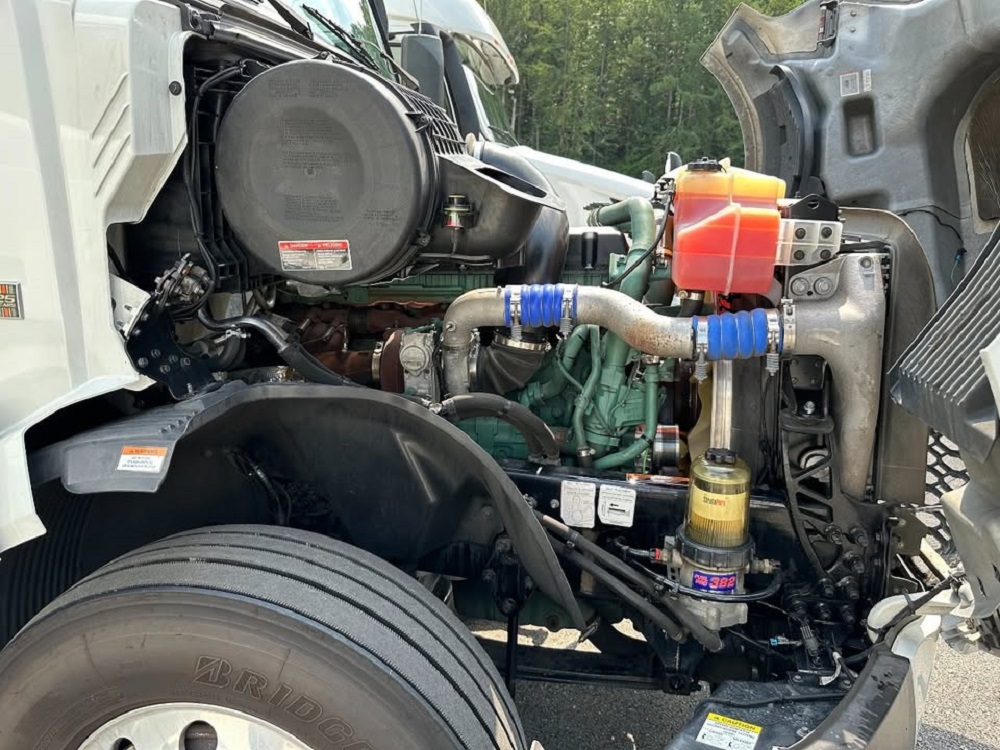
1. How the D13 is built and why some versions crack sooner
Emissions-era breakpoints and the engines that got burned
D13A came with EGR. By 2010, SCR and DPF were stacked on. Then common-rail hit in 2014. Every jump added failure points.
2010–2013 builds saw bad SCR logic and early cup leaks. Late 2013–2014 had mechanical flops; valves hitting liners, idlers coming apart. Even 2024 TC engines triggered a recall for bad bearing preload.
A/B builds ran basic fueling and low pressure. C, H, J brought the high-strung hardware. K and TC went low-RPM, high-torque, and heavier on gear stress.
High-pressure fuel, low margin for bad diesel
Common-rail hits 35,000 psi. More power, less noise; but no room for junk.
Bad fuel scorches pumps and clogs returns. Injectors hang open. Cups fail next, mixing fuel and coolant, wrecking both sides.
Most of it traces to skipped filters, cheap diesel, and dirty tanks. Cup failures show up early on trucks with lazy service.
Why D13TC runs cooler but hits harder
Old D13s use VGT turbos that shift vane angle. TC adds a second turbine and gear drive straight into the crank.
Cruise drops to 900–1,050 RPM. Fuel drops with it. But each stroke slams harder. Bearings, rods, and gearsets take the hit.
Spec it wrong, preload it off, and the TC idlers shear teeth or send metal downstream.
Core D13 vs D13TC design and stress profile
| Feature | D13 (VGT) | D13TC (Turbo Compound) |
|---|---|---|
| Turbo setup | VGT with actuator | Fixed turbo + TC drive |
| Cruise RPM | 1,150–1,300 | 900–1,050 |
| Added weak spot | Vane soot, actuator faults | Idler gears, preload wear |
| Main benefit | Simpler, proven parts | MPG gain, lower revs, fewer cycles |
2. When hardware breaks down and the D13 eats itself
Valve hits liner and takes the whole engine with it
Late 2013 and early 2014 blocks carried a flaw in cylinder #5. The exhaust valve sat too close to the liner. On some units, it made contact.
When it did, the valve snapped. Metal dropped into the cylinder, shredded the piston, cracked the head, and sent fragments through the intake and turbo. Few drivers caught it early. Some noticed a light miss. Most lost the engine in one shot.
Volvo revised the design mid-2014, but trucks from the bad window still surface in auction yards with coolant loss and faint tapping that gets louder under load.
Idler gear wobble wrecks the entire rear train
The D13 runs its gear train at the rear of the block. Crank drives the lower idler, which turns the tandem pump, steering pump, and compressor.
In early 2014 builds, the lower idler gear used a faulty bearing. The race wore uneven. Once the gear wobbled, it ate into the mesh, flung metal through the housing, and stripped other gears in the stack.
When that gear lets go, it usually takes the tandem and compressor with it. In bad cases, it jams hard enough to take out the crank gear. That’s short-block territory. Some techs catch it by checking lateral play during tandem pump swaps. Most don’t until the filters fill with glitter.
Cams flake, tick, and take out the top end
D13 cams carry high injection loads and see long idle hours. That’s a bad mix. Lobe surfaces start to pit, then flake. The metal rides the oil circuit and scars every moving part on the way down.
Flaking shows up as a rhythmic tick, sometimes mistaken for a bad lash set. It gets worse as the rocker arms ride the damaged lobe and the valves start to float. Oil sampling catches it. So does a power drop and hot-cylinder imbalance that won’t clean up.
Later variants added camshaft dampers and stiffer spec for oil. Synthetic buys time, but long idle sessions still load the lobes dry.
High-impact D13 mechanical problems by build era
| Model Years | Known Failure Points | Typical Fallout |
|---|---|---|
| 2007–2009 | Early cam wear, high-idle fleets | Cam, followers, rockers |
| Late 2013–mid 2014 | #5 valve strike, lower idler failure | Full engine, turbo, gear train |
| 2015–2016 | Reduced but present idler and cam issues | Idler swap, cam replacement |
| 2024 D13TC builds | Double idler preload fault (S4532 campaign) | TC gear set, gear housing contamination |
3. Fuel, coolant, and compression all meet in the same place
Injector sleeves fail where chemistry and pressure collide
The injector cup seals 35,000 psi of fuel from the coolant jacket and combustion chamber. On early D13s, those sleeves were soft-metal copper or brass with a flat seat and O-ring.
Long-life coolants tore into them. The organic acids in OAT formulas stripped the metal, wore the seals, and opened leak paths; some slow, some catastrophic. Volvo switched to stainless-steel sleeves with a swedged conical seat. No O-ring. Just pressure and taper.
Those new cups hold up better under heat and chemical load, but the old ones are still out there, especially on pre-2015 heads.
When coolant and fuel swap places, the whole system chokes
Combustion gas pushes through the sleeve and into the coolant. Hoses go rock hard. The reservoir bubbles. SPN 111 with FMI 1 flags low coolant, even when the level looks fine cold.
Flip the scenario, and coolant creeps into the fuel side after shutdown. As pressure in the rail drops to zero, coolant backfeeds through the sleeve. The next morning, fuel tanks show a green or pink layer floating in the separator. Rail pressure won’t build. Injectors stumble. Some trucks don’t start at all.
Either direction ends the same way; coolant loss, failed injectors, and a soot-loaded aftertreatment stack.
Swedging tools fixed the seal, but not the risk
The updated install tool cold-forms the sleeve into the head in one shot. No backing plate, no multi-pass pulls. Just clean taper and pressure. That change eliminated most sealing complaints on new heads.
Still, fleets started treating cup jobs as midlife maintenance. Many swap them at 500,000 miles or earlier if fuel trims wander, tanks show waterline staining, or repeated regens point to injector trouble.
Shops split on whether to pull the head. Some swedge in-frame. Others yank the top and inspect for sleeve movement or erosion patterns in the bore. Neither is cheap, but missed leaks cost more.
Volvo D13 injector sleeve designs and failure behavior
| Feature | Copper / Brass Sleeves | Stainless Swedged Sleeves |
|---|---|---|
| Coolant type risk | High with OAT / extended-life | Low, designed for long-life coolant |
| Seal design | Flat seat, O-ring dependent | Conical taper, one-piece seal |
| Failure path | Coolant in fuel or gas in coolant | Mostly gas in coolant |
| Service pattern | Repeat jobs, sealing issues | One-time install, fewer returns |
4. Aftertreatment breakdowns and the 5 MPH death spiral
One-box stacks turn fragile when heat and flow go sideways
The D13 one-box stacks the DOC, DPF, and SCR in one long can. It’s compact, efficient, and sensitive to everything upstream.
DOC lights off first, using exhaust heat to start chemical conversion. Then the DPF traps soot, and the SCR cleans NOx. Any slip; low temps, bad fuel burn, coolant vapor; knocks it out of sequence. One failed brick drags the others with it.
Ash load creeps. Soot builds. NOx climbs. The ACM throws codes, and the truck starts counting down. Ignore it, and the red lamp locks the throttle at 5 MPH.
Derate hits hard when DEF or NOx numbers go off target
DEF pump loses pressure. Doser clogs with crystals. NOx sensors drift or open. Every one throws a code.
Common failure chains start with SPN 5394 (doser restriction), then SPN 3216 (inlet NOx mismatch), and end with SPN 5246 FMI 0; SCR inducement final. When that hits, you’ve got hours left at full power. Then the limit hits. No override, no partial. Just limp.
Some trucks trigger the lock early, even on fresh fill-ups. Most of the time, it traces to a failing pump filter or bad NOx heater circuit that pulls the sensor offline.
EGR coolers poison the catalyst and ruin the brick
Plugged EGR coolers raise internal temps and cripple flow. That jacks up soot rate, triggers parked regens, and throws off DPF load.
Internal leaks do worse. Coolant vapor enters the exhaust, hits the DOC, and bakes onto the SCR substrate. Once the catalyst gets coated, dosing stops working. NOx climbs, the ECM starts a timer, and the whole one-box needs replacement.
Late EGR failures sometimes show as high-temp white smoke with no coolant loss on dipstick. Burned coolant won’t always hit the tank; just the $15,000 SCR.
Major D13 aftertreatment parts and their failure behavior
| Component | Common Faults / Codes | Driver Symptoms | Long-Term Risk |
|---|---|---|---|
| DEF pump / filter | Low pressure, clogged filter | DEF light, power loss | 5 MPH derate, SCR shutdown |
| NOx sensors | Drift, heater fail, open circuit | Repeated MIL, poor dosing | Catalyst wear, full derate |
| DPF / DOC | Ash load, DOC poisoning | Frequent regens, poor MPG | Melted brick, one-box swap |
| AHI injector | Carbon fouling, poor spray | Failed regens, soot climbs | Soot lock, regen disable |
| EGR cooler | Plugging, internal leak | White smoke, coolant loss | SCR failure, catalyst burnout |
5. Turbo compounding saves fuel but adds new gear risk
Second turbine grabs power and feeds it back into the crank
The D13TC bolts a second turbine downstream of the primary turbo. That turbine spins a fluid coupling and gear drive tied to the crankshaft. No vanes, no actuators. Just heat recovery turned into torque.
It cuts fuel use by 3–6% on steady-state hauls. Pulling at 950 rpm with a deep rear ratio keeps the engine cool, the pistons slow, and the MPG high. The payback shows up on flat lanes, not stoplights.
Drivers notice the low-rpm pull first. The engine sounds muted, revs slow, and holds gear longer under cruise. Climb a grade wrong, though, and it lugs harder than a VGT.
Fewer moving turbo parts, more stress on what remains
Swapping the VGT for a fixed turbo cuts carbon jams and actuator faults. That’s a major win in city work and during winter cycles.
But torque per stroke rises. Bearings, gear lash, and oil quality matter more. The TC coupling and gearset don’t forgive loose preload or dirty oil. Small miss there, and the whole train starts to whine or chatter under load.
Some fleets report lower soot load and better DPF life with D13TC builds. The gain only sticks when the gearing matches the route, and the driver doesn’t idle half the shift.
2024 TC idler campaign flags preload error and full failure risk
In mid-2024, Volvo issued Service Campaign S4532. Engines from February to October left the plant with incorrect preload on the TC double idler gear.
When that preload slips, the gear starts walking. Once it shifts out of mesh, it throws teeth. The metal goes straight into the oil circuit and slams the crank gear. Failures came fast; some in under 30,000 miles.
Fix is a new gear and a full preload reset. No software patch. No soft code. Dealers use Part #24870422 and reset lash to spec. Miss this campaign, and you’ll find it the hard way; spun bearings, metal filters, and an engine that grinds when hot.
D13TC pros and added risk from a service angle
| Feature | D13TC Advantage | D13TC Risk |
|---|---|---|
| Turbo layout | No actuator, no vanes to stick | Second turbine adds heat, shaft load |
| Cruise behavior | Low RPM, high MPG | Overload risk if geared or driven wrong |
| Gear system | Recovered torque, fuel savings | TC idler preload faults, failure campaign |
| Long-term service | Lower soot load if matched right | Specialized parts, tight install tolerances |
6. Cooling system slip-ups and air system cross-contamination
Water pumps leak slow, then leave the truck stuck
D13 water pumps start with seepage at the weep hole. That’s the bearing seal breaking down. Coolant drips at idle, then pours under boost. Wait too long, and the shaft walks, takes out the impeller, and overheats the block.
The failure shows up most around 500,000 miles, especially on fleets that skip coolant filter changes or stretch service too long. Once the seal goes, additives won’t slow it. You’re looking at a full pump replacement and a proper coolant bleed.
Late-stage failures can take the fan clutch and tensioner with them, especially if the belt slips and cooks the idler bearings under load.
Compressor gasket leaks fake a head gasket failure
When the compressor head gasket goes, it doesn’t throw a code. It throws pressure into the cooling system.
Instead of combustion gas, it’s shop air; pumped through a torn gasket and into coolant ports. The reservoir hisses, hoses bulge, and coolant pushes out the cap like a blown head. But the oil stays clean, and combustion tests show nothing.
The dead giveaway is in the air system. Drain the wet tank onto a white shop towel. If it’s got green or pink tint, coolant’s coming from the compressor jacket, not the block.
Cooling weak spots trigger EGT climbs and regen chaos
Overheat codes don’t always show as flashing lamps. In many cases, it’s a fan clutch that slips under load or a radiator that’s half-blocked from internal deposits.
Cooling issues spike exhaust temps. EGR flow falls. Soot builds. The ACM ramps up regens to compensate. Eventually, the DOC overheats, the DPF over-saturates, and the truck locks into a limp mode that looks like an emissions fault.
On most post-2014 builds, weak airflow or soft cooling pressure leads directly to SCR brick damage; without ever showing a coolant code.
7. Diagnostics that catch failures before they wreck the block
J1939 fault chains tell the story in code and order
D13 faults come coded in three parts: SA (source), SPN (system), and FMI (how it failed). Read together, they show not just what failed, but where it started.
SA 61 means the Aftertreatment Control Module. Pair that with SPN 5246 FMI 0 and you’ve hit a full SCR derate. SA 0 SPN 111 FMI 1 flags low coolant, usually from a cup leak or compressor head fault. Ignore the pattern and you’ll chase the wrong part first.
Failures don’t come one at a time. It’s the cluster; what hit first, what followed, what never cleared; that points to the issue.
Numbers that matter before the red light flashes
DEF pressure should sit steady near 120 psi. If it drops below 100 or fluctuates on graphing, the pump or filter’s going soft. NOx inlet and outlet readings should split clean with dosing. If they drift close, dosing’s not working or the brick’s coated.
DPF soot load rising fast with no code usually means the AHI injector’s fouled. Ash load climbing too soon points to heavy idle or a bad coolant thermostat.
Coolant pressure rising without a temp spike? That’s gas in the system, or air from a failed compressor head. Both burn out the reservoir and trigger derates from fake boil-over.
Maintenance that protects more than the oil pan
Valve sets are due at 150,000 and every 300,000 after. Most shops skip the inspection step; cam lobes, rocker lash, injector hold-downs. That’s where early flaking shows up.
Volvo calls for oil every 60,000. Heavy idle cuts that in half. DEF filter holds until 150,000 but clogs early if the fluid’s been stored hot or open. Fuel filters must be done with every oil change; miss one, and return flow drops off.
AHI injectors last if cleaned. If not, they gum up, fail to spray, and set off a soot cascade that ends in forced regen or brick melt.
High-leverage D13 maintenance jobs and their payoff
| Item / Interval | What It Protects | Risk When Skipped |
|---|---|---|
| Oil & filters – 60,000 max | Cam, idlers, bearings, TC gears | Flaking, gear lash, preload wear |
| Fuel filters – every oil | Injectors, cups, HPCR pump | Misfires, return loss, cup leaks |
| DEF filter – ~150,000 | Pump, doser, SCR | Pressure drop, dosing fail |
| Valve/injector set – 150k+ | Power, fuel burn, valvetrain | Burned valves, weak spray, poor idle |
| Injector cups – ~500,000 | Fuel/coolant split, compression seal | Crossflow, tank contamination |
| Air dryer cartridge – ~150k | I-Shift, compressor, valve blocks | Moisture faults, shifting trouble |
8. How the D13 compares against Cummins X15 and Detroit DD13
Failure clusters, service pain, and where each brand stumbles
D13’s worst years hit between 2010–2014. Cup leaks, cam flaking, and idler gear failures dominated that window. Post-2017 builds cleaned most of it up; until the 2024 TC idler campaign brought gearset issues back into play.
Cummins X15 carries its own track record of lifter collapse, cam failures, and early EGR clogging; especially in high-mileage ISX-to-X15 crossover years. DD13 builds run clean early, but tend to throw sensor codes and regen failures around the 400,000–600,000 mark. Most of it ties to wiring corrosion or SCR drift.
Where the D13 struggles with coolant intrusion and gear wear, X15s suffer from top-end mechanicals, and DD13s lean toward sensor faults and DEF aging.
MPG and resale figures where D13 holds the edge
Linehaul D13 builds regularly hit 6.8–7.5 mpg, depending on rear ratio and cruise control discipline. X15s in similar duty cycles usually come in 0.3–0.5 lower. Detroit splits the difference but drops faster under idle-heavy conditions.
Volvo trucks spec’d with XE packages (D13 + I-Shift + optimized rear) often return higher resale. On average, 5–10% stronger than equivalent Freightliner or Peterbilt units after 4–5 years.
Fleets that stay tight on overheads and fluid intervals squeeze better ROI from the D13, especially in fleets where every truck runs cruise at 950 rpm and shuts down clean.
Which fleets keep the D13 alive and which destroy it
Short-haul fleets with heavy idle cycles burn out the D13 fast. Cup failures spike, soot overload climbs, and EGR coolers clog before mid-life. Lazy DEF storage and skipped filters wipe out the dosing side and trigger 5 MPH derates weekly.
The engine stays in the game when paired with linehaul use, proper spec, and drivers who watch temps, log fault chains, and don’t ride the regen countdown.
Tech support also matters. Fleets with a Volvo-savvy in-house shop solve issues before the oil shows metal. The rest chase parts and hit warranty caps before 400,000.
Sources & References
- Which Volvo Engine is Right for You? – TEC Equipment
- Volvo D13 Engine: Complete Technical Guide & Performance Review (2025)
- Volvo D13 motor thoughts? : r/Truckers – Reddit
- List of Volvo Trucks engines – Wikipedia
- Volvo D13 Engine | Volvo Trucks USA
- Volvo Trucks – Introducing I-Torque for the D13TC Engine – YouTube
- VOLVO D13 Engine family
- Volvo D13TC Engine | Volvo Trucks USA
- Volvo Fuel Efficiency and the Turbo D13TC Compound Engine – Vanguard Truck Centers
- Volvo d13 | TruckersReport.com Trucking Forum
- 2016 D13 Volvo idler gear : r/DieselTechs – Reddit
- Volvo D13 Issues | TruckersReport.com Trucking Forum
- Volvo D13 injector cups fail again ! | TruckersReport.com Trucking Forum
- Symptoms of Failing Injector Sleeves on a Volvo D13 Engine | FleetRun Truck Parts
- Can You Replace Volvo D13 or DD15 Injector Cups Without Pulling the Head?
- Unit Injector and Sleeve, Replacement (Conical) – NHTSA
- Why use Stainless Steel Injector Sleeves (Cups) – Irontite Products
- Curious…stainless injector cup verses copper? | TruckersReport.com Trucking Forum
- Volvo D13 injector cups fail again ! | Page 10 | TruckersReport.com Trucking Forum
- D13 coolant problem | TruckersReport.com Trucking Forum
- SPN 111 – Engine Coolant Level – ZIPtuning Blog
- What to do if Your Volvo D13 is Stuck in 5 MPH Derate (3-Minute Read) – OTR Performance
- Your Cummins has a 5 MPH DEF Derate (SPN 5246). What now? – OTR Performance
- Aftertreatment system problems- treat one issue, then more appear : r/DieselTechs – Reddit
- Service DEF system, Parked Regen Required… Just Kidding – Rawze.com
- SPN 5394 – DEF Dosing Valve – ZIPtuning Blog
- ENGINE EXHAUST AFTERTREATMENT SYSTEM TRANSMISSION AND AXLES CHASSIS – Volvo Trucks
- 7 Symptoms of a Failing EGR Cooler on your Volvo D13 Engine | FleetRun Truck Parts
- Spn111 Fmi1 code | TruckersReport.com Trucking Forum
- With Continued North American Success, Volvo Trucks’ D13 Turbo Compound Engine Now Standard on All VNL Models
- Volvo’s John Moore answers questions about the D13TC engine’s design, fuel efficiency, and ROI – Vision Truck Group
- Volvo D13TC turbo compound : r/Truckers – Reddit
- Turbo Compound Double Idler Gear Replacement – NHTSA
- Volvo Fault Codes – Classtrucks.com
- Truck SAE Codes Such as J1939, J1708, SPN, FMI, & MID Explained | Diesel Laptops
- What are SA SPN FMI – Beginners guide to fault codes – OTR Performance® Inc.
- Fault Code Diagnostic Source – TruckFaults
- ENGINE EXHAUST AFTERTREATMENT SYSTEM TRANSMISSION AND AXLES CHASSIS – Volvo Trucks
- D13 Valve Adjustment | PDF | Vehicles | Engines – Scribd
- TSI – Heavy Haulers RV Resource Guide
- Fueling Your Fleet: Where to Buy Volvo Truck Diesel Injectors
- Coolant Pressure D13 volvo | TruckersReport.com Trucking Forum
- Replaced the water pump and thermostat, now the egr cooler is leaking. Thoughts on have I damaged my engine? – Reddit
- 08 780 d13 weird water pump leak | TruckersReport.com Trucking Forum