
The sliding door beeps, reverses before latching, and leaves the school pickup line at a standstill. Worn rollers, snapped drive cables, and faulty latches can all cause trouble. On certain 2018–2020 Odysseys, the problem also carries a safety recall.
A door that looks shut may still be unsecured. Honda warns against driving if the door-open message or beeping continues after closing.
This guide covers the common failures, affected model years, safety recalls, repair options, and costs, from simple lockouts to broken cables and failed latches.
1. Check the Model Year Before Blaming the Door Motor
Older Odyssey Repairs Won’t Always Fit Newer Doors
Honda changed the sliding door layout several times between 1999 and 2026. The 1999–2004, 2005–2010, and 2011–2017 generations used visible center rails along the rear body panels.
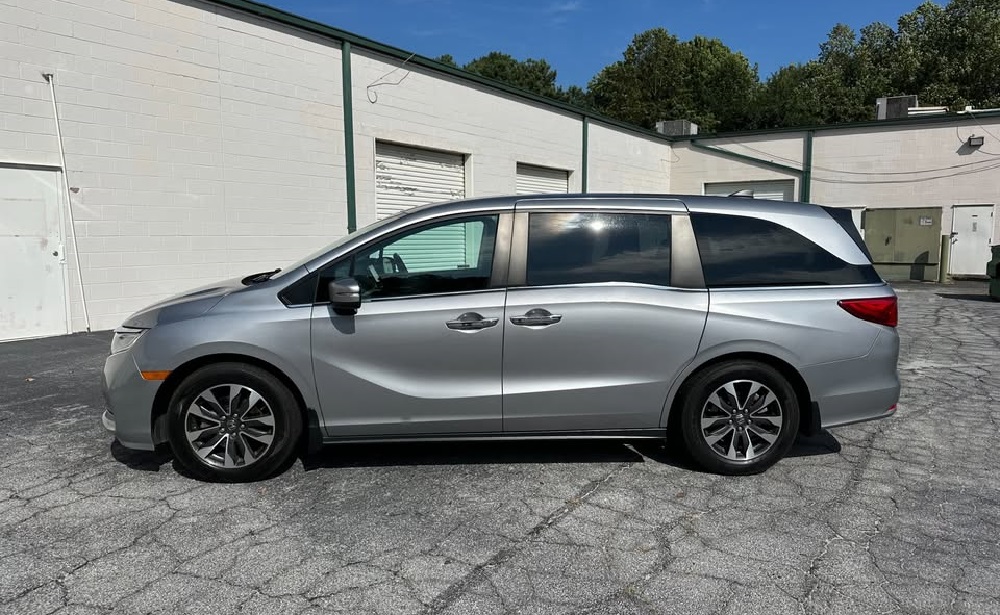
For 2018, Honda moved those rails beneath the rear side glass. That changed access to the rollers, cables, and mounting hardware. An older repair video may show parts in the wrong location for a newer van.
Door equipment also varies by trim. The 2018 LX had manual sliding doors, while EX and higher trims had power operation. Honda made power sliding doors standard across the lineup for 2023.
Before ordering parts, confirm the model year, trim, affected side, and VIN. A motor or cable assembly from another generation may not fit.
Check These Lockouts Before Spending Money
A silent sliding door doesn’t always mean a dead motor. Honda uses several safety interlocks that can block power operation.
Start with the van on level ground and the transmission in Park. If you are using the dashboard switch, also press the brake pedal or set the parking brake. Unlock the doors and set the main power sliding-door switch to ON. On the 2020 Odyssey, power operation also requires the fuel filler door to be closed on the driver’s side.
That fuel-door interlock matters when only the left sliding door refuses to open. The passenger-side door can work normally while the driver’s side stays locked out.
Window position creates another false alarm. Honda’s 2020 owner’s guide states that a sliding door won’t open fully when its window is lowered more than 5 inches.
The fix is simple. Close the sliding door, raise its window, and try opening it again. A door that stops short under those conditions hasn’t proven a failed cable or motor.
One Handle Works, but Another Doesn’t
Power-equipped Odysseys accept commands from several places. The outside handle, inside handle, dashboard switch, door-pillar switch, and key fob can all operate the doors.
Try each control separately. If the outside handle works but the inside handle doesn’t, check the childproof lock first. Honda designed that lock to block opening from inside, regardless of the door’s lock-tab position.
Command timing can also fool you. On 2018 models, Honda revised the controls to accept matching commands made within 0.5 seconds of each other.
When 2 commands arrive more than 0.5 seconds apart, the door can stop and sound a warning beep. This can happen when a parent presses the dashboard button while a child pulls the outside handle.
Test each control alone before chasing an electrical fault. A door that stops only during overlapping commands may be following Honda’s programmed logic.
2. Check the Safety Recalls Before Paying for Latch Repairs
Two Recalls Target Different Door Failures
Honda issued 2 major sliding-door safety recalls covering certain 2018–2020 Odysseys. Both involve doors that may fail to latch securely and could open while driving. Each requires a different repair.
| Recall | Affected models | What goes wrong | Honda’s repair |
|---|---|---|---|
| 18V-795 (Bulletin 18-128) | 2018–2019, excluding LX | Excess friction makes the rear latch stick, preventing secure closure. | Replace both rear power sliding-door latch assemblies. |
| 20V-437 (Bulletin 20-024) | Certain 2018–2020 vans | Water enters exterior handle cables and freezes, keeping the latch release from returning fully. | Replace both exterior handle cables and bush joints. |
The first recall concerns the rear latch itself. Its internal mechanism can stick, leaving the door partly secured even when it looks closed.
The second becomes especially dangerous in freezing weather. Water trapped inside the exterior handle cable freezes and increases friction. That can stop the release mechanism from returning, leaving the door unable to latch properly.
Honda’s amended filing for 20V-437 covered 324,196 vehicles. The August 28, 2020 amendment added 2 vans to the original population. That figure counts potentially affected vehicles, not confirmed door failures.
What Honda Fixes for Free and What Still Costs You
Both recalls provide free repairs through authorized Honda dealers. Start with Honda’s VIN recall lookup, then ask the dealer for the repair history. Model year alone can’t confirm whether a specific van qualifies.
A completed rear-latch recall doesn’t mean the exterior handle cables were replaced. The campaigns cover separate parts. Check that both repairs were completed if the VIN qualifies for both.
The cable distinction matters when reviewing a repair quote. Recall 20V-437 covers exterior handle release cables. It doesn’t cover the steel drive cables that pull the door along its track.
A snapped drive cable, worn center roller, or failed motor can still leave you paying for repairs. Honda’s reversal bulletin 19-028 and upper-roller bulletin 24-088 specify normal warranty coverage. Neither provides automatic free repairs after warranty expiration.
A persistent door-open warning also changes the safety decision. Honda’s rear-latch recall notice tells drivers to stop safely and close the door again. If the warning or beeping remains, don’t drive the van. Arrange towing to a Honda dealer.
3. Where the Sliding Door Stops Points to the Failure
Match the Door’s Behavior to the Parts Worth Checking
A sliding door that stops halfway needs a different diagnosis from one that reaches the body and reverses. The stopping point helps narrow the fault before anyone orders a motor or latch.
| What you notice | Check first | What it doesn’t prove |
|---|---|---|
| Both power doors stay silent | Main switch, operating conditions, battery, and fuses | Both motors have failed |
| Door jerks or catches at the same spot | Center roller, tracks, cables, and alignment | Lubrication will fix worn parts |
| Motor runs, but door barely moves | Drive cables, winding drum, and pulleys | Motor needs replacement |
| Door beeps and reverses while closing | Obstructions, roller drag, pinch sensor, and control board | Rear latch has failed |
| Door reaches the body but won’t stay closed | Rear latch, release cable, striker, and latch-position feedback | Pushing harder will secure it |
Temperature can also expose the fault. A door that refuses to latch during freezing weather deserves an exterior handle-cable inspection, especially on recalled 2018–2020 vans.
Record which side fails, whether the trouble occurs during opening or closing, and any dashboard warnings. Recent battery work also matters because lost power can interrupt door operation.
What Manual Movement Reveals About the Door
Switching off power operation allows a useful mechanical check, provided the door isn’t visibly jammed or damaged. Honda’s manual operation procedure varies by model year, so follow the correct owner’s guide.
With the main switch OFF, carefully move the door by hand. It should travel without hard spots, scraping, or sudden changes in resistance. Don’t force it past a jammed cable or binding roller.
If the door catches at the same point under both manual and powered movement, inspect the tracks and rollers. A frayed drive cable can also bind inside its winding drum.
Smooth manual travel narrows the search, but it doesn’t clear the latch, pinch sensor, or motor controls. The door may move freely by hand yet reverse when powered closing triggers the obstruction-detection circuit.
Alignment needs care, too. Honda’s 17-075 bulletin for 2018–2019 Odysseys covers sliding-door position adjustment. Its procedure checks both front and rear strikers with the door properly supported. Moving a striker without correcting a sagging door can leave the original drag in place.
Don’t Approve a Motor Until the Shop Proves It’s Bad
A replacement motor can cost far more than a damaged roller or loose electrical connection. Before approving the work, ask which test identified the failed part.
For an electrical fault, the technician should check stored trouble codes, power supply, ground connections, and relevant switch signals. A silent motor may never have received a valid opening command.
For a mechanical fault, the shop should identify worn rollers, damaged cables, a binding drum, or failed latch hardware. Visible damage and repeatable test results carry more weight than a general recommendation to replace everything.
A written estimate should name the failed part and the work required to replace it. RepairPal’s published Odyssey power sliding-door motor replacement estimate reaches $1,595–$1,669, before taxes, fees, or related repairs.
4. Worn Rollers Can Snap the Sliding Door Cables
A Worn Center Roller Makes the Motor Work Harder
The center roller guides the sliding door along its body rail. Its bearings can wear, adding drag and allowing the door to sag. This is a common mechanical failure on older Odysseys, especially 2005–2017 models.
Early signs include scraping noises, uneven movement, and a door that hesitates at the same spot. A worn roller can also pull the door out of alignment with its strikers. The motor must then work harder to move the door.
That extra load reaches the steel drive cables. Enright Automotive has documented cable failures linked to worn roller bearings on 2011–2017 Odysseys.
Replacing a snapped cable without checking the roller can leave the same drag behind. The upper and lower guides also need inspection for worn bearings, loose mounts, and poor alignment.
A Snapped Cable Can Damage the Motor Drum
A sharp pop near the rear quarter panel often signals a broken drive cable. You may then see loose steel cable hanging near the track. Sometimes the motor keeps running while the door barely moves.
The power sliding-door motor uses a winding drum to pull the door in either direction. When a cable frays, breaks, or jumps its guide, it can tangle inside that drum. Damaged drum surfaces or pulleys may make a cable-only repair impractical.
Cable replacement kits cost less than complete motor assemblies, but fitting them takes careful routing and winding. The shop must inspect the drum, pulleys, cable ends, and attachments before reusing the motor.
Some genuine 2011–2017 Honda motor assemblies also include the center roller. Ask whether the quoted assembly includes cables and roller hardware. Separate parts charges can overlap with a complete replacement.
Hot-Weather Creaks Have Their Own Honda Bulletin
Some 2023–2024 Odysseys develop a squeak or rubbing noise around the upper sliding-door roller. The sound often appears while driving over bumps in warm weather and direct sun.
Honda addressed this in Service Bulletin 24-088, dated July 29, 2024. As the body flexes, the upper plastic roller can rub against the sliding rail. The noise can occur even when the door opens and closes normally.
Honda’s repair calls for adjusting the upper roller, repositioning the door guides, and checking the roller’s position. The bulletin treats the work as an adjustment rather than a parts replacement.
This bulletin applies to 2023–2024 models under normal warranty terms. It doesn’t cover every sliding-door squeak or a door that reverses during closing.
5. A Door That Reverses May Have a Control Board or Latch Problem
Honda Found a Software Fault Behind Some 2018–2019 Reversals
Some 2018–2019 Odysseys reverse their sliding doors during closing, even with nothing blocking the track. The motor starts pulling the door shut, then stops and sends it back open.
Honda linked this behavior to a software fault in the power sliding-door motor’s control board. The software can falsely detect an obstruction and trigger the safety reversal.
Service Bulletin 19-028 covers 2018 models except LX. It also covers certain 2019 non-LX vans through VIN 5FNRL6H..KB022148.
Honda requires technicians to inspect the rails, rollers, and door path first. Any debris or mechanical damage must be corrected before the bulletin’s repair applies.
If those checks reveal no obstruction or damage, Honda specifies replacing the affected motor’s printed circuit board. The repair doesn’t require replacing the entire motor assembly.
Normal warranty terms apply, so older vans may require an out-of-pocket repair.
A Door That Reaches the Body but Won’t Latch Needs Different Checks
Some doors travel smoothly until the final inches, then bounce open or leave a door-ajar warning. At that point, the rear latch and its release mechanism deserve closer inspection.
The rear latch must engage its body striker and confirm that the door is secured. A sticking latch, poor striker alignment, or release cable that won’t return can prevent full engagement.
On certain 2018–2020 Odysseys, the exterior handle cable can hold the release mechanism open. Honda addressed this under Recall 20V-437. Certain 2018–2019 vans also received replacement rear latches under Recall 18V-795.
A technician should verify latch engagement, cable return, striker position, and latch-position feedback before replacing an internal switch.
Spraying lubricant into the latch won’t complete either recall repair. Honda specifies replacing the affected hardware.
If the door-open warning or beeper remains active after closing, Honda’s recall notice says to stop driving. A door that appears flush can still lack secure latch engagement.
A Damaged Pinch Sensor Can Trigger Unwanted Reversals
The power sliding door has a pinch sensor along its front edge. It helps detect resistance during powered closing and tells the door to reverse.
A damaged sensor or its wiring can interfere with normal operation. Look for torn rubber, displaced trim, or visible damage along the leading edge.
Honda’s 2023 owner’s manual specifically warns against touching or damaging the pinch sensor. Don’t squeeze the strip to test it, bypass its wiring, or put your hand between the door and frame while it closes.
The sensor also has limits. Honda warns that some parts of the door edge cannot detect resistance near the fully closed position. Fingers can still be trapped during the final latch movement.
6. Older Odyssey Electrical Faults Have Their Own Service Bulletins
Rain Can Knock Out Door Locks on 2005–2009 Odysseys
Some 2005–2009 Odysseys develop strange electrical faults after heavy rain. Power locks stop responding, keyless entry fails, or the wipers behave oddly. The sliding doors may also lose normal operation.
Honda linked this pattern to water entering behind the left rear interior trim. Service Bulletin 08-078, issued November 12, 2008, identifies a leaking seal around the rear sliding-door pulley mount.
Water can reach connector C701 and disrupt the van’s body controller area network, known as B-CAN. This network carries signals between body control modules. Moisture or corrosion at the connector can interrupt several electrical features at once.
Honda’s repair involves sealing the pulley mount, repositioning nearby foam, and drying and protecting the connector. The foam must sit at least 25 mm away from C701. Any corroded terminals also need inspection before the connector goes back together.
A scan may reveal B1006, a communication fault code. But that code alone doesn’t prove water damage or a failed sliding-door motor. Bulletin 08-078 applies to vans showing multiple related electrical symptoms, not every door that refuses to open.
A 2014 Door Stuck Unlocked Has a Known Mechanical Fault
A different fault affects certain 2014 Odysseys equipped with power sliding doors. The door may operate but remain stuck in the unlocked position.
Honda documented this in Service Bulletin 14-082, dated December 20, 2014. The bulletin covers 2014 models excluding LX.
Inside the door, the lock-knob lever can rotate too far. It then catches behind the lock microswitch and can’t return to its normal position. This leaves the locking mechanism stuck.
Honda’s repair calls for replacing the power sliding-door remote-control assembly. Despite its name, this part sits inside the sliding door and operates the lock and latch linkages. It has nothing to do with the handheld key fob.
Bulletin 14-082 specifies coverage under Honda’s normal warranty. It doesn’t establish extended coverage for older vans or apply to every fourth-generation latch failure.
7. Clean the Tracks Before Trying a Sliding Door Reset
Dirt and Damaged Guides Can Stop the Door
A sliding door that catches or reverses may have debris blocking its path. Dirt, small stones, and loose trim can interfere with the rollers or prevent full closure.
Start by removing visible debris from the accessible tracks and door opening. Check the rubber seals for tears, displaced sections, or signs of rubbing. Look for loose drive cables or damaged roller brackets without reaching into moving parts.
Honda’s 19-028 bulletin requires technicians to check for debris and mechanical damage before replacing the motor control board. A worn roller or frayed cable still needs repair, even after cleaning.
Avoid spraying brake cleaner or strong solvents into the latch and rail assemblies. Lubricants must match Honda’s instructions for the specific model and contact surface. Heavy grease can also trap grit inside exposed tracks.
Keep your hands clear of the rollers, latch openings, and pinch sensor. Don’t force a door that binds or move its latch mechanism with a screwdriver.
Battery Replacement Can Interrupt Power Door Operation
A sliding door can stop working after the 12V battery or a door fuse has been replaced. This doesn’t always mean the motor or control module has failed.
Honda’s 2023 owner’s manual describes a specific recovery condition. If the battery or sliding-door fuse is replaced while the door is open, power operation may stop working.
Honda instructs owners to close the door manually to restore normal power operation. The door must move freely and latch securely before attempting this recovery.
Avoid using generic online reset procedures that call for pulling random fuses or disconnecting the battery. Fuse locations, control logic, and recovery steps vary between Odyssey generations.
Use the fuse diagram and recovery procedure for your exact model year. If the door still refuses to operate, scan for stored faults and inspect the power supply, switches, and drive hardware. A reset won’t repair a jammed cable or failed latch.
8. Compare Sliding Door Repair Quotes Before Paying for a Motor
Why a $637 Motor Can Turn Into a $1,600 Repair
A broken sliding door cable can lead to a four-figure repair quote. The final bill depends on which parts failed and how much labor the repair requires.
Genuine Honda motor assemblies cost hundreds of dollars before installation. Complete replacements cost more because the shop must remove interior trim, access the drive hardware, and adjust the door.
| Repair benchmark | Price (MSRP in parentheses) | What’s included |
|---|---|---|
| Genuine left motor assembly, 72050-TK8-305, 2011–2017 | $636.63 ($964.59) | Motor assembly with center roller. Labor extra. |
| Genuine right motor assembly, 72010-TK8-305, 2011–2017 | $727.45 ($1,102.19) | Motor assembly with center roller. Labor extra. |
| Odyssey power sliding-door motor replacement, RepairPal estimate | $1,595–$1,669 | Estimated parts and labor. Additional repairs excluded. |
These prices were checked in November 2026. RepairPal updated its overall estimate on September 3, 2026. Its range excludes taxes, fees, location differences, and added repairs.
Cheaper Cable Repairs Can Still Cost More Later
A cable-only repair can save money when the motor and winding drum remain undamaged. However, the old cables must be removed, and new ones must be routed and wound correctly.
A cracked drum or damaged pulley changes the repair. Reusing those parts can cause another cable failure, forcing the shop to remove the assembly again.
Aftermarket motor assemblies and used Honda parts offer another route. Check the exact year, trim, and door side before buying. A used assembly may carry the same roller or cable wear as the original.
Warranty terms matter, too. Some replacement parts cover the part itself but leave you paying for repeat labor. Ask whether the shop will cover removal and installation if the replacement fails.
Don’t assume every broken cable needs a complete motor. A quote should identify the failed drum, cable, roller, or motor before charging for an entire assembly.
Make the Diagnostic Fee Count Toward the Repair
Ask for a written estimate that separates diagnosis, parts, labor, and door adjustments. A shop should explain what failed before ordering a $700 motor assembly.
Find out whether the diagnostic charge will be credited toward the repair. Also ask whether the quoted labor includes cable routing, door alignment, and any required relearning.
Check for overlapping parts charges. Some complete Honda motor assemblies include the center roller, so billing for another roller may need an explanation.
Get the repair warranty in writing, including coverage for repeat labor. If the door fails again, a parts-only warranty could leave you paying the full installation charge twice.
9. Manual Sliding Door Operation Has Limits You Can’t Ignore
Turning Off the Motor Doesn’t Disable the Auto-Closer
A failed power sliding door can sometimes be used manually. But the door must move freely, stay on its tracks, and latch securely.
Honda’s 2023 owner’s manual allows manual operation with the main sliding-door switch OFF. However, the auto-closer remains active. When you push the door near its closed position, the mechanism can still pull it into the rear latch.
Keep fingers clear of the door’s rear edge during that final movement. Switching off power operation doesn’t disable the auto-closer.
Some owners with broken drive cables consider cutting them to free the door. That changes how the door moves and can leave loose cable inside the track or motor drum. It may also leave warning lights active.
Removing cables or disconnecting drive hardware requires checking door alignment, latch engagement, and electrical operation. Don’t assume pulling a fuse eliminates battery drain from every possible fault.
A Latch Reset Won’t Repair Broken Hardware
Honda provides a specific rear-latch recovery procedure on the 2023 Odyssey. The owner’s manual identifies a yellow reset cable behind the hand-pocket cover inside the sliding door.
That cable allows recovery when the rear latch mechanism requires resetting. Follow the procedure in the correct model-year manual. Honda also directs owners to confirm secure latch engagement and contact a dealer afterward.
A reset won’t repair a worn latch, broken drive cable, or bent striker. If the door still shows an open warning, the latch and its position feedback need further inspection.
Manual operation also creates a hazard on slopes. Honda warns that an open sliding door can move under its own weight. A door can suddenly roll closed while someone enters or exits the van.
Never leave the door unsecured around passengers, especially children. If it won’t latch firmly or the door-open warning persists after closing, don’t drive. Arrange transport to a repair shop rather than risking the door opening on the road.
Sources & References
- 2005 Honda Odyssey body / paint problems | CarComplaints.com
- Automatic Sliding Door Not Closing: 5th Gen Honda Odyssey (2018-2026) – The Track Ahead
- 2001 Honda Odyssey Repair & Maintenance Costs – RepairPal
- 1999 Honda Odyssey Repair & Maintenance Costs – RepairPal
- Honda Odyssey Extended Warranty: What Owners Need to Know
- Honda ODYSSEY Owner’s Guide
- Honda Odyssey Sliding Door Won’t Close – Car Dash Facts
- Honda Odyssey Service Manual – Scribd
- Opening/Closing the Power Sliding Doors – Honda Owners
- Honda Odyssey Sliding Door Repair the ‘Easy’ Way – YouTube
- Slide door cable : r/HondaOdyssey – Reddit
- Safety Recall: Power Sliding Door Rear Latches – nhtsa
- Part 573 Safety Recall Report 20V-437 | NHTSA
- 2018 Honda Odyssey Press Kit
- 2018-2025 Honda Odyssey Sliding Door Problem – YouTube
- 2018 Honda Odyssey Problems: 14 Known Issues | Au7o
- Service Bulletin – Honda Owners
- Service Bulletin – OEMDTC
- Honda Odyssey Lemon Law – Door Latch Recall – Allen Stewart PC
- Honda Odyssey Problems by Year – PartCatalog
- TSB-08-078-2007-Honda-Odyssey.pdf
- Honda Odyssey Power Sliding Door Motor Replacement Cost
- Replace: Honda Odyssey Power Sliding Door Motor & Roller
- Genuine Honda Odyssey Door Latch Assembly
- honda odyssey minivan 2005 – 2010 – Rollx Vans
- Honda Odyssey (North America) – Wikipedia
- 1999-2004 Honda Odyssey Power Sliding Door Switch Buttons – OEM
- 2002-2004 Honda Odyssey Sliding Door Contact Assembly
- 2004 Honda Odyssey Sliding Door Contact Assembly – AutoZone.com
- Replace Automatic Sliding Door Cable in 3rd Generation Honda
- Door & Components for 2008 Honda Odyssey
- 25+ Honda Odyssey Sliding Door Motor for sale – eBay
- 2011 Honda Odyssey Press Kit
- Honda Odyssey RL5 Parts (11–17) | Grilles, Spoilers & More
- Odyssey Interior Parts & Accessories for Honda Odyssey – eBay
- 1Set Electric Sliding Door Wire Harness for 2011-2020 Honda
- Honda Wiring Harnesses, Cables & Connectors for Honda Odyssey
- Driver (LH) Sliding Door Cable Replacement – 2011-2017 Honda
- 2011-2017 Honda Odyssey Right Passenger Rear Sliding Door
- 2026 Honda Odyssey – Fun & Modern Family Minivan
- Sliding Doors – 2023 Honda Odyssey
- 2018 Honda Odyssey Rear Passenger Sliding Door Wire Harness
- 2018-2022 honda odyssey rear right sliding door harness actuator
- View Message – NHTSA
- 2018,2019,2020,2021,2022,2023 honda odyssey replacement
- 2018 Honda Odyssey Sliding Door Motor Replacement – YouTube
- 2023 Honda Odyssey Specs & Features
- 2018 Honda Odyssey Recall Information – Conceptcarz
- Honda Odyssey recalled over sliding doors that could open while
- Statement by American Honda Regarding Power Sliding Door Latch
- O40 September 2020 Safety Recall: Sliding Door Outer Handle
- Safety Recall: 2018-2020 Honda Odyssey Sliding Door Outer
- Honda Odyssey Power Sliding Door fix – CHEAP – YouTube
- Honda Odyssey Power Sliding Door Repair – Complete Demo DIY
- Sliding door actuator repair costs on 4th Gen Odyssey – Reddit
- How to replace van power sliding door motor DIY video – YouTube
- Broken sliding door cable – Can I cut it? : r/HondaOdyssey – Reddit
- Power sliding door cable replacement. 2011 – 2017 Honda Odyssey
- 2015 successfully replaced sliding door cable : r/HondaOdyssey
- ODYSSEY SLIDING DOOR ISSUES. #DIYREPAIR, #savemoney
- Power Sliding Door Issue FIXED! | 2005 Honda Odyssey – YouTube
- Honda Odyssey Power Sliding Door Release Actuator Assembly
- “Left sliding door problem” warning in Honda Odyssey – YouTube
- Honda Odyssey passenger sliding door motor replacement tips and
- Honda Odyssey Sliding Door Rear Latch Repair – YouTube
- Sliding door repair estimate by dealership service…is it reasonable?
- Replace Your Sliding Door Motor | #Honda #Odyssey – YouTube
- Sliding Door for 2018 Honda Odyssey | OEM Parts Online
- How to repair a broken sliding door cable on a 2011-17 Honda
- Door Hardware for 2018 Honda Odyssey
- Repair Service for Honda Odyssey Sliding Door Latch. – eBay
- Fixing a Broken Sliding Door Cable in 2011-2017 Honda Odysseys
- Cut the door cable for my odyssey, how to get rid of sliding door error?