Hauling kids is one thing. Hauling a 2,800-lb camper behind a minivan? Whole different story.
The Odyssey’s rated to tow 3,500 pounds, but that number gets shaky fast. Add passengers, gear, and the wrong hitch setup, and you’re already flirting with the edge. Skip the factory ATF cooler and you risk cooking the transmission before the weekend’s over.
This guide breaks it down clean. Which trims are tow-ready. What’s included in the real Honda towing package. What the dealer won’t tell you about that 3,500-lb number. And how it compares to the Sienna, Pacifica, and Chrysler PHEV.
No sugarcoating. No sales talk. Just the truth about what the Odyssey can handle, and where it taps out.
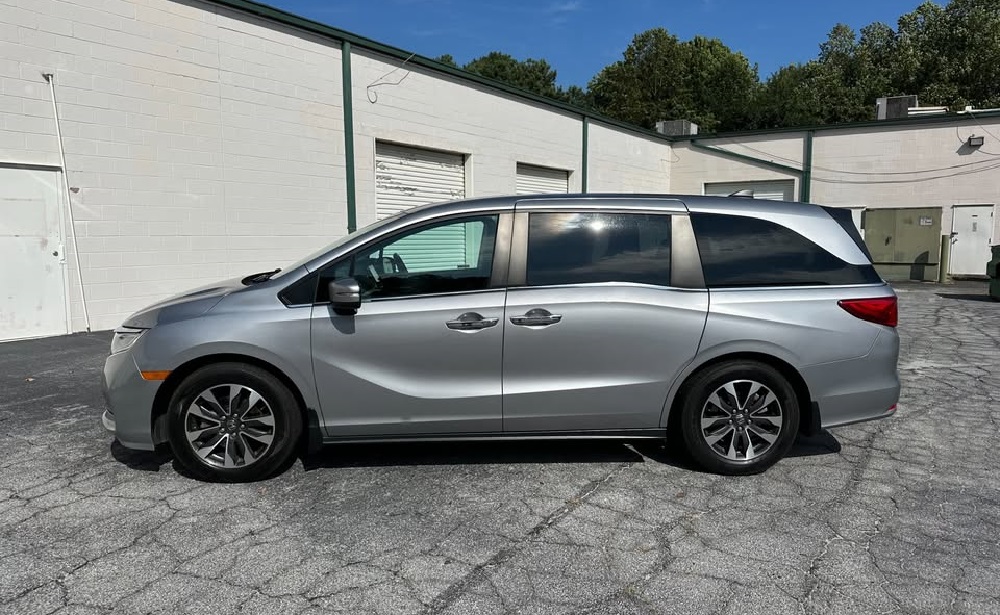
1. What the Odyssey’s really built to tow
Powertrain punches above its weight
Every 2018–2025 Odyssey runs the same core drivetrain: a 3.5L V6 pushing 280 hp and 262 lb-ft of torque through a slick 10-speed automatic. Around town, it’s smooth. On the highway, it’s got enough muscle to drag 3,500 pounds, if the rest of the setup is dialed in.
Honda pairs this with a multi-link rear suspension and stabilizer bar to keep the van planted, especially when tongue weight starts squatting the rear axle. If the suspension can’t hold steady, you’ll feel it fast, steering goes vague, and braking gets sketchy.
Towing limits vary by year; know your trim
If you’re in a 2020–2025 Odyssey, you’re in luck; all trims can tow the full 3,500 lb when properly set up. But step back to 2018 or 2019, and it gets messy. Only the Touring and Elite trims pull the max. LX, EX, and EX-L are capped at 3,000 lb, even with the full package.
Odyssey Towing Limits by Year and Trim
| Model Years | Trims | Max Tow (Properly Equipped) |
|---|---|---|
| 2020–2025 | All | 3,500 lb |
| 2018–2019 | LX / EX / EX-L | 3,000 lb |
| 2018–2019 | Touring / Elite | 3,500 lb |
That 500-lb gap can make or break a trip. Push a 3,200-lb trailer with a lower trim, and you’re flirting with cooked brakes on the first big grade.
Why your van won’t always tow 3,500 lb
That shiny “3,500-lb” badge ignores reality. It doesn’t count passengers, gear, or even your dog. Every pound in the cabin cuts into your trailer allowance.
The real number to watch is payload; it’s printed on the door jamb. That figure includes passengers, cargo, and trailer tongue weight.
And tongue weight adds up fast. You want 10–15% of the trailer’s total weight pressing on the hitch. So a 3,000-lb trailer adds 300–450 lb right at the rear axle. If the van’s already packed with five people, bags, and snacks, you might only have 2,500 lb of trailer headroom left, not the full 3,500.
2. What “towing package” really means for the Odyssey
Hitch, wiring, and mount: bare minimum or bust
Just slapping on a hitch doesn’t make your van tow-ready. A real setup starts with three critical pieces:
• Receiver hitch – The factory Class II hitch (Honda P/N 08L92-THR-100A) works, but many owners swap in a 2″ Class III for more versatility, think bike racks, rental trailers, cargo trays.
• Trailer wiring – A 4-flat plug handles basic lights. If your trailer has electric brakes, you’ll need a 7-way connector and a brake controller wired in.
• Ball mount + ball – Match the coupler size and use the correct drop or rise to keep the trailer level. Tilted towing wrecks control and braking.
Whether you go OEM or aftermarket, skip the cheap universal stuff. Fitment and wiring reliability matter more than saving a few bucks.
Don’t skip the ATF cooler; it keeps the transmission alive
This isn’t optional. Towing heats up the transmission fast, especially in traffic or hills. Without an auxiliary ATF cooler, that slick 10-speed won’t last long.
Honda makes it clear: near-max towing needs added cooling. In some cases, skipping the cooler can even void your powertrain warranty. Dealers know this, and plenty will call it out on failed repairs.
Aftermarket kits run $40–$85. OEM parts cost more, about $317–$452, but it’s still dirt cheap compared to a $4,000 rebuild. Doesn’t matter if it’s just a pop-up camper. Protect the gearbox.
OEM vs. aftermarket, fit and function over price tags
Here’s how the options stack up:
• OEM hitches bolt straight into factory points. No drilling, no weird brackets. Many also use a clean bumper garnish so nothing sticks out.
• Aftermarket hitches (Curt, Draw-Tite, EcoHitch) bolt up easily, usually with a 2″ receiver for universal accessories. Some hang lower or need minor fascia trimming.
• Wiring kits from brands like Tekonsha and Curt are often plug-and-play with factory connectors, no slicing or splicing.
If your trailer has electric brakes, a controller is mandatory. Mount it within easy reach, test the manual override, and adjust gain before you hit the road.
3. What you’ll actually pay for a full towing setup
Dealer quotes look steep, but here’s what they really include
Call a Honda dealer for a towing setup, and you’ll probably hear a number between $700 and $1,500. Sounds high, until you see what’s packed in.
Most installs include the hitch, wiring, OEM ATF cooler, fascia removal, and a rear trim garnish to keep the bumper looking factory. It’s not just a bolt-on, it’s a full system install.
Honda’s kits also use no-drill frame mounts, proper torque specs, and harnesses routed clean through OEM channels. If the van’s still under warranty, this route buys peace of mind and long-term reliability.
Aftermarket shops trim the bill, along with some essentials
Independent shops or chains like U-Haul usually quote $400 to $600. That covers the hitch and 4-flat wiring, maybe a ball mount, but not much else. No ATF cooler. No fascia trim. And don’t expect brake controller integration either.
For light trailers, that might be enough. But if you’re pulling more than 2,000 lb, or driving steep grades, you’ll need to tack on the cooler and brake gear. That “budget” setup adds up fast once you try to make it safe.
DIY can save cash, but not if you cut corners
Wrench-savvy owners can get it done for under $400 in parts. A Curt or Draw-Tite hitch runs $125–$275. Add $21–$76 for a T-harness, plus $41–$86 for an aftermarket ATF cooler, and you’re in business.
But this isn’t plug-and-play. You’ll probably have to pull the bumper, clean out rusty frame threads, and route wiring around exhaust heat. Strip a bolt or short the wiring, and that weekend project turns into a shop bill. Unless you’re confident, DIY can backfire.
Real-world totals: OEM, shop, or DIY?
| Component | OEM MSRP | Discounted OEM | Aftermarket | Notes |
|---|---|---|---|---|
| Hitch kit (receiver/ball) | ~$434 | ~$290–312 | ~$125–272 | Most aftermarket options use 2″ receivers |
| 4-flat wiring harness | ~$172 | ~$123–140 | ~$21–76 | Upgrade to 7-way + controller if trailer has brakes |
| ATF cooler (auxiliary) | ~$452 | ~$317 | ~$41–86 | Strongly recommended to protect transmission |
| Bumper garnish/panel | ~$23 | ~$21 | , | For a clean OEM look |
| Labor (install) | $700–1,500 | , | ~$0–200 | DIY = free labor, but riskier. Shops may quote ~$500 for all-in |
That $1 200 dealer price might look bloated until you realize it includes the cooler, fascia, and warranty-safe labor. Local shop quoting $500? Probably just a hitch and 4-flat wiring. If you’re towing more than jet skis, expect to fill in the gaps.
4. Why installing a hitch isn’t always a bolt-and-go job
Bumper removal is standard; treat it like a surgical job
Odds are you’ll need to pull the rear bumper fascia to install a hitch on the Odyssey. It’s not just cosmetic; it’s how you reach the frame rails for proper mounting. One wrong move and you’ll snap paint clips, scuff trim, or worse.
Once the bumper’s off, the hitch bolts into welded nuts in the frame. Sounds easy, until you find them caked with rust or road grime. Forcing a bolt into a gunked-up thread is how you end up cross-threaded and crawling AutoZone for a tap set.
“No-drill” still means serious work
Most aftermarket hitches promise “no-drill” installs. True, no holes needed. But you still need to torque everything right, prep fasteners, and sometimes apply thread sealant. Some kits also need a torque check after a few hundred miles. Miss that, and you could be dealing with a rattling hitch or loose bolts mid-trip.
Shops sometimes skip these steps. So do rushed DIYers. Either way, you’re left with slop in the receiver or worse, a stressed frame.
Trailer wiring is the weak link in most installs
Wiring is where things fall apart fast. If it’s not routed cleanly, away from exhaust heat, sharp underbody edges, and suspension travel, you’re looking at fried wires, blown fuses, or short circuits on your first tow.
Plug-and-play harnesses help. They tap into factory connectors behind trim panels. But routing to the trailer plug still takes planning. Use factory grommets, ground to the frame, and lock everything in place with proper loom and clamps, not saggy zip ties and electrical tape flapping near your muffler.
Brake controller placement isn’t a guessing game
If your trailer has electric brakes, and most campers do, you need an in-cabin controller. Mount it low on the dash, near your right knee, where you can see the screen and reach the manual override without taking your eyes off the road.
Wiring typically runs to a power source and trigger wire near the fuse box, then out to the trailer’s 7-way plug. Before driving, connect the trailer, set gain levels, and test brake actuation. Get this wrong, and you’ll feel it hard on downhill grades.
5. How to tow steady, stop straight, and save the transmission
Tongue weight isn’t optional; get it right, or deal with sway and squat
This is where most towing setups go sideways. Trailer’s loaded, hitch looks fine, and the driver hits the road without ever checking tongue weight. That’s asking for trouble.
You need 10–15% of the trailer’s total weight pressing down on the hitch. Less than that? The trailer starts wagging behind you. Too much? Rear suspension bottoms out, steering goes vague, and you might scrape the bumper on every dip.
Pack heavier gear ahead of the trailer axle. Use a tongue scale or at least check your ride height; if the rear drops more than 1–2 inches, the weight’s wrong. And make sure your ball mount keeps the trailer level. Nose-up or nose-down throws off handling and braking fast.
Brakes on the trailer mean brains in the van
Small utility trailers and pop-ups under 2,000 lb usually skip brakes. But once you’re towing in the 2,000–3,000 lb range, most trailers come with electric or surge brakes. That means your Odyssey needs proper wiring and a brake controller if it’s electric.
Electric brakes require a 7-way plug, a controller in the cabin, and a working breakaway battery on the trailer. Set the gain too high and the trailer jerks at every stop. Too low, and the trailer shoves the van like dead weight.
Before every haul, walk the setup. Check lights, hazards, blinkers, brake response. One corroded pin or frayed wire, and your brakes are done before you even shift into Drive.
Transmission temps climb fast, don’t ignore them
That 10-speed is smooth under normal load, but throw in a trailer, a hot day, and a long grade, and it starts working overtime. Shifts get snappy. Temps spike. Fluid breaks down.
Use manual gear selection on hills to avoid constant hunting between gears. If you smell hot fluid or feel the brakes fading, back off. Pull over and let things cool down. And if you’re towing often, change the trans fluid early, and always use the factory-spec ATF. Skipping the cooler or stretching intervals is how these gearboxes end up fried by 80K miles.
6. What the Odyssey can tow without white-knuckling it
Jet skis or small boats? No sweat
This is the Odyssey’s comfort zone. A lightweight boat or a pair of jet skis on a trailer runs 1,500–2,200 lb. Even with gear and passengers, you’ve got headroom. Most of these trailers use 4-flat wiring and surge brakes; no controller needed.
If you’re doing longer drives or backing down steep launch ramps, add the ATF cooler. Beyond that, it’s a smooth pull.
Pop-ups and teardrops land right in the sweet spot
These compact campers usually weigh between 1,500 and 2,800 lb loaded. That fits the Odyssey’s rated limit, barely. Throw in passengers and weekend gear, and you’re cutting it close.
Tongue weight becomes the bottleneck. Teardrops often push 300+ lb onto the hitch, which chews into your payload. Trailer brakes are a smart call here, especially if your route isn’t flat.
Lightweight travel trailers? Possible, but barely
Short bunkhouse-style campers might list 2,800–3,300 lb “dry,” but dry weight’s a marketing number. Once you add propane, water, batteries, and real cargo, you’re pushing well past 3,500 lb. That’s before counting passengers or bikes in the trunk.
Can the Odyssey tow it? Maybe. But you’ll need a 7-way harness, brake controller, ATF cooler, and a close watch on axle weight and payload. Even then, you’re close to the edge. Skip weight distribution or sway control, and the handling suffers bad.
Utility trailers and power toys? Right in the groove
Hauling two ATVs or a loaded utility trailer? You’re looking at 1,500–2,500 lb. The Odyssey handles it well if the load’s balanced and tied down right.
Watch tie-down angles and axle placement. Tongue-heavy setups squat the rear, mess with braking, and make turns unpredictable. Get the load level, and this minivan tows like a mid-size pickup.
Real-World Towing Scenarios
| Load Type | Ready-to-Tow Weight Range | Odyssey Viability (Properly Equipped) | Notes |
|---|---|---|---|
| Pair of jet skis on trailer | 1,500–2,200 lb | ✅ Easy | 4-flat wiring; surge brakes common |
| Small boat + trailer | 2,000–2,800 lb | ✅ Yes | Trailer brakes recommended near top end |
| Pop-up/teardrop camper | 1,500–2,800 lb | ✅ Yes | Tongue weight can hit 300+ lb; plan accordingly |
| Lightweight travel trailer | 2,700–3,300 lb (dry) | ⚠️ Maybe | Real-world weight often exceeds 3,500; cooler + brakes required |
| Utility trailer + ATVs | 1,500–2,500 lb | ✅ Yes | Balance load; check tie-downs and ride height |
Reminder: Before assuming the trailer fits, subtract all passengers, cargo, and tongue weight from your Odyssey’s payload. If the math’s tight, the van’s stressed.
7. The towing habits and upgrades that keep your van alive
Skip the walkaround, and you’re asking for trouble
Before every trip, do a five-minute check. Start with tire pressure on both the van and trailer. Low PSI wrecks stability and drags your fuel mileage. Lug nuts tight? Coupler latched, locked, and pinned? Lights, blinkers, and hazards all working?
Safety chains should cross under the tongue, not dangle like bike lock cables. And that breakaway cable? Clip it to the frame, not just looped around the hitch ball.
This routine doesn’t just save your setup. It can save your neck on the highway.
Trailer sway doesn’t start with the wind; it starts with bad loading
A balanced trailer tracks straight. A sloppy one swings like a wrecking ball when you brake or change lanes.
Keep tongue weight in that 10–15% sweet spot. Load gear forward of the axle. Never stack heavy stuff in the back and hope the sway bar fixes it later.
Tires matter too, trailer and van. Get ones rated for load, with stiffer sidewalls. If your trailer creeps past 2,000 lb, a friction sway control bar is cheap insurance, especially with tall campers that catch wind.
Driving style counts. No sudden moves. Back off in crosswinds. And leave space, it’s a minivan, not a Power Wagon.
Rear end sagging? Helpers can fix the stance, not the spec sheet
If the rear dips under load, air springs or helper coils help bring it back up. They’re solid add-ons for camping families or gear-heavy haulers.
But don’t mistake them for a free pass to tow more. Your brakes, transmission, and frame are still rated for 3,500 lb. Lift the ride height all you want; those numbers don’t change.
Use suspension helpers to level things out, not to stretch the van past what it was built for.
Tow often? Treat your fluid like it’s under fire
Towing cooks transmission fluid faster than daily driving ever will. If you’re pulling regularly, or in hot, hilly terrain, cut Honda’s factory interval in half.
Use the real stuff: Honda-brand ATF. Skipping it or mixing fluids is a fast track to internal wear. And while you’re at it, check your rear shocks, bushings, rotors, and pads. Towing loads up everything behind the front seats. Once a year, crawl under and take a look, before things get soft or noisy.
8. Warranty worries? What actually voids coverage, and what doesn’t
Aftermarket hitch? Still covered. Don’t buy the scare tactic
A non-Honda hitch won’t void your warranty. Period. The Magnuson-Moss Warranty Act protects you from that kind of dealer B.S.
The law says the burden’s on them; they have to prove your aftermarket part caused the problem. So unless your hitch twisted the frame or fried wiring, you’re still covered.
Some service writers might try to push back. Don’t fight, just stay calm, bring receipts, and quote the law if you need to escalate.
What will get you flagged
This is where some owners slip. Cheap wiring kits with sketchy grounds can toast your taillight circuits. Sloppy hitch installs that ignore torque specs can shift or rattle loose. And if you tow heavy without an ATF cooler, then show up with a smoked transmission? Expect a denial.
Avoid the guesswork. Stick with name-brand parts. Follow the install instructions like gospel. Torque bolts, secure wiring, and document everything. Take photos. Save part numbers. Treat it like a pre-emptive warranty file.
If you ever have to fight a claim, showing you added the ATF cooler goes a long way. It proves you weren’t just towing, you were thinking ahead.
Dealer-installed isn’t bulletproof, but it’s rarely questioned
Going through the dealer gets you clean paperwork, factory parts, and a trim job that blends into the bumper. And when warranty questions come up, that paperwork makes things easier.
Still, a solid aftermarket install is just as safe, as long as it’s done right. Use the proper mount points, route wiring cleanly, and skip the bargain-bin kits. Do it once, do it clean, and you won’t need to defend it later.
9. How the Odyssey holds up against other towing minivans
Chrysler wins the spec sheet, not always the drive
On paper, the Chrysler Pacifica edges out the Odyssey with a 3,600-lb tow rating. But there’s a catch: you only get that number with the Trailer Tow Group, which bundles a heavy-duty radiator, upgraded trans cooling, and sway control. Problem is, a lot of buyers skip that option unless they order the van new.
In real-world towing, the extra 100 pounds is meaningless, especially after you factor in payload loss and fully loaded trailer weight.
Toyota Sienna plays the hybrid card, with quirks
Every Sienna trim pulls 3,500 lb, thanks to its 2.5L hybrid and eCVT. Sounds solid, but there are tradeoffs. No conventional gears means a softer throttle feel under load. And the hybrid system adds weight, leaving less room for cargo before you hit your limits.
Fuel economy is the big win here, especially in stop-and-go traffic. But if you’re towing up grades regularly, the lack of trans cooling options and rubbery throttle feel may leave you second-guessing it.
Kia Carnival keeps up until the hybrid steps in
The gas-powered Carnival runs a 3.5L V6, mirrors the Odyssey’s 3,500-lb rating, and supports a similar towing setup. It’s a solid pick for families who want a boxier layout or newer cabin tech.
But the Carnival Hybrid takes a nosedive in capacity, only 2,500 lb. That’s a big drop if you’re planning to pull a boat or a camper more than once a year.
Odyssey’s edge: clean execution and real-world comfort
No fancy tow package. No trim exclusives. Just a V6, a geared 10-speed, and the option to bolt on the right parts. Add the cooler, wire it properly, and the Odyssey quietly handles its 3,500-lb limit, without drama. For towers who want reliable performance and a smooth daily driver, this balance matters.
Minivan Towing Comparison
| Model | Max Tow | Powertrain | Key Notes |
|---|---|---|---|
| Chrysler Pacifica (gas) | 3,600 lb | 3.6L V6 | Best on paper, but only with Trailer Tow Group installed |
| Honda Odyssey | 3,500 lb | 3.5L V6 / 10-speed | Balanced setup; conventional gears preferred by many frequent towers |
| Toyota Sienna (hybrid) | 3,500 lb | 2.5L Hybrid eCVT | Efficient, but lacks geared feel and cooling options |
| Kia Carnival (gas) | 3,500 lb | 3.5L V6 | Competitive spec; proper setup required |
| Kia Carnival (hybrid) | 2,500 lb | Hybrid | Sharp capacity drop; not ideal for anything beyond light towing |
10. Choosing the right setup: dealer, DIY, or somewhere in between?
Light hauls? Don’t overthink it
Pulling less than 2,000 lb? You don’t need a full-blown tow package. A quality aftermarket 2″ hitch, 4-flat harness, and level ball mount get the job done.
Still, even light loads can heat up the transmission. An ATF cooler isn’t excessive; it’s cheap insurance if you tow in hot weather or live in hilly terrain.
Weekend camper trips? Now it gets serious
Towing 2,000–3,200 lb eats into payload, jacks up tongue weight, and stretches braking distance. This is the zone where setups fall apart if you cut corners.
You’ll need either a clean OEM kit or a high-quality aftermarket one, 7-way wiring, and a brake controller mounted inside. Without trailer brakes, the Odyssey’s stoppers take a beating every mile.
And the cooler? At this weight, it’s not optional; it’s a must-have if you want the transmission to last the summer.
Tough terrain, long miles? Overbuild everything
If you’re towing through mountain passes or in hot, sticky weather, there’s no room for shortcuts. Use name-brand gear, lock in clean wiring, confirm brake controller calibration, and consider adding sway control. The goal isn’t just to hit the number; it’s to stay stable and stop safe at highway speeds.
This is where OEM shines. Cleaner fit. Tighter install. Fewer headaches if you need dealer support later.
Want it to look like it came from the factory? Go full OEM
Some owners want the setup to look like it rolled off the line with it. If that’s you, go OEM. You’ll get the garnish panel that blends the hitch into the bumper, factory torque specs, and a dealer-backed install.
Yeah, it costs more. But it buys long-term peace of mind, especially if you’re keeping the van past 100K.
Best Setup by Use Case
| Scenario | Hitch Type | Wiring | Cooler | Notes |
|---|---|---|---|---|
| Light towing (≤2,000 lb) | Aftermarket 2″ | 4-flat | Recommended | Cooler still helps, especially in warm or hilly conditions |
| Family camper trips (2–3.2K lb) | OEM or quality aftermarket | 7-way + brake controller | Yes | Required for trailers with brakes; watch payload math |
| Frequent/hot or hilly towing | Robust aftermarket or OEM | 7-way + controller + sway ctrl | Yes | Shorten ATF fluid interval; prioritize balance and control |
| Factory look or resale value | OEM full package | OEM harness | Yes | Best integration; includes clean fascia and dealer serviceability |
11. The checklists that separate smart towers from stuck ones
Buying used? A hitch doesn’t mean it’s tow-ready
Don’t trust a “towing equipped” claim at face value. A hitch on the back doesn’t tell you much; check what’s underneath. Make sure it’s frame-mounted, not clamped to the bumper. Look for trailer wiring tucked behind the rear bumper. No plug? No lights.
Pop the hood or peek through the lower grille to see if there’s an ATF cooler. Many older Odysseys needed one added to tow at full rating, but sellers rarely mention it. Then open the driver’s door and read the yellow payload sticker. That’s your real margin, not the inflated number from a brochure.
After the install, check what they left behind
Dealer or not, trust but verify. Torque the hitch bolts to spec, especially after the first few hundred miles. Make sure the ball mount sits level and that the hitch pin’s fully seated.
Plug in the trailer, test every light, and hit the brake controller’s manual override to confirm response. If you added a cooler, pop the hood and check ATF lines for any seepage. One loose clamp can drain a transmission slowly and silently.
Check for clearance issues, too. Some aftermarket hitches ride low or crowd the spare tire. First trip down the interstate isn’t the time to find out your hitch is rattling against the exhaust.
About to roll out? Run the drill, every time
Level the trailer. Confirm tongue weight. Lock the coupler and yank up on it to make sure it won’t pop loose. Pin it. Chain it, crossed underneath with enough slack to turn, not enough to drag.
Set your mirrors for full trailer visibility, then dial in the brake controller gain in a parking lot. Test the manual override while rolling.
Wheel bearings greased? Both spares aired up? If not, one blowout could end your trip or leave you stranded on the shoulder in 90° heat.
The Odyssey pulls its weight, if you don’t cut corners
The Honda Odyssey looks like a family hauler, and it is. But when equipped right, it’s also a legit 3,500-lb tow vehicle. That max rating isn’t handed out for free.
You’ll need the right hitch, proper wiring, a brake controller if the trailer’s got brakes, and above all, an auxiliary ATF cooler to keep the 10-speed transmission alive under load.
Miss a step, and you’re not just losing performance, you’re putting stress on the brakes, suspension, and drivetrain. Payload disappears fast once you load in passengers, gear, and tongue weight.
But get it right, and the Odyssey pulls boats, pop-ups, and jet skis with control and confidence. No, it’s not a half-ton truck. But for a front-wheel-drive minivan, it tows clean, comfortable, and well within its weight class.
Sources & References
- How Much Can the Honda Odyssey Tow? | Jackson Area Honda ^
- 2023 Honda Odyssey Towing Capacity
- 2024 Honda Odyssey Towing Capacity – Cumming – Lou Sobh Honda
- 2025 Honda Odyssey Towing Capacity
- Powerful Towing Capability – 2018 Honda Odyssey
- Powerful Towing Capability – 2023 Honda Odyssey
- 08L92-THR-100A – Trailer Hitch, 2025 Model Odyssey | Genuine …
- Honda Odyssey Trailer Hitches – Curt Manufacturing
- Towing & Hauling for Honda Odyssey for sale – eBay
- Honda Odyssey Trailer Wiring Kits – Advance Auto Parts
- etrailer | Installing the Tekonsha T-One Vehicle Wiring Harness on a …
- 2013 Honda Odyssey Trailer Wiring Installation – YouTube
- Impact of Towing on Engine & Transmission | Long-Distance
- Will Towing a Trailer Hurt My Transmission?
- Genuine Honda Trailer Hitch ATF Cooler
- Honda odyssey transmission blown/tips to prevent this – YouTube
- Honda Odyssey Trim, bumper edge. Hitch, trailer – 08L92-TK8-10030
- 2023-2025 Honda Pilot Silver Trailer Hitch Panel – 08L92-T90-100C
- Honda 71520-THR-A01 Garnish, RR. Bumper Face Step
- How to Install X7372 | Honda Odyssey Trailer Hitch by EcoHitch …
- Genuine Toyota Sienna Tow Hitch
- 2024 Odyssey Tow Hitch : r/HondaOdyssey – Reddit
- Towing Wiring, Harnesses & Connectors for Honda Odyssey for sale | eBay
- installation instructions – College Hills Honda
- Germain Honda of College Hills www.collegehillshonda.com
- Trailer Hitch Wiring Harness Installation – TWINTOWN DIY
- DIY Trailer Hitch Hookup for Honda Odyssey – Bolts having trouble on passenger side
- 2018-2024 Honda Odyssey Trailer Hitch (2018-2024) (Local Pick …
- Trailer Hitch (2025-2026) (Local Pick Up Only) – College Hills Honda
- Honda Odyssey Transmission Cooler and Parts | Advance Auto Parts
- Can my Honda Odyssey (tow capacity of 3500 lbs) safely tow a travel trailer that we …
- Towing a TT with 2024 Honda Odyssey Touring : r/rvs – Reddit
- Honda Odyssey Towing Suspension: Spring Helpers & Airbags – RealTruck
- Does Adding a Trailer Hitch Void Warranty? – CountyOffice.org – YouTube
- Would installing a third-party trailer hitch on a car void the power train warranty? – Reddit
- What can I tow with my Honda Odyssey? – Good Sam Community
- www.chrysler.com
- 2025 Chrysler Pacifica Towing Capacity: The Minivan that Hauls – Elk Grove Dodge
- www.cornerstonekia.com
- What is the Kia Carnival Towing Capacity? – Kearny Mesa Kia
- www.keithpiersontoyota.com
- Toyota Sienna Towing Capacity
- Sienna vs Odyssey vs Carnival : r/ToyotaSienna – Reddit
Was This Article Helpful?