
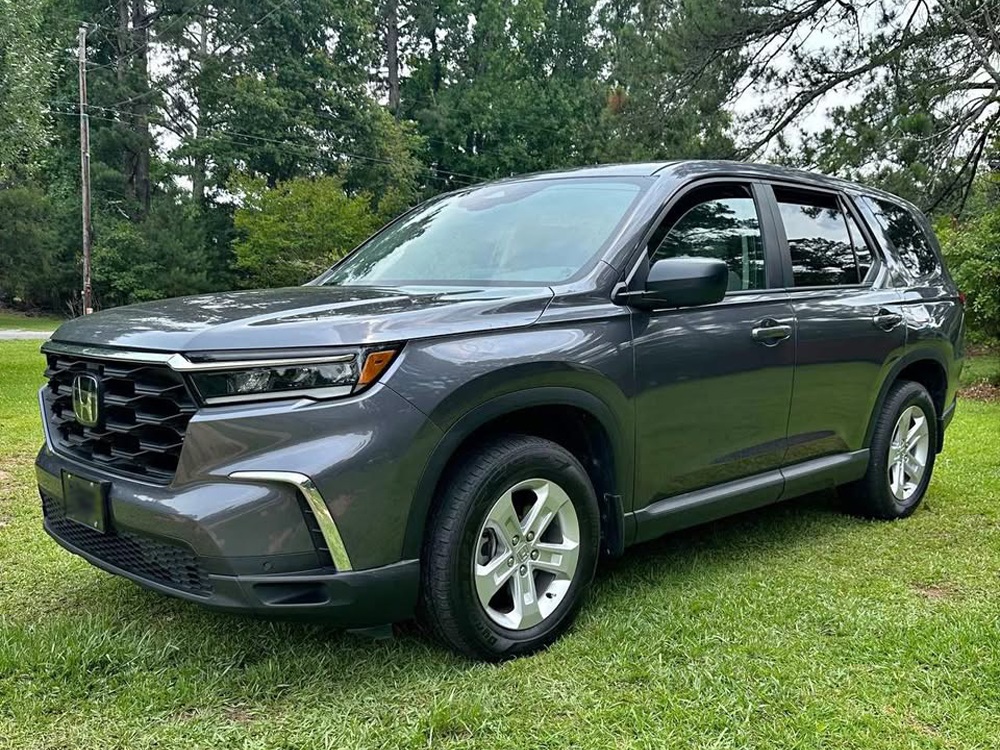
Back up to a 4,200-lb camper, drop it on the ball, and the rear squats. The Pilot’s badge says 5,000 lbs, but that number’s a trap without the right hardware underneath.
The Pilot lives in two tow worlds, 3,500 or 5,000 lbs, nothing in between. The lighter rating covers every 2WD and un-equipped AWD, while the higher mark unlocks only when the i-VTM4 AWD, OEM hitch, 7-way harness, and ATF cooler all line up. Miss one, and the drivetrain cooks long before the brochure limit.
This guide breaks down the real math and machinery behind that jump: what Honda means by “properly equipped,” how tongue load eats payload, why altitude trims towing muscle, and what maintenance keeps the V6 alive under strain.
1. Two tow ratings, one real path to 5,000
What actually separates 3,500 from 5,000
Every 2WD Pilot, and any AWD without the full kit, stops at 3,500 lb. The 5,000-lb card only shows when i-VTM4 AWD teams with an OEM Class III hitch, a 7-way at the bumper, and the accessory ATF cooler.
That bundle adds thermal headroom, proper brake wiring, and a hitch that carries tongue load into the structure cleanly. Push past 3,500 without it, trans temps spike and clutch packs glaze.
Towing tiers and what unlocks them (2023–2025 focus)
| Drivetrain | Advertised capacity | Required hardware to achieve it | Operational notes |
|---|---|---|---|
| 2WD | 3,500 lb | Class III hitch, wiring | Regular fuel ok, tongue ≤ 500 lb |
| AWD, no cooler | 3,500 lb | Class III hitch, wiring | Missing ATF cooler caps rating at 3,500 |
| AWD, properly equipped | 5,000 lb | Class III hitch, 7-way, ATF cooler | Premium fuel recommended above 3,500 lb |
Cooler decides who makes 5,000
Heat is the enemy. Long grades, headwinds, and stop-and-go build shear and varnish in ATF, which speeds slip. The accessory cooler pulls that heat out, keeping pressure up so the clutches hold. Without it, the same climb that felt fine at the ramp can cook fluid by the first summit.
Trim hardware that helps, and what still matters
TrailSport, Elite, and Black Edition bring i-VTM4 hardware to the party. Some trims include the receiver from the factory, which cleans up fit and ground clearance.
The rating still depends on the cooler and the 7-way, since wiring for trailer brakes and thermal control are the real bottlenecks. Add those pieces, and the spec sheet matches the badge.
2. The tow kit that makes the rating real
Receiver that fits tight and carries load cleanly
The OEM Class III receiver tucks high in the fascia, so departure angles stay usable and the bar does not scrape on ramps. Its brackets tie into the structure where Honda planned for tongue load, which keeps the sheet metal out of harm’s way.
Many aftermarket hitches hang lower and push loads through thinner sections, which is why bumper covers bend when the trailer yanks over a curb. Factory hardware also gives a finished panel, so the cutout looks intentional, not hacked.
Wiring that matches real trailers, not lawn carts
Honda builds the current Pilot around a 7-way at the bumper. That plug carries running lights, reverse, a charge line, and a dedicated brake circuit so a proportional controller can do its job.
The OEM harness, often listed as 08L91-T90-100 on 2023–2025, snaps into factory connectors and plays nice with the body control module. Splice kits can confuse lamp logic, trigger warnings, or drop trailer brakes right when a long grade heats up.
Cooler kit that buys thermal headroom
The cooler is the gatekeeper. Older 6-speed AWD Pilots use a dedicated kit such as 06255-RLX-306, while 9-speed AWD and 2023+ 10-speed families use the 06255-5EZ-316 class.
These kits add a stacked-plate heat exchanger, rigid lines, and brackets that keep flow rates where the clutches stay clamped. Under load, ATF shear rises fast, so pulling 20–40°F out of the fluid keeps pressure up and shift timing consistent on climbs and in summer traffic.
Core hardware and the failure it prevents
| Component | What it adds | What it prevents |
|---|---|---|
| Class III receiver | High mount, correct load path | Hitch scrape, bent bumper panels |
| 7-way harness | Brake feed, charge, reverse integration | No-brake trailers, lamp faults |
| ATF cooler | Thermal margin under sustained load | Fluid varnish, slip, limp strategies |
3. Brake control that actually stops the load
Ready for a controller, not ready to roll without one
The bumper’s 7-way carries the brake circuit, charge line, and reverse feed, but a proportional trailer brake controller still needs to live inside the cabin.
The Pilot’s under-dash prewire accepts a plug-in pigtail, so a Redarc Tow-Pro or similar can tie in cleanly. Time-delay boxes work in a pinch. On grades and in traffic, a proportional unit tracks decel and keeps stopping smooth.
Where the wiring hides and how to keep CAN happy
Power and lighting live at the rear connector, while the controller’s trigger and power leads sit at the under-dash pigtail. Using the OEM 7-way harness keeps the body control module calm and prevents lamp errors.
Splices or Scotch-locks can backfeed the network and stop trailer brakes at the exact wrong moment. A plug-and-play adapter preserves signal integrity and speeds the install.
When trailer brakes move from smart to mandatory
Once gross trailer weight creeps past 1,000–1,500 lb, independent trailer brakes stop being optional. At 3,000–5,000 lb, they are non-negotiable for stability and legal compliance in many states.
The controller lets the tow vehicle bias the trailer harder on long descents, which saves the Pilot’s front pads and keeps rotor temps out of the fade zone.
4. Weight math that keeps the rig honest
Payload, the limiter that sneaks up first
Tongue weight rides inside the Pilot’s payload, along with people and gear. The hitch may say 500 lb max, but the sticker on the door sets the real ceiling once seats fill and coolers pile in. Run the numbers before the hookup, because payload disappears faster than trailer weight climbs.
Tongue weight that calms sway instead of causing it
Aim for 10–15% of gross trailer weight on the ball, then check against the 500-lb cap. Too light and the trailer yaws, too heavy and the front axle unloads, and steering goes vague. Boats sometimes run lower percentages due to axle placement, but boxy campers want that 12–15% to track straight.
Altitude trims the combined rating
Engines lose punch as air thins, and cooling follows. Honda’s rule of thumb, cut GCWR by about 2% per 1,000 ft. A setup that looks fine at sea level can feel tapped out by 5,000 ft, so build margin before the grade, not on it.
One real-world example
| Item | Value | Notes |
|---|---|---|
| Trailer at 4,600 lb | Tongue ~ 12% → 552 lb | Already above the 500-lb tongue limit |
| Pilot payload example 1,600 lb | Minus tongue 500 → 1,100 lb | Subtract people and cargo next |
| Four occupants + gear ~ 700 lb | 400 lb remaining | Easy to overrun with bikes and coolers |
| Same rig at 5,000 ft | GCWR effective −10% | More margin needed, not less |
5. Weight distribution without bending the body
What Honda actually says about WDH
Owner’s manuals state the Pilot is designed to tow without a load-distributing hitch. The language warns that incorrect setup can hurt handling, stability, and braking.
The concern is real because a unibody concentrates force at welded mounts. Crank the bars too hard and point loads spike where the structure is thinnest.
What owners learn near 4,000–5,000 lb
Tall campers push the rear down and float the steering axle. Crosswinds add yaw, and the tail starts to steer the nose. A properly sized WDH with integrated sway control pulls some weight forward, steadies the rig, and brings headlight aim back to level. The key is measured tension, not maxing the bars.
How to set a WDH that helps, not harms
Use lighter spring bars sized to actual tongue weight, not the trailer’s badge. Set tension to return only part of the lost front axle load, then verify with scales.
Keep the hitch head height correct so bars sit near level, and use integrated friction or cam sway control instead of cranking bar tension to mask a balance problem.
6. Electronics that pull their weight
Tow mode that shifts like it means it
Tow mode raises shift points and cuts hunting, so the V6 stays in the meat of the powerband. It also disables idle stop, which prevents surprise engine cuts at lights with a trailer behind.
Backing help changes too, since parking sensors and low-speed automatic braking quiet down when a hitch is detected. The goal is steady torque, fewer heat spikes, and less false intervention.
Trailer Stability Assist, the last line, not the first
TSA reads yaw and steering angle, then taps individual brakes to stop a sway event. It reacts fast, but it is still reacting to a mistake upstream, like light tongue weight or too much speed.
If the trailer starts a big oscillation, no software saves a bad setup on a downhill. Use TSA as a safety net, not a crutch.
What drive aids change when towing
| Feature | What it does while towing | Why it matters |
|---|---|---|
| Shift schedule | Holds gears, fewer gear changes | Keeps temps down, steady pull |
| Idle stop | Disabled | No engine cut with a loaded trailer |
| Parking aids | Filters when reversing with a trailer | Prevents false braking from the hitch |
| TSA | Selective braking to counter trailer yaw | Buys time when a sway starts |
7. Maintenance that keeps the driveline alive
What triggers the severe schedule
Regular towing, steep grades, summer heat, and stop-and-go push the Pilot into severe service. ATF shears faster under load, the transfer case runs hotter, and the i-VTM4 clutch packs work harder to control yaw.
Maintenance Minder codes show up sooner because fluid life drops with every hot climb and long descent. Treat towing like city heat, not highway cruising.
Shorter intervals that save parts, not pennies
Plan on 30,000–45,000 miles for ATF, transfer case, and rear diff under towing. Fresh fluid holds pressure and friction values, which keeps shifts sharp and clutches clamped on grades.
Engine oil can fall to about 3,750 miles in heavy use since high RPM and intake temps bake additives fast. Skipping one interval costs more than the fluid ever will.
Service intervals when towing
| Fluid/component | Severe interval | Why it matters |
|---|---|---|
| ATF | 30,000–45,000 miles | Shear and heat thin the film |
| Transfer case | 30,000–45,000 miles | Load and temperature spikes |
| Rear diff (i-VTM4) | 30,000–45,000 miles | Clutch pack health and bite |
| Engine oil/filter | ~3,750 miles heavy use | High RPM, sustained load heat |
8. Warranty moves that keep the odds in your favor
OEM gear keeps the paper trail clean
Factory hitch, factory 7-way, and the Honda ATF cooler tie the 5,000-lb claim to parts the dealer recognizes. Fitment is proven, bracket loads match Honda’s drawings, and the cooler’s flow is sized for the transmission.
If something fails under load, the repair conversation starts on home turf, not with questions about parts equivalency.
Magnuson-Moss, what it protects and where it stops
The law says a maker cannot void coverage just because a non-OEM part is installed. They can deny a claim if that part caused the issue. That puts the burden on them, but it also puts scrutiny on you.
If an off-brand cooler runs hot and the clutches slip, expect pushback. If a spliced harness shorts the brake feed, expect it to land back in your lap.
Smart deviations, and the ones that spark denials
Cooling is the hard line. The 5,000-lb rating assumes the Honda cooler kit class used on 9- and 10-speed AWD Pilots, often listed as 06255-5EZ-316. Match its heat rejection and flow, or stay with OEM.
Weight-distribution hardware is the other risk. Over-tensioned bars can stress unibody mounts, and any crack near the receiver invites a denial. Keep installs documented with part numbers, torque values, and axle scale tickets.
9. How the Pilot stacks up at the hitch
The Pilot tows clean inside its lane, but curb weight and a 500-lb tongue cap keep it honest. Highlander feels similar at the ball, while Telluride’s extra mass settles the rear on rough pavement. Ascent can carry the number, yet CVT heat is the watch item on long grades.
Pilot vs same-class tow posture
| Model (AWD, properly equipped) | Max rating | Tongue cap | Notes felt at the hitch |
|---|---|---|---|
| Honda Pilot | 5,000 lb | 500 lb | Cooler-gated rating, sharp electronics, payload is the choke |
| Toyota Highlander | 5,000 lb | ~500 lb | Similar envelope, hybrid trims rate lower |
| Kia Telluride | 5,500 lb | ~550 lb | Heavier curb weight calms bounce near the limit |
| Subaru Ascent | 5,000 lb | ~500 lb | CVT thermal management is the item to watch |
What the numbers really say about towing with a Pilot
Honda’s 5,000-lb figure looks impressive on paper, but the reality depends on the cooler hanging under the nose and the weight riding on the hitch.
The i-VTM4 AWD system gives solid footing, yet payload and tongue weight leave little slack once the cabin fills. Owners who fit the factory cooler, hitch, and 7-way wiring earn the full rating and avoid warranty fights later.
Keeping trailers under roughly 4,000 lb keeps the drivetrain calm and the steering predictable, especially on mountain routes. The engine’s 285 hp will hold its own, but long climbs force it to work near redline, which makes fluid changes and premium fuel worthwhile.
Treat it like a crossover, not a pickup: maintain heat control, respect the 500-lb tongue cap, and log service early. The Pilot tows confidently when equipped right, just don’t confuse its composure for endless margin.
Sources & References
- Towing Capacity – 2022 Honda Pilot
- Honda Pilot Towing Capacity: Specs By Model Year & Trim
- Can the 2024 Honda Pilot Tow?
- Specifications – 2024 Honda Pilot
- How Much Can A Honda Pilot Tow: 2025 Towing Capacity – Muller Honda Highland Park
- 2016-2020 Honda Pilot ATF Cooler Kit (6-Speed AWD) – 06255-RLX-306
- Honda Pilot Towing Capacity – Comprehensive Review
- Honda ATF Cooler Kit 9-Speed AWD – 06255-5EZ-316
- Honda ATF Cooler Kit (Passport, Pilot) 06255-5EZ-316 – Bernardi Parts
- Towing Capacity Advice : r/RVLiving – Reddit
- Honda Pilot used as a tow vehicle | Good Sam Community – 2878268
- Ok to tow with Honda Pilot? : r/traveltrailers – Reddit
- Honda Pilot Towing Capacity
- 2016-2022 Honda Trailer Accessory 06255-5EZ-316 | OEM Parts Online
- 2023 Pilot trailer hitch install. : r/hondapilot – Reddit
- Trailer Hitch Components for 2024 Honda Pilot | OEM Parts Online
- Honda OEM 08L91-T90-100 7-way Trailer Harness – Miami Hitches
- 2023-2025 Honda Pilot Trailer Hitch Harness – 08L91-T90-100
- Trailer Brakes for Honda Pilot for sale | eBay
- Recommended 7-Way and Brake Controller for a 2020 Honda Pilot | etrailer.com
- Towing a Trailer – honda tech info
- Weight Distribution for a 2009 Honda Pilot and 3,000 Pound Travel Trailer | etrailer.com
- Weight distribution hitch for a 23+ AWD Pilot? : r/hondapilot – Reddit
- First Time Towing : r/hondapilot – Reddit
- Drive Mode System | PILOT 2025 – honda tech info
- Trailer Stability Assist | PILOT 2025 – honda tech info
- Honda Pilot Maintenance Schedule & Service Codes for Normal …
- Maintenance Schedule | Reggie Jackson Airport Honda
- In the United States: American Honda Motor Co., Inc. Honda Automobile Customer Service Mail Stop 500-2N-7A 1919 Torrance Bouleva
- Magnuson Moss Warranty Act – Florida Department of Financial Services
- Magnuson-Moss Warranty Act – The USA Trailer Store
- In the United States: American Honda Motor Co., Inc. Honda Automobile Customer Service Mail Stop CHI-5 1919 Torrance Boulevard