
A cold Elantra engine knocks while the seller reaches for the radio. Excess piston movement can cause that knock as the piston rocks against the cylinder wall. On affected 1.8-liter engines, scuffed cylinder walls can leave you facing an engine replacement.
The 2011–2013 models deserve close attention, but Hyundai’s piston-slap program extends through 2016. Certain 2019–2020 2.0-liter sedans carry a separate piston-ring recall. Those rings can chip, damage cylinder walls, and raise oil use. Continued driving can lead to bearing seizure or a stall.
Year alone will not settle the buying decision. The engine, transmission, and repair history matter, too. We’ll sort the Elantra years that warrant caution, the faults behind them, and the repair proof worth requesting.
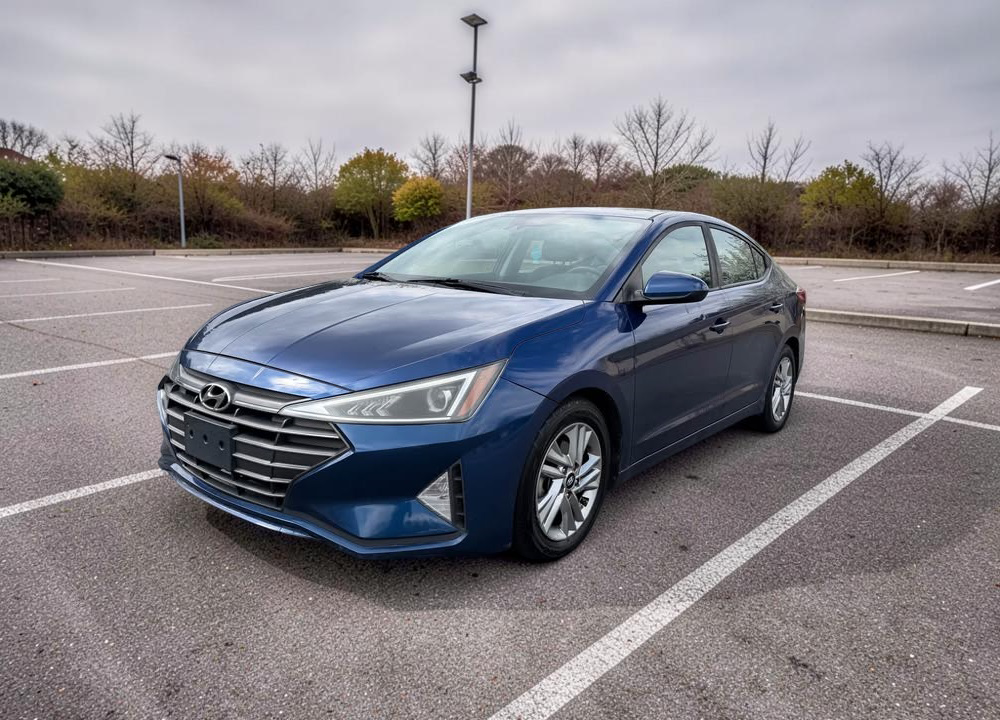
1. Hear the 2011–2016 1.8-liter engine before it warms up
A fading knock can still leave damaged cylinder walls
Piston slap describes a hollow knocking sound that may occur when a piston moves laterally in the cylinder. The noise can be most noticeable after a cold start and may fade as the engine warms. A quieter engine does not prove that the cylinder walls are undamaged.
Hyundai TSB 22-EM-007H addresses possible cylinder-wall scuffing in certain vehicles equipped with the 1.8-liter Nu engine. The scope includes certain 2011–2016 Elantra sedans, certain 2013 Elantra GT vehicles, and certain 2013 Elantra Coupes. This is a technical-service bulletin, not a safety recall.
The prescribed inspection uses a borescope through the spark-plug holes to look for vertical scuffing on the cylinder walls. If Hyundai confirms the required damage, the repair can involve replacement of the engine long block, subject to the bulletin’s inspection, documentation, and approval procedures. If no qualifying scuffing is found, the bulletin does not call for automatic engine replacement.
Arrange the inspection before the seller starts the engine. A warm test drive can miss a cold knock. Timing-chain, valve-train, belt, and bearing noises require separate diagnosis, so sound alone cannot confirm piston slap. Persistent knocking or unexplained oil loss warrants inspection before purchase. [1]
The warranty clock can leave you paying for the engine
Hyundai’s TXXK program is a powertrain warranty extension for qualifying piston-scuffing damage. TSB 22-EM-009H describes the current terms for eligible vehicles. For vehicles currently or previously registered in a listed Cold Weather State, the extension is generally 10 years or 120,000 miles for original retail purchasers, original retail lessees, and Hyundai Certified Pre-Owned purchasers. Other eligible owners generally receive 8 years or 80,000 miles. The first limit reached controls.
A vehicle outside the listed states may still qualify if the owner can document an approved eligibility route. Hyundai’s materials describe proof of substantial qualifying cold-weather use, including at least 90 consecutive days between November and March, or evidence directly linking the damage to the piston-scuffing condition. Living in a warm state does not automatically decide the claim, but Hyundai must confirm eligibility.
The program is not unconditional. Hyundai may consider maintenance history, including exceptional neglect such as failing to obtain an oil change for at least 365 consecutive days or 15,000 miles. Earlier transitional mileage figures in the original program documents should not be presented as the current coverage terms.
Before buying, ask Hyundai to confirm the VIN, original retail delivery or in-service date, category, qualifying registration or use, and remaining coverage in writing. The clock starts with the original vehicle date, not the day you buy the used car. [2] [3]
2. The 2.0-liter badge hides different engine risks
GDI bearing damage comes with specific coverage limits
The 2.0-liter Nu GDI engine injects fuel directly into each cylinder. Certain versions fall under Hyundai’s Engine II settlement, which addresses connecting-rod-bearing failure. These bearings support the connecting rods where they rotate on the crankshaft. Severe wear can produce knocking, trigger an oil-pressure warning, damage the engine, and in some cases cause seizure or stalling.
The settlement includes certain 2014–2016 Elantra sedans with the specified 2.0-liter Nu GDI engine, the 2014 Elantra Coupe, and certain 2014–2020 Elantra GT vehicles. A 2018 GT therefore requires a different engine assessment from a 2018 regular sedan. VIN-level eligibility controls.
Qualifying bearing-related short- or long-block damage may receive coverage for 15 years or 150,000 miles from original retail delivery, whichever comes first. The extension is limited to the covered failure and remains subject to settlement terms, exclusions, maintenance requirements, and other eligibility conditions. It is not a whole-vehicle warranty.
Hyundai generally requires the Knock Sensor Detection System, or KSDS, update before a covered failure. The Elantra-related update is Campaign 966. Vehicles under specified Hyundai recalls 198 and 209 have settlement-specific exemptions; those recalls did not list the Elantra. KSDS detects abnormal vibration and can trigger warning or protection modes. It does not repair a worn bearing or replace an engine. [4] [5]
Brittle oil rings put certain 2019–2020 sedans at risk
NHTSA Recall 21V-301, Hyundai Campaign 203, covers certain 2019–2020 Elantras equipped with the 2.0-liter Nu MPI engine. MPI injects fuel into the intake ports. The recall identifies piston oil rings that may have received improper heat treatment during production.
The affected rings can become excessively hard and chip at the outer edge. Broken material can score the cylinder walls, increase oil consumption, and contribute to knocking or an oil-pressure warning. Continued operation can lead to connecting-rod-bearing seizure, engine damage, stalling, or, in limited circumstances, an engine-bay fire.
The recall remedy begins with an inspection. Hyundai replaces the engine when the specified inspection finds qualifying damage or the vehicle fails the prescribed inspection. The repair is not an automatic engine replacement for every vehicle in the recall population. The campaign also includes enhanced engine-control software with Hyundai’s Piston Noise Sensing System, or PNSS. The software can detect abnormal vibration; it cannot repair chipped rings or scored cylinder walls. [6] [7]
A completed campaign does not prove the engine was replaced
Ask for the repair invoice behind a completed campaign entry. An inspection, software update, and engine replacement leave different records. The invoice should identify the work, parts, date, and mileage.
For a replacement engine, check whether the paperwork lists a short block or long block. A short block generally contains the lower engine assembly, including the crankshaft, connecting rods, and pistons. A long block also includes the cylinder head. Neither description alone establishes how much oil the engine uses now.
Oil-use records after the repair matter more than a clean dipstick during the viewing. A short road test may reveal knocking or hesitation, but it cannot measure oil consumption. Unexplained oil loss needs a measured consumption test and a leak inspection before purchase.
3. A shaking 2017 Elantra needs a diagnosis before an engine quote
Misfire codes do not prove the engine has failed
The engine may shake at a stop and stumble when you press the accelerator. A weak ignition coil can cause those symptoms by failing to fire the spark plug reliably. Diagnostic code P0300 indicates random or multiple misfires; P0301 through P0304 identify misfires in cylinders 1 through 4.
Hyundai TSB 20-FL-001H addresses certain 2017 Elantras with the 2.0-liter engine and specified misfire codes. The procedure combines an engine-control software update with ignition-coil inspection and replacement when required. The software changes how the engine computer learns cylinder differences; it cannot repair a faulty coil. This is a technical-service bulletin, not a blanket safety recall.
The bulletin distinguishes certain older coils by their markings and provides replacement instructions. Ask for an invoice showing which coils were replaced and whether the software update was completed.
A misfire code records uneven combustion, not the failed part. Spark plugs, fuel delivery, and low cylinder compression can also cause misfires. If shaking persists after the specified repair, the shop must test further. Low compression warrants checks for leakage past the valves, piston rings, or head gasket.
A blank code scan also needs care. Recently cleared codes or a disconnected battery can leave emissions-readiness monitors incomplete. That does not prove the seller hid a fault, but it does mean the computer has not finished all checks since the reset. [8]
A hard brake pedal and heavy steering have separate recalls
NHTSA Recall 17V-063, Hyundai Campaign 157, covers certain 2017 Elantras built from September 12, 2016, through January 18, 2017. A dimensional issue in the brake-booster housing can allow the diaphragm to unseat, creating a vacuum leak and reducing or removing power-brake assistance.
You can still apply the brakes, but the pedal requires more force. Hyundai’s remedy is replacement of the affected brake booster. Confirm completion by VIN and request the repair record. The recall documents cite the applicable new-vehicle warranty terms; they do not establish unlimited lifetime coverage.
Recall 17V-213, Hyundai Campaign 161, concerns a small group of vehicles built from December 22 through December 31, 2016. Damage to the electric-power-steering motor connector can trigger the steering warning light and cut electric assistance. Steering remains possible, but turning takes more effort, especially at low speeds. Hyundai’s remedy replaces the EPS motor.
The NHTSA report lists 99 potentially involved vehicles, while Hyundai dealer information cites 100. In either case, a 2017 model-year badge alone does not establish eligibility. [9] [10]
4. Older Elantras can clunk, lose steering assist, or develop ABS shorts
A worn coupler does not call for a whole steering column
A small thud beneath the dash when you turn the wheel can come from a worn flexible coupler inside the electric-steering assembly. Wear can create play between the motor and the driven shaft.
Hyundai TSB 17-ST-002 and warranty extension TXX7 address this condition in specified 2007–2015 Elantra sedans and 2009–2012 Touring models. Hyundai states that this particular coupler wear does not impair steering control. It is a service bulletin and warranty extension, not a safety recall. Coverage is generally 10 years or 100,000 miles for specified vehicles, whichever comes first.
The repair replaces the worn coupler and cleans debris from the assembly. The bulletin identifies an improved replacement part and calls for steering-position calibration and a fault-code check after assembly.
Ask the technician to locate the clunk before approving a complete column replacement. Other causes of steering play still require diagnosis, and warranty labor allowances are not guaranteed retail labor quotes. [11]
Sudden heavy steering points to a different fault
Recall 15V-100, Hyundai Campaign 127, covers certain 2008–2010 Elantra sedans and 2009–2010 Touring models. A discrepancy in steering-input signals can cause the steering-control system to shut off power assistance. Turning then takes more effort, especially during parking or low-speed turns.
Hyundai’s remedy checks electric-steering operation and updates the steering-control software. Replacing a flexible coupler does not complete this recall. Ask for the campaign record even if the seller recently repaired a steering clunk. [12]
An ABS fire risk can remain after the engine stops
Recall 20V-061, Hyundai Campaign 188, covers specified older Elantra and Elantra Touring vehicles. The ABS module can remain powered with the ignition off. Moisture entering the electrical circuit can cause a short and an engine-bay fire. The NHTSA report and Hyundai’s owner-facing campaign materials describe somewhat different model-year groupings, so VIN verification is essential.
Hyundai’s remedy installs a relay in the main junction box so the ABS module powers down when the ignition is off. Normal braking does not prove that the repair is complete. Hyundai states that the short itself does not affect foundation-brake operation, so pedal feel cannot reveal the fire risk.
A separate recall, 23V-651, Hyundai Campaign 251, covers certain 2011–2015 Elantras. Brake fluid can leak inside the ABS module and cause an electrical short and overcurrent, creating an engine-bay fire risk while parked or driving.
The specified remedy is a lower-amperage ABS fuse or fuses, not necessarily a new ABS module. Until the applicable repair is complete, Hyundai directed owners to park outside and away from buildings. [13] [14]
Age adds separate wear to struts, control-arm bushings, and automatic transmissions. A shop should inspect leaks and joint play, then test shifting after warm-up. If engine speed rises during a shift without matching acceleration, the transmission needs diagnosis before purchase.
5. Transmission trouble changes with the trim and year
Takeoff shaking deserves a closer look in Eco and Sport models
Certain 2017–2018 Eco and Sport models use a 7-speed dry dual-clutch transmission, or DCT. The Eco pairs it with a 1.4-liter turbo engine. The DCT-equipped Sport uses a 1.6-liter turbo. Dry friction clutches engage as you pull away, so repeated crawling can create clutch heat.
Persistent takeoff shaking needs diagnosis, even when higher-speed shifts feel smooth. Hyundai TSB 21-AT-013H covers specified applications and uses a clutch-judder test. A failed result can call for replacement of the double-clutch assembly.
The bulletin links the software update to the installed clutch material. Replacing older F833DS clutches with newer F850 material requires the matching transmission-control update. The repair may include actuator adjustment and clutch learning. Incorrect actuator-rod adjustment can prevent the learning procedure from finishing.
During a warm test drive, check normal takeoff, reversing, and stop-start driving. Do not hold the car on a slope with the accelerator or force prolonged crawling. Both actions keep the clutches slipping and add heat. Repeatable judder needs a diagnosis and repair quote before you agree on price. [15]
The 2020 IVT campaign can end with a new transmission
For 2020, the regular 2.0-liter sedan used Hyundai’s Intelligent Variable Transmission, or IVT. Eco and Sport models retained their separate 7-speed DCT applications.
Service Campaign 963 and TSB 20-01-047H address certain 2020 Elantras with specified diagnostic codes, including P0730, P0731, P0741, P0867, and P1603. The procedure can include a software update, pressure or adaptive learning, and IVT replacement when the bulletin’s diagnostic conditions are met.
The campaign does not promise replacement for every 2020 Elantra. The shop must follow the specified code and learning criteria, and out-of-warranty work may require prior approval or goodwill consideration. Ask for the campaign invoice, scan results, and confirmation that the learning procedure passed. [16]
A sharp 1–2 shift in a 2021 N Line needs its own diagnosis
Certain 2021 Elantra N Line models with the 1.6-liter turbo and 7-speed DCT can develop harsh shifting associated with an input-shaft snap-ring issue. Hyundai addresses the condition in service documentation that calls for inspection and, when the specified condition is found, snap-ring replacement.
A prior clutch-judder repair does not establish completion of this separate repair. Check the VIN’s campaign history and the invoice for transmission work. During normal acceleration and slowing, pay attention to the 1–2 and 2–1 shifts. A software update cannot correct an out-of-specification snap ring.
6. The Elantra N has its own power-loss risks
Certain 2022 wet-DCT models can lose drive after a warning
Recall 22V-746, Hyundai Campaign 236, addresses certain 2022 Elantra N models equipped with the 8-speed wet DCT. The transmission’s high-pressure electric oil pump can develop an internal fault. The original control software may fail to maintain drive as intended.
Hyundai’s notice describes roughly 20–30 seconds of normal drive power after warnings appear, followed by loss of motive power. The remedy updates the transmission-control software and includes inspection, with transmission replacement when the specified condition is found. Manual-transmission Elantra N models do not use the affected gearbox. [17]
The fuel-pump recall also reaches manual cars
Recall 24V-528, Hyundai Campaign 262, covers certain 2022–2023 Elantra N models. Wear inside the high-pressure fuel pump’s control valve can admit too much fuel and create a rich mixture, reducing or cutting engine power at low speeds.
The procedure checks for the specified fuel-pressure fault and updates the engine-control software. The high-pressure fuel pump is replaced only when the recall’s diagnostic conditions require it; a completed campaign entry does not automatically mean that a new pump was installed. The recall applies regardless of transmission type, so a manual car still needs a VIN check.
Ask for the recall invoice and find out whether the repair involved software only or included pump replacement. The related TSB 22-AT-009H is a service bulletin, not the recall identifier. [18]
7. Newer Elantras still need a safety-recall check
A smooth test drive will not expose every faulty airbag inflator, seat-belt pretensioner, sensor, or electronic controller. These parts may show no symptom until a crash or a specific operating condition occurs. Check the exact VIN and repair history, including recalls announced after the vehicle was built.
| Vehicle/program | What the program actually concerns | Repair evidence to request |
|---|---|---|
| Certain 2026 Elantras — Recall 26V-254 / Campaign 299 | Misassembled B-pillar side-impact sensors may delay airbag deployment. Only a small number of 2026 Elantras were in the combined recall population. | Sensor inspection and replacement where required. |
| 2021–2023 Elantra and certain 2021–2022 Hybrids — Recall 22V-354 / Campaign 229 | Front seat-belt pretensioners may rupture during deployment. | Installation of the specified protective caps. |
| Certain 2021–2023 Elantra Hybrids — Recall 23V-589 / Campaign 248 | Motor-control software can cause unintended acceleration after brake release in specified conditions. | Motor-control-unit software update. |
| Certain 2023 Elantras — Recall 23V-526 / Campaign 246 | A damaged capacitor in the Idle Stop & Go oil-pump controller can overheat and create a fire risk. | Controller replacement and the specified IVT fluid-level check. |
| Certain 2024 Elantras — Recall 24V-308 / Campaign 260 | An EGR-valve short can disrupt a shared crankshaft-sensor power circuit and cause sudden power loss. | EGR-valve assembly replacement. |
| Certain 2024–2026 Elantra Hybrids — Recall 26V-308 / Campaign 301 | An HPCU component can overheat, causing no-start, reduced-power, or localized fire conditions. | HPCU software update; this is not a campaign for every gasoline Elantra. |
A completed campaign entry still needs to be matched to the VIN and invoice. One repair does not close every other open recall.
8. Theft exposure can erase a low purchase price
A keyed ignition needs its own inspection
Certain 2011–2022 Elantras and certain 2013–2020 Elantra GTs lack an electronic engine immobilizer. That device checks for an authorized key before allowing the engine to start. Vehicles without it are vulnerable to the widely publicized theft method.
The year ranges do not mean every Elantra has the same exposure. Push-button-start vehicles and vehicles with factory immobilizers require a different assessment. Ask Hyundai to confirm the exact VIN’s equipment and anti-theft campaign status.
Hyundai Campaign 993 offers a free software upgrade for eligible keyed-ignition vehicles. The update changes alarm and starting controls; it does not add a physical transponder immobilizer. Owners must lock the doors with the key fob to activate the added protection. Locking by another method may not satisfy Hyundai’s activation instructions.
For eligible vehicles that cannot receive the software, Hyundai has also offered steering-wheel locks or other anti-theft remedies under separate program rules. Confirm eligibility and current availability with a dealer. [19] [20]
Price the insurance before agreeing to buy
Get an insurance quote for the exact VIN before comparing purchase prices. Ask about theft coverage, the deductible, and any required anti-theft work. A software-update receipt does not guarantee that every insurer will treat the vehicle the same way.
Past theft attempts can leave repair costs behind. Check the ignition cylinder, steering-column covers, door locks, and replaced glass. Ask for invoices explaining any damage and repairs. Broken trim alone does not establish what happened, but a loose ignition needs inspection.
Before taking the car, test the key fob’s lock and unlock functions. A dead or missing fob can prevent you from using the specified locking method.
9. Which Elantras deserve a place on the shortlist
The 2018 2.0-liter sedan offers a conventional automatic
A well-maintained 2018 sedan with the non-turbo 2.0-liter engine deserves consideration. Its available 6-speed automatic avoids the later IVT and the turbo models’ dry DCT. That makes it worth inspecting if you prefer a conventional automatic.
This recommendation rests on the hardware, not proof that every 2018 car lasts longer. The Elantra GT uses a different 2.0-liter GDI engine with separate bearing-coverage concerns. Confirm the body style, engine, and VIN before comparing listings.
For the sedan, look for regular oil changes and records of oil top-ups. Test cold starting, warm shifts, and engagement into Drive and Reverse. Price insurance against the exact VIN before making an offer. Any cold knock still needs diagnosis, regardless of model year.
Later non-turbo sedans offer fewer performance parts to maintain
The 2022–2025 non-turbo 2.0-liter IVT sedans may be reasonable candidates after applicable recall repairs. Their appeal comes from an engine without a turbocharger and a transmission without the N Line’s dry clutches. The Hybrid adds a motor and uses a 6-speed DCT, requiring its own assessment.
Fewer complaints on newer cars do not establish better long-term durability. A 2025 model has had less time to build mileage and expose wear than a 2018 car. Service records and a warm transmission test still matter. Hesitation, shudder, or delayed engagement warrants diagnosis before purchase.
Match recall work to the year and equipment. Certain 2022–2023 vehicles need pretensioner-cap work, some 2023 cars need the oil-pump-controller repair, and certain 2024 vehicles need an EGR-valve replacement. An invoice for one campaign does not close another open recall on the same VIN.
An engine-replacement invoice needs more than a date
An older repaired Elantra can remain worth considering when its price reflects its condition and remaining coverage. For an engine replacement, request the mileage, parts description, and repair warranty. Find out whether the shop installed a new, remanufactured, or used assembly. Then examine the oil-use history since installation.
A used engine needs its own identification and mileage records. A replacement invoice alone does not establish whether that engine falls within an affected production group. Ask the installer or Hyundai to confirm the replacement’s specification. Any remaining warranty needs written terms, including whether it transfers to you.
The 2015–2016 badge does not remove the documented 1.8-liter piston-scuffing exposure. A 2008 car’s low complaint count also leaves its steering and ABS recall status unanswered. If the seller will not allow a cold start and an independent inspection, do not commit to the purchase.
Sources & References
- Hyundai TSB 22-EM-007H
- TSB 22-EM-009H
- Hyundai TXXK warranty information
- Hyundai Nu Engine settlement information
- Hyundai Engine II settlement
- Hyundai Campaign 966
- NHTSA Recall 21V-301 amended report
- NHTSA Recall 21V-301 owner notice
- Hyundai TSB 20-FL-001H
- NHTSA Recall 17V-063
- NHTSA Recall 17V-213
- Hyundai TSB 17-ST-002 / TXX7
- NHTSA Recall 15V-100
- NHTSA Recall 20V-061
- NHTSA Recall 23V-651
- Hyundai TSB 21-AT-013H
- Hyundai TSB 20-01-047H / Campaign 963
- NHTSA Recall 22V-746
- NHTSA Recall 24V-528
- Hyundai anti-theft software upgrade
- Hyundai Campaign 993