
A knock under the Kona’s hood can wipe out a low price’s appeal. Certain 2019–2021 2.0-liter engines have defective piston rings that can chip and score cylinder walls. Oil use climbs. Left unchecked, the damage can seize the engine.
Certain 2019–2020 Kona Electrics carry a different risk: battery cells that can short and catch fire. That can happen while parked, charging, or driving. Both groups deserve close scrutiny, but the exact car’s repair history matters. A completed recall needs paperwork showing what the dealer actually did.
This guide separates Hyundai Kona years to avoid by powertrain, explains the failures, and names the repairs to verify.
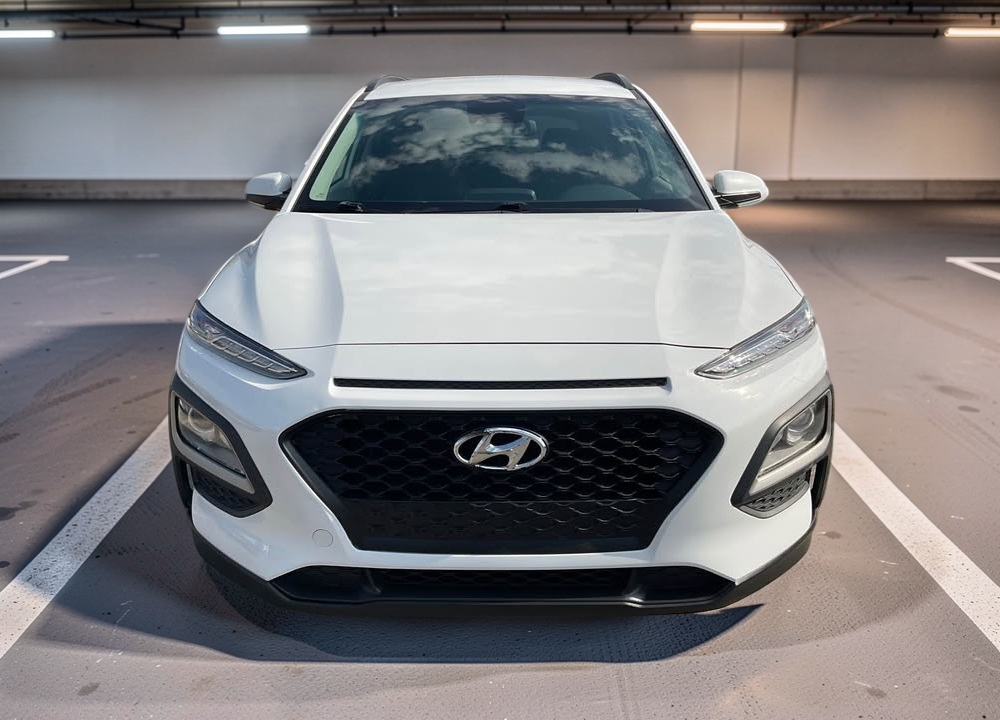
1. Check what’s under the hood before judging the year
A used listing that says “automatic” leaves out a costly detail. Hyundai fitted the Kona with several powertrains and transmissions, each with different wear points. The engine, model year, trim, drivetrain, and VIN determine which one you are buying.
The transmission split that changes your search
| U.S. model years | Engine or version | Transmission | What matters when buying |
|---|---|---|---|
| 2018–2021 | 2.0-liter Nu MPI | 6-speed conventional automatic | Keep piston-ring concerns separate from turbo DCT concerns. |
| 2018–2021 | 1.6-liter turbo GDI | 7-speed dry dual-clutch transmission, or DCT | Certain vehicles are covered by Hyundai’s low-speed judder procedure. |
| 2022–2023 | Naturally aspirated 2.0-liter | Intelligent Variable Transmission, or IVT | This replaces the earlier 6-speed automatic in the naturally aspirated Kona. |
| 2022–2023 | 1.6-liter turbo, including N Line | 7-speed dry DCT | The facelift retains the dry-clutch arrangement. |
| 2022–2023 | Kona N 2.0-liter turbo | 8-speed wet DCT | Its oil-cooled clutches and recall history differ from the 7-speed unit. |
| 2024 onward | 1.6-liter turbo | 8-speed conventional automatic | A torque converter replaces the earlier dry-clutch takeoff arrangement. |
Hyundai distinguishes the N Line from the separate Kona N performance model. Their similar badges can muddy used listings. Confirm the engine and transmission through the VIN-linked build record before applying a recall or repair bulletin.
A repair bulletin can’t tell you the failure rate
A safety recall identifies a defect or a failure to meet federal safety standards. Its coverage depends on the VIN, production dates, installed parts, and other eligibility criteria. A model year alone does not prove that a particular Kona qualifies.
A technical service bulletin gives technicians a diagnostic or repair procedure. Hyundai’s TSB 22-AT-007H addresses low-speed judder in certain 2018–2021 Kona 1.6T models. It specifies testing, software work, and clutch replacement when indicated. It does not establish how many transmissions fail or guarantee free repairs outside applicable warranty or campaign coverage.
Owner complaints describe symptoms, but they do not always establish the failed part. A shudder report without a diagnosis cannot prove that the clutch needs replacement. Raw complaint totals also ignore differences in sales, mileage, age, and time on the road.
For a buying decision, weigh the fault’s severity against repair records and the car’s current condition. A closed engine recall can mean inspection and software work without an engine replacement. Software cannot restore scored cylinder walls.
2. Why certain 2019–2021 engines need a closer look
Hard piston rings can tear up the cylinder walls
Certain 2019–2021 Konas with the 2.0-liter Nu MPI engine fall under NHTSA recall 21V-301, Hyundai Campaign 203. Hyundai traced the defect to inconsistent nitride heat treatment during piston-ring production. That left some oil rings excessively hard and prone to chipping.
Those chipped edges can score the cylinder walls as the pistons move. Oil can then enter the combustion chamber and burn, increasing oil consumption. Abnormal knocking or an oil-pressure warning can follow as the damage grows.
Continued operation can seize a connecting-rod bearing and stall the engine. In limited cases, the rod can puncture the block. Escaping oil can reach hot surfaces and increase the risk of fire. The recall covers certain engines within these model years, not every first-generation Kona.
Find out what the recall repair actually included
Hyundai’s remedy calls for an engine inspection and replacement when the inspection finds damage. It also includes an enhanced engine-control software update containing the Piston Noise Sensing System, or PNSS. That system monitors for vibration patterns that may indicate an abnormal engine condition; it does not replace damaged rings or repair scored cylinder walls.
The repair order should show whether the dealer inspected the engine or replaced it. For a replacement, check the installation date, mileage, and engine details. Then review service records from that point forward. An engine-replacement invoice alone does not establish the engine’s current oil use.
A short test drive will not settle that question. Fresh oil at the full mark tells you nothing about how often the seller adds more. Repeated top-ups call for a measured oil-consumption test and checks for external leaks. Knocking or an oil-pressure warning needs prompt diagnosis, even when the recall shows complete.
Do not assume this campaign provides lifetime engine coverage or protection under an unrelated Hyundai settlement. Ask the dealer to confirm any remaining coverage against the VIN. If the engine keeps losing oil, require a diagnosis before purchase. Low oil pressure can destroy bearings before the next scheduled oil change.
3. The turbo’s dry DCT can turn crawling traffic into clutch heat
Persistent shaking needs more than a software guess
The standard 2018–2023 Kona 1.6T uses a 7-speed dry dual-clutch transmission. During takeoff, a friction clutch slips to feed engine power into the gearbox. That engagement can feel different from a conventional automatic, especially at parking speeds.
Long periods of crawling can keep the clutches slipping and generating heat. Unlike wet clutches, these friction surfaces do not operate in cooling oil. Some engagement feel is normal. Repeated shaking, delayed engagement, or an overheating warning calls for diagnosis.
Hyundai’s TSB 22-AT-007H covers certain 2018–2021 Kona 1.6T models with low-speed judder. The procedure includes a judder test, control-software work, and clutch replacement when indicated. A software update alone will not resolve every case; the test results determine which repair the car needs.
The 2022 facelift kept the dry clutches
The 2022 facelift retuned the 7-speed DCT but retained its dry-clutch layout. Revised control logic can change how the clutches engage, but it does not eliminate the heat generated by prolonged slipping. The earlier bulletin’s listed coverage also does not automatically extend to 2022–2023 models.
Start the test drive with gentle takeoffs and normal stops. Once warm, check forward engagement, reversing, and ordinary stop-start driving. Pay attention to shaking that returns under the same light throttle. Avoid hard launches or prolonged creeping to provoke a fault.
If the seller reports a clutch replacement, read the invoice for the actual parts and accompanying software work. A vague “transmission serviced” entry does not establish either repair. Have a Hyundai-capable shop diagnose repeatable shudder before agreeing to buy. Bulletin publication alone does not make an out-of-warranty clutch replacement free.
4. Kona Electric battery risks extend beyond the first recall
The 2019–2020 fire recalls need proof of repair
Certain 2019–2020 Kona Electrics have battery cells that can develop internal shorts. Hyundai and NHTSA identified folded anode tabs inside affected cells. These defects can allow electrical contact where it should not occur. A fire can start while the vehicle is parked, charging, or being driven.
Hyundai first issued 20V-630, Campaign 196, then issued additional remedies under 21V-127, Campaign 200. The later recall specifically included certain vehicles that had not received a battery replacement under the earlier campaign. Depending on the vehicle and battery involved, the prescribed work may include inspection, battery replacement, and related battery-management work.
A missing replacement invoice alone does not prove that the recall remains unfinished, and an earlier campaign invoice does not automatically prove that the later remedy was completed. Ask the dealer for the VIN-specific campaign record and repair details.
For an affected vehicle awaiting repair, follow Hyundai’s current safety instructions, including parking outside and away from structures when directed. Do not rely on a generic model-year statement in place of the VIN record.
Later models still need battery software and fault checks
Service Campaign 9A4, detailed in TSB 23-01-073H-1, covers certain 2019–2023 Kona Electrics. It updates the Battery Management System, or BMS, to improve diagnostics and checks stored fault information. Depending on the codes and findings, the procedure may require software only or battery-system replacement.
One code that needs closer review is P1AA6. Hyundai uses the stored information and related codes to determine the repair path. The code by itself does not settle the diagnosis.
In 2026, Hyundai issued Service Campaign 9C5 through TSB 26-01-065H for a further BMS logic update on eligible vehicles. This service campaign is separate from the earlier battery-fire safety recalls. Its existence does not place every covered car within the original fire-defect group.
A 2022 or 2023 badge therefore does not establish a clean battery history. Have the dealer check applicable campaigns, scan battery faults, and assess battery condition. Check charging performance separately. A successful charging session cannot rule out every internal battery defect.
5. Early Kona Electrics have faults beyond the battery
A brake warning can mean less stopping power
Certain 2019–2021 Kona Electrics fall under 20V-748, Hyundai Campaign 199. Their Integrated Electronic Brake unit can reduce braking performance when it detects a particular fault. Warning lights may appear at the same time.
Hyundai’s procedure identifies C240201 as a diagnostic clue and calls for revised brake-control software. A battery replacement does not complete this separate brake recall. Ask for the Campaign 199 repair record. Reduced braking performance requires immediate attention, even if the battery campaigns show complete.
An internal coolant leak can cut drive power
Recall 22V-941, Hyundai Campaign 239, covers a narrow group of 2021 Kona Electrics. The U.S. filing lists 853 vehicles built from June 18 through July 31, 2020. Poor sealing can let coolant leak inside the Electric Power Control Unit, or EPCU.
Coolant can contaminate the controller and trigger reduced-power mode. In some cases, the vehicle can lose drive power altogether. Hyundai lists a “Check Electric Vehicle System” message among the possible warnings. The defect does not apply to every 2021 Kona Electric.
The dealer must inspect the EPCU and replace it if the leak test fails. Topping up coolant does not repair the faulty seal. Hyundai’s recall procedure requires EPCU replacement when it confirms an internal leak.
A repeating rumble needs a diagnosis before purchase
A repeating rumble during acceleration or deceleration deserves a closer look. Hyundai’s TSB 22-EV-001H-1 addresses abnormal motor rumble in certain 2019–2021 Kona Electrics. Its scope includes specified vehicles built through January 19, 2021.
The procedure evaluates mounting hardware, the traction motor, and the reduction gear. That gear assembly reduces motor speed before power reaches the wheels. Noise alone does not prove that the gearbox has failed. Hyundai uses staged repairs and repeat road tests to determine whether the noise remains.
Ask the inspecting shop to reproduce the sound and identify the repair needed before you agree on a price. A seller’s guess about a loose mount does not establish the cause. The bulletin lists repair paths that can require motor replacement, reduction-gear replacement, or both. Normal warranty terms apply; the bulletin does not guarantee a free repair outside applicable coverage.
6. The Kona N can lose power through two separate faults
Too much fuel can leave the engine struggling
Certain 2022–2023 Kona N models fall under 24V-528, Hyundai Campaign 262. Wear inside the high-pressure fuel pump’s control-valve plunger can allow excess fuel into the pump. The engine can then run with an excessively rich air/fuel mixture. Hyundai and NHTSA say this can reduce or cut drive power at low speeds.
The relevant warning condition can include P0088/P008800, which indicates excessively high fuel-rail pressure. Hyundai’s recall procedure calls for an engine-control software revision. If the specified warning condition is present, the dealer also replaces the high-pressure fuel pump. A completed campaign therefore does not always mean that the vehicle received a new pump.
Warranty Extension Z04, detailed in TSB 25-FL-002H, covers eligible pump failures for 15 years or 150,000 miles, whichever comes first. Coverage includes subsequent owners and is limited to the specified high-pressure fault and the program’s eligibility requirements. Confirm the extension against the VIN.
If the recall remains open, the dealer follows the recall procedure first. Without the specified fault, the bulletin directs technicians to continue normal diagnosis; the extension is not a blanket warranty for every fuel-pump failure.
The 8-speed DCT has its own loss-of-drive recall
Certain 2022 Kona N models also fall under 22V-746, Hyundai Campaign 236. A fault involving the transmission’s high-pressure electric oil pump can expose a problem with the transmission’s protective control logic. The intended limited-mobility mode may fail, leaving the car without drive power.
The remedy includes transmission-control software, inspection, and transmission replacement when required. Ask for the repair records for both the transmission and fuel-pump campaigns. Completing one leaves the other untouched.
Treat warning lights and lost acceleration during a test drive as reasons to stop safely and arrange diagnosis. Hyundai’s notice describes a short period of continued driving after warnings followed by possible loss of drive power. That gives little room to clear moving traffic.
7. Newer Konas have recall repairs worth checking by VIN
The 2023–2026 recall record covers electrical faults, seat belts, steering parts, and dashboard displays. Each campaign targets specific production groups. These filings do not establish equal failure risk across every Kona from those years.
| Affected U.S. models | Recall identifiers | Defect and risk | Required repair or restriction |
|---|---|---|---|
| Certain 2023 Kona vehicles with applicable Idle Stop & Go equipment | 23V-526 / Campaign 246 | Damaged electrical components in the transmission’s electric oil-pump controller can overheat and create a fire risk. | Inspect and replace the affected controller as required; park outside and away from structures until repaired when Hyundai instructs you to do so. |
| Certain 2024 Kona vehicles | 23V-901 / Campaign 252 | 12-volt battery cables may chafe against the engine-control-module bracket and short during a crash, increasing fire risk. | Install protective sheathing over the specified wiring. |
| Certain 2024 Kona vehicles | 24V-308 / Campaign 260 | An electrical short in the EGR-valve assembly can cause loss of drive power. | Replace the affected EGR-valve assembly. |
| Certain 2024 Kona vehicles | 23V-650 / Campaign 250 | Rear seat-belt assemblies may not function correctly and may not adequately restrain an occupant. | Inspect the rear retractors and replace them when required. |
| Certain 2024–2026 gasoline Kona and 2024–2025 Kona Electric vehicles | 26V-452 / Campaign 306 | A rear-center buckle may fail to restrain an occupant during a crash. | Do not use the rear-center seat until repaired; replace the affected buckle. |
| Certain 2026 Kona vehicles | 26V-069 / Campaign 295 | Improperly cast front steering knuckles may crack or break, causing loss of steering control. | Inspect and replace affected steering knuckles. |
| Certain 2026 Kona vehicles | 26V-047 / Campaign 293 | A software error may cause the instrument-panel display to fail, hiding speed and warning information. | Complete the eligible over-the-air or dealer software update. |
8. Which Konas deserve a place on your shortlist
The 2022–2023 base engine keeps the hardware simpler
The 2022–2023 naturally aspirated 2.0-liter Kona is a reasonable starting point for buyers who want fewer costly parts. It avoids the turbocharger and 7-speed dry DCT. Hyundai pairs this engine with an IVT. These models do not retain the earlier 6-speed automatic.
That recommendation rests on hardware simplicity, not proof of trouble-free use. Exclusion from the earlier piston-ring recall does not rule out oil loss, poor maintenance, or unrelated faults. Review oil-change records and investigate repeated top-ups. For an affected 2023 car, require completion of the electric oil-pump-controller recall before purchase.
The 2024 turbo changes the low-speed compromise
The 2024 redesign gives the 1.6-liter turbo a conventional 8-speed automatic. Its torque converter handles takeoff instead of the earlier dry-clutch arrangement. That makes this version worth considering if your commute involves frequent crawling traffic.
The newer gearbox still contains clutches and can develop wear or faults. Check for delayed engagement, slipping, or harsh shifts once warm. Fewer complaints about a newer car do not prove better long-term durability. It has had fewer years to accumulate miles and repairs.
A repaired 2024 example deserves an individual assessment. Match its VIN against applicable recalls and read the completed repair orders. Protective cable sheathing, an EGR-valve replacement, and seat-belt work address separate defects.
Later Electrics still need evidence of battery health
The 2022–2023 Kona Electric sits outside the original 2019–2020 battery-fire recall scope. That makes it worth considering, but later battery diagnostic campaigns still cover certain vehicles. Ask Hyundai to check eligibility and completion for Campaigns 9A4 and 9C5.
Before paying extra for a later car, request a battery assessment and stored-fault scan. Test charging and investigate unexplained interruptions or EV warnings. A dashboard range estimate changes with temperature and recent driving. It cannot establish the battery’s remaining usable capacity.
9. Theft exposure can erase a low purchase price
Certain 2018–2022 Konas lack an engine immobilizer and qualify for Hyundai’s anti-theft software update. The affected cars use a keyed ignition. Versions with an immobilizer need a different assessment, so confirm the equipment and campaign eligibility through Hyundai’s VIN records.
An immobilizer blocks engine starting without the correct electronic authorization. Hyundai’s software changes the alarm and ignition-control logic on eligible vehicles. The protection depends on following Hyundai’s operating instructions, including locking the vehicle with the key fob where required.
Before comparing prices, get an insurance quote for the exact VIN and your address. Ask whether the insurer will cover theft and what deductible applies. A lower asking price can lose its appeal once you add the premium.
Have a Hyundai dealer verify software eligibility and completion before purchase. Inspect the ignition, steering-column trim, door locks, and glass for damage from earlier theft attempts. If the update requires key-fob activation, a missing or broken fob can leave that protection unavailable.
Sources & References
- NHTSA recall 21V-301: Hyundai Kona engine piston-ring recall
- NHTSA recall 20V-630: Kona Electric battery recall
- NHTSA recall 21V-127: Kona Electric battery recall
- Hyundai TSB 22-AT-007H: DCT judder diagnosis and repair
- Hyundai TSB 22-EV-001H-1: Kona Electric motor rumble
- Hyundai TSB 23-01-073H-1: Service Campaign 9A4
- NHTSA recall 23V-526: Idle Stop & Go oil-pump controller
- NHTSA recall 24V-528: Kona N high-pressure fuel pump
- NHTSA Hyundai recall lookup
- Hyundai recall and service-campaign lookup
- NHTSA Hyundai/Kia anti-theft software campaign
- Hyundai anti-theft software campaign information