
The brake pedal sinks, and that bargain Hyundai Genesis stops feeling like a deal. Corrosion inside the brake control unit can reduce stopping power in certain 2009–2012 sedans. Fresh pads won’t fix that internal fault.
Brake trouble puts 2009–2010 cars under scrutiny. The 2012 adds owner reports of stalling and heavy oil use in some 5.0-liter V8s. The redesigned 2015 brings separate fire recalls that also cover certain 2016 sedans. A newer badge year does not guarantee fewer risks.
The Hyundai Genesis years to avoid depend on the engine, build date, and proof of repairs. This guide explains the trouble years, weighs better candidates, and shows which checks matter before you buy.
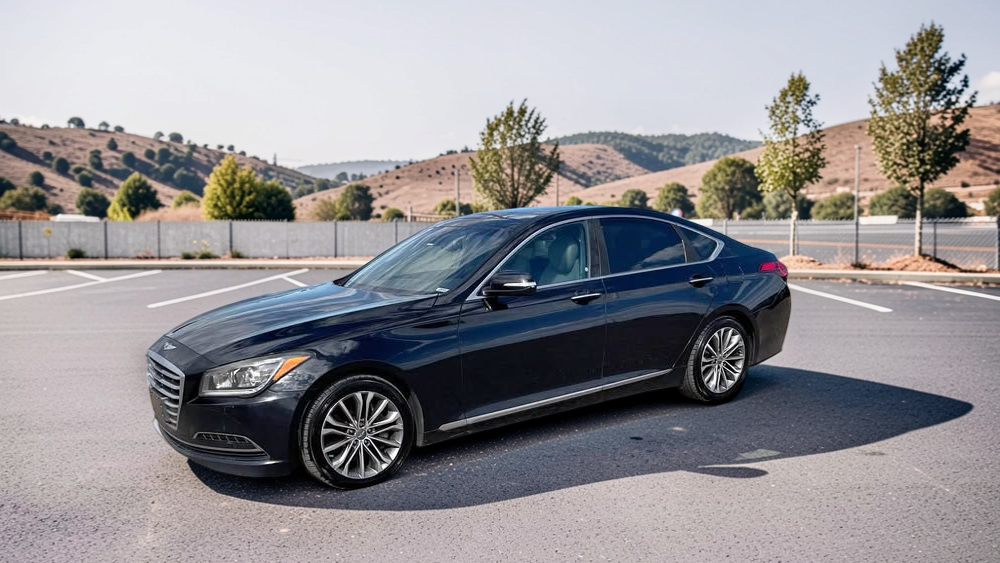
1. Which Hyundai Genesis years deserve the closest look
The Genesis badge covers different cars
This guide focuses on U.S.-market 2009–2016 Hyundai Genesis sedans. The first-generation sedan, known internally as BH, ran through 2014. The redesigned DH sedan arrived for 2015 and continued through 2016 under the Hyundai badge.
The Genesis Coupe needs a separate assessment. Its engines, gearboxes, and recall coverage differ from the sedan’s. Mixing Coupe complaints into sedan totals can send buyers after the wrong faults.
The sedan became the Genesis G80 for 2017 under the separate Genesis brand. The G80 is the successor to the DH sedan, but recall and complaint records should still be searched under the correct model and model year.
Where the buying risks stack up
Recall filings establish specific safety defects. Owner reports can identify symptoms worth investigating, but they do not establish a failure rate. Complaint totals are not adjusted consistently for sales, mileage, vehicle exposure, or reporting habits.
| Sedan model year | Buying assessment | Main reason |
|---|---|---|
| 2009–2010 | High caution, especially without brake-repair records | Early HECU corrosion risk, plus aging hardware and the possibility of incomplete recall work. |
| 2011 | Check brake-recall eligibility closely | Certain cars are included in the 2009–2012 HECU campaign. |
| 2012 | High caution, with engine-specific checks | The HECU campaign still applies to certain cars; some owners also report stalling or oil consumption, but those reports do not prove one universal cause. |
| 2013 | Judge the individual car | The reviewed evidence does not support a blanket avoid label. An unresolved stall, shift problem, or oil-use issue is still a reason to walk away. |
| 2014 | Reasonable first-generation starting point | It falls outside the 2009–2012 HECU campaign, but maintenance and condition still matter. |
| 2015 | High caution until recalls and known faults are resolved | Certain cars have separate starter and ABS fire recalls, and some early cars are covered by the T5W brake-tube service campaign. |
| 2016 | Conditional choice for the newer design | Certain cars remain covered by both major fire recalls. Do not assume a factory fix without VIN-specific records. |
These are inspection priorities, not statistically proven reliability rankings. A well-documented car from a higher-risk year can be a better purchase than a neglected car from a supposedly better year.
The engine changes the inspection
Early BH sedans offered a 3.8-liter V6 or a 4.6-liter V8. For 2012, the 3.8-liter V6 gained gasoline direct injection, and a new 5.0-liter V8 joined the range. The 2012 4.6-liter V8 retained port injection. The U.S. sedan lineup used an eight-speed automatic in 2012, replacing the earlier six-speed transmissions.
Those differences matter when reading complaints. A report of oil consumption in a 2012 5.0 does not establish the same fault in the 4.6. A stall report also needs an engine match and a diagnosed cause before it supports a repair decision.
For 2015–2016, U.S. sedans offered a 3.8-liter V6 or a 5.0-liter V8. Both used direct injection and an eight-speed automatic. HTRAC all-wheel drive was available with the V6; the V8 remained rear-wheel drive.
An AWD car adds a front differential, transfer case, and drive shafts to the inspection. Hyundai bulletin 20-DS-002H addresses propeller-shaft vibration on certain 2015–2016 3.8-liter AWD sedans. It is a technical service bulletin, not a recall or a guarantee of free coverage. Its repair guidance includes shaft replacement and further angle checks if vibration persists.
2. Why early Genesis brake records matter
Corrosion can leave the pedal low and soft
The 2009–2010 Genesis deserves close brake scrutiny, but the HECU defect reaches certain 2009–2012 sedans. The hydraulic electronic control unit, or HECU, controls brake pressure for ABS and stability-control functions. Hyundai says the brake fluid in affected cars did not adequately protect the unit’s internal valves against corrosion.
That corrosion can disrupt valve operation and reduce braking performance. Affected owners may notice a low or soft pedal with more travel than expected, but that symptom is not present in every recalled vehicle. The defect does not cause complete brake loss in every case, but it can increase stopping distance.
NHTSA’s recall record identifies certain 2009–2012 vehicles, with earlier-built cars receiving particular scrutiny during the investigation. That supports extra caution around 2009–2010 examples, but certain 2011 and 2012 sedans also fall within the recall population.
Fresh fluid doesn’t prove Recall 114 is complete
Hyundai Campaign 114, corresponding to NHTSA recall 13V-489, addresses the brake-fluid and HECU concern. The campaign procedure includes the specified fluid service and HECU inspection, with HECU replacement when the inspection identifies a problem. A routine brake flush does not prove that a dealer completed the recall procedure.
Ask for the dealer’s campaign record and the actual repair invoice. Those records should distinguish a fluid service from HECU replacement. New pads and rotors will not correct a fault inside the hydraulic control unit.
A sinking pedal needs diagnosis before a purchase road test. Other faults, including leaks or a failing master cylinder, can cause similar pedal behavior. Do not accept “they all feel like that” in place of a brake inspection.
The 15-year warranty clock may have run out
Hyundai later extended eligible HECU coverage through TXXP, detailed in bulletin 22-BR-001H-1. The extension provides 15 years of coverage with unlimited mileage. It applies to original and subsequent owners, subject to VIN eligibility.
The clock starts at original retail delivery or first use, whichever came first. By 2026, many early cars may have passed that limit. Low mileage does not stop the clock, and changing owners does not restart coverage.
Have a Hyundai dealer check the VIN and original service date. Ask separately about HECU warranty eligibility and any open safety recall. The 15-year limit governs the warranty extension; an outstanding Campaign 114 recall requires a separate campaign check.
3. Why the 2012 Genesis needs a closer engine check
A stall needs a cause and a repair record
Some 2012 Genesis owners report engines shutting off while driving, including reports involving the 3.8-liter V6. Several owner accounts describe repeated stalls despite dealer visits. These accounts are useful leads for an inspection, but they do not prove one shared cause or establish how common the problem is.
An engine shutdown cuts power to the wheels and can reduce steering and brake assist. An intermittent fault may leave the car running normally during a short viewing. A clean start does not settle a history of stalls.
Look for repair records that name the original symptom, diagnosed fault, and work performed. Check whether the engine stalled again afterward. A new battery or cleared warning light alone does not prove that the repair worked.
Ask how far the seller has driven since the repair. A car parked immediately afterward offers little evidence that the fault has stayed away. Pass on a car with repeated shutdowns that no shop has explained.
A full dipstick can hide the 5.0’s oil use
Owners of some 2012 5.0-liter Tau V8s, including R-Spec cars, report excessive oil consumption. These reports justify checking oil-use history closely, but they do not establish a universal piston-ring defect, a firm production cutoff, or a guaranteed later-year cure.
A seller can fill the sump just before you arrive. The dipstick then shows the current level, not how much oil the engine used last month. Useful records show how much oil went in and the mileage between top-ups.
Ask for any dealer oil-consumption test and findings from leak checks. Oil leaking onto the engine’s exterior needs a different repair from oil entering the cylinders. A low dipstick reading alone cannot identify the path.
An engine replacement needs its own paper trail. The invoice should identify the replacement engine, installation mileage, and related work. Service records after installation help show whether oil use continued.
Keep coolant loss separate from oil consumption. Falling coolant levels or past overheating need their own diagnosis. Low oil can starve bearings of lubrication, while low coolant can let engine temperatures climb.
A shift flare differs from an engine stumble
Hyundai fitted an eight-speed automatic across the 2012 sedan lineup. A seller’s claim that the car “hesitates” leaves too much open. The engine might stumble, the gearbox might delay engagement, or a clutch might slip during a shift.
Watch what happens to engine speed when the car hesitates. A flare means RPM rises during a shift without a matching gain in road speed. A stumble feels like the engine briefly loses power.
Have a specialist check the transmission cold and fully warm. The drive should include reverse engagement, light-throttle upshifts, and normal acceleration. Note any delay before the car moves, hard engagement, or repeated flare.
Software updates will not repair worn clutch material or an internal pressure leak. A shop must diagnose the fault before choosing the repair. Persistent slipping or harsh engagement needs a written estimate before purchase.
4. Why the 2013 sedan needs a fairer look
Coupe complaints don’t belong on the sedan’s record
The HECU recall, 13V-489, names affected 2009–2012 Genesis sedans. It does not list the 2013 sedan. That boundary does not rule out age-related brake faults, but it keeps this specific recall off the wrong year.
The 2013 Genesis Coupe has a separate complaint record. Reports of manual-gearbox grinding do not apply to the automatic-only sedan. Timing-chain complaints about the Coupe’s 2.0-liter turbo do not establish a defect in either sedan engine.
For a 2013 sedan, focus on its own service history and symptoms. Hesitation needs a diagnosis that separates engine response from transmission behavior. Past shutdowns and repeated oil top-ups need documented findings, even when the car runs well during the viewing.
The available evidence does not justify rejecting every 2013 sedan. Nor does it prove that Hyundai cured every earlier powertrain concern. An unresolved stall or persistent shift flare remains a reason to stop the purchase.
Peeling paint and dead controls change the price
Peeling clear coat calls for a close look at the finish. Compare the hood, roof, and trunk with nearby panels. Mismatched color, uneven texture, or overspray can point to prior paintwork, though they do not prove crash damage.
Ask a body shop to assess how far the failing finish extends. A proper repair may require removing unstable paint before refinishing the panel. Do not price widespread peeling as a quick polish.
Cabin equipment needs the same attention, especially on cars with navigation and the Driver Information System controller. Test the screen, then check the dial’s rotation and press-to-select action. A working display does not prove that the controller works.
Listen for missing audio channels, crackling, or sound that cuts out. Check the rear camera if fitted, then test the fan speeds and temperature controls. Record each fault before asking a shop for repair quotes.
Equipment varies by trim and package, so replacement electronics need an exact match. One amplifier or controller part number will not cover every Genesis sedan. Verify compatibility by VIN and installed equipment before buying a used module.
5. Why 2015–2016 fire recalls can stop the sale
Two fire risks need two separate repairs
| Recall | Documented fault | Required remedy |
|---|---|---|
| 24V-107 / Hyundai 254 | Water can enter the starter solenoid and cause an electrical short. | Install the specified relay kit in the engine junction box. |
| 21V-160 / Hyundai 201 | An internal ABS-module malfunction can cause an electrical short. | Perform the campaign’s specified fuse remedy; verify the exact repair through Hyundai or NHTSA records. |
The starter relay supplies solenoid power during startup instead of leaving the affected circuit powered continuously. That repair does not mean the dealer replaced the starter motor. Check the campaign entry and repair invoice for the actual work performed.
The ABS remedy is a fuse-related correction, not proof that the dealer replaced the ABS module. Ask the dealer to verify both campaign numbers against the VIN.
A normal start doesn’t clear the fire risk
NHTSA instructs owners of affected, unrepaired cars to park outside and away from structures until the repair is complete. A smooth test drive will not reveal whether either recall remains open. Switching off the engine does not remove the stated fire risk.
Get campaign records before agreeing to collect the car. A seller’s claim that “Hyundai handled the recalls” needs support for both repairs. If either campaign remains open, arrange the remedy before bringing the car home.
Completed recall work addresses the defect named in that campaign. It does not rule out earlier fire damage, flood exposure, or unrelated wiring faults. Melted connectors, scorched insulation, or patched wiring still need a separate inspection.
Early 2015 cars need a brake-tube check too
Certain early 2015 sedans also fall under service campaign T5W, covered by bulletin 21-01-015H. Hyundai lists production from February 21 through June 30, 2014, with eligibility tied to specified salt-belt states. The VIN determines whether a car qualifies.
This campaign calls for brake-tube replacement on eligible cars. It concerns different hardware from the older sedan’s HECU defect and the newer ABS fire recall. A completed ABS fuse repair does not establish that the brake tubes received attention.
Have the shop inspect underbody brake lines for corrosion and leakage. Check campaign history even if the car now lives outside the salt belt. A leaking brake tube can release fluid and reduce hydraulic braking pressure.
6. Which electrical faults have a documented repair path
Flickering headlights can point to the stalk switch
Headlights that flicker in AUTO mode do not automatically need new lamp assemblies. Hyundai bulletin 20-BE-009H-1 reportedly addresses this symptom on certain 2015–2016 Genesis sedans, pairing replacement of the left multifunction switch with a software update. Confirm the bulletin and VIN applicability through Hyundai service information before quoting it as a covered repair.
That switch sits on the steering column and controls the lights and turn signals. Ask whether the flicker occurs in AUTO mode and whether a shop has confirmed the fault. Replacing bulbs alone will not address a switch problem.
Hyundai’s TXXH warranty extension may cover eligible cars for 15 years with unlimited mileage. The clock starts at original delivery or first use, whichever came first. Have the dealer verify VIN eligibility and the start date before approving paid repairs; a bulletin or warranty extension is not automatic coverage for every car with the symptom.
Dead rear lamps and a blank camera may share one harness
A failed rear camera and certain dead passenger-side rear lamps can point to trunk-wiring damage. Bulletin 20-BE-007H is reported to address harness tension near the trunk-lid arm on certain cars. Damage there can interrupt more than one rear electrical function, but the wiring must be inspected before assigning that cause.
The reported repair guidance calls for inspection, wire repair where needed, and harness rerouting. Replacing the camera will not restore a broken wire feeding its circuit. The shop needs to inspect the harness where it bends near the hinge arm.
Ask whether a previous repair included rerouting as well as fixing damaged wires. Leaving the harness under tension can keep pulling on the repaired area. The bulletin gives repair guidance; it does not, by itself, establish free coverage.
A dead screen doesn’t prove the screen failed
A black display, lost audio, or a drained battery needs diagnosis before module replacement. Power loss, a poor ground, damaged wiring, or an internal fault can produce overlapping symptoms. The estimate should name the failed part and show how the shop confirmed it.
For battery drain, ask whether the shop measured current after the car’s electronics entered sleep mode. A weak battery and an electrical drain require different repairs. Installing a battery will not stop a circuit that keeps drawing power after shutdown.
Audio faults also need checks beyond the head unit. Missing channels can involve the amplifier, speakers, connectors, or wiring. A repair quote should identify which part failed rather than price a complete audio replacement.
Trim and option content affect module compatibility. Match replacement electronics to the VIN and installed equipment, then include any required programming in the quote. A matching plug alone does not prove that a used module will work.
7. Why the Genesis Coupe needs its own buying guide
The badge hides a different drivetrain
The 2010–2016 Genesis Coupe needs a separate assessment from the luxury sedan. Its range includes a 2.0-liter turbocharged four-cylinder and a 3.8-liter V6, depending on model year. Buyers also face manual and automatic gearbox choices.
Confirm the engine and transmission before comparing complaints or repair records. A manual Coupe that grinds during shifts needs checks for both clutch operation and internal gearbox wear. A clutch that does not fully release can hinder engagement without proving that the synchronizers have failed.
Have a specialist assess clutch release and shift behavior cold and warm. Note which gears grind and whether the fault changes as the car heats up. Do not accept “it only does that when cold” without a diagnosis.
A cold-start rattle also needs investigation. It can justify checking the timing drive, but it does not prove that every 2011–2013 turbo needs a chain. Ask the seller to leave the engine cold before the inspection.
Undocumented engine modifications add uncertainty to that inspection. A changed turbo, altered boost control, or unknown engine tune needs supporting records. Missing records leave the shop unable to confirm what parts and settings the engine uses.
The Coupe has a separate ABS fire recall
NHTSA recall 23V-651 includes certain 2011–2015 Genesis Coupes. The ABS concern can lead to an engine-compartment fire while parked or driving. NHTSA’s warning directs owners of affected, unrepaired cars to park outside and away from structures.
This campaign differs from the sedan’s ABS recall. A repair receipt for a different Genesis model does not establish coverage or completion for the Coupe. Have Hyundai check the Coupe’s own VIN and campaign record.
Keep recall completion separate from the drivetrain inspection. An ABS repair will not resolve grinding gears, a cold-start rattle, or faults tied to engine modifications. Until the applicable fire-recall repair is complete, follow NHTSA’s parking guidance.
8. Where to start the search for a better Genesis
A documented 2014 3.8 deserves a look
The 2014 Genesis 3.8 sedan offers a reasonable starting point for first-generation buyers. Its model year falls outside the HECU recall’s stated 2009–2012 range. That gives it a specific advantage on that issue, though it does not prove better reliability across every system.
Compare it with a well-kept 2013 before paying a large premium. Check cold starts, warm shifts, fluid levels, and service records on both. Low mileage will not explain missing maintenance or an unresolved stall.
A 2014 5.0-liter V8 can also remain a candidate. Ask for oil-use records rather than assuming the later year cured every consumption concern. Repeated top-ups without a measured consumption test leave the cause and repair cost unresolved.
Buy a 2016 for its equipment, with recall proof
The 2016 Genesis sedan suits buyers seeking the newer cabin and available driver aids. Hyundai made HID headlights and LED daytime-running lights standard that year. Other equipment varies by trim and package, so check the actual car.
Do not pay extra based on a claim that every 2016 received factory-corrected starter wiring. Certain cars remain covered by starter recall 24V-107 and ABS recall 21V-160. Require separate completion records for both applicable campaigns.
Test the fitted equipment even when the recall record looks clean. Flickering lights, a blank camera, or recurring battery drain still need diagnosis. Recall completion does not cover every electrical fault or establish that the car’s current symptoms have been repaired.
HTRAC adds a driveline check
The 3.8-liter HTRAC sedan offers all-wheel drive, but its drive shafts need attention during inspection. Bulletin 20-DS-002H addresses propeller-shaft vibration on certain 2015–2016 AWD cars. A vibration complaint needs diagnosis before a shop assigns it to the shaft.
Record the speed and load when the vibration appears. Ask a specialist to separate tire and wheel faults from driveline vibration. If a previous owner replaced the propeller shaft, check whether that repair stopped the symptom.
Rear-wheel drive avoids this particular AWD repair concern. It does not remove the sedan’s applicable recalls or engine checks. Hyundai’s bulletin calls for further angle inspection when vibration persists after propeller-shaft replacement.
Sources & References
- Hyundai Campaign 114 VIN Validation
- NHTSA recall results for the 2012 Hyundai Genesis
- Hyundai Warranty Extension TXXP: Hydraulic Electronic Control Unit
- 2012 Hyundai Genesis Specs & Features
- 2015 Hyundai Genesis Sedan Specs & Features
- NHTSA Consumer Alert: Important Hyundai and Genesis Recalls for Fire Risk
- NHTSA recall results for the 2015 Hyundai Genesis
- Hyundai Campaign 21-01-015H / T5W: Genesis DH Brake Tube Replacement
- Hyundai 2016 Genesis standard premium-lighting announcement
- NHTSA recall results for the 2013 Hyundai Genesis Coupe