
A deep knock cuts through the test drive, and that cheap Santa Fe stops looking cheap. In certain 2013–2014 Sports, leftover machining debris can restrict oil flow to the connecting-rod bearings. As those bearings wear, the engine can knock, seize, and stall. The repair can mean replacing the engine.
That’s where the model badge can mislead you. The Sport’s four-cylinder engines and the three-row Santa Fe’s V6 carry different faults and warranty terms. Newer versions bring separate transmission recalls. A seller’s claim that “Hyundai fixed it” needs a repair invoice behind it.
This guide sorts the years and engines that need caution, the repairs to verify, and the warranty limits that matter.
1. Which Santa Fe years need the closest look
The same badge hides different engines
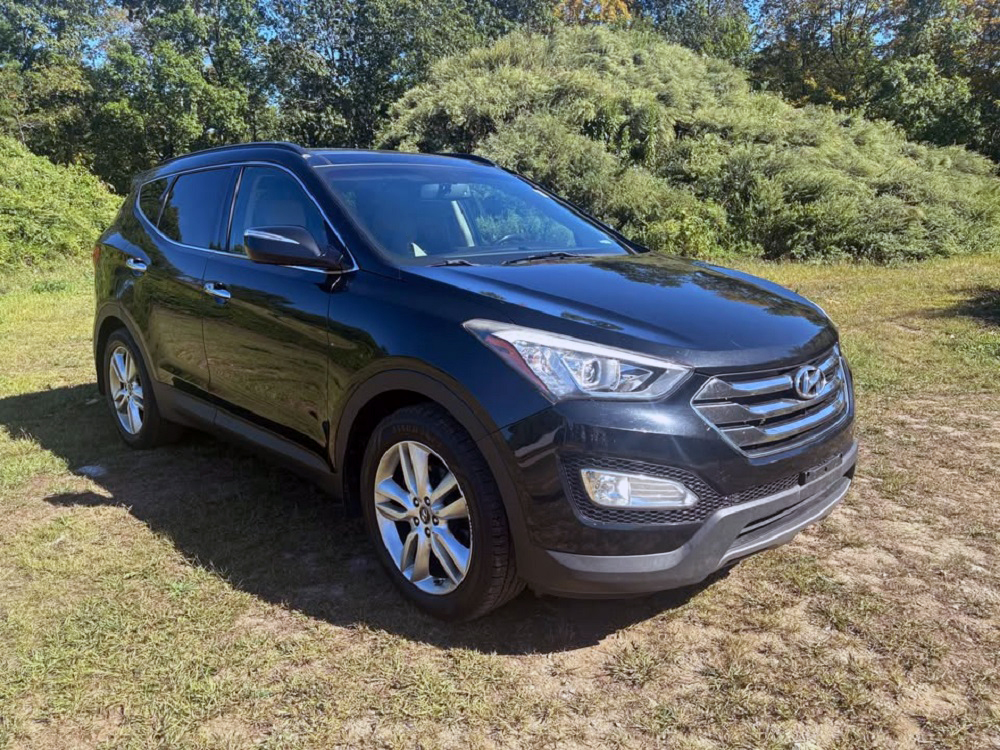
A 2014 Santa Fe Sport and a 2014 Santa Fe are different vehicles under the hood. U.S. 2013–2014 Santa Fe Sports covered by Hyundai Campaign 162 used 2.4-liter or 2.0-liter turbocharged GDI engines. The three-row Santa Fe used a 3.3-liter V6, with separate recall and warranty programs applying to certain vehicles.
Hyundai changed the names for 2019. The redesigned two-row SUV dropped “Sport,” while the older three-row version became the Santa Fe XL. The 2019 two-row Santa Fe continued with 2.4-liter and 2.0-liter turbo engines. For 2021, Hyundai introduced new 2.5-liter naturally aspirated and turbocharged engines, plus a 1.6-liter turbo hybrid powertrain. [1] [2]
Start with the engine, then judge the year
Some Santa Fe engines have documented recalls or warranty extensions for connecting-rod-bearing or crankshaft-related failures. Others have separate electrical, transmission, or accessory recalls. These campaigns do not make every vehicle in a model year defective, and a completed recall does not necessarily mean that an engine was replaced.
| Model years and version | Main concern | Evidence to demand before buying |
|---|---|---|
| 2007–2009 Santa Fe 3.3-liter V6 | Hyundai service information addresses oil leakage near the alternator on certain vehicles. | Campaign and bulletin history, leak inspection, and charging-system test. |
| 2010–2012 Santa Fe 2.4-liter MPI | Certain vehicles are covered by Recall 198 and the TXXM bearing-failure warranty extension. | VIN-specific recall status, KSDS history, repair orders, and remaining time/mileage coverage. |
| 2013–2014 Santa Fe Sport 2.4-liter and 2.0T GDI | Certain vehicles are covered by Recall 162 for premature bearing wear associated with machining debris. | Recall repair order, engine inspection result, and any engine-replacement invoice. |
| 2013–2018 Santa Fe Sport | Later vehicles may be included in KSDS monitoring or other Hyundai programs, but the early recall does not cover every Sport. | VIN-specific campaign history and confirmed warranty eligibility. |
| 2013–2018 Santa Fe V6 and 2019 Santa Fe XL | Certain 3.3-liter Lambda II GDI vehicles may qualify for the TXX8 warranty extension. | Dealer diagnosis, engine repair history, VIN confirmation, and original in-service date. |
| 2019–2020 two-row Santa Fe | The earlier 2.4-liter and 2.0T engines remained in use. Coverage differs by VIN and program. | Engine identification, service history, oil-consumption records when relevant, and written coverage confirmation. |
| 2021–2022 Santa Fe 2.5T | Certain eight-speed DCT vehicles are covered by Recall 236 for a transmission oil-pump fault. | Recall repair order, fault-code results, software-update record, and transmission-replacement record if required. |
| 2024 Santa Fe 2.5T | Certain eight-speed DCT vehicles are covered by Recall 263 for software-related transmission damage and rollaway risk. | Proof of the software update, physical inspection, and replacement record if damage was found. |
| 2025–2026 Santa Fe 2.5T and certain 2.5L vehicles | Recall 25V-549 affects only a small VIN-defined population with insufficiently torqued connecting-rod bolts. | VIN-specific recall status and proof of engine replacement where applicable. |
Complaint totals don’t tell you the failure rate
A complaint count lacks a key number: how many comparable vehicles remain on the road. High sales can produce more reports, while older vehicles accumulate more miles and wear. Owners also differ in whether they report failures. Raw totals cannot establish the odds of engine seizure.
Recall filings identify a defect and the vehicles that may contain it. Owner complaints describe reported failures, but they do not always establish the cause. An engine-replacement bill alone does not prove bearing damage, oil starvation, or a head-gasket fault. The shop’s diagnosis must identify what failed.
Small recalls need the same care. Recall 25V-549 identifies seven Santa Fe vehicles from model years 2025–2026 and 22 Tucsons, for 29 vehicles in total. That number cannot establish a failure rate for an entire Santa Fe model year. Hyundai’s stated remedy is engine replacement for affected vehicles. [3]
2. Why 2007–2012 models need different engine checks
A valve-cover leak can take out the alternator
On certain 2007–2009 Santa Fes, Hyundai service information addresses oil leaking from the front valve-cover area onto the alternator. Oil contamination can reduce alternator output. A battery warning light may appear, and a discharged battery can eventually cause the engine to stall.
Ask what an earlier repair actually included. An alternator invoice does not establish that the oil leak was repaired. Fresh oil around the alternator warrants a valve-cover inspection and charging-system test. Replacing the alternator alone may leave the source of the leak unresolved.
The 2012 four-cylinder can wear through its rod bearings
The 2012 Santa Fe’s 2.4-liter engine uses multi-port injection, or MPI. It belongs to the Theta II family, but it is not the Sport’s later GDI engine. NHTSA Recall 20V-746, Hyundai Recall 198, covers certain 2012 examples for premature connecting-rod-bearing wear. [4]
Those bearings let the connecting rods turn around the crankshaft on a thin oil film. As wear grows, a rhythmic knock can develop. Severe damage can seize the engine and cut power while the vehicle is moving. The recall addresses a fault inside the engine, beyond routine oil-change work.
Hyundai’s remedy includes inspection and engine replacement when the findings require it, along with the applicable engine-monitoring update. A completed recall entry may show inspection and software work without an engine replacement. Ask for the repair order to see which work the dealer performed. Software cannot restore a worn bearing.
A 2011 model can share the bearing concern
Hyundai’s TXXM warranty extension includes certain 2010–2012 Santa Fes with the 2.4-liter engine. It covers eligible connecting-rod-bearing failures for 15 years or 150,000 miles from original retail delivery or first use, whichever comes first. The program states that eligible subsequent owners can receive the protection, subject to its conditions. [5]
The terms generally require installation of Hyundai’s Knock Sensor Detection System, or KSDS, before a qualifying failure. Vehicles previously covered by Recall 198 or certain related recalls are exempt from that requirement. Have Hyundai confirm the VIN’s eligibility and campaign history before counting on a paid repair.
By 2026, the original in-service date can matter as much as mileage. A 2011 model may reach the time limit while its odometer remains below 150,000 miles. The model year alone cannot establish the expiration date.
3. The Theta II risk reaches beyond 2013–2014
Machining debris can starve the rod bearings
Certain 2013–2014 Santa Fe Sports left the factory with residual machining debris in the engine. That debris could restrict oil flow to the connecting-rod bearings. Without enough oil, the bearings can wear and generate heat. Hyundai addressed affected 2.4-liter and 2.0-liter turbo GDI engines under Recall 17V-226, or Recall 162. [1] [6]
A rhythmic knock can grow louder as engine speed rises. An oil-pressure warning or loss of power may follow. Continued bearing damage can seize the engine and cause a stall while moving. A quiet cold start alone cannot establish bearing condition.
The recall requires inspection and engine replacement when the findings call for it. Some vehicles passed inspection and retained their original engines. A seller’s “recall completed” claim does not tell you which repair occurred. The dealer’s repair order should identify the inspection result and any engine replacement.
Later Sports kept the engine under watch
Hyundai’s Campaign 953 extends KSDS monitoring to 2013–2018 Santa Fe Sports and 2019 Santa Fes. That campaign shows that Hyundai continued monitoring certain engines for signs associated with excessive bearing wear. It does not prove that every later Sport has bearing damage or that every early-recall condition exists in every vehicle. [7]
The 2019 redesign also kept the 2.4-liter and 2.0-liter turbo engines. Hyundai introduced the newer 2.5-liter choices for 2021. Confirm coverage separately for a 2020 vehicle before applying terms offered to an eligible 2019 model. [2] [7]
A flashing light and falling oil need separate tests
KSDS uses the knock sensor to detect vibration associated with connecting-rod-bearing wear. When it activates, the check-engine light can flash and engine power can drop. The engine computer may store code P1326. That code triggers diagnosis; it does not, by itself, prove that the engine needs replacement.
Oil consumption needs a different test. Hyundai’s service procedure uses a measured oil-consumption test and a decision point of approximately one quart per 1,000 miles in the applicable procedure. Further work depends on the measured result and the bulletin’s requirements.
A full dipstick at the seller’s home tells you little about oil use between changes. Fresh oil can hide how much the owner recently added. Ask for consumption-test records when the history shows repeated top-ups. A short test drive cannot establish a miles-per-quart figure.
“Lifetime warranty” leaves some repairs outside the claim
The Theta II settlement and related Hyundai programs provide extended or lifetime coverage only for qualifying failures in eligible vehicles. Coverage depends on the vehicle, the diagnosed failure, required KSDS work, and the applicable program terms.
Oil burning alone does not establish a covered bearing failure. Cylinder-head faults and failed engine accessories can fall outside a bearing-failure promise. Other warranties may apply, but no engine program covers every repair. Confirm eligibility against the VIN and the diagnosed fault.
A replacement-engine invoice should identify the assembly installed and explain why the dealer replaced it. “Engine replaced” can leave unclear which original parts remained in service. Ask Hyundai to confirm the applicable coverage in writing. A qualifying bearing warranty does not automatically pay for an unrelated cylinder-head repair.
4. The three-row V6 carries its own engine risks
Certain 2017 V6s have a separate bearing recall
Certain 2017 Santa Fes left the factory with crankshafts whose pin surfaces could accelerate bearing wear. The condition can lead to engine knock and possible seizure. Hyundai addressed the affected VIN population through Recall 168. [8]
The campaign covers certain 2017 Santa Fe vehicles produced during a limited production period, not every 2017 Santa Fe. The remedy is inspection and engine replacement when required. This is a different engine and defect from the Sport’s four-cylinder recall.
NHTSA reviewed petition DP24-001, which sought a new investigation into alleged Santa Fe engine failures, and denied the petition in 2024. That decision does not establish the condition of an individual used engine. A current knock still needs a diagnosis.
The V6 warranty reaches beyond the recalled year
Hyundai’s TXX8 extension covers certain 2013–2019 Santa Fe and Santa Fe XL vehicles with the 3.3-liter Lambda II GDI engine. Eligible engine noise or damage may receive coverage for 15 years or 150,000 miles from original retail delivery or first use, whichever comes first. The program states that coverage is valid for original and subsequent owners, subject to eligibility and inspection. [9]
Dealer approval still depends on the diagnosed fault and program terms. An engine-noise complaint alone does not guarantee replacement. Have Hyundai verify the VIN, engine, coverage, and original in-service date.
If you are considering a V6 with a past engine claim, request the diagnosis and repair invoice. Confirm whether the dealer replaced the engine or only inspected it. The extension stops when either the time or mileage limit is reached.
Coolant loss needs a leak diagnosis
Falling coolant and overheating call for different tests from a bearing knock. A cooling-system pressure test can help locate a leak. The shop must separate an external leak from coolant escaping through a head gasket or another internal fault. Symptoms alone do not prove damaged head-bolt threads.
Kia’s related-engine head-bolt program does not establish coverage for a Hyundai Santa Fe. Shared engine-family names do not make separate manufacturers’ repair programs interchangeable.
Ask for test results if the seller reports repeated coolant top-ups or past overheating. A recently filled reservoir cannot show where the missing coolant went. Keep unexplained coolant loss unresolved until a shop identifies the leak. A bearing-clearance test cannot rule out a head-gasket leak.
5. Fire recalls and steering clicks need different checks
ABS fire recalls cross engine and model lines
Certain Santa Fe ABS units can develop an electrical short and start a fire. The affected years overlap across several recalls, each with its own vehicle list. A four-cylinder Sport and a three-row V6 may need different repairs. The engine badge does not establish which campaign applies.
Recall 21V-303, Hyundai Recall 205, covers certain 2013–2015 Santa Fe Sports. Brake fluid can leak inside the ABS module and cause an electrical short. The remedy includes ABS inspection, replacement when needed, and revised fuse protection. Hyundai recommended parking affected vehicles outside and away from structures until the repair was completed. [10]
Recall 22V-056, Hyundai Recall 218, covers certain 2016–2018 Santa Fe vehicles, 2017–2018 Santa Fe Sports, and 2019 Santa Fe XLs, subject to equipment and production restrictions. Do not assume every vehicle within those years qualifies. Have Hyundai identify the applicable repair through the VIN. [11]
A completed earlier ABS recall does not automatically prove that a later campaign is closed. Check the vehicle’s complete campaign history.
An unused tow harness can still short
A tow-hitch wiring fault can threaten vehicles that have never pulled a trailer. The risk concerns an installed accessory wiring harness and its module. Water and debris can enter the module and cause an electrical short. Leaving the trailer socket empty does not remove an installed module.
Relevant Santa Fe model ranges vary by body style, powertrain, production date, and whether the affected harness is present. Model year alone does not establish eligibility. Ask the dealer to confirm both the presence of the recalled harness and completion of the repair.
Do not treat “we never tow” as evidence that the wiring is safe. Follow Hyundai’s parking instructions for any affected, unrepaired vehicle until the recall repair is complete.
A steering click doesn’t prove the column will lock
A click or thud when you reverse steering direction can come from the flexible steering-motor coupling. Wear creates play between the motor and the steering mechanism. Hyundai addresses this condition in TSB 17-ST-001 for certain 2013–2016 Santa Fe vehicles. The repair replaces the worn coupling with a revised part.
Hyundai states that this coupling wear does not affect steering control. Claims that the worn coupling inevitably jams the steering column go beyond the bulletin. A clicking noise needs diagnosis, but the noise alone does not establish a loss-of-control defect.
Heavy steering, binding, or lost power assist requires a separate investigation. Do not let a shop dismiss those symptoms as the familiar coupling click without testing them. Replacing the flexible coupling addresses its wear and noise; it does not establish that the repair will fix lost steering assist.
6. Engine choice changes the 2021–2023 buying decision
Three engines come with three different gearboxes
Hyundai changed the Santa Fe engine lineup for 2021. The older 2.4-liter and 2.0-liter turbo engines gave way to new choices. Transmission type now matters when comparing listings.
| Powertrain | Transmission | What changes for the buyer |
|---|---|---|
| Naturally aspirated 2.5-liter | Conventional eight-speed automatic | Lower output than the turbo and avoids the recalled turbo DCT. |
| Turbocharged 2.5-liter | Eight-speed wet dual-clutch transmission | More power, but certain 2021–2022 examples fall under Recall 236. |
| 1.6-liter turbo hybrid | Six-speed hybrid automatic | Separate engine and gearbox, plus traction motor and high-voltage battery. |
[2]
The turbo’s recall can require a transmission replacement
Recall 22V-746, Hyundai Recall 236, covers certain 2021–2022 Santa Fes with the eight-speed DCT. A fault in the high-pressure electric oil pump can disrupt transmission operation. The vehicle can lose drive power, leaving the driver unable to accelerate despite a running engine.
Hyundai’s procedure calls for a fault-code check and transmission-control software update. If the specified P1C2D03 fault is present, the procedure directs transmission replacement. Updating the software cannot repair faulty pump hardware.
A seller’s software-update receipt may leave part of that history unanswered. Ask for the recall repair order, including the code-check results. If the dealer found the specified fault, the paperwork should show the required transmission replacement. [12]
Dual injection doesn’t remove the need for inspection
The newer 2.5-liter engines combine port and direct fuel injection. Port injectors deliver fuel upstream of the intake valves; direct injectors spray into the cylinders. Port injection can help limit intake-valve deposits. It cannot prevent every deposit, oil leak, or wear fault.
Test the chosen transmission after it reaches normal operating temperature. Pay attention to delayed engagement, shudder, slipping, and warning messages. Have a shop investigate any repeatable fault before treating it as normal behavior. A brief, cold trip around the block leaves hot-shift behavior untested.
The base 2.5-liter automatic and hybrid’s six-speed do not use the recalled turbo DCT. Their service records still need review for the gearbox actually fitted. For a hybrid, confirm battery and hybrid-drive coverage separately from gasoline-engine coverage.
7. The 2024–2026 redesign needs more than a software check
The 2024 DCT recall requires a physical inspection
Certain 2024 Santa Fes with the eight-speed DCT can suffer transmission damage from faulty control software. The fault can damage the transmission or parking mechanism. Damage to that mechanism can let the vehicle roll while the selector shows Park. Hyundai addresses affected vehicles through Recall 24V-529, Hyundai Recall 263.
The repair requires updated transmission-control software and a physical inspection. If the inspection reveals damage, the dealer must replace the transmission. An over-the-air update can address the software portion where available, but it does not replace the required inspection or restore a damaged transmission.
Ask for the inspection result when reviewing a repaired vehicle. An update notification does not prove that the parking mechanism passed inspection. [13]
The hybrid shares some safety recalls with the gas model
Choosing the hybrid avoids the gas model’s recalled eight-speed DCT. It does not remove recalls involving shared seats, airbags, or wiring. Build date and equipment determine which campaigns apply. Match each recall to the VIN before accepting a seller’s repair claim.
Recent Santa Fe recall filings include campaigns involving rear-seat airbag wiring, starter-terminal covers, rear-camera wiring, side-curtain airbags, and seat-belt anchor attachments. The affected model years and powertrains differ by campaign. Check the current NHTSA and Hyundai VIN records rather than relying on a generic model-year list.
The loose-rod-bolt recall covers just seven Santa Fes
Recall 25V-549 concerns connecting-rod bolts tightened below specification. Loose bolts can compromise the joint that holds a rod around the crankshaft. Engine damage, stalling, and loss of drive power can follow.
The filing identifies seven 2025–2026 Santa Fe vehicles and 22 Tucsons, for 29 vehicles in total. Those numbers cannot establish a broad failure rate for either Santa Fe model year. Hyundai’s remedy replaces the affected engine. [3]
The 2026 gas model drops the DCT
For 2026, the U.S. gas Santa Fe switches from the eight-speed DCT used in 2024–2025 gas models to a conventional eight-speed automatic. The hybrid retains its separate six-speed transmission.
That change matters when comparing otherwise similar listings. The 2026 gas model no longer uses the earlier DCT, but long-term durability still needs time to establish. Shared seat-belt and airbag recalls can still apply. A different gearbox does not correct a faulty restraint attachment.
8. Which Santa Fe versions deserve a place on your shortlist
Start with the 2022–2023 non-turbo 2.5-liter
A well-maintained 2022–2023 Santa Fe with the non-turbo 2.5-liter engine offers a reasonable starting point for buyers who want to avoid the older 2.4-liter and 2.0T engines and the turbo model’s DCT. That is a hardware-based screening preference, not proof of a superior failure rate.
The non-turbo engine makes less power, so test its response with your usual passenger load. Check service records and shift behavior once the transmission warms up. Delayed engagement or slipping still needs diagnosis before purchase.
Judge the hybrid by its battery and your driving
The 2021–2023 Santa Fe Hybrid pairs a 1.6-liter turbo engine with a six-speed hybrid automatic. It deserves a separate comparison if fuel use matters to your budget. Weigh its purchase premium against annual mileage and usual routes. Fuel savings need enough miles to recover a higher asking price.
Have a shop familiar with Hyundai hybrids scan the engine, transmission, and hybrid controls. Ask it to investigate stored faults and assess battery condition. A quiet test drive will not establish high-voltage battery health, and a fault-free scan cannot prove how much usable capacity remains.
Recall completion also matters on a hybrid, including any applicable wiring-harness campaign. Confirm the remaining battery and hybrid-drive coverage before pricing a high-mileage example. Coverage ends at the applicable time or mileage limit.
Make sure the warranty follows the sale
Hyundai’s standard 10-year/100,000-mile powertrain warranty generally applies to the original owner. An ordinary subsequent owner generally receives powertrain protection under the remaining 5-year/60,000-mile New Vehicle Limited Warranty. Buying a used Santa Fe does not restart either clock. [14]
Hyundai-certified used coverage follows separate terms. Engine extensions also have their own eligibility rules and covered failures. A dealer’s “certified” label does not by itself establish Hyundai factory certification. Ask which company backs the warranty and which document sets its terms.
Before paying more for “warranty remaining,” obtain written confirmation tied to the VIN. It should identify the covered parts, expiration date, mileage ceiling, and any applicable deductible. Match engine-replacement invoices to that record. A past engine replacement does not automatically restart the vehicle’s original powertrain warranty.
Sources & References
- “Hyundai Announces Pricing for All-New 2019 Santa Fe”.
- “2021 Hyundai Santa Fe Powertrain Announcement”.
- Recall 25V-549 filing.
- Recall 20V-746 filing.
- TXXM Powertrain Extended Warranty.
- Campaign 162 – Sonata and Santa Fe Sport Engine Recall.
- Campaign 953 – Engine Monitoring Technology.
- Campaign 168 – Santa Fe Crankshaft Recall.
- TXX8 3.3L Lambda II GDI Warranty Extension.
- Recall 21V-303 filing.
- Recall 22V-056 filing.
- Recall 236 dealer procedure.
- Recall 263 dealer procedure.
- America’s Best Warranty.