
Miss a toll in New York or Pennsylvania, and the “discounted” E-ZPass trip you thought you took can double overnight. One unread tag, one low balance, and a few $50 violation notices later, the savings vanish faster than the plate camera flash that caught you.
E-ZPass sells speed and convenience, glide through tolls, skip the lines, but the real money play is in its rate tables. Authorities slash tag rates by up to 77% to push drivers off cash or plate billing, then claw it back through fees and penalties when accounts slip.
This guide cuts through that setup. It maps where E-ZPass truly pays, which state tags drain your wallet, and how to run the system clean, before a “time-saver” becomes a bill collector in disguise.
1. Where E-ZPass actually works, and where it doesn’t
One tag that truly covers ground
A single transponder rides the E-ZPass Interagency Group map from Maine to Minnesota, then down through the Mid-Atlantic. The network spans more than a dozen states and the core turnpikes, bridges, and tunnels that tie them together.
Interoperability extends through NC Quick Pass and SunPass PRO, so the same tag reads cleanly from North Carolina into Florida. Texas and most Western systems sit outside this net, so separate tags still apply there.
Toll plazas fade, gantries take over
Open-road tolling moved the action from booths to overhead readers. The design is simple; if the tag reads, the system rates the trip at the transponder price.
If it misses, cameras fall back to plate billing at a higher table, then add administrative fees when balances are low or details do not match. The policy goal is clear: keep traffic moving at speed, reward electronic accounts, and charge more for video processing.
Home-field pricing shows up on the bill
Many authorities favor local tags with deeper discounts. New York’s Thruway posts one price for NY-issued E-ZPass and a higher table for Non-NY E-ZPass or Tolls By Mail. Similar home-tag perks appear on select bridge and tunnel plans across the region.
Choosing where the tag is issued is not paperwork; it changes what a commute costs over thousands of miles per year.
Regions and coverage at a glance
| Corridor | Primary systems | E-ZPass status | Practical note |
|---|---|---|---|
| Northeast–Mid-Atlantic | NY, NJ, PA, DE, MD, VA, DC, CT, MA, ME, NH, RI, WV | Native | Core bridges, tunnels, turnpikes |
| Southeast | NC, FL, GA, SC | Interoperable via NC Quick Pass or SunPass PRO | One tag covers end to end |
| Midwest | IL, IN, OH, KY, MN | Native or partner acceptance | I-Pass and RiverLink align with E-ZPass |
| West and Texas | TX and West Coast systems | Not E-ZPass native | Separate tags commonly required |
2. The price gap that makes E-ZPass pay
Rate tables built to push you to tags
Toll agencies priced the system to steer behavior. Tag reads get the lowest lane, plate billing lands on a higher chart, then violation processing climbs again. Pennsylvania publishes a clean split, E-ZPass bills at the base rate, while Toll-by-Plate is roughly 2.0× for the same trip.
Maryland’s video tolls typically price about 25% higher than the E-ZPass rate, roughly 1.5× the base cash rate under MDTA policy. New York widens the spread further by giving NY-issued tags a cheaper table than Non-NY E-ZPass or Tolls By Mail.
Real dollars, not theory
On the Thruway, a sample car run prices at $15.90 with NY E-ZPass versus $27.83 on Tolls By Mail, a $11.93 gap on one trip. PANYNJ peak crossings list $13.75 for E-ZPass against a $16.00 cash or plate charge, small per trip, large across a month of commuting.
Pennsylvania’s 1.0× versus 2.0× structure turns a $6.00 tag toll into roughly $12.00 on plate billing. The pattern repeats across corridors, tag holders sit on the cheap row, everyone else pays the premium.
Sample car tolls and the discount reality
| Facility | Tag rate | Non-tag rate | Savings |
|---|---|---|---|
| NY Thruway sample trip | $15.90 | $27.83 | 42–43% |
| PA Turnpike, typical delta | 1.0× | 2.0× | 50% |
| Maryland facilities, video vs tag | 1.0× | up to 1.77× | up to 77% |
| PANYNJ peak bridge or tunnel | $13.75 | $16.00 | ~14% |
Commuter plans that cut deep, then bite if you miss
Discount plans stack another layer on the math, but only for predictable patterns. Bridge authorities tie cheaper trips to minimum counts, for example, 17 per month on certain New York programs, with charges still assessed if the quota is not met.
Staten Island plans can cut nearly half off the cash toll when the account hits three qualifying trips and stays properly funded. The savings are real on a routine route, and the penalties are just as real when the cadence slips.
3. What the tag really costs, by agency and details
The real ownership cost, state by state
Fees live with the issuer, not the road. Maryland hands out a free interior tag, then waives the annual fee for non-residents who make a few trips in the period.
New York agencies usually skip monthly charges in months with no use, so low-frequency drivers avoid overhead. Pennsylvania starts with $35 in prepaid tolls plus about $3 each year, simple and predictable for steady travel.
New Jersey bakes in an annual fee near $12, which only makes sense if you hit their roads often. Ohio charges $0.75 per transponder every month, which punishes light use. Virginia asks for a $35 prepaid balance and no device fee, a clean setup for general East Coast driving.
Funding rules that trigger expensive detours
Every account runs on a prepaid tank. Drop below the line, the system protects itself with higher plate rates and then invoices.
Pennsylvania refills at $10 or less with a $35 minimum top-up, which stabilizes balances but ties up cash. Ohio fires an auto charge when the tag hits $20, steady for commuters and rough on occasional users with multiple tags.
Manual funding sounds tidy until deposits and delays kick in. Pennsylvania adds a $10 deposit per tag if you refuse auto-replenish, which many users forget until the first notice shows up. New Jersey wants a minimum balance near $25, so two family tags can hold $50 before you start the trip.
Issuer comparison for toll shoppers
| Issuer | Device and start | Admin fees | Refill rule per tag | Best fit |
|---|---|---|---|---|
| Maryland (MDTA) | Free interior tag, prepaid tolls | $0 for many, non-resident waived with minimal use | Auto-replenish required | Best for Light or mixed travel |
| New York (MTA/NYSTA) | Prepaid credit, no device fee typical | $0 in months with no use | Standard auto-replenish | NY travel, local discounts |
| Pennsylvania (PTC) | $35 prepaid, ~$3 annual | ~$3 annual | Refill at ≤ $10, min $35 | Regular PA corridor use |
| New Jersey (NJTA) | Variable deposit or credit | $18 annual ($1 monthly service plus $1 for bi-monthly statements) | Minimum balance ~ $25 | Only if you drive NJ often |
| Ohio Turnpike | ~ $3 device | $0.75 monthly per tag | Refill at ~ $20 | Avoid for infrequent use |
| Virginia (VDOT) | $35 prepaid | $0 device fee | Refill in ~ $35 blocks | Solid generalist choice |
4. The admin traps that torch your savings
Low balance flips the rate table against you
Run the account near empty, and the system reroutes the charge. The missed read or short balance drops the trip from the tag rate to plate billing, then invoices stack behind it.
Pennsylvania triggers a refill at $10 or less with a $35 minimum, which keeps commuters afloat but leaves occasional users who forget to link a card. Ohio auto-charges at $20 per tag, so two tags can pull $40 on one dip.
Violation ladders that add $50 at a time
New York authorities move fast once a Toll by Mail bill ages. MTA Bridges and Tunnels and PANYNJ assess $50 per transaction when it escalates, while NYSTA and NYSBA hit $50 per notice.
A two-facility run with a dead balance can rack up $100 in penalties before the mail arrives. New Jersey warns that chronic non-payment can trigger registration problems, which turns a small toll into a legal headache.
License plates are the safety net
A listed plate is the backup when a transponder fails to read. If the plate matches the account, agencies often rate the trip at the tag table or grant a short window to fund before billing higher.
Virginia allows up to 10 days to replenish in some cases, which saves a borderline balance from becoming a video toll. Miss the plate entry or type it wrong, and the charge goes straight to the expensive lane.
Rentals that quietly double bill
Rental fleets install their own toll boxes, so a personal tag can collide with the car’s device. The fix is simple: confirm the rental policy, disable their transponder if allowed, and add the rental plate to your account for the dates in use.
Leave both live, and you can pay twice, once through the rental contract and again through your E-ZPass. The camera does not care whose tag was meant to pay.
5. Time and policy value you actually feel
Gantries keep you rolling, queues disappear
Open-road gantries rate cars at speed, so the stop-and-pay crawl vanishes. Less idling means fewer minutes burned and fewer gallons wasted on heavy corridors.
The gain multiplies on bridges and tunnels where a cash lane still backs up blocks. Time saved is the quiet dividend that stacks with every pass.
NYC credits only post when the tag is alive
New York’s congestion program ties credits to tolled entries like the Lincoln and Holland. A live E-ZPass triggers an automatic credit of up to $3 on the congestion charge.
Toll-by-Mail complicates billing and delays adjustments, which hands control back to the invoice cycle. The cleanest bill in Manhattan starts with a working transponder.
Subsidy gates open for transponders, not plates
Annual permits and bridge plans ride on active accounts. The system needs a valid tag to meter trips, verify residency rules, and push discounted rates.
No tag means no automated accounting and no access to the cheaper tables that reward repeat travel. The programs are built around the transponder, so the hardware decides the price.
6. Pick the right tag for how you travel
City regulars who live on tolled lanes
New York commuters need a NY-issued E-ZPass. The Thruway prices local tags lower than Non-NY E-ZPass and Tolls By Mail, so every bridge and turnpike mile widens the gap.
PANYNJ peaks at $13.75 versus $16.00 cash or plate, which compounds across a workweek. A local tag locks in the cheaper table and keeps commuter plans open.
Interstate drifters who travel a few times a year
Light, multi-state use favors low overhead. Maryland issues a free interior tag and waives the annual fee for non-residents who log a few trips in period, which keeps carrying costs near zero.
New York also skips monthly fees in no-use months, so occasional runs into the Northeast stay cheap. Either issuer covers NC and FL through NC Quick Pass and SunPass PRO interoperability.
Corridor commuters who rack up predictable miles
Pennsylvania’s setup fits turnpike regulars. The account starts with $35 in prepaid tolls and about $3 each year, with auto-replenish triggering at $10 for a $35 refill that stabilizes balances.
Virginia’s $35 prepaid model works cleanly for East Coast corridors, simple refills, and no device fee. Both keep the rate table honest for daily miles.
Edge cases that lose money quietly
Heavy New Jersey use can justify the ~$12 annual fee, but light users watch it eat savings. Ohio’s $0.75 per tag each month punishes rare travel, which makes that issuer a poor pick unless you run the Turnpike often.
Families stacking multiple tags see fees multiply even when cars sit. Pick an issuer that does not meter you while parked.
Profile → best move
| Driver profile | Pattern | Best issuer | Rationale |
|---|---|---|---|
| NYC or Thruway regular | Weekly NY facilities | NY E-ZPass | Deeper local discounts |
| Light, multi-state traveler | A few trips per year | Maryland or New York | Minimal overhead, broad coverage |
| PA corridor commuter | Frequent turnpike | Pennsylvania | Predictable fees, steady refills |
| NJ heavy user | Daily NJTA roads | New Jersey | Admin fee offset by usage |
| Rare Ohio user | Occasional OTC | Not Ohio | Monthly fee erodes value |
7. Turn savings into a sure thing
Lock auto-replenish before the first gantry
Tie the account to a card or bank draft and set alerts above the low-balance line. Replenish amounts should match your pattern: larger blocks for commuters, smaller blocks for light use. This keeps the tag on the cheap rate table and stops the slide into plate billing and $50 notices.
Keep the plate list spotless, review it every quarter
Add every plate that might hit a gantry, daily driver, spare car, and rentals during the dates in use. Correct VIN transfers after sales so the next owner’s trip does not bill your account. One wrong character sends the transaction to the expensive lane even when the balance is healthy.
Only enroll in plans you can clear
Bridge and corridor plans deliver deep cuts when you meet the trip count. Miss the quota and some programs still bill, which turns a discount into a drain. Check your last 60 days of travel and commit only if the pattern proves you can clear the minimum every month.
Close the account cleanly when you are done
Return the transponder in working shape and keep proof of shipment. Ask for the remaining prepaid balance or deposit by check or card credit, then confirm the account shows closed.
8. How E-ZPass value changes with every driving pattern
Daily or weekly tolls that never stop
Tag up. NY E-ZPass bills a Thruway sample at $15.90 while Tolls By Mail hits $27.83, a $11.93 gap that repeats every commute.
PANYNJ peaks at $13.75 versus $16.00, which stacks fast across 40 to 60 crossings a month. Pick a local issuer where you drive most and keep auto-replenish live or the savings flip into $50 notices.
Occasional road trips across corridors
Usually worth it. Pennsylvania’s 1.0× tag rate versus 2.0× plate rate turns a $30 run into about $60 without a transponder.
Maryland’s video tolls can price up to 77% higher than tag reads, so a few long drives repay any small admin overhead. Favor issuers with zero monthly fees in no-use months, like Maryland or New York.
Rare tolls once or twice a year
Often still yes, but choose carefully. A single NY or PA trip can cover a year of light fees, then sit idle at no cost with the right issuer.
Avoid programs that meter you while parked, like Ohio’s $0.75 per tag each month or New Jersey’s roughly $12 annual if you barely cross their roads. Low-overhead tags keep the door open without draining the wallet.
Run the tag like a tool, not a tax
Pick the issuer that matches where you actually drive, switch on auto-replenish, and keep plates spotless. Set alerts, audit the account on a schedule, and skip fee-heavy programs if travel is rare.
For rentals, lock the policy before the trip so one device pays and nothing double bills. Close accounts cleanly when plans change. Treat E-ZPass like shop gear, maintained and checked, and it keeps time and cash in your pocket instead of on an invoice.
Sources & References
- New Jersey Toll Rates Bridges & Tunnels: E-ZPass vs Cash
- How Pay-By-Plate Works in Maryland | DriveEzMD.com
- What if I Don’t Pay? – E-ZPass® New York
- Violation Notice / Toll Bill Inquiry – E-ZPass® New Jersey
- E-ZPass Network Map
- About Us – E-ZPass Group
- Where NC Quick Pass Works
- SunPass PRO
- Toll roads in Texas – Texas Department of Transportation
- Toll and Distance Calculator – New York State Thruway
- E-ZPass – PA Turnpike
- Thruway Toll Adjustment – New York State Thruway – Thruway Authority
- Types of Maryland E-ZPass Accounts | DriveEzMD.com
- E-ZPass – Port Authority
- Toll Calculator | NJTA
- Thruway Gov. Mario M. Cuomo Bridge Commuter Plan – E-ZPass® New York
- Plan Descriptions and Discounts – E-ZPass
- FAQs • I went through the toll with my E-ZPass but my accoun – Chesapeake, VA
- FAQ | E-ZPass® Virginia
- E-ZPass Guide 2025: State-by-State Toll Savings Tips – Roadtrippers
- E-ZPass PA for Pennsylvania and other states – TollGuru
- What payment methods are available for E-ZPass accounts? – PA Turnpike
- E-ZPass: Discount Plans – New York State Thruway
- EZ pass New Jersey is a vampire : r/roadtrip – Reddit
- E-Z Pass System Comparison
- E-ZPass FAQ – Ohio Turnpike
- If you have an EZ pass, make sure you are not paying monthly fees – Reddit
- E-ZPass Personal Account Terms & Conditions
- Toll and Distance Calculator – New York State Thruway
- Toll Payer Advocate Resource Page – MTA
- Congestion Pricing Program · NYC311 – NYC.gov
- Individual Account – E-ZPass® New York
- E-ZPass® New Jersey
Was This Article Helpful?

Hi, my sister and I will be leaving April 5, 2026 from CA, driving eventually through NC, VA, MD, PA & NY, then possibly into New England, and home via NY & PA again, OH, IN & IL.
Would it be worth it to purchase an EZ Pass (Flex?) and if so, which state would be best? VA looks pretty good, but I’m not sure if there are residency requirements for it or any of the passes.
Thanks in advance!
Yes, for that route I’d get an E-ZPass. You’ll be driving through a big chunk of E-ZPass country, and one transponder works across the broader network, including states on your path like North Carolina, Virginia, Maryland, Pennsylvania, New York, Ohio, Indiana, Illinois, and much of New England.
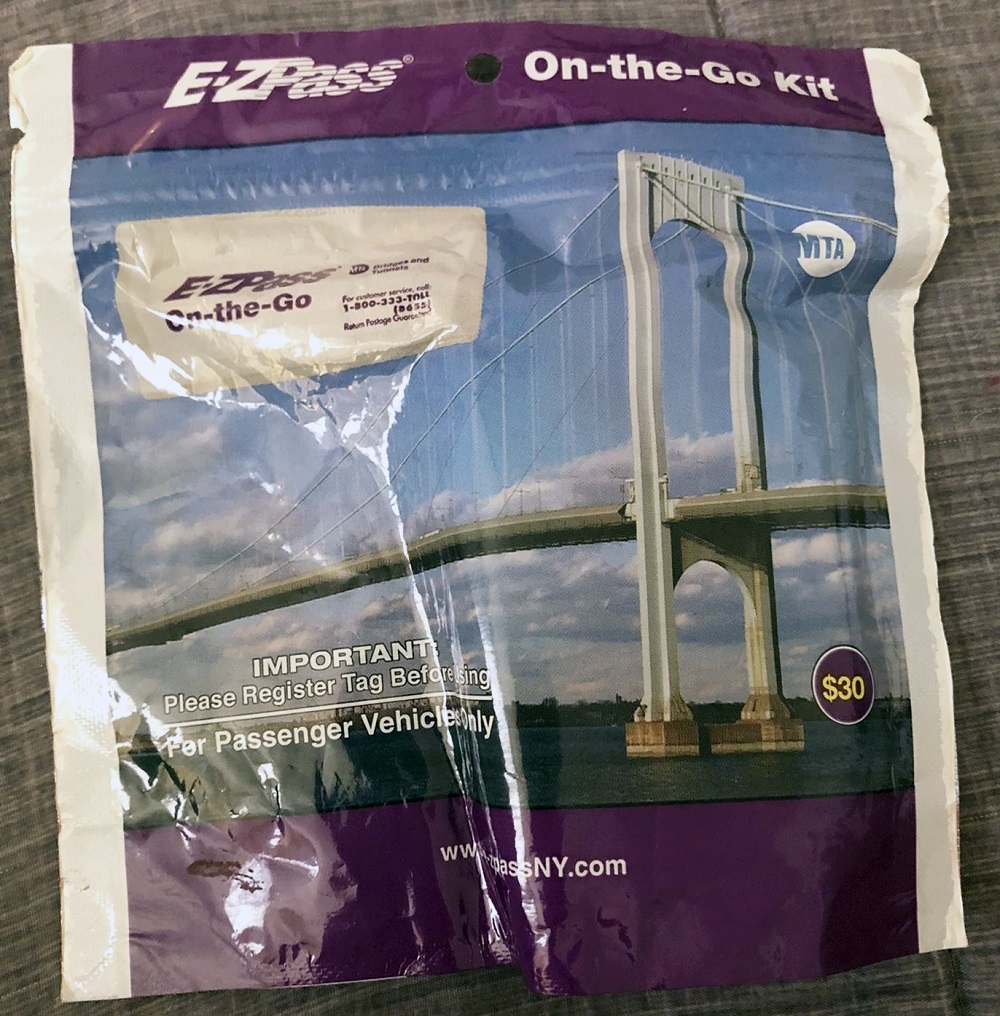
I would skip the Flex unless you know you’ll use Virginia’s Express Lanes in HOV mode. Flex is mainly meant for that toll-or-HOV switch. For a normal road trip, a standard E-ZPass is usually the simpler choice. Virginia’s own site treats Standard and Flex as separate products, and its On-the-Go transponder costs $35.
Where to open the account matters more than the sticker itself, because the tag will work across the network either way. Pennsylvania is not a great casual-trip option because it requires an initial $35 payment per transponder and charges a $3 annual fee per transponder.
Maryland is also less appealing for an out-of-state traveler. Maryland says accounts without a Maryland address can be charged a $1.50 monthly maintenance fee, and that fee is only waived if the account used Maryland toll facilities at least 3 times in the previous statement period.
Virginia is a reasonable choice if you want a simple mainstream option. Its retail On-the-Go transponder costs $35, and Virginia says the transponder can be used immediately on Virginia toll roads, with wider out-of-state availability after registration. I did not find a general Virginia residency requirement for opening a normal account.
So the practical answer is this: yes, it’s worth buying one, and I’d lean toward a standard E-ZPass from a state with fewer fee traps. I would avoid Pennsylvania and Maryland for this trip. Virginia looks like a decent fit, especially if you want something easy to buy and activate before you leave.