
Grab a silver can. Flip it over. Question the price. That’s where the Liqui Moly debate starts. German branding, approvals, and additive talk all packed into one bottle. Cheaper oils nearby claim the same weight and specs.
Liqui Moly built its name on molybdenum friction chemistry and tight OEM approvals. Modern engines demand that precision, especially with turbos and emissions systems in play. The lineup covers over 40,000 vehicles with hundreds of approvals.
Pick the right one and it fits like a factory fill. Pick the wrong one and it’s just expensive oil.
1. Stop asking “Is Liqui Moly good” and start asking which bottle you picked
The lineup runs deep, and each oil targets a specific engine system
Walk into a shop and you’ll see Leichtlauf, Top Tec, Molygen, Synthoil, and Special Tec. Each one targets a different engine design, emissions setup, and service interval. Liqui Moly builds oils around OEM approvals first, not marketing tiers. Their oil guide maps over 40,000 vehicles to exact specs.
That matters because two bottles with the same viscosity can behave very differently. A 5W-30 Top Tec oil protects diesel particulate filters with low ash. A 5W-30 Molygen oil focuses on friction reduction and API fuel economy targets. Same weight, different chemistry, different job.
Pick by viscosity alone and you miss SAPS levels, HTHS viscosity, and approval limits. That’s how DPF clogging, catalyst poisoning, or timing chain wear starts. VW 504 00 oil must pass a 650-hour engine test cycle before approval.
The popular Liqui Moly oils chase completely different performance targets
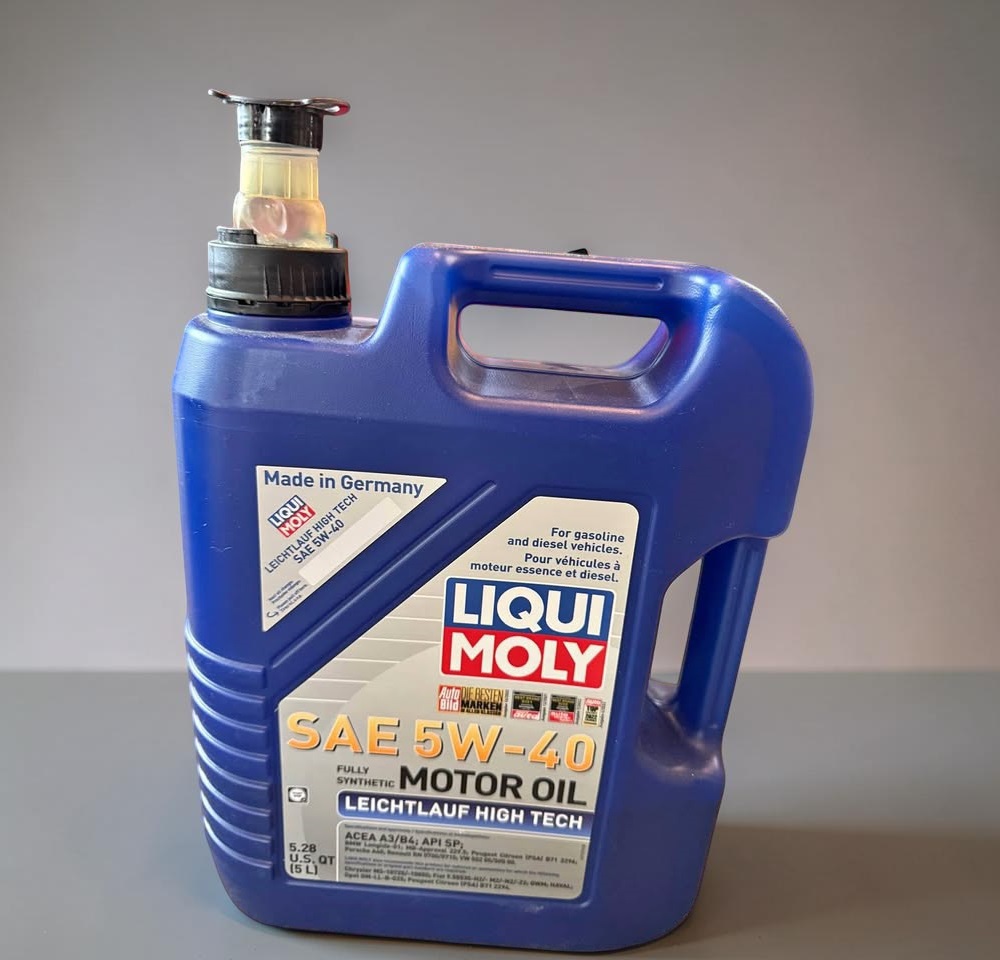
Leichtlauf High Tech 5W-40 sits in the older Euro performance lane. It carries approvals like BMW LL-01, MB 229.5, and VW 502 00. High TBN around 11.3 helps neutralize acids during longer drains. That suits engines without particulate filters.
Top Tec 4200 5W-30 runs a different strategy. Low-SAPS chemistry protects DPF and GPF systems. It carries VW 504 00 / 507 00, BMW LL-04, and MB 229.52 approvals. Ash content and phosphorus levels stay tightly controlled to prevent filter blockage.
Molygen oils lean toward friction control and efficiency. Tungsten-based additives reduce boundary wear and add UV dye for leak detection. Some grades meet API SQ and ILSAC GF-7A. Others lack full OEM approvals due to additive interference in certification tests.
Matching the oil to the engine decides everything, not the brand name
| Liqui Moly line | Core design target | Best application | Mechanical limitation |
|---|---|---|---|
| Leichtlauf / HC7 | High-SAPS Euro performance oil | Older BMW, VW, MB without DPF | Can damage DPF systems due to ash buildup |
| Top Tec | Low/mid-SAPS OEM approval oil | Modern Euro engines with DPF/GPF | Lower TBN limits extended high-sulfur use |
| Molygen | Friction reduction and efficiency focus | API/ILSAC engines, light-duty gasoline | Not approved for many strict OEM specs |
| Synthoil (PAO) | High thermal stability synthetic | High-temp or performance applications | Higher cost, lower additive solubility |
Run a high-SAPS oil in a DPF engine and ash loads the filter. Regeneration cycles spike above 1,100°F and still fail to burn residue. Replacement cost lands between $1,500 and $4,000.
2. Approval codes decide engine survival, not brand loyalty
OEM approvals control wear, deposits, and emissions hardware life
Modern engines don’t care about logos. They care about approvals like BMW LL-04, VW 504 00, and MB 229.52. These specs test cam wear, piston deposits, oxidation, and soot control under long cycles. VW 504 00 requires a 650-hour engine test under heat and load.
Miss that approval and failure shows up fast. Timing chains stretch from poor shear stability. Catalysts clog from excess phosphorus. DPF ash builds and blocks flow. Backpressure climbs and triggers limp mode with codes like P2463.
Liqui Moly builds its lineup around passing those approval tests
Liqui Moly carries over 300 OEM approvals across its catalog. Each approval requires lab validation and engine testing, not label claims. Oils get tuned for HTHS viscosity, sulfated ash, and oxidation limits. That tuning matches specific engine designs and service intervals.
BMW LL-04 oils run low SAPS to protect particulate filters. MB 229.5 oils allow higher SAPS for older engines without aftertreatment. Porsche A40 oils must hold film strength at high shear and high temperature. Each approval locks the oil into a narrow performance window.
Using the wrong approval triggers mechanical failure, not just “reduced performance”
Run the wrong oil in a direct-injection turbo engine and deposits build fast. Intake valves coke up from blow-by and oil vapor. Oil consumption rises past 1 quart per 1,000 miles in some 2.0T engines. Ring packs stick and compression drops.
Use a non-approved oil in a warranty period and coverage can be denied. Labs check oil chemistry for compliance during failure analysis. Dealers look for approval codes on service records. A missing VW 507 00 spec can void engine claims worth $6,000 to $12,000.
3. German manufacturing controls consistency, not outright performance
Centralized production keeps formulas tight from batch to batch
Liqui Moly blends oils in Germany, mainly Ulm and Saarlouis plants. Raw materials get tested before mixing starts. Blends get sampled during production to verify viscosity and additive balance. Finished oil gets checked again before release.
The process includes pipe cleaning between batches using a pigging system. That clears leftover oil from previous blends. High-SAPS and low-SAPS oils stay separated. Cross-contamination drops to near zero.
Retention samples get stored for the full product life. That allows traceability if an engine failure comes back to oil quality. ISO 9001 standards lock these steps into repeatable procedures. Each batch must match the approval spec it claims.
Consistency matters more than headline lab numbers in real engines
Engines fail from drift, not single bad runs. Slight changes in additive balance can affect wear over thousands of miles. Variations in phosphorus or sulfur impact catalyst life. Small viscosity shifts change oil film strength at high load.
Centralized blending reduces that variation. Some global brands use regional plants with different supply chains. That can introduce small formulation differences between markets. Those differences show up under extended intervals and high heat.
Manufacturing control does not guarantee superior performance across all brands
Liqui Moly still relies heavily on Group III hydrocracked base oils in many lines. These oils perform well but compete directly with other premium synthetics. PAO-based oils like Synthoil offer better cold flow and thermal stability. They also cost more and see limited use in daily drivers.
Cold start performance still trails some competitors. Pour points often sit around -39°F to -45°F. Some boutique oils drop below -60°F. In extreme cold starts, that gap affects oil pump flow during the first 2 seconds of startup.
4. Additive chemistry drives the brand, but it follows strict limits
Friction modifiers target the first seconds where engines wear the most
Cold starts cause most engine wear. Oil hasn’t built full pressure yet. Metal parts touch at cam lobes, rings, and bearings. Liqui Moly leans on additives to reduce that contact.
MoS2 plates a solid layer onto metal surfaces. That layer carries load when oil film drops. It can keep parts moving even during brief oil starvation. Early testing showed engines could run short distances with no oil pressure after treatment.
Modern systems shift toward chemical films instead of solid particles
Newer engines run tighter tolerances and finer oil passages. Solid additives can interfere with sensors and filters. Liqui Moly moved toward chemical friction modifiers in products like Motor Protect. These form a thin film at the microscopic level.
That film reduces fretting wear under high pressure. It survives multiple oil changes and heat cycles. Some treatments claim protection up to 30,000 miles or about 50,000 km. The effect targets cam wear and high-load contact zones.
Hybrid additives combine ceramic particles with chemical protection layers
Cera Tec uses micro-ceramic particles with chemical modifiers. Particles fill surface irregularities in metal. Chemical layers smooth friction at the same time. The system works in engines using low-viscosity oils like 0W-20.
Particles stay small enough to pass through oil filters. They don’t clog passages when used correctly. The protection layer remains active under high temperature and load. Typical duration reaches one service cycle or roughly 20,000 miles.
Additives improve boundary protection but cannot override wrong oil selection
Additives don’t fix wrong SAPS levels or missing approvals. A friction modifier won’t protect a clogged DPF. It won’t stop catalyst poisoning from excess phosphorus. It won’t correct viscosity mismatch in a turbo engine.
Misuse can create new problems. Overdosing additives can alter viscosity and foaming behavior. Some systems interfere with oil analysis results. A full additive treatment plus oil service can add $40 to $120 per interval.
5. Performance shows up under heat, load, and long drains, not short trips
High temperature stability controls oil burn and deposit buildup
Run a turbo engine hard and oil faces 250°F to 300°F sump temps. Local hot spots inside turbos exceed 400°F. Weak oil starts to evaporate and leave carbon behind. That carbon sticks to piston rings and turbo bearings.
Liqui Moly holds solid numbers in volatility testing. Synthoil 5W-40 posts NOACK around 7.0 percent. Many mainstream oils sit closer to 9.0 to 10.0 percent. Lower loss means less oil consumption and fewer intake valve deposits.
High volatility shows up as oil loss between changes. Drivers end up adding a quart every 1,000 to 1,500 miles. That pattern often ties back to evaporation and ring deposits. Direct injection engines suffer the most from this cycle.
Viscosity stability keeps the oil film intact under load
Oil thins under heat and shear. Bearings, cam lobes, and timing chains depend on stable film strength. Liqui Moly oils typically run viscosity index values between 160 and 190. That keeps thickness more stable across temperature swings.
High-shear stability matters in turbocharged engines. Oil films break down under load near 10,000 psi contact stress. Weak oils shear down and lose protection mid-interval. That leads to chain stretch, cam wear, and noisy valvetrains.
Chain stretch shows up as timing correlation codes like P0016. Cold starts begin to rattle. Over time, cam timing drifts enough to trigger misfires. Full timing chain jobs often land between $2,000 and $4,500.
Detergency and TBN decide how long the oil stays usable
Combustion creates acids and soot. Oil neutralizes that using its base reserve, measured as TBN. Liqui Moly Leichtlauf 5W-40 typically carries a TBN around 10 to 11.3 mg KOH/g, depending on batch and test method. That supports extended drain intervals common in European service schedules.
As TBN drops, acids start attacking metal surfaces. Sludge builds in oil galleries and ring grooves. Oil thickens and flow slows during cold starts. Extended intervals without proper TBN lead to sludge cleanup jobs costing $1,000 to $3,000.
6. Where Liqui Moly earns its keep, and where it blends in
European engines expose the real strength of approval-driven oils
Run a VW, BMW, or Mercedes turbo engine and oil choice gets strict fast. These engines push long drain intervals up to 10,000 to 15,000 miles. They run tight clearances, high boost, and sensitive emissions systems. Liqui Moly’s approval-heavy lineup fits these engines without guesswork.
Low-SAPS Top Tec oils protect DPF and GPF systems under heat cycles above 1,000°F. Ash stays controlled, so filters don’t load early. Correct HTHS viscosity protects timing chains under high load. Wrong oil here triggers chain stretch, turbo coking, and filter blockage.
German engines also run hotter oil temperatures than many Japanese engines. Oil sees sustained stress above 230°F in highway driving. That’s where oxidation stability and additive balance matter most. DPF replacement still lands between $1,500 and $4,000 when oil chemistry is wrong.
High mileage and long intervals reveal the gap between oils
Run 12,000 miles on one oil fill and weak blends fall apart. Shear drops viscosity. TBN drains out. Deposits start forming in ring packs and turbo bearings. Liqui Moly holds up better in extended intervals when matched to the correct spec.
Used oil analysis often shows lower wear metals under long drains. Iron and aluminum stay controlled when viscosity holds. Oxidation numbers rise slower compared to budget oils. That gap rarely shows in 3,000 to 5,000 mile intervals.
Short interval drivers won’t see that difference. Dump oil every 5,000 miles and most API-approved oils perform similarly. The advantage shows when oil is pushed toward its upper service limit. Extended drain intervals above 10,000 miles separate strong oils from average ones.
Basic commuter engines shrink the advantage fast
Run a simple port-injected engine with 5,000 mile oil changes and the gap tightens. API SP and ILSAC GF-6 oils from major brands already meet wear and deposit standards. Engines without turbos or DPF systems place less stress on oil chemistry. Liqui Moly still performs well, but the margin gets small.
Cost becomes the deciding factor in these cases. Liqui Moly often runs 20 to 50 percent higher per quart. Over multiple oil changes, that adds up without clear mechanical gain. A standard commuter rarely pushes oil beyond moderate temperature and load limits.
Spend $40 to $80 extra per service and the engine behaves the same. No reduction in wear shows under short intervals. No measurable gain in fuel economy appears in daily driving. The oil change interval stays capped by time, not oil capability.
7. Overpaying and overtrusting the brand creates real mistakes
Price climbs fast, but performance doesn’t always follow
Liqui Moly often lands in the $10 to $15 per quart range. Many approved competitors sit closer to $6 to $9. Both can carry the same OEM approvals and viscosity grades. The engine only sees chemistry, not branding.
Run short intervals and the oil never reaches its performance ceiling. Oxidation stays low. Shear doesn’t push limits. That extra cost delivers no measurable reduction in wear metals or deposits.
Over a year, the difference stacks up. Four oil changes can add $80 to $200 in extra cost. No change in engine life shows under normal use and conservative intervals.
Brand image pushes buyers toward the wrong product choice
Bright green Molygen oil stands out on the shelf. Packaging and additive claims pull attention fast. Buyers often pick it based on reputation instead of approval match. That’s where problems begin.
Some Molygen oils carry recommendations instead of full OEM approvals. Additive packages can interfere with certification tests. That limits use in engines requiring strict specs like VW 504 00 or MB 229.52.
Wrong oil selection leads to real failures. Catalyst efficiency drops and triggers P0420. DPF loading increases under city driving. Replacement of emissions components can exceed $2,000.
Mixing additives and oils without a plan creates new failure risks
Stacking additives on top of already formulated oil changes chemistry balance. Detergent levels shift. Anti-foam agents get diluted. Oil can aerate under high RPM and lose pressure stability.
Modern engines rely on precise oil behavior. Variable valve timing systems depend on clean oil flow. Sludge or foam disrupts control solenoids and oil passages. That triggers cam timing faults and rough idle.
Oil analysis becomes unreliable with mixed additives. Labs can’t read baseline wear or contamination accurately. Diagnosis gets harder when issues show up. Incorrect additive use can push oil service costs up by $100 per interval.
8. Selection logic beats brand loyalty every time
Start with the approval code or risk mechanical damage
Every engine lists a required spec in the owner’s manual or under the hood. That spec controls wear limits, emissions compatibility, and oil life. Skip it and problems show up under load and heat. Timing chains, turbos, and catalysts take the hit first.
Liqui Moly’s oil guide maps exact matches by VIN and engine code. It filters by approvals like VW 507 00, BMW LL-04, or MB 229.52. That removes guesswork and avoids cross-application mistakes. Using the wrong spec can trigger failures within 5,000 to 10,000 miles.
Viscosity must match temperature range and engine design
Viscosity controls oil flow at startup and film strength at temperature. Too thick and cold starts starve the valvetrain. Too thin and hot operation drops oil pressure under load. Turbo engines demand tighter viscosity control due to heat and speed.
Modern engines often specify 0W-20 or 5W-30 for fuel economy and emissions. Older engines may require 5W-40 or higher for wear control. Deviating from spec affects oil pump pressure and bearing protection. Oil pressure drops below safe levels once viscosity shears under heat.
Product line comes after approvals and viscosity are locked in
Once spec and viscosity match, then the oil line matters. Top Tec fits low-SAPS emissions systems. Leichtlauf suits older Euro engines without filters. Molygen fits API-driven engines focused on efficiency and friction control.
Wrong line selection still creates issues even with correct viscosity. High-SAPS oil in a DPF engine causes ash buildup. Low-SAPS oil in older engines reduces protection under long intervals. Product family must match engine design limits.
| Decision priority | Why it matters |
|---|---|
| OEM approval | Controls wear, deposits, and emissions survival |
| Viscosity grade | Maintains oil pressure and film strength |
| Product line (Top Tec, etc.) | Matches SAPS levels and engine hardware |
| Additives and branding | Minor effect after core requirements are met |
Run the wrong approval and oil-related failures can exceed $5,000 before diagnosis even starts.
Sources & References
- Liqui Moly – Wikipedia
- Valvoline vs Liqui Moly vs Castrol: Best Engine Oil? – GE for Trading
- About us | LIQUI MOLY
- Our state-of-the-art oil production | LIQUI MOLY
- Battle against engine wear: Our oil additives in comparison | LIQUI MOLY
- Reducing Friction: Liqui Moly MoS2 vs Cera Tec
- Cerma STM-3 vs Liqui Moly Ceratec: Ceramic Engine Treatment Comparison (2026)
- Company history | LIQUI MOLY
- Introduction to LIQUI MOLY MoS2 Anti-Friction Engine Treatment (Art. 2009) – YouTube
- LIQUI MOLY – 2328 Leichtlauf High Tech 5W-40 (5L) – Engine Oil – VAGPARTS Australia
- Leichtlauf High Tech SAE 5W-40 | LIQUI MOLY
- LIQUI MOLY QUALITY STATEMENT
- Right oil for German cars | LIQUI MOLY
- Classifications and specifications | LIQUI MOLY
- Which Engine Oil Should You Pick and Why? | A Guide from BAVMODS | Castrol Edge, Liqui-Moly, Mobil 1, etc.
- What are the differences between various motor oils? | LIQUI MOLY
- Are all Synthetic Oil Groups the Same? Group III vs IV vs V – AMSOIL Blog
- Comparison Liqui Moly Top Tec 4100 5W-40 vs Synthoil High Tech 5W-40 – E-Catalog
- Product information – Synthoil High Tech 5W-40 – Liqui Moly
- Synthoil High Tech 5W-40 | LIQUI MOLY
- Product information – Leichtlauf HC7 5W-40 – AWS
- P000323-Top Tec 4200 5W-30 New Generation-95-en – Liqui Moly Turkey
- Liqui Moly vs Mobil 1: Engine Oil Comparison | Performance Oil Technology
- Liqui Moly vs Mobil 1 AUTODOC BLOG – AUTODOC UK
- Product information – Motorbike 4T Synth 5W-40 Street Race
- Motul vs Liqui Moly – AUTODOC UK
- MoS2 Anti-Friction Engine Treatment | LIQUI MOLY
- Engine wear protection with LIQUI MOLY’s Cera Tec | The Porsche Club of America
- Increase your engine life with Ceratec from LIQUI MOLY | Reduces Friction – YouTube
- Review: Liqui Moly Cera Tec Friction Modifier in my Skoda Laura – Team-BHP
- LIQUI MOLY Molygen: A Tool For Everyone’s Garage | FCP Euro
- P001758-Molygen New Generation SAE 5W-40-43.0-en – OilGroupBG.com
- Synthoil Premium SAE 5W-40 Leichtlauf High Tech SAE 5W-40 Top Tec 4605 SAE 5W-30 MoS2 Antifriction SAE 10W-40 Top Tec 4200 SAE 5 – Europa Parts
- Product information – Top Tec 4200 5W-30
- Top Tec 4200 SAE 5W-30 New Generation | LIQUI MOLY
- LIQUI MOLY Top Tec 4200 5W-30 Full Synthetic Engine Oil, Reduces Deposits 2011
- Molygen | LIQUI MOLY
- Liqui Moly 5W-40 : r/GolfGTI – Reddit
- 5 Liter Molygen New Generation Engine Oil (5w-40) – Turner Motorsport
- Liqui Molygen or Leichtlauf High Tech 5w40 : r/GolfGTI – Reddit
- Engine Oils | LIQUI MOLY
- Motor Oils & Additives – Europa Parts
- Molygen New Generation 5W-40 – Product information
- Liqui Moly Molygen New Generation 5W-40 Engine Oil 5L – 8536 – Optilubes
- Liqui Moly vs Castrol – AUTODOC UK
- Best Synthetic Motor Oil? Complete Guide – Cadence Petroleum
- Is Liqui Moly oil superior to traditional high quality synthetic oil such as Mobil One? – Reddit
- Which engine oil is the best? Test, compare, and select the best engine oil manufacturers
- Another engine oil thread. Castrol Edge/Pennzoil/ Liqui Moly? – BMW M3 and BMW M4 Forum – Bimmerpost
- LIQUI MOLY TOP TEC 4110 Engine Oil 22120 Porsche 993 911 Mercedes Benz E320 BMW
- Liqui Moly Ceratec – BMW X5 and X6 Forum (F15/F16) – BIMMERPOST.com
- Quick and simple remedy for high oil consumption | LIQUI MOLY
- Liqui Moly solves high oil consumption fault – Professional Motor Mechanic
- What Products Stop Oil from Leaking? – In The Garage with CarParts.com
- Liqui moly motor oil saver. Any good? : r/MechanicAdvice – Reddit
- What’s the best engine oil ? Why does everyone say castrol is bad : r/GolfGTI – Reddit
- Liqui Moly, Motual, or Mobile 1 for bmw, Mercedes, Porsche? What’s the best oil for oil change to use and why. Thanks! : r/cars – Reddit
- Liqui Moly Motor oil vs Mobil1 for M5/M8s – M5POST – BMW M5 Forum – F90
- Motul, Castrol Lead Poland Auto Oil Rankings, Liqui Moly Gains – Lubes’N’Greases
Was This Article Helpful?