
Cold starts, turbo heat, and long drain runs can wreck weak oil fast. Mobil 1 shows up in that fight a lot. Key grades like 5W-30 carry current specs such as API SQ, ILSAC GF-7A, and dexos1 Gen 3.
So is Mobil 1 good oil? That depends on what sits under your hood. A turbo engine, a worn commuter, and a Euro car with emissions hardware all need different oil chemistry.
This guide cuts straight to that match. It shows where Mobil 1 holds up, where the wrong bottle causes problems, and how each line fits real engines, from regular Mobil 1 to Extended Performance, High Mileage, ESP, FS, and Supercar.
1. Start with the straight answer before the oil wars begin
Mobil 1 is good oil when the spec and grade match the engine
Yes, Mobil 1 is good oil. In most modern engines, it gives strong wear control, good deposit handling, and a broad approval list when you buy the right grade. Current Mobil 1 5W-30 carries API SP, API SQ, API SQ Resource Conserving, ILSAC GF-6A, ILSAC GF-7A, and GM dexos1 Gen 3.
That matters more than old label talk. Modern approvals target real failure modes, not ad copy. API’s current guide ties API SQ Resource Conserving to ILSAC GF-7A, with added fuel economy, emissions-system protection, low-temp pumpability, and support for engines running fuel blends up to E85.
Mobil 1 still will not save you from the wrong pick. Use the wrong viscosity, wrong SAPS profile, or wrong OEM approval, and you can still end up with noise, oil use, clogged aftertreatment parts, or denied warranty coverage. Bottle match comes before brand loyalty.
Brand quality and formula fit are two different fights
A lot of owners mash two questions together. One asks whether Mobil 1 makes strong oil. The other asks whether the exact Mobil 1 bottle fits the engine on the driveway.
Those are not the same call. Mobil 1 ESP 5W-30 is built for emissions-system protection and carries approvals like MB 229.51, MB 229.52, and VW 504 00/507 00. Mobil 1 5W-30, by contrast, sits in the mainstream gasoline lane with dexos1 Gen 3 and current API and ILSAC approvals.
Grab the wrong sub-line and the brand name will not save you. A low-SAPS Euro oil can be the wrong move for an engine that wants a different spec. A Corvette-targeted 0W-40 can also be wrong for a shelf shopper who only sees “Mobil 1” and “0W-40” on the front label.
| Ownership situation | Where Mobil 1 fits | Where it goes wrong |
|---|---|---|
| Turbo DI daily driver | Strong current approvals and modern LSPI-focused chemistry | Wrong viscosity or lazy drain habits can still pound the engine |
| High-mileage commuter | High Mileage formulas target leaks, deposits, and older seals | Not every old engine needs HM chemistry |
| Euro car with emissions hardware | ESP and FS lines carry serious OEM approvals | The wrong Mobil 1 sub-line can be as wrong as the wrong brand |
| Track or very hard use | Supercar and some FS grades fit the job better | Shelf-label confusion can put the wrong 0W-40 in the pan |
The shelf looks simple until the bottle choice starts costing money
Regular Mobil 1 is the mainstream baseline, not the cheap version. Its current 5W-30 page still carries a 15,000-mile guarantee, which shows how far modern retail synthetic oil has moved from the old 5,000-mile mindset.
Extended Performance changes the math again. Its product page pushes 25,000-mile protection, while the FAQ still says recommended oil change intervals run up to 20,000 miles or 1 year. That gap matters if you drive short trips, tow, run boost often, or let fuel dilution build in the sump.
High Mileage adds another split. Mobil says those formulas target engines over 75,000 miles, use additives and conditioners to combat leaks and sludge, and run higher base oil viscosity to help with leaks and high-temp protection. Mobil also says many engines that used Mobil 1 regularly may not need those extra HM benefits at all.
2. The base-oil fight still gets loud, but the finished formula does the real work
The Group III versus Group IV argument still hangs over Mobil 1
A lot of Mobil 1 debates still start with one old complaint. Some enthusiasts want a “true synthetic” to mean mostly Group IV PAO. They look at Group III hydrocracked oil and treat it like a downgrade before the engine even fires.
That fight came out of an old industry shift. Group III starts as crude oil, then gets heavily reworked under heat and pressure. Group IV PAO is built from smaller chemical building blocks, which gives it very strong cold-flow and low-volatility traits.
Modern Mobil 1 formulas no longer live in one neat base-stock bucket. The current lineup is widely described as a blend of Group III, Group IV, and Group V components, mixed to hit the final targets for wear, volatility, oxidation, and approvals. The bottle in your hand matters more than the argument on a forum thread from 2007.
Base stock matters, but the additive package now carries half the load
The oil does not survive on base stock alone. Modern engines hammer oil with heat, soot, fuel dilution, moisture, and fine debris from direct injection. The additive package is what keeps that mess from turning into chain wear, sludge, varnish, and acid attack.
API’s newer gasoline categories were built around those real failures. API says API SQ Resource Conserving, which lines up with ILSAC GF-7A, adds fuel economy, emissions-system protection, low-temp pumpability, and protection for engines running ethanol blends up to E85. That means the oil has to do more than stay slippery.
Mobil 1’s newer formulas also reflect that shift. The brand’s recent chemistry pushes modern wear control, sludge resistance, and LSPI protection instead of selling one simple “pure synthetic” story.
In today’s engines, detergent balance and anti-wear chemistry can matter as much as the base oil under the label.
The purists still have one fair point
There are edge cases where a heavier PAO or ester-heavy oil can still buy more margin. Arctic starts, custom long-drain programs, repeated road-course heat, and high-boost abuse all punish oil harder than normal commuter use. Those conditions expose volatility, film stability, and oxidation limits faster.
That does not knock Mobil 1 out of the fight. It sets a boundary around the claim. For most daily drivers, finished-oil approvals and the right viscosity tell you more than a base-stock purity debate, but edge-case users still chase lower NOACK loss, stronger cold flow, and more reserve under heat.
AMSOIL often comes up there because some comparisons show lower volatility and higher TBN than standard Mobil 1 formulas.
3. Modern engines are where good oil earns its keep
LSPI, chain wear, and turbo deposits forced oil makers to get better
Modern gasoline engines hit oil harder than old port-injected engines ever did. Smaller turbos run hotter. Direct injection adds soot and fuel dilution. Long drain intervals leave less room for weak chemistry.
That pressure changed the rules. API says current API SQ and ILSAC GF-7A oils were built to protect against fresh and aged oil LSPI, improve timing chain wear protection, control high-temp deposits on pistons and turbochargers, and hold down sludge and varnish.
GF-7A also adds fuel economy, better low-temp pumpability, stronger emissions-system protection, and support for fuels up to E85.
Mobil 1’s current 5W-30 sits in that new category stack. Its product page lists API SQ, API SQ Resource Conserving, ILSAC GF-7A, and dexos1 Gen 3. Those are the approvals you want in a late-model turbo daily driver, not some dusty “good enough” API SN jug from the back shelf.
LSPI is the fast, ugly failure that can wreck parts in one hit
LSPI stands for low-speed pre-ignition. It shows up in turbo direct-injected engines under load at low rpm. You roll into the throttle, cylinder pressure spikes too early, and the hit lands before the piston is ready.
This is not a mild ping. Severe LSPI can crack ring lands, hammer bearings, and bend rods. That is why oil chemistry got dragged into the fight. The newer standards include a dedicated LSPI test because the wrong additive balance can help trigger the event.
The file’s technical review also points to the detergent side of the problem. Calcium-heavy chemistry drew heat in LSPI research, while newer formulas moved toward a better calcium-magnesium balance. That shift matters most in boosted 4-cylinders that lug hard below the fat part of the torque curve.
Timing chains and turbochargers punish dirty or weak oil first
Timing chain wear sounds slow until it reaches the bill stage. Direct-injected engines send soot and fuel into the sump. Thin, dirty oil then works on chain pins, rollers, guides, and tensioners every time the engine lights off.
Turbo heat adds another layer. The hottest oil lives near the shaft and bearing housing, where weak oil can oxidize, leave carbon, and thicken. API’s current categories now call out high-temperature deposit protection for pistons and turbochargers for that reason.
Oil can help protect those parts, but it has limits. It will not fix low oil level, skipped changes, chronic short-trip fuel dilution, or a driver who runs full boost and then shuts the engine off hot every day. Once deposits harden in turbo oil passages, the damage bill can move well past a routine oil service and into 4-figure repair territory.
4. The shelf gets messy fast once every bottle says Mobil 1
Regular Mobil 1 is the baseline, not the bargain-bin version
Regular Mobil 1 is the bottle most drivers picture first. It is the mainstream full synthetic line, and the current 5W-30 version still carries a serious approval stack. Mobil lists API SP, API SQ, API SQ Resource Conserving, ILSAC GF-6A, ILSAC GF-7A, and dexos1 Gen 3 on that product page.
That matters because many engines do not need a niche formula. They need the exact viscosity and a current approval set. For a normal gasoline daily driver that calls for 5W-30, regular Mobil 1 covers a lot of ground without forcing you into a Euro oil, a high-mileage blend, or a long-drain risk.
Mobil also gives that bottle a 15,000-mile guarantee. That number is about the oil’s capability, not a free pass to ignore the manual, skip level checks, or run short-trip sludge duty all winter. The guarantee printed on the page is 15,000 miles.
Extended Performance is where the drain-interval math starts getting slippery
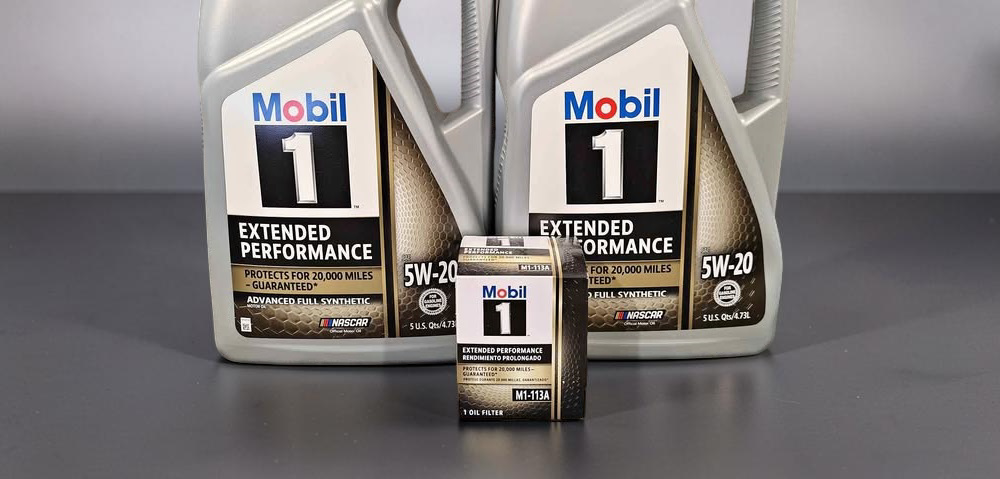
Extended Performance is sold to drivers who want more room between changes. Mobil’s page pushes 25,000 miles of protection on the product banner. The same page says the oil is recommended for intervals up to 20,000 miles or 1 year in the FAQ.
That split matters in real use. Highway miles with stable temps are one thing. Short trips, fuel dilution, towing, repeated boost, and cold starts are another. Oil life falls apart faster when the sump never gets a clean, hot run.
Extended Performance is not snake oil. It is a stronger long-drain play with tighter limits than some buyers hear at the parts counter. Mobil’s own FAQ line stops at 20,000 miles or 1 year.
High Mileage targets old seals, mild leaks, and worn clearances
High Mileage is built for engines over 75,000 miles. Mobil says these oils use additives and conditioners aimed at leaks, sludge, and general wear. It also says they run higher base oil viscosity to help reduce leaks and improve high-temp protection.
That does not mean every older engine needs it. Mobil also says many vehicles that used Mobil 1 regularly may stay in excellent condition and may not need the extra High Mileage benefits.
A well-kept 110,000-mile engine is not the same case as a tired engine with seepage at the timing cover and a quart lost every 1,500 miles.
Sequence IVA wear-test language also shows up in Mobil’s High Mileage FAQ. Mobil says the family offers “unsurpassed wear protection” in that industry-accepted test. The stronger reason to buy HM, though, is seal behavior and oil use, not a horsepower bump.
ESP, FS, and Supercar may share the logo, but they do not share the same job
ESP 5W-30 is the emissions-hardware bottle. Mobil says it is engineered to help prolong the life and efficiency of particulate filters and emission systems in diesel and gasoline European vehicles. Approval listings tied to ESP 5W-30 include VW 504 00, VW 507 00, Porsche C30, MB 229.51, and MB 229.52.
FS 0W-40 sits in a different lane. Mobil markets it as a European Car Formula and a 15,000-mile oil. The outline material also places Porsche A40, dexosR, and MB 229.5 in the FS 0W-40 approval story, which is why buyers need to read the back label instead of grabbing any Mobil 1 0W-40 they see first.
Supercar 0W-40 narrows the target even more. Mobil says the viscosity matches other 0W-40 oils, but the formulation was specifically designed to meet GM dexosR for fourth-generation and later Corvette models. Same grade on the front label, different approval and different mission.
| Mobil 1 formula | Best fit | Strong official hook | Core catch |
|---|---|---|---|
| Mobil 1 5W-30 | Mainstream gasoline engines that call for a current ILSAC/API oil | dexos1 Gen 3, API SQ, ILSAC GF-7A, 15,000-mile claim | Wrong choice for many Euro or low-SAPS applications |
| Mobil 1 Extended Performance 5W-30 | Drivers who want longer drain headroom | 25,000-mile protection banner, 20,000 miles or 1 year in FAQ | Severe service can crush the long-drain plan |
| Mobil 1 High Mileage 5W-30 | Older engines with seepage, deposits, or mild oil use | 75,000-plus-mile target, leak and sludge focus | Will not fix bad seals or worn rings |
| Mobil 1 ESP 5W-30 | Euro gas or diesel engines with emissions hardware | VW 504 00/507 00, MB 229.51/229.52, Porsche C30 | Wrong if the engine calls for another SAPS profile or spec |
| Mobil 1 FS 0W-40 | Performance Euro engines and some high-output gasoline applications | European Car Formula, long-drain marketing, premium approval lane | Not every 0W-40 application wants FS |
| Mobil 1 Supercar 0W-40 | Corvette and other dexosR-focused GM performance use | Specifically formulated for GM dexosR | Easy to confuse with FS 0W-40 because the front label looks close |
5. Long-drain claims need a hard footnote before you trust them
The guarantee is real, but the fine print still runs the show
Mobil does make real long-drain claims. Regular Mobil 1 5W-30 carries a 15,000-mile guarantee. Extended Performance 5W-30 pushes 25,000-mile protection on the product page, while the FAQ says recommended oil change intervals run up to 20,000 miles or 1 year.
Those numbers do not cancel the owner’s manual. They also do not overrule the oil life monitor if the vehicle uses one correctly. Mobil’s own wording keeps the long-drain pitch tied to the vehicle maker’s service requirements and the product’s approved use.
That matters because plenty of drivers hear one number and stop there. A bottle guarantee does not know your oil level, your fuel dilution, your PCV health, or how often the engine shuts off before the sump gets hot. One missed quart can wreck the whole long-drain plan.
Some driving patterns let long-drain oil do its job
Steady highway miles are the easy case. The oil warms fully, water boils off, fuel dilution stays lower, and the crankcase sees fewer cold starts per mile. A healthy engine with stable temps and good ventilation gives a premium synthetic far more room to hold viscosity and control acids.
Fleet-style use can also be kind to oil. A sedan that racks up 25,000 highway miles a year may treat oil better than a crossover that crawls 6 miles at a time through winter traffic. Time, load, and sump temperature often matter more than the odometer alone.
Extended Performance’s technical story leans on that kind of use. The file’s chemistry review ties the long-drain claim to strong oxidation resistance, a solid TBN reserve, and a high flash point that helps in turbo heat. The listed TBN is 9.2 for Extended Performance 5W-30.
Short trips, boost, and fuel dilution can wreck the drain interval fast
Now the ugly side. Short trips leave water and raw fuel in the oil. Direct injection makes fuel dilution easier. Turbo engines add heat at the bearing housing and piston crown, where weak oil cooks first.
That is where long-drain math falls apart. The oil can still test “premium” on paper and lose ground fast in the crankcase. Viscosity drops, acids build, deposits harden, and timing chains start living on dirtier film.
Towing adds another hit. Repeated short cold starts add another. A direct-injected turbo engine used for school runs and grocery trips has no business chasing a 20,000-mile interval just because the bottle can survive it in better conditions. Mobil’s own FAQ line stops at 20,000 miles or 1 year.
6. Put Mobil 1 against Pennzoil, Castrol, and AMSOIL where drivers actually feel the difference
Mobil 1 and Pennzoil Platinum run close in normal daily use
This is the tightest mainstream fight. Both sit in the premium retail lane. Both cover a huge chunk of late-model gasoline cars. Both usually land in the same shopping cart when a driver wants a known full synthetic without boutique-oil pricing.
Pennzoil Platinum leans on Shell’s gas-to-liquid base oil story. That gives it a strong cold-flow reputation and a very clean base stock pitch. Some used-oil comparisons also show lower wear metals in certain engines, including lower lead and iron in specific side-by-side reports.
Mobil 1 keeps punching back with approval density, retail reach, and a strong detergent reputation. That matters more over years of real use than one flashy lab stat from one engine family. If you buy oil at Walmart, Costco, an auto parts chain, or a random town off the interstate, Mobil 1 usually wins the availability fight.
Castrol EDGE sits close too, but the back-label game matters more
Castrol EDGE lives in the same premium retail crowd. Plenty of drivers cross-shop it with Mobil 1 because both are easy to find, both carry OEM approvals, and both sell hard on performance language. The real split usually comes down to the exact spec on the back and the price on the shelf that week.
That is where Mobil 1 often feels safer for the average buyer. Its lineup is broad, and the product families are built around clear buckets like mainstream gasoline, high mileage, Euro low-SAPS, and dexosR performance use.
Castrol can match it in many applications, but the buyer still has to read the approval code, not fall for the front-label drama.
If both oils meet the exact approval your engine calls for, the gap often gets small in daily use. In that case, price per change, local stock, and how often you can actually buy the same oil again matter more than forum chest-thumping. Consistency beats brand-switching experiments every 4,000 miles.
AMSOIL is the edge-case alternative, not the average-driver alternative
AMSOIL lives in a different lane. It chases the enthusiast crowd, the long-drain crowd, and the driver who wants extra margin on paper. That is why AMSOIL comparisons keep circling back to lower NOACK volatility, higher TBN, and a heavier PAO and ester story.
Those numbers do matter in hard use. Repeated towing, track heat, very cold starts, and custom drain plans can expose the gap faster.
Some comparisons in the file show AMSOIL with lower volatility and higher reserve than standard Mobil 1, which can matter when oil has to survive more heat and more miles before the drain plug comes out.
Most drivers will never cash that extra margin in. They will feel the higher price first. Mobil 1 covers far more normal use at lower cost, with stronger mass-market access and a deeper factory-fill history. That is why AMSOIL can be the stronger edge-case tool while Mobil 1 still makes more sense for the average car on the road.
| Brand matchup | Where Mobil 1 pulls ahead | Where the alternative can pull ahead |
|---|---|---|
| Mobil 1 vs Pennzoil Platinum | Broader approval story, stronger shelf access, strong detergent reputation | GTL base-oil story, excellent cold-flow image, some used-oil reports show lower wear metals |
| Mobil 1 vs Castrol EDGE | Broad lineup, easy availability, clear product buckets | Often competitive on approvals and retail pricing |
| Mobil 1 vs AMSOIL | Lower cost, easier to buy, strong real-world coverage for most cars | Lower volatility, stronger TBN in some comparisons, more margin for hard use |
7. Buy by approval code, engine type, and duty cycle, not by brand noise
The approval code is the last filter that matters
This is where the buying rule gets simple. Start with the owner’s manual. Check the viscosity. Then match the approval code before you care about the logo.
Mobil 1 has real strength here. Regular 5W-30 carries dexos1 Gen 3 plus current API and ILSAC approvals. ESP 5W-30 carries Euro emissions-hardware approvals like MB 229.51, MB 229.52, VW 504 00, and VW 507 00. Supercar 0W-40 targets GM dexosR.
That matters because the wrong approved oil can still be the wrong oil. A low-SAPS Euro blend in the wrong engine can miss the intended target. A generic 0W-40 can also miss a dexosR or Porsche-specific requirement. Approval codes are the guardrails.
Match the bottle to the engine, then match the interval to the abuse
Turbo gasoline daily drivers do well on regular Mobil 1 or Extended Performance if the exact spec matches. The issue is short-trip use, boost, and fuel dilution. Those engines can crush a long drain even when the bottle says premium.
Euro engines with particulate filters or tight aftertreatment needs belong in the ESP lane when the manual calls for it. High-mileage engines with seepage or mild oil use can benefit from High Mileage formulas, but worn rings and torn seals still need parts, not oil hype.
Corvette and other dexosR applications need the right high-performance formula, not any bottle that happens to say 0W-40 on the front.
Old commuter cars on short oil-change intervals can still live long lives on cheaper correct-spec synthetic oil. Mobil 1 may give more margin, but it does not rewrite the math for every basic engine. A cheap correct oil changed on time still beats a premium oil run too long.
| Vehicle or owner profile | Best Mobil 1 angle | Watch this before buying |
|---|---|---|
| Turbo gasoline daily driver | Regular Mobil 1 or Extended Performance in the exact required spec | Short-trip use and fuel dilution can ruin the long-drain plan |
| Euro engine with GPF, DPF, or strict low-SAPS needs | ESP line | Approval code matters more than brand loyalty |
| 100,000-mile engine with light seepage or mild oil use | High Mileage or Extended Performance High Mileage | HM oil will not fix broken seals or worn rings |
| Corvette or other high-output GM application calling for dexosR | Supercar or the exact approved performance formula | Same viscosity does not mean same approval |
| Old commuter on short OCIs | Mobil 1 can work well, but may be more than you need | Correct-spec synthetic changed on time can still win |
| Repeated track use or custom long-drain experiments | Mobil 1 can work, but boutique oils may buy more margin | Used-oil analysis matters more than brand confidence |
The final answer depends on what sits under your hood
Mobil 1 is good oil. For most modern engines, it is a strong premium choice with broad approvals, strong shelf access, and enough lineup depth to cover daily drivers, Euro cars, high-mileage engines, and some serious performance use. The issue lives in the bottle match, not the logo.
Buy by approval code, viscosity, and service pattern. Use regular Mobil 1 for mainstream gas engines when the spec matches. Use ESP for emissions-sensitive Euro applications.
Use High Mileage for older engines that actually show seepage or oil use. Use Supercar where dexosR is required. Mobil’s own Extended Performance FAQ still caps the recommended interval at 20,000 miles or 1 year.
Sources & References
- Synthetic motor oil brand | Mobil 1 History
- ExxonMobil Celebrates 30 Years of Mobil 1 Synthetic Leadership; Mobil 1 Has Been the World Leader in Synthetic Motor Oil Technology and Innovation since 1974 | Exxon Mobil Corporation
- Mobil 1 – Porsche Motorsport
- Base Oil Groups Explained – Machinery Lubrication
- Are all Synthetic Oil Groups the Same? Group III vs IV vs V – AMSOIL Blog
- A Complete Guide to the Different Base Motor Oil Groups – Driven Racing Oil
- Mobil 1 – Wikipedia
- PAO vs Group III: What’s the Real Difference in Engine Oil Performance – KCK Lubricants
- AMSOIL Vs Mobil 1 | Which Synthetic Oil Actually Wins? – Vyscocity
- Is Mobil1 a type III or IV based oil? – the Pelican Parts Forum!
- Mobil 1™ 5W-30
- What a quality engine oil should do for your car – Sgcarmart
- Mobil 1™ 5W-30 – ExxonMobil
- MOBIL 1 5W-30 Advanced Full Synthetic Motor Oil
- Mobil 1™ Extended Performance 5W-30
- Mobil 1â„¢ Extended Performance 5W-30
- Motor Oil Comparison Testing – Amsoil
- Mobil 1™ Extended Performance 5W-30
- Best Mobil 1 Engine Oil Tips To Boost Your Car’s Performance – Texas Diamond Garage
- High mileage oils FAQs – Mobil
- Mobil 1™ High Mileage 5W-30
- What is the difference between mobil 1 and their high mileage version? : r/MechanicAdvice
- Does Mobil 1 High Mileage Work? – HVI App
- Mobil 1 High Mileage 0W-20 Full Synthetic Review – HVI App
- Lubricants: The Power of Mobil 1 | Walthall Oil Company
- Mobil 1™ ESP 5W-30
- Mobil 1™ ESP Formula P 5W-30
- Mobil 1™ ESP 5W-30
- Mobil 1™ ESP 5W-30
- Mobil 1™ ESP 5W-30
- AMSOIL vs. Mobil 1* Performance
- What Is the World’s No. 1 Engine Oil Brand? Why Top Rankings Don’t Tell the Whole Story
- What’s the better oil? Amsoil signature series vs pennzoil ultra platinum? – Reddit
- Best practical engine oil: Pennzoil Platinum or Ultra Platinum : r/cars
- Pennzoil vs Mobil 1: Oil Analysis Reveals the Winner #amsoil #carmaintenance #automotivetools – YouTube
- Oil Reports 5W30 Pennzoil Ultra Platinum vs 0W20 Mobil 1 : r/Silverado
- We Tested Mobil 1 vs Pennzoil… The Results Surprised Me! – YouTube
- Mobil 1 Full Synthetic 5W-20 Motor Oil | The Petroleum Quality Institute of America
- AMSOIL Performance Test
- Mobil 1 Annual Protection Ultimate Full Synthetic SAE 5W-20 Motor Oil
- Outstanding LSPI Protection | Mobil™
- Why Late Model Engines Burn Oil – BestLine Racing
- LSPI is Still Causing Problems – AMSOIL INC – EU
- Mobil 1™ FS 0W-40
- Mobil 1 Racing™ 0W-30
- Mobil 1 Racing Full Synthetic Motor Oil 0W-30, 1 Quart
- Mobil 1 Advanced Fuel Economy Full Synthetic Motor Oil 0W-30, 5 Quart – Walmart.com
- Is the same brand of oil different from Walmart or Amazon than an auto store? – Reddit
- ‘Super Tech, Amazon, And Kirkland’: Man Goes To Walmart. Then He Looks At Mobil 1 Oil And Has A Change Of Heart – Motor1.com
- Popular Synthetic Oil Brands Ranked Worst To Best
- Mobil 1 Oil Product Specs Guide PDF | PDF | Motor Oil | Vehicle Industry – Scribd
- Mobil 1™ FS European Car Formula 0W-40
- Which Mobil 1 Full Synthetic oil should I get? : r/MechanicAdvice