
See “Trailer Tow Group IV” on the sticker, and most think it’s just a hitch and plug. Wrong. That badge unlocks 6,200 lb only if the radiator, alternator, suspension, and wiring all match, and most don’t.
Same engine, same frame, different build? Ratings drop to 3,500 lb. Add a hitch later and you still won’t get factory cooling, load-leveling, or legal backup in a crash report.
This guide shows what Jeep really installs, how each engine pulls under load, and why skipping the factory tow package cuts your towing game in half.
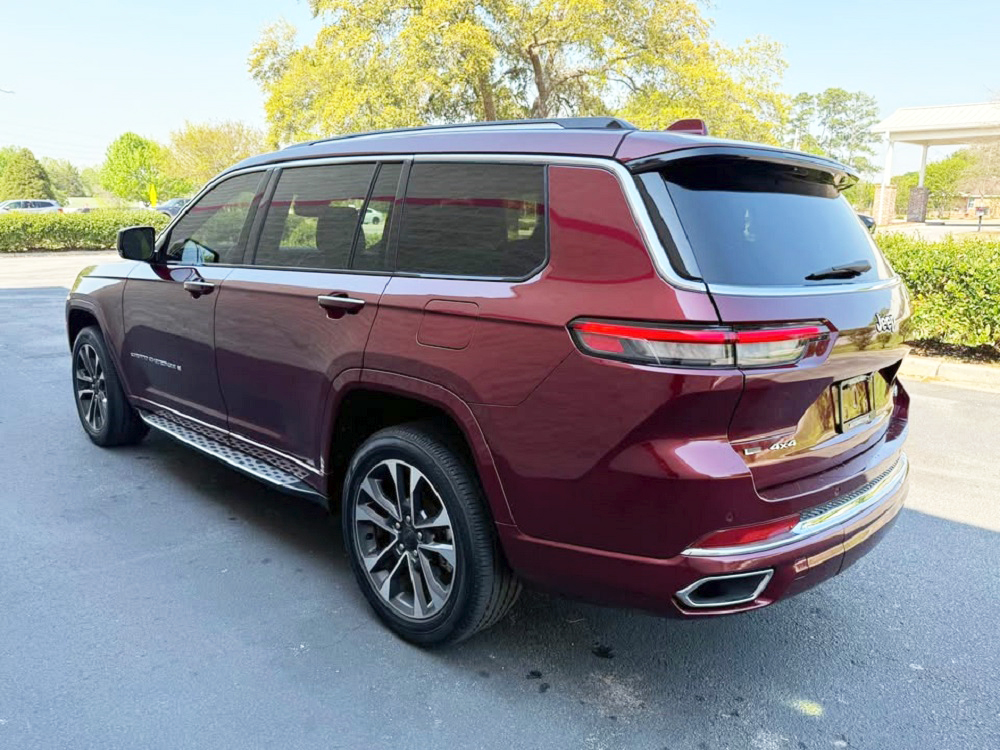
1. What each powertrain really pulls under load
Pentastar V6, Hurricane 2.0T, and 4xe don’t tow the same
The 3.6L Pentastar makes its 260 lb-ft of torque at 4,000 rpm. That’s a long rev before grunt kicks in, fine for light boats and open-road cruise, but you’ll feel the delay when pulling grades or backing into tight spots with 5,000 lb behind you.
The 2.0L Hurricane 4 Turbo makes 90% of peak torque by 2,600 rpm and holds all 332 lb-ft from 3,000 to 4,500 rpm. Built with turbulent jet ignition and a fat torque curve, it hauls harder through elevation and merges faster under load.
The 4xe plug-in hybrid throws down 470 lb-ft from a standstill, using twin motors and a 2.0 turbo engine in tandem. It launches trailers clean off the line, even on boat ramps, but thermal management becomes the choke point after prolonged climbs or heat soak. The hybrid’s extra curb weight cuts tow rating slightly.
Ratings shift fast depending on build
Every ICE model with the tow package tops out at 6,200 lb. That includes both the V6 and Hurricane. The 4xe PHEV maxes at 6,000 lb due to cooling demands and battery load.
These are not average numbers, they’re the legal max, tied to VIN builds with the factory tow group. Anything less gets a hard cap.
2025–2026 Grand Cherokee engines vs tow ratings
| Engine / system | Power / torque | Max tow (with package) | Typical use case |
|---|---|---|---|
| 3.6L Pentastar V6 | 293 hp / 260 lb-ft | 6,200 lb | Light–medium campers, boats, utility trailers |
| 2.0L Hurricane 4 Turbo | 324 hp / 332 lb-ft | 6,200 lb | Heavier campers, highway towing, mountains |
| 2.0L 4xe PHEV | 375 hp / 470 lb-ft | 6,000 lb | Short-haul towing, torque-rich launches |
Drop to 3,500 lb happens without the tow group
Same engine, same frame, but lose the heavy-duty radiator, fan, alternator, and load-leveling shocks, and Jeep slashes the tow rating to 3,500 lb.
The power’s still there. The weak link is thermal load and electrical strain. A base V6 or Hurricane rig pulling past 4,000 lb risks cooking the transmission or sagging into unsafe rake angles without help from the right suspension. Dealers can’t “flash” that rating up later. It’s locked to the build sheet.
2. What the Trailer Tow Group IV actually bolts on
Bigger cooling and a smarter alternator keep the rating alive
Tow a 5,000 lb camper up a summer grade, and the radiator takes the first hit. Without the tow group, the Grand Cherokee runs a thinner-core radiator, standard fan, and looser thermal thresholds. Hook up something heavy, and the heat spikes fast.
Factory-equipped rigs upgrade to a 26 mm thick radiator core, high-speed fan, and tighter ECM logic that locks in transmission and coolant temps under load. That setup cuts the odds of a heat soak shutdown after a steep climb.
The alternator gets a bump too, base rigs run 160 to 180 amps. Tow-package trims step up to 220 or 240 amps to handle ADAS, power steering, HVAC, and a 12V trailer circuit all at once without dropping voltage at idle.
Hitch class, full wiring, and brake controller readiness
Every tow-package Grand Cherokee leaves the plant with a factory Class III/IV hitch receiver, 4- and 7-pin wiring, and a powered charge line to keep trailer batteries topped up while driving.
But the real advantage is hidden: the brake controller harness is already wired in behind the dash. That cuts out risky splicing, keeps install time low, and guarantees the system stays inside Mopar specs. No guesswork, no fried circuits.
Suspension that fights squat and keeps headlights level
Rear-end sag ends steering feel, throws off headlight aim, and makes every speed bump feel like a teeter-totter. Jeep’s fix? Self-leveling shocks on every tow-package build.
Base tow rigs get Nivomat-style shocks that hydraulically raise the rear end as you drive. Summit and Overland trims take it further with Quadra-Lift air suspension. It levels each corner, stabilizes the load in crosswinds, and still drops for easier hitch-ups or passenger entry when unhooked.
Key Trailer Tow Group IV hardware vs base setup
| Component | Base Grand Cherokee | With Trailer Tow Group IV |
|---|---|---|
| Radiator / fan | Standard core, standard fan | Heavy-duty core, higher-output fan |
| Alternator | ~160–180 A | ~220–240 A |
| Suspension rear | Conventional shocks | Load-leveling shocks (air optional trims) |
| Trailer wiring | None or 4-pin on some trims | 4- and 7-pin with charge circuit |
| Hitch receiver | Not included | Factory Class III/IV receiver |
3. Specs that tilt the scale, body length, payload, and gears
Longer wheelbase, tighter margins on payload
The Grand Cherokee L rides on a 121.7-inch wheelbase, 5 inches longer than the standard 2-row. That stretch settles trailer sway and gives longer bunkhouses better directional stability, especially at highway speeds or in wind.
But added length means added weight. Depending on trim, the L can carry slightly more payload, or less. Payload ranges from around 1,160 lb to 1,400 lb.
Once you add passengers and gear, you’re left with a tight envelope for tongue weight. It only takes 600–700 lb on the hitch to shift the balance, especially when towing over 5,000 lb.
Sample 2026 Grand Cherokee payload and tow pairings
| Trim / body style | Engine | Max tow | Payload ballpark | Realistic trailer class |
|---|---|---|---|---|
| Laredo 2-row | V6 | 6,200 | ~1,280 lb | 4,500–5,500 lb bunkhouse or boat |
| Limited L | V6 | 6,200 | ~1,400 lb | 5,000–6,000 lb camper with family aboard |
| Summit 2-row | Hurricane | 6,200 | ~1,160 lb | 4,000–5,000 lb cargo / enclosed trailer |
Axle ratio and 8-speed launch gear make the pull feel lighter
Every 2025–2026 Grand Cherokee comes with a 3.45:1 rear axle, paired with an 8-speed TorqueFlite. On Hurricane models, it’s the beefier 8HP80, packing a steep 5.50:1 first gear. That combo gives strong crawl ratio without needing low-range or special drive modes.
It matters most pulling out of boat ramps, uphill parking lots, or steep trailheads. The Hurricane’s low-end torque pairs with the gearing to get a 6,000 lb trailer moving without drama.
The V6 needs more revs to hit the same force, which you’ll feel when backing into tight spots or crawling up a grade with family and gear onboard.
4. Brake control, factory harness, and keeping sway in check
Factory brake controller installs clean and talks to the dash
Mopar’s integrated brake controller snaps into the center stack and replaces a 12V outlet. No clunky boxes. No guessing. It ties directly into the Grand Cherokee’s CAN bus, displays trailer brake status in the cluster, and works with sway control logic out of the gate.
Aftermarket units like Tekonsha or Curt still work, but they sit under the dash, need to be angled just right, and can’t relay messages through the Jeep’s screen. They’ll stop the trailer, but they won’t integrate.
Harness lives behind the felt, ready to plug and run
Tow-package models come pre-wired with a controller harness above the driver’s left footwell. Pull back the felt liner, and it’s usually taped to the junction box, ready for a clean plug-in.
No cutting, no butt connectors, no warranty gray zone. The harness location stays consistent across 2021–2026 WL builds, so install shops already know the drill.
Sway control fires automatically, if everything else is right
Electronic stability control (ESC) with sway damping kicks in when trailer yaw or steering input gets out of sync. It trims engine torque and hits individual brakes to straighten the trailer fast.
But it only works if tongue weight’s right, the trailer brakes are tuned, and the load isn’t too tail-heavy. Miss one piece, and the system can’t save it. Factory sway logic can mask small mistakes, but it won’t bail out a bad setup on a mountain curve.
5. Why a bolt-on hitch doesn’t give you 6,200 lb
The factory rating lives in the VIN, not the receiver
Every 6,200 lb rating ties back to how the vehicle left the factory. That includes cooling upgrades, alternator spec, suspension setup, hitch class, and internal software calibration. Without the Trailer Tow Group, your Grand Cherokee is capped at 3,500 lb, no exceptions.
Adding an aftermarket hitch won’t change that. It gives you mounting strength, not thermal endurance. The ECM won’t adjust fan speed or transmission behavior just because you bolted something on. Jeep never validated non-tow-package rigs for heavier loads.
Liability hits hard when you’re over the line
Insurers and adjusters don’t guess. They run the VIN, pull the build sheet, and compare the towed weight against rated capacity. Tow over the legal limit, and you’re on the hook if something goes sideways.
Even a clean install can get flagged. If a 3,500 lb-rated Jeep totals out while pulling 5,000 lb, expect denied claims, finger-pointing, and legal blowback. Jeep’s rating draws a hard line. Crossing it makes your rig the risk, not the trailer.
Where aftermarket still fits, if you’re already rated
If your Jeep came with the tow package and you’re still within its limits, aftermarket has a role. Replacing a rusted hitch, upgrading to a stronger ball mount, or swapping in a better controller won’t affect legality.
Just match your gear to the weakest link. A 6,200 lb Jeep pulling with a 5,000 lb-rated ball mount still caps at 5,000. Tongue weight, WDH brackets, and receiver strength all carry their own ceilings. Tow safe, or tow cheap, you don’t get to do both.
6. Digital tools that actually help you hitch, check, and haul
Hitch zoom turns solo hook-ups into a one-shot line-up
ParkView’s Trailer-Hitch Zoom locks the camera on the ball mount, not the bumper. On-screen guides show angle and distance to the coupler. You back up slow, stay lined up, and land the ball dead center, no spotter needed.
It’s not just for the first hitch-up. It also makes quick work of mid-trip checks. Pull into a rest area, flick to reverse, and you can see if the jack, safety chains, or coupler latch shifted.
Rearview mirror turns useless glass into a live camera lane
With a tall trailer, your mirror becomes a wall. The digital rearview system fixes that. It taps a rear-facing camera and pipes the view straight into the mirror, bypassing what the trailer blocks.
This isn’t decoration, it changes how you handle merges, off-ramps, and tailgaters on long grades. You get a full-width view without blind spots, even with a high-profile camper blocking the glass.
Uconnect screens that show what actually matters
The 12.3-inch screen isn’t just for maps. You get real-time temps for transmission and coolant, trailer-light status, and off-road angles. When you’re pulling 6,000 lb through summer heat or tight grades, temp creep shows up fast. Watching those numbers keeps the 8-speed from cooking.
Hurricane and 4xe builds depend on thermal balance more than raw brawn. If you’re towing heavy, don’t bury the data three swipes deep. Put it on-screen and stay ahead of the heat.
7. Where Jeep wins, and where issues claw back
Segment weight class: Jeep holds the high ground
Jeep Grand Cherokee’s 6,200 lb rating beats every other unibody midsize SUV in this segment. Explorer taps out around 5,600. Highlander and Pilot max at 5,000. Most of them don’t offer load-leveling, and few have factory trailer brake readiness.
Jeep gets there with real hardware: 26 mm radiator core, 240 A alternator, load-leveling suspension, and a hitch circuit that powers batteries and brakes straight from the dash. None of that comes on a base trim. But it’s in the tow group, and that group earns its number.
Segment comparison: unibody SUV tow ratings
| Model (2025–2026) | Max tow (properly equipped) | Notes on tow package / cooling |
|---|---|---|
| Jeep Grand Cherokee | 6,200 lb | HD cooling, 220 A alt, load-leveling |
| Jeep Grand Cherokee 4xe | 6,000 lb | Hybrid thermal limits, big torque |
| Ford Explorer (V6 / ST) | ~5,600 lb | Strong, but below Grand Cherokee |
| Toyota Highlander (Turbo 4) | ~5,000 lb | Good family tow rig, lower ceiling |
| Honda Pilot (V6) | ~5,000 lb | Solid light-duty tow, softer focus |
Tow the right trailer, not just the biggest one
Under 4,000 lb, you’re in the safe zone for utility trailers, jet skis, pop-ups, or cargo haulers, especially if the Jeep didn’t leave the factory with the tow package.
Between 4,000 and 5,500 lb, you’re towing bunkhouses, medium boats, or dual-axle rigs. That range leans hard on cooling, brakes, and suspension. The tow package isn’t optional at that point, it’s essential.
Above 5,500 lb, you’re fully into Class III-IV territory. You need all of it: torque off the line, load leveling, air temp under control, and legal clearance across the board.
This is where the Hurricane engine, Quadra-Lift, and 7-pin wiring finally earn their stripes. Miss one, and you’re towing on borrowed time.
8. Towing wears different, service intervals and weak links
Pull hard, service early, fluid life tanks under heat
Frequent towing triggers Jeep’s severe-service clock. Forget the “lifetime” fluid claim. You’re cooking oil and ATF every time the trailer pushes your temps north of 220°F.
Engine oil should be changed around 5,000 miles when towing regularly. Transmission fluid won’t survive 100,000 miles, not under load. Plan for 30,000 to 50,000 mile intervals depending on grade, speed, and heat cycles. Wait too long, and the 8HP80’s clutches won’t give you a second chance.
Rotors roast and shocks sag if you don’t watch the wear
Even with trailer brakes, the Jeep’s front rotors take the heat, especially on descents. Most trims run 13.9-inch front discs, and some add vented rears. But pad glazing and rotor warping still show up early if you haul near the limit.
Rear shocks, bushings, and alignment angles shift faster when tongue weight lives on the back axle. Load-leveling shocks buy you time, not immunity. Skipping rotations and ignoring rear tire wear means tracking goes loose and braking balance drifts.
4xe hybrids tow hard, but need close thermal watch
The 4xe puts down more torque than anything else in the lineup. But its cooling system carries the engine, battery, and hybrid electronics all in one loop. Push it on a hot day, and the system may derate power or throw warnings.
Software updates help manage thermal load and regen braking behavior, especially when pulling trailers downhill. But battery degradation hits faster if you treat the 4xe like a full-time tow mule.
Long hauls are fine, if you follow the service curve and don’t ignore warning lights. One overheated charge loop, and the instant torque goes dark until cooldown.
Sources & References
- 2026 Jeep Grand Cherokee Drops V6 for a Four, Power Goes Up – Autoweek
- 2026 Jeep Grand Cherokee vs 2025 Grand Cherokee: A Guide | Pilson Chrysler Dodge Jeep Ram Fiat
- 2026 Jeep Grand Cherokee for Sale in Allentown Near Bethlehem
- 2026 Jeep Grand Cherokee Facelift Brings a New Hurricane Inline-4 – RoadandTrack.com
- 2026 Jeep Grand Cherokee: All-new 2.0-liter Hurricane 4 Turbo Engine Packs Big Power With Race-proven Combustion Technology – Stellantis Media
- 2026 Jeep® Grand Cherokee Preliminary Product Information
- 2026 Jeep® Grand Cherokee Preliminary Specifications – Canada
- 2026 Jeep Grand Cherokee: Your Top Questions Answered – Cooksville Dodge
- How much can the 2026 Jeep Grand Cherokee tow? – Frontier Dodge
- 2026 Jeep Grand Cherokee Towing Capacity | Glendale CDJR
- 2026 Jeep Grand Cherokee Engine Options
- Jeep Grand Cherokee Dimensions and Towing Specs
- Jeep Grand Cherokee Towing Capacity With Charts
- Tow package or aftermarket? : r/GrandCherokee
- Tow capacity? : r/JeepGrandCherokee
- 2026 Jeep® Grand Cherokee – Adventure-Ready Performance
- 2025 Jeep Grand Cherokee Trailer-Tow Package: Top Features & Benefits – VIP Auto Lease
- 2025 Jeep Grand Cherokee Towing Capacity & Tow Package Guide
- 2026 Jeep Grand Cherokee Gets New Hurricane Turbo-Four Engine With 324 HP – Jalopnik
- Package Options for the 2025 Jeep Grand Cherokee | Antioch CDJR
- Jeep Grand Cherokee Towing Capacity | AutoNation CDJR Roseville
- 2016–2022 Dodge Durango / Jeep Grand Cherokee Radiator Replacement Options – GPD Tech Tips
- Tow Package Aftermarket Parts : r/GrandCherokee
- Jeep Grand Cherokee Upgrades, Features, & Package Options
- 2025 Jeep Grand Cherokee Engine & Tow Specs | Barrington, IL
- 2011–2024 Jeep Grand Cherokee with Factory Tow Package CURT Assure Trailer Brake Controller
- Jeep® Grand Cherokee Capability – Towing Capacity
- 2026 Jeep Grand Cherokee Denver CO | Prestige Chrysler Dodge Jeep Ram
- 2026 Jeep Grand Cherokee L Review, Pricing, and Specs – Car and Driver
- 2026 Jeep Grand Cherokee vs Grand Cherokee L
- 2026 Jeep Grand Cherokee L Limited Reserve 4×4 Features and Specs – Car and Driver
- 82215834AC – Trailer Brake Control 2021–2025 Jeep | The Official Mopar eStore
- Mopar 82215652AD Trailer Brake Controller for Jeep Wrangler JL and Gladiator JT
- 2026 Jeep Cherokee Tekonsha Voyager Trailer Brake Controller – etrailer.com
- JEEP GRAND CHEROKEE Installation Sheet – Curt
- Mopar Jeep Trailer Brake Controller: DIY Install in 17 Steps
- Answer: 2024 Brake Controller Harness on GCL Summit : r/GrandCherokee
- 2014–2021 Jeep Grand Cherokee Trailer Brake Controller + 7 Pin Wiring – Tekonsha
- 2026 Jeep® Gladiator Buyer’s Guide – Stellantis Fleet
- 2026 Jeep Cherokee Trim Levels | Elk Grove CDJR
- 2026 Jeep® Cherokee vs Jeep® Grand Cherokee
- Are there any additional benefits beyond style for an OEM aftermarket hitch? : r/GrandCherokee
- Seeking advice: I purchased Jeep Grand Cherokee as my tow vehicle : r/GoRVing
- 2025 Jeep Grand Cherokee Towing Capacity: Power & Utility
Was This Article Helpful?