
The hitch drops, the springs sag, and the trailer bites back before the tires even roll. The Wrangler’s short wheelbase makes it sure-footed on rocks, twitchy under load.
Jeep’s Trailer Tow and Auxiliary Switch Group adds the hitch, wiring, and cooling to meet the spec sheet. But raw muscle isn’t the limiting factor; chassis layout and suspension geometry call the shots.
Most JL trims are capped at 3,500 lb. Only the 2024+ Rubicon with the full-float axle and 4.10 gears claws up to 5,000. This guide cuts straight to what matters; how each trim handles a trailer, what caps the rating, and where control fades before capacity does.
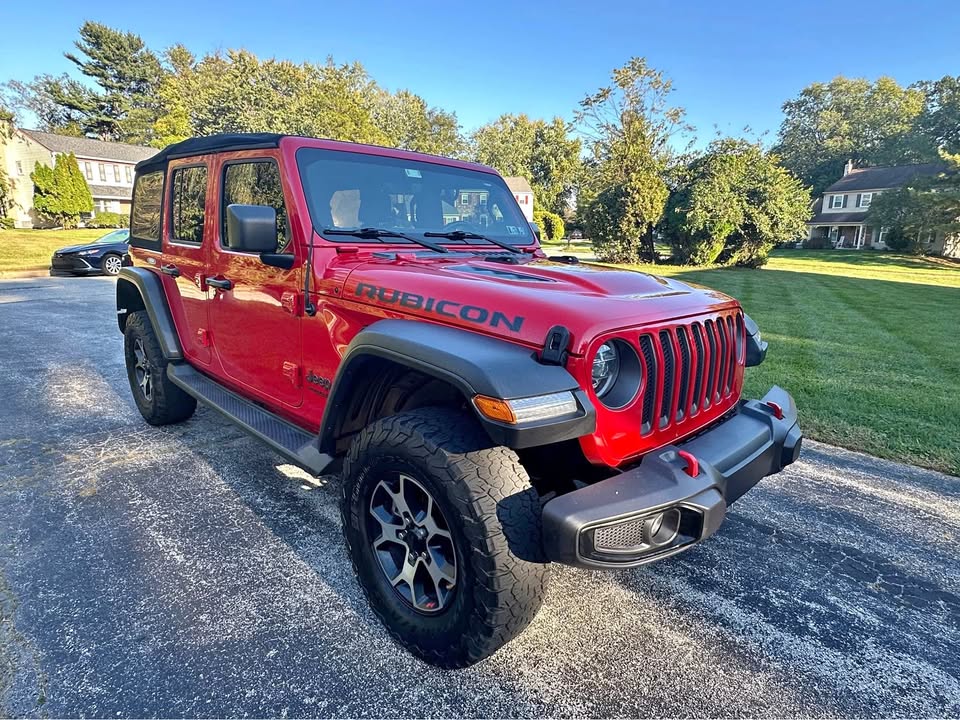
1. How Wrangler tow ratings actually break down
Three clear tow classes, not five
Every JL falls into one of three towing tiers: 2,000 lb, 3,500 lb, or, if you’ve got the right 2024+ Rubicon build, 5,000 lb. All 2-doors hit the wall early at 2,000. Most 4-doors top out at 3,500.
Only the latest Rubicon and Rubicon X with the full-float axle and 4.10 gears break through to 5,000. Ratings follow chassis layout and suspension stiffness, not engine torque.
Even the torque kings, 4xe and 392, stay locked at 3,500 lb. Their extra curb weight, cooling constraints, and limited payload cut off the advantage. Power’s not the bottleneck; geometry and structure still hold the pen.
Why the 2-door can’t stretch beyond 2,000
The 2-door Wrangler is short, nimble, and unstable once a trailer latches on. The hitch sits close to the rear axle, so any tongue weight or side gust has more leverage.
Sway hits early, steering goes light, and the whole rig reacts faster than a longer chassis can recover. The cap sticks at 2,000 lb for a reason, and no engine swap can erase it.
Small gear trailers, ATVs, and fishing boats ride fine. But tall campers or car haulers are out of their league.
3,500 is the norm, 5,000 is rare air
Every 4-door JL with the 8-speed automatic can tow 3,500 lb. Stick shifts don’t make the cut; heat buildup and torque delivery under load matter more than raw ratings. That 3,500 zone covers most pop-up campers and small utility trailers but already starts to pinch payload headroom.
The 5,000 lb number only shows up on 2024+ Rubicon and Rubicon X builds with the full-float rear axle and 4.10 gears. That axle passes tongue load through the housing instead of stressing the shafts, a fix to the old weak link.
But even with that badge, real-world trailer size still bumps against payload and GCWR. With passengers and gear, 4,500 lb is usually the smart ceiling.
JL Wrangler max towing by configuration
| Body | Engine | Transmission | Axle setup | Max Tow (lb) | Limiting factor |
|---|---|---|---|---|---|
| 2-door | All | Auto / Manual | Standard | 2,000 | Wheelbase, sway |
| 4-door | 3.6 V6 / 2.0 T | 8-speed auto | Standard | 3,500 | Structure, cooling |
| 4-door | 4xe PHEV | 8-speed auto | Standard | 3,500 | Curb weight, payload |
| 4-door | 392 V8 | 8-speed auto | Standard | 3,500 | Cooling, weight |
| 4-door Rubicon 2024+ | 3.6 V6 / 2.0 T | 8-speed auto | Full-float rear + 4.10 | 5,000 | Payload, GCWR |
2. Trailer math that actually matters
Why payload, tongue weight, and Jeep geometry clash
GCWR sets the combined weight cap for Wrangler and trailer. GVWR is the Jeep’s limit by itself. Payload is what’s left between curb weight and GVWR, and tongue weight eats into it first.
With any Wrangler, 10 to 15 percent of trailer weight presses down through the hitch. A 3,500 lb trailer loads 350 to 525 lb onto the rear before a single passenger climbs in.
Most 4-door trims carry 1,100 to 1,400 lb of payload. But the 4xe drops lower thanks to the battery. Stack in four adults and gear, and that number can dip under 500 lb. A legal 3,500 lb rating might only support a 2,800 to 3,200 lb trailer once you count real weight.
The transmission and gear ratio affect how heat builds under strain, especially on long grades. And Wrangler’s short wheelbase plus tall stance exaggerate any imbalance. Running 12–13% tongue weight helps keep steering planted without crushing the rear springs.
Why short and heavy tows behave better than tall and light
Boats, UTV trailers, and dual-axle haulers pack their weight low. That helps tracking, keeps crosswinds tame, and puts less pressure on sway control. But boxy campers stack mass high and wide. Wind from semis, highway gusts, and uneven pavement can toss a tall trailer hard, even when it weighs less.
Owner reports back this up. A 3,000 lb camper earns plenty of white-knuckle stories on the highway. A 3,500 lb boat? Often feels smooth, planted, and drama-free. The sticker gives you a number. The trailer’s shape decides how rough the ride gets.
Real payload and tongue weight scenarios
| JL build | Rated payload (lb) | Example trailer | Tongue at 12% (lb) | Tongue at 15% (lb) | Remaining payload after 12% (lb) | Remaining payload after 15% (lb) | Notes |
|---|---|---|---|---|---|---|---|
| 4-door Rubicon, gas | 1,250 | 3,500 lb camper | 420 | 525 | 830 | 725 | Usable, but two adults and 200 lb gear cut room fast. |
| 4-door Rubicon, 4xe | 1,150 | 3,500 lb camper | 420 | 525 | 730 | 625 | Battery weight tightens margin, watch GCWR and temps. |
| 4-door Sahara, gas | 1,350 | 3,000 lb boat | 360 | 450 | 990 | 900 | Low, dense load tracks clean, easier on sway control. |
| 4-door Rubicon FF 2024+, gas | 1,300 | 5,000 lb car hauler | 600 | 750 | 700 | 550 | Rated for 5,000, but people and gear can push GVWR. |
| 4-door Sport, gas | 1,400 | 3,000 lb box trailer | 360 | 450 | 1,040 | 950 | Tall side area needs WDH and good tires to stay calm. |
3. Factory tow gear that actually pulls its weight
Hard parts that turn a Wrangler from ready to legal
The Mopar hitch receiver bolts straight into the frame and holds a Class II rating on paper, but it’s built to match Jeep’s max tow numbers. Aftermarket hitches might wear a Class III badge, but the Wrangler’s mounting structure doesn’t change, so real-world gains are slim.
Mopar’s unit clears the bumper and spare without a fuss, tucks in tight for departure angle, and carries factory corrosion protection that holds up to salt, grit, and trail spray.
The wiring setup separates a legal tow from a blind one. The basic 4-pin runs lights, nothing more. The 7-pin adds brake feed, reverse signal, charge line, and trailer power, mandatory for any setup with electric brakes.
The factory tow group includes both, sealed and integrated through a dedicated harness that talks directly to the Body Control Module (BCM). That link unlocks trailer detection, sway control logic, and bulb-out warnings through the cluster.
The Auxiliary Switch Group brings four pre-fused, dash-mounted circuits that are ready for air compressors, lighting, brake controllers, or winches. Each lead comes pre-wired and labeled, no cutting, no chasing wires.
Matched with the tow harness, the Wrangler turns from a wiring headache into a well-laid electrical grid.
Why wiring needs to speak the truck’s language
Installing the Mopar 7-pin harness isn’t plug-and-play. Shops quote up to five hours because the harness runs deep, bumper to cabin, then up into the BCM behind trim panels.
But once in, you don’t just get power; you get Trailer Sway Control, proper current sensing, and brake fault warnings in the dash. That doesn’t happen with a cut-and-splice 4-pin kit. Those feed signal, not data.
Skip that integration, and you’re towing without a safety net. The Jeep won’t apply brake pulses or trim throttle if sway kicks in. And mismatched wiring can throw constant errors or overload relays that were never meant for trailer duty. It might light up the road, but it leaves the electronics guessing.
What the Mopar tow package really costs, and when it’s worth it
Parts alone run about $718 MSRP for the factory hitch and harness. Installed, most dealers quote $950 to $1,100, depending on labor. Retrofitting a used JL often costs more than checking the box at build time, since software activation and teardown take extra time.
That price stings, but if the trailer has brakes, carries a battery, or runs long highway miles, the upgrade pays off in control and legal compliance. For short trips with light gear under 2,000 lb, a bolt-on hitch and 4-pin kit may get you by.
But once the trailer grows or the trip gets serious, 7-pin wiring, factory brake feed, and sway logic aren’t upgrades; they’re the line between towing and hoping.
4. The axle and gear combo that unlocks 5,000 lb
Full-float axle, the end of bending shafts
A semi-float axle makes the shaft do double duty; twisting the wheels and holding up the trailer. Every bump stacks bending stress on top of torque, and that’s where older Wranglers hit their limit.
The 2024+ Rubicon full-float axle fixes that. It moves the vertical load off the shaft and into the axle housing and hub bearings. That leaves the shaft to handle torque alone, not the weight pressing down from the tongue. No more bending, less deflection, and tighter alignment under load.
It pays off in real-world driving. Rough roads pound the hubs, not the seals. Lateral stability improves. Shaft flex drops to near zero. That’s the difference between tiptoeing at 3,500 lb and towing with confidence at 5,000.
Shorter gears, cooler temps, smoother pull
The 4.10 final drive works hand-in-hand with the 8-speed to keep the torque converter locked and the ratios in the sweet spot.
Taller gears force more downshifts and let revs swing, heating up the transmission fast. With 4.10s, the Jeep holds lower gears longer, stays in the torque band, and builds heat slower under strain.
It’s not a magic fix. You’ll still need to manage temps, especially on long grades. Watch the coolant, trans sump, and keep fluid changes on schedule. Use Tow/Haul mode to lock out hunting. The right gearing stretches the safe range; it doesn’t override physics or the GCWR.
Why the 4xe and 392 stay locked at 3,500
The 4xe packs battery mass that eats into payload before you hitch anything. The 392 brings more curb weight and extra cooling demands. Both trucks make massive torque, but that doesn’t raise their ceiling. The constraints come from GVWR, GCWR, and heat, not horsepower.
Real-world loads hit the limit fast. Toss in four passengers, some weekend gear, and the tongue weight alone can wipe out what’s left of the payload. Jeep holds the line at 3,500 lb to protect these premium builds from cooking themselves on long climbs. The margin isn’t generous, but it’s intentional.
5. Keeping a short, flexy rig towing straight
Coil springs love trails, hate tongue weight
The Wrangler’s coil-spring suspension soaks up rocks and keeps wheels planted off-road, but it comes soft when it’s time to tow. That articulation-friendly setup allows the rear to sag under tongue weight, which lifts the nose and dulls steering feel. The more the front lightens, the more wind and sway take the wheel.
Owners hauling mid-size campers all say the same thing, fine at 50, sketchy at 65. The body leans once, rebounds slow, and needs more steering correction than you’d like. It’s the compromise for running trail-tuned springs on pavement.
WDH bars fix the float, and the nerves
A Weight-Distribution Hitch (WDH) rebalances tongue weight across all four corners. On a short-nose Wrangler, that front-axle recovery makes the difference between wandering and holding lane. Once the bars are tensioned, the front tires grip again and the Jeep stops drifting through wind blasts and semi wake.
Electric trailer brakes become non-negotiable around 3,000 lb, but the WDH earns its place even sooner. Add-on sway control, friction pads or dual-cam systems, tames gusts that would otherwise shove the Jeep sideways. Together, they turn a twitchy 3,500 lb tow into something that feels like it belongs on the highway.
Tires, shocks, and bars that anchor the ride
Tires carry more than weight; they set the tone. P-metric all-terrains flex under load, which feels fine off-road but sloppy at 65. LT-rated C or E tires run stiffer, stay cooler, and track straighter with a trailer on the hitch. If towing happens more than twice a year, they’re worth it.
Stock shocks allow too much rebound. Towing-grade dampers or helper springs calm the cycle without trying to fake a higher tow rating. A stiffer rear sway bar, like the Hellwig 7775, tightens the roll without reducing flex. These upgrades don’t raise the limit, but they make every pound inside it feel stable.
6. Picking parts that actually pull their weight
Hitch receivers that don’t hang low or talk big
Mopar’s factory receiver mounts clean, clears the spare, and avoids dragging on steep trails. Aftermarket options like Curt or Draw-Tite often flaunt Class III or IV numbers, but the Jeep’s frame and sticker still cap the game at 2,000 to 5,000 lb.
The real call is build quality and profile. Some hitches hang low or sit wide, risking departure angle or bumper rub. A tight-fitting, corrosion-resistant unit that stays tucked beats a flashy badge when the road gets rough.
Why trailer wiring should talk to the Jeep, not just light it up
A basic 4-pin plug powers tail lights. That’s it. The Mopar 7-pin harness adds brake feed, charge line, reverse trigger, and, crucially, talks to the BCM. That’s how you get working sway control, brake fault alerts, and voltage sensing through the dash.
Yes, it takes time to install. The loom runs deep into the cabin and connects to the brain of the Jeep. But for anything larger than a lawn trailer, that integration isn’t optional; it’s the difference between active safety and guesswork.
Brake controllers that work without knee pain
Old-school time-delay controllers lag behind braking and roast pads on descents. A proportional unit ties trailer brake force to actual deceleration, keeping things smooth and straight under pressure.
For the Wrangler’s tight cabin, space matters. The Redarc Tow-Pro mounts the brain behind the dash and uses a fingertip dial on the panel, no boxes near your knees. Tie it into an Aux circuit for power, grab the signal from the Mopar harness, and skip the wire spaghetti. No splices, no bruises, no drama.
7. Matching the trailer to the Wrangler that’s pulling it
Under 2,500 lb, the Wrangler’s comfort zone
Stay under 2,500 lb and the JL feels composed. Small boats, jet skis, and utility trailers with a low center of gravity track clean and brake predictably. Wind shove stays mild, and handling stays sharp without extra hardware.
A bolt-on hitch and clean 4-pin wiring are usually enough at this weight, but tongue weight still needs to land in the 12–13% range to keep the front axle planted. Tire pressure matters, check it hot, and don’t push highway speeds. Keep things balanced, and the Jeep stays calm.
2,500 to 3,500 lb, the sweet spot for 4-door builds
Once you cross 2,500 lb, the 4-door JL with the 8-speed auto starts showing why it’s built for more. Small campers and heavier UTV haulers tow well, if the trailer has electric brakes and the Jeep wears real tires that hold their shape under load.
A weight-distribution hitch stabilizes steering, while sway control smooths out gusts and wash from passing trucks. Tow/Haul mode keeps the transmission from hunting and helps control temps on climbs, saving brake pads and trans fluid.
The 5,000 lb lane, reserved for one build
Only the 2024+ Rubicon and Rubicon X with the full-float axle and 4.10 gears carry a 5,000 lb rating. But between passengers, cargo, and GCWR, real-world towing often lands closer to 4,500.
This range suits compact boats or car haulers that sit low and dense. A tall, slab-sided camper pushing 5,000? That’s a stretch. At that size, a half-ton truck isn’t excessive; it’s the right tool. The Wrangler goes back to what it does best: clawing up trails.
What kind of tow rig the Wrangler really is
The Wrangler can tow with confidence, but it never stops being an off-roader first. Every pound it pulls leans on short-wheelbase physics, soft coil springs, and narrow payload margins.
The 2-door handles light gear hauls. The 4-door with the 8-speed steps into weekend trailer duty, if the wiring and brake setup are solid. Only the 2024+ Rubicon with the full-float axle and 4.10 gears truly earns the 5,000 lb badge, and it does it through structural muscle, not raw torque.
Factory tow gear pays off when the trailer has electric brakes or racks up serious miles. The Mopar hitch, 7-pin harness, and BCM-linked sway control keep the rig stable and responsive. Skip those, and even short trips start to feel longer.
Matched with the right trailer, low, balanced, and inside the real payload window, the Wrangler tows like it means it. Push past that, and you’ll feel every shortcut. The badge may say Jeep, but the limits say math.
Sources & References
- Jeep Towing Capacity Guide
- Get Hitched: Selecting and Using a Trailer Hitch for Your Jeep – RealTruck
- Jeep Wrangler Towing Capacity Chart & Information
- Jeep Wrangler Towing Capacity | Max Tow Specs By Trim – Autostar Chrysler Dodge Jeep Ram FIAT of Waynesville
- 2024 Jeep Wrangler Towing Capacity: How Much You Can Tow
- Jeep Wrangler Towing Capacity: How Much Can It Tow? – Aaron CDJR
- What is the physical limitation of the JL’s ability to tow? | Jeep Wrangler Forums (JL / JLU)
- Jeep Wrangler 4xe Towing Capacity: Power Meets Adventure
- 2025 Jeep Wrangler Towing Capacity | Five Star Clearfield CDJR
- Jeep Wrangler Specific Towing and Power Solutions – REDARC
- Hellwig rear swaybar for towing – JL Wrangler Forums
- Jeep Wrangler Towing Capacity by Year & Trim – Turlock CDJR
- 2024 Jeep Wrangler 4xe Towing Capacity | Central Chrysler Dodge Jeep Ram Fiat Of Norwood
- 4XE Rubicon – towing a camper questions/concerns | Jeep Wrangler Forums (JL / JLU)
- Towing with my 2018 Wrangler JL | Jeep Wrangler Forums (JL / JLU)
- New Jeep Wrangler Towing Capacity: How Much Can It Tow?
- Hitch Install Question | Jeep Wrangler Forums (JL / JLU)
- 82215209 – Hitch Receiver 2018-2026 Jeep Wrangler | The Official Mopar eStore
- 2024 Jeep Wrangler 4xe Towing Capacity | Central Valley CDJR
- Mopar tow harness installation time by dealer – JL Wrangler Forums
- Mopar Tow Vehicle Wiring Harness for 2018-2025 Wrangler JL – JustForJeeps.com
- Jeep Wrangler Towing Capacity – What Can It Tow? | Jeep Dealership in Littleton
- CSF #7340: Jeep Wrangler (JL) & Gladiator (JT) Heavy-Duty All-Aluminum Radiator
- Reviews and General Information: R-Pod Jeep Wrangler Unlimited Towing Experience?
- 2025 Jeep® Wrangler 4xe Specs – Capacities, Towing & More
- 2025 Jeep® Wrangler Specs: MPG, Towing and More
- Mopar OEM Hitch versus Off Brand? – JL Wrangler Forums
- Jeep JL Hitches & Towing for 2018-2026 Wrangler | Best Prices at ExtremeTerrain
Was This Article Helpful?