
Hook up the wrong trailer and the Telluride will let you know, fast, what Kia meant by “limits.” The phrase “tow package” gets tossed around by dealers and forum posters alike, but half the time, no one agrees on whether it’s a trim level, an option bundle, or just a hitch slapped on in the shop.
All Tellurides pack the same muscle: a 3.8L V6 pushing 291 hp through an 8-speed automatic. That setup alone earns the base 5,000-lb tow rating. Step into an X-Pro, and the number jumps to 5,500, not because of the hitch, but because of the factory-installed heavy-duty cooling gear.
That’s where the mix-up starts. Some dealers bolt on a hitch, add a cooler, and call it a “tow package.” It mimics the X-Pro’s setup, but it’s not the same path. Without proper cooling, you’re still capped at 5,000, even if the hitch says it can handle more.
So what’s actually in the kit? A factory Class III hitch, either 4-pin or 7-pin wiring, brake controller compatibility, and on X-Line/X-Pro trims, a self-leveling rear suspension.
Tongue weight? Locked at 500 lb, no matter the trim. What you don’t get is license to ignore the limits. That package decides whether you’re stuck at 5,000 or cleared to pull 5,500.
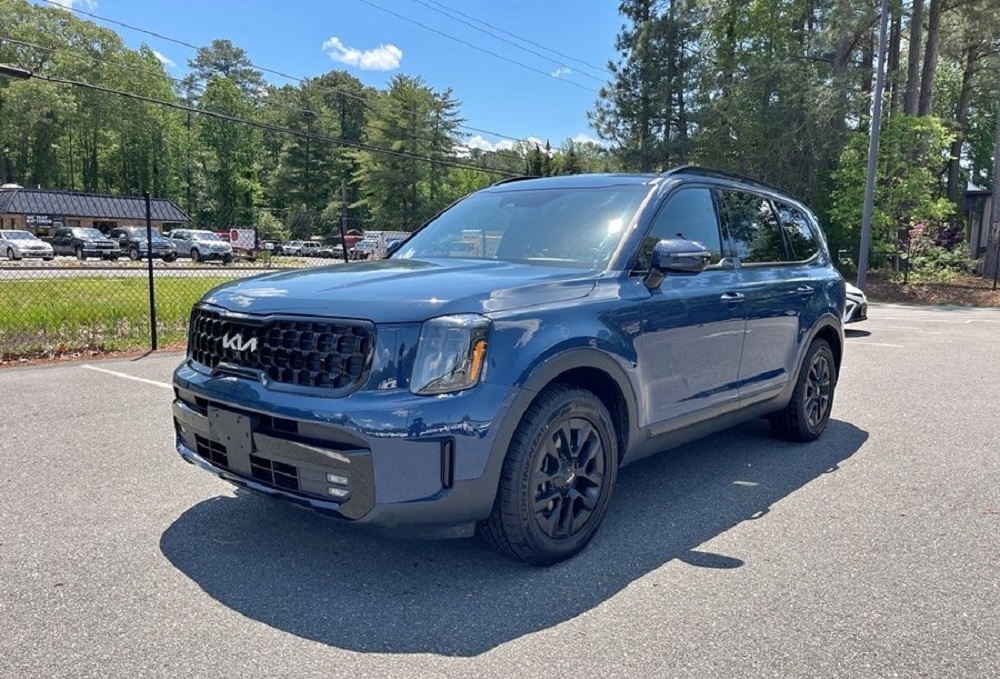
1. Same engine, different limits: cooling makes the call
Every Telluride since launch runs the same powertrain: a 3.8L V6 GDI with 291 hp and 262 lb-ft of torque, tied to an 8-speed automatic. It’s a solid combo, plenty of grunt for a midsize SUV, but Kia draws a hard line on how much you’re allowed to tow, and it hinges entirely on how well the system manages heat.
From 2022 to 2025, trims without upgraded cooling are capped at 5,000 lb. Doesn’t matter if you bolt on a Class 3 hitch rated for 6,000; the limit is set by fluid temps, not hardware labels. The transmission’s thermal load decides whether you keep pulling or hit limp mode halfway up a mountain.
So where’s the extra 500 lb come from?
Only one place: Kia’s heavy-duty cooling setup. On 2023–2025 X-Pro trims, that gear comes baked in, along with all-terrain tires, tow mode, and self-leveling suspension.
In 2025, select SX and SX Prestige trims can match the X-Pro rating if the dealer installs Kia’s full Tow Package, which adds the same cooling stack, hitch, and wiring harness.
It’s not about ride height or rugged badging. The 5,500-lb rating exists because the upgraded heat exchanger and trans cooler keep ATF alive under stress. Without those, the drivetrain overheats long before the hitch ever complains.
Tow rating by trim and year
| Model Year | Trims at 5,000 lb | Trims at 5,500 lb | How 5,500 is earned |
|---|---|---|---|
| 2022 | All trims | Optional | Dealer-installed Tow Package (cooling + hitch/wiring) |
| 2023 | LX, S, EX, X-Line, SX, SX X-Line, SX Prestige, SX Prestige X-Line | SX X-Pro, SX Prestige X-Pro | Factory X-Pro (includes heavy-duty cooling) |
| 2024 | Same as 2023 | Same as 2023 | Factory X-Pro (includes heavy-duty cooling) |
| 2025 | LX, S, EX, EX X-Line | SX X-Pro, SX Prestige X-Pro | Factory X-Pro (includes heavy-duty cooling) |
| 2025 | SX, SX X-Line, SX Prestige | Up to 5,500 lb | Dealer Tow Package (adds cooling, hitch, wiring) |
2. Hardware that makes towing work, not just look the part
Back up to the ramp at dusk, plug in your trailer, and if the lights stay dead, you’ll wish you double-checked the wiring.
Hitch and wiring: the backbone of your setup
The Telluride’s factory hitch is a frame-mounted Class 3 with a 2-inch opening, tucked tight under the bumper to keep departure angles clean.
Kia’s official kit (S9F61-AU100) integrates cleanly and comes with either a 4-pin or 7-pin harness, depending on your trailer. CURT’s C13420 is a go-to aftermarket match if you want something similar with a concealed body.
A 4-pin connector handles just lights, tail, stop, and turn. That’s fine for light-duty trailers with no brakes.
Step up to 7-pin and you add reverse lights, a brake controller signal, and 12V accessory power for charging a trailer battery or running gear. Popular kits include Kia’s S9F67-AC802, Tekonsha 22134, and CURT 56490.
If your trailer has brakes, don’t skip the controller. Install it, check the gain settings, test it manually in an empty lot, because the first panic stop isn’t where you want surprises.
Cooling: the upgrade that earns you 500 more pounds
Unless your Telluride came with the heavy-duty cooling package, you’re towing at 5,000 lb max. The 5,500-lb rating on X-Pro trims isn’t just branding; it’s thermal capacity.
Kia fits a beefed-up heat exchanger and trans cooler to keep ATF and coolant from cooking during long pulls. Without it, even a 6,000-lb aftermarket hitch won’t raise the limit. Heat wins.
In 2025, some SX and SX Prestige models can match that X-Pro capability with the dealer-installed package. But if the cooler’s not on your build sheet, the rating stays at 5,000, no matter what the drawbar says. Want to be sure? Ask the parts desk to check the cooler part number tied to your VIN.
Suspension smarts that hold the line under load
X-Line and X-Pro trims get self-leveling rear suspension as standard. Drop 500 lb of tongue weight on the ball, and the system brings the rear end back to spec, keeping headlight aim right and weight where it belongs, on the front axle.
That means better steering response and ABS performance. Just know: it levels, not redistributes. For long or heavy trailers, a proper weight-distribution hitch is still your friend.
Tow Mode, also exclusive to X-Line and X-Pro, tweaks shift points, keeps the engine braking responsive, and disables Idle Stop & Go so the driveline stays ready in traffic.
Other standard helpers? Trailer Stability Assist to control sway, Hill Start Assist for ramps, and Downhill Brake Control for sketchy descents.
Use them all. Then tow like you’ve got a sail behind you. Slower speeds, more space, they’re what keep your trip smooth.
3. Tongue weight, payload, and the 500-lb wall you can’t dodge
The Telluride might tow 5,000, or even 5,500 lb with the right cooling, but it always hits the same hard stop: 500 lb of tongue weight.
Early 2020 manuals printed it wrong (351 lb), but Kia corrected it with a tech bulletin. Doesn’t matter what the trailer weighs or which hitch you bolt on; 500 is the limit.
Why tongue weight gets you first
Tongue weight is the downward force the trailer puts on the hitch. Get it wrong, and you’ll know fast. Too light and the trailer fishtails. Too heavy and the rear sags, front lifts, and braking goes soft.
The sweet spot is usually 10–15% of the trailer’s weight. Even though a “properly loaded” 5,500-lb trailer should drop 550–825 lb on the ball, that’s over the Telluride’s cap. So now you’re aiming for the low end of the range, closer to 10–11%, just to stay legal and safe.
Payload: the number most owners never check
Payload includes passengers, gear, and tongue weight. That’s where things fall apart. A family of five plus weekend luggage can easily burn 900–1,000 lb.
Now toss 480 lb of tongue on the back, and you’re dancing at the edge of the GVWR. It’s not just about overloading the springs; go too far and you compromise braking, stability control, and steering feel.
Real-world trailer examples
| Scenario | Trailer GVW | 10% TW | 15% TW | TW Cap OK? | Notes |
|---|---|---|---|---|---|
| Small boat | 3,200 lb | 320 lb | 480 lb | ✔ | Leaves plenty of payload for passengers and gear |
| Pop-up camper | 4,200 lb | 420 lb | 630 lb | 10% = OK | Load forward carefully, aim for 10–12% |
| Max conventional | 5,000 lb | 500 lb | 750 lb | Cap = 500 lb | Load balance is key, watch payload, not just tongue weight |
| X-Pro at 5,500 lb | 5,500 lb | 550 lb | 825 lb | Still capped | Extra tow rating doesn’t raise the TW cap; stick with lighter tongues |
4. WDHs and brake controllers aren’t just nice-to-haves; they’re survival gear
The Telluride can pull its weight, but when you move beyond small boats and flatbeds, two upgrades make or break the tow: a brake controller and a weight-distribution hitch (WDH). Skip them, and it won’t take long before a crosswind or panic stop turns the trip sketchy.
Why WDHs matter more on a unibody SUV
The Telluride rides on a unibody, not a body-on-frame setup. That makes it more sensitive to tongue weight. Too much weight at the rear lifts the front, softens steering, and pushes braking out of sync.
A WDH fixes that. It uses spring bars to shift some of that tongue weight forward, onto the front axle of the SUV, and back onto the trailer. What you get is sharper tracking, less sway, and brakes that respond like they should.
Self-leveling rear suspension helps (X-Line and X-Pro trims have it), but don’t confuse it with weight transfer. It levels your ride, not your load.
If you’re pulling something over 3,500–4,000 lb or anything tall and boxy, a WDH isn’t a luxury; it’s insurance. Just make sure your hitch receiver works with the system you choose, and always re-aim your headlights after adjustment.
Brake controllers, the unsung hero behind a safe stop
Trailer’s got brakes? Great, but without a controller, they won’t do a thing. The Telluride’s pedal doesn’t send a signal to trailer brakes unless you’ve wired in an electric brake controller. That’s why the 7-pin harness exists: it delivers brake signals, backup lights, and 12V power to the trailer.
Top options like the Tekonsha Prodigy P2 or CURT Spectrum plug straight into the under-dash port with an adapter harness ($20–$40).
Once installed, you can set the “gain” so the trailer brakes match the SUV’s. No lag, no nose dive, no screeching pads. Always test your setup with a manual override in a parking lot before heading into traffic.
5. OEM vs aftermarket: same bolt holes, different story
The hitch bolts to the frame, but what you choose, and where you get it, shapes how clean it fits, how long it lasts, and how well it plays with your warranty. Kia sells an OEM kit.
Aftermarket names like CURT and Torklift offer cheaper, sleeker, or stealthier options. Just know this: none of them change the Telluride’s 5,000–5,500 lb towing ceiling.
When OEM makes sense
Kia’s S9F61-AU100 hitch kit bolts directly into factory mounting points, tucks into the bumper plate, and carries the same gross ratings as the vehicle. When installed by a dealer, it protects your warranty trail. It’s the no-headache option, clean fit, no guesswork, just pay the dealer markup.
Where aftermarket hits, and where it doesn’t
A CURT Class 3 (C13420) looks solid on paper: 5,000-lb standard, 6,000-lb with weight distribution, 750-lb tongue. It hides well behind the bumper, fights corrosion with a powder coat, and comes with a limited lifetime warranty.
Torklift’s EcoHitch takes it further with a hidden stainless receiver that barely shows once mounted. Great if you want a clean look, but don’t confuse better packaging with stronger performance.
And here’s where folks get tripped up. They see “6,000 lb” stamped on the hitch and assume that raises the SUV’s tow limit. It doesn’t. The weak link isn’t the steel; it’s thermal load, payload balance, and Kia’s strict 500-lb tongue cap. You’ll fry the transmission long before you snap a hitch.
Compare the top hitch kits
| Product | Part No. | Rating (WC/WD) | TW Limit | Design perks | Warranty / Notes |
|---|---|---|---|---|---|
| Kia OEM Hitch Kit (’24–’25) | S9F61-AU100 | Matches vehicle | Matches vehicle | Clean OE fit, bumper integration | Coverage depends on dealer install |
| CURT Class 3 | C13420 | 5,000 / 6,000 lb | 750 / 750 lb | Concealed body, bolt-on design | Limited lifetime |
| Torklift EcoHitch (SS) | X7462S | 5,000 lb | 750 lb | Hidden stainless receiver | Lifetime, rust-resistant |
6. Setup, costs, and the gear that keeps you out of trouble
You bolt on parts Saturday, then spend Sunday wondering why the trailer still pushes you sideways. Towing confidence isn’t just about weight ratings; it’s getting the setup right.
Light-duty trailer? Here’s what you actually need
If your trailer weighs under 5,000 lb and doesn’t have brakes, a Class 3 hitch, and 4-pin harness, get the job done. But confirm the trailer truly has no brakes; some pop-ups hide them behind small wheels.
Keep tongue weight near 10–12%, then double-check payload after passengers and gear. If your lights flicker, fix the grounds before blaming the harness.
Towing heavy? Time to go full kit
Once the trailer gets brakes or pushes past 3,500–4,000 lb, step up your setup. You’ll need a 7-pin harness, a brake controller, and probably a weight-distribution hitch if the trailer’s long or tall.
If you’re towing near the max, the X-Pro’s cooling system, or a dealer-installed Tow Package, is what keeps your ATF from boiling on a grade. And that 500-lb tongue limit? Still locked in. Nothing you add will raise it.
Parts-only price ranges
| Part or Kit | Typical Price Range |
|---|---|
| Class 3 Hitch | $230–$450 |
| 4-Pin Wiring Kit | $45–$80 |
| 7-Pin Wiring Kit | $120–$220 |
| Brake Controller | $90–$200 |
| Controller Plug-In Lead | $20–$40 |
| Weight-Distribution Hitch | $350–$800 |
Labor estimates from most shops
Hitch installs run 1.5–3.0 hours. Wiring adds another 1–2 hours. Brake controller mounting and cable routing adds time on top. A weight-distribution hitch install means bar angle, chain setup, and headlight re-aiming. Plan for more time, especially on your first go.
Alignment isn’t required for hitch work, but always torque and re-torque your bolts after the first haul.
Checklist to dial it in right
1. Check your payload sticker. Subtract passengers and gear to see what tongue weight you’ve got left.
2. Pick the right wiring: 4-pin for lights only, 7-pin for brakes and power.
3. Choose a controller that plugs into Kia’s factory connector. Get the adapter lead too.
4. Mount the hitch to spec. Use a torque wrench and anti-seize if allowed.
5. Route wiring away from hot spots and edges. Use loom. Strip paint for solid grounds.
6. If using a WDH, set bar weight to match real tongue load, not a guess, and re-aim headlights after.
7. Test in an empty lot. Use the controller’s manual slide. Adjust gain until the trailer helps, not yanks.
Done all that? One last thing: check your VIN for heavy-duty cooling before planning for 5,500 lb. If it’s not there, don’t fake the number.
7. How to keep the Telluride stable, before and after the trailer hooks up
Towing isn’t just bolts and ratings. The way you load the trailer and handle the wheel decides whether the drive feels locked-in or like it’s about to come undone.
Pre-trip checks that actually prevent problems
Start under the hood. Check coolant and ATF levels, and make sure both are warmed up before you roll out. If you’ve got an X-Line or X-Pro, hit Tow Mode, it disables Idle Stop & Go and sharpens gear shifts under load.
Measure tongue weight with a scale or hit a CAT scale if needed. Keep it in the 10–12% zone, but never push past 500 lb.
Tire pressures matter. SUV tires go to the door placard; trailer tires go to the max on the sidewall. Cross the chains under the tongue, plug in the 4- or 7-pin harness, test every light, and run a low-speed brake test with your controller.
Clip the breakaway cable to the frame, not the hitch, so it holds if the worst ever happens.
Steering, braking, and sway control on the road
The Telluride isn’t a ¾-ton diesel, so drive like it. Dial back your speed, especially with tall, blunt-nose trailers. Give yourself more following distance. Yes, the SUV has four-wheel discs, but a loaded trailer adds weight, and the brakes weren’t designed to fight alone.
Use Tow Mode on hills and don’t ride the brakes, downshift early, and let the engine hold speed. If sway shows up, don’t panic. Keep the wheel steady, ease off the throttle, and gently apply trailer brakes with the controller. Smooth inputs keep sway asleep. Jerky moves wake it up.
8. Real-world towing setups that actually match what you’re pulling
You’re at the driveway, family loaded, trailer hitched. Here’s what to run based on what’s behind you.
Under 3,000 lb: keep it simple, build the habits
Any trim works. Bolt on a Class 3 hitch, use a 4-pin harness only if the trailer has no brakes, and aim for 10–12% tongue weight. That keeps you well below the 500-lb cap and leaves margin for passengers and cargo.
If your lights flicker, clean your grounds first; most issues aren’t wiring modules, they’re rusted bolts.
3,000 to 4,500 lb: time for brains, not bravado
At this weight, most trailers have brakes. Run a 7-pin and install a brake controller. Still aim for 10–12% tongue weight, but verify you’re under 500 lb at the ball. If your trailer’s long or boxy, a weight-distribution hitch helps keep steering planted and the ride flat.
Tow Mode helps the transmission play nice. Set the gear up once, then just repeat the same prep every trip.
4,500 to 5,000 lb: right at the tongue-weight ceiling
You’re living on the edge of the rating. Keep tongue weight right at 500 lb (or just under), and do the payload math every time people or gear get in.
You need the full suite here: 7-pin, quality brake controller, properly tuned weight-distribution hitch. Self-leveling suspension helps with stance, but the WDH keeps the front wheels gripping the road.
If the front feels light, you’re not ready for highway winds yet.
Going for 5,500 lb? Cool it right, or don’t bother
To run 5,500 lb, you need heavy-duty cooling. That’s standard on the X-Pro. Some 2025 SX, SX X-Line, and SX Prestige trims qualify if the dealer-installed Tow Package was added and verified. Even then, your tongue weight cap stays locked at 500 lb.
Pick a trailer that can stay balanced near 9–10% tongue weight. Then stick to the winning setup: 7-pin, controller, WDH, Tow Mode, smooth hands.
Heat, hills, and grades will expose weak cooling before you even crest the top.
Towing in hot weather or hilly terrain? Set up for stability
Pump trailer tires to their sidewall max. Set SUV tires to the placard. On long climbs or descents, downshift early; engine braking saves the pads.
Shorter, lower trailers handle better than tall cubes. If you’ve got a choice, go with less frontal area. If sway shows up, steady the wheel, back off the gas, and slide in some trailer brake to calm it down.
You can’t outdrive physics. But you can stack the odds in your favor.
Only tow occasionally? Save the budget, not the setup
If you only haul a few weekends a year, and always under 3,000 lb, keep it basic. Class 3 hitch, 4-pin harness, maybe rent a brake controller when needed. Keep the receiver clean and greased so the ball mount doesn’t seize.
Don’t pay X-Pro money for a rig that never sees a mountain pass. Just spend smart: a good tongue scale and a trusted controller are worth more than chrome trim and bragging rights.
9. Forum myths that wreck gearboxes and gut warranties
Spend five minutes in a Telluride towing thread and you’ll hear the same half-truths repeated until someone cooks a transmission. These are the most common traps.
Thinking the hitch rating trumps the SUV’s limits
Aftermarket hitches like the CURT C13420 or Torklift EcoHitch often show 6,000-lb WD and 750-lb tongue weight right on the label. That number’s real, for the hitch.
But the Telluride’s limits come from the drivetrain and chassis, not the sticker on the receiver. A stronger hitch doesn’t raise capacity. It just buys peace of mind against rust and fatigue.
Believing the X-Pro unlocks a higher tongue weight
The 5,500-lb rating on the X-Pro only reflects thermal capacity, thanks to beefier coolers. Kia never raised the 500-lb tongue cap. So if you’re pulling a full-weight trailer, you’ll need to bias toward 9–10% TW to stay within spec. Load too much on the nose, and you’ll overload the suspension, even if the hitch holds.
Using self-leveling as a WDH replacement
Self-leveling on the X-Line and X-Pro keeps your ride height flat. That’s it. It doesn’t transfer load to the front axle. So even with the rear leveled, you may still feel light steering or longer braking.
Only a weight-distribution hitch shifts weight forward and keeps the front wheels planted. Together, leveling + WDH keeps the whole setup balanced.
Running a 4-pin harness on a trailer with brakes
Some owners install a 4-pin because it’s cheap and fast. Then they hook up a camper with brakes and assume it’s good enough since the lights work. It’s not.
A 4-pin doesn’t carry brake signals, reverse lights, or aux power. If your trailer has brakes, you need a 7-pin and a controller. Otherwise, your SUV is doing all the stopping, alone.
What it really takes to tow smart with a Telluride
If you’re towing close to the Telluride’s max, don’t cut corners. Start with an X-Pro or a 2025 SX-family trim that’s confirmed to have the heavy-duty cooling package.
Then bolt on the essentials: a 7-pin harness, a trusted brake controller, and a weight-distribution hitch that’s actually tuned to your trailer. Tongue weight stays locked at 500 lb, period. Payload math matters every time the family climbs in.
For lighter jobs, you don’t need the whole arsenal. Any trim with a solid Class 3 hitch and proper wiring can tow jet skis, small boats, or utility trailers without drama.
Just remember, the hitch alone doesn’t guarantee stability. It’s the full system that holds it together: cooling, suspension, Tow Mode, balanced loading, and smart driving.
Treat the limits as hard numbers, not loose suggestions. Do that, and the Telluride will pull steady, safe, and drama-free, every single trip.
Sources & References
- 2025 Kia Telluride Towing Capacity & Performance Specs | Edwards Kia
- Kia Telluride Towing Capacity | Comprehensive Review | DARCARS Kia of Frederick
- 2024 Kia Telluride Towing Capacity
- 2025 Kia Telluride Towing Capacity | Fox Kia North
- 2024 Kia Telluride Towing Capacity: Everything You Need To Know | Pride Kia of Lynn
- 2025 Kia Telluride Towing Capacity | Kia of Cerritos
- 2024 Kia Telluride Towing Capacity | Kia of Cerritos
- 2024 Kia Telluride Towing Capacity
- The 2023 Kia Telluride X-Pro is Better Off-Road and Tows More – YouTube
- Class 3 Trailer Hitch, 2″ Receiver, Select Kia Telluride #13420 – CURT
- Genuine Kia Telluride Tow Hitch
- 2024-2025 Kia Telluride Tow Hitch Kit S9F61-AU100 | OEM Parts Online
- telluride maximum towing tongue weight update – nhtsa
- Custom Wiring Harness, 4-Way Flat Output, Select Kia Telluride #56490 – Curt Manufacturing
- Do 2024 Kia Telluride’s Come With A Trailer Hitch And Wiring Already Included
- Tow Custom Harness, 7-Way Complete Kit, Compatible with KIA Telluride – TEKONSHA
- For 20-22 Kia Telluride 7 Pin Trailer Wiring Plug Fits All Models Curt 7 Prong | eBay
- Kia 7-Pin Trailer Hitch Wiring Harness – 2023-2025 Telluride S9F67AC802
- 2024 Kia Telluride Towing Capacity – Bridgewater Kia
- Telluride Towing : r/KiaTelluride – Reddit
- What Is Self-Leveling Suspension, and Why Does It Matter? – CarExamer
- Self-levelling suspension – Wikipedia
- 2024 Kia EV9 First Drive – Setting Expectations | The Truth About Cars
- 2020 Kia Telluride Air Lift 1000 Air Helper Springs for Coil Springs – Rear – etrailer.com
- TOW mode (if equipped) – Kia Owner’s Manual
- 2020-2022 Kia Telluride Hitch Kit (AA023) – KiaStuff.com
- Kia Telluride Parts – Towing Accessories
- Kia Telluride – 2020 – 2025 – Stainless Steel EcoHitch® Trailer Hitch – Torklift Central
- 2023 Kia Telluride Weight Distribution for Towing – RealTruck
- Trailer towing – Kia Owner’s Manual
- For 2020-2024 KIA Telluride Trailer Brake Controller + 7 Pin Trailer Wiring by: Tekonsha
- Universal Installation Kit for Trailer Brake Controller on a 2024 Kia Telluride – YouTube
Was This Article Helpful?