
Hesitate on a merge. Feel a light shudder at 45 mph. Watch the gear change slam harder than it should. That’s how many Kia Telluride transmission problems begin.
Since 2020, the Kia Telluride has paired a 3.8L V6 with an 8-speed automatic built to haul families and tow up to 5,500 pounds. Early 2020 units saw full transmission and torque-converter replacements under service action SA428.
Later models shifted toward damper-clutch logic faults tied to P074100, rough-shift updates like SA490, and driveline recalls that can mimic a blown gearbox.
Some years carry launch scars. Others mostly fight calibration quirks and heat-related wear. This guide sorts real mechanical failures from software noise and false alarms.
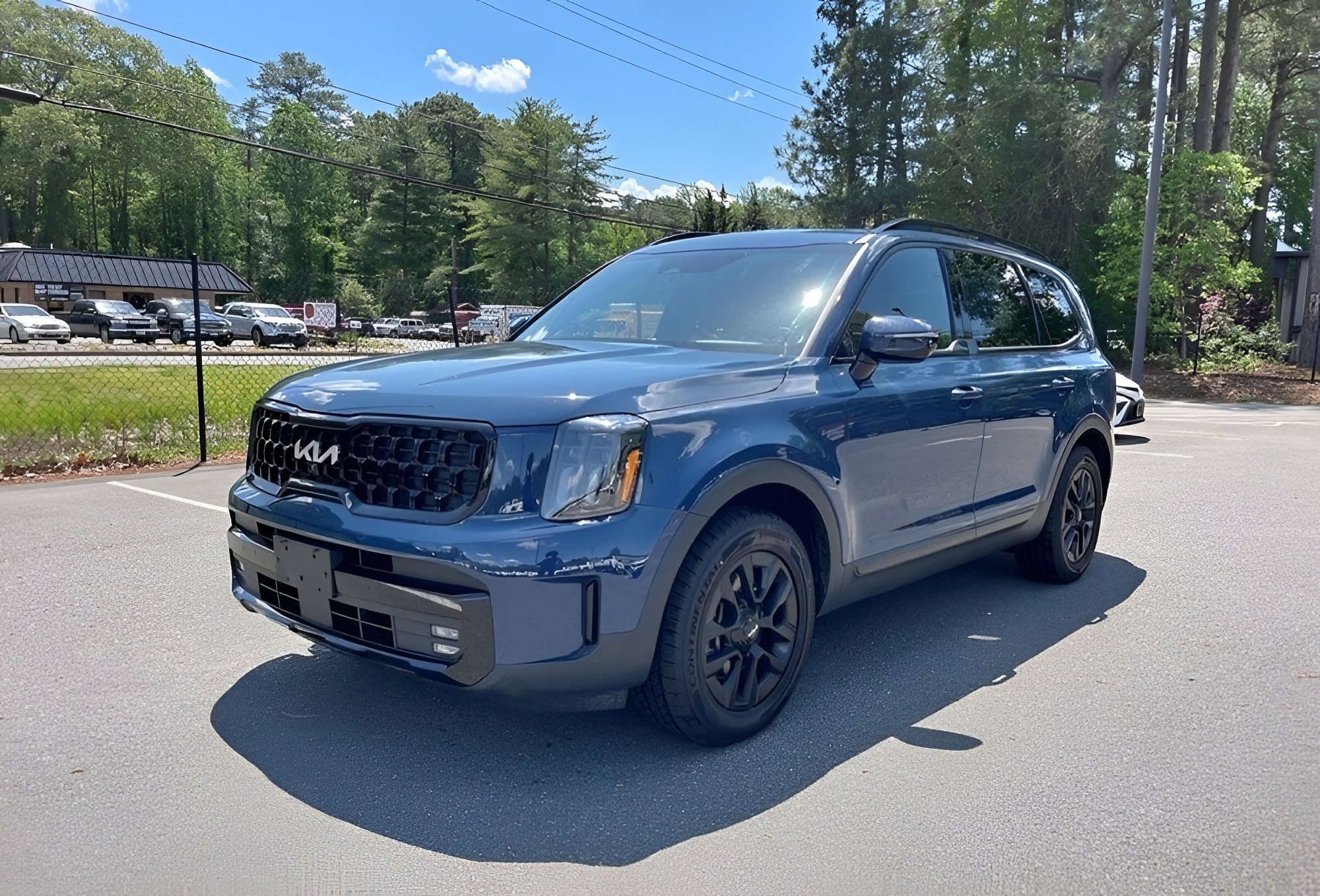
1. The 8-speed hardware and why this SUV loads it hard
One V6, one 8-speed, and 4,500-plus pounds to move
Bolt a 291 hp 3.8L V6 to a full-size three-row shell and call it family duty. The Kia Telluride weighs roughly 4,100 to 4,500 pounds depending on trim and AWD.
Add passengers, cargo, and 5,000 to 5,500 pounds of trailer weight, and the A8F42 transmission works under steady torque load. That constant load builds heat in the torque converter and clutch packs.
The 8-speed uses a planetary gearset and an electronically controlled torque converter. Line pressure, clutch timing, and lockup strategy depend on tight ECU and TCM coordination.
Miss the timing window and the shift flares or bangs. Slip the converter clutch too long and fluid temp climbs fast past 220°F.
Shift-by-wire and why voltage stability matters
The Telluride uses shift-by-wire, not a mechanical linkage. Your gear selector sends an electrical signal to the TCM. The TCM then commands solenoids to route hydraulic pressure through the valve body.
Low system voltage scrambles that control. Solenoids react slow, clutch pressure drops, and gears hunt. Owners report flickering battery lights followed by harsh or delayed engagement when alternators fail.
The transmission also uses an electric auxiliary pump for start-stop events. When voltage sags, that pump can’t hold pressure at a stoplight. Engagement delay on restart follows, sometimes with a sharp lurch.
Three failure paths show up again and again
Early 2020 builds saw hard mechanical faults. Kia’s SA428 bulletin called for full transmission and torque-converter replacement on a narrow VIN batch built May 18 to May 20, 2020. The fix required a complete cooler flush, a red flag for internal debris risk.
Mid-cycle complaints focus on torque-converter shudder and P074100 damper-clutch logic faults. Later reports include rough shifting and hesitation addressed under SA490 with ECU and TCU updates.
Separate from internal gearbox issues, recall SC303 targets intermediate shaft engagement on 2020 to 2024 models. Stripped splines can cause total loss of drive even when the transmission selects gear.
| Drivetrain Item | Spec or Detail | Mechanical Impact |
|---|---|---|
| Engine | 3.8L Lambda II V6, 291 hp, 262 lb-ft | Steady torque load on clutches |
| Transmission | 8-speed automatic (A8F42) | Electronic pressure control, heat-sensitive |
| Towing | Up to 5,500 lbs | Fluid temps rise quickly under load |
| Shift System | Shift-by-wire | Voltage-dependent gear selection |
| Known Recall | SC303 driveline shaft issue | Loss of drive unrelated to internal gears |
Fluid for this unit is SP-IV. Dark, burnt fluid or metallic flakes during a pan drop confirm internal wear. A remanufactured unit typically runs $4,500 to $6,500 plus labor out of warranty.
2. 2020 launch-year failures that forced full unit swaps
SA428 and the three-day build window that went sideways
Build dates matter on early 2020 models. Kia issued service action SA428 for Tellurides built May 18 to May 20, 2020. Affected units showed noise and vibration below 1,500 rpm, often during light throttle or decel.
The prescribed fix was severe. Dealers replaced the entire automatic transmission and torque converter assembly. Labor time ran near 5 hours, plus a mandatory cooler flush to remove debris.
That flush requirement signals internal damage risk. Metallic particles in the cooler can contaminate a new unit within minutes of startup.
Low-rpm vibration and what it meant inside the case
Owners described a droning vibration under 1,500 rpm. Some felt it through the seat or floor during steady cruise. Others heard a growl on light acceleration.
Inside the transmission, that points to torque converter or clutch pack imbalance. A warped converter cover or damaged bearing can send vibration through the input shaft. If the converter sheds metal, it travels straight into the valve body.
Once the valve body passages score, clutch pressure drops. Slip follows, then heat, then burnt fluid.
Why cooler contamination changes the repair math
A torque converter failure rarely stays isolated. Friction material circulates through the cooler and lines. Restart the system without a proper flush and the new transmission ingests that debris.
Dealers used a dedicated cooler flush kit during SA428 repairs. Skip that step and the replacement unit risks early failure.
Out of warranty, a full transmission replacement on a 2020 Telluride typically lands between $4,500 and $6,500 installed. A contaminated second unit doubles that cost fast.
3. Torque converter shudder and P074100 damper-clutch faults
Rumble-strip vibration at 40 to 55 mph
Cruise at 45 mph. Hold light throttle. Feel a buzz through the seat like you hit a rumble strip. That pattern shows up often on 2020 to 2023 models.
The torque converter clutch tries to lock in that speed range. If the clutch lining slips, it grabs and releases in pulses. Each pulse sends vibration through the input shaft and flexplate.
Fluid temp climbs during repeated slip events. Once temps push past 230°F, friction material starts to glaze.
P074100 and damper-clutch logic breakdown
Kia issued a TSB for 2020 builds covering DTC P074100. The code flags improper torque converter damper-clutch engagement. Owners often saw a check engine light with reduced shift smoothness.
The fix involved an ECU and TCM software update. The update adjusted lockup timing and clutch pressure mapping. No hard parts were replaced in most cases.
If shudder remains after the update, the converter clutch likely suffered wear. Software can’t restore friction lining once it thins.
How shudder turns into full transmission damage
Converter clutch slip sheds fine friction debris. That debris travels through the valve body and solenoids. Line pressure control degrades as passages clog.
Metal flakes or dark fluid during service confirm internal wear. Once debris spreads, valve body replacement can run $1,200 to $1,800. A full transmission replacement climbs to $5,000 or more installed.
Ignore sustained shudder and fluid contamination becomes unavoidable past 10,000 to 20,000 miles of continued slip.
4. 2022 hesitation and rough shifts tied to SA490 logic updates
Hard throttle, slow response, and gear hunting
Mash the pedal to merge. The engine revs, then the transmission pauses before grabbing a lower gear. Some 2022 Tellurides felt that lag under moderate to heavy throttle.
Owners described gear hunting between 3rd and 4th. Others felt a sharp bump on 2-3 upshifts. No warning lights showed in many cases.
Build dates from June 8, 2021 to November 4, 2021 fall into the known window.
SA490 and the ECU/TCU calibration rewrite
Kia issued service action SA490 for affected 2022 models. The fix required updating both the ECU and TCU ROM IDs through the Kia Diagnostic System. The update revised torque reduction timing and clutch pressure ramps.
The original calibration sometimes delayed torque reduction during shifts. That delay forced clutch packs to absorb excess load. The result was harsh engagement or a brief flare.
Revised software tightened shift timing under part throttle and wide-open throttle. Most vehicles improved after the reflash.
Where software stops helping
If harsh shifts persist after SA490, friction wear likely began before the update. Clutch material overheated during repeated flares. Fluid breakdown accelerates once temps exceed 240°F.
Continued driving with flare or slip can score clutch drums. A worn clutch pack repair often runs $2,000 to $3,000. A full replacement pushes past $5,000 installed.
5. SC303 driveline recall and sudden loss of drive
Gear selected, engine revs, SUV barely moves
Shift into Drive. Tap the throttle. The engine climbs past 2,000 rpm and the Telluride crawls or won’t move. Many drivers blamed the transmission at first.
Recall SC303 covers certain 2020 to 2024 models. The issue centers on the intermediate shaft and right front driveshaft. During assembly, splines may not have fully engaged.
Over time, those splines can strip. Once they shear, torque from the transmission never reaches the wheel.
How stripped splines mimic a blown gearbox
The 8-speed still selects gears. The torque converter still multiplies torque. The parking pawl still locks the transmission output shaft.
But the mechanical link to the wheel is compromised. The SUV can lose drive power while moving. In some cases, it can roll even when shifted into Park if the parking brake isn’t set.
That symptom pattern feels like catastrophic transmission failure. The weak link sits downstream in the driveline.
Repair scope and real-world risk
Dealers inspect spline engagement under SC303. Damaged intermediate shafts get replaced. Software updates adjust electronic parking brake logic to reduce roll-away risk.
If spline damage spreads, the driveshaft assembly requires replacement. Parts and labor outside recall coverage can exceed $1,500 to $2,500 depending on component damage.
6. Voltage collapse and start-stop pressure loss that feel like transmission failure
Flickering battery light, then harsh shifts
See the battery icon flash. Feel the next shift bang into gear. Several 2020 to 2023 Tellurides logged alternator failures before 60,000 miles.
Low voltage disrupts the TCM’s control of shift solenoids. Line pressure drops when solenoids can’t respond cleanly. Clutch packs engage late or slam hard.
Drivers report sudden loss of acceleration and heavy steering during charging failures. The transmission becomes the first system to show symptoms.
Electric fluid pump and delayed engagement at stoplights
The A8F42 uses an electric auxiliary pump during auto start-stop events. That pump maintains hydraulic pressure while the engine is off. When voltage sags, pump output weakens.
Release the brake and the engine restarts. If line pressure isn’t ready, engagement delays. Some drivers feel a pause, then a sharp lurch into Drive.
Repeated low-pressure starts heat the clutch packs. Fluid temp spikes during city traffic.
Brownout damage and what it costs
Short-term voltage drops can trigger limp mode without stored codes. Repeated brownouts stress solenoids and control modules. A failed alternator typically runs $600 to $1,200 installed.
If voltage instability damages the TCM, module replacement can exceed $1,500 plus programming. Continued low-voltage driving risks clutch slip and internal wear within a few thousand miles.
7. Fluid breakdown, towing heat, and how neglect cooks the A8F42
Heavy SUV, steady torque, rising fluid temps
Load seven passengers and hook up 5,000 pounds. The 3.8L V6 feeds 262 lb-ft through the torque converter nonstop. In traffic or on grades, converter slip drives heat fast.
Transmission fluid carries lubrication, cooling, and hydraulic pressure. Once temps exceed 230°F for extended periods, oxidation accelerates. SP-IV fluid darkens and loses friction stability.
Burnt odor during a pan drop signals overheated clutch packs. That damage doesn’t reverse with fresh fluid.
“Lifetime” fluid versus severe duty reality
Kia classifies stop-and-go driving, towing, and high heat as severe service. Under those conditions, fluid exchange every 30,000 to 60,000 miles protects clutch integrity. Many urban family SUVs fall into that severe category.
A simple drain and refill replaces only part of the fluid. A full exchange cycles fluid through the cooler and torque converter. That approach removes suspended friction material and varnish.
Ignore service past 80,000 to 100,000 miles under heavy use and slip risk climbs. Dark fluid with metallic sheen confirms internal wear already underway.
Heat damage and real repair numbers
Overheated fluid reduces line pressure stability. Clutches begin to flare between 2-3 or 3-4 shifts. Continued slip scores clutch drums and warps steels.
Valve body contamination from degraded fluid can trigger harsh or delayed shifts. Valve body replacement often runs $1,200 to $1,800. A full remanufactured transmission typically lands between $4,500 and $6,500 installed.
8. Model-year risk and where the real exposure sits
2020 models carry the heaviest baggage
Launch year units saw the highest complaint volume. SA428 covered a narrow May 2020 build window that required full transmission and torque converter replacement. Early 2020 builds also triggered P074100 for damper-clutch logic faults.
Some owners reported limp mode and shudder under 30,000 miles. Cooler flush procedures during replacement confirm contamination risk in failed units. A 2020 Telluride out of warranty can face a $5,000 to $6,500 transmission bill.
2021 to 2022 units lean toward calibration and heat stress
2021 models show fewer full unit swaps but continued shudder reports. 2022 builds within the SA490 window required ECU and TCU logic updates for rough shifting and hesitation. Most improved after reflash, though some developed clutch wear before correction.
Urban use and towing pushed fluid temps past 230°F in repeated complaints. Once fluid darkens early, clutch life shortens. Valve body and clutch repairs on these years often fall between $1,500 and $3,000.
2023 to 2025 models show lower internal failure rates
Later production runs display fewer internal transmission defects. Driveline recall SC303 affects 2023 and 2024 units for spline engagement, not internal gear damage. Electrical brownout complaints still surface on some 2023 models.
2025 models show scattered reports of delayed engagement when cold. No widespread internal gearbox campaign has emerged for 2023 to 2025. Major transmission replacement remains uncommon in these later years, but still exceeds $5,000 installed if required.
9. Warranty exposure and what happens when coverage runs out
First owner protection versus second owner reality
Kia backs the Telluride with a 10-year or 100,000-mile powertrain warranty for the original owner. That coverage includes the transmission and torque converter. Certified Pre-Owned buyers keep similar protection.
Second owners outside CPO status lose that long coverage. Powertrain protection often drops to 5 years or 60,000 miles from first in-service date. Buy a 2020 model with 75,000 miles and the safety net may already be gone.
A failed A8F42 outside warranty lands squarely on the owner’s wallet.
Repair versus replacement economics
Dealers often replace the entire unit rather than rebuild in-house. Remanufactured transmission assemblies typically cost $4,500 to $6,500 installed. Parts backorders have left some owners waiting weeks for units.
Valve body repairs or solenoid packs can run $1,200 to $2,000. Torque converter replacement alone may approach $2,000 to $3,000 depending on labor and contamination. Once debris spreads through the cooler, partial repair becomes risky.
Independent shops may offer rebuild options, but internal hard-part damage limits savings. A scored drum or damaged planetary set pushes the job toward full replacement.
Long-term survival comes down to heat and voltage
Clutch life depends on fluid condition and temperature control. Sustained operation above 230°F shortens friction life. Repeated voltage drops destabilize solenoid control and clutch pressure.
Owners who service fluid every 30,000 to 60,000 miles under severe use reduce wear. Ignoring shudder or hesitation accelerates damage. A neglected Telluride transmission can consume $5,000 in a single failure event.
Sources & References
- Kia Telluride Problems & Lemon Law | Timothy Abeel
- Kia Telluride Reliability: Everything You Need To Know – Wallace Kia Of Bristol
- 2020 KIA Telluride Problems: How To Get Compensation For It?
- Kia Telluride vs Hyundai Palisade: Data-Backed Look at Long-Term Reliability
- 2025 Kia Telluride: Redesign, Specs, Range, Speed | SAT JAPAN
- Keeping Your Kia Telluride Running Smoothly: Essential Service Tips – Kia of Dayton
- Find Existing Kia Telluride Car Recalls – DealerRater
- Telluride needs a new transmission : r/KiaTelluride – Reddit
- service action: acceleration logic improvement (ecu & tcu) … – nhtsa
- Kia Problems Overview | CarComplaints.com
- service action: automatic transmission/torque converter … – nhtsa
- tcm mil on dtc p074100 logic improvement – nhtsa
- BAD TORQUE CONVERTER SYMPTOMS: SHUDDER, VIBRATION, NOISE, CAUSES AND FIX – YouTube
- Top 10 Most Reliable SUV Brands of the Last Decade: A Deep Dive into Longevity and Performance
- Common Problems with Kia Telluride: 2025 Guide
- 2025 Kia Telluride Prices, Reviews, and Pictures | Edmunds
- 2020 Telluride Transmission Issues : r/KiaTelluride – Reddit
- Bad Torque Converter Symptoms, Diagnosis, and Fixes
- 5 WARNING Signs Your Torque Converter is Failing – YouTube
- Understanding Kia CVT Transmission Problems: Expert Insights and Solutions
- 2022 Kia Telluride Transmission Repair and Replacement Prices & Cost Estimates
- 2020 Kia Telluride Transmission in Tampa
- 2020 Kia Telluride Transmission in Atlanta
- Find Existing Kia Sorento Car Recalls – DealerRater
- Kia Recalls | Cars.com
- Download – Data.Transportation.gov
- Telluride Alternator Failure – Leads to Transmission Failure : r/KiaTelluride – Reddit
- 98000 miles on Telluride and dealer just replaced transmission under warranty – Reddit
- 2022 Kia Telluride Transmission in Tampa
- Comprehensive Guide to Kia Warranty Coverage
- Kia Warranty Explained: Industry-Leading 10-Year/100K Mile Coverage – Kia of New Bern
- Kia Extended Warranty (2026) | ConsumerAffairs®
- TELLURIDE TRANSMISSION ISSUES : r/KiaTelluride – Reddit
- Extended Warranty pricing : r/KiaTelluride – Reddit
- Just bought a 2025 Telluride. Was I screwed on the warranty? : r/KiaTelluride – Reddit
- Out of warranty transmission replacement : r/kia – Reddit
- 2025 Kia Telluride Transmission Repair and Replacement Prices & Cost Estimates
- 10 Of The Most Common Complaints Kia Telluride Owners Report With Their SUV
- 3 common complaints about the Telluride – Is it still a good buy in 2024? : r/KiaTelluride
- 2020 limp mode? : r/KiaTelluride – Reddit
- 8-speed dual clutch transmission (dct) s/w logic improvement (sa526) – nhtsa
- The Most Common 2022 Kia Telluride Problems That Owners Complain About
Was This Article Helpful?